Blog Archives
By Their Fruits You Shall Know Them


James Rondinone’s By Their Fruits You Shall Know Them is a thoughtful and carefully researched examination of one of Christianity’s most consequential questions: How can believers determine whether someone has genuinely received salvation? Drawing extensively from Scripture, theological interpretations, and personal experience, Rondinone explores the relationship between faith, outward conduct, and spiritual transformation. The book takes its title from Matthew 7:20, a biblical passage frequently cited when evaluating the authenticity of someone’s Christian faith. Rondinone examines how different churches interpret this teaching and how those interpretations influence their understanding of salvation. His central concern is the distinction between receiving salvation and demonstrating spiritual growth through one’s actions. By presenting competing theological perspectives, he encourages readers to examine familiar religious teachings with greater care and develop a more informed understanding of their beliefs.
The book is organized around specific behaviors and religious practices that various Christian denominations associate with evidence of salvation. Rondinone addresses good works, tithing, speaking in tongues, habitual sinful behavior, water baptism, and alcohol consumption. Each subject receives substantial attention through biblical passages, historical context, and differing interpretations of key scriptural terms. His discussion of good works is especially representative of the book’s approach. After presenting contrasting interpretations of passages from James, Hebrews, and Romans, he writes, “Good works do not substantiate salvation.” This statement reflects an important distinction explored throughout the text: outward actions may reveal something about a believer’s spiritual development without necessarily establishing the condition of that person’s relationship with God. Rondinone’s method allows readers to see how different theological conclusions can emerge from the same biblical passages, particularly when individual words are interpreted through different doctrinal frameworks.
One of the book’s most engaging qualities is the author’s willingness to incorporate his personal experiences within Christian ministries. Rondinone recounts encounters with church leadership, disagreements over religious requirements, and situations that prompted him to reconsider teachings he had previously accepted. His experiences involving financial giving, baptism, and alcohol consumption give the theological discussions a practical dimension. These accounts illustrate how doctrinal differences can affect relationships, church membership, and individual spiritual journeys. The author’s conversational style also makes complex subjects more approachable. He frequently addresses readers directly, poses questions, and invites them to examine Scripture alongside him. His extensive biblical references and explanatory commentary create a study-oriented reading experience, while the personal anecdotes and supplementary accounts provide welcome variety. Although the detailed examination of individual passages requires concentration, that thoroughness reflects Rondinone’s commitment to treating these questions seriously.
Beyond its examination of specific religious practices, By Their Fruits You Shall Know Them offers a broader consideration of Christian identity, spiritual maturity, and the responsibilities of religious leadership. Rondinone’s discussion of salvation and sanctification brings the book’s central themes into sharper focus, encouraging readers to consider the difference between becoming a Christian and growing in Christian character. His attention to denominational disagreements and the exercise of authority within churches adds another meaningful dimension to the discussion. Throughout the book, he consistently emphasizes personal study and informed spiritual discernment, reminding readers, “What’s left is for you to decide whether good works prove whether someone is saved.” This invitation captures the book’s educational purpose and its respect for the reader’s responsibility to examine theological claims. For Christians interested in biblical interpretation, denominational teachings, and the relationship between faith and conduct, Rondinone provides a substantial resource that encourages careful reflection, independent study, and a more deliberate engagement with Scripture.
Pages: 179 | ASIN: B0GKQ3M258

INVISIBLE FORCES: Recognizing The Weapons Of Our Enemy and How To Resist Them


Do you really know who the devil is? In Invisible Forces, James Rondinone sets out to unveil the devil’s true identity and significance. The book delves into biblical passages, weaving together stories from both past and present. Its goal? To enlighten Christians and shield them from the devil’s deceptions. Expect a range of fascinating tales: the rise and fall of Lance Armstrong and the saga of Elizabeth Holmes. But James goes beyond Earth’s history, investigates where the devil was originally created, and explores his divine purpose. Through these insightful pages, readers will grasp why the anointed Cherub fell, learn how Christians can combat the devil’s weapons, and absorb other valuable biblical teachings.
Middle Ages insights in a book about the devil just scratch the surface of the book’s diverse and captivating topics. It’s intriguing to discover that, until the Middle Ages, the goat had little association with demonology. The book is a treasure trove of rich information from various sources, such as Jeffrey Burton Russell’s The Devil: Perceptions of Evil from Antiquity to Primitive Christianity. It explores several biblical passages. The author analyzes the words in certain verses to shed new light on their messages. As James explores the concept of the devil, he shares his personal perspectives. This allows readers to see how the messages influence his thoughts. All of this makes for an immersive experience. I appreciated that the chapters are titled as questions. Throughout the book, numerous queries are posed and answered. It feels interactive and engaging.
Invisible Forces offers profound, logical, and educational resources that help readers understand the devil’s workings and enable them to evade his traps. It provides messages for drawing closer to God and succeeding in the heavenly race.
Pages: 151 | ASIN : B0D6XKV3G9
God’s Abundant Life

God’s Abundant Life by James Rondinone offers insightful guidance on how Christians can lead a rich and fulfilling life rooted in their faith. At the outset, the author outlines the attributes of an abundant life, paving the way for a deeper exploration of the topic. Rondinone delves into how Christians can attain and experience such a lifestyle, covering a range of interesting topics, including the early church, the Sabbath, and works.
The author also includes detailed explanations of several Greek words to deepen readers’ understanding of their roots and contextual meaning. The book is replete with numerous Bible verses, which serve to further clarify the theological concepts discussed in the text. While the first chapter may seem somewhat lengthy and dense, the subsequent chapters pick up pace, and the author’s approach becomes more accessible and engaging.
Rondinone incorporates thought-provoking articles throughout the book to encourage readers to examine familiar topics from new angles. Towards the book’s conclusion, just when the reader thinks the author is about to wrap up, Rondinone explores a topic that is not as commonly discussed today: godliness. He shares his views on how godliness is perceived by people today and describes what the Bible says about the subject. While I think the first chapter could have been divided into smaller parts, the book’s contents are informative, engaging, and thought-provoking.
I recommend this book to readers seeking to deepen their understanding of Christianity or looking to reflect on their faith from a new perspective.
Pages: 109 | ASIN: B0BX7GSM6H
The Church of God or Church of Man
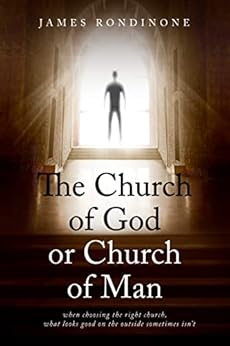
The Church of God or Church of Man by James Rondinone helps believers choose churches that align with God’s ways and the teachings of the Holy Scripture. The author wrote an essential book for Christians, as many may not be aware of what goes on in the churches that they attend and how ministers, bishops, and pastors run their places of worship. In this book, Rondinone includes biblical references, how to worship, and what to look out for in a pastor and a church.
While some people may find this book a bit controversial, the author’s aim is to improve Christian worship and the growth of churches worldwide. I appreciate how Rondinone is raw and writes about the good, bad, and ugly sides of what’s often concealed in places of worship. His intentions are clear in that he aims to guide individuals to find a church with high leadership standards and scriptural ideas. It’s essential and vital to ask questions before joining a church, and the author offers a comprehensive checklist with features often skipped or forgotten.
Rondinone provides an in-depth look at the importance of joining a place of worship with programs for various groups, such as men, women, youth, children, and ample accommodations for weddings, social gatherings, and community involvement. He also invites readers to review a church’s principles concerning being a charitable ministry, how well leadership supports members, and other elements that contribute to being an excellent place to worship. The author also covers the ability of a church to closely follow the doctrines of the Christian faith, if the leadership is qualified, and how they ordain pastors and ministers. The book thoroughly delves into all aspects of practicing one’s faith and finding the right church for worship and community.
The Church of God or Church of Man by James Rondinone is a respectful, insightful look at churches and a guide for Christians and those unfamiliar with organizational structures and scriptural ideas. It’s a compelling read, and I recommend it as it brings positive changes and guidance in finding the right path for worship while promoting well-organized churches and supportive ordained leaders.
ASIN B0BRQVPHS8 | Pages: 126


