Blog Archives
An Unexpected Act of Kindness

TOUCH: The Tumbles and Turns of Time Manipulation follows a radiologist whose migraines lead him to an experimental treatment that inadvertently unlocks an ability to manipulate time by sending memories back to his younger self. What was the inspiration for the setup of your story?
The author’s first historic moment for a timeless crystal memory occurred when he was seven. He couldn’t get his kite to fly in the local park. An older kid came to help from across the street but broke the kite. The tall thirteen-year-old immediately replaced it with a new, better kite from his house. Later, the author was a receiver for him in touch football.
Close to the onset of the writing, one of the author’s sisters died of lung cancer because of her teenage smoking start.
A professional football player the author knew died early with severe memory loss.
Were you able to achieve everything you wanted with the characters in the novel?
Yes, the author accomplished what he desired with the characters. He left room for follow-up writing with some of the characters, particularly the female quarterback, Evelynn Dovell, who recognized Cillian.
What were some themes that were important for you to explore in this book?
With regard to time, the author explored the contrast between events that seem inevitable and others that have a rare randomness.
The impact of an unexpected act of kindness can be forever.
What is the next book that you are working on, and when will it be available?
The author’s next book, planned for release in 2025, is a follow-up to Clean Slate (where a woman used a drug to selectively erase her boyfriend’s memories of prior girlfriends.)
Meet Cillian, a physician whose seemingly ordinary life takes an extraordinary turn after a fateful accident during a groundbreaking medical procedure. Suddenly endowed with the ability to send messages to his younger self, Cillian embarks on a quest to rewrite his friend’s medical history.
But as Cillian delves deeper into the complexities of time travel, he discovers that changing the past comes with unforeseen consequences. From opportunities and missed opportunities with his true love, Mary, to heartbreaking revelations about his friend Shawn’s illnesses, Cillian grapples with the weight of his choices as he navigates a maze of alternate timelines.
With each twist and turn, “Touch” immerses readers in a riveting tale of love, sacrifice, and the timeless struggle between fate and free will. Will Cillian mend his fabric of time and secure a future with Mary, or will his attempts to rewrite history only lead to further heartache?
TOUCH: The Tumbles and Turns of Time Manipulation
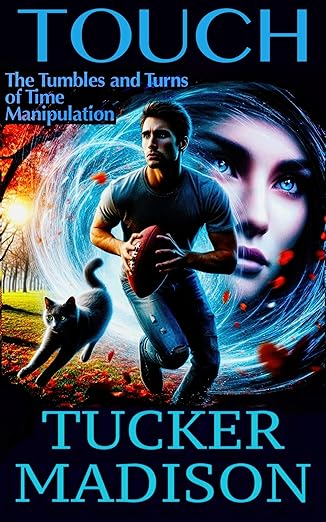

Tucker Madison’s TOUCH: The Tumbles and Turns of Time Manipulation is a mind-bending, emotional journey that plays with the idea of time in a way that is both deeply personal and scientifically intriguing. The novel follows Cillian Cole, a radiologist whose migraines lead him to an experimental treatment that inadvertently unlocks an ability to manipulate time though not in the traditional sci-fi sense of building a machine. Instead, Cillian experiences a series of déjà vu-like flashes that allow him to send memories back to his younger self. This revelation sets off a cascade of existential questions and moral dilemmas as he tries to use this power to prevent tragedy, particularly for his childhood hero and friend, Shawn. As Cillian navigates shifting realities, the novel asks whether changing the past is truly possible or if fate has a way of course-correcting.
One of the most compelling aspects of the book is its treatment of time not as a rigid sequence but as something malleable through memory and consciousness. Madison crafts some truly arresting moments, like when Cillian suddenly has two versions of the past in his mind: one where his medical school canoe trip photos were ruined, and another where they survived because he subconsciously knew to bring a dry bag. That small ripple effect makes the whole concept feel eerily plausible. The writing during these moments is hypnotic, capturing the surreal quality of memory itself. The novel doesn’t bombard the reader with heavy scientific jargon, but rather plays with the idea in a way that feels instinctive like something we’ve all felt in those weird, uncanny moments of déjà vu.
Where the novel really shines is in its emotional depth. Cillian’s relationships particularly with Shawn and later with Mary ground the sci-fi elements in something deeply human. The football scenes between Young Cillian and Shawn are electric, especially the moment of his first big catch, where time slows to an almost supernatural degree. That moment becomes a portal of sorts, something that Cillian later revisits as he tries to change Shawn’s fate. The novel is laced with nostalgia, regret, and a longing for second chances, making it feel less like a traditional time-travel story and more like a meditation on memory and loss. The relationship between Cillian and Mary, which develops through an altered timeline, is equally compelling, giving the novel a love story that feels both earned and deeply romantic.
As Cillian grapples with the implications of his power, there’s an underlying question of how far he should go. The scene where he visits an older, memory-damaged Shawn is heartbreaking, especially when Shawn fails to recognize his own wife, Peggy. It forces Cillian and the reader to ask whether altering the past is always the right thing to do or if the consequences are too unpredictable. The book is at its best when it wrestles with these questions, making the reader feel the weight of Cillian’s choices. The ethical dilemmas feel real because they’re rooted in personal stakes rather than grand, world-saving missions.
TOUCH is an engrossing, thought-provoking read that blends science fiction with deep emotional resonance. Madison crafts a story that is as much about the physics of time as it is about the fragility of human connection. This book is perfect for anyone who loves time manipulation with a strong emotional core. It makes you wonder: if you could whisper advice to your younger self, would you? And even more importantly, should you?
Pages: 160 | ASIN : B0CX96ZTQQ

Watching, A Different Type of Time Travel, Volume 2: Portrait of an Innocent Girl
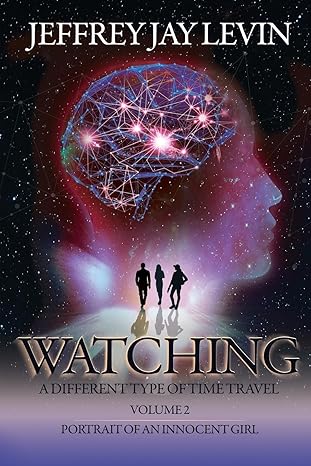
Jeffrey Jay Levin’s Watching Volume 2 is a mesmerizing journey that marries time travel with emotional resonance. This sequel builds on the intriguing concept of “Watchings” introduced in the first volume, where the protagonist, Josh, undertakes non-corporeal journeys through space and time. This time, he is drawn into the haunting world of Nazi-era Vienna, compelled by a painting and the mysteries surrounding it. The narrative effortlessly balances historical drama with speculative fiction, making it an engaging read from start to finish.
What struck me first about this book was the vivid detail. Levin paints historical settings with such precision that you can almost feel the tension of occupied Vienna or the eerie stillness surrounding stolen art. The prologue, describing the chilling parade of Nazi tanks and soldiers, is visceral. This immersive style carried me through the story, though at times, I wished the pace didn’t lag in Josh’s modern-day contemplations. However, the descriptions of the titular painting and its impact on Josh more than made up for these slower moments.
I also appreciated the emotional depth Levin brought to his characters, especially Josh. His reluctance to revisit his Watching abilities, juxtaposed with his unrelenting curiosity, feels relatable. One standout scene was his interaction with Adrian after his museum experience. Their dynamic captures the perfect mix of love, worry, and exasperation that comes with sharing an extraordinary burden. Similarly, Agent Starling Hebert’s frustration with bureaucracy and sexism within the FBI grounds her character, making her investigative journey all the more satisfying. Levin’s ability to weave personal struggles into the grander narrative of historical intrigue is a triumph.
The pseudo-scientific explanations of Watchings add a fascinating layer to the story, showcasing Levin’s creative imagination and his ability to blend science with fiction. The idea of heightened enzymes and hippocampal activity is unique, giving the concept of time travel a fresh twist. While these sections delve deeply into detail, they provide a thoughtful backdrop for the fantastical elements, enriching the reader’s understanding of the phenomenon.
The exploration of Nazi art theft and the mystery surrounding Gustav Scheiner’s Portrait of an Innocent Girl was fascinating and tied beautifully to themes of loss, memory, and justice. Levin’s extensive research shines here, offering a thought-provoking look at the devastating cultural impact of war.
Watching Volume 2: Portrait of an Innocent Girl is a compelling read for fans of historical fiction, mystery, and time travel. It’s perfect for those who savor rich character development and thought-provoking themes. I’d recommend it to anyone intrigued by history’s shadows and the mysteries they hold.
Pages: 288 | ISBN : 978-1685135935
Mussolini’s Puppet Government

Jigsaw: Beginnings follows a group of students on a trip to Italy who stumble into the secrets of a WWII teleportation experiment, forcing them to unravel a conspiracy where history and the present collide. What were some sources that informed this book’s development?
Excellent question. I did a great deal of research on the Italian Resistance Movement, OSS espionage and Holocaust rescue efforts at the time and general area, Mussolini’s Puppet Government in Salo following his rescue by the Nazis in 1943, and overtures to get Spain to join the war on the Axis side. I felt these were neglected parts of history that needed greater exploration. I also have visited Voltri on two occasions when I was younger. My Great Aunt and Uncle (my Grandmother’s brother) lived there and I wanted to make this a quasi-tribute to that side of the family. I also drew from personal experiences and other people I know like my parents, grandmother, siblings, and friends to fill in the character development. The names of the student’s characters came from children that attended the charter school I once owned.
Colonel Angelo and Professor Klein are morally complex characters. How did you develop their motivations?
Klein represents that part of history where Conservative Jewish Palestinians had, at first, a productive relationship with Mussolini’s Government in the 1920s and 1930s. As Italy’s government became more openly Anti Semitic in its subservience to Hitler, Jews who thought Mussolini had backstabbed them were more prevalent. That is how I developed Klein. I do not want to say much about Angelo here because he has an arc that readers would see in the second and third books in the series, Warheads and Full Circle and I do not want to spoil that.
The Italian settings feel incredibly vivid. Did you visit these locations, or was your research primarily historical?
As mentioned in the first question, I have visited Voltri and Genoa several times. While I based some of the scenes on personal experience like visiting the Villa and going to the Genovese port, I did still have to research the areas and the history to fill in the gaps and round out the historical plot of the story.
Were there any real-life wartime experiments that influenced the teleportation aspect of the story?
Not to my knowledge. I know there were rumors of the Philadelphia Experiment in the 1940’s and the German time machine Bell program but those did not influence the plot.
Author Links: GoodReads | X (Twitter) | Facebook | Instagram | Threads | Website | Amazon
High school history buffs Noah Patterson and Mariah Fischer can’t wait to get to Italy. Their plan? To explore as much as they can and have loads of fun. What they face, however, is mind-blowing when they get shot at by the Italian Black Brigade.
Running for their lives, they quickly realize that they’ve somehow been transported to Italy, circa 1943. But how?
Humiliated by defeat and rescued by Hitler, Mussolini plans to win the war at all costs. Pushing forward relentlessly, he has a secret weapon: teleportation. But a failed experiment with the device draws Noah and Mariah back in time. Now they must find a way to stop Mussolini’s “New Roman Empire” and return to the present they know—if it’s still there.
The fight for reality starts now…Jigsaw Beginnings is an adrenaline-driven, YA time travel series perfect for action and adventure enthusiasts.
The Legacy of a Fool
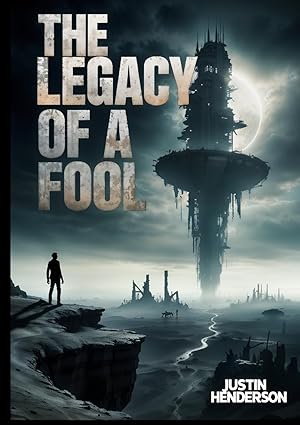

In The Legacy of a Fool, Justin Henderson delivers a futuristic, character-driven tale set against the backdrop of a tech-saturated, holographic society. The story explores the trials of Devin Skye, a young man grappling with personal ambition, societal expectations, and his own shortcomings in a world where technology overshadows human connection. Through diary entries, letters, and shifting perspectives, Henderson creates a layered narrative that examines the complexity of individual growth and systemic change.
From the start, I found Devin Skye’s chaotic and sometimes comically tragic life engaging. Henderson’s knack for crafting vivid, sensory-rich scenes shines in moments like Devin’s frantic preparation for a party in “Holograms and Hovercars.” His use of body spray to mask dirty jeans, paired with his misguided confidence in “winning over” his crush, Tonya, made me laugh and cringe simultaneously. Henderson masterfully balances comedy with poignant commentary, making it hard not to root for Devin even when he self-sabotages.
The futuristic world-building felt immersive yet relatable. In scenes describing Highland City’s hovercars and holographic technology, Henderson seamlessly weaves in societal critiques. For example, Rita Parker’s journal entry detailing corporate reliance on automation highlights the ethical dilemmas of technological progress. Her internal conflict of choosing between company profits and the livelihoods of her team mirrors real-world struggles, giving the story a grounded resonance.
The book’s structure enriches the story by offering multiple perspectives, as seen in Rita’s heartfelt reflections on Devin’s shortcomings as an employee. I do feel that some narrative shifts occasionally disrupt the flow, making it harder to connect with the central storyline. Still, the fragmented style cleverly mirrors the chaotic world Devin inhabits, and it left me reflecting on the nature of legacy and the unintended impact of one’s actions.
The Legacy of a Fool is a captivating exploration of personal growth and societal transformation. Henderson’s blend of humor, heartbreak, and sharp social observations makes this a memorable read. I’d recommend it to fans of speculative fiction who enjoy flawed, deeply human protagonists. It’s a book for anyone willing to laugh, wince, and reflect on how far we’ve come and how far we still have to go.
Pages: 354 | ASIN : B0DP1NPYHG
The Morally Grey Character

The Dark Without follows a young woman living in a world where the Earth is dying, who is abducted by aliens and becomes a powerful mystical leader charged with bringing Earth back from the brink of death. What was the inspiration for the setup of your story?
When I first started, I had no idea where it was heading, but I knew it had to be along the lines of a total power failure and the ensuing outcome of what that brings. But by the third chapter, things started to veer sideways and new ideas hit me all at once. Having aliens in the mix wasn’t in the plans at first. But if I’d kept to the original, it would’ve been pretty drab and predictable, with the backdrop of an Earth falling dreadfully into a dystopian apocalypse with no hope of ever coming out of it. I did toy around with having the aliens as the good guys, but that would’ve been boring, and again, predictable. So I made the protagonist, Esme, the morally grey character – one who the reader would hopefully root for, yet be unsettled with her choices.
The inspiration for the “original” story came about several years ago during a power cut. I sat there feeling absolutely stranded and at a loss of what to do next. No power meant no WiFi, television, or even the air conditioner. What a cushy, entitled life we live in now, right? And from there, a thought bubble formed and a story – what if the power never came back on, what would happen? What would people do? And that ended up the base of the story.
I find the world you created in this novel brimming with possibilities. Where did the inspiration for the setting come from, and how did it change as you were writing?
The setting just sort of manifested organically. I keep a list of names for future characters in future books (which author doesn’t, right?), and I grabbed “Esme” because it sounded right for the story. A simple, classic name, and a little unusual from the norm. From there, I went with it, and decided she didn’t have to be the typical “English-speaking” protagonist, and why not have things happen in Spain, rather than the usual places…and from there, it spiralled onto a wider platform.
What were some themes that were important for you to explore in this book?
Not anything in particular, but by the time I was a quarter way into the first draft, I knew this was going to be a dark story. A vengeful story. One that would reflect humans at their core, as in what and how we would react in extreme situations and conditions. Just seeing what’s happening around the world is enough to understand what we can and will do, especially to another human being. That was the motivator for Esme’s character. A normal, young girl who is thrown into an impossible, horrific reality. What would she do, and how would she do it? And to what extremes would she go to, to get it done?
Will there be a follow-up novel to this story? If so, what aspects of the story will the next book cover?
Tempting, but no. While the end of the story left things ambiguous, the story is done. I enjoyed writing it.
Author Links: GoodReads | X (Twitter) | Threads | Instagram | Facebook | Website | Amazon
“Humankind is always doomed to fail. It has fallen many times before, and many times we have intervened to ensure it stays on the correct course. Earth is salvageable, but if you had continued along the path you were on, it would not have been. You have billions of years more to exist before your planet’s final destruction. We are only making certain it survives that long, and ensuring your survival until the ultimate end. At times you progress too fast, but such is humankind’s way. So we had to accelerate this current failure sooner in order to restart. As we have done before, a guide with a better objective and understanding of how to protect your world, will be inserted…”
But why did they care what humans did with their lives? They were aliens—beings from another dimension! Earth wasn’t their home.
Esme Serrano’s predestined encounter with the trans-dimensional anthropomorphic Aakehollats sends her on a multi-pathed journey spanning ten thousand years. A journey riddled with lies, manipulations and untold layers of deception. She guides Earth as the Sibyl, a powerful and mystical leader, and brings the dying world back from the brink of death. She helps the Aakehollats, and ensures that Earth survives until its ultimate destruction in the cosmos.
But her one true goal is, and always will be, to kill the Aakehollats.
Unborn

Eva Barber’s Unborn tells a tale that feels like a dreamy collision of family bonds, mystery, and the tug of destiny. It opens with the discovery of a mysterious infant in the forest, devoid of a belly button, by a couple in rural Russia. Sasha and Lev, battling their own heartbreak over childlessness, decide to keep the child despite its otherworldly origins. What unfolds is an exploration of the girl Olesya’s extraordinary nature, her struggles with identity, and the looming forces seeking to claim her.
Barber sets the scene vividly in the opening chapters. The forest is not just a backdrop but a character itself, ancient and whispering secrets. The moment Sasha discovers Olesya is pure magic and it pulls you right into the story. But as the narrative progresses, some passages lean heavily on exposition.
What really works for me is Barber’s exploration of the emotional ties between Olesya and her adoptive parents. Sasha’s maternal instinct feels raw and real, especially in scenes where she defends Olesya fiercely against a world that might see her as an oddity. When she performs the makeshift surgery to create a navel for her daughter, I felt her desperation to make Olesya fit into a world she might not belong to. These moments, packed with tension and love, kept me invested.
Olesya herself is an enigma, and her journey to find her place in a world both mundane and mysterious is fascinating. Her struggles with bullies at school, her social awkwardness, and her scientific brilliance make her relatable despite her supernatural origins. I especially loved her conversation with her teacher about atoms, she’s bright but understated, a quiet force. Her supernatural abilities, like the incident with the boy in class, add a layer of danger that I wished the author had explored more deeply early on.
The plot raises intriguing questions about destiny and choice. There’s a constant push and pull between safety and discovery. Lev’s interaction with his cousin Lech, leading to their plan to flee to the United States, adds a touch of thriller energy. The stakes feel personal yet far-reaching, and I couldn’t help but wonder what secrets about Olesya’s origins might unfold next.
While many scenes are rich with detail and emotion, a few moments linger a little longer than necessary, while others, like the shadowy men in the forest or Olesya’s recurring nightmares, could benefit from a bit more attention to fully capture their significance. That said, Barber’s gift for crafting compelling characters and emotional depth shines through.
Unborn is an atmospheric and thought-provoking read for anyone who enjoys stories about family, identity, and the intersection of science and the fantastical. Fans of speculative fiction with a strong emotional core, think The Midnight Library meets The Giver, will find much to love here. It’s a slow burn, but one worth savoring.
Pages: 435 | ASIN : B0DPYGM68C

Twists and Turns

Once Upon a Time Machine is a dazzling anthology of short stories that traverse genres, from time travel to alien encounters, with themes ranging from heartbreak to whimsical absurdity. What was the inspiration for this collection of short stories?
I am inspired by everyday life. Is there anything more absurd than that? Some of my ideas come directly from weird news stories, while others are just continuations of something that happened to me during the day. For example, in the story “The Mystical Rock,” Annie trips on a rock and it changes her luck. That story was hatched the day I tripped on a mangled coat hanger and felt lucky not to be injured.
What draws you to the genre of speculative fiction and makes it ripe for you to write such great short stories in it?
When I was seven years old, I watched my first episode of Star Trek and was immediately hooked on science fiction. I was fascinated by the idea of time travel, aliens, and visiting different worlds. I then began watching The Twilight Zone and was mesmerized by the brilliant stories, and excited by all the twists and turns each episode would take. When I began to write, it felt only natural to write about the things I loved.
What story in the collection did you have the most fun writing?
This is a very hard question. It’s almost like asking which one of my children I have the most fun with. Truthfully, I had fun writing all of the stories, even the serious ones. Two of my quirkier stories, “The Pet from Outer Space” and “Necessary Exclusion” were particularly fun because I actually laughed out loud as I was writing them.
Is this the first book in the series? If so, when is the next book coming out and what can your fans expect in that collection?
Not a series, but there will be a new collection of short stories entitled Twice Upon a Time Machine, which I hope to get started on early in the next year.
Author Links: X (Twitter) | Website | Amazon
Once Upon a Time Machine is a journey through the eerie and enchanting, where ghosts linger, aliens visit, and time itself is a plaything. A collection of speculative fiction shorts from author Peggy Gerber, each page is an invitation to step into a world where the ordinary collides with the extraordinary. Prepare to be enchanted, unsettled, and thoroughly entertained…because we could all use a little magic in our lives.


