Blog Archives
Serving the Leftovers: Balancing Service and Sanity in an Uncommon Life of Dog Rescue


Serving the Leftovers is a memoir that blends the grit of animal rescue with the raw edges of personal survival. Alysia Dubriske shares her journey from a fractured marriage and unfulfilling jobs into a life defined by compassion, chaos, and canine companionship. Through stories of Pekingese rescues, barnyard adventures, and late-night emergency vet runs, she invites readers into the messy, heartbreaking, and often hilarious reality of saving “the leftovers,” the unwanted, overlooked, and broken animals who need someone stubborn enough to fight for them. The narrative isn’t just about the dogs, though. It’s about how rescue work transforms the rescuer, forcing them to confront their own scars while tending to the wounds of others.
Reading this book, I felt like I was riding shotgun in Alysia’s truck, driving from one impossible situation to the next, always with a dog (or three) in the back. Her writing is candid and conversational, never dressed up with needless polish, which makes the emotional punches land harder. Some chapters made me laugh, like with the golden retriever too bored to fetch, or the duck-pool competitions, while others left me with a lump in my throat. She doesn’t sugarcoat the burnout, the heartbreak, or the anger at human cruelty. Yet she also never loses sight of the beauty in each small victory. That mix of grit and tenderness stuck with me.
What I admired most was her unflinching honesty about herself. She talks openly about mistakes, moments of doubt, even the selfish thoughts that creep in during hard times. It makes her wins feel earned. At times, the pacing feels like a kitchen table conversation. Stories tumble out with tangents and sudden swerves, but that unpredictability works here. Rescue is chaotic, and so is life, and she captures that without forcing it into a neat box.
I’d recommend Serving the Leftovers to anyone who loves animals, but also to anyone wrestling with the idea of purpose. This isn’t just a book for dog lovers. It’s for people who have been knocked down and gotten back up, and for those still down, who might discover that reaching out to help another soul could be exactly what saves them, too.
Pages: 247 | ASIN : B0DJMXGHJ7

Healing is Possible

Mother’s Ruin is a brutally honest and heartbreaking memoir that shares with readers your tumultuous childhood and early adulthood life as you coped with the effects of your mother’s alcoholism and emotional instability. Why was this an important book for you to write?
Definitely for my own healing and for that of those facing similar circumstances. My mother’s addiction and untimely passing have long since overshadowed me, and I needed to share my story to achieve full emotional freedom from this.
Despite what the stigma may have you believe, addiction is a trauma-response and never a choice. Nobody wakes up one morning and decides to pick up a bottle of alcohol or similar, and this was something that I was desperate to convey through my writing.
How did you decide what to include and leave out in your memoir?
This was something that I struggled with: the fine line between oversharing and undersharing. I wanted my writing to be rich and emotive, but to also not read like a personal diary, and I hope that I have achieved this.
I do believe that having already outlined my second memoir at the time also helped in choosing what to include (alongside endless rounds of editing, of course!).
What was the most challenging part of writing your memoir, and what was the most rewarding?
The flashbacks and the fear of being perceived were equally challenging. Long-suppressed memories were suddenly boiling to the surface, and not only did I have to address and write about these, but I also had to learn to do so in a safe, controlled and healthy manner, without reverting to previous toxic coping mechanisms.
Though my mum may not have been my protector, I have spent my life believing that I should be hers. With this in mind, I was worried that people would believe that I was villainising her in some way, when this could not be further from the truth.
That said, Mum may well have been poorly, but this is no justification for her actions, and I am tired of living a life enshrouded in secrets and lies to protect a collective.
The most rewarding aspect has definitely been the feedback that I have received. Though it pains me to know how many people can relate to my story, I am also proud of and thankful for those who have reached out to me whilst on their own healing journeys.
What do you hope is one thing readers take away from your story?
That healing from trauma may be painful, messy, and never linear, but it is always possible.
Raised fatherless on a ’90s poverty-stricken council estate, in the East Midlands, Belle details the struggles faced as she shared the role of young carer with her older brother, and the difficult transitional period as their relationship changed from brother and sister to child and caregiver, following court-approved legal guardianship.
MOTHER’S RUIN is an honest account of the devastating long-term impact of a mother’s addiction, dangerous actions and untimely death, just before her daughter’s eleventh birthday.
Mother’s Ruin: A Mother’s Addiction and her Daughter’s Survival

Belle Mills’ Mother’s Ruin is a brutally honest and heartbreaking memoir that follows the author’s tumultuous childhood and early adulthood as she copes with the effects of her mother’s alcoholism and emotional instability. Written in raw and intimate prose, the book is both a confession and a cry for connection. It tracks Belle’s experiences growing up in a working-class British town, surrounded by love yet starved of the nurturing and stability she craved. Her account weaves together personal memories, therapy sessions, and vivid reflections on trauma, mental illness, and the weight of abandonment, all told through the lens of someone fighting to make sense of her own pain.
Reading this book shook me. It left me feeling like I’d sat beside Belle through each moment, watching her as a child search for her mother’s approval, as a teenager drowning under the pressure of school and self-worth, and later as a young woman walking the tightrope between survival and collapse. The writing is emotionally dense but easy to follow. Belle doesn’t use fancy words to impress; she tells it like it is. And that’s where the strength lies. Her vulnerability is disarming. I found myself rooting for her, crying with her, and getting angry on her behalf. The structure bounces between timelines at times, but it only makes her struggle feel more lived-in. You feel how trauma isn’t linear. It loops and claws and resurfaces when you least expect it.
What struck me most was how well Belle captures the duality of love and pain, especially the love for a parent who keeps letting you down. The parts about her mother are some of the hardest to read because they’re not one-note. Belle doesn’t just paint her as a villain. She mourns the person her mother used to be and the one she might have been. It’s complicated and messy, and that makes it feel so real. I also appreciated how much Belle lets us into her head. The way she describes dissociation, panic attacks, and suicidal ideation is visceral and chilling. She doesn’t shy away from the darkness. But there’s also beauty in her resilience. Her relationship with her brother, her dogs, and even with strangers who show her small kindnesses, all of it reminds you that survival isn’t always dramatic. Sometimes it’s just continuing.
Mother’s Ruin is for anyone who’s grown up with a parent who couldn’t parent. For anyone who’s carried too much, too young. For survivors of trauma who don’t have tidy endings but still keep going. I wouldn’t recommend this book to someone looking for light reading or an uplifting memoir. But if you want to read something brave, human, and painfully relatable, then this one is worth every page.
Pages: 201 | ASIN : B0DVLYD3C7

Forever Fly Free: One Woman’s Story of Resilience and the Power of Hope and Love

Forever Fly Free is the gripping, raw, and deeply human story of Jenny Brandemuehl’s life turned upside down after her husband Mark is severely burned in a horrific plane crash. Told in five parts that span panic, heartbreak, healing, and rediscovery, the book chronicles the emotional and physical toll of trauma, not just on the person injured but on the entire family. Jenny lays bare the sleepless nights, medical jargon, ICU beeps, and gut-wrenching decisions, all the while weaving in threads of love, humor, and a whole lot of grit.
Jenny’s voice is steady and clear, and even when she writes about the most painful moments like her husband’s bandaged, unrecognizable body, or the moment her son learns about the accident. There’s a grace in the way she keeps moving forward. Her writing flows naturally, like a close friend confiding in you. It’s not fancy, and thank God for that. It’s real. There’s also unexpected beauty tucked in the folds like a stranger’s prayer, a nurse’s quiet courage, or a joke Mark cracked in the ER that made me laugh through tears.
What I loved most was how this book is as much about healing as it is about survival. It’s not just medical updates and hospital visits. It’s about rediscovering hope when everything falls apart. Jenny lets us witness the mess of it all, like family tension, career stress, and the fear of the unknown, but she also shows how small acts of kindness and love carry her through. I was especially touched by the moments of spiritual reflection and how Jenny manages to hold space for both science and mystery. Her faith isn’t preachy; it’s personal and quietly powerful.
Forever Fly Free left me with tears, yes, but also with warmth. It reminded me how resilient people can be when they are fueled by love. I’d recommend this book to anyone facing loss, anyone caregiving for a loved one, or anyone simply looking for a true story that stirs the soul. It’s not just about burn recovery or trauma, it’s about the big stuff like love, family, and what it means to keep going when you’d rather not. I finished the last page and sat still for a while, grateful that Jenny let me into her story.
Pages: 352 | ASIN : B0F281H16L
Don’t Disappoint Daddy: A Story of Abuse, Abortion and Acceptance in the Beloved

This memoir is a raw and unflinching account of childhood trauma, faith, survival, and eventual healing. It follows Elisha through her early years in a military household, where her father’s tyranny casts long shadows over every corner of life. Woven through beatings, verbal degradation, emotional confusion, and heartbreaking loneliness, the story also reveals slivers of hope through her bond with her mother, her growing relationship with God, and the slow, painful process of understanding her own worth.
Elisha’s writing is sharp, honest, and often devastating in its simplicity. She doesn’t try to dress up pain or smooth over the ugly parts. Her memories come to life with vivid emotional detail, pulling you into the child’s perspective. It’s not just a story, it’s an experience. Her use of humor, especially in moments of horror or confusion, is disarming. At times, I caught myself laughing through tears. The book doesn’t try to follow a clean arc or perfect structure, and that’s part of what makes it feel so real. It’s fragmented the way trauma is, and deeply reflective without being preachy.
I found myself angry. A lot. Angry for the child who was never protected. Angry at a society and a church that turned its head from abuse while preaching virtue. But I also felt proud. Watching her grow through those memories, learning to play piano, lead a choir, explore her voice, and find healing, was incredibly moving. Elisha doesn’t write from a place of self-pity. She writes from a place of survival, of transformation. There’s a quiet power in her words. She’s not begging for sympathy. She’s sharing so no one else feels alone.
This book is not for the faint-hearted. But if you’ve ever struggled with a difficult parent, spiritual confusion, or the long road of self-forgiveness, this memoir will speak to you. I’d recommend it for survivors, for adult children of abusive parents, for anyone working through religious trauma, and especially for those who feel like their story might be too ugly to tell. It’s not. Elisha proves that there is strength in telling the truth.
Pages: 143 | ASIN : B0D276HND1
Musings of Mannarkoil Professor: Now and then here and there
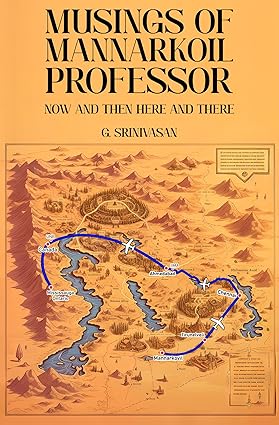
Musings of Mannarkoil Professor is a delightful collection of autobiographical essays by G. Srinivasan, a retired academic who traces his journey from a temple village in Tamil Nadu to a fulfilling professional life in Canada. The book skips across time and place with warmth, humor, and surprising insight, offering personal tales that touch on family, education, cultural identity, and the everyday absurdities of life. From playful musings on spelling and name pronunciation to deeply rooted reflections on migration and belonging, Srinivasan stitches together a life story that feels both intimate and quietly epic.
Reading this book felt like chatting with a wise, well-traveled friend who always has something interesting to say. The author’s recounting of being mistakenly addressed as everything from “Spinivasan” to “Scinivasan,” a result of bureaucratic misinterpretations of South Indian naming conventions, was both humorous and revealing. These anecdotes not only elicited genuine laughter but also prompted reflection on how names encapsulate identity, geography, personal history, and the enduring influence of colonial languages. Particularly memorable was his wry response to those inquiring about the pronunciation of his name: “Please don’t. I am alive.” It is uncommon to encounter a writer who so seamlessly blends self-deprecating wit with insightful commentary.
The childhood recollections are rendered with a poignant nostalgia that remains measured and never overly sentimental. The vividness of his descriptions evokes a tactile sense of the era; one can almost feel the cool surface of a slate or hear the distinctive tickticki of the itinerant barber’s clippers. His attention to detail, whether it is feeding pencil shavings to a peacock feather or applying ivy gourd leaves to a slate for their supposed medicinal properties, imbues everyday moments with remarkable vitality. These memories are layered with emotional nuance, effortlessly shifting the reader from quiet amusement to unexpected poignancy. His account of his mother calmly examining a cracked slate and pronouncing it fit for another year of use encapsulates both the affectionate pragmatism and quiet discipline that characterize life in a large, traditional Indian household.
What stood out most to me was how the author seamlessly connects the dots between the personal and the cultural, especially in the later chapters. His story about selling used notebooks to sweet vendors and then getting those same pages back as food wrappers was not just funny, it was such a vivid snapshot of frugality, circular economy, and childhood ingenuity in small-town India. An intimate knowledge of Tamil Nadu is by no means a prerequisite to appreciating his narrative. His storytelling possesses a rare generosity, inviting and inclusive, it resonates across cultural boundaries.
Musings of Mannarkoil Professor is a lovely, gently funny, and surprisingly profound read. It’s perfect for anyone who enjoys memoirs, especially those filled with culture, wit, and old-school charm. If you’ve ever migrated, struggled to explain your name, or just reminisced about the weird tools of your schooldays, this book is for you. I’d especially recommend it to diaspora readers and South Asians of all ages. Anyone with an appreciation for well-crafted narratives imbued with warmth and humor will find much to admire in this work. Though now retired, the professor’s storytelling remains as compelling and incisive as ever.
Pages: 161 | ASIN : B0F757C98J
Sand, Grit and Dangerous Supply Missions-The Unsung Civilian Heroes of the Iraq War

Keith Richard’s Sand, Grit and Dangerous Supply Missions offers a vivid and personal account of civilian logistics operations during the Iraq War, told from the perspective of someone who lived it firsthand. The book follows Richard’s unexpected journey from a seasoned logistics executive in the U.S. to leading one of the largest civilian military support efforts in a war zone. Through stories packed with emotion, hardship, and bureaucratic chaos, he lifts the curtain on the thousands of unsung civilian workers. Many of them are truck drivers who put their lives on the line without a uniform or a weapon. It’s part memoir, part tribute, and part exposé of how civilian contractors played an essential but invisible role in modern warfare.
I found the writing to be raw, honest, and sometimes unpolished, but in a way that works. Richard doesn’t try to sound like a polished author. He writes the way he talks, which makes the whole thing feel personal, like a friend telling you a war story over coffee. Some chapters hit hard, especially the ones where lives are lost or where Richard grapples with the emotional toll of being away from his family. But just as powerful are the quiet moments: awkward airport layovers, cigarette breaks with skeptical soldiers, dusty meetings in sweltering trailers. Those little things made the story feel real. The voice is genuine and heartfelt, though sometimes a bit repetitive or tangential. But I didn’t mind. It gave the story a rhythm that felt true to the chaos he was living through.
What I liked most were the ideas beneath the surface. This book isn’t just about logistics or war. It’s about leadership, identity, and purpose. Richard steps into a role that he never could’ve fully prepared for, and instead of folding, he adapts. He leads through grit and connection, not ego. That said, there were moments when I wished he pushed harder on the system itself. The bureaucracy and mismanagement he described were shocking. Maybe that’s loyalty, maybe it’s diplomacy. Either way, the book raises important questions about how we treat the civilians who support military efforts and whether we even acknowledge them at all.
I’d recommend this book to anyone interested in military history, leadership, or stories of resilience in the face of overwhelming odds. It’s especially compelling for those who’ve worked in logistics or operations, since it highlights a side of war that’s rarely talked about but absolutely vital. It’s a gritty, heartfelt memoir that gives voice to the everyday heroes who get left out of the headlines.
Pages: 150 | ASIN : B0F91X5ZYD
Becoming a Good Ancestor
In Becoming a Good Ancestor, Alexandra Asseily blends personal storytelling, spiritual insight, and lived experience into a series of heartfelt reflections on how to live well and leave a legacy rooted in love, forgiveness, and awareness. Through a collection of short chapters, some philosophical, some practical, many deeply emotional, she invites readers to examine the scars of their personal and collective pasts and transform them into something healing and generative. Drawing from her background in psychotherapy and decades of peace work in Lebanon, Asseily shares wisdom shaped by war, loss, family history, and reconciliation.
Reading this book felt like sitting down with a wise and kind grandmother who’s seen a lot, made peace with most of it, and wants you to avoid her mistakes. The writing is soft and slow, in the best way. It meanders sometimes, but never aimlessly. I was moved by how openly Asseily talked about pain, especially the inherited kind. Her stories about her grandmother’s coldness or her uncle’s death in war weren’t shared for drama, they were shared to show how these unresolved hurts can ripple through generations. What stayed with me most was her idea of the “unquiet dead” and how healing isn’t just for the living. The idea that we carry unfinished business from those who came before us is heavy, but she makes it feel hopeful.
The stories she tells are powerful, but her writing style tends to cushion everything in warmth. This is probably intentional as she’s modeling compassion and healing. That said, when she’s blunt, it hits hard. Her reflections on hate, envy, and guilt were especially clear-eyed and honest. I also appreciated that she didn’t try to sound “academic” even though she’s clearly educated. She just tells it how she’s lived it.
I’d recommend this book to anyone feeling stuck, weighed down by the past, or wondering how to make peace with where they come from. It’s not a “how-to” guide, and it’s not trying to be one. It’s a companion, something to read in quiet moments and return to over time. It’ll speak most deeply to people who are looking inward or trying to understand what healing actually means, especially in a world that keeps repeating old mistakes. If you’re ready to do some soul work, not with checklists but with stories, this is a lovely place to start.
Pages: 81 | ASIN : B0DW4BDJQZ



 LITERARY TITAN