Blog Archives
Inhuman Intentions
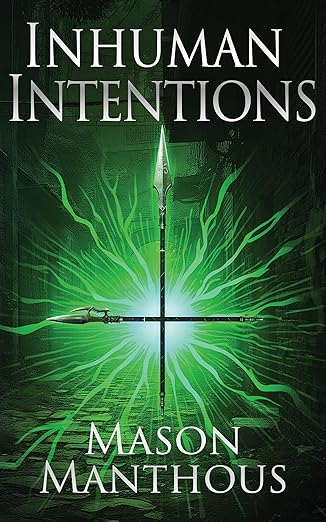

The story follows Aaron White, a nephilim captain who leads an elite unit, S-0, across the hostile frontiers where monsters called nightmares roam and kill without mercy. It begins with a tense hunt in the wastes and quickly escalates into battles in ruined towns, desperate clashes with abominations, and the pursuit of Silas, a treacherous vampire who revels in carnage. Beneath the action, the book wrestles with questions of humanity, loyalty, and survival in a world where the line between man and monster is paper-thin.
The writing is sharp, violent, and unflinching. The creatures are described in grotesque detail, and the combat scenes are fast and vivid. At times, I found myself pausing, just to breathe after the chaos on the page. It’s rare for a book to push me into that kind of rhythm. The prose leaned into the gothic, almost theatrical at times, and it made the atmosphere all the more vivid and unforgettable.
What really worked was Aaron himself. He is powerful yet burdened, a man feared for what he is and respected for what he does. His struggle with identity gave weight to the story, and his exchanges with Durham and Dalton often made me smile, grim as they were. The people they saved, or failed to, gave the book a relatable core. The relentless pace kept the tension high, and the constant push from one storm to the next made the world feel dangerous and alive.
Inhuman Intentions is for readers who want dark fantasy that does not hold back, who enjoy worlds where morality is murky and survival is fragile. If you like stories with squads of hardened soldiers, grotesque monsters, and heroes who are not quite human, this book will grip you and not let go.
Pages: 232 | ASIN : B0FLZ2987N

The Coldmoon Cafe


The Coldmoon Café is a strange and beautiful book. It’s part gothic fairytale, part fever dream, and part late-night forum thread from the ‘90s. The story follows a rotating cast of mourners, monsters, and misfits who stumble into a mysterious café that only seems to exist for the broken. There’s no central plot in the usual sense. Instead, it’s a collage of scenes, slow-burning conversations, poetic memories, and surreal moments of magic and grief, set against a backdrop of found family, old rites, and quiet hunger. The café, always watching, becomes more than a place. It’s a mood, a threshold, a ritual. And the people who gather there aren’t just characters. They’re ghosts of the internet age, wrapped in myth and melancholy.
The prose is lyrical, atmospheric, and at times so intimate it feels like eavesdropping. It drifts between styles like journal entries, script-like dialogue, and immersive third-person. What surprised me most was how emotional it got. Not loud, not dramatic. Just a steady ache. Like someone humming an old lullaby at the edge of a dream. The author manages to make the supernatural feel deeply human. There are vampires, shifters, witches, and magical scars, but what resonates the most are the quiet admissions of grief, of guilt, of wanting to matter to someone. Some parts made me tear up without warning.
The pacing is uneven, I think on purpose. Some chapters are full of action, others are just two people talking in a room for pages. There’s no traditional story arc, no tidy resolutions. And it leans heavily into its origin as a stitched-together roleplay with references, fragmented lore, insider nods that could leave some readers a little adrift. But for me, that was part of the magic. It feels like a digital séance. A love letter to forgotten usernames and forum ghosts who made stories when no one was watching. There’s a strange honesty in that. A kind of myth born out of message boards and memory.
I’d recommend Coldmoon Café to anyone who’s ever felt like a liminal creature. Folks who grew up online, who found solace in dark fantasy, who know what it’s like to carry sadness in your bones but still laugh with your friends at 3 a.m. It’s for people who miss LiveJournal, who remember the beauty of broken syntax and late-night confessions. This isn’t a book you read fast. It’s one you sit with. Maybe while it’s raining. Maybe while you’re a little heartbroken. Maybe while you’re ready to believe in something weird and beautiful again.
Pages: 583 | ASIN : B0FGW3YTJR
Multiverse Mayhem

Multiverse Mayhem, the third installment in Aurora M. Winter’s “Magic, Mystery and the Multiverse” series, picks up right where the chaos of book two left off. Ana Zest, the sharp-witted and surprisingly courageous teen heroine, faces down the Crimson Censor, a villain as stylish as she is brutal, in a fiery, magic-fueled standoff that propels Ana and her friends on a desperate quest across fantastical realms. From spell-splintered forests to dwarven strongholds, Ana grapples with betrayal, trauma, and the aching weight of responsibility, all while missing her tongue, her brother, and any semblance of a normal life. The multiverse is at stake, and the only things standing in the way of destruction are a talking dog, a bag of enchanted dust, and the pure grit of a girl who just wants her brother back.
I was charmed and unnerved by the writing in equal measure. The prose flips between whimsical and dark without warning, which makes the tone delightfully unpredictable. One moment, you’re giggling at a sass-tossing talking dog, and the next, you’re gritting your teeth as Ana gets her tongue magically severed. The worldbuilding is rich and clever, though sometimes a bit dense. There were moments where I felt lost in the swirl of spells, tech, and shifting allegiances. Still, I never wanted to stop reading. The action scenes are tight, the banter is sharp, and Winter’s pacing rarely falters. The emotional beats like Ana’s fear, her guilt, and her stubborn hope land beautifully. Even the villain, Crimson, is magnetic in her evil elegance.
What surprised me most was how invested I became in the book’s ideas about identity and choice. Hunter, the conflicted vampire-son of the Big Bad, is a standout. His scenes teeter on the edge of romantic tension and moral ruin, and I never knew whether to root for him or throw something. The story doesn’t sugarcoat the consequences of betrayal or the trauma of war. Ana’s struggle to reclaim her voice, literally and metaphorically, felt raw and real, even surrounded by magic hippogriffs and portal keys. There’s also a healthy distrust of authority that threads through everything, and the book doesn’t pretend that good and evil are always easy to spot. I liked that. It made the stakes feel more grounded, even when the characters were flying through dimensional portals.
Multiverse Mayhem is a chaotic, clever, and heartfelt ride through a universe that’s as magical as it is dangerous. I’d recommend this book to readers who love found families, high-stakes fantasy, and just the right amount of weird. Fans of Harry Potter, Artemis Fowl, or Percy Jackson will feel right at home, though they might be surprised at how much darker and more philosophical this series is willing to get. It’s a wild ride, but it’s got heart. And magic. And a dandy-lion that turns the tide of battle. What more could you want?
Pages: 370 | ASIN : B0DCKCGT7R

Knights of Orion Citadel – Illusion of Safety
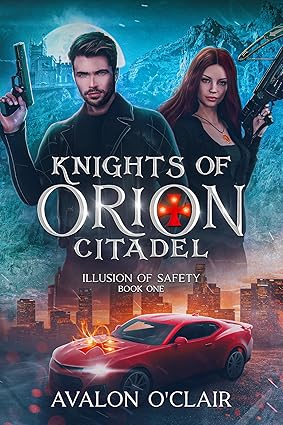
I found Illusion of Safety to be a whirlwind of a story. We follow Emma, a young woman whose world is turned upside down when she witnesses the murder of her stepfather. This event sets off a chain reaction, leading her to cross paths with Chase and Ben Kincaid, modern-day Templar Knights. They save her from a vampire ambush, and from there, the story accelerates. We learn that Emma is a magnet for all things monstrous due to a curse, and to complicate matters, she and Chase are soulmates, a rare and powerful connection. The story is a frantic race for survival, a quest to break the curse, and a battle against the forces of evil. It’s a story packed with action, supernatural beings, and a hint of romance.
I was completely hooked by the writing. Avalon O’Clair has a knack for creating a sense of urgency. The short, punchy sentences in the action sequences had my heart racing. The dialogue is snappy and modern, which makes the characters feel real and relatable. It’s clear that a lot of heart and soul went into crafting this novel.
The ideas in the book are a fun mix of old and new. The concept of Templar Knights in the 21st century, fighting ancient secret societies and supernatural creatures, is a popular one, but O’Clair manages to make it feel fresh. I was particularly drawn to the idea of soulmates, which added a layer of depth and emotion to the story. The connection between Emma and Chase felt palpable, and I found myself rooting for them from the start. The curse that plagues Emma is a fascinating plot device, creating a constant sense of danger and forcing her to be strong and resilient. I was impressed by how the author wove together these different elements to create a story that is both exciting and emotionally engaging.
Illusion of Safety is a thrilling ride from start to finish. It’s a book that will keep you on the edge of your seat, with its fast-paced action, intriguing mythology, and a touch of romance. I would highly recommend this book to anyone who enjoys urban fantasy, paranormal romance, or action-packed adventures. If you’re a fan of stories with strong heroines, ancient conspiracies, and a healthy dose of the supernatural, then this is the book for you.
Pages: 672 | ASIN : B0CH5T9YKK
Out of Body: Straight to Hell

Out of Body: Straight to Hell is a wild, genre-defying ride that blends psychological drama, speculative science, supernatural horror, and heartfelt coming-of-age storytelling. The novel follows Harley Baker, a paralyzed young man who, after a childhood trauma tied to a dream-world soulmate and a very real fall from a second-story window, sets off on a determined, mind-bending journey to rediscover the truth of those dreams. Armed with government-declassified astral projection guides, banned hallucinogens, and a stubborn belief in the soul’s reality, Harley risks everything to find Stephanie—a woman who may or may not exist. Along the way, he tangles with literal demons, the CIA, and the biggest enemy of all: his own doubt.
I didn’t expect to get sucker-punched by emotion so often in a story that features Satan as a literal antagonist. But Chater does something special here. His writing has this knack for yanking you through a dozen moods in a single chapter. One minute, I’m laughing at Harley’s razor-sharp sarcasm and tragically millennial monologues, and the next, I’m stunned into silence by the sincerity of a line about loneliness or parental love. Chater’s voice is sharp, raw, never too polished, and it suits Harley’s inner chaos perfectly. Some of the scenes, especially those involving the black-eyed dream demon or Harley’s aching memories of his dog Barney, hit harder than I expected. And while the dialogue flirts with melodrama at times, it never crosses into the unbelievable. Harley’s voice is exactly what it needs to be: brutally honest, emotionally bruised, and relatable.
Now, the ideas in this book? They’re bonkers—in the best way. We’re talking government-funded psychic training, astral projection as espionage, spirit dogs quoting hip-hop, and an actual demon with a libido and a vengeance. And yet… it works. Chater doesn’t dump exposition on your head. He lets you piece together the crazy through Harley’s obsession. There’s a surprising amount of research under the hood—Gateway tapes, Monroe Institute lore, CIA documents—and it’s all used not to impress, but to deepen Harley’s desperate search for truth. The line between madness and metaphysics is always razor thin, and Chater walks it like a tightrope artist. Sure, some plot turns stretch credibility, but so does reality when you’re twenty-two, emotionally shattered, and chasing your dream girl through multiple dimensions. I bought in—and I stayed in.
If you’ve ever wondered what would happen if The OA made out with Stranger Things while reading a Monroe Institute report high on DMT, this book is your answer. It’s heartfelt sci-fi for the spiritual misfit, horror for the sensitive soul, and a love story written in the language of astral projection, regret, and raw hope. I’d recommend this to readers who crave deep weirdness with emotional bite—fans of Chuck Palahniuk, Neil Gaiman, or anyone who’s gone down a rabbit hole at 2 a.m. and come out wondering if any of it was real.
Pages: 216 | ASIN : B0F4ZJ8WVG
A Track of Forgiveness

Snow: Cursed begins in a traditional way, but then takes a turn that defies traditional fantasy storytelling. What was your approach to writing the story?
My approach was definitely to “defy tradition,” and that trope of “good guy versus bad guy” with the good guy always winning. I wanted to express the fact that we—as humans—are all different, and that good and evil are not two absolutes, but that there’s a blurred line in between. I really just wanted to turn the whole idea of a fairytale on its head so I could expose that truth while unraveling that trope in the process. I tried to really show that in the prologue of Snow: Cursed, which is written in Snow’s first person as a sort of “looking back” type thing. In a way, I set out to make something entirely untraditional, to escape the black and white, and I believe I succeeded.
What are some things that you find interesting about the human condition that you think make for great fiction?
The human condition is so unique and can take lots of different turns which makes it stellar for fiction books. As humans, we have countless emotions that can be displayed in so many ways, and we get into lots of situations that are awesome to write about. Our reactions to things are very interesting and are fun to play with in fantasy because sometimes they can become warped by fictitious realities. Writing from perspectives other than my own sort of allowed me to place myself in their bodies and feel for what I, as the character, would do in that situation. I’ve done this with Snow more times than I can count. It’s so fascinating to me to put all those components into a character and to stir them up and spew them out sometimes.
What were some themes that were important for you to explore in this book?
There were a lot of themes that I wanted to explore throughout Snow: Cursed, primarily the fact that good and evil aren’t as black and white as the stories say. I really wanted to show off that morally gray area in my debut novel. Self-discovery, self-acceptance, forgiveness, and friendship are also really important parts of my book. Snow has to go on a journey to find herself, and to accept who she has become because of her knowledge of the curse. She sets herself on a track of forgiveness when Merlin refuses to go with her out into the world behind the wall. Forgiveness is something I think a lot of teens reading YA probably struggle with, so I wanted to delve into that quest. Snow’s friendships were also paramount in my mind when I was writing their interactions with each other, but especially with Merlin. The strong bond between the two characters is expressed during Merlin’s flashback in chapter twenty-four. Themes of loyalty and trust are explored through their relationship, sometimes both getting shattered in different situations. All of these are really important to me.
What is the next book that you are working on, and when can your fans expect it to be out?
I’ve finished writing book two of the Snow Saga, and I am currently revising it. It’s a continuation of Snow: Cursed that follows up on the cliffhanger ending, so readers will learn what happens to Snow, along with Marian and Merlin. New characters are introduced into the story, such as Gretel Charming, Jack Horner, and Mulan. The title of the second installment is Snow: Wanted. I’m also playing around with a few different series ideas to expand my writing interests a bit further.
Author Links: GoodReads | X (Twitter) | Facebook | Website | Amazon
On the eve of her fifteenth birthday, her father divulges a secret that her parents had kept from her since the very beginning. One that could ruin her life forever. The fact that she was cursed at birth by an evil sorceress who cast a spell that is nearly impossible to break.
Snow will find that the line between good and evil is not all that it is cut out to be. It is blurred, and it has faded from the black and white that it once was. Good is not always pure, and evil is not always wicked. Throughout her adventures, battles, and difficulties she quickly discovers that she might not be on the side that she thought she was on.
Will she succumb to the fate that was forced upon her or live to see another day? Will she find the truth or just encounter lies? Will she remain pure as snow, or will her conscience falter as the trials of her life wear on? Will she live happily ever after or have her future unjustly stolen from her grasp? The future is up to Snow.
Snow: Cursed
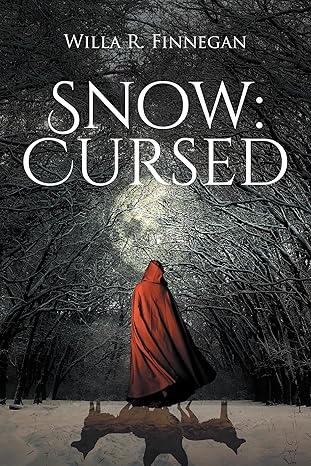
Snow: Cursed takes a classic fairytale and shatters it like glass underfoot. We start with a familiar image: Snow White, pale as snow, hair black as night. But instead of dwarves singing in the mines, we get blood, betrayal, and wolves with names like Big Bad and Dummy. This story spins out into something entirely new, grittier, darker, and painfully human. At its heart, it’s about identity and control. Who are you when the world decides you’re evil before you even take your first breath?
What stood out most to me was the prologue. Finnegan immediately immerses the reader in a morally ambiguous space, blurring the lines between good and evil. The opening passage reads like a blend of philosophical reflection and personal testimony. Statements such as “no one is truly good, and no one is truly evil” are particularly striking, establishing the thematic foundation for the rest of the novel. Rather than presenting a simple fantasy, the prologue invites deeper reflection on the assumptions we make about people and the lasting impact of the roles society assigns them.
Snow herself is fascinating. She starts out fragile and frightened, learning that her own father plans to burn her alive because of a curse. That scene involving Merlin and the journal was particularly impactful and emotionally resonant. When she finds out about her supposed destiny and how her father lied to her for fifteen years, it’s devastating. And then she breaks out of the castle, climbs the wall, and everything flips. There’s this moment where she takes down Big Bad, the alpha wolf, and suddenly she’s “Red Riding Hood,” drenched in blood, leading a pack. That moment was striking, intense, and deeply affecting. It vividly conveyed her transformation, which felt palpable through the page.
While Finnegan’s writing occasionally leans toward directness in the dialogue, it’s balanced by a refreshingly original voice that brings a distinctive energy to the narrative. It’s dramatic and fast-paced, but it never takes itself too seriously, and I appreciated that. There’s a kind of campy magic in how she blends fairytale with modern sarcasm. When Snow throws a dagger near Dummy’s neck to shut everyone up, it’s brutal and hilarious. That blend of horror and humor works surprisingly well. The side characters are uniquely compelling, with Midnight the wolf standing out in particular. Her character arc is both surprising and dramatic, culminating in a plot twist that is as unexpected as it is effective.
The ideas in this book stick with you. Finnegan messes with traditional fantasy in a way that made me uncomfortable, but in a good way. There’s a recurring theme of rewriting your story instead of letting it be written for you. Snow literally goes from princess to fugitive to alpha to maybe something even darker. And that evolving identity is central to the whole thing. It’s not always clean or elegant, but it’s full of grit and soul.
Snow: Cursed is a fairytale for anyone who’s tired of black-and-white stories. It’s for readers who like a little bite with their magic. Readers are likely to find this story thoroughly engaging. It is intense, emotionally charged, and at times brutal, yet undeniably compelling. I found it difficult to put down.
Pages: 260 | ASIN : B0DS2SVPZS
Rage (The Lit Series Book 3)

Rage is a relentless, mind-bending thriller drenched in supernatural horror. The third book in The Lit Series, it drops us into the chaos of Sam Morris, a man shackled by both his past and the terrifying entities clawing at his mind. The story grips from page one as Sam, bloodstained and half-conscious, sits in police custody, interrogated for a crime steeped in mystery. What follows is a disturbing descent into an eerie world where reality and nightmare bleed together. As Sam’s fragile grip on sanity crumbles, the novel introduces Ellie and Josh—two figures tangled in the same supernatural horror—desperately navigating an existence where monstrous forces lurk in the shadows, waiting to strike.
Mark Anthony’s writing style is an experience in itself. It’s raw, visceral, and utterly immersive. The way he captures Sam’s unraveling psyche in the opening scene is haunting. Sam isn’t just confused or traumatized he’s drowning in a thick fog of something unexplainable. The story thrives in these moments, where reality feels slippery, and every shadow threatens to come alive. Anthony’s prose flickers between poetic and grotesque, making the horror feel as much psychological as it is physical. It’s messy, unpredictable, and wildly effective.
What truly sets Rage apart is its unsettling atmosphere. From the interrogation room to the rain-drenched streets, everything feels oppressively claustrophobic. The scene where Ellie and Josh, exhausted and terrified, realize they are being stalked by a presence they cannot see is particularly chilling. The horror isn’t just in the grotesque creatures that lurk in the dark; it’s in the dread that builds before they strike. The tension never lets up, and Anthony’s knack for drawing out suspense leaves the reader in a constant state of unease.
Rage doesn’t shy away from violence, and when things go bad, they go bad fast. The moment the Dark Child enters the police station, reality collapses into chaos. One officer, blindly grappling with an incomprehensible horror, has his face torn apart before he can even scream. The scene is savage and cinematic, a blood-soaked spectacle of terror. But Anthony balances brutality with a sense of sorrow, this isn’t just horror for horror’s sake. The violence means something, and the characters are acutely aware that every drop of blood spilled has consequences.
By the time the dust settles, Rage leaves a mark. It’s intense, deeply unsettling, and lingers long after the last page. This is a book for readers who crave horror that gets under their skin. If you like your thrillers laced with paranoia, supernatural terror, and gut-wrenching suspense, Rage is for you.
Pages: 545 | ASIN : B0DRKP5GMT



 LITERARY TITAN