Blog Archives
Delve Deeper Into Relationships
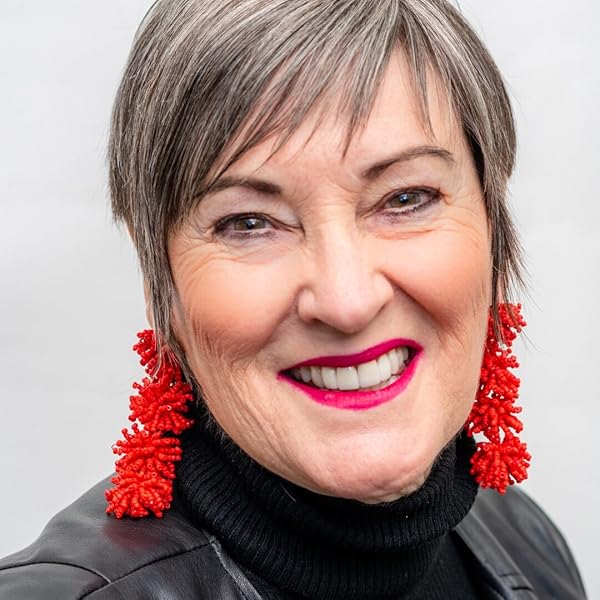
Growing Up, Rocky is a poignant journey through your childhood in rural Australia, revealing the profound impact of family dynamics and life’s tumultuous waves on shaping one’s character and destiny. Why was this an important book for you to write?
I wanted to show the backstory and intimate behind-the-scenes of a prominent, public family. You cannot judge others until you know their full story.
How did your family’s missionary background and rural Australia influence your perspective on life and relationships?
Watching my parents give their time, energy and love to others was inspirational. Later, even though I knew we were loved, I also realised that our family always came second, as an afterthought.
Looking back, what do you believe is the most significant lesson you learned from the challenges and experiences of your youth?
I learned to back myself, and that anything was achievable. I had two hands and a brain, the same as everyone else. How hard can it be?
What do you hope is one thing readers take away from your story?
To believe in yourself, be resilient and follow your dream. Delve deeper into relationships with your family. Things are not always as they seem. Perhaps there were reasons for neglect, as my parents also struggled with their own demons of depression and loneliness.
Author Links: GoodReads | Instagram | Facebook | Website | Amazon
This is the true story of the youngest daughter of a Sydney couple living at Lockhart River Mission for 9 years, raising their children within an Aboriginal village of five tribes.
Conceived on Cape York, and finally moving to Rockhampton as a young child. A family tragedy in 1971 with the shocking death of brother Chris, two days before a family wedding, sees the upheaval of family life.
Patty feels abandoned and has to educate and raise herself as well as learn to iron a cassock!
Patty brings herself up with her distracted parents, marries young and then flees a violent marriage. Patty dreamed of a bigger life than what was offered in her sleepy country town. Life became a series of ground-breaking adventures, and we follow her turbulent relationships and jobs, learning how to survive.
Share her adventures in this gentle, humorous and insightful early memoir.
Memoirs of Successful Women


Memoirs of Successful Women, compiled by Annie Gibbins, is an engaging anthology that resonates with the contemporary theme of female empowerment. This collection presents twelve chapters, each a unique memoir, where women from various professional realms share their journeys toward success. These narratives delve into their effective strategies, notable mistakes, and the innovative approaches that catapulted their careers. The book effectively highlights the transformative moments that shape a woman’s transition from an idealist to a trailblazing figure in the business landscape.
Each story in this compilation stands out for its individual perspective on success, making the book a versatile resource. It caters to a broad audience, from young professionals seeking guidance to mid-career individuals in need of inspiration and those intrigued by the varied success stories of women globally. The strength of this compilation lies in its diverse representation, offering relatable and empowering tales for readers from all backgrounds. The memoirs encompass an array of professions and challenges, underscoring the message that success is not tied to a singular path but is accessible through perseverance, adaptability, and continuous learning. A personal highlight for me was Swati Tyagi’s memoir, which elegantly brings to the forefront the learnings from everyday challenges, reminding us that what may seem mundane to some can be a significant hurdle for others. Like the others, her story offers valuable insights from a unique vantage point.
Memoirs of Successful Women stands as a testament to women’s enduring spirit, resilience, and tenacity worldwide. It celebrates their achievements and serves as an inspirational guidebook for anyone aspiring to navigate the complexities of personal and professional success.
Pages: 142 | ASIN : B0CLL26Z9N

The Past is the Past

Eleonora and Joseph: Passion, Tragedy, and Revolution in the Age of Enlightenment follows an aristocratic woman who becomes an advocate for liberty and plays an important role in forming the Neapolitan Republic. What was the inspiration for the setup of your story?
Good question, thank you! Many years ago, one sunny Saturday morning, I was walking in the streets of Naples and found in the Spanish Quarter a school that bore the name of Eleonora Fonseca Pimentel. I was surprised: this was a Portuguese name, not Italian. I had never heard of Eleonora; she wasn’t well known in Portugal as I was growing up. So, I looked up her name. Later, I read The Volcano Lover by Susan Sontag; the novel takes place in Naples during the time of Eleonora’s life. At the end of the book Sontag has several monologues and one of them is by Eleonora. I enjoyed Sontag’s book but didn’t like Eleonora’s voice: it didn’t sound quite right to me. I thought I could do a better job with her literary voice, after all I am Portuguese like Eleonora. I hope I don’t sound presumptuous, but this is exactly how I felt. So, I decided to write the novel. It took me years to complete the job.
Your novel is rich with historical details that are not well-known to the average reader. What kind of research did you do for this novel to ensure you captured the essence of the story’s theme?
I am a very disciplined person, but writing a historical novel takes a huge amount of work. Huge! I also love history, and so, this combination of discipline and love for a given theme can be quiet rewarding. Moreover, I love the freedom of imagination that fiction allows me. For credibility’s sake, a historical novel needs to be both accurate and plausible. These are different issues. Accuracy has to do with knowing the period well enough not to make gross historical mistakes about events, dates and so on. Plausibility is about filling in the historical record in such a way that what we don’t know as an historical fact (or event), could indeed have occurred. Good historians share this approach with historical novelists: think of a book like Citizens by Simon Schama, a professor at Columbia University.
Therefore, you look at historical sources and go back and forth all the time about issues. Compare sources. Check again and again, look at information from different angles. Take notes, build private maps of many lives and historical facts. Then you create your own road map. If lucky, you get close to the truth. I wrote close to the truth – not the truth itself. That doesn’t exist and historians know this as well as historical novelists. That someone was born in such a such date is just a fact, but the truth of someone’s life is something very different. It requires digging up, examining that life in dept, looking at it from many different angles, with vision and perspective.
What was one scene in the novel that you felt captured the morals and message you were trying to deliver to readers?
Another good question! We can’t look at the past as if the events we are describing took place at the time we are writing. The past is the past, no way around it.
An example comes to mind, and it has to do with Jefferson’s Monticello.
We rightfully condemn slavery today but, as horrible as it was, it was an accepted practice for centuries. I read recently a great book, Wicked Flesh by Jessica Marie Johnson. Descriptions like those of the Middle Passage are gut-wrenching. But the book also shows how people in captivity were also able to take some advantage of the conditions they were in.
I needed to be very thoughtful when describing Joseph Correia da Serra’s views of Monticello when he and Jefferson go for walks there. Jefferson was a complex man, full of contradictions. To such an extent that when he died, his family had to sell his slaves to pay a few of his debts. And later, Monticello itself had to be sold, too.
This is, somehow, beyond belief, but it did happen. There were, however, much crueler slave owners in Virginia than Thomas Jefferson. Nevertheless, to say – as I read somewhere – that he raped Sally Hemings for a lifetime is a distortion of their lives. It represents a total lack of understand of the historical period. Slave owners did sleep with slaves, and the practice was much more generalized than one tends to believe. Reproachable? Yes, certainly, and also a crime in Virginia. But Sally Hemings did succeed in having her children freed when they grew up. She wasn’t sold either, she lived as a free woman in Charlottesville after Jefferson’s death.
So, the difficulty of this kind of analysis is to find the balance of a life, any life. In the past, as much as in the present. One only needs to consider one’s own life (one among many other lives, mind you!) to notice the challenges that ‘balance’ presents.
What is the next book that you are working on, and when will it be available?
I have just returned from Istanbul, where my next novel takes place. It’s another historical novel, the set-up is Constantinople in the late 18th century. I had a great time, and a dear Turkish friend helped me enormously, but I am dealing with an artist whose work is far greater than his extant oeuvres. That is not what I was hoping for…
The soul of a place is important, but the way it touches you as an author, that’s important too! I still need to figure out how to deal with my, somewhat, disappointment. How can I say this? I wanted a particular 18th-century garden to be still there – but it isn’t! Crazy, right? So, this is how it goes: you have to imagine a setting as accurately as you can, if your work is going to be any good. Again, you need to go back to the period you are dealing with and try to figure out how it could have been. I wanted clues to help me along the way with my writing, but I was left with very few, close to none.
I don’t really like to discuss what I am writing about; I will present the work when it is finished. Then, as now, Istanbul is a fascinating city, the true meeting of East and West. I love the set-up I chose. The city is grandiose, cosmopolitan, exotic, and adventurous. But I still have a lot of work ahead. If I work consistently, I might have the novel finished within a year.
Literary Titan, thank you so very much for this opportunity.
Author Links: GoodReads | Twitter | Facebook | Website
Eleonora and Joseph. Passion, Tragedy, and Revolution in the Age of Enlightenment. A Novel.

Eleonora and Joseph: Passion, Tragedy, and Revolution in the Age of Enlightenment by Julieta Almeida Rodrigues is a captivating debut novel that brings to life the stirring tale of Eleonora Fonseca Pimentel, a revolutionary and advocate of liberty in the 18th century. Her pivotal role in forming the Neapolitan Republic is a testament to her unwavering belief in equality and the power of education, even as she faced the dire consequences of opposing the ruling class.
Born into aristocracy, Eleonora’s early acclaim for her poetic genius and intellectual prowess sets the stage for a life less ordinary. Her heartrending love story with Joseph Correia de Serra—a young man from a humbler background, and her own journey through triumph and adversity—are poignantly chronicled in her memoirs, discovered posthumously in Thomas Jefferson’s library. Jefferson, an acquaintance of Joseph and a scholar of great repute, becomes the conduit through which Eleonora’s indelible impact is revealed.
The novel is a rich tale of young love’s exuberance and the complexities of human relationships, as seen in Joseph’s life choices, including his unexpected path to priesthood and the paradoxes that define his existence. Thomas Jefferson emerges as a beacon of intellect and kindness, while Eleonora herself is portrayed as a formidable and spirited force, her intellect and rebellious nature blazing against the backdrop of societal constraints. With its exquisite character development and compelling narrative, the book vividly portrays the social stratifications of the time, marked by class, religion, and economic divisions. The rich and elaborate dialogue complements the exceptional storytelling, showcasing the author’s deep dive into historical records to create an immersive and captivating experience.
For historical fiction enthusiasts, Eleonora and Joseph is a cornucopia of passion, tragedy, and the spirit of enlightenment. It’s a celebration of a remarkable woman whose legacy endures and a journey through a time that shaped the modern world. This novel is not just a read; it’s an encounter with history’s enduring echo.
Pages: 212 | ASIN : B08K3HGZYX
How Healers Heal
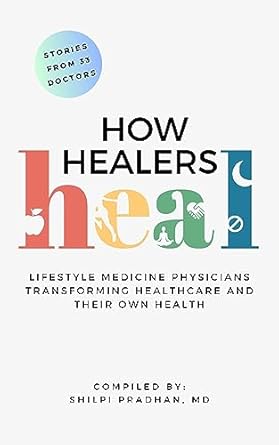
Health and wellness extend beyond the mere absence of illness; they encompass a holistic approach that delves into the physiological, emotional, and mental dimensions of well-being. In her enlightening book, Dr. Shilpi Pradhan takes readers on a journey through the six pillars of lifestyle medicine, interweaving her personal transformation narrative with a scientifically backed approach to achieving optimal health.
The book How Healers Heal is a compilation of various health and wellness professionals’ perspectives. The amalgamation of these expert opinions showcases the potential of positive lifestyle shifts in preventing, treating, and reversing chronic diseases. The overarching message underscores the paramount importance of lifestyle modifications, not just as a preference but as a potent instrument for healing and rejuvenation.
Written in an engaging and accessible style, the author blends personal anecdotes with the broader implications of adopting lifestyle medicine practices in healthcare settings and personal lives. This harmonious blend serves as both an educational resource and a source of inspiration, motivating readers to take proactive steps towards a healthier lifestyle. Each recommendation provided is deeply rooted in scientific evidence, further enriched by the authors’ genuine passion and conviction in the transformative power of lifestyle medicine. It’s evident that Dr. Shilpi Pradhan’s fervor for promoting wellness, previously seen in Goodbye, Dry Eye!, resonates throughout this work, mirrored by the contributions of her fellow authors.
How Healers Heal speaks to a diverse audience keen on understanding and implementing the principles of Lifestyle Medicine. It is an invaluable resource filled with evidence-based insights and actionable advice on enhancing well-being through informed lifestyle decisions. Given the growing trend towards proactive wellness over merely combatting ailments, this book is poised to be a go-to reference for many.
Engaging, credible, and impactful, How Healers Heal is more than just a read; it’s an invitation to transform. As readers delve into the captivating stories and expert insights, they’re left with a renewed motivation to integrate these invaluable lessons into their daily lives. The resounding takeaway is clear: embracing lifestyle medicine is not merely an option; it’s a transformative journey to holistic well-being.
Pages: 497 | ASIN : B0CCLLDCZM
Forget Me Not


Forget Me Not by Dr. Aparna Baruah is a contemplative exploration into the intricacies of human relationships, spiritual growth, and the quest for self-understanding. Set predominantly in India, the narrative weaves stories of friendship, familial bonds, the resonance of grief, the impact of mentors, and the zest for life. The story revolves around characters like Tina, Debu, the narrator, Mrs. Fernandez, and the narrator’s resilient mother, Ma. Throughout the book, readers experience the characters’ connections, losses, and growth.
Dr. Baruah seamlessly weaves together a tapestry of human experiences in this novel. One of the book’s most commendable aspects is its ability to touch on profound topics such as death, love, and empathy without becoming overwhelmingly somber. The chapters dealing with the deepening bond of friendships, like in ‘The Bond Beyond’, provides readers with a warm sense of familiarity. Similarly, ‘Teachers in Disguise’ and ‘Zest for Life’ are exceptional in their depth, highlighting the transformative power of kindness and the beauty of resilience.
The book presents a rich tapestry of emotions and insights while providing intricate details that contribute to its depth. Readers will find the variety of characters and themes expansive, as the book encompasses a wide range of human experiences.
The settings, ranging from Kolkata’s urban landscape to the serene Shillong Flower Festival, add a rich backdrop to the tales. The characters, each with their unique struggles and strengths, become relatable figures, making the reader invested in their stories. Themes of self-compassion, enduring friendships, and the essence of life and death are delicately interlaced with a narrative style that resonates deeply.
Forget Me Not is a touching exploration of life’s myriad facets. While it might benefit from a tighter narrative, it remains a heartfelt tribute to the human spirit.
Pages: 126 | ASIN : B0BZ9NBGV5
“The Mother of Hubble”

Her Eyes Were On the Stars: Nancy Grace Roman, “Mother of Hubble” Space Telescope, tells the story of how one girl’s dream of becoming an astronomer turned into a reality. What inspired you to tell her story?
At the time, I was looking for subjects to write about. I was hearing a lot about STEM and biographies for women in science, so maybe it was prophetic when I was watching an episode of NOVA on PBS about the Hubble Telescope and “the Mother of Hubble” when the name of Nancy Grace Roman was mentioned, and I thought she might be an interesting person to write about. She was certainly someone I had never heard of before and I was willing to bet others hadn’t either. I realized how remarkable she was after I started some preliminary research. I was fortunate to find her email on NASA’s website and to receive a quick response from her saying she would be interested in doing a telephone interview with me. From there, there was no turning back!
Your background in Engineering and having an MLIS in children’s literature gives you a unique perspective on writing nonfiction children’s books. What is the most rewarding part of writing books for children to you?
For me, it is that feeling I want to recreate that I had as a child reading really good books, magical books, or those that gave me a glimpse into someone else’s life. I’ve always had an interest in science, so maybe I am more interested in writing about those subjects. But I am also a very creative person, and my interest in architecture and interior design goes back to my creativity. So even though I love writing nonfiction, I also love making stories up, too.
What were some educational aspects that were important for you to include in this children’s book?
One thing I wanted to convey was how important first-hand accounts are to research. Primary sources are essential, and that was why I wanted so badly to interview Dr. Nancy Grace Roman in person. I wanted her account of events. I always tell kids that research can be like a game of telephone. The original message gets tangled the more times it gets told. So, one thing I really wanted to include in this book were the actual quotes Dr. Roman said to me. Also, I included all the other sources I used in the bibliography in the back that can be checked against my work. We all need to remember that just because someone says something, it doesn’t mean it’s true. Check your facts!
Will this book be the start of a series? I would love to see more books about other women in science, or are you working on a different story?
This book is a stand-alone, with no plans for more in a series. I do have other books, both nonfiction and fiction. One nonfiction book I am very proud of is Octopus Capers that is still unpublished, but with my agent, Stephen Fraser of Jennifer DeChiara Literary Agency. He also has a middle-grade fantasy called The Changeling. Currently, I am working on a Halloween picture book called Every Creature Eats about a witch’s party where she is pushing lots of “treats” on her guests. It’s the kind of book I would’ve loved to have had as a Children’s Librarian at the library, where I would read a story to the kids, and then we’d have an activity related to the book, in this case, a snack.
Author Links: GoodReads | Twitter | Facebook | Website | Amazon
As a child, Nancy Grace Roman moved from home to home. The only constant? The nighttime sky. She loved the stars and knew from a young age that she wanted to become an astronomer. But could she, during a time when many women weren’t even allowed into colleges? Nancy Grace found a way to overcome each barrier placed before her. Her persistence paid off when she was named the first female executive as Chief of Astronomy at the newly created National Aeronautics and Space Administration, or NASA, in 1959. It was here she faced her biggest challenge to date.
Astronomers across the country wanted a telescope that would orbit in space above the Earth’s atmosphere allowing for the clearest view of the stars a telescope had ever seen. The problem? At this early stage of the United States space program, engineers hadn’t even successfully launched a rocket. How would Nancy Grace ever get a telescope into space? HER EYES WERE ON THE STARS introduces readers to a female scientist in the field of astronomy who will be forever affectionately known as “Mother of Hubble.”
“…is often forgotten by our younger generation of astronomers who make their careers by using the Hubble Space Telescope. Regretfully, history has forgotten a lot in today’s Internet age, but it was Nancy Grace Roman in the old days before the Internet and before Google and e-mail and all that stuff, who really helped to sell the Hubble Space Telescope, organize the astronomers, who eventually convinced Congress to fund it.” – Ed Weiler, former NASA Chief Scientist for Hubble
The Finer Things Club: The Summertime Chronicles of a Yellowstone Housekeeping Employee
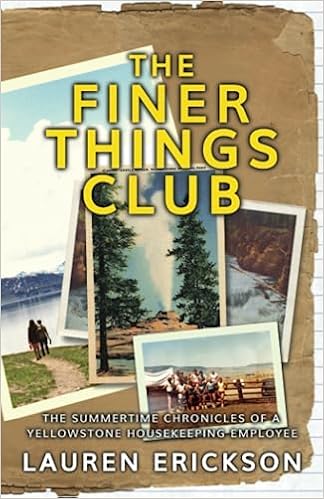
In The Finer Things Club, Lauren Erickson invites readers on an exploration of courage, determination, and self-discovery as she recounts her travels over 1300 miles to face fears and challenges in the pristine wilds of Yellowstone Park. Inspired by her father’s similar experience three decades earlier, Erickson chronicles her three-month tenure working as a maid in this breathtaking location, stepping out of her comfort zone and embracing the unknown.
Throughout the pages, Erickson delves into her quest to understand previously unexplored aspects of her life – such as freedom, the autonomy to make personal decisions, and the courage to move forward. Surrounded by the extraordinary natural beauty of Yellowstone, she confronts the self-doubt that once convinced her of her inadequacy or compelled her to conform to others’ expectations.
Spanning two contrasting seasons in Yellowstone, the book eloquently narrates Erickson’s growth through new beginnings and uncertainties. Readers will find themselves immersed in vivid descriptions of her daily routine as a housekeeper, the enriching experiences of hikes, stargazing, and campfire conversations, as well as the cultivation of meaningful friendships. Equally poignant are Erickson’s reflections upon returning home, where she grapples with the disparity between her transformed self and the life she once knew.
The Finer Things Club serves as an inspiring reminder that the courage to step beyond our comfort zones can lead to the most remarkable adventures, revealing our true selves in the process. This beautifully written account is not only a must-read for nature enthusiasts but also for anyone seeking to embrace life’s challenges and discover their inner strength. I wholeheartedly recommend this book.
Pages: 328 | ASIN : B0C4X6XGZR



 LITERARY TITAN