Blog Archives
Your Road to Yes!: How to Build Trust in Yourself and with Others
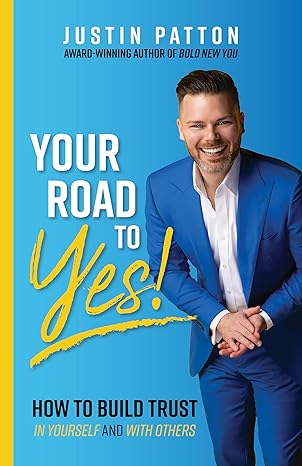

Your Road to Yes! is a heartfelt and gutsy exploration of what it really takes to build trust—within yourself and with others. This book isn’t just about professional growth; it’s about personal healing too. Author Justin Patton breaks down trust into its moving parts, then rebuilds it with fierce honesty, storytelling, and practical advice. From everyday situations to life-changing revelations, he guides readers through what trust looks like in action, why it fails, and how to rebuild it. If Leadership Presence was about how to show up, Your Road to Yes! is about why showing up matters in the first place.
I liked how deeply personal this book is. Patton doesn’t just teach trust—he lays bare his own journey. In the first chapter, he shares a story about crashing his bike as a kid and how his tough Air Force dad gently carried him home and bandaged his toe. That moment, he writes, was his first real memory of trust. It got me thinking about those rare times in life when someone showed up for me with zero judgment. It’s this emotional openness that gives the book its power. Another example that resonated with me was the anecdote about his mom—how she never gave up on their relationship, even when things weren’t perfect. It made me reflect on how many times I’ve let silence kill trust in my own life because I didn’t want to rock the boat. Patton flips that idea. He says silence is our biggest threat, and that message echoed throughout the whole book like a wake-up call.
From a practical standpoint, this book is a toolbox. Patton outlines what erodes trust (like emotional exhaustion and fear-based leadership), and how to repair it with consistent action, transparency, and tact. I really appreciated how he framed trust as something both given from the heart and earned through the head. That balance stuck with me. He’s not shy about calling out performative leadership or the culture of busyness that drowns real connection. He talks about managers needing to stop hiding behind productivity metrics and actually invest in their people. I especially loved the chapter on trust being your “biggest competitive advantage.” It’s not just a nice idea—he backs it up with research and real-world coaching stories. And yet, it’s written in such a warm, down-to-earth tone.
Your Road to Yes! is equal parts pep talk and soul check. It’s a tough but loving reminder that trust doesn’t just happen—it’s built moment by moment, conversation by conversation. If you’ve ever felt like you were walking on eggshells in a relationship, or like your voice didn’t matter at work, this book will crack something open for you. I’d recommend it for leaders, parents, partners—honestly, anyone who wants deeper, healthier relationships. It’s also perfect for folks feeling stuck or burned out, looking for a more grounded way to lead and live.
Pages: 164 | ASIN : B0B4PFGPJD

The Win-Win Workplace: How Thriving Employees Drive Bottom-Line Success

Angela Jackson’s The Win-Win Workplace is an insightful exploration of what it takes to balance employee well-being with organizational success. Tackling the complexities of modern workplaces, Jackson redefines the employer-employee dynamic, presenting a blueprint for creating thriving, collaborative environments. Her work not only addresses the challenges of today’s workforce but also provides actionable strategies designed to foster mutual growth and sustainable success.
The book dives deep into core areas such as operationalizing employee feedback, empowering middle management, skills-based hiring, and long-term talent development. It emphasizes workplace culture as a values-driven ecosystem, highlighting the necessity of inclusivity and adaptability in a diverse and ever-evolving work environment. With a focus on data-driven decision-making and scalability, Jackson offers readers a rich, meticulously researched guide for optimizing workplaces. Her strategies are both practical and deeply rooted in evidence, making this book a powerful resource for leaders and HR professionals alike.
Jackson’s methodical approach shines through in every chapter. She meticulously deconstructs organizational structures, moving from frontline employees to senior leadership, and builds each concept upon the last. Her integration of case studies, such as Ekow’s Inside Voices and Buffer’s radical transparency model, brings abstract theories to life, offering readers tangible examples of her principles in action. Tools like the six-step ROI framework add further depth, demonstrating how her strategies can be applied in real-world scenarios with measurable results.
The writing is authoritative yet accessible, striking a careful balance between technical rigor and relatability. Jackson’s articulate style ensures the material is digestible without oversimplifying the complex dynamics of workplace systems. Her ability to weave research-driven insights with engaging anecdotes creates a compelling narrative that appeals to professionals across industries. The thoughtful structure of the book fosters a seamless reading experience, allowing readers to build their understanding progressively and apply the concepts effectively in their own contexts. Jackson highlights timely themes such as diversity, transparency, and the evolving workforce, supported by examples like Kanarys’ data-driven DEI initiatives. Her commitment to reimagining workplace paradigms underscores the idea that prioritizing employee well-being and achieving organizational success are not contradictory goals but mutually reinforcing pursuits.
The Win-Win Workplace is a must-read for business leaders, HR professionals, and anyone invested in creating equitable and productive workplaces. Jackson challenges outdated workplace norms and inspires readers to drive meaningful change. Comprehensive, methodical, and visionary, The Win-Win Workplace is a testament to Angela Jackson’s dedication to building better, more inclusive work environments. It is an essential guide for anyone seeking to adapt and lead in the modern world of work.
Pages: 240 | ASIN : B0D6V6B4TN
The Canary Code
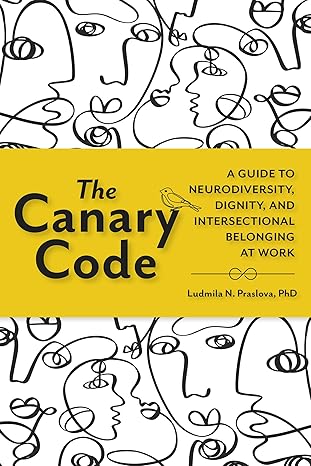

In The Canary Code: A Guide to Neurodiversity, Dignity, and Intersectional Belonging at Work, Ludmila N. Praslova delivers a groundbreaking framework for rethinking workplace inclusivity through the lens of neurodiversity. At the heart of the book is the “Canary Code,” a compelling concept that underscores the transformative power of supporting the most vulnerable individuals in an organization. By prioritizing their well-being, Praslova argues, workplaces can evolve into environments that benefit everyone. Drawing a vivid analogy to the welcoming and diverse atmosphere of Glastonbury, Praslova advocates for workplaces to emulate this spirit of inclusivity and open-heartedness. Rejecting the deficit-based approach that seeks to “fix” neurodivergent individuals, she instead challenges organizations to confront and dismantle neuronormative systems that marginalize these employees. Her perspective reframes neurodiversity as a systemic issue, shifting the focus to creating equitable conditions where all individuals can thrive.
One of the book’s most powerful contributions lies in its exploration of neurodivergent leadership. Often overlooked in conversations about workplace diversity, this section examines the unique strengths neurodivergent leaders bring and highlights actionable steps organizations can take to support their advancement. Praslova’s emphasis on inclusive leadership—centered on outcomes rather than rigid adherence to traditional behaviors—offers a fresh and forward-thinking perspective. Blending social science, case studies, and actionable strategies, this book is both informative and inspiring.
Praslova writes with clarity and compassion, balancing academic rigor with accessibility. Her structured, articulate prose makes complex social concepts easy to understand, while her use of real-world examples and anecdotes adds relatability to the narrative. Praslova’s passion for social justice shines through on every page. From debunking misconceptions about neurodiversity to advocating for inclusive recruitment practices, her coverage of the subject is comprehensive. Particularly notable is her integration of both quantitative data—such as the alarming statistic on UK managerial reluctance to hire neurodivergent individuals—and qualitative stories that humanize the challenges faced by this community. This dual approach provides a holistic understanding of the systemic barriers neurodivergent individuals encounter. Praslova’s advocacy extends beyond awareness to actionable change. The book includes detailed strategies for eliminating barriers to workplace success, from crafting bias-free job descriptions to designing quiet workspaces that support focus and productivity. Her step-by-step guidance ensures that readers not only understand neurodiversity but also see its value, fostering workplaces where diverse neurological experiences are celebrated rather than stigmatized.
With The Canary Code, Ludmila N. Praslova offers a bold and essential blueprint for transforming workplaces into havens of inclusion and respect. Her work is as compassionate as it is informed, demonstrating her commitment to dismantling systemic inequities and creating opportunities for all individuals to thrive. This is more than a book; it is a call to action. For leaders, educators, and anyone committed to advancing workplace equity, The Canary Code is a vital resource—and a beacon of hope for a more inclusive future.
Pages: 352 | ASIN : B0CDN6V9SR

Purposeful Collaboration

In EVERYTHING IS PERSONAL, you explore the difference between effective leadership skills and straightforward management tactics. What inspired you to write this book?
After being a leadership program designer, facilitator, and avid student of the art of leadership for decades, the premise of foundational leadership success became vividly clear. When leaders, or anyone, embraced the idea of “stewardship of others” and made positive and enriching relationships purposeful, it completely switched up how we view our interactions with others inside and outside of work. I wanted to collect these ideas in a simple but thought-provoking way via my first leadership book!
Can you share with us a little about the research behind your book?
Working on five continents with teams and leaders of various experiences, education, and interests was the best research I could have hoped for and yielded such valuable information. Whether leaders were in Brazil or Thailand…Azerbaijan or Thailand…China or UAE…the common query of leadership ran throughout. How do we retain talent? How do we drive success across our enterprise? How do we create an environment where people desire to succeed? The answer was always enlightened leadership, not based in authority, but resident in relationships.
What is one misconception you find most people have about business leadership?
That it’s “lonely at the top.” That leadership is a solitary place to live practically and emotionally. Nonsense. Beyond the stereotypical staff meeting, the most successful leadership environment is a place rich with healthy debate, challenging viewpoints, and purposeful collaboration.
What is one thing you hope readers take away from EVERYTHING IS PERSONAL?
I hope they never hide behind the “it’s just business” premise again. Yes, we need to make tough decisions in business all the time…just like we do throughout every facet of our lives…why deny the personal elements? In fact, embrace them – even when it’s deeply difficult. As a result, your credibility, transparency, and authenticity will only grow.
Author Links: GoodReads | LinkedIn | Facebook | Website | InspireLSC | Amazon
Through storytelling and practical guidance, Louis Roden empowers readers to cultivate excellence and empowerment in their organizations and beyond by exploring the essence of transformational leadership and delving into the heart of stewardship.
Drawing from a wealth of global industry experiences, Everything is Personal serves as a roadmap for navigating the complexities of leadership with confidence and clarity. By embracing the principles outlined in this book, readers will discover how to forge genuine connections, inspire trust, and drive sustainable success in every facet of their lives. Join us on a journey of self-discovery, as we challenge conventional notions of leadership and empower individuals to lead with authenticity and purpose. Together we can unlock the transformative power of stewardship and make every interaction, every decision, and every moment truly personal.
EVERYTHING IS PERSONAL: Embracing Stewardship in The Workplace and Everyplace
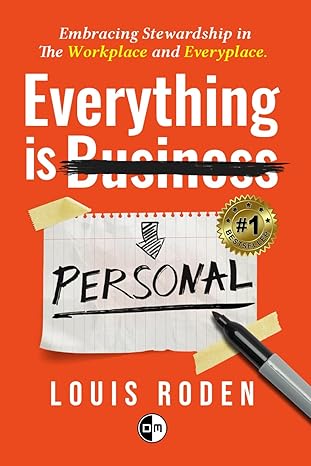
“There is a stark difference between organizations that are led and those that are merely managed.” This assertion is at the heart of Everything is Personal, a compelling guide to understanding the intricacies of true leadership. Louis Roden’s work highlights the significant distinction between textbook management and leadership infused with a personal touch. Challenging the conventional separation of personal and professional life, the book argues convincingly that every decision in business is profoundly individual. Through a series of insightful essays and reflections, Roden dismantles the notion that business decisions can or should be devoid of personal impact.
The book makes a powerful start with a critique of the phrase “it’s not personal, it’s business,” which Roden dismisses as nonsense and a cowardly evasion of responsibility. He argues that leaders must acknowledge the implications of their decisions, as these decisions shape the lives and well-being of their teams. This critical perspective will force readers to reconsider every instance they have used the phrase, ultimately agreeing that it indeed represents an evasion of responsibility. Roden’s writing is marked by its candid and often provocative tone, challenging readers to rethink their approach to leadership and workplace relationships. He emphasizes the significant amount of time individuals spend at work, arguing that workplaces must be more than impersonal environments focused solely on productivity. Roden’s unique perspectives challenge the notion that coworkers are not friends, urging readers to reconsider their relationships both at work and beyond. For instance, his reinterpretation of the golden rule—treating others as you would like to be treated—reveals it to be presumptuous and advocates for a more individualized approach to empathy and understanding.
Everything is Personal is strongly anchored in Roden’s personal experiences, following his own advice to let the personal reign. By drawing on his experiences, he illustrates his points effectively, making his suggestions practical and relevant to the real world. He calls for greater responsibility in shaping workplace culture, recognizing that empathy can transform soulless transactional engagements into meaningful, mutually beneficial relationships with coworkers and subordinates.
Everything is Personal is a thought-provoking read, especially in a world where the nature of work is rapidly changing. It advocates for a shift from workplaces that function merely as money-minting operations to fulfilling environments that employees look forward to each day. Roden’s passionate advocacy for personal accountability and genuine leadership makes Everything is Personal an essential read for anyone looking to transform their workplace culture into one that promotes trust, engagement, and long-term success.
Pages: 110 | ASIN : B0D55LW8VX
How Can I Make This Fun?

Drop the F-Bomb in Your Business is a book that delves into the impact of a company’s culture on productivity and employee retention, as well as how to create a positive and enjoyable work environment. What motivated you to write this book?
My love for business and all things fun and silly really drove me to write this book. I constantly reflect on the common themes among successful businesses and I’ve discovered businesses that have the most fun, are the most successful and healthiest. I knew that if I could frame that concept as a business strategy, it would not only be easy and exciting to implement, but could begin to positively impact the business community for generations to come.
The need to move away from traditional corporate culture in order to remain relevant in today’s world raises the question of why this shift in corporate mindset is necessary. What do you believe are the reasons behind this change from the established norm?
Our new workforce is demanding the change. We see those demands in the form of memes, videos, and social media posts. Work behaviors and trends like “quiet quitting”, firing your boss, and “ghosting” are becoming normal and shows us that traditional business cultures and themes aren’t resonating. In order to keep up with the trends of our incoming workforce, companies need to prioritize workplace happiness and mental health benefits and there’s not better way to do that then with a dose of no strings attached fun!
What is one measure that businesses can start with to establish a conducive work environment that attracts talented employees and encourages their long-term retention while minimizing turnover using The Fun First Strategy™?
The principle of P.L.A.Y. is a core concept of The Fun First Strategy and encourages leaders and business owners to “Prioritize Laughter And Youth.” What that means is to encourage an environment and culture that is centered around laughter and positive expression, recalling games, activities, and events from your youth that can built into fun engagements with your team and colleagues.
What is one thing that you hope readers take away from Drop the F-Bomb in Your Business?
It all starts with an easy but profound question- “How can I make this fun?” By starting there, you automatically begin to unlock more creative, positive, and unique solutions to doing business, making it more enjoyable for everyone involved!
Author Links: GoodReads | LinkedIn | Website
Enter Pete Kusiak’s Drop the F-Bomb in Your Business—the groundbreaking book that challenges the status quo and introduces readers to a daring new concept called The Fun First Strategy™. Drawing on his lifetime of experience, Kusiak shows readers how prioritizing fun and keeping an open mind can not only build happier, more productive teams but also solve complex business challenges and allow the organization to reach desired goals in the most unexpected ways.
Through tips and real-world examples, readers will discover a clever twist on the traditional f-bomb. Kusiak wildly redefines the word with The Fun First Strategy™, revealing how a single question can transform workplace culture and foster success.
Will the reader have the courage and conviction to drop the f-bomb in their business? Will The Fun First Strategy™ pave the way for a new era of corporate culture, marked by satisfied workers and soaring profits? The answers lie within the pages of Pete Kusiak’s Drop The F-Bomb in Your Business, a unique and revolutionary book in redefining the balance between work and play and creating a future where business success and employee happiness go hand in hand.
Drop the F-Bomb in Your Business
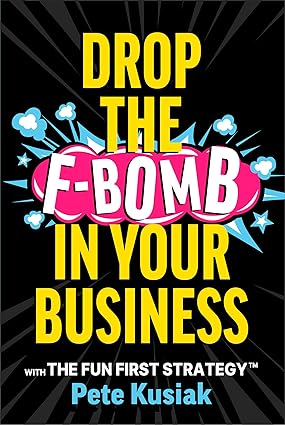
Pete Kusiak’s latest publication, Drop the F-Bomb in Your Business, delves into the increasingly relevant theme of enhancing workplace environments. The book is a testament to the growing recognition of the importance of a positive, enjoyable work atmosphere. Kusiak’s approach in this business-oriented guide is to showcase the significance of fostering a space that not only attracts employees but also promotes their long-term retention with a focus on minimizing turnover.
Kusiak meticulously investigates various businesses that have excelled in creating dynamic, fun workspaces. He presents an extensive array of methods that have been effectively employed to shape companies into places that employees admire and enjoy. This exploration culminates in what he terms The Fun First Strategy™, a concept that promises to revolutionize traditional business environments. Kusiak posits that integrating fun into the workplace enhances productivity, bolsters customer relations, and rekindles the creative and joyful spirit in the workforce.
A notable strength of Kusiak’s work lies in the diverse range of suggestions he provides for employers. His ideas extend beyond typical corporate events, advocating for tangible changes that could range from aesthetic modifications in the office to the integration of humor and levity into the daily routine. These strategies prioritize fun and posit it as a cornerstone of company culture. Moreover, the reading experience of Drop the F-Bomb in Your Business itself is designed to be engaging and enjoyable, with interactive elements like fun breaks, a workplace fun-level questionnaire, and step-by-step implementation guides.
This book is a useful resource and an engaging read. It is suitable for a wide array of organizational settings, from manufacturing plants and law firms to small enterprises and educational institutions. Drop the F-Bomb in Your Business is poised to set a new benchmark in business literature, offering a comprehensive guide for anyone aiming to revitalize their work environment and embrace a more dynamic, fun-filled corporate culture.
Pages: 167 | ISBN : 1962202003
Curiosity Killed the Nine to Five

Curiosity Killed the 9-5 serves as an enlightening guide, offering a glimpse into the lives of remarkable female entrepreneurs and their journeys. This collection of stories sheds light on the integral roles of curiosity, resilience, and the pursuit of dreams in the business realm. Highlighting the varied backgrounds and industries these women have navigated, the book provides valuable insights and reflections, celebrating their achievements and inspiring others to embrace entrepreneurial challenges.
The narrative is engaging and relatable, marked by personal storytelling and motivational elements. It maintains a celebratory and empowering tone throughout, applauding the extraordinary accomplishments and the spirit of courage, resilience, and curiosity that propels these women into business. Departing from the typical formal style of business literature, it adopts an informal, enthusiastic approach, making the content more accessible and lively.
The book’s language is diverse and engaging, effectively conveying ideas and adding a unique flair to the writing. The contributors’ voices are assertive and encouraging, designed to inspire confidence in readers. A mix of sentence structures, from concise and impactful to more descriptive and illustrative, paints a vivid picture of these women’s experiences, demonstrating a mastery of narrative style.
Targeting an audience interested in business and personal growth, Curiosity Killed the 9-5 is particularly empowering for women. It encourages readers to embrace risk-taking and pursue their entrepreneurial aspirations. The personal anecdotes and insights from the author and featured entrepreneurs inspire those eager to overcome barriers and leave a mark in the business world.
The book skillfully blends storytelling with practical insights, creating a narrative that resonates with a wide readership. Particularly commendable is the author’s ability to intertwine personal experiences with broader themes of entrepreneurship and empowerment. Each chapter includes self-coaching reflections, allowing readers to engage deeply with the content and extract personal and professional growth lessons.
Curiosity Killed the 9-5 stands out as a compelling and motivational read, offering a unique perspective on the entrepreneurial journey, especially for women seeking inspiration and guidance in the business world.
Pages: 360 | ASIN : B0CPHLQK4B



