Blog Archives
Of Inklings and Willowpillars


Brent K. Newcomb’s Of Inklings and Willowpillars, the first book in The Chronicles of Ber’Ebrin, is a wonderfully eccentric fantasy adventure that combines Victorian charm, fairy-tale magic, and a mischievous sense of humor. Set in 1877, the story follows five imaginative children who call themselves the Inklings, along with their absentminded mentor, Professor Augustus E. Peabody. When the professor discovers a mysterious map pointing toward the legendary paradise of Ber’Ebrin, the group embarks on a journey into a world filled with strange creatures, dangerous kingdoms, and surprises that challenge everything they thought they knew. Meanwhile, a sinister creature known as the Beast has been given a particularly troubling assignment involving fifteen-year-old Mary Doyle. This darker thread adds an intriguing tension to an adventure that frequently delights in the ridiculous. Newcomb creates a story where curiosity opens doors to extraordinary possibilities, even when what’s waiting on the other side is considerably more dangerous than anyone anticipated.
Newcomb clearly enjoys inventing unusual creatures, peculiar customs, and fantastical locations, and that enthusiasm comes through on nearly every page. From the mysterious Colorless Kingdoms to the enchanting Woodrealm, each setting has its own personality and dangers. The creatures are especially entertaining, including the endearing willowpillars, unruly imps, intimidating drakes, and other beings that seem to have wandered out of a particularly inventive collection of folklore. The world feels expansive, with its own histories, rivalries, magical artifacts, and rules that the characters must gradually understand. Newcomb also has a fondness for elaborate descriptions, playful dialogue, and unexpected comic interruptions. His narrator frequently addresses the reader directly, adding a storytelling quality reminiscent of an eccentric grandfather sharing a fantastic tale beside the fireplace. The result is a richly detailed adventure that invites readers to enjoy the journey as much as the destination.
Readers familiar with C.S. Lewis’s The Chronicles of Narnia will recognize a similar affection for children discovering magical worlds where goodness, temptation, and courage carry real consequences. Both authors understand how fantasy can explore moral choices through exciting adventures and memorable creatures. Newcomb, however, brings a more rambunctious personality to his storytelling, with a distinctly Victorian flavor and a generous helping of absurdist comedy. His eccentric professor, in particular, adds a delightful unpredictability to the proceedings. There are also echoes of L. Frank Baum’s The Wonderful Wizard of Oz in the colorful assortment of companions and strange societies encountered along the way. What makes Newcomb’s approach engaging is the balance between whimsical adventure and genuine peril. The young characters face situations that require resourcefulness, loyalty, and difficult decisions, and their individual personalities help give those moments emotional weight. Mary’s struggle between growing up and holding on to her imagination is especially compelling, while the younger children contribute warmth, humor, and an infectious curiosity.
Of Inklings and Willowpillars is a story about friendship, innocence, temptation, and the courage to choose what’s right when doing so becomes difficult. Newcomb gives these themes room to develop through an ambitious narrative filled with intersecting adventures, amusing detours, and a substantial cast of characters. The pacing occasionally slows as the author explores another corner of his elaborate world, but those diversions contribute to the book’s old-fashioned storytelling appeal. There’s something refreshing about a fantasy novel so willing to linger over a strange encounter, an amusing conversation, or a peculiar bit of magical history. Although its youthful protagonists make it accessible to younger fantasy enthusiasts, the book’s darker elements, literary references, and layers of humor offer plenty for adult readers to appreciate as well. With its lively imagination, memorable creatures, and underlying belief in the importance of goodness, Of Inklings and Willowpillars offers an entertaining introduction to a much larger fantasy universe. It’s an inviting choice for readers who enjoy traditional portal fantasies, eccentric characters, and stories that still believe there’s something marvelous waiting beyond the familiar world.
Pages: 276 | ASIN : B0HJFRXBTQ

Stray


Angélique Jamail’s Stray, the second book in the Animal Affinities series, takes a fascinating premise and turns it into a deeply personal coming-of-age story about identity, friendship, family, and finding where you belong. Set primarily in Houston, the novel imagines a world where people develop animal affinities that influence their physical characteristics, instincts, and relationships. At the center is Raqia, a Lebanese American teenager navigating the already complicated experience of growing up while waiting for her own affinity to emerge. Her closest friend, Anabelle, has been a constant presence in her life, but adolescence brings changes that test even their longest-held assumptions about each other. Jamail weaves the supernatural elements into everyday teenage experiences so naturally that the animal affinities feel like another dimension of growing up. There’s something especially compelling about watching Raqia figure out who she is while everyone around her seems to have an opinion about who she should become.
One of the novel’s greatest strengths is how convincingly Jamail captures the shifting dynamics of teenage relationships. Raqia and Anabelle’s friendship has a believable history, complete with inside jokes, familiar routines, insecurities, and moments of tension. Their interactions feel authentic because Jamail understands how friendship can become complicated when two people start developing different priorities. Eddie, Anabelle’s older brother, adds another emotional dimension to the story, introducing questions about attraction, loyalty, and what it means to feel genuinely understood. Raqia’s grandmother, Taita, is another particularly memorable character. Her warmth, protectiveness, and cultural traditions give the story an emotional foundation, especially as Raqia works through questions about her family and Lebanese heritage. The relationships are layered, and Jamail gives readers plenty of opportunities to understand why these characters behave the way they do, even when their decisions create friction.
Readers familiar with Maggie Stiefvater’s Shiver will recognize a similar interest in the complicated intersection of human emotion, animal instincts, and romantic connection. Both authors explore how extraordinary biological changes can intensify the experiences of adolescence, particularly the desire for intimacy and acceptance. Jamail brings her own perspective to that territory by developing an entire social landscape around animal affinities. In Stray, these traits influence everything from family expectations to public perceptions and social hierarchies. The story also touches on prejudice, personal autonomy, and the expectations people place on others based on their identities. Jamail’s writing is especially effective during quieter scenes, when conversations reveal underlying tensions or a small gesture communicates more than a lengthy explanation. Her attention to Raqia’s internal reactions makes the character’s uncertainty, excitement, and frustration easy to connect with. The pacing gives these emotional developments room to unfold, creating a reading experience driven as much by relationships as by the fantasy premise.
What makes Stray particularly engaging is its understanding that finding your place in the world often means reconsidering what belonging actually looks like. Raqia’s experiences raise interesting questions about the connection between instinct and choice, the responsibilities that come with relationships, and the difference between being accepted and being understood. Jamail also gives meaningful attention to cultural identity, allowing Raqia’s Lebanese American background to inform her worldview and family relationships. These details bring specificity and warmth to the story while making its larger themes feel relatable. The novel’s combination of contemporary teenage life, emotional complexity, and speculative worldbuilding gives readers several reasons to become invested in Raqia’s journey. Fans of character-driven young adult fantasy, especially stories that explore friendship and romance alongside questions of identity, will find plenty to appreciate here. Stray is an emotionally attentive novel about growing into yourself, learning to navigate changing relationships, and discovering that belonging involves both the people who surround you and the choices you make.
Pages: 239 | ASIN : B0GR6S7Y6D
Kalani’s Kalo: The Garden in the Forest

Jason Izumi’s Kalani’s Kalo is a children’s book about growing food, learning from elders, and discovering how much care goes into feeding a community. Set in Hawaiʻi, it follows a boy whose desire for a dependable supply of kalo sends him into the highland forest with his boar companion, Pua. That practical starting point gives the story an appealing sense of purpose. Kalani’s curiosity and occasional impatience make him easy to connect with, while the animals bring humor and companionship. There’s also a thread of mystery that makes the forest feel like a place worth exploring.
What I enjoyed most was the attention Izumi gives to doing things by hand. Preparing food, tending plants, and shaping tools all take time, and the story lets readers feel that effort. Its descriptions make everyday tasks interesting, especially when sounds and repeated rhythms invite children to join in during a read aloud. Hawaiian words appear throughout the dialogue and narration, tying the language closely to the people, plants, and objects on the page. The relationship between Kalani and his elder teacher gives these details warmth. Their exchanges show how knowledge passes between generations through questions, observation, and working together, with room for a child’s doubts and enthusiasm.
The textured drawings, delicate lines, and soft washes of color give the landscapes a dreamy quality while keeping individual leaves, stones, woven surfaces, and tools visible. Forest scenes are especially inviting: slender trunks and tangled branches surround the figures, and small touches of red and green reward a closer look. Elsewhere, warm browns make indoor scenes feel intimate, while pinks and purples soften the shoreline and distant mountains. I liked how the artwork moves between broad views of the landscape and close studies of hands at work. Those changes in scale help children notice both the setting and the skill involved in everyday activities.
The book asks for a leisurely reading pace, with enough text and practical detail to suit several shared sittings. Some passages explaining a process slow the momentum, though they also give curious readers plenty to ask about. The glossary and informational pages offer useful places to return when a word or object catches a child’s attention. For families and classrooms interested in Hawaiian language, food traditions, gardening, and relationships with the land, there’s plenty here to discuss. Its strongest quality is the way it connects care with action: listening, practicing, sharing, and paying attention all matter. It’s an affectionate, visually distinctive book that makes the work behind a meal feel worthy of a child’s curiosity.
Pages: 80 | ASIN : B0HJLHQG7B
Secrets Burn

A.J. Mortimer’s Secrets Burn is a young adult fantasy that blends Irish faerie lore, elemental magic, angelic mythology, and political conflict. Eliora begins as an isolated student in Ireland, troubled by amnesia and recurring visions, before learning that her human life has been carefully constructed to conceal her connection to Kenor, a realm divided by war. Her return transforms the novel into a dangerous journey through living sanctuaries, poisoned waterways, ruined citadels, and hostile territories. The accumulating revelations give the story an expansive scope while keeping its focus on Eliora’s search for identity.
The novel examines the relationship between memory and moral agency. Eliora fears that recovering her past will erase the person she has become, yet ignorance leaves her vulnerable to manipulation. Her declaration, “I can handle fear. I just can’t handle lies,” captures both her personal conflict and the wider culture of secrecy surrounding her. Mortimer also treats grief as a potent political force. Caitria turns bereavement into extremism, Acker allows hope to distort his loyalties, and Eliora’s losses repeatedly test whether sorrow will make her compassionate or destructive.
The first-person narration is emotionally immediate, with Eliora’s anxiety, anger, guilt, and dry humor shaping every encounter. Her friendships with Florence and Brigh provide the story’s emotional foundation, while her guarded attraction to Cael develops through shared danger and suppressed history. The elemental magic is closely tied to feeling, allowing internal conflict to alter the physical world in vivid ways. The prose favors rapid dialogue and frequent reversals, creating strong momentum, though repeated explanations of Eliora’s guilt and instability occasionally soften the impact of otherwise powerful scenes.
Secrets Burn becomes a story about choosing an identity. Eliora’s discovery that she is an angel and reaper complicates the familiar chosen-leader narrative, especially when she must reconcile her duty to preserve balance with her growing love for mortal lives. As Cael tells her, “It’s about what we choose, every day, and who we choose to stand with.” The ending resolves Caitria’s immediate reign while opening a broader conflict involving Ramiel and the horsemen, leaving Eliora changed, grieving, and newly purposeful. It’s an ambitious, emotionally driven fantasy whose strongest achievement is making power inseparable from responsibility.
Pages: 354 | ASIN : B0GHYYDS17
Queen of Starlight

Molly M. Hammond’s Queen of Starlight, the second book in the Starlight Series, is an energetic fantasy adventure built around magical worlds, ancient riddles, dragons, political reconciliation, and a romance that’s finally ready to move beyond lingering glances. A year after saving Edira, Luma begins seeing shadows that no one else can see. She soon discovers that a corrupted mage named Hex is draining magic from both Edira and the wizard world of Malicath, forcing former enemies to work together. The resulting quest takes Luma through ruined landscapes, secret archives, dragon sanctuaries, and the unsettling Dark Forest between worlds.
The book’s biggest strength is its lively group of characters. Luma remains the emotional center, but Figg’s blunt humor, Aire’s playful commentary, Trill’s pompous “owl matters,” and Ketu’s dragon-sized enthusiasm keep the story from becoming too heavy. Ashen is an especially effective addition. His swagger and flirtatious teasing create friction with Corr, yet he gradually becomes a courageous and loyal friend. Hammond gives the ensemble a warm, lived-in quality, so scenes involving meals, jokes, children, and minor squabbles matter almost as much as the magical battles. Even the alliance between elves and wizards grows through personal trust.
Luma’s central struggle gives the adventure its emotional weight. She starts by insisting she’s fine while fear, exhaustion, and strange whispers steadily close in around her. As the story progresses, she has to accept grief, romantic vulnerability, her mother’s dark magical legacy, and the limits of starlight by itself. The final confrontation works because victory depends on balance. Luma learns to wield darkness and light together, controlling her anger instead of letting vengeance control her. Izarre’s death brings genuine pain to that lesson, while Ashen’s sacrifice for Corr shows how far the once-divided characters have come.
Readers of Sarah J. Maas will recognize the appeal of a powerful heroine surrounded by a loyal, bantering found family, with romance and large-scale magical conflict woven through the same story. Hammond’s storytelling has a more direct, brisk rhythm, and her world carries an inviting fairy-tale warmth even when the stakes turn grim. The resolution is generous, giving space to political recovery, returning dragons, weddings, friendships, and Luma’s new role as queen. That hopeful finish suits a book whose clearest idea is that strength comes from bringing divided forces into harmony. Queen of Starlight is a heartfelt romantasy sequel with accessible world-building, affectionate humor, and a heroine who earns her crown by learning what her power truly contains.
Pages: 302 | ASIN : B0H8TF5Z4H
Moonstone: The Winter’s Twins Series Book 1

J. W. Murray’s Moonstone, the first book in the Winter’s Twins series, is a sprawling young adult epic fantasy adventure filled with cloudships, floating islands, winged warriors, ancient weapons, political schemes, strange creatures, and a prophecy that pulls a group of young champions into a much larger conflict. The story begins by following several seemingly separate lives, including the street-smart orphan Traiden, the sheltered and fiercely competitive gymnast Cassille, the guarded Queen Elenya, and Marek Jaad, an experienced cloudship captain who can sense disturbances in time. Their paths gradually converge as evidence emerges that an old enemy called the Legion is returning and that a set of mysterious stones may be the key to stopping it.
The world-building is the novel’s biggest attraction. Murray doesn’t treat the cloudships as decorative fantasy vehicles. Their navigation, rigging, weather hazards, crew hierarchy, and customs shape everyday life, giving the book a convincing airborne culture. The Six Kingdoms also feel distinct, with their own rivalries, beliefs, fighting traditions, and social rules. There’s a lot of terminology to absorb, especially early on, but the details reward readers who enjoy getting thoroughly immersed in a new setting. The book’s guiding idea appears in the warning, “Then remember, coincidence does not exist. The Pallomand was always pulling the strings.” That line captures the pleasure of watching scattered characters, relics, dreams, and political maneuvers become parts of the same design.
Traiden and Cassille give this coming-of-age fantasy novel its approachable emotional center. Traiden’s humor, loyalty, and instinct for improvisation make him easy to root for, while Cassille’s pride and hunger for independence give her a sharper edge. Their early friction develops into a believable partnership as they face danger, separation, loss, and the unsettling discovery that their roles may have been chosen long before they understood them. Marek provides a useful counterweight. He’s capable and experienced, but his skepticism about prophecy keeps the story from becoming a simple chosen-one tale. The supporting cast is large, sometimes almost too large to track casually, yet figures such as Dagor, Pattan, L’dai, Harnen, and Morab bring humor and personality to the journey.
Readers who enjoyed Philip Pullman’s The Golden Compass may recognize a similar blend of young protagonists, unusual technology, animal-like allies, competing powers, and a cosmic mystery hidden beneath an adventurous surface. Moonstone is more expansive and nautical in its storytelling, with the cloudship crew functioning much like the company in a traditional seafaring epic. It also spends more time on technical world-building and introduces its central cast through multiple storylines before fully joining them. That measured structure creates anticipation, though the number of names, titles, invented words, and historical references makes this a book best read with attention.
The ideal target audience is teen and adult readers who enjoy steampunk fantasy, airship adventures, magical quests, and ensemble casts. Its violence and political intrigue give it enough weight for older readers, while its young heroes, lively humor, creatures, competitions, and sense of discovery should appeal strongly to teenagers. Moonstone works as both a grand introduction to the world of Winter’s Twins and the opening movement of a longer story. It closes with important relationships transformed and the larger conflict coming into focus, leaving its heroes headed toward an uncertain destination.
Pages: 536 | ASIN : B0GZR2D2KV
Wishes and Choices: MorKano’s Wish

Wishes and Choices: MorKano’s Wish, by D.B. Thomas, is a young adult fantasy novel about Kit, Mythral, Cat, and their allies trying to protect the Realms after MorKano’s defeat proves less final than everyone hoped. The story blends magic, time inversion, dark wizards, dragons, gryphons, and a layered three-realm world, but its real focus is on the weight of choices. Kit has wished for adventure and romance, and now she has both, along with danger, responsibility, and the awful knowledge that saving others can demand more than courage.
What I liked most is that the book does not treat fantasy as only a spectacle. There are spells, magical duels, and cosmic stakes, but the heart of the novel is much more grounded than that. Kit is powerful, but she is still young, still learning, still wondering if she is making the right call. Mythral, meanwhile, carries regret like a stone in his pocket. I found that reflective thread compelling. The author keeps returning to the idea that mistakes are not always cleanly separated from victories, which gives the story more emotional texture than a simple good-versus-evil adventure.
The writing has a lively, direct style, and Cat’s interruptions give the book a playful classroom-story feel. Sometimes those asides are funny; sometimes they slow the momentum, but they also make the novel feel distinct. The author seems interested in teaching as much as entertaining, especially when the story moves into ideas about power, self-control, mentorship, prejudice, and protecting those who are vulnerable. The book can be heavy on explanation, but there is sincerity here, and you can really feel that throughout the story. The book wears its moral questions openly, without pretending not to care.
I would recommend Wishes and Choices: MorKano’s Wish to readers who enjoy young adult fantasy with strong magical systems, chosen-family bonds, time-travel complications, and a clear moral center. It will especially appeal to fans who like their fantasy adventurous but thoughtful, with characters who pause between battles to ask what their choices have cost and what kind of people they want to become.
Pages: 224
How the Winterlilies Grow
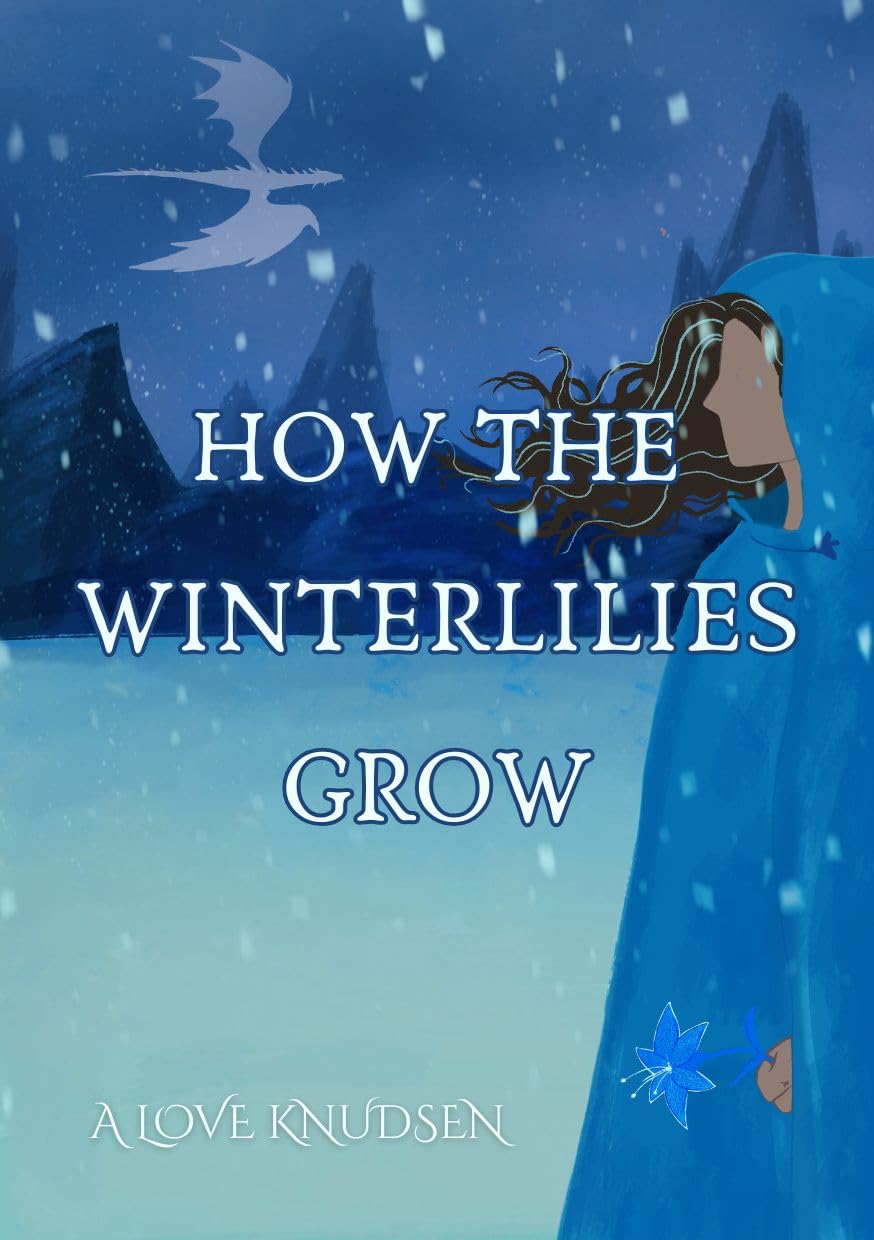
How the Winterlilies Grow follows Aradella, a young woman desperate to save her mother from the deadly Aurora Veins, as she is pulled from her ordinary life of candles and marketplace worries into a kingdom-shaking quest for the legendary winterlily. What begins as a search for a healing flower widens into a journey through dwarven bargains, goblin negotiations, sea voyages, hidden gardens, spiritual testing, and open rebellion against King Draven’s cruel rule.
I was most drawn to the way the book treats courage as something trembling rather than polished. Aradella is not a fearless heroine carved from marble; she is anxious, stubborn, tender, and often overwhelmed. That makes her growth feel earned. Her search for the winterlily becomes more than a plot device. It becomes a crucible where grief, faith, control, and surrender all meet. The story’s Christian elements are direct and unmistakable, but they work best when woven into Aradella’s fear of losing her mother and her slow realization that she cannot carry the whole world by herself.
The novel also has an appealing classic fantasy feel. There are dwarves, goblins, sirens, magical weapons, winter-bound towns, royal decrees, secret histories, and a climactic ball that turns into something far more dangerous than ceremony. The story’s abundance makes the pacing feel crowded, and some scenes pause to explain feelings that the action already suggests. Still, I found the sincerity of the book hard to dismiss. Its best moments have a lantern-lit quality: warm, earnest, and bright against snow.
I think this book is best suited for readers who enjoy Christian fantasy, young adult fantasy, adventure, fairy-tale quests, and faith-based coming-of-age stories. Fans of C. S. Lewis’s moral clarity and Gail Carson Levine’s enchanted-kingdom sensibility may find familiar pleasures here, though this story leans more openly into devotional reflection. How the Winterlilies Grow is a snowy quest about healing, but its deeper bloom is trust. A tender fantasy where faith flowers in the coldest places.
Pages: 338 | ASIN : B0GX2Y96BD


