Author Archives: Literary_Titan
Fun, Unusual, and Silly

Zany Zoo Adventures with Cadie the Rescue Dog follows a lovable German Shepherd adopted from a rescue shelter who joins her family on a trip to the zoo and spends the day learning about the animals. What was the inspiration for your story?
The inspiration was my niece who was a zookeeper and continues to work with animals in her current job. In addition, my love for animals!
In your story you packed in a lot of educational information, but still made it feel organic and not like reading a fact sheet. What was your thought process on deciding what facts to include?
I tried to include ‘fun’, unusual, and silly facts to make it fun for the reader- while learning- and not be boring!
The colorful artwork is dynamic and charming, especially the representation of Cadie. What was it like to work with Chris Schwink?
I absolutely love working with Chris. He really is talented in how he brings my stories- and visions- to light. Most people use digital illustrations where I like the raw talent of hand drawn ones, and Chris does an amazing job!
What is the next book that you are working on, and when will it be available?
This is our 3rd book of the Adventures With Cadie Kids Book series and it just was released in December 2025. I have ideas for the next one already, with some outlines but unsure of when it will be finished at this time!
Author Links: Instagram | GoodReads | Facebook | Website
In her latest escapade, Cadie explores a bustling zoo with the help of a kind zookeeper who introduces her to a parade of fascinating animals―from towering giraffes to mischievous monkeys. Join Cadie as she discovers new friends and finds joy in every pawstep!
Along the way, young readers will follow a colorful zoo map, answer playful questions, and learn fun animal facts without even realizing they’re learning. With vibrant illustrations, interactive elements, and Cadie’s lovable charm, this story is perfect for families who cherish animals, adventure, and stories that spark curiosity.
Whether read aloud at bedtime or explored independently, “Zany Zoo Adventures with Cadie the Rescue Dog” invites children to laugh, learn, and believe in second chances.
Why Was She Moaning?
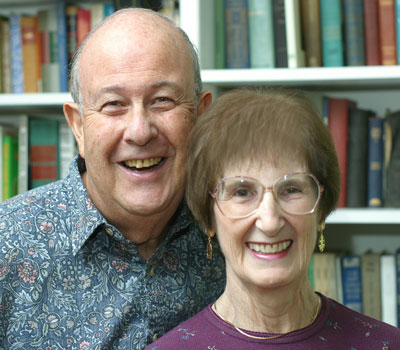
The Moaning Lisa follows an older married pair of sleuths who land in the middle of a disturbing mystery inside the Gilded Gates assisted living community, where several residents have gone missing. What was the inspiration for the setup of your story?
Almost fifteen years ago we published the three Paco and Molly mysteries: Locks and Cream Cheese, Hot Grudge Sunday, and Boston Scream Pie. We had established their ages in their sixties, but now they would be in their eighties—not exactly vigorous protagonists in pursuit of a mystery. Coincidentally, elderly relatives of ours were kicking and screaming over the prospect of moving into a retirement facility. Their reluctance and fears sparked the idea for a setting where Paco and Molly might flourish. One day, just kidding around about the Mona Lisa, one of us happened to say “Moaning Lisa” and it clicked right away. Who was Lisa and why was she moaning? We dove into the plot.
I loved the characters of Paco and Molly; their personalities work well together. Was there anything from your own life that you put into the characters in your novel?
When we started writing together decades ago, we hadn’t even considered writing mysteries—until we visited Rosemary’s father, Dr. Saul K. Pollack, a prominent psychoanalyst in Milwaukee, Wisconsin. That visit set us on a happy new course. Her father, a widower in his seventies, had a housekeeper/gourmet cook named Dorothy. She was sixty-three, with a beach ball figure, waddle walk, taffy-colored curls, and a good-natured, nosy-body personality. She had never gone past the tenth grade, but she was super-smart and keenly observant.
Dorothy also had a unique way of expressing herself. “I have to take my calcium so I don’t get osteoferocious.” During our visit, Rosemary’s father pulled out a piece of paper from his desk drawer and handed it to us: his secret list of Dorothy’s sayings. He thought we could submit it to Reader’s Digest. Back home in Severna Park, Maryland, we studied the list and decided, “Forget Reader’s Digest. Dorothy belongs to us.” We named her Molly. Her frequent witticisms were “malaprops,” but we named them Mollyprops. The concept of malaprops originated with the character Mrs. Malaprop in a 1775 comedy of manners, The Rivals, by Robert B. Sheridan.
When Locks and Cream Cheese, our first in the series, was initially conceived, we envisioned ourselves—our own alter egos—as protagonists Simon and Rachel. But Paco and Molly came across so powerfully in the writing that they soon edged us out.
Paco is modeled after a Barcelona, Spain, police inspector I met socially aboard a U.S. Naval ship docked in that city’s harbor. I was a field engineer for RCA at the time. The short, fit, and vibrant inspector was visiting the ship to practice his English. For an entire evening, the inspector told me one impressive anecdote after another. His bushy eyebrow movements were a “tell” of his current emotions. They moved together and individually, making the man memorable even to this day.
What was the hardest part about writing a mystery story, where you constantly have to give just enough to keep the mystery alive until the big reveal?
The hardest part of writing a mystery story is building and keeping track of the details. After razzle-dazzling readers with twists, turns, and the black art of red herrings—and perhaps a subplot—we need to leave a trail of clues that make sense. It’s a matter of maintaining the readers’ trust. We want them to come back and read our next mystery.
Can you tell us more about what’s in store for Paco and Molly and what the next mystery they will have to solve is?
Any new Paco and Molly mysteries will sit on the shelf for a time while we pursue our next adventures. Last year we published our first spy novel, Kent and Katcha: Espionage, Spycraft, Romance. It won five stars and an award. We are now working on the sequel, Kauai Spies and Bald-faced Lies. Our fifth short-story collection is also brewing. Who knows if and when our Paco and Molly muse will strike again. Meanwhile, our twenty-one published books are currently displayed at our website, www/magicile.com.
Author Website
Now in their eighties, Paco and Molly have moved into Gilded Gates, an assisted living community in Maryland. They expect their golden years to be blissful. They are dead wrong. Some residents are missing and no one knows what has happened to them.
One suspicious resident is a sleepwalker and claims to have heard mysterious moaning during his night walks, but for the life of him he can’t figure out where the anguished sounds are coming from.
“Inspector Paco” has retired as head of the Black Rain Corners police force. But many residents of Gilded Gates fear they might be next on the list of the missing. They beg Paco to investigate.
Naturally, Molly also pokes her keen nose and shrewd insights into the baffling disappearances.
The Many Layers of the Past
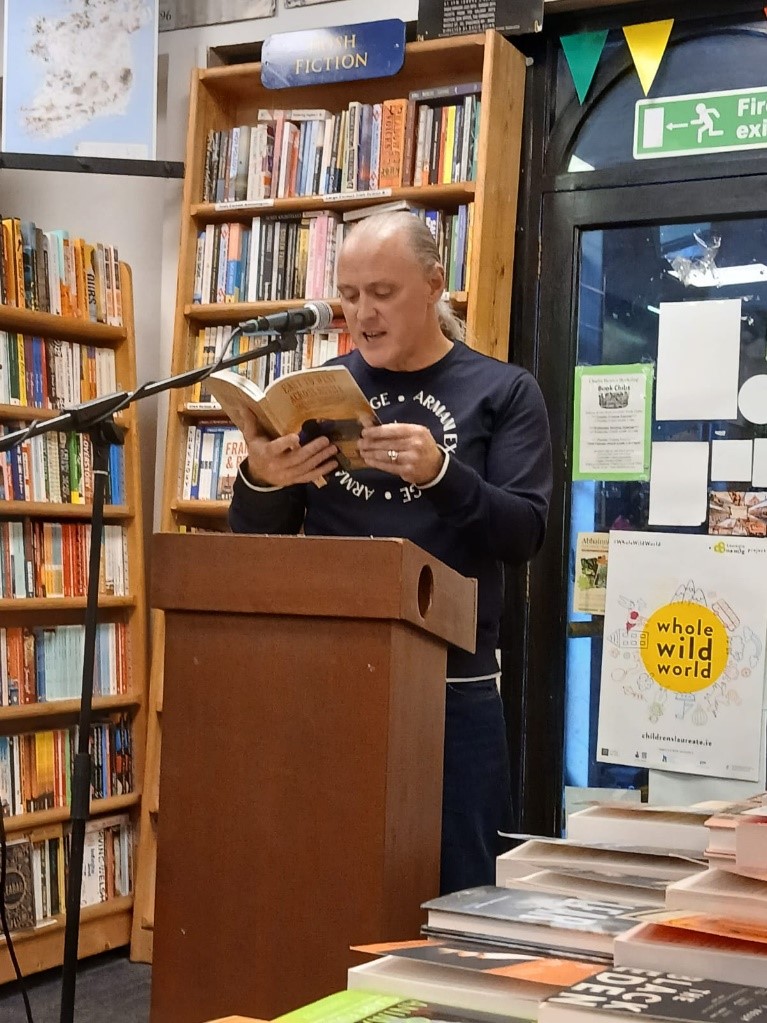
East to West Across Russia follows a man who chases a childhood dream to ride the Trans-Siberian Railway from Vladivostok all the way to Moscow, on a journey of self-discovery and introspection. What was the inspiration for the set-up of your story?
In the dedication at the beginning of the book I wrote
‘Dear N,
I dedicate the words written on these pages drenched in the cloak of my melancholy to you my great love. Has there ever been a light so illuminating, a smile so effervescent? We walked together hand in hand but now it is only I with my dreams of a love I once knew and the fate of that love never to burn in my heart again.
Always,
D
The entire narrative lives and dies and is fuelled by the character N. She is nameless and for many she is not even seen as a real life person. Some see her as a ghostly figure, a faint representation of an idealised love while others have seen her as a symbol of Old Rus, that grand and mythical era where all Soviet and Russian people long to return to. Perhaps she exists or perhaps she does not exist. In the end it really doesn’t matter but for the protagonist D, N is everything he ever wished for and dreamt of. He has no memory of life before she existed and the memory of her since she faded away from his heart continues to burn and ruptures the core of his being. D moves from east to west slowly across Russia but he also moves slowly from his past into his present and contemplating on a future without N who lingers long in his thoughts.
What were some themes that were important for you to explore in this book?
The theme of memory is crucial to the narrative of the story. It is a memoir of the protagonist as he traverses the longest train journey in the world but more importantly it is a memoir of the past and the many layers that exist not only within D but within the human mind. Every place the human being experiences becomes part of his collective memories. We can never go to any place and simply not exist and have an experience of that place. Wherever we go, there we are and a memory and timeline of such a place will always reside within us whether we can recall such a memory or not. I wanted to explore and show the theme of solitude through the nomadic wanderings of the protagonist D. We live in a world that is teeming with life but as a unique individual being in this world we can never understand what it feels like to be another human being. We can only ever feel and understand what it is to be oneself. I cannot be another human being and another human being cannot be me. We can only reside within oneself so in my narrative across the vast terrain that is both Siberia and Russia I tried to depict such solitude, such bleakness, such passion, such love, such philosophical thoughts within the individual traveller. D is an individual but when the reader gets to see and contemplate his inner thoughts we begin to understand that we too are like D. We have fears, we have anger, we have deep emotions, we have dreams and desires. We see our human frailties through D and especially so when he moves through the immeasurable raw beauty that is Siberia. The human becomes frail and finite when resting alongside such natural places of wonder. The theme of nationalism takes central stage in the long monologue scene set at Lake Baikal. The protagonist D calls out from his own brokenness across the sublime waters of Baikal and wonders is there anybody out there to listen to such a cry. In his monologue, D specifically points to the 20th century and the many examples of nationalism that aimed to divide and to destroy human beings. For D, nationalism is everything that is insular and divisive about our world. When we are nationalistic we only look inward and see a blind image of the world where we choose to fight for our own nations and in the process we challenge, deride and abuse other nations especially the much smaller ones. Nationalism becomes the great evil and occupier of human beings. We cannot become vessels for peace when the stain and blood of nationalism continues to be fuelled from within our own nations. At the core of all wars whether they be civil or world wars is a disturbed view of nationalism whose only aim it is to conquer, destroy and rule. What narrative anywhere can exist without the age old themes of life and death? They are the themes of our humanity. Life and death are inextricably linked for the protagonist D in his wanderings and tale across Russia. As D physically moves across the endless terrain of Russia the interior world becomes fused with the external and natural world of the environment. The melancholy of such thoughts within D become more pronounced as his mind wanders and lingers within his own brokenness. The 20th century of death and mayhem are used and depicted by D in his long monologue scene. Everything about that century brought human cruelty and barbarity into a new era of lust and a desire for death over life. For D, death became the great aggressor and nemesis against life and the human condition. Human illness becomes for D the natural consequence for the stain that was written into our soul from our birth. However, the philosophical and continuous choice that humans have allows us to choose whether we want our lives to be fuelled with a desire to destroy or by an energy to live and accept such a stain of corruption that is part of all of us but which we can decide not to act upon such dark impulses.
All of us human beings understands what it means and what it feels to be loved. We were all loved by somebody at one time but familial love is very different to romantic love. When we love another person in a romantic way we slowly move away from the ego that drives our energy and we channel all of our energies and desires into this other person. It becomes heroic and unselfish as we begin to love another person more than we love oneself. When that love cracks, breaks and fades into nothingness a great chasm exists for the one who has been rejected. The grief is paramount, real and it often manifests into a deep-seated melancholy just like how a physical illness attacks the human body. This is the reality for D, the hero of this tale across Russia. Who or what is D without N in his life? He was once loved by her but now she has gone and he does not have a roadmap to navigate a route back to life and love. He wanders from one place to the next and tries to live but N continues to occupy his heart. He does not know how to live and to love without her. The vast and unending plains of Russia are symbolic for the vast and unending love that D has and holds for N. I was trying to depict and expose more of the internal struggles of man. We never truly understand the magnificence and mystery of such an internal world. The reader whilst travelling on this journey across Russia will stand and sit next to D and begin to feel all of his emotions as they are released from his mind and heart. When they read and experience D’s tale they will also go along their own journey as their own memories become heightened and alive with nostalgia and feeling.
I find sometimes authors ask themselves questions and let their characters answer them. Do you think this is true for your characters?
As an author I often ask questions of myself and wonder how it feels to think in a certain way, how it feels like to undergo an illness, a grief, a torment, how it feels like to be truly loved and to love another unconditionally, how it feels like to be truly happy. In this tale across Russia it is primarily D who slowly answers such questions. Before D set out on his journey across Russia he was curious what it would feel like to stand next to the largest freshwater lake in the world at Lake Baikal. He had no idea what feelings and emotions would stir up in him on witnessing the mighty Taiga Forest range and the immense happiness that he would experience on simply riding the trains without any agenda or goal in mind other than to live and experience the pleasure of living in such a finite moment. There is a scene in the book where D meets a family on the train to Moscow. D is all alone and has lost his family and so the depiction of Christina and her family reveals to D the meaning and purity that exists within a family setting. Christina and her family become the manifestation of the ideal for D, something to admire, something to long for and a reminder of the once severing of his family. Christina reminds D that he can love again but D longs only for his N, the cradle of his spirit. There are two characters in the book who remind D of his father. He meets a policeman in Ulan-Ude and a security guard named Yuri in Yekaterinburg. It is Yuri’s wish to one day go to Irkutsk and to see Lake Baikal with his own eyes as it reminds him of his father. In these two characters D is reminded about when we are more similar in this world than how we are divisive. On his final train journey to Moscow D contemplates on the journey that has passed and has a connection with his future self who echoes his thoughts and his soul to truly live and enjoy such finite moments as such moments will one day cease for all of us. The future D becomes the present and the past D as the readers get to listen to such words travelling from the future into the present in the silence of the moving train as sleep awaits. The thoughts of D are from the future but echoing along his heart in the present as he tries to move on from the continuous pain that he carried within him since N departed his life.
What is the next book that you’re working on and when can your fans expect it out?
My second book will be very different to my first book as this first book focussed on the author in a very personal way and was a memoir from a specific point in time. This second book is going to be a collection of twenty Short Stories set in various European locations. They are fictional tales and a snapshot of life as it was lived by its characters. I have ten of these stories written already with another ten stories to write. I have chosen locations such as Paris, Copenhagen, Venice, Lake Bled, Chernobyl, Bergen, Stockholm, Berlin, Barcelona, Weimar and diverse topics such as memory loss, first love, childhood trauma, illness, loss of love, dreams, the natural and artificial environment, the epistolary form of memory and longing, the sanctity of life. I hope to have this second book completed by the end of 2026.
Author Website
Do You Have Any Fairies?

Faery Academy of QuillSnap follows Tansy WaterSprite, a “Little” in the Human Realm, being held by her evil guardian, when a mysterious visitor shows up at the toadstool house with an invitation to attend the Faery Academy. She will first have to get there, where she will have to find her inner strength and courage and uncover answers to family and faery secrets.
What was the inspiration for the setup of your story?
One afternoon with my 4-year-old granddaughter on my farm in the Enchanted Land of Iowa, where I live, is in a forest. I took her to see the forest that had just been trimmed of dead branches and brush, which now looks like a true Enchanted Forest.
She said, “I love your Enchanted Forest, Mimi, but do you have any fairies?”
Thinking quickly, I responded, “Of course I do. Over here is where they live, and over here is where they go to school, because they are not born a fairy; they have to go to school to be a fairy.”
She was deep in thought as she considered this information. She was getting ready to go to preschool and didn’t think it was a good idea, since she already knew everything; however, if fairies had to go to school too…
At night, she preferred fairy stories instead of reading a book. Kids are really smart and remember if you repeat part of the story, and I would quickly be told, “Mimi, you already told us that!” I had to start writing it down, and today it is the Faery Academy of QuillSnap: Night of the Purple Moon.
There is a lot of time and care spent on descriptions and building the setting and tone of the story. Was this out of necessity to develop the depth of the story, or was it something that happened naturally as you were writing?
This came naturally as I was telling my granddaughter the story that was inspired by our afternoon in the Enchanted Forest that sparked the story.
What were some themes that were important for you to explore in this book?
Adversity builds character, I think I can becomes I know I can, Girls and women can do anything.
Will this novel be the start of a series, or are you working on a different story?
I am currently working on the sequel, hoping to go to editing by the first of the year.
Author Links: GoodReads | X | Facebook | Facebook- author| Website
US Review of Books RECOMMENDED
International Impact Award Winner
Readers’ Favorite 5-Star Award
Finalist Independent Author Award
Finalist for Global Book Awards
In a world invisible to human eyes, the enchanting Faery Realm exists. Entering a secret portal from the mundane to the magical begins Tansy WaterSprite’s adventure of sparkling danger. Her evil guardian is stalking her with a different, dark agenda. Only “littles” who have been monitored since birth and passed secret tests are invited to attend the Faery Academy of QuillSnap, but not everyone gets to stay. Those who overcome the dangerous obstacles during the Night of the Purple Moon will determine who stays. Hidden family secrets shape Tansy’s destiny as she uncovers her inner strength and resilience, forging a new path guided by newfound courage—a new kind of faery tale for all ages.
Humans Amaze Me
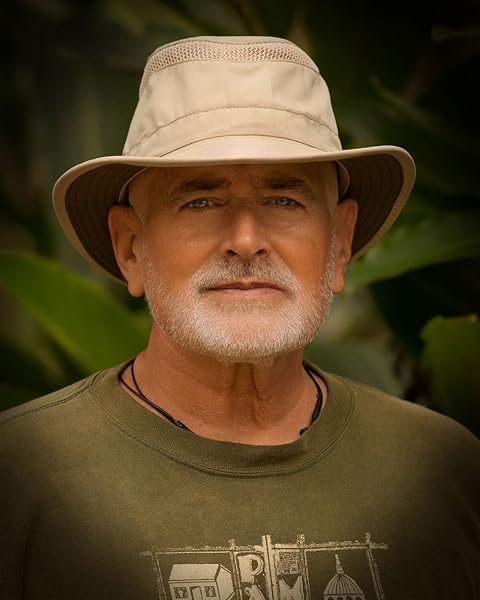
I, Robot Alien follows Scoots, a robot created by transcendent alien beings and sent to a devastated Earth to guide humanity back from devolution, while avoiding involvement in any significant event.
What are some things that you find interesting about the human condition that you think make for great fiction?
I am constantly amazed at the vast gulf between the highest qualities, skills, and positive attributes of human beings and their propensity for depravity, ignorance, and violence. Due to the apparently infinite reservoir of possibilities, there is no dearth of material for great fiction.
I find that, while writing, you sometimes ask questions and have the characters answer them. Do you find that to be true? What questions did you ask yourself while writing this story?
Yes, that’s true, because every character has an individual answer to every question, thus revealing much about themselves through their answers. My personal questions have much more to do with maintaining credibility, continuity, consistency, and clarity—a whole lot of ‘Cs’ to keep in mind.
I hope the series continues in other books. If so, where will the story take readers?
There will be 2 more books in the series. I am currently writing I, Robot Tessa, about a female robot, which will be published on August 10, 2026. The fourth book, I, Robot Human, promises to be darker and less optimistic than the first three.
Author Links: GoodReads | Facebook | X (Twitter) | Website | Amazon
I was created by beings who couldn’t touch this world … only watch it crumble.
Every twenty years, a new tribe … a new hope … a new failure.
I was told, “Do not interfere.”
But watching them die … again … again …
I wasn’t meant to change history … only guide it.
Silently.
Humanity had a second chance … I was left to make sure they didn’t waste it.
But I broke Directive Three.
Can they survive a second collapse … can I?
Out Of the Drawer
Stupid Gravity follows a sharp but disgraced software engineer who is on probation, witnesses the abduction of a girl from a homeless shelter, and has to find a way to save her without breaking her parole. What was the inspiration for the setup of your story?
I created Alex/Liliane as a secondary character in my first attempt at writing a novel. That particular Not Ready for Primetime manuscript went into a drawer and never came back out, but the rocky backstory of the strange little hacker girl with the gray-fendered Mustang stuck with me. A few years later, I brought her back in a NaNoWriMo project that morphed into a full first draft, Shadow Girl. A discussion with Hank Phillipi Ryan at a writer’s conference led me to realize that what I had really written was the second book in the series and that I needed to go back and develop the origin story. The result was Stupid Gravity.
Alex can’t seem to catch a break and just wants to get her life back on track, but the universe seems to have other plans for her. What was your inspiration for their characters’ interactions and backstories?
Back in the Nineties and Aughts, I used to hang out at a carriage house on Capitol Hill where first one and then another of my friends lived and sold weed. I’ve sometimes reflected on the irony of that little business operating comfortably and profitably for over twenty years while hundreds of more technically legitimate Denver businesses came and went. Visitors stopping in for pot or just a cup of coffee and conversation included lawyers, college professors, two dominatrixes who lived next door, one published poet, a former Penthouse pet, numerous players in the local recreational pharmaceuticals scene, a PO stopping in to buy weed from his probationer, and many more unique Capitol Hill specimens. The incidents and people from that carriage house still provide a wealth of inspiration.
Do you think there’s a single moment in everyone’s life, maybe not as traumatic, that is life-changing?
I think many people have dramatic changes in their life path due to some personal or shared tragedy. We certainly hear about individuals driven to careers in medicine, law enforcement, religion, etc., by such events. In recent years, it would be hard to calculate how many lives were drastically altered by 9/11. For most of us, though, I think life is a little more like billiard balls caroming about on a pool table. I know I’ve frequently thought back on the way seemingly innocuous decisions changed my life—a college course taken, a chance encounter in a bar, a job offer accepted or turned down, etc.
Can you tell us what the second book will be about and when it will be available for fans to purchase?
Set two years after the series opener, Shadow Girl is in the final stage of beta reads and should be released in early 2026. Still the employee-from-hell at HappyMart, still rooming with Cici, and still on probation, Alex/Liliane has developed a side gig doing what she likes to call street-level detective work. That knife-edge balance of an existence comes under threat when a stalker threatens to expose her litany of probation violations. His price for keeping quiet is a hacking job as liable to land her in prison as keep her out.
Author Links: GoodReads | Website
Disgraced software engineer Liliane Dupuis is genius-level smart, wise in the way of sarcasm, and incurably socially inept. She’s also living in her car, a forty-year-old blue Mustang fastback with one primer gray fender. She’s on probation, having allowed a manipulative ex-boyfriend to drag her into a failed ATM hacking scheme. And she’s unemployed in 2010 when finding a job is tough even for those unburdened with a felony conviction. When Liliane witnesses the abduction of a little girl from a homeless shelter, she doesn’t figure her new bottom-rung reality carries the risk tolerance for getting involved.
With funds dwindling to desperation level, she uses a fake ID to land a job at a convenience store on a seamy stretch of Denver’s Colfax Avenue. Less than a week into her new salesclerk career, Liliane watches as the shelter kidnapper walks into her store. It’s not a coincidence, she knows. Just karma continuing to mess with her. A call to the police might or might not get the abductor locked up, but the exposure of Liliane’s parole violation will absoluely land her on a Sheriff’s bus headed for the state pen. Instead, she must use her resourcefulness, hacking skills, and ruthlessly logical gray matter to track down the kidnapper and rescue the little girl.
The “Hard Question”

The INCARNEX Rebellion follows a scientist and the girl he is raising in hiding as they try to survive the aftermath of a Britain reshaped by mind-transferring technology. Where did the idea for this novel come from?
The idea began with the “hard question” in consciousness theory, which asks where consciousness truly resides. Is it biological, something created by the mind and body working together, or something that exists beyond our physical form? That led me to wonder what happens in the moments after death and when exactly consciousness disappears.
Of course, if we ever discovered exactly where consciousness exists, someone would inevitably try to control it. That idea formed the core of The INCARNEX Compound, where resurrection is possible but comes with consequences.
For The INCARNEX Rebellion, I wanted to take things a step further. A company that could restore consciousness into a new host body would no doubt eventually try shifting it between bodies. Body-swapping is a classic sci-fi trope, but I wanted to explore it from a different angle, asking what happens when consciousness itself becomes something that can be transferred, stolen, or turned into a weapon.
The science inserted in the fiction, I felt, was well-balanced. How did you manage to keep it grounded while still providing the fantastic edge science fiction stories usually provide?
Thank you. That balance was something I worked hard on. My approach was to let the science serve the characters instead of overshadowing them. At its core, the story is about David and Celia and the people they join along the way. Their emotional journey keeps the technology grounded. If the characters feel real, the science feels more believable as part of their world.
I also made sure that INCARNEX had limits and real-world implications. These flaws helped keep it realistic and also added pressure and urgency to the story. The science needed to feel like a step forward from what we understand today, not something so advanced that it loses connection to reality.
What is the most challenging aspect of writing a trilogy?
The biggest challenge for me was developing character arcs that felt authentic across all three books. The events of the first novel have long-term consequences, and I needed to reflect how those experiences shaped everyone’s goals, fears, and choices in the second book. I did a lot of reading on trauma and psychology to help keep those reactions believable.
Another challenge was keeping everything cohesive while still escalating the stakes. I had to blend action, science, and character development into one larger narrative that still allowed the second book to stand on its own. It was a difficult balance but has also been one of the most rewarding parts of writing the trilogy.
Can you give us a glimpse inside the final installment of the INCARNEX trilogy? Where will it take readers?
Certainly. The final book is titled The INCARNEX War. Britain has split apart, and the events of the second book have pushed the country into full-scale civil war. David and the rebels lead the south, while the north is controlled by a regime built on fear, control, and ruthless ambition. It becomes a classic struggle of fascism and corporate power on one side and the hope for freedom and liberty on the other.
But war is not the only threat. A terrifying discovery forces the characters to confront choices far more difficult than they expected. They are no longer fighting only for freedom but for the survival of everyone touched by INCARNEX. A few familiar faces return, old rivalries resurface, and the stakes rise to their highest point.
Readers can expect a dramatic and intense conclusion, with twists, sacrifices, and the largest war dystopian Britain has ever seen!
David Harris has spent years in isolation, desperate to protect his adopted daughter Celia. But when his technology is weaponised in horrific new ways, hiding is no longer an option.
As Celia flees to New London, determined to take vengeance on the man who murdered her mother, David faces an impossible choice: join the rebels’ brutal scorched earth campaign and risk becoming the very thing he’s fighting, or lose Celia and any hope of a normal life.
Hunted, deceived, and pushed to their limits, both are forced towards lines they swore they’d never cross. To defeat a monster, they may have to become something worse.
Is the Grass Greener?
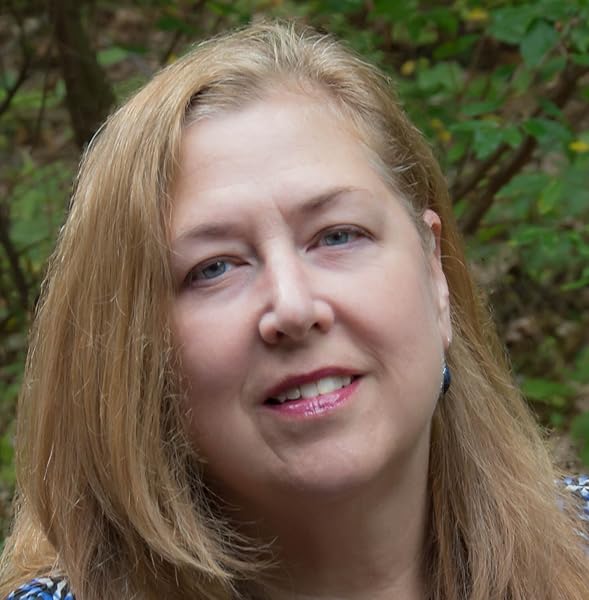
Having It All follows a devoted mother and Wall Street trader, who tries to hold together a demanding career and a family when one disaster after another hits, leaving her to make a desperate decision. What was the inspiration for the setup of your story?
I started out with the idea to show three women with very different lifestyles, a single woman, a stay-at-home mom and a working mother, and show that each was a viable option. And you see these three characters in the book. But the working mother ended up being the focus. Perhaps because that was what I was most familiar with myself.
Dalia is a relatable character that many modern women will see parts of themselves in. Was there anything from your own life that you put into the characters in your novel?
There was plenty! This was originally my first attempt at writing a novel. I gave Dalia a security trader position because that was my job and I figured it would save on the research involved with using an alternative. So, I had the long commute, the stressful day and the child and husband to juggle.
I put the manuscript away for years because I couldn’t resolve some issues with the plot, but five published books later, I knew how to fix the problem. I kept the book set in 1997 because that’s when I started writing it, and if the characters had modern technology, the story wouldn’t work, and the trading details wouldn’t be accurate anymore.
What were some themes that were important for you to explore in this book?
Back in the day, they led women to believe they could have a perfect life as a working wife and mother with nothing having to suffer. That it should all be a simple snap of the fingers. But everything in life has its ups and downs. Also, the grass isn’t always greener on the other side, so be sure to take time to be grateful for what you have.
What is the next book that you are working on, and when will it be available?
I’m working on the second book in my Findale Fae Mystery series with hopes to have it available by the end of 2026.
Author Links: GoodReads | Facebook | Website | Instagram
1997––Dalia Roberts had it all––a successful career on Wall Street, a big beautiful house, a loving marriage, and two fantastic kids. But along with those blessings came the work-related stress, the harried days and sleepless nights, the long commutes, and the constant, never-ending juggle of marriage, children, and finances.
Despite being a two-paycheck family, Dalia and Joel Roberts must juggle to make ends meet. Then disaster after disaster hits, leaving their once-perfect home life, along with the professional persona Dalia had worked so hard to perfect, in shambles. Burnt out and unable to think clearly, Dalia makes a desperate decision. Will this ill-thought-out move be the answer or only cause further heartbreak?
Belinda Gordon’s poignant new contemporary fiction unpacks the complex struggles and financial challenges working women with families face when trying to have it all.



 LITERARY TITAN