Category Archives: Five Stars
Abigail Trench
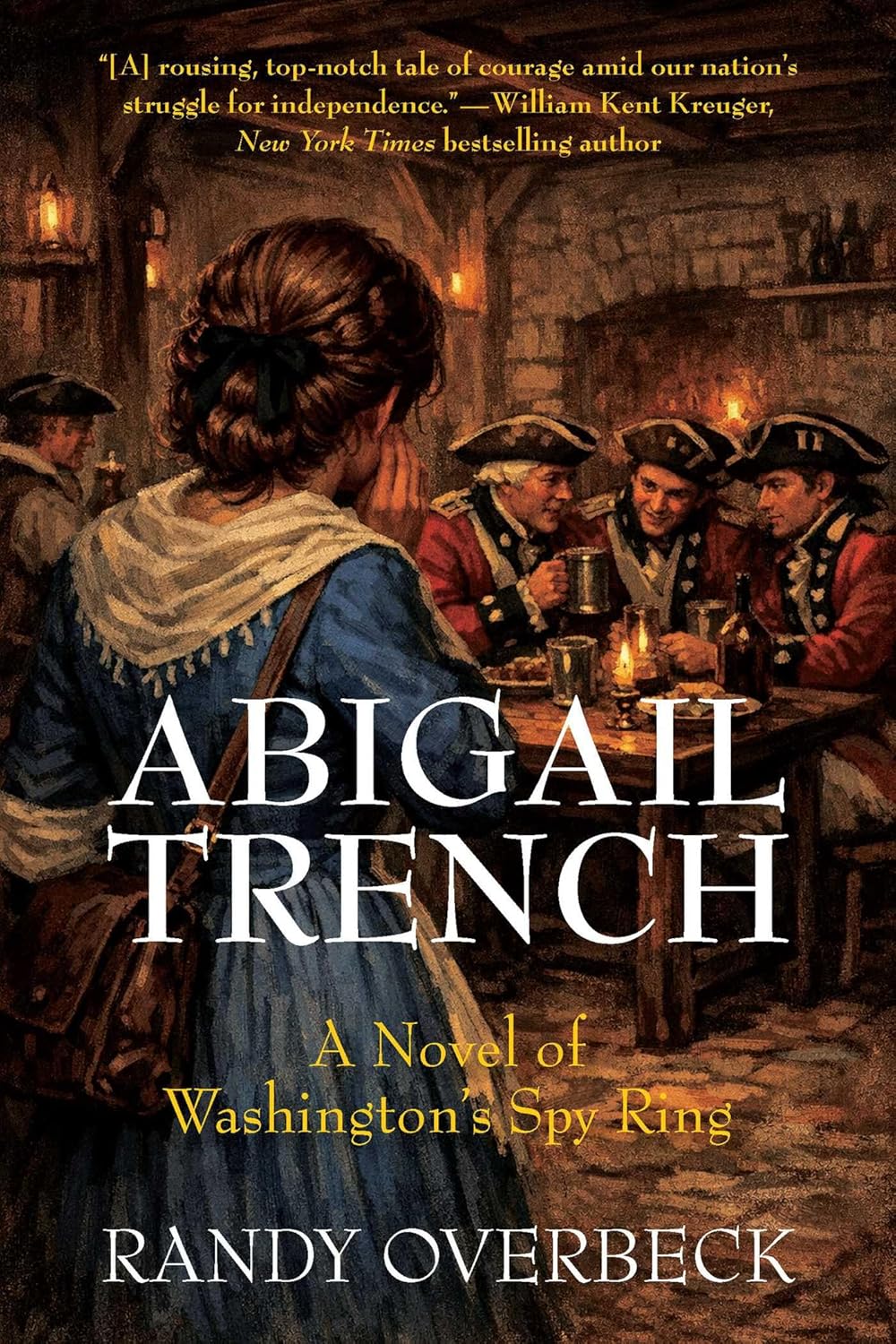

Abigail Trench is a historical spy novel that starts in the muck, noise, and cruelty of Revolutionary-era New York and never really lets you forget how precarious daily life is there. The opening makes that clear right away, with Abigail arriving in the city looking for work and instead finding herself in a crowd watching a public hanging. When Molly tells her, “Your first hangin’, huh? Ya get used to it,” the line works as both character detail and mission statement: this is a book about what people get forced to live with, and what it costs them to keep going.
What the author does well is build the novel from the ground up. Abigail isn’t introduced as a ready-made legend. She’s a teacher, recently uprooted, trying to earn a living, carrying trauma she can’t fully speak aloud, and learning the city through its taverns, dockyards, drawing rooms, and alleys. That gives the book a strong sense of texture. It feels interested in work, class, danger, and the small negotiations people make just to get through the day. The result is a story that treats espionage not as glamour, but as something stitched out of observation, nerve, timing, and need.
The novel is also a character-driven account of political awakening. Abigail’s path into the world of Nathan Hale, Robert Townsend, and the wider intelligence struggle grows naturally from who she is, rather than from plot machinery alone. One of the book’s strongest ideas is that the Revolution isn’t only being shaped by officers and generals. It’s also being shaped by tutors, servants, laborers, sex workers, hustlers, and merchants, all of whom move through spaces the powerful don’t fully control. When Nathan says, “Men and women need to decide if they are willing to knuckle under to the crown’s tyranny or . . . do something about it,” the novel’s real interest comes into focus. It’s not just telling a spy story. It’s telling a story about civic courage spreading through ordinary lives.
I also liked that the book keeps its emotional center close to Abigail even as the historical stakes widen. The friendships with Molly and Jamie give the story warmth and rough humor. The shifts from Nathan Hale to Robert Townsend add different shades of intimacy, grief, and trust. And the espionage plot works best when it grows out of those relationships, especially in scenes where Abigail has to listen, improvise, and hold her nerve while moving through British-controlled spaces. By the later sections, the novel has become a portrait of a woman learning how to make herself legible in one world and invisible in another.
Abigail Trench is an accessible, vivid piece of historical fiction that blends Revolutionary War intrigue with a personal story of survival and self-invention. What I liked most wasn’t just the spy-ring premise, though that’s a strong hook. It was the book’s sense that history is lived at street level by people who are frightened, resourceful, wounded, stubborn, and often underestimated. Abigail’s journey from displaced schoolteacher to someone capable of operating inside a dangerous political world gives the novel its pulse. It’s a story with grit, momentum, and real affection for the people history usually leaves at the edges.
Pages: 384 | ASIN: B0G93VFZTD

Wake Up!!
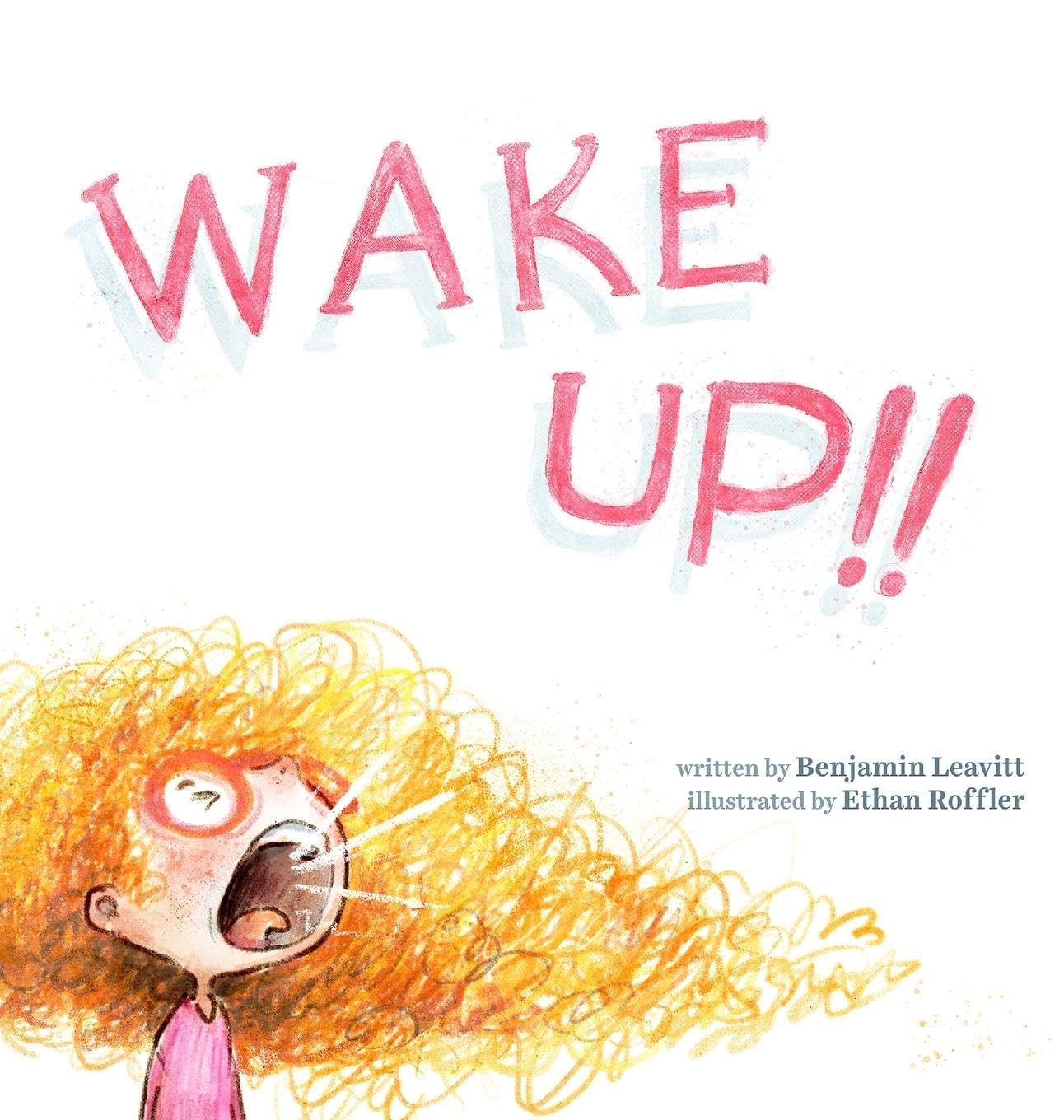
Benjamin Leavitt’s Wake Up!!, illustrated by Ethan Roffler, is a delightful picture book about the runaway force of a child’s imagination at bedtime. From the opening page, the story radiates restless energy. A wide-awake child resists sleep with absolute determination, while an exhausted parent struggles to keep pace and, eventually, get some rest.
Told from the father’s perspective, the story places readers right in the middle of his daughter’s whirlwind imagination. What begins as an ordinary bedtime soon spirals into a series of increasingly chaotic, funny, and unpredictable moments. Animals appear as if summoned from thin air, each new arrival adding another layer to the child’s ever-expanding narrative. The escalation feels natural. It also feels familiar. Anyone who has tried to persuade a child that bedtime truly means bedtime will recognize the pattern at once. One idea sparks the next. The chaos gathers momentum. The parent is left trying to untangle it all and guide them both toward sleep.
One of the book’s greatest strengths is its relatability. Children will recognize themselves in the story’s boundless imagination, that remarkable ability to stretch a single moment into an entire world. Parents will recognize something else entirely: the fatigue, the patience, and the quiet desperation of trying to settle a child who will not stop talking, wondering, or inventing. The result feels honest, amusing, and unexpectedly comforting.
The writing has a lively rhythm that makes the book especially effective as a read-aloud. The prose moves with ease and has the natural cadence of conversation, which suits bedtime reading beautifully. There is also a pleasing irony at work: reading a book about a child who refuses to sleep while attempting to coax your own child to sleep. That contrast only adds to its charm.
The illustrations were easily my favorite part of the book. They carry a crayon-like texture that feels playful, warm, and immediately familiar, almost as though they were drawn by a child. That quality makes the story even more immersive for younger readers. The artwork does more than complement the text; it actively advances the storytelling. For children just beginning to read, that visual support is especially valuable.
Wake Up!! is funny, energetic, and deeply relatable, and I would recommend it to any parent who has ever spent the night wide awake because of a child’s unstoppable imagination.
Pages: 44 | ASIN : B0GV1LQGYJ

Carrasco 67′ A harrowing tale of an Imperialist Pig

Carrasco ’67 is a historical suspense novel that drops the reader into Montevideo in 1967 and builds its story around political fear, family vulnerability, and a city that feels like it’s listening in. Author Elaine Broun frames the book as “a fictitious interpretation based on a true story,” and that matters, because the novel reads like a dramatized account of a real danger rather than a purely invented thriller. From the opening phone call, when Peter tells Paula, “The children, us, we are in danger,” the book announces exactly what kind of story it wants to be: urgent, personal, and rooted in the panic of trying to protect a family when the world around them has turned unstable.
What the novel does especially well is create a constant sense of exposure. Broun gives the political climate a lived-in texture through hotels, offices, chauffeurs, school runs, dinner events, bodyguards, and whispered logistics. The setting isn’t just backdrop. It’s the pressure system that shapes every choice. The affluent neighborhood of Carrasco, the business culture, and the presence of the Tupamaros all feed the book’s atmosphere, so the danger feels embedded in daily life rather than pasted on top of it.
The novel is also very character-driven, though in a direct, old-school way. Peter and Paula Gray are written less as complicated antiheroes and more as a family unit under siege, which gives the book a steady emotional center. Miguel de Luna, on the other hand, is drawn as a volatile, deeply self-involved threat, and Broun makes him effective by showing how fear becomes his method long before it becomes anyone else’s. When he says, “Frightened people are controllable, they become weak,” the line works because it doubles as both his worldview and the novel’s central argument about terror.
Broun’s prose leans into detail, sometimes almost scene by scene in the way it tracks movement, clothing, rooms, cars, and gestures. That can make the pacing feel deliberate, but it also suits the material. This is a book interested in procedure: surveillance, escape plans, daily routines, security checks, and all the tiny habits that suddenly matter when a family is being hunted. By the time the story reaches its late-stage operation to get the Grays out of the country, the accumulation of those details pays off because the rescue feels earned, organized, and tense rather than conveniently dramatic.
Carrasco ’67 is a family-in-peril historical thriller with a strong sense of place and a clear moral pulse. It’s most compelling when it stays close to the human cost of political violence and the quiet bravery of the people trying to keep one another alive. The book’s emotional engine isn’t spectacle. It’s the steady question of what ordinary life looks like once fear moves into the house and refuses to leave. That gives the novel its staying power, and it makes the story feel less like an action tale and more like a sustained account of endurance.
Pages: 234 | ASIN: B09BLBW45X
Three Little Words


Three Little Words is a memoir about survival, memory, and the long, uneven process of taking yourself back. Lucy Clifford frames her story through the language of energy, which gives the book its particular shape and voice. She isn’t just telling you what happened to her. She’s tracking what those experiences felt like in her body, how they echoed through family life, and how they kept surfacing years later. That approach gives the book a strong emotional thread from the opening pages onward, and it helps the memoir feel personal rather than performative.
I liked how vividly Clifford writes about childhood perception. She captures the way a child reads danger before she can explain it, and that gives the early chapters a real pulse. The family scenes are especially effective because they aren’t flattened into simple categories. Warmth, humour, protection, fear, and confusion all exist at once.
The book’s voice is one of its biggest strengths. Clifford can move from sharp observation to dark humour to painful clarity without losing herself on the page. Even when she’s writing about trauma, she keeps the prose grounded in concrete moments: car journeys, family gatherings, hospital corridors, weddings, letters, friendships, and the strange ways ordinary settings can carry enormous emotional charge. That conversational style makes the memoir accessible, and it also makes the harder passages hit with more force because they’re told so plainly.
I also think the book knows what story it wants to tell. This isn’t a memoir that tries to wrap everything up in a bow. It’s more interested in tracing the beginnings of self-reclamation, in naming what was taken, and in showing how a person starts to gather herself back together. When Clifford writes, “They stole my energy. I’m stealing it back,” it works as more than a dramatic line. It feels like the book’s mission statement, and the chapters keep returning to that idea in different forms.
Three Little Words is an intimate and emotional memoir that blends personal testimony with reflection in a way that feels sincere and specific. Its strongest qualities are its honesty, its sense of emotional texture, and its refusal to separate pain from personality. Clifford comes through not just as someone recounting harm, but as someone trying to understand how a life gets shaped, fractured, defended, and reclaimed. By the end, the book feels less like a final verdict on the past and more like a clear, hard-won act of self-definition.
Pages: 130
The Resettlement of Vesta Blonik

The Resettlement of Vesta Blonik is a historical fiction novel set in 1937 and 1938, during the Depression, and it follows Vesta Blonik, an unmarried farm woman in rural Minnesota whose father quietly arranges a future that leaves her behind. As Vesta realizes just how precarious her place in the world is, the story widens to include Gordon Crenshaw, a grieving man in North Carolina whose family’s desperate plan draws the two of them together through letters, half-truths, and the possibility of a new life. This is a novel about survival, dignity, and the strange, fragile ways hope can arrive when life has already taken a hard swing at you.
Author Denise Smith Cline writes with a plainspoken steadiness that feels exactly right for Vesta, and that choice gives the book a lot of its force. The prose trusts small details to do the heavy lifting, whether it’s the smell of damp wool, the ache of farm work, or the comfort Vesta finds beside Lottie the cow. I liked that the writing never begged me to feel something. It just kept laying honest detail beside honest detail until the emotional weight built on its own. That kind of restraint is harder to pull off than it looks, and here it works.
I also admired the author’s patience with her characters. Vesta could have been written as a symbol of rural hardship, or as a simple underdog to cheer for, but she feels much more lived-in than that. She is proud, lonely, watchful, capable, and sometimes a little awkward in ways that made me trust the book more. Gordon, too, could have turned into a neat plot device, but the novel gives his grief and uncertainty real room. What interested me most was how this historical novel keeps asking quiet questions about dependence, gender, class, and who gets to make decisions for whom. None of that feels forced. It just sits there in the story like cold air coming through a crack in the wall.
I came away thinking this book will mean the most to readers who like character-driven historical fiction with emotional depth, especially novels that move at a decent pace and care more about the characters’ inner lives than spectacle. I would recommend it to people who enjoy stories of resilience, complicated family ties, and hard-won tenderness, and to readers who like their historical fiction grounded, compassionate, and just a little bruised. It’s thoughtful, intimate, and quietly sure of itself.
Pages: 337 | ASIN : B0FGZMVZ7D
Wilbur’s Heart

Wilbur’s Heart begins with a premise that sounds like a dare and then keeps following it: a failing patient receives a pig-heart transplant, a bold Boston surgeon teams up with an eccentric New Hampshire device crew to make xenotransplantation viable, and what starts as a medical long shot sprawls into a story about risk, attachment, politics, romance, and the unnerving possibility that an organ may carry more than tissue. By the time the novel reaches its late turns, the book has braided together operating-room tension, public controversy, and the strange afterlife of Wilbur himself with a confidence that is half earnest, half gleefully audacious.
I read it expecting a straightforward medical thriller and got something more oddball and more animated: a novel with scalpels and immunosuppressants in one hand and a streak of mischief in the other. The dialogue often has an old-fashioned, talky vigor; characters banter, flirt, needle one another, and occasionally sound larger than life, but that expansiveness is part of the book’s charm. I was especially pulled in by the way the novel keeps returning to the emotional absurdity of the central act: not merely “can this surgery work?” but “what does it do to the people who consent to it, perform it, defend it, fear it, or begin to believe in it?” When the book leans into cellular-memory eeriness and Wilbur’s lingering presence, it acquires a pleasantly uncanny shimmer.
I also admired the book’s refusal to become antiseptic. For all its technical talk, it is not bloodless; it is emotional, sometimes sentimental, sometimes wry, and willing to be a little pulpy in the best sense. The final stretch won me over because it commits fully to its own peculiar weather: high-stakes surgery, grief, political fallout, romantic crosscurrents, and a last note that is genuinely strange rather than neatly explanatory. The novel throws a lot onto the table, and not every subplot lands with equal force. But Wilbur’s Heart has a kind of unabashed narrative appetite, and I found that invigorating.
I’d hand this to readers who enjoy medical thrillers, speculative thrillers, science-inflected fiction, and character-driven suspense with a taste for ethical provocation and a dash of romantic turbulence. It should especially appeal to people who like medicine in fiction not as wallpaper but as the engine of consequence. In spirit, it feels closer to Robin Cook than to Michael Crichton: less icy, less purely mechanistic, and more interested in the human ache and eccentricity around the science.
Pages: 263 | ASIN : B0FLVS2TVN
In Jake’s Shoes

In Jake’s Shoes is a work of contemporary literary fiction with a strong family drama and coming-of-age core, and it follows Jake Gatlin, a young soldier serving in Mortuary Affairs in Afghanistan, while also tracing the older grief and silence that shaped him back home. As the novel moves between war, memory, and the letters Jake wrote to his dead grandmother, it slowly becomes a story about loss, guilt, and the hard work of finally seeing someone you thought you already knew. It’s not just about what happened to Jake. It is also about what his family, especially his father, failed to understand until it was almost too late.
Author Andrew C. Phillips does not rush the pain in this book, and he also doesn’t try to dress it up too much. The novel trusts ordinary family moments, old arguments, private letters, and half-finished conversations to carry real weight. I liked that the book lets Jake feel wounded, observant, tender, and angry all at once. The letters to Gammy Gat could have felt like a gimmick in another novel, but here they become the quiet engine of the whole story. They give Jake a voice that is open in ways he cannot be with the living, and they also give the novel its deepest sense of intimacy.
I also found myself thinking a lot about the father. In many books like this, the emotionally blocked parent is there just to be judged. Here, Phillips does something harder and better. He lets Marshall be wrong without flattening him into a villain. That choice gave the novel its professional edge for me, because it pushed the story beyond easy blame and into something more honest about family, masculinity, and the stories parents tell themselves about discipline, strength, and love. The novel is direct to the point of sentimentality. Still, I respected that openness. The book means what it says. And by the end, that candor felt earned rather than naive, especially once the father begins to understand Jake through the letters and, finally, through grief.
I would recommend In Jake’s Shoes most to readers who like heartfelt literary fiction, family-centered war novels, and stories of grief that lean toward healing rather than irony. People who respond to books about parents and children missing each other emotionally, then trying to bridge that distance, will probably find a lot here. It’s a reflective, sad, generous novel, and it feels written from a place of real care.
Pages: 345 | ASIN : B0G6G8R4QT
More Other Such Matters

Fella Cederbaum’s More Other Such Matters is a book of spiritually searching poems that circle around identity, love, mortality, truth, and the terrible persistence of the thinking mind. The collection moves less like a narrative than like a sustained act of inquiry, each poem worrying at the same great questions from a different angle until they start to glow. Again and again, Cederbaum turns to direct address and cascading questions, asking what remains when profession, doctrine, self-image, fear, and even opinion fall away. Poems like “Before You Were You,” “Faith,” “The Knower And The Known,” and “The Mirror” make the book feel like both a meditation manual and a private reckoning, though its strongest moments are more intimate and embodied than abstract.
What struck me most was the book’s unusual combination of severity and tenderness. Cederbaum can sound almost admonishing, as if she’s trying to shake the reader awake, but there’s warmth under that urgency, and often a real ache. I felt that most sharply in poems where the philosophical pressure gives way to something bruised and personal, like the old tears in “Love Broke Through,” the lonely vastness of “One Single Tear,” or the quietly devastating recognition in “What I Thought I Wanted,” where imagined identities keep turning bland in the hand. Even the more playful poems, especially “My Universe of Cheese,” have that same undercurrent: delight laced with metaphysical impatience. I admired the refusal to settle for easy consolation. This isn’t poetry interested in decorating experience. It wants to strip experience bare.
The book is most effective when its style becomes genuinely musical. Cederbaum has a real instinct for repetition, for the pressure of a recurring phrase, for the way a question can become its own rhythm. Her best lines have lift and clarity, and her images can be surprisingly memorable, as with the orchid and the daisy, the cat as a silent teacher in “Medical Journeys,” or the mirror that keeps changing with praise, desire, and self-doubt until the poem lands on a wiser, steadier truth. The poems return often to oneness, surrender, and the unreliability of thought. But even then, the voice is unmistakably authentic.
I found More Other Such Matters earnest, searching, and often deeply affecting. It’s a book less interested in polish than in penetration, less interested in literary coyness than in saying the largest things as plainly as possible. I think readers drawn to spiritual poetry, contemplative writing, and emotionally candid meditations on selfhood, love, and impermanence will find a great deal here.
Pages: 156 | ASIN : B0FR37DNSZ


