Because of His Heart


Because of His Heart tells a twisting story of strained love, private wounds, and the strange ways people hide from themselves. The book moves between Charles Portland, a journalist who stumbles through heartbreak and confusion, and Erica Seames, a doctor whose inner world spills into journals, therapy sessions, and dream-like reflections. Their marriage trembles under jealousy, grief, illness, and the pull of outside influences. Around them swirl detectives, therapists, academics, and a host of observers who add tension and mystery. What begins as a domestic rift grows into a psychological maze that pushes everyone toward breaking points and revelations. The story feels intimate and huge at the same time, like a whisper that somehow shakes the walls.
I felt pulled in by the writing right away. The style is rich, sometimes thick with emotion, sometimes floating in quiet sadness. I caught myself slowing down just to feel the rhythm of a paragraph. At other times, I sped ahead because the tension swelled and I needed to know what someone would say or remember or confess. The voices of the characters shift often, and that creates a strange, almost musical pattern. I enjoyed that. It felt risky and bold. When the book turns inward, especially through Erica’s journal passages, I felt a kind of ache, something tender and unsettling. The language is lush, sometimes a little wild, but it fits the turbulence inside her.
The book probes marriage. It pokes at the pride and fear that sit quietly between two people who love each other but stop speaking honestly. It also wanders into questions about identity, longing, projection, and the blurry line between truth and imagination. Some sections confused me in a way that felt intentional, almost like the author wanted me to experience the disorientation the characters felt. At times, I wished for clearer edges, yet the fog added to the emotional weight. I admired how the book balanced real-world problems with almost mythic undertones. Charles and Erica felt fragile but also alive, and their pain carried a beauty.
I would recommend Because of His Heart to readers who enjoy psychological fiction that digs deep into relationships and the hidden storms beneath daily life. It is perfect for someone who likes character-driven stories that wander through memory, longing, and emotional tension. If you want a straightforward plot, this may feel heavy. If you love getting lost in voices, feelings, and messy human truths, this will be a fantastic book for you.
Pages: 555 | ASIN : B0FS5BF8GD

Careers By the People: Candid Career Advice from 101 Experienced Professionals

Careers By the People is a wide-reaching look at what real work feels like for real people. Mike Wysocki gathers 101 interviews that span everything from CEOs to beekeepers to teachers, and he lets each person speak plainly about what their days look like, what they enjoy, and what grinds them down. The book moves through these stories with an easy rhythm. It shows how career paths twist and turn. It also explains how personality, luck, stubbornness, and honest self-reflection shape a life more than any job posting ever could.
I liked how direct the voices were, since many career books wrap advice in buzzwords. This one does not bother with that. The interviews feel like short but candid coffee chats. I caught myself underlining certain lines because they hit close to home. The mix of pride, regret, humor, and grit reminded me how messy most careers really are, and that made the entire book comforting. I also appreciated how Wysocki frames the stories with his own reflections. He speaks openly about his missteps. His tone feels friendly, almost like a mentor who refuses to sugarcoat anything.
At times, the honesty stings. Some stories feel heavy, and a few made me anxious in the best way because they pushed me to think harder about my own choices. When several similar roles appeared in a row, the forward momentum slowed. Still, that repetition also proved the point that every job contains highs and lows. I found myself enjoying the unpredictable flow of opinions. Some workers adore their field. Others are blunt about their frustration. I liked that mix. It made the book feel alive.
I would gladly recommend Careers By the People to high school and college students, early career professionals, and anyone who feels stuck or restless at work. The book works well as a guide, but it also works as a reality check. It gives readers permission to explore, to question their assumptions, and to admit when something does not fit. If you want straight talk, human stories, and a push to think about what you actually want from forty years of work, this book will serve you well.
Pages: 570 | ASIN : B0BPX59FT5
A Personal Challenge

The Manglers of Carraig centers around a boy fighting to protect his mother and sister and a jeweler known for her grim designs, both living in a world split by wealth and riddled with monsters. Where did the idea for this novel come from?
Believe it or not, the idea came from Brandon Sanderson’s writing course. I was in a bit of a literary slump, so I decided to check out the free creative writing course Brandon Sanderson posted on YouTube. In one of the classes, he asks students to come up with a setting or plot for a horror story. One of the students suggested “economic,” which stumped Sanderson. However, as an economics teacher, I took it as a personal challenge. Not long after, the idea hit me: what if a nation’s currency was not only a medium of exchange but also something people needed to keep the monsters away at night? I immediately took that concept and layered it over Hemingway’s To Have and Have Not—and voilà, my masterpiece was born.
What intrigues you most about the horror genre?
Definitely the characters. All genres need compelling characters, of course, but there is something about horror that requires very human and flawed people. I think this is why Stephen King is so successful. His plots are powerful, but it’s his characters that keep people invested for hundreds and hundreds of pages. To be honest, I would consider The Manglers of Carraig more dark fantasy than horror, but I knew I needed compelling characters if I was going to get readers invested in the setting.
What was your favorite scene in this story?
The scene with the Finger Baron. The chapters set in the Hen House, in general, are some of my best writing. I remember when I finished those chapters, I felt tremendous pride in how they turned out. Normally, I’m nervous after finishing a chapter because I worry the writing wasn’t as clear as it felt while it poured from my fingertips. But I had so much fun writing those chapters that they required almost no revisions in later drafts. The interaction with the Finger Baron was especially fun, and I actually laughed out loud at the madness I had created—or, more accurately, the madness the characters created for themselves, as sometimes happens when they take over the narrative. Hopefully, readers will find the same horror, humor, and suspense that I felt while writing the scene.
Can we look forward to more work from you soon? What are you currently working on?
I have quite a few books waiting to be discovered on Amazon, but for now, I’m working on a seafaring fantasy with pirate orcs and sea monsters. It’s in the early stages, but I’m happy with where it’s headed and hope to be finished by the end of 2026.
Author Links: GoodReads | Website | Amazon
Profound Emotional Bonds

The Third Twin follows an ER nurse who is pulled into a web of corruption and black-market adoptions when she sets out to find her missing twin sister. What was the inspiration for the setup of your story?
The inspiration for The Third Twin came from my lifelong fascination with human connection—how bonds are formed, broken, and sometimes manipulated. As DrHeatAndHeart, my work has always focused on the space where emotional intelligence meets high-pressure situations, and that lens deeply shaped this story.
Identical twins represent one of the most profound emotional bonds we know. Their connection is often intuitive, unspoken, and deeply rooted in identity. I wanted to explore what happens when that bond is violently severed—and how the absence of someone who is literally part of you can become both a wound and a driving force.
Choosing an ER nurse as the protagonist was intentional. Nurses are trained to read people quickly, to stay calm in chaos, and to lead with empathy even when the stakes are life and death. That made her the perfect heroine—not just for a thriller, but for a romance. As she searches for her missing sister, she’s also forced to confront her own emotional walls, learning that vulnerability can be just as powerful as strength.
The black-market adoption thread allowed me to explore a darker side of connection—how love, legacy, and longing can be exploited when systems become corrupt. But at its core, The Third Twin is still a love story. It’s about trust earned under fire, intimacy forged in danger, and the courage it takes to let someone see you when everything is on the line.
Ultimately, the story asks a question I return to again and again in my work: Can love survive the truth? And sometimes, more importantly, can it heal it?
Is there anything from your own life included in your characters’ traits and dialogue?
When we moved into our first neighborhood in Colorado, my next-door neighbor discovered she was pregnant, with triplets. I had the rare privilege of watching that journey unfold from pregnancy through infancy, witnessing not just the logistics of raising three babies at once, but something far more extraordinary: the invisible bond that connected the babies from the very beginning.
After the triplets were born, I helped often, which allowed me to see firsthand how deeply attuned they were to one another—even in the earliest days. Like all newborns, they fussed at times, and each was cared for individually—fed, changed, held, soothed. But when one baby became inconsolable, something remarkable happened. Simply placing one of the other babies beside them in the crib brought instant calm. No rocking. No singing. Just proximity. As if comfort lived in the shared presence of each other.
We watched their tiny hands reach out, searching, until they found one another. The moment they touched—fingers curling, palms resting—peace followed. It was clear they didn’t just recognize each other; they needed each other. This connection existed beyond sound or sight, rooted in something deeper than ordinary awareness.
As they grew, their communication became even more fascinating. Long before words, they spoke in their own language—soft babbles, rhythmic sounds, gestures, and expressions meant only for each other. Even as they learned to communicate with adults using words, they continued speaking in this private way among themselves, as though translating life into a language only they shared.
What struck me most was their awareness of one another, even when they weren’t in the same room. They seemed to sense when another needed comfort, attention, or closeness—crying, settling, or calming in patterns that defied coincidence. When reunited, their communication resumed effortlessly, as if no separation had occurred at all.
Watching these triplets changed the way I understood sibling bonds—especially those formed before birth. Their connection wasn’t learned; it was remembered. A quiet, powerful communication code that many twins and triplets experience, often dismissed as myth—but I saw it with my own eyes. It’s real. And once you witness it, you never forget it.
What is the most challenging aspect of writing a thriller?
The most challenging aspect of writing a thriller is maintaining relentless tension without sacrificing emotional authenticity. Suspense can’t exist on plot alone—readers may turn the pages for danger, but they stay for the people at the center of it.
For me, the real challenge is ensuring that every twist is earned on an emotional level. As DrHeatAndHeart, my work has always focused on how people think, feel, and communicate under pressure. In a thriller, characters are constantly operating in high-stakes environments, and if their reactions don’t feel psychologically true, the tension collapses. Fear, love, hesitation, and trust must unfold in ways that mirror real human behavior—even when the circumstances are extreme.
There’s also a delicate balance between control and surprise. A thriller requires precise pacing and careful structure, yet it must still feel unpredictable. The hardest moments to write are often the quiet ones—the pauses between danger—because that’s where readers sense what could be lost. Those moments allow space for romance, vulnerability, and connection, which ultimately raise the stakes far more than action alone ever could.
Ultimately, blending thriller and romance means understanding that danger sharpens desire, love intensifies risk, and when both are woven together, the emotional payoff becomes as powerful as the suspense itself.
Can we look forward to more work from you soon? What are you currently working on?
Yes—readers can absolutely look forward to more work very soon. The Third Twin is part of The Casanova Family Legacy Series, an interconnected collection of romance thrillers that blend danger, devotion, and the enduring power of family.
Two new novels are already in development. The first is When Fire Meets the Snow, set against the breathtaking backdrop of Aspen, Colorado. This story traces the emotional evolution of two people who are both afraid to commit, yet slowly discover a bond strong enough to build a family rooted in trust and love. Readers will also be introduced to Luna, an affectionate, purpose-trained rescue puppy—carefully selected and certified for her intelligence, temperament, and ability to serve—whose journey into becoming a skilled mountain rescue dog mirrors the healing and resilience of the people around her.
The second upcoming novel is The Heiress’s Daughter, which introduces a new heroine while weaving in familiar faces from the Casanova world. She is a classically trained chef who studied in Paris, built her career in Seattle, and then lost everything during the collapse of the restaurant industry in the wake of COVID. Seeking a fresh start, she makes her way to the wide-open beauty of Colorado, where building a career within the Casanova family’s restaurant empire brings opportunity—but also exposes her to betrayal, hidden agendas, and unexpected danger. Her journey is one of reinvention, strength, and love tested under fire.
What excites me most about these stories is the balance—introducing new voices while deepening the emotional legacy of characters readers already know. My goal remains the same with every book: to create stories that keep readers on the edge of their seats, emotionally invested, and believing in love even when the stakes are high.
Author Links: GoodReads | Instagram | Facebook | Website | TikTok | Amazon
My body guard. My mistake. My obsession.
And now I am pregnant with his twins.
Luca Stone Is a badass protector.
His mission: Protect the billionaire’s daughters
—including me.
Then danger tore through my family.
A kidnapping. Dangerous predators. Crimes we never knew.
His life changed. So did mine.
But touching him one stormy night changed everything for both of us.
Now the man I hated is the only one I can trust.
As the walls come tumbling down around us,
Can love rescue us and make life right again?
A Reflection on My Life

Looking for Trouble is a vivid, unfiltered look at police work, city life, and the long road a person walks to find purpose, starting with your childhood in Baltimore and continuing through your career in law enforcement. Why was this an important book for you to write?
It was essential to write this book for several reasons. I wanted to leave a written account of my life for children and the rest of my family, so they could see what my life and upbringing were like and be inspired to accomplish their dreams when faced with seemingly insurmountable obstacles. I also wanted to provide a voice for crime victims so the world could see the impact of crime on their quality of life. I wanted to show the world the trials, tribulations, and triumphs that police officers experience while working in the line of duty. Lastly, I wanted to provide an ethical blueprint to guide police officers and managers facing enormous challenges.
How did you balance the need to be honest and authentic with the need to protect your privacy and that of others in your memoir?
One way I balanced this was by changing the names and physical descriptions of some characters. I provided a disclaimer at the beginning of the book to help accomplish that goal. Honesty and authenticity were fundamental to me. I wanted my readers to realize that police officers have feelings, emotions, and fears. However, despite those fears, we race toward trouble while other people run from it. I wrote the book in the first person so the reader could experience scenarios through my eyes and evaluate the critical choices that I had to make.
How has writing your memoir impacted or changed your life?
Writing a memoir gave me a reflection on my life. I was able to witness my own growth and identify good and destructive patterns of behavior that I was unconscious of. I learned that my upbringing shaped many of the decisions I made. That is something that I was previously unaware of. I learned many lessons about my life and resilience that I had never considered.
The book has made me a better and more analytical person. I have become more empathetic to the challenges of others.
What do you hope is one thing readers take away from your story?
I hope readers gain a greater appreciation for the enormous sacrifices police officers make to enhance the safety and quality of life for people in the community.
Author Links: GoodReads | Website | LinkedIn | Amazon
During Maurice’s 20-year career, he memorialized his cinematic transformation from a rookie patrolman to a relentless, battle-hardened police veteran. While mastering the art of “Looking for Trouble, “Maurice soared through the ranks and was promoted to Lieutenant. The police veteran graphically describes his action-packed career. Maurice was forced to examine and reconcile his upbringing as he operated in the shadows immersing himself in a lifestyle that he spent his entire life trying to avoid. While battling drug dealers, murderers, and robbers, another battle emerged and expanded beyond the streets.
Some of his fiercest battles extended to the halls of the Criminal Investigations Division and the Narcotics Enforcement Division. Maurice believed his career was in free fall, but a crisis shook the community. Against the odds, Maurice emerged as the lead investigator of an FBI Safe Streets Homicide Task Force, creating the biggest challenge of his career. Maurice was confronted with the same drug dealer whom he clashed with while a patrol officer. The drug dealer ascended to become a Kingpin while Maurice became a detective. Maurice worked frantically to stop the killings, trying to nab the most dangerous and elusive Drug Kingpin in county history, suspected of 12 murders.
Why Was She Moaning?
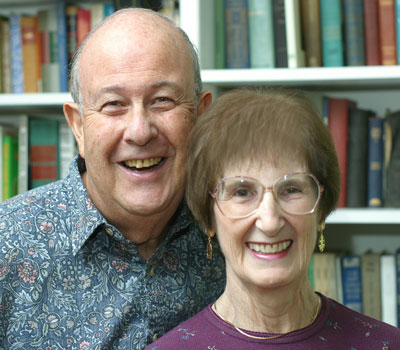
The Moaning Lisa follows an older married pair of sleuths who land in the middle of a disturbing mystery inside the Gilded Gates assisted living community, where several residents have gone missing. What was the inspiration for the setup of your story?
Almost fifteen years ago we published the three Paco and Molly mysteries: Locks and Cream Cheese, Hot Grudge Sunday, and Boston Scream Pie. We had established their ages in their sixties, but now they would be in their eighties—not exactly vigorous protagonists in pursuit of a mystery. Coincidentally, elderly relatives of ours were kicking and screaming over the prospect of moving into a retirement facility. Their reluctance and fears sparked the idea for a setting where Paco and Molly might flourish. One day, just kidding around about the Mona Lisa, one of us happened to say “Moaning Lisa” and it clicked right away. Who was Lisa and why was she moaning? We dove into the plot.
I loved the characters of Paco and Molly; their personalities work well together. Was there anything from your own life that you put into the characters in your novel?
When we started writing together decades ago, we hadn’t even considered writing mysteries—until we visited Rosemary’s father, Dr. Saul K. Pollack, a prominent psychoanalyst in Milwaukee, Wisconsin. That visit set us on a happy new course. Her father, a widower in his seventies, had a housekeeper/gourmet cook named Dorothy. She was sixty-three, with a beach ball figure, waddle walk, taffy-colored curls, and a good-natured, nosy-body personality. She had never gone past the tenth grade, but she was super-smart and keenly observant.
Dorothy also had a unique way of expressing herself. “I have to take my calcium so I don’t get osteoferocious.” During our visit, Rosemary’s father pulled out a piece of paper from his desk drawer and handed it to us: his secret list of Dorothy’s sayings. He thought we could submit it to Reader’s Digest. Back home in Severna Park, Maryland, we studied the list and decided, “Forget Reader’s Digest. Dorothy belongs to us.” We named her Molly. Her frequent witticisms were “malaprops,” but we named them Mollyprops. The concept of malaprops originated with the character Mrs. Malaprop in a 1775 comedy of manners, The Rivals, by Robert B. Sheridan.
When Locks and Cream Cheese, our first in the series, was initially conceived, we envisioned ourselves—our own alter egos—as protagonists Simon and Rachel. But Paco and Molly came across so powerfully in the writing that they soon edged us out.
Paco is modeled after a Barcelona, Spain, police inspector I met socially aboard a U.S. Naval ship docked in that city’s harbor. I was a field engineer for RCA at the time. The short, fit, and vibrant inspector was visiting the ship to practice his English. For an entire evening, the inspector told me one impressive anecdote after another. His bushy eyebrow movements were a “tell” of his current emotions. They moved together and individually, making the man memorable even to this day.
What was the hardest part about writing a mystery story, where you constantly have to give just enough to keep the mystery alive until the big reveal?
The hardest part of writing a mystery story is building and keeping track of the details. After razzle-dazzling readers with twists, turns, and the black art of red herrings—and perhaps a subplot—we need to leave a trail of clues that make sense. It’s a matter of maintaining the readers’ trust. We want them to come back and read our next mystery.
Can you tell us more about what’s in store for Paco and Molly and what the next mystery they will have to solve is?
Any new Paco and Molly mysteries will sit on the shelf for a time while we pursue our next adventures. Last year we published our first spy novel, Kent and Katcha: Espionage, Spycraft, Romance. It won five stars and an award. We are now working on the sequel, Kauai Spies and Bald-faced Lies. Our fifth short-story collection is also brewing. Who knows if and when our Paco and Molly muse will strike again. Meanwhile, our twenty-one published books are currently displayed at our website, www/magicile.com.
Author Website
Now in their eighties, Paco and Molly have moved into Gilded Gates, an assisted living community in Maryland. They expect their golden years to be blissful. They are dead wrong. Some residents are missing and no one knows what has happened to them.
One suspicious resident is a sleepwalker and claims to have heard mysterious moaning during his night walks, but for the life of him he can’t figure out where the anguished sounds are coming from.
“Inspector Paco” has retired as head of the Black Rain Corners police force. But many residents of Gilded Gates fear they might be next on the list of the missing. They beg Paco to investigate.
Naturally, Molly also pokes her keen nose and shrewd insights into the baffling disappearances.
The Many Layers of the Past
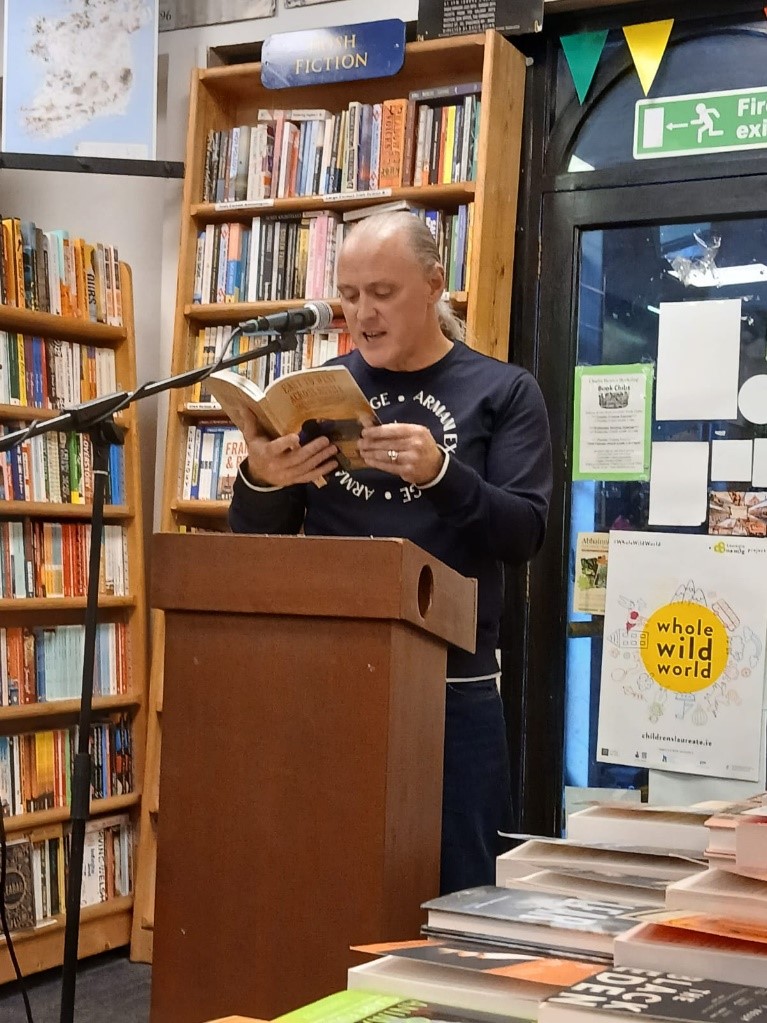
East to West Across Russia follows a man who chases a childhood dream to ride the Trans-Siberian Railway from Vladivostok all the way to Moscow, on a journey of self-discovery and introspection. What was the inspiration for the set-up of your story?
In the dedication at the beginning of the book I wrote
‘Dear N,
I dedicate the words written on these pages drenched in the cloak of my melancholy to you my great love. Has there ever been a light so illuminating, a smile so effervescent? We walked together hand in hand but now it is only I with my dreams of a love I once knew and the fate of that love never to burn in my heart again.
Always,
D
The entire narrative lives and dies and is fuelled by the character N. She is nameless and for many she is not even seen as a real life person. Some see her as a ghostly figure, a faint representation of an idealised love while others have seen her as a symbol of Old Rus, that grand and mythical era where all Soviet and Russian people long to return to. Perhaps she exists or perhaps she does not exist. In the end it really doesn’t matter but for the protagonist D, N is everything he ever wished for and dreamt of. He has no memory of life before she existed and the memory of her since she faded away from his heart continues to burn and ruptures the core of his being. D moves from east to west slowly across Russia but he also moves slowly from his past into his present and contemplating on a future without N who lingers long in his thoughts.
What were some themes that were important for you to explore in this book?
The theme of memory is crucial to the narrative of the story. It is a memoir of the protagonist as he traverses the longest train journey in the world but more importantly it is a memoir of the past and the many layers that exist not only within D but within the human mind. Every place the human being experiences becomes part of his collective memories. We can never go to any place and simply not exist and have an experience of that place. Wherever we go, there we are and a memory and timeline of such a place will always reside within us whether we can recall such a memory or not. I wanted to explore and show the theme of solitude through the nomadic wanderings of the protagonist D. We live in a world that is teeming with life but as a unique individual being in this world we can never understand what it feels like to be another human being. We can only ever feel and understand what it is to be oneself. I cannot be another human being and another human being cannot be me. We can only reside within oneself so in my narrative across the vast terrain that is both Siberia and Russia I tried to depict such solitude, such bleakness, such passion, such love, such philosophical thoughts within the individual traveller. D is an individual but when the reader gets to see and contemplate his inner thoughts we begin to understand that we too are like D. We have fears, we have anger, we have deep emotions, we have dreams and desires. We see our human frailties through D and especially so when he moves through the immeasurable raw beauty that is Siberia. The human becomes frail and finite when resting alongside such natural places of wonder. The theme of nationalism takes central stage in the long monologue scene set at Lake Baikal. The protagonist D calls out from his own brokenness across the sublime waters of Baikal and wonders is there anybody out there to listen to such a cry. In his monologue, D specifically points to the 20th century and the many examples of nationalism that aimed to divide and to destroy human beings. For D, nationalism is everything that is insular and divisive about our world. When we are nationalistic we only look inward and see a blind image of the world where we choose to fight for our own nations and in the process we challenge, deride and abuse other nations especially the much smaller ones. Nationalism becomes the great evil and occupier of human beings. We cannot become vessels for peace when the stain and blood of nationalism continues to be fuelled from within our own nations. At the core of all wars whether they be civil or world wars is a disturbed view of nationalism whose only aim it is to conquer, destroy and rule. What narrative anywhere can exist without the age old themes of life and death? They are the themes of our humanity. Life and death are inextricably linked for the protagonist D in his wanderings and tale across Russia. As D physically moves across the endless terrain of Russia the interior world becomes fused with the external and natural world of the environment. The melancholy of such thoughts within D become more pronounced as his mind wanders and lingers within his own brokenness. The 20th century of death and mayhem are used and depicted by D in his long monologue scene. Everything about that century brought human cruelty and barbarity into a new era of lust and a desire for death over life. For D, death became the great aggressor and nemesis against life and the human condition. Human illness becomes for D the natural consequence for the stain that was written into our soul from our birth. However, the philosophical and continuous choice that humans have allows us to choose whether we want our lives to be fuelled with a desire to destroy or by an energy to live and accept such a stain of corruption that is part of all of us but which we can decide not to act upon such dark impulses.
All of us human beings understands what it means and what it feels to be loved. We were all loved by somebody at one time but familial love is very different to romantic love. When we love another person in a romantic way we slowly move away from the ego that drives our energy and we channel all of our energies and desires into this other person. It becomes heroic and unselfish as we begin to love another person more than we love oneself. When that love cracks, breaks and fades into nothingness a great chasm exists for the one who has been rejected. The grief is paramount, real and it often manifests into a deep-seated melancholy just like how a physical illness attacks the human body. This is the reality for D, the hero of this tale across Russia. Who or what is D without N in his life? He was once loved by her but now she has gone and he does not have a roadmap to navigate a route back to life and love. He wanders from one place to the next and tries to live but N continues to occupy his heart. He does not know how to live and to love without her. The vast and unending plains of Russia are symbolic for the vast and unending love that D has and holds for N. I was trying to depict and expose more of the internal struggles of man. We never truly understand the magnificence and mystery of such an internal world. The reader whilst travelling on this journey across Russia will stand and sit next to D and begin to feel all of his emotions as they are released from his mind and heart. When they read and experience D’s tale they will also go along their own journey as their own memories become heightened and alive with nostalgia and feeling.
I find sometimes authors ask themselves questions and let their characters answer them. Do you think this is true for your characters?
As an author I often ask questions of myself and wonder how it feels to think in a certain way, how it feels like to undergo an illness, a grief, a torment, how it feels like to be truly loved and to love another unconditionally, how it feels like to be truly happy. In this tale across Russia it is primarily D who slowly answers such questions. Before D set out on his journey across Russia he was curious what it would feel like to stand next to the largest freshwater lake in the world at Lake Baikal. He had no idea what feelings and emotions would stir up in him on witnessing the mighty Taiga Forest range and the immense happiness that he would experience on simply riding the trains without any agenda or goal in mind other than to live and experience the pleasure of living in such a finite moment. There is a scene in the book where D meets a family on the train to Moscow. D is all alone and has lost his family and so the depiction of Christina and her family reveals to D the meaning and purity that exists within a family setting. Christina and her family become the manifestation of the ideal for D, something to admire, something to long for and a reminder of the once severing of his family. Christina reminds D that he can love again but D longs only for his N, the cradle of his spirit. There are two characters in the book who remind D of his father. He meets a policeman in Ulan-Ude and a security guard named Yuri in Yekaterinburg. It is Yuri’s wish to one day go to Irkutsk and to see Lake Baikal with his own eyes as it reminds him of his father. In these two characters D is reminded about when we are more similar in this world than how we are divisive. On his final train journey to Moscow D contemplates on the journey that has passed and has a connection with his future self who echoes his thoughts and his soul to truly live and enjoy such finite moments as such moments will one day cease for all of us. The future D becomes the present and the past D as the readers get to listen to such words travelling from the future into the present in the silence of the moving train as sleep awaits. The thoughts of D are from the future but echoing along his heart in the present as he tries to move on from the continuous pain that he carried within him since N departed his life.
What is the next book that you’re working on and when can your fans expect it out?
My second book will be very different to my first book as this first book focussed on the author in a very personal way and was a memoir from a specific point in time. This second book is going to be a collection of twenty Short Stories set in various European locations. They are fictional tales and a snapshot of life as it was lived by its characters. I have ten of these stories written already with another ten stories to write. I have chosen locations such as Paris, Copenhagen, Venice, Lake Bled, Chernobyl, Bergen, Stockholm, Berlin, Barcelona, Weimar and diverse topics such as memory loss, first love, childhood trauma, illness, loss of love, dreams, the natural and artificial environment, the epistolary form of memory and longing, the sanctity of life. I hope to have this second book completed by the end of 2026.
Author Website


 LITERARY TITAN