Blog Archives
Trusting Yourself

Rewilding follows a 12-year-old girl who finds solace in nature while struggling to keep her and her brother’s difficult home life quiet. Where did the idea for this book come from?
It started when a fledgling scrub jay landed in my woodpile. I knew there was a story in my family’s experience of trying to care for the bird. We made many of the mistakes that Joy eventually makes in the book. As Joy’s journey with nature and rewilding started to bloom, the darker challenges of her life also began to surface. At that time, I had a number of friends who were wrenching themselves out of gaslighting relationships. I began to wonder about Joy and what lots of kids deal with every day. I began to ask how do you solve a problem with no good answers? Where do you turn?
Is there anything from your own life that helped inspire your characters’ traits and dialogue?
One of my favorite artistic pursuits is collage. So often my books feel like little scraps of experience pieced together to create something new and cohesive. I have a few wild and wise older women in my life who helped inspire the character of Ezzie. And Joy’s younger brother, Ian, is absolutely modeled after my daughter, Mieke, who is full of exuberant energy and big feelings. She’s now twelve, but when I started writing the book, she was about Ian’s age. She liked to climb and jump on everything. I’m happy to report that she still does.
What were some themes that were important for you to explore in this book?
The theme of trusting yourself is very dear to me. So many of us grow up looking to others to tell us how to think and feel about ourselves. We look to others to see if we measure up, if we’re doing things the right way. But really, each of us is the expert on our own selves. We need to learn to listen to our inner voices.
Also, nature. It has always seemed to me that we humans are not here on this planet to dominate and control, but to care for and nurture and celebrate our home.
What is one thing you hope young readers take away from Rewilding?
I hope they see bits of themselves or others they know. I hope they find understanding and compassion for themselves and others. I hope those glimpses inspire them to look more closely at the world around them. Maybe that’s three things. Or maybe it’s all part of one big thing.
With her dad gone and her mom falling into depression, the responsibility of managing the household and caring for her younger brother, Ian, falls on her small shoulders. She struggles with the reality of wearing old clothes that no longer fit and constantly dealing with Ian’s hunger. Joy lives in fear that the school counselor might contact Child Protective Services due to their situation.
One day, a baby bird falls from its nest, reminding Joy of her dad’s warning, “You don’t know your own strength.” Desperate for help, Joy strikes a deal with their quirky neighbor, Ezzie, known as the “Ark Lady.” Through this new relationship, Joy, Ian, and her friend embark on a journey to restore the garden. In the process, they discover the concept of “rewilding,” which brings unexpected beauty and healing. This experience leads Joy to question her father’s views, opening her eyes to new possibilities and strengths within herself.
Rewilding
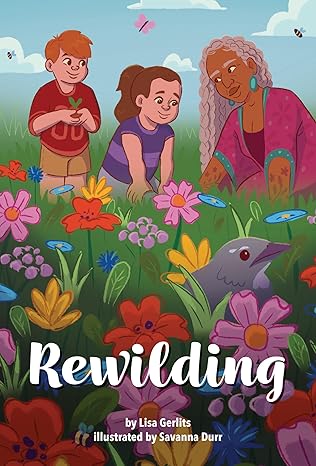

At its heart, Rewilding is a tender, poignant middle grade novel about twelve-year-old Joy, who finds herself juggling way more than any kid should. While taking care of her younger brother Ian and hiding their struggling home life from nosy adults, Joy stumbles into something unexpectedly healing: nature. Between dodging Child Protective Services and trying to keep her family from falling apart, she begins to rewild a neglected yard and, in the process, slowly begins to rewild herself.
Joy’s narration is painfully real, funny in all the right ways, and completely heartbreaking when it needs to be. Right from chapter one, when she eavesdrops on a conversation between the school counselor and her brother, we’re dropped into a world where Joy is already carrying the emotional weight of an adult. “Big clumsy Joy strikes again,” she says after barging into Bertie’s office, and that moment hits like a brick. She’s trying so hard to hold things together that you want to jump into the story and tell her she doesn’t have to. But that’s the thing, she does have to. No one else will.
The themes Gerlits weaves through the story of neglect, gaslighting, mental illness, and body image are handled with honesty and subtlety, but they never weigh the book down. Joy’s relationship with her own body, for instance, is explored quietly and compassionately. She’s constantly aware of her size, of how her clothes don’t fit right anymore, of how people react to her strength. And then comes the moment when Joy discovers a baby bird in the woodpile and makes the quiet but profound decision to care for it. The scene is deeply moving. When she gently says, “You trust me,” to the fragile creature in her hands, it becomes a powerful symbol of her own longing to be trusted, needed, and capable. For a brief instant, everything else in the story seems to pause around that simple, tender exchange.
But what I loved most was the metaphor of rewilding. Not just the literal ecosystem restoration Joy does in the ARK yard, but the way she’s unknowingly restoring herself. Her home life is rough. Her mom is barely functioning, her dad is unreliable, and her little brother is too young to understand the danger they’re in. Yet Joy never gives up. She mows the lawn, feeds her brother, protects her mom’s dignity, and tries (with mixed results) to raise a bird. The passage in which Joy resolves to clean up the yard to prevent others from suspecting neglect is among the most emotionally wrenching in the novel. It reveals a fierce, protective love intertwined with a desperate desire to maintain control over an unraveling situation. The moment is rendered with striking authenticity and emotional depth.
Rewilding isn’t just a story for kids. It’s for anyone who’s ever tried to make the best of a messy situation. It’s for anyone who’s ever felt unseen or overwhelmed or not strong enough, only to discover they are. I’d recommend this book to middle grade readers who like realistic stories with heart, but also to adults who remember what it was like to be young and scared and brave all at once. This book doesn’t shy away from hard truths, but it also offers hope in the shape of a baby bird, a patch of wildflowers, and a girl who learns she really does know her own strength.
Pages: 288 | ASIN : B0DZCJYQHW

Our Deepest Roots: Navigating Past Trauma to Build Healthier Queer Relationships
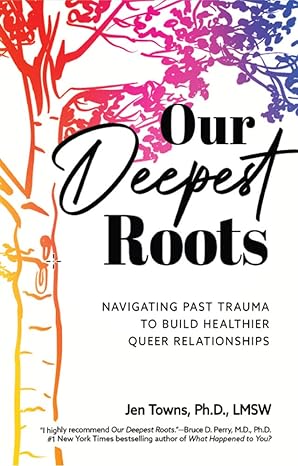
Our Deepest Roots is a brave and illuminating book about how trauma—especially the kind rooted in queerness and relational wounds—intertwines with the mess and beauty of love. Dr. Jen Towns doesn’t just discuss trauma in the abstract. She lays bare her own experiences, not as case studies or distant theory, but as raw, beating-heart truth. Through her lens as a queer trauma therapist and partner, she unpacks how our “parts” (the internal voices, reactions, and protections we develop) shape, distort, and sometimes save our relationships. She explores this through concepts like attachment theory, the Internal Family Systems (IFS) model, and a blend of hard-earned wisdom from both the therapy room and the kitchen table.
Reading this as a gay man who’s wrestled with his own ghosts, I felt seen in a way that knocked the wind out of me. The opening scene where Dr. Town’s wife (also a trauma survivor and therapist) writes about storming out of a fight, numb to her partner’s sobbing felt uncomfortably familiar. That terrifying push-pull of needing space but fearing abandonment? Yep. Lived it. And the self-loathing inner monologue she transcribes after the fallout was brutally spot on. It’s one thing to read about trauma reactions. It’s another thing entirely to read someone gently dissect their own and realize, oh god, that’s me too.
What sets this book apart is the refusal to shy away from the complicated, layered ways trauma shows up in queer love. Towns doesn’t romanticize healing, and she doesn’t offer cheap fixes. Instead, she walks us through her fights, her therapy, her missteps, and the hard-won tools she now teaches. When she talks about “fawning” in queer identity—where we perform caretaking to stay safe—it hit like a freight train. She describes fawning not as a flaw but as a strategy, born of survival.
Towns also brings a refreshingly down-to-earth voice. It’s not clinical or cold. It’s like a trusted friend walking with you, swearing a little, crying with you, laughing with you when you realize, yes, we’re all a little messed up but still deeply worthy of love. And her exercises, like the PEACE TALKS framework and the “Zhuzh” reminders, are actually doable—not just filler. She brings everything back to the body, the relationship, and the now. It’s healing work you can feel.
I recommend Our Deepest Roots wholeheartedly, especially to my fellow queer men who grew up believing we had to shrink to be loved, who still brace for rejection when things get close. This book isn’t just for therapists or couples in crisis—it’s for anyone tired of repeating old patterns and ready to face themselves with honesty and tenderness. It’s raw, smart, sometimes painful, and deeply human. And if you’re anything like me, you’ll find parts of yourself on every page.
Pages: 268 | ASIN : B0C6FRBKN2
My Story Wasn’t Just Mine

The Committed Professor: A Memoir is a powerful and unflinching account of your descent from contentment to emotional devastation. What were some ideas that were important for you to share in this book?
There were three key ideas I wanted to convey in this book.
First, betrayal, divorce, and narcissistic abuse aren’t just painful experiences. They can be deeply traumatic. I endured all three at once, and the psychological consequences were profound. Too often, people underestimate the lasting impact of these relational traumas. I wanted readers to know they are not alone, that their pain is real, and that these experiences fundamentally change who you are as a person. By sharing my story, I aimed to validate the emotional and psychological toll these experiences take, particularly on women.
Second, individual trauma doesn’t exist in a vacuum. It is shaped and compounded by systemic forces, especially for women. We live in a patriarchal society that often dismisses women’s pain and questions their credibility. Divorce, in particular, becomes a site where male privilege plays out in legal, financial, and social realms, making it even harder for women to break free and rebuild their lives. I wanted to explore how these structural inequalities intensify an already devastating experience, turning divorce into a broader battle for agency and justice.
Finally, I wanted to show that survival is possible. This book isn’t just about trauma. It is also about resilience. I didn’t write it to dwell in despair but to illuminate the path forward. Healing is neither linear nor easy, but it is possible. There is power in speaking our truth, in reclaiming our voices, and in understanding that we are not defined by what was done to us but by how we rise from it to help others.
I appreciated the candid nature with which you told your story. What was the hardest thing for you to write about?
The hardest part of writing this memoir was confronting the impact that my toxic divorce had on my children. As a mother, you want to protect your kids from pain, and reflecting on how my choices and circumstances affected them was heartbreaking. Writing about them meant revisiting some of the most difficult moments of my life, times when I felt like I was failing them or couldn’t shield them from the fallout of the divorce.
It was especially challenging to navigate the balance between telling my story and respecting their privacy. My children are a central part of my life, and their experiences are intertwined with mine. But as I wrote, I had to be careful that I wasn’t projecting my perspective onto their stories.
Ultimately, writing about my kids forced me to face some of my deepest regrets. It brought up a lot of guilt, but it also brought moments of clarity. It reminded me of my strength as a mother and the ways I’ve fought for them, even in the face of immense personal struggles.
What was the most challenging part of writing your memoir and what was the most rewarding?
Without a doubt, the hardest part of writing my memoir was reliving the trauma of my past. Writing a memoir isn’t just about telling a story. It is about digging up painful memories, sitting with them, and shaping them into something that resonates with others. Revisiting my ex-husband’s betrayals, narcissistic abuse, and the toxicity during the divorce process took an emotional toll. There were moments I questioned whether I could continue, especially knowing the stigma that comes with women publicly sharing their experiences. But I kept going because I knew my story wasn’t just mine. It also belonged to countless other women who have been cheated on, gaslit, manipulated, and abused.
The most rewarding part was reclaiming my voice. For so long, my reality had been distorted by my ex-husband, by societal expectations, by the family law and court systems, and even by my own attempts to rationalize what had happened. Writing this book allowed me to break free from that distortion and tell my truth on my own terms. And seeing how my story resonates with other women—how it helps them feel seen, validated, and empowered—has made every painful moment of this process worth it. The Committed Professor isn’t just about my personal journey; it’s about challenging the cultural narratives that silence women and hold them responsible for men’s betrayals and abuse. The response from readers who feel less alone because of my story has been the greatest reward.
What advice do you have for aspiring memoir writers?
My advice to aspiring memoir writers is to be brutally honest with yourself and don’t shy away from the hard truths. A memoir isn’t just a collection of events, but an excavation of your deepest emotions and experiences. That means facing parts of your past you might rather avoid. But it’s in those raw, unpolished moments that the true power of your story lies.
At the same time, give yourself permission to take breaks. Writing about your life can be emotionally exhausting, and processing trauma on the page isn’t something you can push through too quickly. Prioritize your mental health. Let yourself sit with the memories as they surface. The most meaningful writing often takes time.
Another key piece of advice is to focus on the universal themes within your story. While your experiences are uniquely yours, what makes a memoir resonate is its ability to tap into emotions and struggles that others recognize in themselves. Readers connect not just to what happened, but to how it felt.
And finally, remember that writing a memoir is as much about healing as it is about storytelling. Be kind to yourself throughout the process. Telling your story is an act of courage, and no matter how difficult it feels, the result will be worth it.
Author Links: Website | TikTok | Instagram | BlueSky
________
In The Committed Professor, A Memoir, My Fall from the Lectern to the Psych Ward, Dr. Kathi N. Miner tells the powerful true story of being married to a man with a double-life of adultery, the horrific narcissistic abuse that occurred after she filed for divorce, and the related events that led her to being committed to a psychiatric hospital. In her harrowing narrative, she demonstrates the critical role patriarchy plays in the process of divorcing abusive men.
The Committed Professor, A Memoir, My Fall from the Lectern to the Psych Ward should be of interest to:Anyone who has experienced or wants to learn more about narcissistic or psychological abuse by an intimate partner
Anyone who has experienced or wants to learn more about narcissistic, betrayal, or divorce trauma
Those with post-traumatic stress disorder (PTSD) or PTSD-related symptoms as a result of non-physical abuse from an intimate partner
Women in the midst of a marital separation or divorce from an abusive partner or who are considering leaving their psychologically abusive partner
Academics and students in psychology, women’s and gender studies, sociology, law, social relationships, and health and well-being
Those who work in the family law system (e.g., attorneys, judges, social workers, etc.)
Anyone who likes a good, true story that is full of surprising twists and turns
Crazy Has A Name
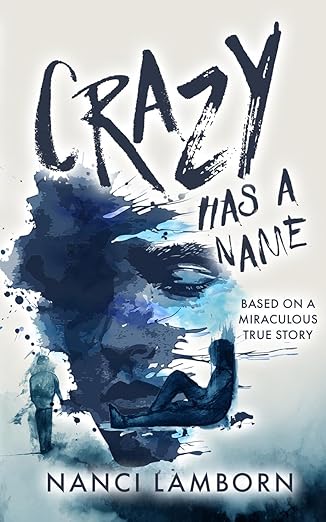
Crazy Has a Name is a raw, Christian contemporary novel that dives deep into the harrowing journey of Danny, a man haunted by his traumatic past and literal inner demons. From being born into unspeakable circumstances to navigating the voices (or “Others”) that live in his mind, Danny’s story is an emotional rollercoaster. At its heart, this book is about hope, redemption, and the powerful intersection of faith and healing. It’s a blend of brutal realism and miraculous transformations, making it both heavy and uplifting.
Author Nanci Lamborn’s voice is gritty and honest. I appreciated the candidness in Danny’s therapy sessions with Marti, especially when he recounts his childhood in “The Pit” or the horrifying truths about his foster family. One part that shook me was his reflection on being bought for $200 and how casually the adults treated it. That kind of detail sticks with you. I loved the depth of Danny’s character, but I would have loved to have seen some of the secondary characters, like his wife Grace, more fleshed out.
What I found most powerful—and frustrating—were Danny’s interactions with the “Others.” Garrison, Kendra, and the Bossman felt like fully realized characters, almost like spiritual manifestations of his fractured psyche. The scenes where Kendra scolds Danny or Garrison protects him are fascinating. However, I wanted more clarity about what these figures represented. Lamborn dances between psychological and spiritual explanations, which is intriguing.
Lamborn doesn’t shy away from portraying the darker side of life, but she pairs it with intense moments of faith-based healing. When Danny begins to unpack his trauma and face the memories he’s suppressed, you can feel his desperation and yearning for peace. The moment where he confronts his adoptive father’s cruelty while holding onto his belief in Jesus felt both heart-wrenching and hopeful.
This book is not for the faint of heart. It’s for readers who can handle heavy topics like abuse, neglect, and the complexities of mental health, all through the lens of faith. If you’re into Christian contemporary fiction with a raw edge and don’t mind grappling with some tough truths, Crazy Has a Name will grip you from start to finish.
Pages: 246 | ASIN : B0DTC2LS4W
Walk a Mile in My Shoes: Surviving Life’s Challenges


Paul Bradford’s Walk a Mile in My Shoes delves into the life of a man scarred by childhood trauma, exposing a harrowing journey from victim to perpetrator. Bradford recounts his life with unflinching honesty, refusing to excuse his actions as an adult while tracing their origins to the extreme hardships he endured as a child. The narrative begins with Bradford’s recollections of an abusive, alcoholic father whom he blames for his mother’s death. A pivotal moment in his life unfolds during a hitchhiking trip to his grandparents’ home, where he endured molestation, a secret he reveals for the first time in this book. The story continues through his unstable upbringing, bouncing between foster families, and the damaging influences that shaped his understanding of sexuality. Both the church and manipulative older boys contributed to a distorted, exploitative perception of intimacy and boundaries. Bradford’s use of vivid, colloquial language, what he describes as “hillbilly” expressions, paints a raw, authentic picture of his early years. His descriptions evoke the atmosphere of a bygone rural society, adding texture to the narrative.
As a piece of writing, the book is well-crafted. Bradford’s grammar is precise, and his articulation is engaging. Despite the deeply unsettling themes of abuse, violence, and exploitation, the narrative holds the reader’s attention through its clarity and flow. However, the focus of the book tilts heavily toward the darker chapters of his life. Positive memories, though present, sometimes feel rushed and underdeveloped. These moments, when they appear, offer glimpses of light but I feel lack the depth and exploration given to his tragedies. A more balanced portrayal, with a fuller depiction of happier times, could enrich the narrative and serve as a reminder that not all of his childhood was consumed by pain.
While the book is well-written, the content may not appeal to everyone. Bradford’s candid acknowledgment of his past wrongdoings and his struggle with trauma elicits some sympathy, but it does not mitigate the gravity of his actions as an adult. His experiences underscore how a lack of education and societal attitudes like “boys will be boys” can perpetuate cycles of harm. Yet, as someone who endured similar trauma, Bradford’s choices remain difficult to reconcile. Walk a Mile in My Shoes is a raw, unsettling account of a life shaped by adversity and mistakes. While it may resonate with readers drawn to unfiltered stories of human frailty and resilience, the graphic and disturbing subject matter makes it a challenging read.
Invitation to Co-Creation: A Spiritual Path from Child Abuse and Religious Trauma to Love, Healing, and Oneness
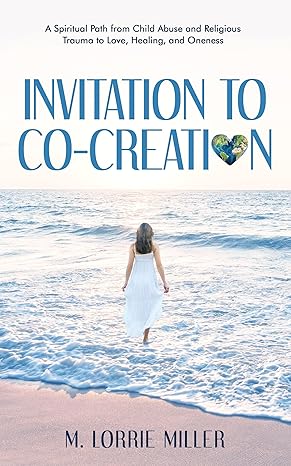
M. Lorrie Miller’s memoir, Invitation to Co-Creation, is a deeply personal and courageous exploration of healing from the scars of childhood abuse and religious trauma. Lorrie’s early years were fraught with abandonment, harsh discipline, and the weight of a toxic religious environment. These experiences led her to retreat into herself, concealing her beliefs, emotions, and painful family secrets. Everything changed when she embarked on a transformative journey. Through inner work and spiritual growth, Lorrie uncovered forgiveness, self-respect, kindness, and a profound sense of self-love. Most significantly, she found peace and love within herself. This journey allowed her to shed the trauma of her past, step into a healed version of herself, and share her powerful story of redemption and growth.
In her memoir, Lorrie answers universal questions such as how do we survive life’s most devastating challenges? How do we move forward to find hope and meaning? Her narrative is raw and vulnerable, written to inspire readers of all backgrounds—spiritual, religious, or otherwise. She bares even the darkest moments of her life to show that healing and transformation are attainable.
This book is both deep and thought-provoking. I was moved by the depth of her story and its ability to offer hope and inspiration to anyone seeking healing, regardless of their spiritual or religious beliefs. Lorrie’s unflinching honesty makes her journey relatable and impactful. While I enjoyed the book, I felt the book’s writing style occasionally affects its clarity. At times, Lorrie’s intentions were less clear, which could make it challenging for readers who are less familiar with spiritual or religious concepts to fully engage with certain passages. However, once the rhythm of her voice becomes familiar, the narrative flows more smoothly. This memoir deserves recognition for its authenticity and courage.
Lorrie’s journey is one of resilience, transformation, and the pursuit of inner peace. Invitation to Co-Creation stands as a testament to the strength of the human spirit, and I honor her willingness to share her story with such openness. Its message of healing and hope makes it a meaningful read.
Pages: 297 | ASIN : B0DPB773X8
Out of the Basement – Beyond Surviving Sexual Assault

Deborah K. Halvorson’s Out of the Basement: Beyond Surviving Sexual Assault is a deeply personal, yet universally resonant, guide for survivors of sexual assault. With a three-part structure—BE, DO, and SHARE—Halvorson walks readers through the journey of healing, from acknowledgment and self-compassion to building community and empowering others. The book is raw, heartfelt, and, above all, hopeful, offering not only comfort but also practical exercises to foster a deeper sense of personal agency.
What really struck me was how Halvorson’s writing balances vulnerability with strength. The opening chapters are beautifully grounded in a metaphor of emerging from a dark, damp basement into the light of self-awareness. There’s a poignant section in Step 1 where she describes the agony and eventual liberation that comes with acknowledging the truth of being assaulted: “Leaving the basement may be uncomfortable and scary, yes. But it won’t kill us.” Her words feel like a comforting hand on your back, gently nudging you forward. The basement metaphor felt so real to me, conjuring that familiar sense of claustrophobic shame that many survivors understand all too well. The author’s approach to healing is not prescriptive but deeply empathetic.
In Step 2, she introduces the idea of a “Spiritual Connection,” a force she describes as our “undamaged Self.” Halvorson writes with a spiritual but not religious tone, making these ideas accessible even to skeptics. She shares how this inner connection can be a source of resilience, guiding readers to rediscover their inherent worth and strength. There’s an emotional heft in passages where she admits that trusting this process is difficult. It’s this candor that kept me engaged and reassured that the book doesn’t sell false promises but offers authentic, lived wisdom.
The spiritual language might not resonate with every reader. But even then, Halvorson’s sincerity shines through, and she always circles back to practical tools for everyday coping. The exercises, like standing at the foot of the metaphorical stairs and visualizing your next step, felt grounding. I loved her suggestion of gratitude practices and using simple body movements to break up negative thought patterns. These actionable steps made the book not just a read but an experience.
Halvorson’s inclusion of survivor stories in Part III is both uplifting and heart-wrenching. Each narrative underscores the book’s central thesis: healing is not linear, but it is possible. For those who feel isolated in their trauma, these stories act as a testament to shared strength and the power of community.
Out of the Basement is a brave and compassionate guide for anyone who has been impacted by sexual assault, whether directly or indirectly. It’s for those ready to step into healing, those looking for community, and even those not quite ready but curious about what’s possible. Halvorson’s voice is one of an experienced survivor who has walked this path, making the book feel like a trusted companion rather than a self-help manual. If you or someone you love is seeking hope, strength, and a roadmap to emotional freedom, this book is a meaningful place to start.
Pages: 184 | ISBN : 1643435590



 LITERARY TITAN