Blog Archives
I Wanted To Bring Out The ‘Lion’

Lion – Most Wanted follows Aslan as he breaks a high-value target out of a Russian supermax prison and becomes the most wanted man in the Middle East. What were some sources of inspiration that informed the development of this novel?
1) My visit to Budapest, Hungary
2) A sex-trafficking ring operating in England
3) The Bosnian war
4) The theory that the Syrian civil war is over oil/ gas pipelines
5) The British hacktivist who become a social media consultant/ hacker for the Islamic State
6) The film, Eye in the Sky
What were some obstacles you felt were important to developing Aslan’s character in this book?
I wanted to drive home the point that, all Aslan wants, is to get out of his circumstances. I needed a clever way to really let him be left alone which needed the ancillary characters’ motivations to be equally developed.
What scene in the book did you have the most fun writing?
The scene where Aslan escapes from the Hungarian gang. It is brutal because I wanted to bring out the ‘lion’ , no holds barred.
What can readers expect in book three of The Escape Series?
For now, I haven’t considered a trilogy for The Escape Series. This is primarily because I want to move to a new series (of which 4 books are in development). But one can never tell: I might bring Aslan back. Everybody loves stories in which trouble finds the hero who has given up a dark past 🙂
Author Links: GoodReads | Instagram | Website
Their Journey Had Just Begun

Lessons on Seduction follows a college student who becomes entangled with a professor with a secret life of affairs and lustful encounters. What was the inspiration for the setup of your story?
The inspiration behind Lessons on Seduction was my readers in a writing/reading community. When I started writing the first draft, it was originally meant to be a sweet college romance. However, my readers wanted a steamy story with a brave heroine. I reshaped my writing into an erotic romance with a thrilling plot, a protagonist with a strong voice, and a love interest who is swoon-worthy, intelligent, and relatable. Without my readers, I wouldn’t have written the story the way it is today.
Sapphire and Julian are intriguing characters. What were some driving ideals behind their character’s relationship?
Fresh from a breakup, Sapphire turns away from her family’s expectations, and she chooses to pursue her own goals. She meets her best friend’s brother, Julian, who gives her the freedom she needs to be herself, and he encourages her to let go of her inhibitions in their relationship. I was inspired by the concepts of freedom, equality, and empowerment to bring Sapphire and Julian together. Their relationship—though far from perfect—is based on trust, faith, and love.
What were some themes that were important for you to explore in this book?
Some of the themes that were important for me when I wrote the book include:
- Love and faith. From a romance standpoint, it was love at first sight for Sapphire and Julian. They had the instant connection both physically and intellectually, but their journey had just begun. A deeper and more protective love developed throughout the story.
- Forgiveness and redemption. Julian made some big mistakes. After facing his dark secrets, which had become exposed, he went through a period of atonement, while Sapphire’s character developed to reach a higher maturity level. When the timing was right, both characters were reunited at an event. This is where forgiveness and redemption came into play.
- Love triangle. From a romance perspective, Julian and Sapphire were trapped in a love triangle involving his former flame, a wealthy woman who had no scruples about breaking up the two characters.
What is the next book that you are working on and when will it be available?
I recently re-edited the sequel to Lessons on Seduction and have submitted the manuscript to my publisher. I hope it will be available this year.
Author Links: GoodReads | Twitter | Facebook | Website
Handsome, smart and intimidating, Julian Richland finds himself enthralled with Saira Quinn, a powerful woman willing to pay top dollar for his time in the bedroom. To pay his debts and continue his lavish lifestyle, Julian discovers a world filled with sex, drugs, and lies.
Vera introduces Sapphire to her brother and sparks fly. Julian sees a sexy vixen who he wants despite her conservative background. He desires to school her in passion but he must keep his budding relationship secret.
Will his secrets and his desires put Sapphire in danger?
A Perfect Place For A Murder

Murder at Amapas Beach follows an American consul living in Puerto Vallarta who discovers a murdered woman while on vacation at the beach. What was the inspiration for the setup of your story?
For the last several years, I have spent considerable time in Puerto Vallarta and once took a similar outing (as described in the novel) to Amapas Beach which is located about 20 miles south of the city. Walking in the jungle toward a small craft village, I was struck by the setting—the overgrown trees and bushes and ominous twists and turns of the path. It seemed a perfect place for a murder.
More generally, I have always enjoyed reading fiction set in unusual places and Puerto Vallarta seemed to be a perfect location to set my Amanda Pennyworth series. The resort has a large indigenous population in the old part of the city, a sleek and expensive section for time shares and American and Canadian tourists, and a trendy quarter with night clubs and restaurants…and a large expat community. In other words, it’s a wonderful jumble of all sorts of people in a variety of distinct areas.
How did the mystery develop for this story? Did you plan it before writing or did it develop organically?
Because this is the third book in a series featuring the same amateur sleuth (Amanda Pennyworth, the American Consul to Puerto Vallarta), I already had my main character. The inspiration for her, however, came from a stint working for the U.S. State Department on their promotion panel. There I read hundreds of job descriptions and evaluations, and I was impressed by what embassy staff did in their foreign assignments. It seemed a perfect opportunity to create a character who had to negotiate two cultures.
In terms of composition, when I conceptualize a story line, I generally have an overall idea of the plot and I am pretty certain as to how it will end. But as I write, I find that some situations and characters develop in ways that I had not originally anticipated. That’s the greatest enjoyment in writing: the surprises that your imagination springs on you!
What experience in your life has had the biggest impact on your writing?
In the course of my career as an academic historian, I had the unusual privilege of teaching in a wide variety of locations abroad. The most important aspect of those assignments was the opportunity to experience very different cultures and learn about the ways that people spoke and acted. I think that any writer is also an observer—someone who tries, above all, to understand the human motivations. Above all, this seems to me to be the source of creating characters and the stories they inhabit.
What is the next book in the Amanda Pennyworth mystery series that you are working on, and when will it be available?
I have not begun the fourth book in this series, but trouble always seems to find Amanda Pennyworth, my amateur sleuth. And I am certain that it will happen again soon, and she will find herself struggling to solve the murder of an American tourist or expat living in Puerto Vallarta.
Author Links: GoodReads | Facebook | Website
First on a romantic outing to a secluded cove along the Mexican coast where the beautiful Danielle Maglin is found bludgeoned to death; and then at an elegant dinner party thousands of miles away only days later with the killer surely present, Amanda finds herself drawn into the search to find the culprit’s identity. When Danielle’s close friend Terrence Blanchard is found dead from an apparent suicide, Amanda is convinced that the killer has struck again. But there are too many possible suspects and just the usual list of motives: jealousy, greed, sex, money, and hatred. Nothing seems to make sense.
Working with the police first in Mexico and then in the United States, Amanda is sure that the killer was among the group of friends on an excursion to Puerto Vallarta from the small city near Chicago. But which one? The police are stymied when their forensic investigation leads nowhere. It is up to Amanda to find out why Danielle and Terrence had to die.
It Was Dark And Scary

The Celine Bower Story follows a woman whose need for revenge after she’s viciously assaulted changes her into a new and vengeful person. What was the inspiration for the setup of your story?
I was living in Blackpool in England, and I woke up one morning and realized I was going to be late for work. I left my house in a hurry; all I had on me were my keys and my phone. I was running down this street trying to get there on time when I got to a crossroads. In front of me was this dark alley, and I could go down there, or a couple of blocks up was the city street, but I thought ‘nah, I don’t want to be late’. I ran as fast as I could down this alley. It was dark and scary; there were dumpsters and vans and doors slamming and at one point I looked up and saw this vision of a woman coming out of one of the buildings and walking down the fire escape. I stopped to watch her for a second, then I realized I was going to be late for work, so I started running again and by the time I got there I felt like I knew her whole life story. The Celine Bower Story began on paper napkins.
Celine Bower is a compelling character that goes through a dramatic transformation. What were some driving ideals behind her character’s development?
The driving ideals behind Celine’s development were that her purpose would still revolve around her service to others and in making the right choices based on her abilities and strengths. If one were to consider Celine a superhero or vigilante—it is the traumatic event that becomes the catalyst for change which drives our heroes to take the law into their own hands. Celine didn’t strive to become a hero; she became one by taking vengeance on those who had terribly wronged her. I think she would have loved to have stayed the same person she was before she was attacked and left for dead; that kind and loving free spirit, but instead, based on things that happened and her need for vengeance, she was forced to adapt and become more than what she had planned for herself.
What were some themes that were important for you to explore in this book?
Some of the themes that I thought were of importance had to do with the events that led up to Celine becoming a vigilante. Vengeance, which was something that Celine had never considered as a response to anything that had happened in her life before she was attacked suddenly became relevant to her and what she considered to be an appropriate punishment for rape. The other theme that I considered of great importance was the need for my character to pick herself up and brush herself off after what happened to her, and not in such a way that her suffering or trauma was trivialized, but to demonstrate that she possessed an inner strength she didn’t know she had, from which to draw from in order to move on from the terrible event that changed her life . I wanted her to not only survive but to thrive after what she went through.
What can readers expect in Chronicle Two?
Readers can expect Celine to be back in action in Chronicle Two which was released in August of 2022. I traveled to the jungles of Borneo in Southeast Asia myself to conduct the research for the second book. I think it’s really exciting and readers will enjoy catching up with Celine once again.
Author Links: Facebook | Website
Our Original Collaborative Dream
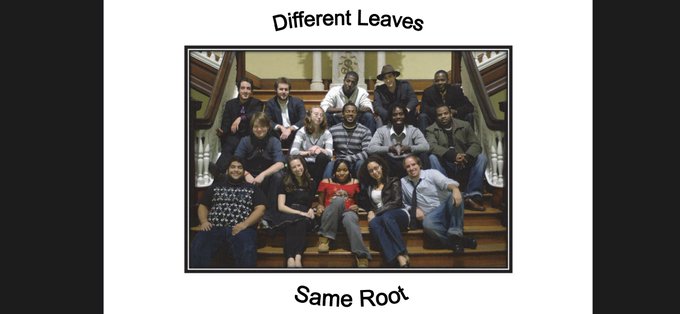
Perception is a collection of writing, drawing, and photography by various artists demonstrating the power of art to challenge a person’s perceptions on different subjects. Why was this an important collection for you to put together?
In my junior year of college many of the writers of “Perception” including myself published our poems within “The Grackle”, Chestnut Hill College’s literary magazine and were a part of the Poetry Club. In a small college everyone typically cross paths in one facet or another – mainly our paths all crossed at the open mic spoken word poetry events we held on Thursday, Friday, or Saturday nights. We would at times have up to a hundred people sitting in attendance to enjoy the ambiance or to read a piece they wrote.
When I returned from winter break of junior year I decided to gather a collection of my best poems at the time. While I was putting the collection together and editing them to be publication prepared I started to think it would be a wonderful idea to put together an anthology of some of my friends poetry collections who I’ve interacted with in the poetry club and open mic nights. I selected fourteen writers, including myself, altogether to participate in the anthology: J. A. McGovern, K. G. McLaughlin, Alex Garcia, Kairi Suswell, Nicholas Raspanti, Zachary Grubb, Marcus A. Hayes, R. S. Flores-Drennen, Yannick Wallace, Ashley Lynn Pavone, Christopher Dunn, Jr., Zander Donaldson Calomeni Tippett, Colleen Laura Tozer, and Ariama Long.
After I found my team of writers I realized this anthology could be truly special to not only represent writing: poetry, prose, song lyrics, and short stories – I found an illustrator, Christopher Lee, and photographer, Keaton Shane Nahan, to participate.
While I was handling the details of searching and finding a publisher and after finding one creating the book layouts and finding an editor to clean up the illustrations; I told my team to only focus on their work and gather the best collection of all their pieces they had or were creating for the anthology by the publisher deadline.
I selected the members of this team very carefully, I had a vision when describing what the message of the anthology would contain – there are no boundaries to art, only the ones created within our minds. Every artist within this collection, I had up to that point in putting together the team: many different conversations, listened to their work at open mic nights, read each other’s work to provide feedback, and looked through all the illustrations and photography ahead of time. I was systematically building a diverse team coming from even further diverse backgrounds with each artist creating work differently from one another. I wanted to create a project which could lead not only to discussions from all the different themes presented within the anthology but at least one piece would speak to the reader: bring joy and laughter, sorrowful tears, help with an issue they may be experiencing, or possibly inspire them. Every artist I informed there wasn’t a particular theme, each artist had their own creative space within the anthology and used their creative liberties to write, draw, and photograph whatever they desired. There wasn’t a selection process, whatever they wanted to put in the book to express themself creatively I completely supported and through this method I believe we were able to express ourselves best and provide the audience our best work.
Along with the purpose of reaching a vast audience with the project, the most important purpose for creating “Perception” is every artist in this anthology was a friend to each other and I wanted to create a moment in time, after years pass and when each artist picks up this book they will smile and reflect to a special project they created. I’m honored and privileged to be published along side every artist within “Perception” – and to see the project finding an audience and receiving recognition is fulfilling to our original collaborative dream.
With so many different contributors to this project, what was the collaboration process like?
The collaboration process between the team of artists is similar to every collaboration process with a group of people. I knew working with the publisher would be very tedious and at times frustrating to achieve the project exactly how I envisioned it – it was. I probably edited through twenty different rounds of proofs through the two to three year process but overall I was able to keep intact the original creative vision and obtain exactly how I wanted the anthology to appear.
Also, at the time I understood how a long and arduous process such as this can be discouraging for people, even creatives, which is why I took that aspect on. Since this was a self-published anthology the issue of money can typically come into play. I was happy to see with an evenly distributed full cost, there were no issues, everyone paid their portion in a timely manner.
Team interactions with each individual artist I didn’t see any serious issues, a couple meetings to keep us on track with deadlines but that was about it. I believe there weren’t many issues in collaboration at the time because we were all working through school: classes, activities, and part-time jobs – while simultaneously working on all our individual collections of work for the project. There wasn’t much time for difficulties between each other. It’s refreshing when projects work out in the long run with minimal issues.
What were some ideas that were important for you to share in this book?
Since there were no specific ideas or themes for the anthology and all of the artists expressed creatively any theme they wanted I feel it was a wonderful way of not only expressing different points of views on shared themes between the different artists but touched on a variety of themes. I’m an advocator in reference to any artist creating they maintain their creative liberties and don’t change anything for the sake of an audience, benefactor, or feedback with the only exception being if the artist takes the feedback to heart reflecting and decides to alter the work with purpose. In reference to themes within “Perception” when I had the first set of proofs all put together and it was my first time reading through each artist’s section and I was happy to see universal themes: Love, Peace, Racism, War, Inspiration – what I most enjoyed was seeing the different depictions of the themes where they began to cross into intertwined themes which made very interesting reads. Also, I found another aspect I most enjoyed even flipping briefly through the pages to reflect on this particular moment in time – the styles of each piece, which was wonderfully noted within the review of the anthology, are not similar between any of the writers, photographer, or illustrator. I believe we all did a wonderful job, whether intentional or not, creating a completely original concept – I’m most proud of this accomplishment.
What do you hope is one thing readers take away from your book?
I hope readers will take away from “Perception” there are no boundaries to the concept of art, only the walls within our minds. Allow an artist to work and create to their desires and expectations and don’t dictate what an artist is creating – the results and originality of the creation will always surpass if allowed to be created only through the artist(s) vision. I truly hope “Perception” inspires people to create for themselves and believe in their work strongly enough to find the inner courage within themselves to share with the world their personal endeavors and expression.
A group of sixteen artists, of various walks of life with even more different perspectives within the concept of art, came together overcoming struggles and defiance and published their first book, “Perception”, together, not only as friends but as an artistic family. They will be remembered.
Author Links: Facebook | Twitter | IMBD
They Are Capable of Doing Anything

I Can Do What Mommy Can Do follows a young girl as she helps her mother around the house and has a lot of fun doing it. What was the inspiration for the setup of your story?
I wanted to show kids that they are capable of doing anything they set their minds to. Plus, most kids look up to their parents so I wanted to show how it can be fun learning things from the parents.
The art in the book is wonderful. What was the art collaboration like with illustrator W. Smiley Isaac?
Smiley is actually my daughter. I gave her the words and she created the characters and the backgrounds.
What were some ideas that were important for you to explore in this book?
Spending time together. Children being encouraged. Creating a desire for kids to be helpful.
What is the next book that you are working on and when will it be available?
I actually just released a coloring book for black and brown girls that includes positive affirmations. I haven’t come up with another concept for a children’s reading book just yet. But you never know.
Author Links: GoodReads | Facebook | Website
It Is Possible To Write Happy Endings

The Shoemaker’s Splendid Lamp follows the family of a shoemaker who tries to make enough money to feed his family and save his sick son. What was the inspiration for your story?
I am very interested in history and like to tell children about it. It is essential to understand the past to know how to live today and plan for the future. Understanding of society increases when a more comprehensive perspective is available. Knowing different life situations and circumstances also creates empathy toward other people.
My relatives come from rural areas in Eastern and Northern Finland, where families were once large and poor. My grandfather was a shoemaker who died years before I was born. I have heard much about his family’s poor life from the decades before and after the wartime.
In particular, my father and grandmother told me about the old days, which in their case, admittedly were not always easy and happy. The experiences of my own relatives have given me a perspective on the development of society and improving people’s opportunities.
I can reveal that “The Shoemaker’s Lamp” is a true story regarding actual events and people. The only difference is that the fairy tale’s happy ending did not come true in the lives of the people in question.
Both the father, and Aron were interesting characters. What was your favorite character to write for and why?
I already mentioned my grandfather, who was a shoemaker. He is naturally my inspiration for the father of this fairy tale. He was a hard-working man who did his best to provide food for a large family with seven children. But he also longed for beauty as he was ready to buy a splendid oil lamp for his little house.
It was nice to write about this shoemaker and imagine how he made his lamp dream come true. In real life, my grandfather’s family finally had to sell this lamp to buy something even more necessary.
However, it was even more pleasant for me to write “a happy end” for little Aron, who was struggling with his health. This boy in the book has a sad equivalent, my father’s brother, who died when he was about five years old. I have heard about his short life from my grandmother and father – one lost her son, the other his brother. But in this fairy tale, I could write what I wanted and give little Aron health and a new summer with its fishing trips.
That’s what I find so liberating about writing. It is possible to write happy endings and give hope to readers – maybe even to mend hurt feelings and right the wrongs readers have experienced in their own lives.
What were some educational aspects that were important for you to include in this children’s book?
Already at the beginning of the story, I remind readers that it takes place in “old times.” This way, they can position themselves correctly to understand the events better. It is essential to realize that the world has been different before and that people’s opportunities and needs have changed.
However, for example, the average standard of living nowadays does not extend to all people, unfortunately. Thinking about social issues and justice is one of the most important things in this story. I don’t want to accuse anyone; I just want to observe what kind of situations people in different circumstances get into – and how they can survive.
I also want to emphasize how important it is that other people’s empathy leads to practical actions to help those in need. In this story, the lamp oil brought by the neighbor is of great importance to the shoemaker’s family. But it’s vital for the sick boy, for whom the lamp’s light gives the courage to fight the illness and believe in the coming of one more summer.
On a practical level, this splendid lamp in the story is necessary for many reasons during the dark winter months. The light from the lamp and the beautiful flowers on its sides are a shared joy in that difficult time. But the essential thing in the story is the love between father and son. In their cooperation, there is a lot of gentleness and consideration for each other. The power of love encourages them to believe in the almost impossible – to heal the boy and go fishing together in the summer heat.
I believe children understand the symbolic value of a lamp and its light. They will surely realize that the most valuable light is in people’s loving hearts.
What is the next book in the History for Children series about?
This theme – History for children – has influenced many of the books I’ve written, even if they don’t form a compact and coherent series together. However, I have some ideas for the next books, where the point of view would be clearly “historical.”
My next book about the times of previous generations will probably be a story about a small and stubborn horse that falls into the hands of strangers during the war. It will be a true story as it describes how my grandfather came on leave during the war and witnessed the harsh and unfair treatment of his own horse by men in the home village. He couldn’t allow it and showed others a gentle example of how a weak animal is ready to try his best, even if the task is hard to fulfill. Gentle care and encouragement are essential, even for the crankiest horse.
What attracts me the most is that writing suitable little stories can show children that their ancestors were once similar to them. Only the physical setting of events was different. I can also teach children facts about specific periods of history, although I prioritize the core of the actual story – the one that unites people throughout the years.
Author Links: Facebook | Website
The shoemaker longs to make more shoes to feed his family, but the cottage gets so dark, he must stop working before the sun goes down. One day the shoemaker and Aron spot something at the market—a beautiful oil lamp! Can the splendid lamp help the shoemaker—and save little Aron?
The Psychopathic Mind O A Serial Killer

Manifesto for a Serial Killer follows a brilliant and likable young socialite woman who also happens to be a serial killer. What was the inspiration for the setup of your story?
Manifesto for a Serial Killer was a complete diversion from my normal self-help books, photography books, and my cookbook. While I had written a couple of other novellas, I hadn’t delved into the psychopathic mind of a serial killer, particularly a female one!
I got the idea for a murder app for a phone from different conversations I have had with friends and relatives. Someone said how there seems to be an app for everything. We talked about possibilities for apps that might make money, and I said “wouldn’t it be strange if there was one for confusing the police about motives, locations, and types of crime? If the crimes were completely random, could they determine a modus operandi?
That got me thinking about a possible book based on this premise. How about I made it into a female psychopath serial killer? Lots of opportunities for an app to come up with random variations of the theme.
I chose Australia as the base of operations because I live here and it’s huge! The killer could travel for hundreds of kilometers and not double back on themselves ever.
When will book 2 be available? Can you give us an idea of where that book will take readers?
There is a sequel to “Manifesto for a Serial Killer” and it will be entitled “Emergency Services. Who do you want to kill today?” (Yes, I know it should be “Whom” but that’s my choice). As you would surmise, Jessica Harper, our socialite psychopath has grown tired of killing average Joe Blows and wishes to move on to something a bit more exciting. She plans to use the Manifesto app to murder first responders at accident scenes. Accident scenes she causes, mind you!
I’m not sure whether everyone will be happy with my choice of victims, but these types of attacks happen in real life too. Killers do set up traps for emergency services personnel, just like the enemy does in war situations.
Author Links: Amazon | GoodReads



 LITERARY TITAN