Blog Archives
Part of God’s Plan

Becoming Forever Families follows the experiences of a woman who finds love later in life and marries in the LDS church. What was the inspiration for the setup of your story?
This woman, Sarah, was previously married and had three children with Randy. He later divorced her; however, she felt that she needed to be married to a faithful husband, and prayed to God that this would occur. This story shows how God answered her prayers, and how she was married in the Lord’s House according to her desires.
Is there anything from your own experiences that you include in the lives of your characters?
Foremost is Ethan’s autism, which was introduced in my prequel Living a Miracle. I show how he was able to overcome many of its characteristics, as I have. I also relate Ruth’s situation of living alone with my being single and living by myself until I met my wife. She then later passed on, placing me in the same situation.
What were some themes that were important for you to explore in this book?
The main theme is the Lord’s plan for families to be together forever, as we have strong family bonds which we want to continue forever. Our struggles in life now are part of God’s plan to help prepare us to achieve this result after this life is complete. Another theme is that God will bless us during our difficulties in life as we stay faithful to Him.
Can readers look forward to seeing another installment following the Wilkinson family?
I have no immediate plans to continue this story; however, I may continue it later, with a message about how a high-functioning autistic adult can teach and help other people so that they can realize that their family lives are able to continue forever.
Author Links: GoodReads | Website | Amazon
We desire our strong, loving family connections we presently experience, to continue in the Spirit World and beyond.
What is Christ’s real plan for our families after this life?
This great question is answered here. You will learn about:
• What Christ’s blessings are for us, now and forever
• What the real purpose of this life is for us and our families
• What Christ’s plan is for those with no family in this life
• How we can actually become as Christ is now, and the purpose of doing it
• How Christ can lovingly help us
This sequel continues the life story of the Wilkinson family, showing us how to become a forever family. It illustrates how we can view ourselves from an even greater perspective, and shows our true missions in life.
Included is a thought-provoking Reading Guide, to assist you to have a much better understanding of yourself. You will truly see the great significance of living this life, individually and with your family, along with your incomprehensible potential after this life is completed. Becoming Forever Families will prove to be very beneficial for everyone.
This work also promises to make great reading for a book club.
Sele Speaks Without Words


Sele Speaks Without Words is a heartfelt and imaginative story about a young boy named Sele, who navigates life with nonverbal autism, sensory processing disorder, and learning difficulties. Sele’s journey begins in the familiar world but soon takes a fantastical turn when he discovers a magical stone that transports him to a realm filled with unique creatures, each with their own talents and challenges. Through his interactions with these creatures, Sele learns valuable lessons about friendship, self-acceptance, and the power of communication beyond words.
From the first page, I was captivated by Ediale’s storytelling. The descriptions of the magical world are enchanting, and Sele’s interactions with creatures like Maddy the Dragonfly, Drogo the Owl, and Cha-Cha the Butterfly are both imaginative and poignant. The author’s ability to depict Sele’s inner thoughts and feelings, especially in the epigraph and introduction, provides insight into the mind of a child with autism. This empathetic portrayal is touching and enlightening, making Sele an endearing protagonist who captures the reader’s heart.
One aspect I liked most about this book is the way it handles complex emotions and challenges associated with various conditions like ADHD, cerebral palsy, and epilepsy. For instance, the chapter where Sele helps Drogo cope with his fear of the dark and aids Flash in managing his hyperactivity is beautifully crafted. These moments highlight Sele’s growth and demonstrate the importance of patience, understanding, and creative problem-solving.
The illustrations interspersed throughout the book are another highlight. They complement the narrative wonderfully, providing a visual representation of Sele’s adventures and his friends’ unique traits. The colorful artwork, such as Sele bandaging Cha-Cha’s wing or meditating with Flash, enhances the reader’s connection to the characters and their journey. These visual elements make the story more engaging for younger readers, adding a delightful touch to an already compelling tale.
Sele Speaks Without Words is a beautifully written children’s book that will resonate with children and adults alike. It’s perfect for readers who enjoy fantasy stories with meaningful messages about acceptance, empathy, and the power of non-verbal communication.
Acceptance Starts With Asking Questions

In Happy Thoughts: Going to the Aquarium, a young girl with autism overcomes her anxieties with the help of her friends when she visits the aquarium and makes a new friend. Why was this an important story for you to share?
It was important because it’s rare to see anything let alone a book from a child with Autism’s point of view. Also, it was because Emma does not use her mouth to talk; she uses her cards and writing. This is something not seen at all in the literary book world. I thought that should be changed. I wanted to children to see themselves in Emma and families to see their loved ones. There is something so magical in seeing yourself in a book, and I wanted to bring that to children and families.
Is there anything from your own life in the characters in Happy Thoughts?
Yes, I am very passionate about animals and animal conservation. What better way to encourage children to want to learn about animals than to write about a visit to the aquarium? In the book, some of my favorite marine animals are shown, too. There really are no books that show Beluga whales, and that was important to me. They are beautiful, smart, and silly creatures that I thought should be showcased.
What is one thing you hope young readers can take away from Emma’s experience?
There are many different ways to talk. Also, talking differently makes us beautiful. Embrace your friends and family members who may talk differently or have anything that makes them different. Or go up to the little different one and become friends with them. Ask your teachers how and about what Autism is. Acceptance starts with asking questions to learn.
What next book are you working on, and when will it be available?
The next book that will come out is called Mischievous Cat Brothers, and it is book two in the Cat Brothers series. It should come out this summer and will be illustrated by the amazing individuals of Brainstorm Productions. The younger brother will narrate it, Snowball, making it a bit more silly.
Author Links: GoodReads | Twitter | Facebook | Instagram | Amazon
Grab your copy of Award Winning author, Lisa Jacovsky’s Happy Thoughts: Going to the Aquarium today!
Happy Thoughts: Going to the Aquarium

Happy Thoughts: Going to the Aquarium, by Lisa Jacovsky, presents an insightful glimpse into the life of Emma, a young girl with autism who has her own unique way of communication. Unlike her peers, Emma relies on index cards to express herself when she feels comfortable, a distinctive trait that sets her apart in social interactions. This narrative becomes especially poignant when Emma encounters new individuals, such as a boy named Alex at the aquarium, highlighting both the challenges and the triumphs of her communication method.
Jacovsky’s narrative is commendable for its sensitive and innovative portrayal of autism. By choosing index cards as Emma’s medium of expression, the author provides a tangible and relatable tool for young readers to understand and empathize with different communication styles. This technique effectively fosters awareness and acceptance among children, demonstrating that differing abilities should be embraced and respected. The aquarium setting is a masterstroke, offering a serene and engaging backdrop for this enlightening tale. It not only serves as a non-threatening environment for character interactions but also enriches the story with vibrant illustrations of marine life, including seals, dolphins, and beluga whales. John Thorn’s illustrations are noteworthy for their charm and their role in bringing the story to life.
Jacovsky‘s book stands out for its educational value, seamlessly weaving a lesson on acceptance and uniqueness into an enjoyable story. Emma’s journey, marked by her distinctive way of interacting with the world, is a testament to the beauty of diversity and the importance of understanding those who may seem different.
Happy Thoughts: Going to the Aquarium is a meaningful exploration of individuality and communication. Jacovsky’s thoughtful approach makes this book a valuable read for children, illuminating the richness that different perspectives bring to our world.
Pages: 30 | ASIN : B0CVHTT9W5

May I Come to Your Party?

Grace A. Wolf’s May I Come to Your Party? is a poignant and thoughtful exploration of the challenges faced by children on the autism spectrum, as seen through the experiences of the protagonist, Jimmy. Wolf portrays Jimmy as a compassionate and endearing character, grappling with the complexities of social interaction and inclusion. His journey underscores the often-overlooked emotional impact of feeling excluded due to being perceived as different.
The narrative unfolds with Jimmy’s realization that he has not been invited to his classmate Clara’s birthday party. This moment serves as a pivotal point in the story, highlighting the nuances of social dynamics among children. Clara’s response to Jimmy’s query about the party, masked by a lie, is a critical moment that Wolf handles with sensitivity and insight. Alice, another classmate, emerges as a key figure in the story. Her response to the situation reflects a deep sense of empathy and understanding. Wolf uses Alice’s character effectively to convey a powerful message about the importance of inclusivity and kindness toward those who may seem different. Wolf’s depiction of Jimmy’s autism is done with care and respect, emphasizing his sensitivities to sensory stimuli and communication challenges. The narrative strongly advocates for seeing beyond these differences, affirming that every child, including those with autism, deserves acceptance and inclusion.
May I Come to Your Party? is a significant contribution to children’s literature, addressing vital themes of empathy, understanding, and the value of including everyone, regardless of their differences. Wolf’s narrative is a testament to the transformative power of embracing physical and intellectual diversity, fostering a sense of belonging and unity among children.
Pages: 40 | ASIN : B0CLKZ25C6
Nurturing Neurodivergence: The Late-Identified Adults’ Guide to Building Healthy Relationships with Self and Others
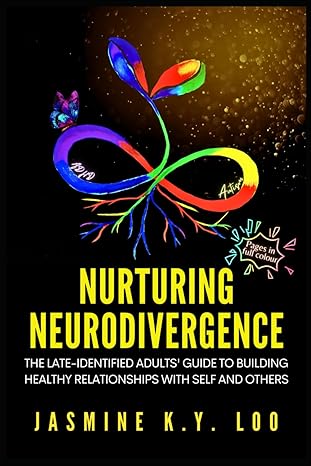
Nurturing Neurodivergence: The Late-Identified Adults’ Guide to Building Healthy Relationships with Self and Others, by Jasmine K. Y. Loo, serves as a practical and insightful guide for neurodivergent individuals, particularly those with Autism and ADHD, navigating a world predominantly designed for neurotypical individuals. Loo addresses the notable gap in literature for adults who discover their neurodivergence later in life. Through a blend of personal anecdotes and experiences from her professional interactions, the author provides a roadmap to help these individuals transition from unawareness of their neurodivergence to understanding and navigating life with this new self-knowledge.
The book is enriched with introspective questions and guided exercises, which are thoughtfully integrated either for in-book reflection or use in a personal journal. This approach not only deepens the reader’s comprehension of the topics discussed but also facilitates a more personalized journey of self-discovery and understanding.
An especially commendable feature of Loo’s work is the organization of the chapters. The book begins with an overarching introduction before delving into specific discussions on Autism and ADHD. Each section thoughtfully examines the emotional, executive functioning, and sensory processing challenges associated with each condition, along with other unique characteristics. This book is a significant resource for those interested in psychology as it highlights the reality that awareness and understanding of neurodivergence in adulthood are still emerging concepts. This realization, combined with a lack of adequate professional guidance and existing stigmas, underscores the importance of Loo’s work.
Nurturing Neurodivergence stands out for its accessibility, empathy, and the careful balance it strikes between being comprehensive and personalizable through the included exercises and queries. The book resonates as a voice for many undergoing similar experiences, offering valuable insights for neurodivergent individuals, mental health professionals, and those seeking to broaden their understanding of neurodiversity.
In essence, Jasmine K. Y. Loo’s book is a significant contribution to the field of neurodiversity and mental health. Its practical guidance and empathetic tone make it a valuable resource for a wide audience, fostering greater understanding and support for neurodivergent adults.
Pages: 148 | ISBN : 978-0645896084
Thought is Not the Boss of Me!

Our minds are very powerful things. It allows us to do many things, such as dancing, sports, and learning new skills. They can, even without us knowing, control our entire bodies to stay alive. Our minds can also get lost in thought, and thought can sometimes cause mischief.
In, Thought is Not the Boss of Me! by Sheila Booth-Alberstadt and Sarah Lamb, we are introduced to Lincoln. A young child who tends to get into some trouble without realizing he is being coerced into doing so by none other than ‘Thought.’ ‘Thought’ bosses Lincoln around and makes him do not nice things, and ends up being punished.
This relatable story is beaming with delight, from the vibrantly adorable illustrations by Elizabeth George to the comical and inviting writing. This picture book was such a clever way of showing young kids how thoughts and the mind work and how to overcome the negative thoughts that come along with them. I love how Lincoln is presented as innocent during the entire ordeal but makes a conscious decision to stop listening to ‘Thought.’ Once Lincoln realizes ‘Thought’ only gets him into trouble, he starts thinking as well as acting on his own account. What an extremely difficult thing it is to do, to master one’s thoughts, as a growing child.
Thought is Not the Boss of Me! is an extraordinary children’s book about recognizing and dealing with big emotions. This well-written story helps children realize that big feelings are normal and that they can learn how to manage them. I Would absolutely recommend it to any family or young reader, as the message is valuable to people of all ages. It would make a great addition to a school library or classroom.
Pages: 32 | ASIN : B09LFLLS9N
The Surprising Potential Humans Have

Noki follows a boxer with Autism, he wants to use his skills to help his father but encounters people that do not have his best interest at heart. What was the inspiration for the setup to your story?
The story of Noki was stuck in my head for over ten years. I couldn’t shake it. I just fell in love with the character and felt I needed to share him with the world. I believe the book does a great job showing the limitations we, as a society, place on people, knowingly or not. Even more importantly, it shows the surprising potential humans have. This is something I saw in my thirty-year experience as a doctor treating autistic patients. People with autism, like Noki, may have some social and communication difficulties, but it doesn’t mean they are without aspirations, goals, love, thoughts, or purpose. I hope this book shows the reader this.
What were some driving ideals behind your character’s development?
We all need to be aware that when you meet one person with autism you meet one person with autism. Everyone is different. Everyone deserves basic respect and nonjudgment from others, autism or not. That being said, autism is a spectrum and this has to be acknowledged. There is a pivotal point in Noki where there is a hearing to decide whether he understands the consequences and risks of boxing. Understanding the differences between each autistic person provides a learning opportunity for characters in the book and should do the same for those who read it.
What were some themes that were important for you to explore in this book?
I definitely wanted to explore the deep dark secrets of the boxing world. I know it all too well. No one really talks about it and it hasn’t changed much in a century. Putting someone like Noki in that environment was exciting to me. I wanted to also make a social worker a hero (heroine) because normally they are portrayed negatively. Lastly, the surprise ending in Noki is critical in realizing what you may have just read is something you have seen many times before.
What is the next book that you are working on and when will it be available?
I am writing another business book now but will probably start on a book about Taddy Roosevelt (yes, that is spelled right).
Author Links: Amazon | GoodReads
A bankrupt boxing gym, a down-on-his luck drifter, and a desperate father grapple with an opportunity that could solve all their problems, but at a tragic cost.
Noki has grown up in his father’s gym, around the seedy world of boxing his whole life, the fighters there calling him a “man-child.” A young Black man with autism with a penchant for wearing Disney t-shirts, Noki is gifted with incredible boxing skills, considered by his inner circle as unbeatable. But when the unscrupulous boxing bigwigs see dollar signs, his gym family is torn: Are they permitting Noki to pursue his passion or are they taking advantage of someone with a disability. Noki, a new young adult fiction novel by Douglas Farrago, is a masterfully written coming of age story of loyalty, grit, and self-discovery in the most heartbreaking of circumstances.



 LITERARY TITAN