Blog Archives
Nostalgic Journey

Musings of Mannarkoil Professor traces your journey from a temple village in Tamil Nadu to a fulfilling professional life as a professor in Canada while sharing insights on family, education, cultural identity, and the everyday absurdities of life. Why was this an important book for you to write?
Having lived half of my life in India and half in Canada, I felt I can be a bridge between the next generation here and the earlier generation there, in enhancing their understanding of the similarities and differences in growing up experiences across cultures. When I started looking at my experiences within India itself, I observed a whole lot of interesting differences between rural and urban settings, and across regional and linguistic divisions. The humour and the vivid narration that I added in describing mundane routines of life were received well by my friends and relatives. That kindled the storytelling spark in me and pushed me to write the book.
What were some ideas that were important for you to share in this book?
Ability to recall and cherish joyful moments of childhood, even if those experiences have become archaic due to time and or technological changes, and keeping an open mind to learn from new experiences are some of the key ideas that I want to share with the readers. Equally important is honing the sense of laughing at oneself and with others but not at others.
How did you decide what to include and leave out in your memoir?
I was very clear to include only the joyful memories that readers can relate to their own experiences and undertake a pleasant nostalgic journey. My intention was that my narration would induce them to focus on their experiences. I was clear not to draw their attention towards me through empathy or pity. I wanted to be a co-traveller in their fun-filled nostalgic story.
What do you hope is one thing readers take away from your story?
One thing I hope that readers will realize is that one can find joy and happiness in a lot of little things around us, if only we have the right set of mind to look and appreciate.
Author Links: GoodReads | Website | Amazon
Rooted in Asian cultural experiences, this reflective work offers both heart and wit as it explores themes of personal development, cultural identity, and resilience. From chalk slates in Tamil Nadu to lecturing in North America, Srinivasan’s path illustrates the essence of personal growth journeys and self-improvement books, making it an inspiring read for anyone interested in immigrant life stories, cultural exploration books, or adventure travel stories.
With vivid anecdotes and warmth, this inspirational biography also speaks to readers of travel memoirs and cultural identity memoirs, offering a unique perspective on navigating worlds apart while holding on to heritage. Mannarkoil to Mississauga is a celebration of transformation, identity, and humour, an honest and engaging journey of a life fully lived.
Inspirational Biography Memoir: A Professor’s Journey from Rural Roots to Global Recognition
Gopalan Srinivasan’s life is a shining example of transformation. From humble beginnings in Mannarkoil, India, to an academic career in Canada, his story is a rare blend of perseverance and grace. This memoir invites readers into a life shaped by education, discipline, and humour, a true journey of personal growth and inspiration.
Adventure Travel Stories: From South Indian Streets to Canadian Campuses
Whether cycling to village temples or navigating snowy sidewalks in Mississauga, Srinivasan’s life unfolds through vibrant, often humorous travel tales. These adventure travel stories not only chronicle physical movement across continents but also capture the mental and emotional transitions of an immigrant shaping his new world.
Life Lessons with Humor: Finding Wisdom in Everyday Moments
Told with wit and warmth, this book captures the lighter side of serious transitions. From childhood mischief to bureaucratic surprises in Canada, each story blends personal development with gentle humour. Srinivasan’s sharp observations bring levity to life’s trials, offering readers joy, insight, and an honest lens on self-improvement.
Personal Journey & Travel: Charting a Path Through Education, Culture, and Identity
This is more than a travel memoir, it’s a chronicle of ambition and identity. Srinivasan’s path from village schools to global academia reveals his search for meaning and belonging. His journey reflects the spirit of self-improvement books, exploring how education, family, and resilience shaped his life across vastly different cultures.
Cultural Identity Memoirs: Bridging Indian Traditions and Canadian Realities
In balancing tradition and adaptation, Mannarkoil to Mississauga stands out among cultural exploration books. With humour and heart, Srinivasan reflects on language, customs, and the immigrant experience in Canada. His reflections speak to the shared struggles and triumphs of immigrant life stories, particularly within the South Asian diaspora.
Hopefully Ever After

In The Widow Chose Red?, you share the highs and lows of your marriage and professional life, your unshakable faith, and your husband’s heartbreaking journey with ALS. Why was this an important book for you to write?
It was important to write this book for a few reasons: To heighten the awareness of ALS, which is still considered a rare disease. Too many people still don’t know about it. Proceeds from the book are benefiting the LiveLikeLou Foundation.
To have a written record of my life with John as something tangible for my boys to refer to.
To provide inspiration for others who may find themselves facing unimaginable circumstances and give them some support, insights, and strategies for dealing with those curveballs life throws at us. To remind people that we, as believers, we have all been gifted with a supernatural superpower in the form of the Holy Spirit, which is there to comfort and fortify us when we can’t go on..
I appreciated the candid nature with which you told your story. What was the hardest thing for you to write about?
The hardest parts to write about were the day we got the diagnosis, the Christmas we told his family, the day we told our boys, and the day John died. Even though it has been 14 years since John died, the mind is magical and mystical in how it can take us back to that moment in time, complete with emotion and physical presence. It’s never a fun process to go back to those moments of pain, suffering, sorrow and loss, and that is why sometimes, it is best to give yourself some time to process.
What advice would you give someone who is considering sharing their own memoir with readers?
Go for it! It’s your story, and someone will benefit from your sharing it. Get clear on your message. That being said, it is a process that can be lonely, confusing, and tiring, so get some support.
There are so many tech tools available (and I’m not talking AI), like transcription, voice recording, etc, that will make the process of getting it on paper so much easier. If you need to interview someone else to get a perspective…write up a list of questions and submit ahead of your conversation…give yourself a goal for writing…a number of words a day…a chapter a month…published by this date. Otherwise, it can go on forever, and don’t discount the editing process…it’s HUGE!!
What is one thing you hope readers take away from your experience?
Even when your “happily ever after” doesn’t go the way you wanted…you can have a “hopefully ever after” that is beyond your imagination.
Author Links: GoodReads | Facebook | Website | Amazon
“She stood at his service wearing red. Not in defiance, not in denial – but in love. Because grief is not just sorrow; it is the bold echo of a love that never fades. And red is not just a color – it is the flame of the Holy Spirit and the fire that refuses to be extinguished.”
When Rachel Kerr Schneider lost her husband, the world expected her to mourn in black – to withdraw, to disappear into sorrow. But she made a different choice. She wore red. Not because she wasn’t grieving, but because love – real love – is too vibrant, too deep, too enduring to be cloaked in darkness. And because red, the color of fire, is the color of the Holy Spirit – the every-present force that carried her through the valley of grief and into a future she never imagined.
This is not just a memoir about loss – it is a story of resilience, faith, and the bold, sometimes unexpected ways we learn to live again. For anyone who has ever faced heartbreak and wondered if joy was still possible, The Widow Chose Red is a testament to the truth that even in sorrow, life still shines – and the Spirit still burns.
A Promise I Made

Avoiding Muddy Foxholes: A Story of an American Bombardier recounts the life and military service of your father, Richard “Dick” Loveless, a young man from Washington, D.C., who joins the Army Air Corps during World War II to avoid the muddy foxholes of infantry life. Why was this an important book for you to write?
Like many boys growing up in the 1950s and ’60s, we were completely captivated by our fathers’ involvement in World War II. They were our heroes, and playing army was how we tried to be like them. As we got older, we began to understand that war wasn’t a game. Fighting and dying for your country was serious business. Like many veterans of that war, it was something they wanted to forget, but as kids who didn’t know any better, we pressed them for their stories.
My father didn’t talk much about the war, not because of any psychological issues. He just believed back then that he was doing his job, and that wasn’t something anyone would find interesting. Little did he know that, over time, I would come to see that this man, who was my father, was a true hero, and his story needed to be told. It became a promise I made to him on Father’s Day in 1972, and I vowed that his story would always be remembered.
What were some ideas that were important for you to share in this book?
One main idea I wanted readers to understand was how my father overcame the many fears he had to face during his experiences in the war. He relied on his strong faith to get through everything and believed that if he could handle the things he knew he could control, God would take care of the things he couldn’t.
Also, it is important to know that the people of the town in France, Champigny, honor the five crew members who died on each anniversary of the day their plane was shot down over their town.
What was the most challenging part of writing your father’s story, and what was the most rewarding?
The most challenging part of writing my father’s story was that by the time I was able to write it, everyone who was a part of it had passed away. In many cases, I had to rely on my familiarity with those I knew to create the dialogue. Also, my knowledge of history and the many events that made up the story helped me with trying to piece everything together. What was most rewarding was that almost every incident I had to speculate on, hoping it was correct, turned out to be spot on. It was particularly rewarding that I was able to convey a nearly one-hundred-percent accurate account of his story.
What do you hope is one thing readers take away from your dad’s story?
My hope is that readers will gain an understanding through the story of one man what those of the Greatest Generation did to help preserve the freedoms we take for granted today.
Author Links: GoodReads | Facebook | Website | Amazon
Though neither really discussed it, marriage was undoubtedly on the horizon. Unfortunately, a war got in the way. He was forced to decide between being drafted into the Army or enlisting so he could choose what branch of the service he would serve. Dick enlisted. Regrettably, enlisting didn’t matter; he wound up in the coastal artillery. As luck would have it, an opportunity to join the Air Corps presented itself, and Dick took it.
Thus, the adventure began for Dick. From boot camp and flight school to flying bombing missions over Germany for the 388th Bombardment Group, things never got easier. But it was only in his sixth mission over Stuttgart, Germany, that his strength, courage, and faith were put to the ultimate test. No training could prepare him for what lay ahead.
Eighty years later, Dicks oldest son finally made good on a promise he made him. He vowed never to let his father’s remarkable story go untold, so “Avoiding Muddy Foxholes” is his story.
The Widow Chose Red?: My Journey with Jesus, John, and ALS


The Widow Chose Red? is a deeply personal memoir chronicling the life of Rachel Kerr Schneider, from her whirlwind romance with John Schneider through decades of marriage, parenting, and professional shifts, culminating in John’s heartbreaking battle with ALS. Told through a lens of faith and fierce devotion, the book walks readers through the joys of new beginnings, the messiness of real relationships, and the crushing weight of terminal illness, all while clinging to the hope and grace found in God.
The writing is conversational, often funny, and incredibly raw. Rachel doesn’t hide behind platitudes. She’s honest when things are hard, she laughs when they’re absurd, and she leans into her faith with a kind of vulnerability that feels both courageous and familiar. The structure, split into sections of life stages, reflects how grief and growth aren’t linear. I loved how she wove in reflections after each major chunk of the story. It gave me space to breathe and think alongside her.
There were times when I felt gutted by the emotional weight of it all. Watching John’s health decline through Rachel’s eyes was both beautiful and brutal. Her love for him doesn’t flinch. It holds steady through every stage of ALS, even when things got messy and uncertain. But this isn’t just a moving book; it’s a book about showing up. It’s about surviving with grace when life doesn’t let you plan ahead. I admired how Rachel let us see the struggle to stay spiritually grounded when everything feels unfair. And somehow, even in the grief, she writes with humor.
The Widow Chose Red? is a love letter to John, to her sons, and to the God who walked through every minute of it with her. If you’ve ever cared for someone who’s sick, if you’ve wondered where God is in your pain, or if you just want to feel less alone in your own tough season, you’ll find something in Rachel’s story. I’d recommend it to caregivers, to women figuring out who they are after loss, and to anyone trying to make peace with the messiness of life. You don’t need to be religious to connect with her heart.
Pages: 224 | ISBN : 978-1966561101

Sand, Grit and Dangerous Supply Missions-The Unsung Civilian Heroes of the Iraq War
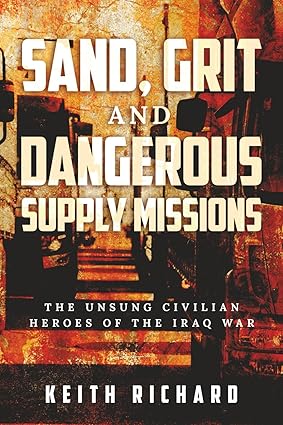

Keith Richard’s Sand, Grit and Dangerous Supply Missions offers a vivid and personal account of civilian logistics operations during the Iraq War, told from the perspective of someone who lived it firsthand. The book follows Richard’s unexpected journey from a seasoned logistics executive in the U.S. to leading one of the largest civilian military support efforts in a war zone. Through stories packed with emotion, hardship, and bureaucratic chaos, he lifts the curtain on the thousands of unsung civilian workers. Many of them are truck drivers who put their lives on the line without a uniform or a weapon. It’s part memoir, part tribute, and part exposé of how civilian contractors played an essential but invisible role in modern warfare.
I found the writing to be raw, honest, and sometimes unpolished, but in a way that works. Richard doesn’t try to sound like a polished author. He writes the way he talks, which makes the whole thing feel personal, like a friend telling you a war story over coffee. Some chapters hit hard, especially the ones where lives are lost or where Richard grapples with the emotional toll of being away from his family. But just as powerful are the quiet moments: awkward airport layovers, cigarette breaks with skeptical soldiers, dusty meetings in sweltering trailers. Those little things made the story feel real. The voice is genuine and heartfelt, though sometimes a bit repetitive or tangential. But I didn’t mind. It gave the story a rhythm that felt true to the chaos he was living through.
What I liked most were the ideas beneath the surface. This book isn’t just about logistics or war. It’s about leadership, identity, and purpose. Richard steps into a role that he never could’ve fully prepared for, and instead of folding, he adapts. He leads through grit and connection, not ego. That said, there were moments when I wished he pushed harder on the system itself. The bureaucracy and mismanagement he described were shocking. Maybe that’s loyalty, maybe it’s diplomacy. Either way, the book raises important questions about how we treat the civilians who support military efforts and whether we even acknowledge them at all.
I’d recommend this book to anyone interested in military history, leadership, or stories of resilience in the face of overwhelming odds. It’s especially compelling for those who’ve worked in logistics or operations, since it highlights a side of war that’s rarely talked about but absolutely vital. It’s a gritty, heartfelt memoir that gives voice to the everyday heroes who get left out of the headlines.
Pages: 150 | ASIN : B0F91X5ZYD
Women in Predominantly Male Cultures
Dancing on Coals is a raw and riveting memoir that chronicles your lifelong pursuit of approval, identity, and peace, capturing the endless loop of seeking love through overachievement. Why was this an important book for you to write?
I wrote the book to try to integrate what felt like two sides within me. I had an extraverted, performative side, and yet deep within me was an introspective, contemplative side that held, I suspected, true wisdom. For many years these two sides were in conflict, battling over real estate in my psyche, but by writing this book and making sense of the full trajectory of my life, from launchpad of trauma to a landing pad of peace, I brought them together in a deeply healing way and came to accept myself more fully.
What were some ideas that were important for you to share in this book?
I wanted to discuss the role of women in predominantly male cultures, such as the theater at that time, and to question the power of Voice. Is the female Voice as respected and powerful as the male Voice in our culture? I don’t think so. I also wanted to highlight the roles psychotherapy and meditation can play in the process of healing and finding one’s true self. The false self gives way to the true self when we explore within, both through therapy and through the silent, transformational art of meditation.
I appreciated the candid nature with which you told your story. What was the hardest thing for you to write about?
The hardest thing to write about was my failure. I felt that I failed as an artist, mostly because I failed to be true to myself as an artist, playing a role designed for me from the outside rather than one that issued organically from the inside. But in fact, that failure launched me into the next phase of my life, which was finding my True North. If I hadn’t failed, I would never have embarked on that search and made that priceless discovery. I wouldn’t trade it for anything!
What do you hope is one thing readers take away from your story?
I hope readers can take away a visceral sense of the transformation of striving, efforting, and over-performing into calm, peaceful abiding and acceptance. I wanted to make these states sensorial, so that reading about my discovery of peace becomes a kind of transmission to the reader.
Author Links: GoodReads | Facebook | Website | Amazon
In Dancing on Coals, Cynthia Moore describes a multi-decade, harebrained search for love in all the wrong places, starting when her narcissistic mother abandons her to a Swiss finishing school. Desperately seeking belonging, she leapfrogs from a polyamorous commune into a high-octane all-male performance group, dancing as if her life depends on it. When she finally quits the theater, earns a masters degree in psychology and develops her own therapeutic approach, she is able to heal herself and find the true belonging and peace she longs for.
At times humorous and self-deprecating, at times poignant and heartbreaking, this is the story of one woman’s path from abandonment to wholeness and authenticity.
Authenticity and Sacredness

Improvising in Italian is a heartfelt memoir that shares your journey of moving to Modena, fueled by a blend of optimism, romance, and idealism, and the personal unraveling that follows. Why was this an important book for you to write?
When we moved to a small town in northern Italy, we were surrounded by beautiful scenery, ate delicious food, and met wonderful new friends, all while dealing with the country’s notorious bureaucracy. The typical things you’d expect from Italy. But our experience living there ended up being a unique one. We found ourselves in crazy, once-in-a-lifetime situations like getting involved in trying to sell Stradivarius violins and a Raphael painting, and we met colorful people. Then, when COVID-19 hit, we were in strict lockdown, and this put a strain on our marriage. All this made me reflect on my childhood living in various countries around the world, my mother’s death, and raising my children.
What were some ideas that were important for you to share in this book?
Some of the themes in my book center around the idea of freedom, change, being categorized – the world broken down into clubs – and our search for the perfect meal, especially traditional dishes made with unprocessed ingredients, which represents authenticity and sacredness.
What was the most challenging part of writing your memoir, and what was the most rewarding?
The most challenging part of writing my memoir was exposing my vulnerabilities and ignoring the voice in my head that worried about what people were going to think of my story.
The most rewarding thing about writing this memoir was being able to look back on an interesting but difficult time and learn something from it.
What do you hope is one thing readers take away from your story?
That life is about change, and even though there are no guarantees that things will turn out as planned, we should be open to new possibilities.
Author Links: GoodReads | Website | Amazon
Improvising in Italian, narrated with candor and humor, is an honest appraisal of the romance and pitfalls of being a global nomad in a fast-changing world. It follows the couple as they survive missteps and setbacks-while struggling to maintain their love and friendship-improvising their way through it all.
Becoming a Good Ancestor
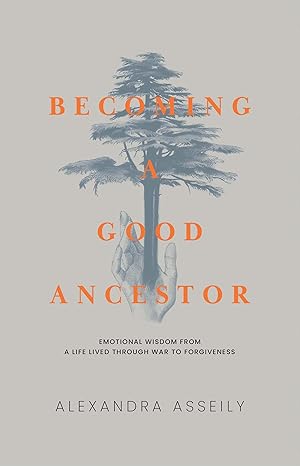
In Becoming a Good Ancestor, Alexandra Asseily blends personal storytelling, spiritual insight, and lived experience into a series of heartfelt reflections on how to live well and leave a legacy rooted in love, forgiveness, and awareness. Through a collection of short chapters, some philosophical, some practical, many deeply emotional, she invites readers to examine the scars of their personal and collective pasts and transform them into something healing and generative. Drawing from her background in psychotherapy and decades of peace work in Lebanon, Asseily shares wisdom shaped by war, loss, family history, and reconciliation.
Reading this book felt like sitting down with a wise and kind grandmother who’s seen a lot, made peace with most of it, and wants you to avoid her mistakes. The writing is soft and slow, in the best way. It meanders sometimes, but never aimlessly. I was moved by how openly Asseily talked about pain, especially the inherited kind. Her stories about her grandmother’s coldness or her uncle’s death in war weren’t shared for drama, they were shared to show how these unresolved hurts can ripple through generations. What stayed with me most was her idea of the “unquiet dead” and how healing isn’t just for the living. The idea that we carry unfinished business from those who came before us is heavy, but she makes it feel hopeful.
The stories she tells are powerful, but her writing style tends to cushion everything in warmth. This is probably intentional as she’s modeling compassion and healing. That said, when she’s blunt, it hits hard. Her reflections on hate, envy, and guilt were especially clear-eyed and honest. I also appreciated that she didn’t try to sound “academic” even though she’s clearly educated. She just tells it how she’s lived it.
I’d recommend this book to anyone feeling stuck, weighed down by the past, or wondering how to make peace with where they come from. It’s not a “how-to” guide, and it’s not trying to be one. It’s a companion, something to read in quiet moments and return to over time. It’ll speak most deeply to people who are looking inward or trying to understand what healing actually means, especially in a world that keeps repeating old mistakes. If you’re ready to do some soul work, not with checklists but with stories, this is a lovely place to start.
Pages: 81 | ASIN : B0DW4BDJQZ




 LITERARY TITAN