Blog Archives
Gone The Sun
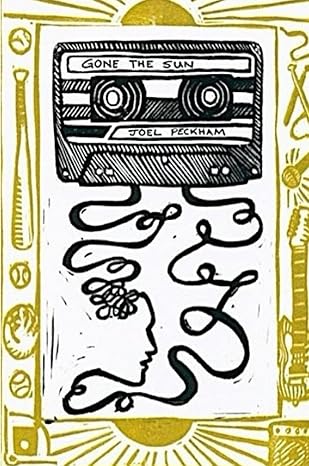

Joel Peckham’s Gone the Sun is a searing memoir wrapped in a tender love letter to his father, himself, and the complicated beauty of memory. Set mostly in the nostalgic-yet-chaotic backdrop of Camp Manitou, this book tracks Peckham’s navigation through grief, identity, generational legacies, and dementia, his father’s, and possibly his own. Through lyrical storytelling, he examines what it means to lose and find oneself in the rhythms of place, people, and pain. The memoir reads like a long conversation with an old friend, raw and honest, never trying to fix things, only to understand.
What struck me most and most powerfully was the depth of emotional vulnerability Peckham allows himself to reveal. In the opening scene, as he portrays his father’s anger as both atmospheric and oppressive, I felt a visceral sense of unease stir within me. The description of his father’s explosive moods, their routine eruptions, and the fallout that ripples through a summer camp already humming with energy, hit home. “You just don’t understand,” his father says, and suddenly, we’re in it. The first chapter is remarkable, striking a careful balance between lyricism and impact, maintaining poetic grace without sacrificing clarity or momentum. I found myself returning to certain passages, drawn by the cadence and precision of the prose.
Peckham’s integration of rhythm and sound into the structure of the narrative is both deliberate and profoundly affecting. His relationship with music serves as a form of sanctuary, a language he continues to share with his father when spoken words no longer suffice. When he writes, “Rhythm is life. Is peace,” the sentiment resonates with unmistakable weight. His descriptions of baseball drills as musical compositions and the ambient noise of camp life as a kind of symphonic backdrop elevate the prose beyond observation into something lived and embodied. The music program he builds becomes a refuge not only for himself but for the marginalized and overlooked, both campers and staff. It is not merely about music; it is about creating meaning and belonging in a world that can so often feel overwhelming and dissonant.
Peckham’s portrayal of his father’s dementia is both devastating and deeply unsettling. He captures, with unflinching clarity, the painful contradiction of witnessing someone gradually disappear while still physically present. “He doesn’t just forget things, he forgets who he is,” he writes a line that lingers long after it is read. Peckham does not exempt himself from scrutiny; his own history of trauma, brain injury, and profound personal loss permeates the narrative, often just beneath the surface. Yet he continues to persevere, showing up for his students, the camp community, and most of all, his father. At times, this devotion is marked by resentment, at others by tenderness, but it is always rendered with striking honesty. In one particularly affecting moment, he embraces his father and simply says, “I know, Dad. I know.” It is a moment of raw human truth, an acknowledgment that sometimes presence and empathy are the only answers we have.
This is not a neatly structured memoir. It is expansive, circuitous, and deliberately so, mirroring the unpredictability and complexity of lived experience. Gone the Sun resists the temptation to impose order on chaos, instead offering a narrative that embraces uncertainty and emotional truth. I would recommend this book to anyone who has cared for a loved one facing memory loss, struggled to hold a family together through sheer will and fragile hope, or turned to music as a means of survival. This is more than a tribute; it is an unflinching reckoning with grief, identity, and love.
Pages: 97 | ASIN : B0DNTQV5FS

Become Advocates

Tucson 9-1-1: Do The Right Thing! is a deeply personal, sometimes fiery, and always passionate insider account of the rise and fall of Tucson’s emergency communications center. Why was this an important book for you to write?
9-1-1 service is so critical to emergency services, but it suffers everywhere from neglect for political reasons. A little advocacy could easily turn this around, but there are no advocates. I want people to know how they can save lives simply by letting government officials know that we are watching. I want people to become advocates. After 14 years, the 9-1-1 service of Tucson has only degraded even more. Why is this tolerated?
What were some ideas that were important for you to share in this book?
Anyone would imagine that doing great service for people who call 9-1-1 is automatic, a no-brainer. However, the reality is far different. I had this personal experience, but this same kind of truth is paralleled everywhere. I felt it was important to report the facts and quote the actual communications because readers could accurately judge the behavior of myself and all involved. Some might see me as a troublemaker, but then they will have to wonder that no one else was speaking for the victims calling 9-1-1 and dying quietly. Someone should speak for them.
How did you balance the need to be honest and authentic with the need to protect your privacy and that of others in your memoir?
I am not sure that I protected anyone. I deliberately avoided naming some people in some situations to prevent unfairness and harm to them. Maybe, I was too protective, but I don’t think anyone would say so. It’s a memoir, so I could not be honest and still protect myself.
What do you hope is one thing readers take away from your story?
Demand what you value from your elected officials because politics governs what happens. Advocacy is necessary. Nothing is easy.
Author Links: GoodReads | Linkedin | Amazon
Inherited Trauma
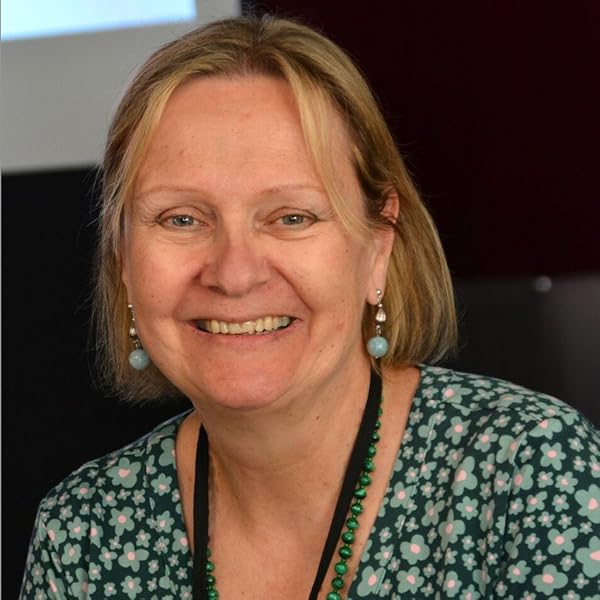
The Tennis Champion Who Escaped the Nazis is a deeply personal and emotionally charged biography of your grandmother, Liesl Herbst, who went from being Austria’s national tennis champion in the 1930s to a Jewish refugee fleeing Nazi persecution. Why was it important for you to write this book?
In 2018 my daughter, who was a student at the time, asked me about her family heritage and I realised I knew very little. So I took my three children to Vienna, and I started my research. I soon realised that what I’d planned to be a book for my children, could be something for a wider audience. It just grew from there.
What were some ideas that were important for you to share in this book?
Inherited trauma and survivors’ guilt. I realised that my grandmother and mother both suffered from survivors’ guilt and trauma, and they had unwittingly passed these down to the next generation. Writing the book has been cathartic for me. It is not just those who survived the Holocaust who might feel this way, but anyone who has survived war or a tragedy – but their friends or family have not.
What was the most challenging part of writing your grandmother’s biography, and what was the most rewarding?
Most challenging was having to travel to the places in the Czech Republic and Slovakia where my grandparents were born and where my grandmother’s family was murdered. It was upsetting visiting the concentration camp near Prague where my grandmother’s mother and oldest sister were killed, and the forest in Slovakia where my grandmother’s other sister and her family were massacred among 700 people. It was also difficult searching museum archives in languages I do not speak or read. Most rewarding was the people I met in those places who gave up their leisure time to help me and were all incredibly helpful and friendly.
What do you hope is one thing readers take away from your book?
Even in the darkest situations, there is hope.
Author Links: GoodReads | Instagram | Facebook | Bluesky | Website | Amazon
In London, though initially stripped of their Austrian passports and rendered stateless aliens, both Liesl and her daughter Dorli competed at Wimbledon. They remain the only mother and daughter ever to have played doubles together at Wimbledon.
This moving story of escape and survival is told by Liesl’s grand-daughter, Dorli’s daughter. Some of the story, the author heard first-hand from her grandmother; the rest, she has meticulously researched over many years in four countries. It is as much a search for the author’s own identity as for her own children and grandchildren to ensure that their remarkable family history is never lost again.
Illustrated throughout with family photographs and original documents, this is a story of survival against terrible odds, an inspiring tale of resilience and hope.
Mommy, Can Boys Also Be Doctors?: A Message to Young Scientists and Other Humans

Marlene Belfort’s Mommy, Can Boys Also Be Doctors? is a memoir as layered as the life it chronicles. At once deeply personal and sweeping in scope, it traces the author’s journey from a girl growing up in apartheid South Africa to a pioneering molecular biologist in the U.S. The book is divided into five thematic sections, each tackling different life chapters—from her immigrant upbringing and the devastating loss of her father to her rise in science, balancing motherhood, coping with depression, and reflecting on aging. Belfort writes with unflinching honesty, sharing hard-won lessons and posing tough questions about resilience, ambition, gender equity, and the messy but beautiful reality of being human.
What struck me most about this memoir was how real it felt. Belfort walks us through tragedy with grace—her father’s suicide, her battles with depression, the push-pull of ambition and parenting—without ever wallowing. Her prose has a kind of raw elegance to it. You feel her warmth and intellect, her insecurities and boldness. She calls things what they are, even when they’re ugly. There were passages that made me laugh and others that left me aching. Her reflections on scientific ambition and gender bias hit hard, especially the contradiction of being celebrated professionally and doubted personally. She talks about the guilt, the exhaustion, and the benign neglect of parenting with honesty that’s rare and needed.
There’s also an unexpected charm to the writing. Belfort’s tone is smart and vulnerable without being sentimental. She’s both a scientist and a storyteller and that dual-lens makes for something really special. The book bounces between continents, decades, and disciplines with a rhythm that kept me engaged. Her love story with her husband Georges, whom she met as a teen, is a quiet backbone throughout, and their lifelong partnership feels like a rebellion in its own right. But this book isn’t just about her life. It’s about the lives she’s touched, the systems she’s challenged, and the next generation she’s talking to. It feels like a letter, a warning, and a gift, all at once.
Belfort’s memoir is for anyone who has ever felt like an outsider, who has chased meaning in both career and family or who’s been caught between survival and growth. It’s especially for young scientists, women in academia, and anyone juggling big dreams with real-life mess. It’s not a self-help book, and it’s not a typical memoir—it’s something braver and harder to define. And that’s what makes it powerful. I recommend it without hesitation.
Pages: 243 | ASIN : B0F43DHBD1
Such a Pretty Picture

Andrea Leeb’s Such a Pretty Picture is a devastating and intimate memoir that tells the story of a childhood marked by trauma, silence, and survival. Set in 1960s and ’70s New York, the book opens with a gut-wrenching scene: a four-year-old Andrea is molested by her father during bath time. Her mother, upon discovering the abuse, collapses and goes temporarily blind—both literally and emotionally. That moment becomes a metaphor for what follows: a house where appearances are cherished, secrets are guarded, and a child is left alone in the fallout. What unfolds is a gripping narrative of emotional abandonment, maternal betrayal, and the long shadow of incest.
Reading this memoir gutted me. Not just because of the trauma Leeb endured, but because of how plainly she lays it bare. She doesn’t use flowery language or metaphors to distance herself—she brings you into the room with her. In Chapter 1, when she says, “The way he touched me felt strange: good but not good,” I felt that sick knot of confusion and fear. What shook me even more was her mother’s reaction—not to rescue, but to disappear. That decision to prioritize denial over protection sets the tone for the emotional cruelty that follows.
Leeb’s mother, Marlene, is portrayed with brutal honesty. She’s fragile, vain, jealous, and deeply wounded, but also dangerous in her indifference. You feel Andrea’s heartbreak not in screams, but in those small silences where a child should have been loved and wasn’t. The mother’s obsession with order and appearances, like matching pink nightgowns or birthday parties, just made the contrast sharper. I found myself mourning what Andrea never had more than anything she lost.
The darkest chapter for me was Chapter 6. Andrea, still a child, tapes her mouth shut, stuffs cotton in her nose and ears, and lies in bed trying to suffocate herself. Her suicide attempt is not melodramatic; it’s quiet, methodical, almost innocent in its execution. All she wants is for her mother to love her again. And when her mother finally holds her and says, “My poor baby. What have I done to you?”—You feel hope. But deep down, you know it’s just a pause before the next wave of pain. That’s the emotional rhythm of this book: brief tenderness followed by long stretches of ache.
This book is brutal. It’s heavy. But it’s honest in a way few memoirs are. It doesn’t try to make pain pretty. It doesn’t ask for pity. Andrea Leeb writes like someone who has lived through hell and made it her mission to tell the truth. I’d recommend this memoir to survivors, to those who work with trauma, and to anyone who’s ever wondered how abuse hides behind closed doors.
Pages: 256 | ASIN : B0DWYSSLL6

Life in a Tumble Dryer: Living and Working in Khartoum, the World’s Hottest Capital (Not How I Planned It)
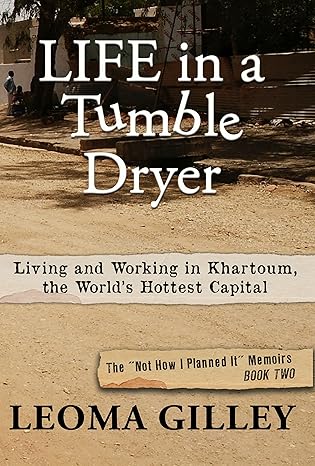
Life in a Tumble Dryer is Leoma Gilley’s vivid and deeply personal memoir of her years living and working in Khartoum, Sudan, specifically the sweltering, dust-choked, unpredictable chaos of everyday life in the world’s hottest capital. The book is structured around letters to her cousin Harriet and weaves together tales of linguistic research, cultural missteps, bureaucratic wrangling, unexpected friendships, and survival tactics in a place where the electricity vanishes with the heat and dust storms sneak up like petty thieves.
What really stuck with me from the start was how sharply Leoma captures the absurdity and humor of adapting to a totally different way of life. Her story about arriving in Khartoum with 256 kilograms of luggage, complete with solar panels, books, and fans, only to be delayed by a flat tire on the tarmac at 3 a.m. is a peak travel nightmare. But she tells it with a wink and grit that made me laugh out loud. Even funnier, she ends up in the wrong airport queue behind Orthodox Jews boarding an El Al flight, while she’s bound for Sudan, one of those “what even is my life” moments you just can’t make up.
But the memoir isn’t all quirky misadventures. What’s most powerful is the subtle unraveling of her own assumptions. Leoma is honest about her initial sense of control and expertise, especially when it comes to linguistics. But then, in a scene that humbled even me as a reader, she recalls how a colleague gently reminded her that it’s not her job to decide for people what their language or culture should look like. “It is their language and thus their decision,” she’s told. That moment comes back again and again, and it’s the soul of the book. She’s not there to fix anything; she’s there to walk alongside. That shift in mindset is deeply moving, especially when so many “aid” narratives fall into the trap of saviorism.
The book is more a series of letters and anecdotes than a tightly plotted memoir, so it’s best to read it slowly, maybe a chapter at a time. Still, that format is part of its charm. The chapter where she writes a parody song called “The Yellar Dust of Khartoum” had me wheezing, especially the line: “Your oily skin is daily dried by that abrasive touch, but one good thing about it, it doesn’t cost that much.” There’s something about surviving in a brutal climate with nothing but a fan, peanut butter on sour crepes, and a sense of humor that made me love this book all the more.
By the end, I felt like I knew Khartoum, its smells, its setbacks, its kindnesses, and I admired Leoma not just for what she did there, but how she let herself be changed by the place. Life in a Tumble Dryer is perfect for readers who love honest travel writing, especially memoirs with heart, humor, and a dose of humility. If you’ve ever tried to make a home somewhere wildly unfamiliar or wondered what it would take, this book is for you.
Pages: 319 | ASIN : B0DSLP2V12
The Darker Elements
In Awakening 52, you share with readers the intense spiritual experiences you encountered following the event that nearly took your life in 2014. Why was this an important book for you to write?
Ever since this experience, I felt the need to write a book about what was felt, seen, and heard. I needed to understand and voice what I felt was important messages of faith in what I had encountered. Given that there are so many different views around religions and cultures that divide, for me, it was about creating an understanding and a pathway of self-discovery and a reach to the reader that resonates with the individual. If it makes people more spiritually aware I felt it could create and bring peace to people in a hectic world.
I appreciated the candid nature with which you told your story. What was the hardest thing for you to write about?
The subject was difficult as I really had to step out of my own shadow as it is very personal. Everyone suffers at points of life around death, and it is a sensitive subject. Venturing into the darker elements was not easy as energies felt in this space, I did not want to give it credit or existence, but it was shown with clarity and was written as a warning.
Is there anything you decided to omit from your book that you now wish you had included?
There is so much more that I could have added around impacts into life and how I saw the darker aspects leaching into society, how this energy collectively grows but plan on writing another book in the future as there is so much more to this awakening experience. Awareness could lead to great change in society as it was seen throughout the visions and remembrance, so much more can be written that could assist people in finding self and creating a healthier and more unified world.
What is one thing you hope readers can take away from your experience?
I hope readers can look within and learn more about themselves, understand that life is not the start or the end, and give some guidance into being more aware. To bring comfort to those who may be suffering the loss of loved family members, friends, and peers by understanding they do live on in spirit and soul in a place of immense love. To understand that love is buried within every living person and by connecting to this love and changing views bringing better relationships and creating positive change. If Awakening 52 brings peace and understanding to the reader and alters lifestyles the messages from the master have been heard as his presence was something I will never forget.
Author Links: Goodreads | Amazon
In Awakening 52, Smith recounts this profound experience, one that revealed divine wisdom, spirit guides, and the deep connection between our earthly existence and the afterlife. Years of reflection and regression uncovered powerful insights that challenge beliefs, expand awareness, and offer a glimpse into the unknown.
With raw honesty and deep insight, Smith shares not only his miraculous awakening but also the lessons it brought.
His story invites readers to question, explore, and perhaps even awaken to their own understanding of life’s greater purpose.
Are you ready to take the journey?
Life is Fragile

The Blank Journal is a heartfelt travel memoir that follows your journey together riding a tandem bike in all 50 states, and sharing your experiences of healing from deep grief, rediscovering joy, and making the most of the time you have left in life. Why was this an important book for you to write?
Because we understand life’s fragility, our goal in writing this book is to inspire and encourage others, especially those starting over after having experienced setbacks or loss.
What were some ideas that were important for you to share in this book?
By being vulnerable, we shared emotions, hope, and the importance of resilience. We also shared the raw ups and downs of our lives while achieving this goal.
What was the most challenging part of writing your memoir and what was the most rewarding?
It was challenging to decide which stories to include in various chapters in an effort to keep the book inspirational and motivational, as opposed to being a purely historical record. The most rewarding aspect was being authentic while reminiscing and focusing on lessons learned about life, ourselves, and each other.
What do you hope is one thing readers take away from your story?
Life is fragile and unpredictable. For readers who have gone through difficult circumstances, we hope the book will encourage them to stay engaged in life. For readers longing to pursue dreams and goals, we hope the book will ignite passion and persistence.
Author Links: GoodReads | Website



 LITERARY TITAN