Blog Archives
The Difficult Process of Emotional Recovery

Seven Blackbirds follows a law student trapped in an abusive marriage, struggling to protect herself and her infant son, who fights to escape her husband and rediscover who she is away from the abuse. What was the inspiration for the setup of your story?
During the course of writing this novel I was actively raising four children and became pregnant and gave birth to the fifth, so the way motherhood shapes and changes a woman was very much on my mind! I wanted to write about a protagonist who was not strong but became strong, found her voice and truly came into her own—regardless of the consequences for her marriage, which in this case was already rickety. My law studies had really opened my eyes to the impact of the legal system on mothers trying to dissolve the ties of organized society that bound them to their abusers while also trying to make their way through the difficult process of emotional recovery from that abuse. And I have to say that Tulsa inspired me as well. I lived there for several years and developed a deep affection for it. A strong sense of place is important to me as a writer. It grounds a story dealing with difficult subject matter so that the reader can wrap it around her like a cloak and really relate to the characters.
Did you plan the tone and direction of the novel before writing, or did it come out organically as you were writing?
There were maybe four things I was convinced of before I began. I knew I wanted to write about the “afterward” of Kim’s bad situation, that is, not dwell on the abuse, but focus on the recovery process. I knew I wanted to showcase a character who did not grow up in an abusive environment, because that would offer a pat explanation; I wanted this to be a shock and surprise to her, because there’s so much more meat to that story. I knew I was going to include humor because that adds realism—life is funny and sad and everything in between, all mixed up together. Finally, I knew I was going to need flashbacks because the recovery process is quite literally bringing the past back up into the present to meditate on it, digest it, and heal. That’s probably all the planning that went into it. I sketched out a few scenes and let things develop!
What were some themes that were important for you to explore in this book?
Smashing the stereotypes around DV; physical and emotional abuse in the home cuts across all demographic categories.
The way that denial, deflection, minimizing, and holding toxic secrets impedes emotional healing and growth; and conversely, that bravery will get you everywhere!
That growing up means finding the voice of your soul, and trusting that the inner stability that brings will help you ride the waves in the outer world.
That the legal system is imperfect, but when a woman stops viewing herself as a victim in need of rescue by the system, she’s in the best position to wring what she wants out of it.
Were you able to achieve everything you wanted with the characters in the novel?
Yes, for the purposes of this particular novel. Some of the characters do return in the companion volume, “Songs My Mother Taught Me,” so I was able to work with them more and it was and it was fun to discover what came next. “Songs” picks up with our heroine Kim later on, and I was especially pleased to be able to flesh out the relationships within Kim’s family of origin—that’s definitely something that comes to the fore in middle age! I loved working more deeply with her mother and sister, and of course it was a pleasure to see the tiny boy in “Seven Blackbirds” grow into a teen.
Author Links: Amazon | Website
Not Just Another Brick in the Wall
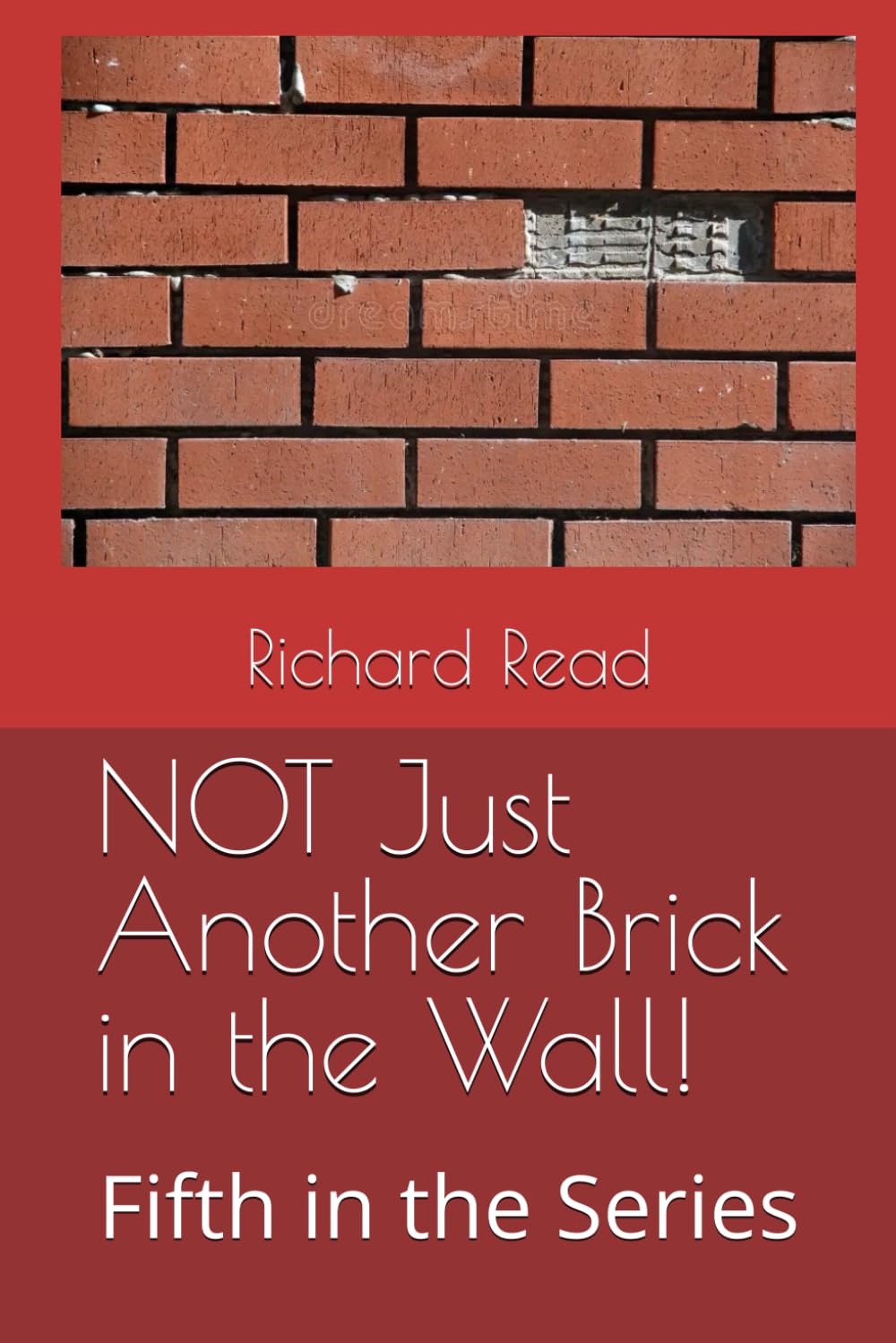

Not Just Another Brick in the Wall! follows Calista “Cali” Snipe and Skyler “Sky” McCray through their first year at Parkington High, surrounded by a colorful circle of friends. It’s a story about growing up, testing limits, and figuring out identity during those shaky teenage years. The novel captures the texture of adolescence. The gossip, the awkward humor, the risky choices, the first brush with adult problems. There’s a lot of talk about friendship, loyalty, dating, and the lines between fun and danger. It’s a coming-of-age story that takes its time, mixing the sweetness of young love with the unease of real-world threats like drugs, death, and betrayal.
I found myself pulled in by how honestly it portrays teenage life. The writing feels raw and unfiltered, almost like eavesdropping on a bunch of high schoolers figuring things out as they go. Sometimes the dialogue rambles, but that’s part of the charm. It’s messy in the same way real conversations are. I liked that the author doesn’t talk down to teens. He lets them be confused, hormonal, funny, and scared all at once. Some scenes take their time to develop, and the number of characters can be overwhelming. Yet, beneath the chatter, there’s something genuine and kindhearted. The story cares about its kids, even when they don’t always make the right choices.
What struck me most was how the book balances innocence and tension. One minute it’s light and full of laughs, the next it dives into darker corners like grief, pressure, and manipulation. It doesn’t shy away from uncomfortable truths. I caught myself feeling protective of the characters, even the ones making mistakes. The counselor subplot gave me chills, not because it was overtly sinister at first, but because of how quietly it built up. The book made me remember what it felt like to be young, to think I knew everything, and still feel lost. That nostalgia hits hard.
Not Just Another Brick in the Wall! is an emotional and honest portrayal of adolescence. I’d recommend it to readers who like realistic teen fiction that doesn’t whitewash life. It’s heartfelt and worth reading together. For anyone who remembers high school as both the best and worst of times, this book will feel all too familiar.
Pages: 234 | ASIN: B0DNZ1LCCF

Son of Asmodeus


Son of Asmodeus throws readers into a world where angels, demons, and humans all fight over faith, fate, and the heavy price of truth. The story follows John “Sully” Sullivan, a former monk turned demon hunter who learns that his bloodline ties him to both Heaven and Hell. His battles stretch from the chaos of celestial war to the gritty alleys of Los Angeles, where divine secrets, lost memories, and half-truths come crashing together. It’s an urban fantasy layered with centuries of guilt, loyalty, and the question of what it means to belong when both light and darkness claim you.
The writing has a cinematic punch. Fights are vivid, and the tension never lets up, but what really hooked me wasn’t the action. It was the ache under it all. Sully’s struggle with identity and redemption hit me hard. I found myself rooting for him, even when he made choices that hurt. The mix of religious mythology and raw emotion worked better than I expected. Sometimes the dialogue leaned a bit heavy on exposition, but the story’s heart kept me going. I could feel the loneliness in every scene, the way faith can turn into a burden when you start to doubt your own soul.
The world itself is wild and haunting. The author plays with ancient language, heavenly wars, and smoky Los Angeles bars as if they all belong in the same universe. And somehow, they do. The pacing runs hot and cold. Slow, meditative moments mixed with sudden bursts of blood and fire, but I liked that rhythm. It gave me time to breathe before diving back in. The emotional pull is strong, too. There were times I felt uneasy, other times strangely hopeful.
Son of Asmodeus is the kind of story I’d hand to readers who love dark fantasy with a moral twist. If you like stories where angels bleed and sinners pray, where the hero is broken but still stands up swinging, this one’s for you. It’s not a light read, but it’s full of grit, heart, and that small flicker of grace that refuses to die.
Pages: 186 | ASIN : B0BLXMTCXC

Love’s Cauldron: Reclaim Your Wild Feminine

Love’s Cauldron is part memoir, part spiritual guide, and part poetic incantation. Author Jennifer J. Lehr traces her path from childhood wounds and self-doubt toward awakening her “witch self,” a reclamation of intuition, creativity, and the divine feminine. The book moves between personal stories, reflections, and poetry, exploring themes of trauma, healing, and empowerment. It invites readers to honor the unseen, the magical, and the deeply emotional parts of themselves. Lehr’s voice blends vulnerability with wisdom, and she treats her life as a sacred collage, each experience a fragment of becoming whole.
Reading it felt intimate and raw. Lehr’s honesty pulled me in, especially when she described her fear of revealing her spiritual identity and her journey through pain toward acceptance. The mix of memoir and mysticism gave the writing a pulse, alive with both sorrow and hope. Some sections read like prayers, others like confessions. Her reflections on trauma, how it hides in the body, how healing demands courage, resonated with me. At times, the writing stretched into abstraction, and I found myself pausing to catch up emotionally. Still, the beauty of her language and her conviction kept me turning the pages. It’s not a light read, but it’s one that lingers.
What I admired most was Lehr’s blend of psychological insight and spiritual wonder. As a therapist and a self-proclaimed witch, she stands between science and spirit and refuses to choose one over the other. That mix gave the book a grounded magic. Some might resist her talk of guides, past lives, and energy healing, but her sincerity makes it hard to dismiss. The poetry scattered throughout is rich and sensory. It slows the reader down, asking you to feel rather than analyze. I caught myself reading lines twice, just to savor them.
I’d recommend Love’s Cauldron to readers drawn to self-discovery, spirituality, and feminine wisdom. It’s for anyone who has ever felt “too sensitive” or out of step with the world and who wants to see that sensitivity as strength. It’s also a gentle call to those who’ve buried parts of themselves, to dig them up, dust them off, and let them breathe.
Pages: 346 | ASIN : B0FH5MC4ZV
Gods and Guardians II Escape from Durgurrum

Gods and Guardians II continues the saga of Arthur, Samuel, and their companions as they’re pulled through portals, thrown aboard Elvish starships, and forced into battles that stretch across galaxies and gods’ domains. Author R.W. Dove blends science fiction with fantasy so smoothly that I sometimes forgot where one ended and the other began. The pacing swings from quiet, reflective moments to grand, cinematic scenes filled with tension, friendship, and wonder. There’s a sense of adventure in every chapter, like the book itself refuses to slow down, and you’re pulled along whether you’re ready or not.
What I liked most was Dove’s ability to make everything feel alive. The ships, the crystals, even the air in the alien halls hum with a kind of magic. The writing has a rhythm that’s old-fashioned in a good way, like classic fantasy storytelling where the author truly believes in the world they’ve built. At times, the descriptions stretch long, yet they never lose heart. I could tell Dove poured himself into this, weaving myth and technology together with such sincerity that it’s hard not to admire it. I felt that some parts could have used tighter dialogue, but even then, the sheer imagination keeps it moving. The story feels vast, full of purpose, and though it leans heavily into the moral struggle between light and dark, it never loses sight of its human center, courage, loyalty, and belief in something bigger.
Emotionally, the book surprised me. I found myself caring about Arthur’s confusion and fear, about the weight of destiny he didn’t ask for. I liked how friendship drives much of the plot; even when gods and kings are scheming, the heart of the book is still about people just trying to do what’s right. Dove’s writing feels hopeful, even when the world he’s describing teeters on the edge of ruin.
If you love sprawling worlds, moral stakes, and a touch of classic heroism, Gods and Guardians II: Escape from Durgurrum is worth your time. This is a story for dreamers, for those who miss the feel of true adventure and heartfelt imagination. It’s a long ride, but one filled with light, danger, and just enough wonder to make you believe in magic again.
Pages: 278 | ISBN : 1968973427
My Love Letter

Black Architects is a lyrical tapestry of poems and meditations that transforms Blackness into a sacred hymn that’s part prayer, part protest, and all love. What inspired you to write and publish this collection?
Well, first I want to thank you for the opportunity to reflect on the work. It was inspired by an incident that was racially charged, which occurred at a job that I had. I remember feeling the lowest that day, though refusing to let them see me cry. On the train ride home, I started to write this soliloquy/prayer, declarations if you will, by hand in protest. Every time I wrote a line I felt a sort of redemption that I knew, if no body else, the Almighty would be witness to me climbing out of the hole I was in. In that job space, and other spaces, I felt the compression and pressure of having to hide the majority of my identity. Though I dared anyway, in some ways, to embody the ideals, culture, and depth of what I encompass as a black woman, I felt the battle every single day to be, speak, do, and exist otherwise. Aversion for true expressions of blackness is so intricately and subtlety interwoven in the fabric of our society, that it becomes easy for that aversion to manifest, and the smart from it is hard at times to pinpoint, but undeniably experienced. Black Architects was born from this. It came as protest, as a resistance to extinction. It is my love letter to and celebration of black people, written to those who continue to build our legacies in this world. The architects are the young, middle aged and seasoned who see themselves as caring about this world, being architects of thought, experiences and manifestations that will lead people to honor themselves, despite how others may dishonor them. The work was also inspired by the community where I live. I see black faces, in all variety, everyday. Working, playing, growing, having setbacks, prospering, loving. So it was important to tap into this pulse of the people and show us in even the mundane aspects of living. In this predominately black community, we still don’t control resources or have many businesses, so in a way Black Architects is also how one dreams to be the architect that lives just beneath the surface in each of us.
How did you approach balancing vulnerability and defiance in your writing about Black identity?
I balanced the two by just being honest about my experience. I let my love for mankind in general shine through as an act of defending an oppressed identity, like I would for any other people I see being stifled. I practiced a sort of curiosity as though I was both outsider and member of the community, which informed the observations presented in the work. It was important for me to come straight from the heart and to say everything with my chest despite resistance because my only audience at the time of the work’s conception, was myself and the Almighty. Both of whom it is impossible to lie to, and I wanted to extend that courage to the reader. It came from love’s protest and can be seen as Love’s defense of me, who at the time of writing felt deeply wounded and dangerously vulnerable. That day at work, and many others in that work environment, I suffered almost disparaging defeat. The part of me that refused to die found a home in the larger tradition of struggles of black identity, and expanded within the honesty and authenticity of expression.
In the process of writing, I felt the support of my 10,000, my ancestors – and all of heaven, really – witnessing and celebrating with me. Even so, I knew I risked offending and that is also where defiance set in. There are some who expect that every other identity can be celebrated without question but when black people unite in this way, it is threatening. I’ve noticed and experienced that the black voice tends to be sacrificially inclusive, speaking for every and each, with associations to other black people only assumed, rarely explicit. Even in this interview as I express my love for black identity, I feel compelled and forced, almost, to remind about my love for other groups as if my expression of solidarity with my community would mean otherwise. Why is this?
We, like other groups, are not monolithic and I tried to show some of our diversity. I was not trying to speak for a whole group of people. These lines are simply a testament of how a single mind sees blackness and they are for any others that can see and celebrate this too. Being unapologetic about love is something I’ve had to practice and my fondness, deep affection and concern for my people, I hope, is apparent. Honesty, truth and love are the only ways to truly touch and reach people. In keeping with this reminder I was able to maintain the balance between the vulnerability and defiance so palpable in the work.
What were some themes that were important for you to explore in this book?
Vulnerability is one of them. In all our function and dysfunction, we are bared for the world to see. This work came through me while I was on the train, with my writing pad open for all onlookers to see – to some pleasing, and to others distasteful. Still the courage to be – considering and despite – persisted. Love is another theme. The multi-dimensional and variety of ways that we do exist and persist conveys, I hope, the beneficence of the Almighty who avenges the oppressed and reinforces the poor in spirit. We’re inspired to have this joy that for little reason, be. Redemption is also a theme. The work ends calling forth the youth, painting a picture of the architects of better days to be birthed from the sowing of this work.
Which artists, writers, or ancestral voices guided you while writing this book?
Christ Jesus guided me to be unflinchingly honest about the triumphs and despair of being a black woman. His walk on Earth inspired me to endeavor the universal heart through love and appeal to the cosmic conscience in man transcending identity throughout the work.
Emperor Haile Selassie I, the quintessential, cosmopolitan man, was a huge inspiration. His concern for the world has always been apparent to me, though his love for his own people never to diminish. Reflecting on the heights chartered by his words, inspired the loftiness of description in the text.
Dr. Maya Angelou was a huge influence. She took on the challenge so well of expressing her love for her people and for all people simultaneously and effortlessly. So I felt less alone in taking on the mission of this work.
They both were so masterful with the written/spoken word, that I could only dream to pave my own path and trajectory with their light as my guide.
E. E Cummings also has a quote in the same tradition of how the work was born: “To be nobody but yourself in a world which is doing its best, night and day, to make you everybody else – means to fight the hardest battle which any human being can fight; and never stop fighting.” Black Architects bandages the mind broken from this fight.
I identified with Frantz Fanon’s Black Face, White Masks and I ambitioned to be as astute an observer as he when it came to communicating and constructing the plight and positionality of the black architect.
I was also listening to this one Nina Simone song on repeat while composing the collection: it’s called “You’ll Never Walk Alone”. The work was written matching the ebb and flow and climax of her piece. It is very much woven into the every line of Black Architects.
Lastly, Marcus Garvey was a model because like Garvey in the whirlwind in one of his infamous speeches, I wanted this voice – this celebration – to be witness to the love and defiance enduring through time in the blood, DNA, genes and generations of a people. It is a message to the people at that job and in the world at large that they/it can never kill my spirit. Love, which I have chosen, will always outlast hate and though I may have died in battle that day, I am destined to be resurrected in the coming generation of architects that will redeem this world, black and otherwise.
Author Links: Instagram | Website
Black Architects is all the variations of ‘Black’ and ‘Excellence’ paired together. It is a rallying cry and celebration that interweaves an account of a people’s triumphs, their weaknesses, their shortcomings and their aspirations. It is a picture of what it is like to be Black in America. It is a protest against the monotony of invisibility of the Black plight in a Western purview demanding a reinvention of how we love ourselves: that we do love ourselves and our seed.
The Apostle and the Galapagos

This book intertwines two distinct yet surprisingly parallel journeys: that of Charles Darwin, the curious young naturalist struggling to find his place in science and faith, and Saul of Tarsus, the zealous Pharisee who would become the Apostle Paul. Each man, separated by centuries, faces a crisis of belief and identity, torn between the comfort of tradition and the pull of discovery. Boateng alternates their narratives with vivid, sensory detail, burning lamps, dusty scrolls, waves of incense and wind, and lets them move toward their defining moments of revelation. The story is both historical and deeply human, a kind of imagined dialogue between reason and revelation.
The writing is lush and poetic, sometimes almost musical. The scenes are painted with color and light rather than explained with facts, which gives them a haunting realism. I could almost smell the sea air of Shrewsbury and the burning incense of Jerusalem. Sometimes the prose lingers a little too long on the setting, but I didn’t mind. It gave the story a slow rhythm, a contemplative heartbeat. The contrast between Darwin’s gentle curiosity and Saul’s fiery conviction hooked me early. I found myself rooting for both, even when they stumbled. The way the author lets their doubts breathe, without preaching, without giving answers, felt honest and brave.
What stayed with me most was how the book explores the cost of conviction. Darwin’s yearning to see nature as both creation and mystery mirrored Saul’s hunger to serve a truth larger than himself. The beauty of it is that neither wins the argument; instead, both find transformation. Boateng writes about belief and reason like they’re old friends arguing at the same table. I felt moved, sometimes even uneasy, watching these two men fight their inner wars. The story isn’t just about science or religion, it’s about how people make meaning in chaos, and how they keep walking when certainty falls away.
I’d recommend The Apostle and the Galapagos to readers who love introspective historical fiction, especially those who enjoy stories like The Alchemist or Cloud Atlas. It’s not a quick read, but it rewards patience with depth and emotion. It’s for anyone who has ever questioned what they were taught, loved something they were told to reject, or searched for a bridge between faith and thought.
Pages: 155 | ASIN : B0FRVWWL7N



 LITERARY TITAN