Blog Archives
Tissiack: A Sierran Siren


Tissiack: A Sierran Siren follows Awena, a Native American and white high schooler who runs cross country, deals with family pressures, hears a mysterious ancestral voice, and tries to figure out who she is. The story jumps between her school life, her tribe’s struggles, and big moments like the State meet and the winter Bracebridge feast. It also weaves in deep cultural history, government injustice, and a coming-of-age kind of quest that Awena doesn’t fully understand at first. By the end, she starts shaping a path that blends tradition, identity, and her own sense of purpose.
The writing sneaks up on you. One minute it feels like a simple YA story about running and friendship, and then suddenly it drops these heavy truths about Native history and government failures that made my stomach twist. I kept getting caught by the quiet moments, especially Awena’s talks with Ama. They felt warm and sad at the same time. I liked that the book didn’t rush those scenes. The whole vibe had this mix of modern teenage life and thousands-of-years-old memory that gave the story a kind of echo. It made the book feel bigger than it looked.
The scenes with the BIA meetings made me mad. The explanations about broken treaties and stolen land made me sit back and just stare for a second. I kept thinking about how unfair it all is, and the book didn’t sugarcoat any of it. I liked that the story leaned into the messy parts of identity and didn’t pretend everything works out cleanly. Some moments were blunt. Some were tender. Some were almost funny in a dark way, like the boys’ cross-country team acting tough and then totally wimping out in front of a mountain lion. The mix of moods kept the book alive.
By the end, I felt proud of Awena. I wanted to cheer for her. She isn’t perfect, and that made her real. She stumbles, she doubts herself, and she fights through it. The writing made me feel like I knew her. I also loved how the story kept circling back to the idea of hearing your own voice, not just the ancestral one but the inner one.
If you like coming-of-age stories with heart, culture, humor, and a real sense of place, Tissiack: A Sierran Siren would be great for you. It feels especially perfect for teens or adults who enjoy stories about identity and heritage, and for anyone who loves the outdoors or running. It also works well for readers who want something thoughtful but not heavy in a gloomy way.
Pages: 64 | ASIN : B0F922QL54

Opportunities in Brittany
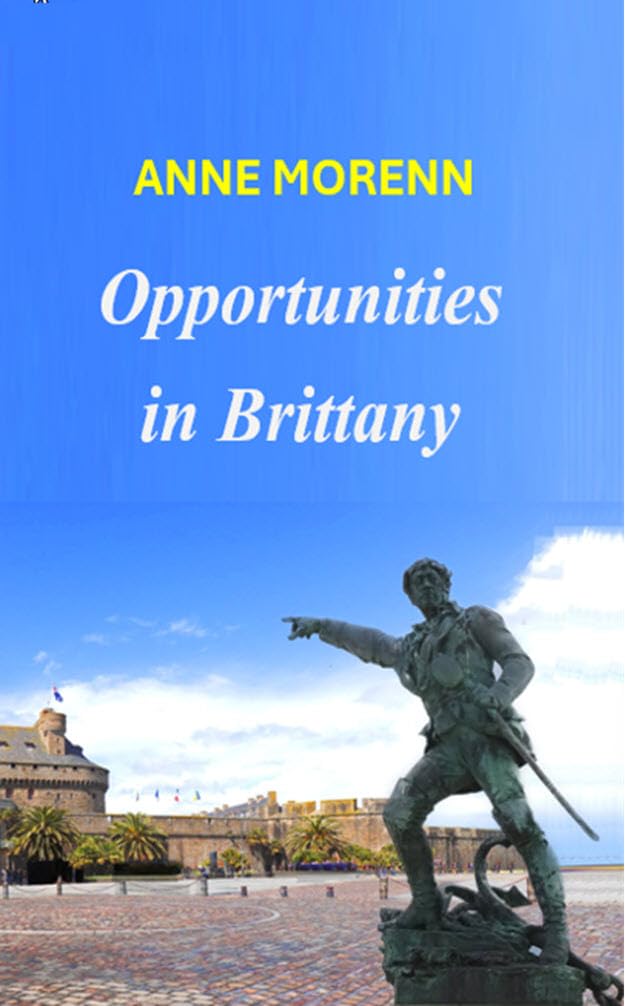
Opportunities in Brittany is a contemporary romance novel that follows a wide cast of characters whose lives intersect across Brussels, London, and, most vividly, Brittany. It begins with Félix Lemestre helping a mysterious young woman on a Eurostar platform, and from there the story branches into intertwined arcs: Eleanor escaping her controlling family, Yasmin fleeing an arranged marriage, and the many members of the Lemestre and Cavendish families whose histories, choices, and secrets gradually come together. The novel moves through travel, family intrigue, marriage negotiations, career shifts, and cultural crossings, eventually landing its characters in Brittany, where futures open, relationships deepen, and long-awaited opportunities finally take shape.
The writing is patient, almost procedural at times, as if the author trusts the reader to follow each careful step. It made the characters’ decisions feel grounded rather than dramatic for the sake of drama. When Félix helps Yasmin cross the border, the scene unfolds with a surprising amount of detail, but I found that detail comforting because it showed how much thought the characters give to each other’s safety and dignity. The same tone carries into the later chapters set in Brittany, where homes, rooms, and meals are described with a kind of affectionate precision.
What struck me most was how intentional the author is about choices. Eleanor’s backstory, for example, is not rushed. Her decision to escape her family carries weight because we’ve watched her strategize for years. Yasmin’s storyline works the same way: her flight from her father’s plans is not impulsive but careful, painful, and hopeful at once. Even secondary characters, like Agnès and Mathieu in Corseul, are given enough texture that I understood their influence on everyone around them. I also enjoyed the quieter cultural notes woven into the book, especially the sense of community in Brittany and the way the region feels both inviting and rooted in its own identity. By the time weddings, job offers, and new beginnings unfold near the end, the emotional payoff feels earned.
This is a romance novel, but one built more on steady interpersonal changes than on sweeping melodrama. If you like stories where relationships develop through trust, competence, and small acts of loyalty, this will likely speak to you. It’s also a good fit if you enjoy ensemble narratives, slow-burn connections, or settings that feel lived-in. Readers looking for fast conflict or high-tension twists might find it too gentle, but for anyone who enjoys thoughtful characters finding their place in the world, Opportunities in Brittany is a warm and satisfying read.
Pages: 390 | ASIN : B0DJF9JQ82
Where Did My Brain Go?

Where Did My Brain Go? is the true story of a man whose life split sharply into a before and after. The memoir follows Mitchell Miller from the bustle of Manhattan to a quiet Southern town and then through a devastating car crash that shattered his body, altered his mind, and derailed his future. Across the pages, he recounts the long march through surgeries, confusion, misdiagnoses, and nine lost years before doctors finally discovered his frontal-lobe traumatic brain injury. The book moves from the shock of survival to the slow, stubborn rebuilding of a life that no longer matched the one he remembered.
Reading this book put me through a mix of emotions. At times, I felt pulled into the raw terror of the crash and the surreal moments afterward. His memories of waking in the ICU, piecing together how badly he was hurt, and struggling through early recovery felt painfully intimate. I admired how directly he wrote about the confusion that followed him for years. He doesn’t dress it up. He lets the reader sit with that fog and frustration. I found myself angry on his behalf as he revealed how the brain injury went undiagnosed for nearly a decade and how the people closest to him sometimes failed him when he needed help most. The writing is plainspoken and almost blunt at times, and that made the emotional hits land harder for me.
What really stayed with me was the honesty about the small humiliations and the long stretch of not knowing who he had become. When he finally learns what happened to his brain, the relief is mixed with grief, and that contradiction hit me in the gut. I appreciated how he examined the way the injury reshaped his personality, his impulses, even his taste in food and habits. I could feel the years slipping by as he tried to anchor himself. His eventual escape from the “disability trap” and the chemical fog of prescribed stimulants made the later chapters feel lighter, almost like watching someone slowly open the blinds after a long night. Knowing how much he fought to regain a sense of self gave those moments real emotional weight.
Where Did My Brain Go? shows a man who survived more than he understood at the time and who rebuilt a life that finally felt steady again. The author writes with gratitude, even toward the hardest memories, and that grounded the book for me. I’d recommend this memoir to readers who appreciate personal stories told without pretense, especially those interested in traumatic brain injury, medical missteps, or the resilience of ordinary people pushed into extraordinary circumstances.
Pages: 96 | ASIN : B0FLYKYXTJ
Blurred Lines Between Reality & Nightmare

The Dreaming at the Drowned Town follows a haunted Filipino translator whose nightmare-plagued diary unravels a deadly expedition to a newly risen island where history, paranoia, and ancient horrors collide. What was the inspiration for the setup of your story?
We’ve always been drawn to overlooked corners of Philippine history, especially the transitional period of the 1920s, when cities like Cebu were rapidly modernizing under American rule while remaining at the cultural crossroads that decided the modern Filipino identity–between the legacy of three centuries of Spanish-style hacienda communalism and the enduring influence of the Church, the new American nation envisioned by the suit-wearing, English-nicknamed Sajonistas, and the vision of a country free from both that endured in places like Eastern Visayas. We’ve wanted to write a story in that setting for the longest time, portraying the interaction between people trapped between any of or perhaps none of the paths the Philippines was on the verge of walking, and the conflict that would arise from the clash between their different values and cultural contexts.
The core of the novel, however, came from two major sparks. The first was a love for early 20th-century cosmic horror, particularly the works of H.P. Lovecraft. Kyle has been a devoted fan for years before we ever started writing professionally, and he always wanted to craft a proper homage grounded in our own cultural landscape. The second—and more unexpected—inspiration came from real life. Around the time of the 2024 Manila International Book Fair (MIBF), when we launched our debut novel, Answering the Human Question, Kyle had come up with the concept of a protagonist troubled by vivid and terrible dreams, inspired partly by his own string of nightmares that he had been dealing with at the time through journaling. This entered the story as the main character and narrator of Enrique, who would write about his dreams as Kyle did. It also shaped in some aspects the book’s dream logic–its many false awakenings and the often blurred lines between reality and nightmare.
We also pulled from real historical curiosities like the desolate, sunken town of Pantabangan, the very real Drowned Town that exists here in the Philippines. It’s located in Luzon and in the province of Nueva Ecija, and it resurfaced during the El Niño droughts of both 2020 and 2024. We also combined the aesthetic of that place with Dawahon Islet, which, like the titular Drowned Town, is found near Leyte. Dawahon is a tiny yet densely packed community built on a reef that Kevin often flew over during pilot training. The distant glances and later images of empty, almost liminal spaces in both locations created an uncanny timelessness. It immediately planted in our minds the place where the book’s central mystery would unfold: a drowned town rising again after centuries beneath the sea.
The atmosphere is incredibly vivid. What research or techniques did you use to capture the sensory overload of the island and Enrique’s nightmares?
Much came from layering real-world observation with psychological insight. Research and a little bit of Kevin’s background in biology gave us a foundation for sensory detail—how bodies react to exhaustion, how coastal environments smell, sound, and move. Our travels to parts of the Visayas gave us firsthand experience of environments that feel both crowded and isolated, which helped shape the island’s suffocating atmosphere.
On Kyle’s end, his study of psychology—as well as a few readings of old court decisions for Philippine Law—taught him how perception breaks down under stress. Around the time of MIBF 2024, he was having recurring nightmares, and journaling them became the seed for Enrique’s dream sequences. Those dreams were chaotic, absurd yet vivid, and he translated that rawness into the book’s “dream logic.”
In addition to being partly inspired by Kyle’s own journaling, we employed Enrique’s diary as a framing device. In doing so, we hoped to keep the nightmares disorienting but maintain that they were narratively coherent. The diary form lets us narrow the focus to Enrique’s senses: the heat sticking to his skin, the sulfur that burns the throat, the texture of the drowned town rising from the sea. When those sensory details begin to distort or repeat, the reader feels Enrique’s unraveling in real time.
How did you approach blending real historical tensions of the American-occupied Philippines with cosmic or supernatural horror elements?
We began by grounding the story firmly in Philippine history. The 1920s was a pivotal transitional period in our hometown and province—Cebu was rapidly modernizing under American rule, yet memories of the Philippine-American War and the Revolution before it still lingered. A younger generation of Sajonistas emerged, eager to embrace American culture and modernity, and they often clashed with their elders, who had been shaped by centuries of Spanish influences and even hateful opposition to the betraying, conquering Americans themselves. Naturally, we wanted readers to feel that political and cultural tension in every scene, long before the supernatural appeared.
From there, the horror grew from two sources: Lovecraftian atmosphere and Filipino folklore. Lovecraft shaped the tone and structure—the slow unraveling of sanity, the tension between logic and the unknowable. But we never wanted to imitate Western cosmic horror wholesale. Filipino folklore, possessing tales of otherworldly spirit realms and the phantasms of the restless dead in spades, also played an important role in shaping the story’s identity. In our culture across its history, dreams have often held great power and importance, heralding either auspices of fortune or warnings of a coming malevolence. The sea has long been the place of both the dead as well as the living, and so it seemed natural as well as Filipino for us to portray the water with that same mystic aura.
When these folkloric themes collide with the real political tensions of the American occupation, they amplify each other. The characters themselves reflect this clash–to name a few, the American who believes he brings enlightenment and progress, the Western-educated Filipino guide plagued both by nightmares and generational trauma brought on by war, the old revolutionary who compromises his morals by relying on the wealth of his oppressors, and a corrupt constable armed by the law of a distant empire to fulfill his personal depravities. All of them come together in a chaotic misalliance of pathologies and dysfunctions beneath the cross of a condemned Spanish village, in the caves where the ancestors before told their stories, and above the depths of what came before them all.
Lita’s character goes through some of the most surprising twists. What was your process for constructing her arc?
When we were constructing the original skeleton of the story for Drowned Town, we wanted to explore imperialism—not just as the domination of one country over another, but on a smaller, interpersonal scale through the abuse and conflict that occurs between people. Every character written in this story speaks to or personifies that concept in some way, and Lita began as no different. The age gap between wife and husband, the bursts of passion punctuated by periods of ignorance from one side and betrayal from the other—she represents the country in her own way, a young and beautiful person being taken advantage of by a much older figure. We wanted another victim of imperialism, and in her case, we told the story of a kind of sex tourism and all the sordid perceptions that come with being someone in that world. However, we also wanted her to be aware of that dynamic, so she could play that game and defeat those who would take advantage of her or hold her in low regard. She needed to bear an innate refusal to be victimized, so that by the end she could be the true writer of the story—the architect of her own fate—rather than simply a supporting role in someone else’s narrative. That’s where her most surprising twists come from: the realization that she was never the object of the story, but its author all along.
Author Links: GoodReads | Facebook | Website
When an ancient town mysteriously emerges off the coast of Leyte, Enrique has no choice but to follow his employer to investigate. But as the expedition unravels, so too does the boundary between dreams and reality. With the island’s dark secrets coming to light, Enrique must face the horrors of its past before he too is claimed by the Drowned Town.
Bringing Magical Worlds to Life

Little Creatures follows a science-loving twelve-year-old girl who recently moved from the city to a quiet town and discovers that her backyard and bedroom wall are hiding a magical mystery. What was the inspiration for the setup of your story?
“From an early age, I was captivated by tales of fairies and elves—”Peter Pan” was my favorite. Alongside my love for stories, I had a deep passion for art, often spending hours sketching in my room. Around the age of twelve, I dreamed of writing a story about tiny elves hidden within the walls of a house. Life moved on, and that idea remained just a dream.
Today, as an author of adult fantasy, I decided to challenge myself by creating a children’s book. Instantly, my imagination returned to that twelve-year-old version of me—the one who longed to bring magical worlds to life. Now, I’ve finally fulfilled that dream and proudly checked it off my bucket list.”
In fantasy novels, it’s easy to get carried away with the magical powers characters have. How did you balance the use of supernatural powers?
“Because “Little Creatures” is a children’s story, I aimed to keep the supernatural powers simple and the narrative easy to follow—engaging young readers without overwhelming them with excessive detail.”
What were some themes that were important for you to explore in this book?
“The central theme of “Little Creatures” is that good always triumphs over evil. In a world often filled with chaos and destruction, I believe it’s important for children to experience stories with hopeful, fairytale endings—nurturing their imagination and reinforcing the power of positivity.”
Will this novel be the start of a series or are you working on a different story?
“Absolutely! I’ve already completed the sequel, “Rise of the Thramgrim,” and I’m excited to share that a third installment, “Curse of the Sandman,” is also in the works. This series is just beginning to unfold, and I can’t wait for readers to experience the journey ahead.”
Author Links: GoodReads | X | Facebook | Instagram | Website
Can a science-loving girl save a place where magic rules?
When twelve-year-old Zowie Lillian Saintclair moves from bustling Houston, Texas, to the quiet town of Greenwood, Arkansas, with her family, everything seems normal until she begins to spot little creatures that only she can see hiding in the shadows of her backyard.
And just as she thought things couldn’t get any more bizarre, she discovers something otherworldly living within her bedroom walls. That’s when she realizes her life is about to change in ways she never imagined.
Perfect for readers of all ages who love fantasy, adventure, and a smart heroine who isn’t afraid to explore the unknown.
Twinkling Wings and Toothy Things


Twinkling Wings and Toothy Things tells the story of Nutter Nate and his crew of tiny tooth-builders who live in the Tooth Fairy Realm. They plant lost baby teeth in the ground, grow them into strong adult teeth, and then team up with a tooth fairy named Maribel to deliver them to kids like Sam and Sadie. A mix-up, a pup, and a lot of teamwork turn their mission into a late-night adventure. By the end, they learn about cooperation, courage, and that mistakes don’t mean failure.
I got a real kick out of the whole idea of teeth growing like crops in neat little rows. It made me smile right away. The writing feels playful and warm, and it moves fast. I liked how each character had a goofy name that matched their job. It made the world feel silly in the best way. I enjoyed the teamwork in this children’s book as well. I kept thinking about how sweet it was that they all supported each other when things went sideways.
As I kept reading, I felt this surprising wave of nostalgia. It reminded me of being a kid and believing that tiny magical creatures zipped around at night. The pup made me laugh. I loved how the story didn’t pretend everything has to go perfectly. Mistakes happen. The fix matters more. That part actually felt kind of touching.
The illustrations in this book are bright, playful, and full of tiny details that make each scene feel alive. The soft colors and warm lighting create a cozy mood while still keeping everything fun and energetic. The little fairies are bursting with personality. Every image has something charming for kids to spot. The style feels gentle and expressive and fits the story’s sweet, whimsical tone perfectly.
I really enjoyed this picture book. I think it’s perfect for young kids who like magical stories and bright, cartoonish art, and any child who finds the whole tooth fairy thing exciting or a little mysterious. It would be especially great for kids just starting to lose teeth. It might even calm a few nerves. I’d happily recommend it to parents, teachers, and anyone who wants a bedtime story that feels gentle, silly, and full of heart.
Pages: 32 | ISBN : 1966786239
Facing Revenge

Facing Revenge follows Calista Snipe and Skyler McCray as they navigate friendship, romance, and rising danger during their high school year. The book opens with normal teen routines, like rides to school and lunchroom drama, then slowly shifts as tension rises around bullying, simmering grudges, and a growing threat targeted at their friend group. The story builds toward a frightening climax in which Skyler, Clair, and others face off against masked attackers to rescue kidnapped girls, a scene vividly shown when Sky bursts into the loft to confront four hooded figures reviewing photos of their captives. The novel blends everyday teenage life with suspense, friendship loyalty, and moments of courage.
I found myself pulled into the friendships more than anything else. The banter between Sky, Bax, Leantos, and Clair made the group feel familiar and warm, even when they were dealing with tense moments, like when Clair was harassed in the cafeteria, and Eli slammed Boman against the milk cooler in his defense. The writing had a casual rhythm that felt like listening to actual teens talk. Sometimes the dialogue rambled, but that looseness also made the quieter emotional moments land harder. Seeing Clair’s anxiety before his first wrestling match and the tears on his cheeks afterward made me feel protective of him. Those scenes felt honest in a way that surprised me.
I also reacted strongly to the darker parts of the novel. The boys plotting revenge in Bakari’s bedroom, talking flippantly about grabbing Calista or Gabrielle, hit me with a jolt because of how casually they floated the idea, almost like it was entertainment rather than cruelty. That casual malice felt real and unsettling. And by the time the kidnapping unfolds, the book had built enough dread that the violence in the loft genuinely shocked me. The moment Sky uses the stave as a ruse, fakes high, then sweeps the attacker’s knees while Clair charges like a human battering ram, felt unexpectedly intense for a teen novel.
I felt satisfied with the way the story balanced its emotional beats. The friendships carry the book, and the suspense gives those bonds real weight. I would recommend Facing Revenge to readers in the older-teen range who enjoy stories about tight friend groups, school drama, and real danger woven together. It would especially fit readers who like character-driven suspense that still feels grounded in everyday life, and anyone who appreciates stories that highlight loyalty, bravery, and the way ordinary kids can rise to extraordinary moments.
Pages: 195 | ASIN : B0F5N8YYS9
The Universe’s Playground

Talisman: Subterfuge follows a shattered war hero who becomes a secret superpowered vigilante after a cosmic force offers to resurrect his wife, if he can save one thousand lives before his darker self destroys him. What inspired the moral dilemma at the heart of Liam’s deal with the Aeterium Axis?
My first thought was that there’s something or someone that just won’t leave Planet Earth alone. Either we’re the universe’s playground, or we just haven’t learned from previous lessons, and now we must do so again. Liam “Foxy” Mayfield happens to get caught up in this conundrum, just as Jet and others were in the “Dissonance” saga. I thought, wouldn’t it be interesting if there were someone sentient out there, far more galactically nefarious than the gorgons, who come with a seemingly innocent demand of restoring the balance?
The Zorander is terrifying. How did you approach crafting a villain who is essentially the hero’s twisted reflection?
There’s always a backstory. It’s a bit of “been there, done that.” The Zorander used to be, for all intents and purposes, the Iskander / Talisman. But he was betrayed, and you’re beginning to learn that the Aeterium Axis might not in fact be all that they claim to be; they certainly didn’t do the Zorander any favors, and that’s why he has become bitter and hardened.
Liam’s grief feels incredibly real on the page. Did you draw from any personal experiences or research when writing his emotional arc?
Anyone who has been bereaved can relate to Liam. However, beyond that there is the earnest hope that he can essentially become UN-bereaved, and, taxing though his charge may be, he follows through on it and delivers the goods, pursuing that hope to its end. I’ve been there…kind of a sunk-cost fallacy mindset: he’s too far in now to reverse course. He’s too committed and has come too far now to abandon hope, even though on paper it seems that this pursuit is nothing more than a vain one. Hope always pushes us on. The question now is, is this hope tangible? Trustworthy? Or…even likely?
Are there hints about the larger universe or future installments hidden in the reporter’s storyline or the nature of the Aeterium Axis?
Perhaps? 😊 That’s all I’ll say for now. I will say that Liam Mayfield is a direct pull from the ‘Dissonanceverse,’ as Rosie Campion is – she has appeared in several of my other novels. Liam seemed a natural fit for this spinoff series, but I’m not convinced there is another storyline for him or Onyx beyond this. I’m a pantser, an organic writer, so I have to write it and see how it all plays out before I commit to anything additional beyond the end of this trilogy.
Author Links: GoodReads | X | Facebook | Website
Fail, and another soul he cherishes will be lost forever.
Armed with supernatural abilities and a relentless drive, The Talisman operates in the shadows, leaving only golden talismans as proof of his existence. But as a determined journalist closes in on his secrets and a vengeful former talisman hunts him across worlds, The Talisman’s quest for redemption becomes a desperate race against time—and fate.
Talisman: Subterfuge is a pulse-pounding blend of sci-fi intrigue and raw human emotion, where every rescue comes at a devastating cost and every choice could tip the balance between hope and oblivion. Will The Talisman’s sacrifice be enough to save those he loves, or will the darkness claim him first? For fans of high-stakes thrillers and cosmic mysteries, Talisman: Subterfuge is an unforgettable journey into the heart of loss, loyalty, and the price of second chances.



 LITERARY TITAN