Blog Archives
ULTIMATE LAW OF SUCCESS: Provide Solutions, Solve People’s Problems, Meet Others’ Needs, Get Paid for Your Products and Services, and Attain Wealth


Ultimate Law of Success, by Peter James Kpolovie, is an expansive self-improvement and wealth-building book built around one insistent premise: lasting success comes from solving other people’s problems through useful products, services, inventions, and disciplined action. Across chapters on time, breakthroughs, skill acquisition, business websites, memory, enthusiasm, and going the extra mile, Kpolovie returns again and again to the same moral and economic equation: serve real needs, create value, and wealth will follow. He illustrates this through figures such as Willem Kolff, Steve Jobs, Thomas Edison, Stanley Mason, and everyday inventions like toothpaste tubes, razors, microwave ovens, and disposable diapers, using them as proof that human progress is often born from someone refusing to accept a persistent inconvenience as permanent.
The book is most compelling when it treats success not as personal accumulation, but as usefulness made visible. There’s a humane spark inside the argument, even when the language is intensely commercial. Kpolovie’s repeated insistence that egocentrism repels wealth and that time should be guarded for service gives the book a straightforward quality. I respected the moral pressure behind the author’s ideas. The book made me reconsider productivity less as busyness and more as contribution. The example of Kolff’s dialysis machine stayed with me because it gives the book’s philosophy a heartbeat: invention isn’t merely profitable, it can stand between suffering and survival.
The book’s confidence is energizing. The writing is passionate, repetitive, and forceful. Kpolovie favors declaration, and the book revisits principles to ensure they stick. The author writes with the certainty of someone preaching from long conviction rather than casually offering advice. I appreciated the breadth of examples, from Apple’s products to print-on-demand publishing and Stanley Mason’s small, practical inventions, because they grounded the grand ideas in recognizable things people actually use.
I came away seeing Ultimate Law of Success as a fervent, ambitious, and earnest manifesto about service, invention, and wealth creation. It has a clear purpose: to make something useful, help people meaningfully, and refuse to live passively. I’d recommend it to entrepreneurs, aspiring inventors, coaches, students of personal development, and readers who respond well to motivational writing with a strong moral charge and a practical business emphasis. For someone looking for a warm but uncompromising push toward disciplined value creation, this book offers a vigorous and memorable call to become useful in the world.
Pages: 396 : ASIN : B0G2JXDWBH

The Asia Code: A Million-Dollar Handshake: How to Build Relationships That Win in Asia


The Asia Code is a practical, story-driven guide to doing business in Japan, China, and South Korea, built around the idea that deals in Asia are won less by perfect pitches than by patience, trust, emotional intelligence, and the slow art of being known. Author Gadi Sznajder frames Asian business as a world where the real negotiation often happens beneath the spoken one, in the silence after a presentation, the dinner after the meeting, the questions about family, or the careful preservation of face. Through examples like Innovate Corp misreading a Japanese boardroom, Antoine fumbling a Seoul relationship by treating culture as a checklist, and Michael Chen losing a Chinese partnership despite fluent Mandarin, the book keeps returning to one central truth: business is personal before it’s transactional.
What I liked most is the book’s insistence that cultural intelligence can’t be reduced to etiquette. That gives the whole thing a warmer pulse than many executive guides have. The strongest moments are the ones where Sznajder pulls the reader away from surface behavior and toward motive, especially in his discussions of guanxi, mianzi, nemawashi, ringi, jeong, nunchi, and pali-pali. I found the Japanese sections particularly elegant because they capture the ache of ambiguity, that strange Western discomfort when silence feels like refusal but may actually be an invitation to listen harder. The writing can be grand, with Tokyo boardrooms gleaming, tea being poured slowly, and whole business cultures unfolding like weather systems. That style works beautifully. It makes abstract ideas feel lived-in.
I also appreciated the way the book returns to its central wisdom from several angles, letting the idea settle in rather than simply stating it once and moving on. The message that relationships matter more than transactions gains weight through repetition because each chapter refracts it through a different cultural lens. Frameworks like BRIDGE, TRUST, and ADAPT give the reader practical handles without pretending that human encounters are simple, and Sznajder’s humility keeps the book grounded. The Korean field notes were especially memorable to me, with their sharp observations about visible busyness, after-hours obligation, loyalty, and even the theater of leaving a car at work. Those details gave the advice a grainier texture and made me trust the book more because it felt observed.
I appreciated The Asia Code as a reflective argument for slowing down, paying attention, and taking people seriously. Its best idea is also its simplest one: the “code” isn’t really a code at all, but a disciplined way of showing respect before asking for commitment. I’d recommend it to executives, founders, consultants, and sales leaders preparing to work in East Asian markets, especially those who are smart enough to know that data alone won’t carry them across the room.
Pages: 213 | ASIN : B0GSD2SHTB
One Size Doesn’t Fit All

Entrepreneur Secrets is a collection of stories from real-world entrepreneurs that reveals how purpose, profit, and power are forged not in theory but in lived experience. What made you choose a multi-author format instead of writing a single, unified business narrative?
Honestly, the question itself surprises me a little, because the word “entrepreneur” covers such an enormous range of people. An entrepreneur can be anyone: the hot dog vendor who starts with a single cart and grows it into a fleet of a hundred, a charter boat operator, a retailer, a tech founder, or a service provider. The paths look nothing alike on the surface.
That’s exactly why I chose a multi-author format. I wanted readers to step inside the journeys of very different kinds of entrepreneurs and see the world through each of their eyes. A single, unified narrative would have flattened that diversity into one voice, one industry, one perspective, and the truth is, one size doesn’t fit all in this world.
What unites these stories isn’t the how; it’s the outcome. No matter how varied the starting point or the path, the end result is the same: someone who took an idea, committed to it, and built something real. By bringing twenty of Houston’s elite entrepreneurs together in one book, readers get twenty different doorways into that same truth, and they’re far more likely to find a story that mirrors their own ambitions.
The book revisits ideas like resilience, mindset, and “knowing your why.” Why do you think these lessons keep resurfacing?
Knowing your why is absolutely critical to success, and I think these lessons keep resurfacing because they’re the foundation on which everything else is built. Strategy, capital, marketing, talent; none of it holds up without a clear sense of purpose underneath.
When you truly understand your why, you develop what I’d call an irrational passion for achieving it. And that’s the keyword: irrational. Because rational people quit when the first real obstacle appears, and obstacles always appear. Cash flow tightens. A key employee walks away. A deal falls through at the last minute. The market shifts overnight.
In those moments, logic tells you to stop. Your why is what tells you to keep going.
That’s why resilience and mindset come up in story after story in this book. They aren’t separate lessons; they’re the natural byproduct of an entrepreneur who knows exactly why they started and refuses to let circumstances rewrite that answer. You can teach someone tactics, but you can’t teach them purpose. They have to find that for themselves, and once they do, it becomes the engine that carries them through everything else.
Many chapters sit inside failure, uncertainty, and reinvention. Why was it important to include those moments, and do you think the culture around entrepreneurship is still too focused on polish over reality?
There is no Plan B. There is only Plan A, which is to manifest your dream. That doesn’t mean you can’t switch course or attack Plan A from a different angle when something isn’t working. It means you don’t abandon the dream itself.
Think about it this way: as a child learning to walk, you didn’t give up every time you fell on your bottom. You didn’t sit there and decide, “That’s it, I’m going to be a crawler for the rest of my life.” No, you tried again, and again, and again, in different ways, until you finally walked. That’s the entrepreneurial spirit in its purest form, and most of us had it before we could even speak.
That’s exactly why it was important to include the failures, the uncertainty, and the reinventions in this book. Those moments aren’t detours from the entrepreneurial journey; they are the journey. And yes, I do think the culture around entrepreneurship has become far too focused on polish over reality. We see the highlight reels, the magazine covers, the funding announcements, but we rarely see what it actually took to get there.
One of the most important lessons in the book is this: you don’t have to be perfect to launch. A friend of mine waited two full years to release his product because he wanted it to be flawless. During those two years, six other companies launched similar concepts. They weren’t perfect either, but they were in the market. They were learning, adjusting, building customers, and generating revenue while my friend was still polishing.
Done is almost always better than perfect. The entrepreneurs in this book understand that, and their stories prove it again and again.
The book challenges the idea that success is purely financial. How do you personally define it now?
Financial windfalls are great, there’s no question about that. But success, the kind that actually lasts, is bigger than the bank account. Lifting people up and giving back to the community matters just as much, if not more.
Money is a good thing to have, because it enables you to provide, not just for yourself and your family, but for the people and the place around you. I think of money as an umbrella. When it’s used well, it doesn’t just cover you; it extends out and shelters the community you live in, the employees who depend on you, the causes you care about, and the next generation of entrepreneurs coming up behind you.
That’s how I define success now. It’s not the number on the page, it’s the reach of the umbrella. If you’re winning financially but no one else around you is better off because of it, you haven’t really won. The entrepreneurs in this book understand that, and you’ll see it woven through every story. Their financial success is the engine, but the impact they have on their community is the real measure.
Author Links: GoodReads | Facebook | Instagram
25 Business Leaders. One Book. Countless Lessons.
What if the secrets to entrepreneurial success weren’t found in textbooks—but in real-life stories from those who’ve built, stumbled, and succeeded?
“Entrepreneur Secrets: Real Stories of Purpose, Profit, and Power” brings together 25 of Houston’s most dynamic business leaders. These are the voices behind thriving companies and influential brands, each one offering unfiltered insights into the strategies, setbacks, and breakthroughs that shaped their success.
This is more than an anthology. It’s a front-row seat to the decisions, pivots, and defining moments that built careers and legacies.
Inside this powerful collection, you’ll discover:
Candid stories from founders, CEOs, creatives, and service-based leaders
Lessons in leadership, branding, team building, and mindset
Practical insights from entrepreneurs who’ve faced failure and rebuilt stronger
Diverse perspectives from Houston’s top business innovators
Strategies and reflections that connect purpose to sustainable profit
Who is this book for:
Business owners ready to scale with clarity and confidence
Aspiring entrepreneurs seeking real-world mentorship
Leaders looking to align purpose with long-term profitability
Professionals hungry for inspiration rooted in truth, not theory
Motivational. Practical. Professional.
“Entrepreneur Secrets” is not about hype. It’s about what really works. Each chapter is a guidepost for navigating the entrepreneurial journey with heart, purpose, and relentless commitment.
All proceeds benefit Kids’ Meals, a Houston-based nonprofit feeding over 10,000 preschool-aged children daily.
Take the guesswork out of growth. Learn from those who’ve walked the path.
Order your copy of Entrepreneur Secrets today.
Authors include:
Bill Baldwin, Dr. Jacquie Baly, Steven Lawrence Biegel, Lary Barton, Matt Brice, Charles Clark, Kimberly Sherer Cutchall, Karen DeGeurin, Adrian Dueñas, Tod Eason, Gretchen Gilliam, Beth Braniff Harp, Alicia Jansen, Romain Kapadia, Joe Machol, Taft McWhorter, Dawn Nelson, Gerard A. OBrien, Mickey O’Neal, Helen Perry, Theresa Roemer, Edward Sanchez, Trace J. Sherer, Saba Syed, and Peter C. Remington
Leadership Mindset

Adventures in Leadership offers reflections on leadership based on outdoor misadventures, near misses, and hard-won moments of perspective. Why was this an important book for you to write?
It was important for me to write Adventures in Leadership because the most meaningful leadership lessons I’ve learned didn’t come from a conference room; they came from real experiences, often in moments where things didn’t go as planned.
Over the years, I realized those moments, missteps, pressure, and uncertainty had more to teach than any formal training ever could. And if I could capture those lessons in a way that was honest and relatable, I believed it could help other leaders navigate their own challenges a little more effectively.
At its core, I wanted to show that leadership isn’t about titles or ego. It’s about how you show up for people, especially when things get hard. And if sharing my experiences helps someone lead with a little more humility, awareness, or intention, then the book did exactly what I hoped it would.
Many chapters end with clear takeaways—how important was it for you to keep the lessons practical and actionable?
That was incredibly important to me. I didn’t want to write a book that just sounded good; I wanted to write one that people could actually use.
There’s no shortage of leadership content out there, but a lot of it lives in theory. My goal was to bridge that gap between insight and action. After each chapter, I wanted the reader to walk away with something they could apply immediately, whether that’s a shift in mindset, a better conversation, or a small change in how they lead their team.
Because to me, leadership only really matters if it shows up in how you operate day to day. If someone can read a chapter and then go lead a little more effectively that same week, that’s where the real value is.
Was there a particular experience—like getting off trail or a near miss—that changed your leadership mindset the most?
There are a few moments that stand out, things like a river rescue or a near miss on Half Dome, but honestly, it wasn’t any single experience that changed my leadership mindset. It was the accumulation of those moments over time.
What I started to realize is that, in both the outdoors and leadership, things rarely go perfectly. People make mistakes, plans change, and pressure shows up when you least expect it. And instead of seeing that as something to eliminate, I began to see it as something to lead through.
That shift carried over into how I led my teams. I wanted people to feel like they could be human, that they didn’t have to be perfect to be valuable. Because when people feel trusted, supported, and appreciated for what they bring to the table, they perform better, they grow faster, and they show up more fully.
So those experiences didn’t change me overnight, but they reshaped how I define what good leadership actually looks like.
If readers remember only one lesson from Adventures in Leadership, what do you hope it is?
If there’s one thing I hope readers take away, it’s that leadership isn’t about a title or being perfect, it’s about how you show up for people.
The most meaningful leadership happens in real moments, when things are messy, when there’s pressure, when someone needs support. That’s where trust is built, and that human connection, especially through adversity, is what people actually remember.
If someone walks away understanding that they can lead right where they are, by being present, by being real, and by valuing the people around them, then that’s the lesson that matters most.
Author Links: GoodReads | Amazon
After more than two decades leading teams in the corporate world, Brent Witthuhn discovered something unexpected: the moments that shaped him most as a leader didn’t come from strategy meetings or spreadsheets; they came from the outdoors.
From getting lost on remote trails…
To pushing through exhaustion, uncertainty, and failure…
To learning firsthand what it really means to lead when things don’t go according to plan…
Adventures in Leadership is a collection of real stories from the trail, each paired with a powerful, practical leadership lesson you can apply immediately in your life and work.
Inside, you’ll discover how to:
Stay calm and lead through uncertainty
Take ownership when things go wrong
Build trust and support within a team
Adapt when the plan falls apart
Grow through both success and failure
Written in a clear, relatable style, this book feels less like a lecture and more like sitting around a campfire, hearing stories that stick with you long after they’re told.
Whether you’re a seasoned leader, an aspiring professional, or simply someone looking to grow, Adventures in Leadership will challenge you to think differently about leadership, and remind you that the best lessons are often learned when you step off the beaten path.
Stagnation Assassin: The Anti-Consultant Manifesto

Stagnation Assassin is Todd Hagopian’s hard-charging argument that most struggling organizations aren’t really being beaten by competitors, market conditions, or bad luck, but by their own tolerance for drift. Hagopian turns his personal history, including the disciplined channeling of neurodivergent intensity, into the HOT System, a set of frameworks meant to help leaders diagnose stagnation, concentrate resources, move faster, and challenge the “best practices” that often make companies look busy while they quietly decay. The book moves from the Stagnation Genome and the 90-Day Question to tools like the Karelin Method, the 80/20 Matrix, customer and competitor intelligence, orthodoxy-smashing, and a final 90-day transformation playbook.
Hagopian writes like someone who has stood inside a burning building and has very little patience for committees debating the temperature. The Whirlpool refrigeration story gives the book its emotional spine: the division losing $175 million while dashboards still glowed green, the maddening phrase “that’s how we’ve always done it,” the seventeen signatures required for routine engineering changes, the reluctance to launch a lower-priced counter-depth refrigerator because it might disturb a premium fantasy. Those moments land because they feel painfully recognizable. I appreciated how the book keeps returning to the difference between motion and progress, because that’s a distinction many business books nod toward but rarely make this blunt or memorable. The writing has a martial rhythm, sometimes thrilling, sometimes a little relentless, but it suits the subject. The book wants to shake the reader by the collar, and often, I thought it earned that urgency.
The anti-consultant posture is bracing, especially when Hagopian argues that consensus, benchmarking, and endless analysis can become elegant disguises for fear. His insistence on concentrating resources around the tiny slice of work that actually creates value feels practical, almost cleansing. The best parts of the book make room for tension by grounding intensity in systems rather than personality. I liked that Hagopian doesn’t pretend he invented Pareto analysis, Theory of Constraints, or continuous improvement. His claim is more interesting than invention: that the power lies in compression, integration, and disciplined deployment. That humility, when it appears, gives the louder passages more credibility.
Stagnation Assassin is best for executives, operators, founders, private equity leaders, and ambitious managers who suspect their organization is confusing survival with health and who are ready for a confrontational, practical framework rather than a soothing one. I’d recommend it to readers who can handle its intensity, sift its sharper claims with judgment, and still let its urgency do what urgency is supposed to do: wake something up.
Pages: 250 | ASIN: B0GV1KXJFN
Literary Titan Gold Book Award: Nonfiction

The Literary Titan Book Award recognizes outstanding nonfiction books that demonstrate exceptional quality in writing, research, and presentation. This award is dedicated to authors who excel in creating informative, enlightening, and engaging works that offer valuable insights. Recipients of this award are commended for their ability to transform complex topics into accessible and compelling narratives that captivate readers and enhance our understanding.
Award Recipients









Three Little Words by Lucy Clifford
Visit the Literary Titan Book Awards page to see award information.
Entrepreneur Secrets: Real Stories of Purpose, Profit, and Power
Entrepreneur Secrets: Real Stories of Purpose, Profit, and Power is a many-voiced collection about entrepreneurship as lived experience, not glossy myth. Across its chapters, author Peter Remington gathers business leaders who treat success as something more textured than revenue: Bill Baldwin grounds real estate in trust, neighborhood knowledge, and showing up; Dr. Jacquie Baly frames leadership through education, policy, immigrant resilience, and legacy; Matt Brice turns the sudden shock of opening a restaurant just before pandemic shutdowns into a lesson in improvisation; Gretchen Gilliam builds The Hive around the humble, communal metaphor of bees; Beth Harp’s Kids’ Meals story reminds the reader that scale can still be tender, human, and mission-led. The book’s central argument is simple but deeply felt: entrepreneurship is not just building a business, it’s building a life with purpose braided through the hard parts.
What I appreciated most was the book’s emotional generosity. Its strongest chapters don’t pretend that entrepreneurship is sleek or painless. They linger in the uncomfortable rooms: the empty restaurant dining room after COVID closures, the early office where the phone doesn’t ring, the private ache of reinvention later in life, the quiet pressure of leading people who are looking to you for courage. I found those moments moving because they made the advice feel earned. Baldwin’s insistence on one phone number and one email for decades could have sounded like a small business tip, but in context it becomes almost moral, a commitment to steadiness. Baly’s reflections on education and representation carry the warmth of someone who knows that access isn’t abstract. Saba Syed’s spa story, with its emphasis on faith, women’s care, and starting again, adds a softer and more intimate register.
Some chapters read like polished keynote speeches, some like memoir, some like mentoring notes written from across a kitchen table. The book leans into motivational language, and a few passages repeat familiar success principles about mindset, gratitude, resilience, and finding your “why.” Still, I found myself forgiving the repetition because the voices keep shifting the light. Charles Clark’s food-centered origin story has a satisfying sensory pull, while Kimberly Sherer Cutchall’s “You. Only Better.” chapter brings a sharper leadership lens, asking not only what leaders achieve but how they make people feel. The best writing here has a plainspoken sincerity that lands because it refuses cynicism.
I came away from Entrepreneur Secrets with respect for its sincerity and its insistence that profit, power, and purpose don’t have to live in separate rooms. The book works best when read slowly, one story at a time, rather than as a conventional business manual. Its conclusion, for me, is that entrepreneurship is less about certainty than devotion: to people, to craft, to community, to the stubborn little flame that keeps asking to be protected. I’d recommend it to aspiring entrepreneurs, small business owners, nonprofit leaders, career changers, and anyone who wants business wisdom with a distinctly human pulse.
Pages: 277 | ASIN : B0GMTLB6KR

Adventures in Leadership
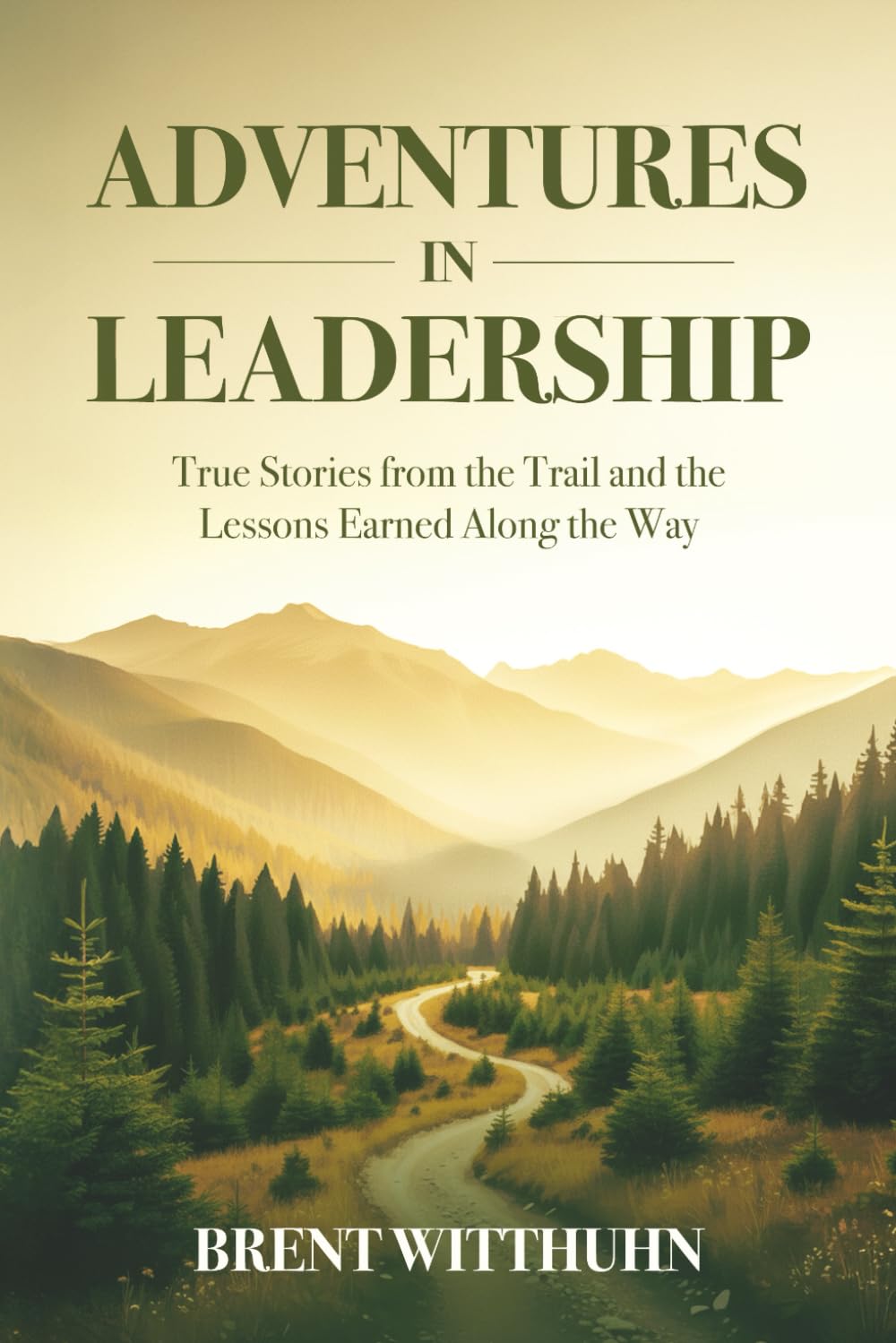
Adventures in Leadership is a short, clear-eyed book of leadership reflections built from outdoor misadventures, near misses, and hard-won moments of perspective. Brent Witthuhn structures it as a series of trail stories that turn into leadership lessons, so a wrong turn on the Buffalo River Trail becomes a meditation on admitting you’re off course, a freezing night in the Ozarks becomes an argument for preparing beyond best-case scenarios, and a tense river rescue becomes a case for calm, immediate action when someone is in real trouble. The governing idea is simple and sincere: leadership is less about authority than responsibility, less about appearing strong than staying present, steady, and useful when conditions turn.
What I liked most is that the book’s moral vision is earnest without feeling cynical or slick. Witthuhn returns again and again to humility, care, and attentiveness, and while those aren’t radical ideas, he gives them enough lived texture that they land. I found myself responding especially to the chapters where he resists the fantasy of the infallible leader. The scene where he realizes he’s wandered onto the Old River Trail, the Half Dome descent where a dehydrated hiker has to be helped down, and the story of trying to help novice backpackers without taking over all work because they expose the small vanities that leadership can hide inside. He’s at his strongest when he lets embarrassment, fatigue, and uncertainty stay on the page. Those moments give the book its credibility, and they also make it warmer than a standard business parable.
The writing has an easy, quotable cadence, and many chapters end with clean takeaways. The book has a predictable rhythm: vivid outdoor setup, distilled lesson, and practical challenge. That rhythm makes the book accessible. Some insights are genuinely sharp, especially the warning against reacting to imagined threats instead of facts, or the chapter on sunk cost disguised as commitment when the river was clearly signaling danger. I admired the plainspoken conviction of the book. It’s not trying to impress me with theory. It’s trying to tell the truth as the author has learned it, and that honesty carries real weight.
Adventures in Leadership is less a grand argument than a companionable field guide to character. It doesn’t pretend leadership can be mastered once and for all. Instead, it makes a modest, sturdy case that people remember who stayed calm, who shared the load, who told the truth when the map no longer matched the trail. I’d recommend it to new managers, team leads, mentors, coaches, and really anyone who prefers leadership writing with dirt under its nails and a little weather in its voice. It left me with the sense that the author means what he says, and that, in a book like this, matters a great deal.
Pages:75 | ASIN : B0GDJF3Q6V


