Blog Archives
The Hate Game: Screaming in the Silence – A Memoir


The Hate Game: Screaming in the Silence is an evocative memoir by Gary Trew that delves into the harrowing experiences of his youth at Knoll School for Boys in Hove, Sussex. Set in the 1970s, the book captures the brutal reality of a boyhood overshadowed by relentless bullying, a toxic school environment, and the enduring trauma that came with it. Trew narrates his story with a raw honesty that draws the reader into the bleak halls of “Knollditz,” a nickname derived from the Nazi prison camp, revealing a world where survival often came at the cost of one’s spirit.
The memoir’s strength lies in Trew’s ability to convey the sheer terror and helplessness of his formative years while maintaining a sense of dark humor and resilience. His writing is candid and unflinching, offering a vivid portrayal of a school culture that normalized violence and dehumanization. The chapter titled “Playground Holocaust,” for instance, stands out for its disturbing recount of a ritualistic game where younger boys were subjected to mock concentration camp scenarios by their older peers. This chapter, among others, exemplifies the memoir’s disturbing yet necessary exploration of the long-term effects of unchecked aggression and the failure of adults to protect the vulnerable. While Trew’s recounting of events is gripping, his writing includes richly detailed passages that enhance the vividness of his memories, adding depth to the narrative. These moments offer readers a more immersive experience, allowing them to fully engage with the story. His comparison of Knoll School to infamous historical sites like Auschwitz might seem jarring at first, but it effectively communicates the intensity of the fear and oppression he felt as a child. One of the most compelling aspects of the memoir is Trew’s reflection on the psychological impact of his experiences. He does not merely recount his past but also delves into the lasting scars it left on his psyche, demonstrating a deep understanding of trauma and its complexities. His ability to articulate the silent suffering of his youth, while also finding moments of hope and resistance, makes this memoir not just a story of survival but also a testament to the resilience of the human spirit.
The Hate Game: Screaming in the Silence is a powerful and disturbing memoir that will resonate with anyone who has faced adversity or struggled to overcome the demons of their past. It’s a must-read for those interested in understanding the darker side of school life and the enduring impact of childhood trauma. Gary Trew’s story is a stark reminder of the importance of empathy, intervention, and the need to confront bullying in all its forms. This book is particularly recommended for educators, mental health professionals, and anyone interested in memoirs that explore personal resilience in the face of overwhelming odds.
Pages: 290 | ASIN : B0D9J21WGD

Willing to Acknowledge the Pain

Angry Daughter: A Journey from Hatred to Love shares your path of healing and forgiveness through the use of healing prayer. This seems like a very personal story for you. How hard was it to put this story out in the world for people to read?
I never had actually planned to write this story, but the first chapter just popped out one day quite unexpectedly, so I suppose God had other plans. Because part of my story includes the sudden loss of my mom, getting it on paper wasn’t so much hard as it was cathartic for my grieving. I was a little nervous about it being a memoir, mainly because I didn’t want to bring any grief or pain or shame to family. But the responses have been overwhelmingly positive, and I’m grateful that my vulnerability is helping others.
What were some ideas that were important for you to share in this book?
The biggest idea was that there truly is profound freedom in real forgiveness. It radically, unexpectedly, changed everything about my life. Another important idea is that victims of childhood abuse don’t often discuss the mothers who stood by, and this has to be part of the discussion in order for full healing to start. The gravity of fleeting time is also a major idea because we never know if we will have another opportunity to forgive someone. And a final idea is that a traumatic, abusive childhood does not have to define someone’s life and that when we are willing to acknowledge the pain of what happened, then we can start to heal from it.
What is one piece of advice you wish someone had given you when you were younger?
I wish I would have learned a long time ago that my value and my worth are well-established in God, regardless of how people treated me or spoke to me. I wasted decades looking for acceptance and validation when God already gave these to me.
What is one thing you hope readers take away from your story?
When we choose to recognize that the failures of our parents weren’t intentional as much as they were learned by their own brokenness, it creates space for grace, mercy, and a better understanding of why.
Get your copy of Nanci’s FREE gift, this daily spiritual warfare prayer download here.
Author Links: GoodReads | Twitter | Facebook | Instagram | Website | Amazon
Well into her mid-forties, Nanci Lamborn was a critical, angry Christian who carried a consuming hatred of her mom. Frustration, annoyance, and offended contempt were constant companions at every family gathering, and these emotions robbed Nanci of her inner peace for decades. With no concept of the freedom available, she surrendered to heart healing prayer and experienced profound transformation.
From navigating the messy relationship with her dramatic, difficult mom, to surviving traumatic abuse, and finally assuming the role as a caregiver before her mom’s tragic death, Nanci’s story blends gritty, uncomfortable truth with beautiful and tender healing.
Now as an ordained minister of inner healing, Nanci walks with hurting people to introduce them to the supernatural power of forgiveness, repentance, and release of the painful past to Jesus. Angry Daughter is Nanci’s very personal journey down that same path to peace.
Part personal growth, part hilarious memoir, and part self-help, Angry Daughter thematically weaves its way through resentment and grief, to fear and shame, and from trauma to destiny. Nanci paves a clear pathway for those ready to begin their own journey of releasing Mom to the Lord in prayer.
Angry Daughter: A Journey from Hatred to Love

Nanci Lamborn’s memoir, Angry Daughter: A Journey from Hatred to Love, offers an introspective look into her transformative journey from enduring a troubled childhood to finding inner peace. In this candid account, Lamborn confronts the daunting legacy of familial neglect, particularly from her mother, and the harrowing experience of sexual abuse she and her twin sister suffered at the hands of a grand uncle. Lamborn’s narrative is a testament to her resilience, detailing her path to healing and forgiveness.
The memoir is striking in its honesty, especially when Lamborn shares her mother’s dismissive response upon revealing her traumatic past. This moment epitomizes the complex emotions and challenges Lamborn faces throughout her journey. Her narrative skillfully captures the emotional landscape of someone grappling with deep-seated pain, betrayal by loved ones, and the arduous journey towards forgiveness. Her eventual role as a caregiver for her mother adds a profound layer to her story, highlighting the power of forgiveness and empathy.
A central theme in Angry Daughter is the role of faith in Lamborn’s healing process. Her reflections are rooted in Christian teachings, offering a perspective that intertwines spiritual beliefs with practical steps towards emotional recovery. Lamborn shares how her faith, complemented by the support of mentors, aided her in navigating the complexities of forgiveness and personal growth. Additionally, the book is enriched by Lamborn’s inclusion of short prayers focused on forgiveness. These prayers underscore the book’s emotional depth and its practical applicability to readers who might be on similar paths of seeking understanding and reconciliation. The incorporation of these prayers transforms the book from a mere recounting of personal experiences to a valuable resource for others in pursuit of healing and peace.
Angry Daughter: A Journey from Hatred to Love is not only Lamborn’s personal story of overcoming adversity and finding solace but also serves as an inspiring guide for others on similar paths, making it a compelling and insightful read.
Pages: 216 | ASIN : B0CY7KVGDB
Emotional Isolation Within Families

Running As Fast As I Can follows a teenage boy living in an abusive home who runs away trying to find someplace safe, and people he can call family. What was the inspiration for the setup of your story?
Obviously, all good fiction starts in some reality. When I founded Good Samaritan Home 22 years ago, my intent was to help men and women coming back from prison restart their lives. But the one constant theme I heard was they all came from broken and often abusive homes.
Although not as intense, my experiences growing up were similar to theirs. I think Daniel said it best, “I shared space with people called family. We had the same address, ate at the same table, even had the same last name, but we were strangers. We all lived alone together.” I believe this emotional isolation within families can be as destructive as any physical abuse—and I wrote Daniel’s story through that lens. That’s why I call this “everyone’s story.” I believe there are many people who come from the same haunted background as me. We just hide it better than my Good Samaritan Home residents.
The bottom line is everyone is looking for a second chance. It was that theme that I tried to convey through all the characters in my book.
Your novel brings the characters to life, all the pain and hurt, as well as the moments of joy. What was your writing process to ensure you captured the essence of the characters?
I started with a very rough outline 10 years ago, but the actual story evolved and grew as I wrote it. Or more accurately, as the characters revealed themselves. Initially, the primary characters such as Daniel, Elizabeth, and Kate, were two-dimensional, flat, without any real personality. Beta readers couldn’t feel them, and therefore, they couldn’t identify with them. Part of the problem was my background. My academic training, and especially my years as a journalist, taught me to present the facts—who, what, when, where, and how. Never introduce emotion into a story. That’s fine for a research paper, but it doesn’t read well as a novel. Finally, my editor suggested—more like demanded—that I allow my emotions to come out in the characters—to show them as real people who struggled with insecurities, doubts, and fears through their actions. That made a significant difference in the emotional intensity of the story. But it was when I applied that same approach to all the supporting characters, like Doc Samuels, Ruthie, Sister Rose, James and Elijah, Daniel’s three kids, and especially Charles, that’s when the story really came alive. But that was no easy process. It took seven years and more than twenty drafts, adding 50,000 words to the manuscript, I might add.
What were some themes that were important for you to explore in this book?
Initially, it was a story of a boy growing up in a dysfunctional family, but that soon evolved into sexual abuse as the church sex scandals came to light. The common thread seemed to be vulnerable kids in broken families looking for adult attention. They were easy prey—just like Daniel. But what we never knew was what happened to these kids afterward. How do they function normally as adults when they have been so damaged as children? I call it “broken from birth.”
It’s like Somerset Maugham’s character Philip Carey in Of Human Bondage. He was born with a club foot, and he spent the rest of his life struggling to be normal—physically and emotionally. And that was Daniel. He was born with an emotional club foot, from a mother and father who ignored him and a pastor who abused him. He limped through the rest of his life, and the insecurities, and especially the false sense of shame and guilt that always accompanies child sexual abuse, affected every relationship, every choice he made.
That internal struggle led Daniel into a world he never imagined possible, like destructive relationships, depression, poverty, homelessness, and addiction. However, the key theme that arises out of all this is second chances. But not some simplistic just-say-no, come-to-Jesus solution that seems made for television. Real life is messy, with a lot of mistakes, and lots of do-overs. Too many of us have started so far behind, and with so few tools, we don’t know how to start over. All we know to do is to go back to the same destructive relationships, making the same wrong choices over and over. But the key theme here is that we keep trying, keep starting over, and never quit running.
That said, the one subtle theme that emerged was that our salvation often comes from unexpected sources. All the people who helped Daniel learn to walk normally were broken in their own way—like Doc Samuels, Elijah, James, Sunshine and Mellow, even Father Webber. And the one person who was most instrumental in helping Daniel through his greatest crisis was Charles. Daniel said it best. “I had degrees in both psychology and theology, but this guy who could barely read, and who’s been in prison all his life, knew more about forgiveness than me.” I remind myself of this periodically with the men and women I deal with at Good Samaritan Home. No matter how damaged they may be, no matter what crime they may have committed, they are still part of God’s fallen creation, and I can still learn something from them. Maybe that’s why I sometimes tell people I feel safer in prison with these guys than I ever did in a church board meeting when I was a pastor. In prison, everyone admits they are a sinner. In church, we just hide it better.
What is the next book you’re working on, and when can your fans expect it out?
It’s called Requiem. It means a Mass of remembrance for the dead. In Running As Fast As I Can, there is a 30-year gap between the last chapter and the epilogue. Requiem is the story about what happens to all the remaining characters. Spoiler alert—a main character dies tragically at the end of Running. How do the remaining characters adapt—or not adapt—to that death? But this time I am looking at bringing in a political thriller element as Daniel finds evidence that this death may not have been accidental. And that leads him all the way to Washington for his answers. But I still want to maintain the same intense emotional storyline of Running As Fast As I Can. This time, however, I don’t plan on spending ten years writing it. I hope to have it completed in a year.
Author Links: Goodreads | Twitter | TikTok | Facebook | Instagram | Website | Good Samaritan Home | Amazon
1st PLACE FIREBIRD BOOK AWARDS 2024
FINALIST FEATHERED QUILL BOOK AWARDS 2024
FINALIST AMERICAN WRITING AWARDS INSPIRATIONAL FICTION 2024
Growing up in the mill slums surrounding Pittsburgh, all that Daniel Robinson ever wanted was a family who loved him. Instead, he was ignored by a mother who hid in her room praying to an unseen God, and a drunk for a father who used everyone as a punching bag.
He thought he found love in college with Elizabeth. But she dropped him as soon as someone “with better prospects” came along. Daniel spends the next ten years wandering the country throughout the turbulent 1960’s, desperate to find someone who didn’t care about money and would love him as he is. While traveling he gets caught up in the hippie drug invasion in San Francisco, racial violence in Cleveland and Detroit, and especially a deadly anti-war protest at Kent State.
Ultimately, he does find that love in Ruthie, a salt-of-the earth Ohio farm girl and her family who welcome him as one of their own. Marriage is expected—until Elizabeth resurfaces and seduces Daniel with false promises of love.
Daniel loses Ruthie, his job, and nearly loses his mind over what he has done to Ruthie. He again goes on the road, but he is only going through the motions—what he calls “a dead man walking.” Daniel loses hope he will ever be happy—until he meets Kate Fitzgerald, who was running from her own demons. Together they get a second chance at love and the family they both want.
Daniel is now determined, with Kate’s love and support, that his new family will be different than the abusive home he came from, but can he ever run far enough to leave behind his haunted past? Because of his experiences with street people, he is offered a job helping men coming from prison. When asked to find housing for Charles Vickers, a black man who spent twenty years in prison for a rape Daniel is convinced he never committed, he and Kate open their own home to him. This enrages the community, especially when a local girl disappears. Violence erupts—with Daniel as the focus of their rage. Should he stay and fight for Charles—and put his family at risk, or run away again?
Daniel’s story, with its harrowing social themes, conveyed through an intense personal odyssey, bridges the gap between literary and commercial fiction. It would be enjoyed by readers who were moved by the heartbreaking, yet hopeful narratives of Forrest Gump and Where the Crawdads Sing. RUNNING AS FAST AS I CAN vividly portrays a traumatic period in our history, while grappling with intense emotional and social issues we still face today.
It is an epic journey for love and forgiveness. Most important, it is a page-turner story that readers will identify with because it is, on some level, everyone’s story.
Running As Fast As I Can

Running as Fast as I Can by John David Graham is an evocative novel set in the Midwest during the turbulent 1960s. The story follows the protagonist, Daniel Robinson, through a difficult childhood marked by an abusive father and a mother grappling with mental illness. Seeking an escape from this oppressive environment, Daniel leaves home at 16, initially finding refuge with a sympathetic pastor. This sanctuary is short-lived, however, as a betrayal by the pastor sets Daniel on a challenging path of self-discovery and belonging.
Graham paints a vivid picture of Daniel’s disillusionment with the religious institution he once turned to for solace. The narrative is enriched by the array of characters Daniel meets — some offering wisdom and support, others struggling themselves, yet all contributing to his growth. The central theme of constructing a chosen family comes to fruition when Daniel meets Kate Fitzgerald, with whom he endeavors to build the nurturing home he always longed for. Yet, a lingering question persists for the reader: Can Daniel truly free himself from the shadows of his past?
John David Graham’s writing is impressive, characterized by meticulous planning and skillful character development. His attention to detail creates immersive scenes, bringing the characters’ emotional journeys to life. The reader is drawn into Daniel’s world, sharing his pain, understanding the complexities of overcoming trauma, and witnessing his efforts to find love and acceptance. The novel is not without its familiar tropes. One particular instance where Daniel confides in his mentor, Doc, echoes a memorable scene from the film “Good Will Hunting.” While this similarity may detract from the novel’s originality, it does not significantly diminish the overall impact of Graham’s storytelling.
John David Graham has written an emotionally charged story that delves into the themes of resilience, belonging, and the importance of human connection. The story follows Daniel through personal struggles and challenges, discovering the true power of perseverance and human relationships. This story is a poignant reminder of the importance of finding one’s place in the world. Overall, Running as Fast as I Can is a must-read for anyone looking for a heartfelt and inspiring tale of triumph over adversity.
Pages: 466 | ASIN : B0CKK418FB
Raven and the Hummingbird: A Healing Path to Recovery from Multiple Personality Disorder
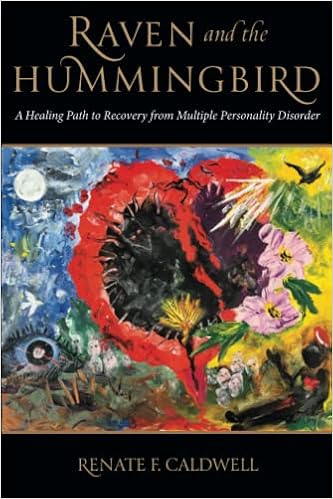
Raven and the Hummingbird: A Healing Path to Recovery from Multiple Personality Disorder by Renate F. Caldwell is an insightful exploration into the complex world of Dissociative Identity Disorder (DID), formerly known as Multiple Personality Disorder (MPD). This book brings to life the experience of Joan, a 44-year-old woman living with 52 distinct personalities, a coping mechanism her mind created in response to the severe sexual abuse she endured as a child.
This story is rooted in a chance encounter in 2003, where Caldwell, serving as a substitute therapist at a church group, met a group of women who were seeking solace by sharing their burdens with one another. Among them was Joan, a silent figure sitting alone, whose tear-stained note led to a transformative five-year recovery journey.
What sets Raven and the Hummingbird apart is its authenticity. This is not a book steeped in theoretical frameworks or rooted in empirical research. Instead, it provides readers an intimate, unfiltered look at a challenging therapeutic journey. It invites readers to step into Caldwell’s shoes and witness the rollercoaster of Joan’s recovery, experiencing every triumph and setback along the way.
As a psychology student, I found the portrayal of Joan’s numerous personalities, particularly Beth, a seven-year-old alter, profoundly touching. Caldwell’s narrative gives readers a vivid, tangible understanding of DID, allowing us to witness the transitions from Joan to Beth and back and observe their unique characteristics and interactions. This stark portrayal of DID, coupled with Joan’s journey to recovery, offers a profound educational opportunity for both students and practitioners in the field of psychology and psychiatry.
In addition to presenting a profoundly human story of resilience and healing, Caldwell accomplishes two significant feats with this work. First, she aids Joan in overcoming her DID through dedication, diligence, and empathy. Second, she masterfully translates their shared experience into a raw, honest, and richly layered narrative. As a result, this book doesn’t merely inform; it changes its readers, offering a deeply empathetic understanding of DID.
However, it is essential to note that certain sections of the book include detailed accounts of child sexual abuse, which may be triggering for some readers. Please consider this before committing to this emotionally intense journey.
Describing the impact of this book is a challenging task. Reading it felt akin to sharing a coffee with a dear friend, intimately privy to their experiences, which is a compelling way to approach such a subject. I extend my heartfelt congratulations to Caldwell and Joan for their success in both the journey to recovery and crafting a book that succeeds in demystifying DID.
I highly recommend Raven and the Hummingbird to students of psychiatry and psychology, who will find invaluable insights not readily available in standard academic literature. Additionally, anyone interested in an intimate exploration of human resilience or seeking to understand DID will find this book both enlightening and profoundly moving.
Pages: 669 | ASIN : B0BHBFS4S1
Nobody’s Daughter
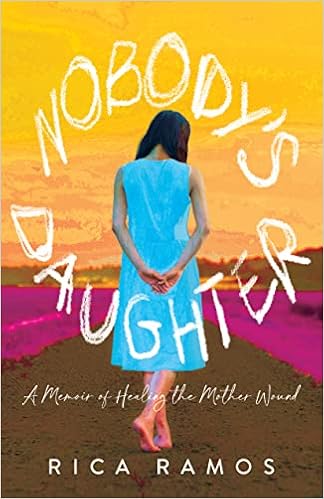
In Nobody’s Daughter, author Rica Ramos shares a deeply personal memoir that recounts a difficult childhood marked by an unsupportive mother and the lasting impact of those experiences. Ramos navigates the intersections of past and present, illuminating the constant presence of a mother who consistently failed to provide the care and protection her children needed. The narrative delves into the author’s experiences with abuse, exploring her feelings of resentment towards not only her abusive stepfather but also her mother for neglecting to shield her children from harm.
Ramos tackles a range of sensitive subjects. However, the memoir’s primary focus extends beyond the traumatic experiences that occupy a substantial portion of the narrative. The ultimate goal becomes evident in the concluding chapters, as the author applies the healing she has undergone through therapy to nurture the newest generation of her family—her grandchild. By reflecting on her mother’s actions and consciously choosing to treat her grandchild with gentleness and love, Ramos offers solace to her inner child.
While the book contains moderately detailed accounts of sexual abuse, making it unsuitable for readers who may find such topics distressing, it is an invaluable resource for those who have experienced similar emotional detachment from a parent. The author’s journey toward healing provides a cathartic and potentially helpful perspective for individuals grappling with comparable childhood traumas.
Nobody’s Daughter is a compelling memoir that I would recommend to many who have overcome abuse or who know someone who has suffered from abuse. It is also an insightful look at the mother and daughter relationship and shows readers that their own self-worth matters over the cultural stigma of honoring their mother. Through Rica’s story, other women will find validation and strength to stand up for themselves and know their voice matters.
Pages: 187 | ASIN : B0B8H4T8MQ
Rooted HEIR
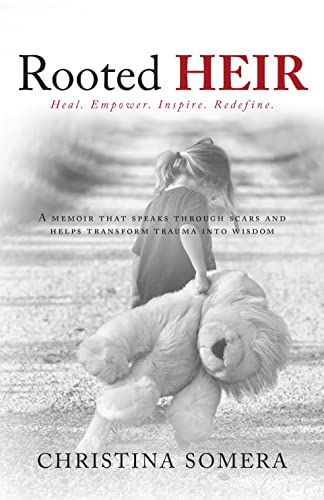
Rooted HEIR by Christina Somera is a memoir focusing on the traumas and events of Christina’s life and her path to understanding and healing from them. Starting on her childhood and the abuse she experienced that later put a wrench in her relationship with her mother and children, Christina acknowledges the unresolved feelings she’s been burying over the years. Yet, sharing her thoughts and feelings about each chapter of her life continues to bring her closer to the woman she wants to be.
Scared of becoming her mother and her family falling apart, Christina does everything she can to keep her family together but, in the process, grows distant from her kids, struggling to form the relationship she lacked growing up. Constantly seeking validation and love from men, Christina repeatedly tries to fill a hole she’s had since childhood. Rather than taking the time to love herself, she does everything she can to get the men in her life to love her or find new men to love her. All of these struggles Christina goes through are part of the journey she shared in this inspirational book.
From the first page to the last, this book wrapped itself around my heart. It was absolutely inspirational. Christina’s story is a heavy one; after all that she has been through, the steps she took to heal are genuinely unique. I loved this book so much; I don’t often give a 5/5, but Rooted HEIR deserves it. As Christina shares the events of her life and the trials she overcame, she inspires others to heal. I love that there are so many lessons we can take away from this book, the most important to me being that you can’t give something you don’t have for yourself. You can’t properly love or be loved until you love yourself first. Forgiveness and healing are a journey; neither can be rushed, and neither should be put on hold.
Christina’s book is not only well written, but it is empowering and inspirational. Yes, her story is an emotional rollercoaster, but her words prove the steps she took to overcome her past and show her strength. This book is eye-opening because you never know what people are going through, even if they’re smiling. This book definitely has sensitive topics: physical abuse, emotional abuse, rape, and suicide. However, they are all raw truths about Christina’s life that took a lot of strength for her to reminisce and process, reflecting on her strength and courage and inspiring others to keep going.
Rooted HEIR is an intensely emotional memoir about survival and learning to thrive after abuse and trauma. Christina’s story is as inspirational as it is heartbreaking. Through all the trauma, she has found who she really is and is learning to thrive and sharing this message with others so they too can break free from their shells and be who they are meant to be.
Pages: 155 | ASIN : B0BGCS3NHR



 LITERARY TITAN