Blog Archives
As Long as We’re Alive, Problems Will Arise

Pandora’s Box follows a 14-year-old boy who discovers he is a demigod like his late mother. His life has become a whirlwind of magical schools, ancient mythologies, and adventure while he tries to prevent evil from taking over the world. What was the inspiration for the setup of your story?
My son was my inspiration. When I became a mother, a new fear was unlocked: what will become of my child if I am not here tomorrow? I wanted to write something that could speak to him, nurture him, and entertain him, while leaving him with the values I hope I will have the time and support to instill in him.
The MC’s name is my child’s name: Liam. His mourning is built on my biggest fear.
The chaos the MC faces is nothing but the chaos of life. We tend to think our problems are the biggest in the world—and for us, they are. But it’s important for children to see that everyone has problems, which, to them, feel just as big. As long as we’re alive, problems will arise, and that will be true for everyone. The realization of this fact gives them a sense of belonging, helping them step out of the victim mentality and see problems for what they really are: opportunities for solutions and growth. I was careful to reflect that on each and every page.
I find the world you created in this novel brimming with possibilities. Where did the inspiration for the setting come from and how did it change as you were writing?
My inspiration comes from the books I grew up with. I’m a huge Star Wars fan, which is why you’ll see a mix of Sci-Fi and Fantasy in my work. I also love The Lord of the Rings and The Hobbit, and I read a lot of Agatha Christie and Sherlock Holmes as a child—this helped me develop my approach to building suspense, planting clues, and leading characters (and readers) toward discoveries.
Role-playing games have also been a major influence. I spent years as a Game Master for Vampire: The Masquerade and Dungeons & Dragons, which shaped my multi-perspective storytelling, worldbuilding, and rule-setting for magic and power. RPGs also helped me focus on character growth, much like players leveling up through campaigns.
Brazilian folklore played a big role in my childhood—it was mandatory in school and deeply woven into our culture. This sparked my curiosity about other mythologies, particularly Nordic folklore. Beyond that, I have a very poetic way of describing emotions, which comes from my younger years when I wrote poetry, competed in poetry contests, and attended poetry events as early as 12 years old.
On top of that, I love Greek mythology, Egyptian history, and the original versions of the stories that Disney adapted—many of which were quite dark in their European roots before being softened for children. That’s probably why my writing naturally leans toward darker themes.
Honestly? My writing style hasn’t changed much while writing. What has changed is my awareness of how readers perceive my published works, which influences what I choose to emphasize or tone down in future books. Since I haven’t read anything published in the last 20 years, my writing style remains uninfluenced by modern trends—it’s purely shaped by the stories I love.
What were some themes that were important for you to explore in this book?
Self-discovery, the concept of character (discerning good from bad), cause-and-effect (accountability for our choices), and inner power were all central themes. I wanted to show that having flaws doesn’t make you incapable of achieving great things—nor does it automatically turn you into the villain. It’s important for teenagers to develop a fair sense of self rather than viewing themselves through extremes of “good” or “bad.”
Faith in something bigger also plays a key role. Throughout the trilogy, I touch on difficult topics, even taboos like suicidal thoughts, in hopes of helping young readers recognize that the voice telling them they’re not enough doesn’t come from them—and that they can (and should) break free from it.
Can you tell us more about where the story and characters go after book one?
Without giving too much away—because surprises are half the fun—the second and third books take the characters much deeper into the prophecy hinted at in Pandora’s Box. Relationships will evolve, secrets will come to light, and the stakes will grow far beyond what they imagined. You’ll see characters like Liam, Ada, and others struggle with even more challenging situations, both magical and personal. Also, expect to see new realms, powerful antagonists, and the consequences of choices made in book one. It becomes a story not just about stopping evil, but about understanding yourself and the cost of standing for what you believe in.
Author Links: GoodReads | X | Facebook | Website | Trilogy Website
Liam Hale gets a posthumous gift from his late mother, Bree, on his 14th birthday. It’s a holographic message that turns Liam’s life upside down: According to a projection of Bree, Liam is a demigod (as Bree had been), will attend a magic school, and will take over his mom’s role as keeper of the Seven Wonders (Earth and six other dimensions).
He will have to be “initiated” before claiming the keeper’s throne within 90 days, or the resultant fight for the position will trigger an intergalactic war (“It’s too much power”). As if that weren’t enough pressure, Liam must also complete Bree’s mission of finding “the Pandora’s Box,” an artifact that will restore the balance between good and (currently rising) evil. Luckily, he’s got help: His allies include his best friend Ada, mage student Benji, and perpetually bickering witch-twins Zac and Zoe.
With mythological creatures, a magic school, and dimension-hopping adventures, Liam and his friends must uncover the secrets of The Pandora’s Box before darkness takes over.
Heroes of Another Age: A Guardian Prequel (The Guardian)
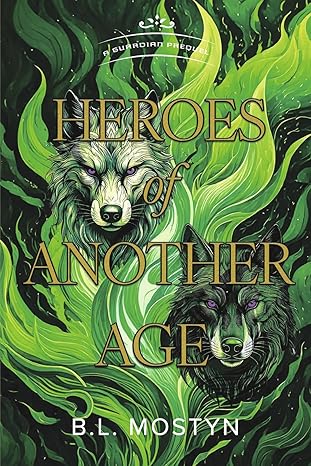

Heroes of Another Age is a fantasy coming-of-age tale that follows twin brothers Aaron and Aton, two young werewolves living a secluded life with their mother on a remote mountain peak. What starts as a quiet pastoral existence quickly unravels into a tale of magic, identity, and legacy when Aaron discovers he has mysterious healing powers and Aton’s supernatural abilities begin to surface. Their world, previously defined by sheep herding and cinnamon bread, begins to crack open with danger, secrets, and signs of a larger destiny.
This book completely surprised me. It starts off with such a calm, even cozy vibe. The early chapters, especially when Aaron talks to sheep who don’t fear him and worries about feeling ordinary despite being a werewolf, are honestly kind of adorable. There’s warmth in the writing, especially in the family dynamic. Their mother is tough but nurturing, and her presence anchors the story beautifully. When Aton climbs the peak to get their mom a flower, only to get badly hurt, I felt that mix of horror and love. The magical healing moment had me wide-eyed and flipping pages.
I really appreciated how this book handles magical discovery, not with flashy spells and big showdowns, but with quiet awe and genuine confusion. Aaron’s realization that he has healing magic comes not with cheers but with a panic attack and a desperate attempt to save his brother. And that scene where he wakes up and sees his mom casually cradling glowing green light in the kitchen? It’s magical but also intimate. That’s what this book does well; it makes the fantasy feel close to home. There’s a wonderful sense of scale: this isn’t a story about kings and kingdoms but about a little boy trying to understand who he is and how he fits into a world that might fear him.
It’s not all sweet family vibes and glowy hands. There’s darkness creeping in. The book doesn’t shy away from fear, especially fear of being different. When Aaron’s mom explains that people might kill casters just for using magic, it’s a terrifying thought. And Aton’s growing distance, his determination to protect his brother, and the way he starts carving a wooden sword, it all points to something bigger on the horizon. The tension grows slowly, but it’s there like storm clouds building behind a sunny sky. I genuinely loved how much emotional weight was packed into the little moments. Even small things, like the way the brothers bicker, felt so real. The writing doesn’t try to be clever; it’s honest and vivid, with a lot of heart.
Heroes of Another Age feels like the start of something special. It’s a small story, but it hints at big things. If you’re into slow-burn fantasy that puts relationships first, this book is for you. It’s perfect for readers who liked The Lion, the Witch, and the Wardrobe but wanted more time in the wardrobe. Or for anyone who enjoys quiet magic, complicated families, and characters, you just want to wrap in a blanket. It’s a book that made me feel warm, then worried, then hopeful, all in a couple hundred pages.
Pages: 378 | ASIN : B0F395WJSQ

What Does Normal Look Like?

The Art Collector’s Wife follows a grandmother and survivor of Auschwitz raising her seventeen-year-old granddaughter, who is desperate to know the truth about her parents, while her grandmother struggles to deal with her grief from the past.
What were some themes that were important for you to explore in this book?
One of the main themes I explored in my book was the idea of what it’s like for a family to survive a world-wide tragedy and somehow come out intact on the other side. What does that new normal look like and how does a young survivor find the old nearly-erased story of her family while writing a new story for herself at the same time? The theme of feeling “othered” as a minority living in a dominant culture was also an intrinsic theme and informed the main characters’ point of view throughout. This is the idea that as a minority you don’t quite fit into the dominant culture but you must strive to assimilate nonetheless, even as you feel the pull of your own culture and identity calling and often coming into conflict with the majority’s influence.
What were some goals you set for yourself as a writer in this book?
I wanted to construct the sound structure of a thriller, but one with a literary voice and a historical context in which the characters were lively and three dimensional, flawed but mostly lovable. I wanted the story to have high stakes and the tension to be palpable and taut with nothing extraneous to the central tension.
What is the next book that you are working on and when can your fans expect it to be out?
I am working on writing a reincarnation crime thriller with aspects of magical realism in four sections, each one of the four elements. It’s in the early rough draft stage and will take at least up to 12 months to finish.
Author Links: GoodReads | Facebook | Instagram | Website
The Dragon Way Home
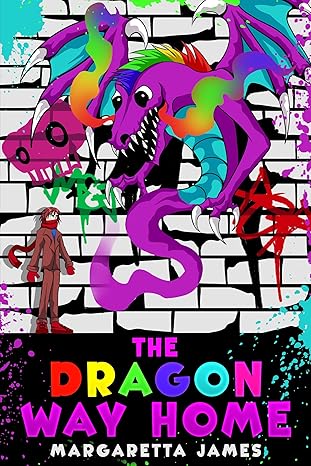
The Dragon Way Home is a magical, heartfelt middle-grade novel that follows Jamison, a lonely Australian boy desperate to reconnect with his father in Paris. When a sand sculpture of a dragon named Littus comes to life, Jamison’s quiet beach day turns into a globe-trotting journey via a magical hot air balloon, tropical villages, mystical caves, and bustling metropolises, all guided by dragons of every temperament. Along the way, he meets fiery personalities (literally), faces emotional trials, and most importantly finds his way home, in more ways than one.
From the very first chapter, I was hooked. James has this rare ability to slip from breezy realism to mythic magic without missing a beat. One moment, you’re sitting with Jamison at Surfers Paradise beach, watching a sand artist create a dragon. The next, that dragon is speaking, glowing, and offering to take you across the world to see your dad. And somehow, it all feels totally plausible. Littus, the baby dragon sculpted from sand, is easily my favorite character because he is vulnerable, funny, and strangely wise. The scene where he says, “Power doesn’t come from size; it comes from the heart and mind,” actually made me pause. It’s soft, sweet stuff with teeth.
There’s also a deeper sadness underneath all the fantasy that really caught me off guard. Jamison isn’t just on an adventure; he’s grieving the life he lost when his parents split. His pain isn’t dramatic, but it’s everywhere: in the microwave dinners, the absence of rules at home, the silence when he thinks of his dad. When he finally bursts into tears with Littus after the dragon gets vandalized by teens, I felt it in my chest. The emotional beats don’t scream; they hum just below the surface, and that restraint is what makes them land harder.
The parade of dragons Jamison meets is a brilliant device for exploring different cultures and ideas. Iawo, the ancient, grumpy dragon from the Solomon Islands cave, scared the crap out of me at first. But then he turns out to be fiercely protective, and he literally shields a whole village from a storm with his body. Jinlong, the Chinese fire dragon, brings speed, elegance, and wisdom. And Tesson, the crystal French dragon who shapeshifts into a Parisian woman with Swarovski accessories, absolutely stole the show for me. Her dry sass and grace under pressure made her unforgettable. Plus, the way she guides Jamison through a literal and emotional maze to find his father was so well done.
The final chapters in Paris are warm and satisfying. There’s no huge battle, no earth-shattering twist. Just a boy rediscovering his place in the world, helped by the most unexpected of allies. I got misty when Jamison stood frozen in front of the Eiffel Tower, realizing he’d made it. And the reunion with his dad was messy, real, and absolutely earned.
If you’re someone who loves gentle fantasy, emotional coming-of-age stories, and dragons that feel more like mentors than monsters, The Dragon Way Home is for you. This book would be perfect for middle-grade readers, sure, but also for adults. It’s a reminder that magic exists if you’re still willing to believe in it and that sometimes, finding your way home means leaving it first.
Pages: 50 | ASIN : B0DRZ3L1B9
The Gypsy King: A Christmas Story

The Gypsy King: A Christmas Story is a deeply emotional coming-of-age tale wrapped in the quiet stillness of 19th-century America. The story follows 15-year-old Daniel McDavid, whose life unravels in the opening pages with the death of his parents and the separation from his little sisters. Orphaned and alone, Daniel is forced to reckon with grief, survival, and an uncertain future. What unfolds is a powerful journey through hardship, found family, and unexpected friendship, especially with a grieving German immigrant named Christian Kline, who becomes both mentor and anchor in Daniel’s drifting world.
The writing doesn’t pull punches, especially in the first chapter. There’s this raw, quiet moment at the funeral home where Daniel sits in silence, watching his whole world get signed away on paper. The way the authors described the grandfather clock ticking and the stillness in the room, I could practically feel the dust and grief hanging in the air. And when Aunt Charlotte explains she cannot take him in, Daniel quietly responds, “It’s okay. I can make do.” That line struck me deeply. It’s a simple statement, yet it speaks volumes about his resilience and the stark reality of the world he now faces. I had to pause reading just to absorb the weight of it.
What really carried the heart of the story for me was the relationship between Daniel and Mr. Kline. Their connection builds slowly, organically, through shared grief and quiet generosity. There’s a moment where Christian helps Daniel break his five-dollar bill into smaller change just to keep him safe. He does it gently and respectfully like a father would. Later, when Christian offers Daniel a ride and eventually a place to stay and a shot at apprenticing with a blacksmith, I honestly teared up. These weren’t grand acts of heroism, they were small, deeply human choices, and they mattered so much more because of it. It’s not often a story lets two people, from totally different worlds, find healing in each other like this.
Stylistically, the book is folksy and rich, with a soft kind of poetry laced through the everyday grit. I loved how the characters spoke; their voices felt true to the time and place without ever becoming stiff or forced. The Irish lilt in Daniel’s dialogue, especially when he talks about his grandda or says things like “I canny imagine,” adds charm and warmth to the heavy themes. One of my favorite scenes is when he wakes up in a barn after a vivid dream of the “Gypsy King” saving him from wolves, a dream that becomes a beautiful metaphor for his inner strength and his need for protection. That moment hit like a folk tale, mythic and intimate all at once.
By the end, I didn’t want to leave Daniel. His pain is real, but so is his resilience. I finished the last chapter with a lump in my throat and this sense of quiet hope. This story doesn’t pretend that everything is okay; it shows you how people can help each other carry the weight of things, even when the load doesn’t get any lighter.
I’d recommend The Gypsy King: A Christmas Story to anyone who loves historical fiction with soul, especially readers who appreciate stories about chosen family, loss, and the slow rebuilding of a life. It’s perfect for fans of Little Britches, Sarah, Plain, and Tall, or even Anne of Green Gables, but with a grittier edge. This isn’t a holiday story full of tinsel and cheer, but it is one filled with grace, faith, and the kind of quiet miracles that come with kindness. It’s a gift of a book and I’m glad I opened it.
Pages: 214 | ASIN : B0DY3SNRGK
The Borealis Queen

The Borealis Queen by Henry Guard is an imaginative adventure set in a speculative Ice Age world, centered around Nin, a resilient young woman marked by a mysterious prophecy. Struggling against oppressive foes and navigating harsh landscapes, Nin embarks on a perilous journey that intertwines survival, destiny, and the forging of unexpected bonds.
I found myself captivated by Guard’s storytelling. His vivid descriptions, especially of Nin’s harrowing encounters with Gore, are so intense and emotional they kept me flipping pages, heart in throat. The opening scene in Chapter 1, where Nin is dragged through the snow by her hair, is brutal but powerfully written. It immediately connects readers with Nin’s defiant spirit despite her desperate circumstances.
One thing that stood out to me was the portrayal of relationships and unexpected alliances. Nin’s bond with Shadow, the fearsome Dagger Mouth Demon, genuinely moved me. The nuanced depiction of their connection—beginning with Nin’s compassionate rescue of Shadow as a pup and later reciprocated through his fierce loyalty—highlighted themes of empathy and interdependence. The moment Shadow saves Nin from Ursang was both thrilling and heartwarming, encapsulating the book’s underlying message about the power of kindness even amid brutality.
While I admired the strong character development, some sub-stories, like the detailed recounting of tribal rituals or backstory expositions, momentarily pulled me away from the main plot. Still, these slower sections offered rich cultural insights, and Guard’s enthusiasm for his created world shone through clearly.
The Borealis Queen is a compelling read with memorable characters and gripping emotional intensity. Guard does a fantastic job creating a world that’s both fantastical and believably harsh, making the stakes feel real and the victories genuinely rewarding. I’d recommend this book to readers who enjoy immersive fantasy with a gritty edge—particularly those who appreciate strong, complex heroines and intricate relationships set against vivid, unforgiving landscapes.
Pages: 395 | ASIN : B0DXH5MT1B
Ancient Wisdom and Future Technology Collide

The Legacy of Festoria follows five gifted kids, each with a special connection to an element—shadows, wind, water, fire, or earth—who are called to seek out a mysterious sage who holds the key to balancing their ancestral powers with emerging AI technology. Where did the idea for this novel come from?
The idea for The Legacy of Festoria was born out of a deep curiosity about what would happen if ancient wisdom and future technology were to collide. I’ve always been fascinated by elemental magic and the idea that nature holds secrets we’ve barely begun to understand. But I also wanted to explore how modern innovation, especially AI, might not oppose that wisdom but enhance it. The story came to me like a vision: children gifted by nature, living in harmony with the elements, who must journey to uncover not just magical truths but also the role of advanced intelligence in preserving that harmony. It’s a tale of inheritance—both spiritual and intellectual—and the power of unity in a time when the world is at a crossroads between tradition and transformation.
The Legacy of Festoria begins in a traditional way, but then takes a turn that defies the conventional fantasy story, blending fantasy with AI technology. What was your approach to writing the story?
I wanted the story to feel like a gentle unfolding—a familiar beginning in an enchanted village that slowly peels back layers to reveal a far more complex world. My approach was to root the reader in timeless, almost mythological elements—earth, water, wind, fire, and shadow—and then introduce the unexpected: the fusion of those elemental gifts with artificial intelligence. Instead of framing technology as an invasive force, I chose to write AI as something that could coexist and evolve alongside ancient magic. This blend creates a narrative tension that mirrors our modern world’s dilemma—do we abandon the old ways, or do we find ways to adapt and evolve them? Writing this book was about creating harmony between opposites and allowing the characters to be the bridge between them.
What were some themes that were important for you to explore in this book?
At its core, The Legacy of Festoria explores the balance between nature and technology, past and future, and solitude and connection. One key theme is identity—each child must come to terms with their unique gift, their ancestry, and what it means to use their powers responsibly. Unity is another essential thread—though the characters are wildly different in temperament and talent, they are strongest when they come together. I also wanted to explore legacy—what we inherit from those who came before us and how we choose to carry that forward. And finally, the story delves into purpose—not just finding it but forging it, especially when the path is unclear. The fusion of AI with elemental magic became the perfect metaphor for growth: honouring the roots while reaching toward the stars.
Where do you see your characters after the book ends?
When the children step through the portal and meet Solon, it’s just the beginning of their actual journey. I see each of them stepping into a new chapter—not just as individuals mastering their gifts, but as Guardians of a new era. Aria will likely become a Seer of unparalleled wisdom, learning to read not only shadows but the complex moral patterns in the world. Leo might become a Messenger between realms, interpreting the shifting winds of change. Marina could become a diplomat of sorts, mediating between the old magic of nature and the logic of AI. Ember would thrive as a protector, defending their world with passion and courage. And Sage—steady and grounded—might grow into a builder of bridges, both literal and symbolic, between the elements and technologies that shape their future. Together, they’ll form the foundation of a new kind of harmony: one where magic and innovation walk hand in hand.
The Art Collector’s Wife
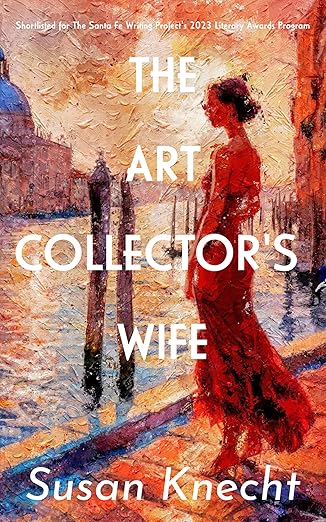
Susan Knecht’s The Art Collector’s Wife is an emotionally rich, time-skipping novel that weaves together post-war trauma, intergenerational secrets, art-world intrigue, and the sharp edges of teenage rebellion. It starts in the horror of Auschwitz, then unfolds decades later in sun-drenched Venice, following the fractured legacy of one family—particularly the women who survived and the granddaughter determined to uncover the past. It’s part historical drama, part coming-of-age, with a steady undercurrent of longing.
The prologue, set on the day Auschwitz was liberated, is devastating and lyrical—just brutal and beautiful all at once. Lila, the mother, trying to keep her friend and a pregnant girl alive, while praying for a glimpse of her son Leo, had me breathless. Knecht doesn’t hold back, and the imagery stuck with me long after I closed the book.
Then we shift to 1960s Venice, and things change gears in a really compelling way. Now we’re with Isabel, Lila’s teenage granddaughter, who’s navigating Catholic school, first love, and the weight of secrets no one will talk about. Isabel is such a great character—sharp, moody, defiant. I loved her scenes with Antonia, her chain-smoking bestie who has all the bad ideas and a heart of gold. When Isabel steals the ruby rosary and starts skipping school to flirt with Niccolo (who is equal parts charming and sketchy), the tension crackles. You can feel her aching for answers about her father and mother, and the way Knecht slowly drops hints about their story is fantastic.
But what really got me was the emotional layering. Knecht has a way of showing how grief and silence pass through generations like DNA. Lila is wrapped so tightly in control and shame, you feel her unraveling even when she says almost nothing. There’s a haunting scene at the cemetery where Isabel confronts her grandmother about her parents—Isabel demands answers, and Lila can’t speak. That silence? It screams. And Miriam, the family friend who carries so much of the emotional glue, is a favorite. She’s got this old-Hollywood flair, but also such deep loyalty and sadness. I kind of wanted a whole book just about her.
I loved this book. It’s heavy but worth it. The prose is poetic without being precious, the story moves through decades without losing momentum, and the characters feel real, flawed, and alive. If you’re into multi-generational family sagas, WWII fiction with a heart, or just crave a book that will grab you by the collar, The Art Collector’s Wife is for you.
Pages: 257 | ASIN : B0F38R8KBV



 LITERARY TITAN