Blog Archives
Stealing Stealth
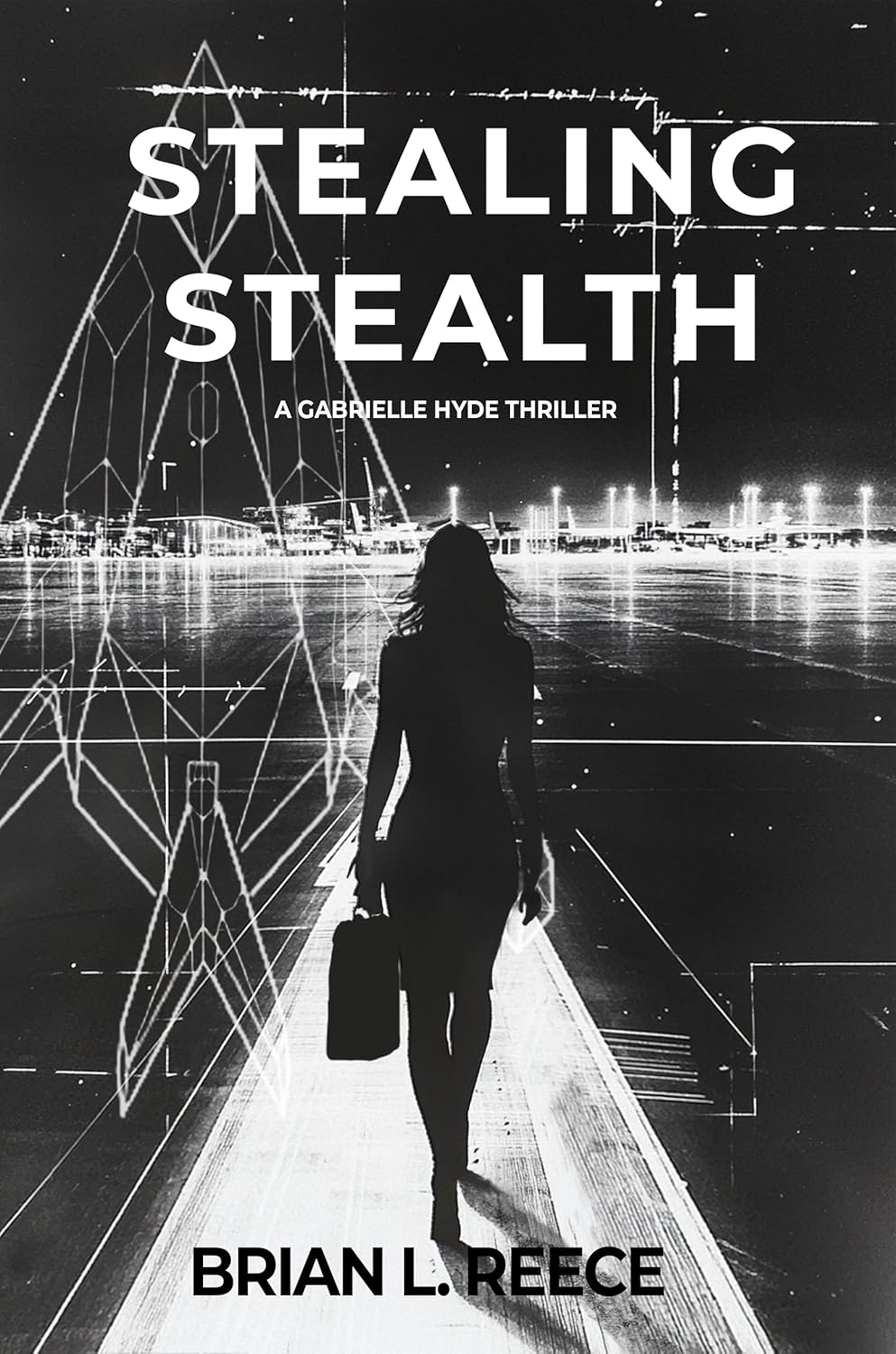

Stealing Stealth is a Cold War spy thriller about a master thief and a burned-but-still-burning CIA case officer who get pulled into a fight over the future of stealth technology. We meet Gabrielle Hyde in 1975 Toronto, dropping into a dusty old government office from a ventilation shaft to steal classified files while half the law-enforcement world hunts her. At the same time, John Olson, a young CIA case officer with something to prove, becomes obsessed with catching her and then with stopping a legendary Soviet operator, Sasha Morozov, from getting his hands on America’s experimental stealth aircraft research, the kind of “perfect first-strike weapon” that could tip the whole Cold War. Their paths cross, collide, and eventually twist together as they race from rooftops and embassies to African markets and the secretive Skunk Works facility, trying to plug leaks, uncover a mole, and keep a fragile nuclear treaty from falling apart.
Reading it, I felt like I was sitting in a dark theater watching one of those big, old-school spy movies. The writing leans into atmosphere: the musty FBI outpost, the humid chaos of Mogadishu’s markets, the cold wind high over Toronto when Olson literally throws himself between rooftops after Hyde. Scenes play out in clean, visual language that made it easy for me to track the action without getting lost in technical detail. I liked how the book switches perspectives between Gabrielle, Olson, and even Morozov, so I never felt like I was stuck on just one side of the board. The pacing feels very much like a modern spy thriller: bursts of intense action, then quieter conversations where people argue about loyalty, politics, and what it costs to do this kind of work. There are moments where the briefing-room talk about treaties and stealth programs slows things down a bit, but most of the time it adds weight instead of drag, reminding me this is not just about a cool gadget in a metal case, it is about who gets to shape the world.
What stuck with me most were the choices the characters are forced to make. Olson is haunted by a failed operation in Somalia and the death of his partner; that guilt colors everything he does after, especially when he is ordered to stand down and decides to ignore it. Gabrielle is fun to watch because she is both playful and ruthless, a thief who talks about capability as a kind of moral authority and treats sexism in the agencies as another lock to pick. The book lets her be brilliant without sanding off her sharp edges, and I appreciated that. Morozov could have been a cartoon villain, but instead, we see his grief for his granddaughter and the way he is forced back into being “the Demon” when she is taken and ransomed for the stealth data. It does not excuse what he does, but it makes him more human and more unsettling. I also liked the thread about institutions versus individuals: the CIA, FBI, and political leadership spend as much energy protecting careers and narratives as they do protecting the country, and Olson and Hyde are constantly working around their own side as much as they are fighting the enemy.
Stealing Stealth is a solid, character-driven spy thriller with a techno edge, the kind of book you pick up for the rooftop chases and Cold War tension and stay for the messy loyalties and bruised hearts underneath. If you like stories in the vein of Cold War espionage, enjoy the mix of spies, thieves, and experimental weapons, and you appreciate a capable female lead who is always three moves ahead, this book will likely hit the spot for you.
Pages: 474 | ASIN : B0FSL2KVB8

Countdown
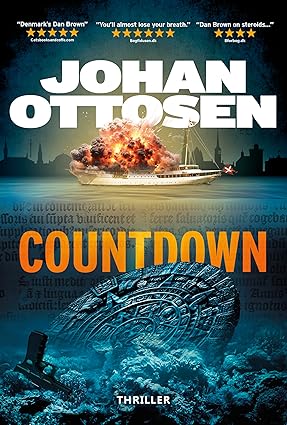
Johan Ottosen’s Countdown is a fast-paced, intricate thriller that follows multiple characters as they race against time to prevent an apocalyptic disaster. The story spans Denmark, Norway, and Sweden, weaving together conspiracy, espionage, and political intrigue. At its heart, the novel follows radiation expert and former UN weapons inspector Søren Storm, journalist Kurt Østergaard, and other key figures who find themselves entangled in a deadly web of secrets. The book starts with a chilling scene in Copenhagen’s Tivoli Gardens, setting the tone for a story full of tension, unexpected twists, and dark revelations.
Ottosen’s writing is immersive, blending real-world research with fiction so seamlessly that it’s easy to believe these events could unfold outside our windows. His use of GPS coordinates at the start of each chapter adds a level of realism that’s both clever and unsettling. The book’s structure—short, punchy chapters—keeps the momentum high, making it hard to put down. One particularly gripping sequence involves a harrowing assassination through radiation manipulation, a scene so well-crafted it sent chills down my spine.
Kurt Østergaard is the journalist who stumbles onto a story much bigger than he anticipated. While these characters work well within the story’s framework, I would have liked to have plumbed their emotional depths a bit more. That said, their interactions and individual arcs remain compelling, particularly as the stakes grow higher with each passing chapter.
One thing that sets Countdown apart is its meticulous attention to historical and geopolitical details. The book touches on nuclear energy, intelligence agencies, and ancient secrets hidden in archives. It’s evident Ottosen has done his homework. Occasionally, the level of detail slows the pacing, especially during technical explanations about radiation and security protocols. A slightly more streamlined approach could have maintained both the intrigue and momentum without sacrificing depth.
Countdown is a gripping thriller that will appeal to fans of Dan Brown, Robert Ludlum, and Tom Clancy. It’s a story that blends action, conspiracy, and history in a way that keeps the reader engaged. If you enjoy high-stakes thrillers with a strong sense of place and a dose of realism, this book is well worth your time.
Pages: 429 | ASIN : B0DTSSPRKC

Kickback A Dafne Olabarrieta Mexico Mystery Book 1


Ana Manwaring’s Kickback, the first installment in the Dafne Olabarrieta Mexico Mystery series, delivers a gripping crime thriller set against the backdrop of Mexico’s complex criminal underworld. The novel’s fast-paced narrative introduces Dafne Olabarrieta, a determined and multifaceted protagonist, whose journey unfolds with both intensity and emotional depth. The story begins with an intimate domestic moment: Dafne and her husband are having breakfast, debating the prospect of starting a family. While her husband pushes for this next step, Dafne remains focused on her career. The tranquility is shattered when a call from an estranged friend catapults Dafne into a dangerous world. From leading her firm to utilizing her hostage negotiation training, Dafne is drawn into a high-stakes race to rescue a child, navigating a labyrinth of corruption, loyalty, and moral ambiguity.
Manwaring’s intelligent prose is enriched by seamless cultural integration, with Spanish phrases and expressions adding authenticity and texture to the dialogue. Even common idioms, such as “ay,” resonate naturally in the narrative. The book’s structure also deserves praise, with its numbered and titled chapters, a thoughtful touch that enhances the reading experience in a genre where such details are often overlooked.
Dafne’s character is skillfully portrayed as both relatable and compelling. Torn between family obligations, her class-conscious mother’s expectations, a husband eager for stability, and the betrayal of her former friend Alba, Dafne’s internal struggles parallel the external chaos of the mission. The stakes are high, and personal tragedy intensifies the emotional gravity of her journey. Yet, Dafne’s resilience and moral grounding guide her through the violence and grief, reflecting a powerful arc of growth and healing.
While Kickback is undeniably a taut thriller, it transcends genre conventions by exploring themes of forgiveness, loss, and the human capacity to endure. Dafne is not without flaws, but these imperfections make her all the more believable amid the novel’s relentless pace and intricate plot. Manwaring’s nuanced exploration of the human condition elevates the story, ensuring readers are both captivated by the suspense and moved by its emotional resonance.
Kickback is a crime thriller that is a testament to the complexities of human relationships and the strength required to confront life’s darkest moments. With its engaging narrative and deep emotional undertones, this is a book that will leave readers eager for the next chapter in Dafne Olabarrieta’s journey.
Pages: 363 | ASIN : B0DJL8F8NL
“Perfect American Life”

Tangles follows a fierce secretary and a brash scientist as they seek to expose the mishandling of radioactive waste by the government and the impact it has on their town. What was the inspiration for the setup of your story?
Very early on in my research I came across multiple non-fiction volumes about Hanford. When I read Trisha Pritikin’s (herself a victim of radiation exposure) book, The Hanford Plaintiffs, multiple personal accounts inspired several characters. Mary and Luke and their parents are an amalgamation of many different folks who were a part of those lawsuits in early 2000. Those court proceedings went on for almost 12 years and resulted in very little recompense for the victims. When I discovered that, I knew I had to write this story.
I enjoyed the depth of your characters and how relatable they are. Who was your favorite character to write for and why?
Luke was probably my favorite, but a close second was Walker. Creating their “guy” relationship, the melding of their different backgrounds, was both a challenge and really satisfying when I got it right – especially when one of my expert readers said, “Yes, that is exactly how scientists talk to one another. You’ve captured the competitiveness perfectly.”
Was there a scene you felt captured the character’s essence?
For Luke, that was the hiking scene into the Goat Mountains where a significant discovery was made. I worked very hard on his inner thinking, to portray the guilt he felt on many levels. For Mary, it was the scene with Helen, Luke’s Mom, when she learned how to can tomatoes. Again, her inner thoughts and her responses to Helen when she offered Mary her aide in her difficulties, said it all about Mary.
What were some themes that were important for you to explore in this book?
So many, but maybe foremost, the debunking of the tropes that abound about the 40s and 50s “perfect American life.” So many problems in our society were ratcheted up as industry and wars created huge problems across both the middle and lower classes and affected our education systems, especially at the post-secondary levels. Second was daylighting the severe limitations women still endured, both financially and career-wise, because of societal dictates.
Will there be a follow-up novel to this story? If so, what aspects of the story will the next book cover?
If you read to the end, you will see a set up for another Luke tale, and maybe, just maybe he and his son will take on a challenge together. But for now, I am working on my mother’s story, involving the five women she boarded with while teaching high school in rural Texas during the 30s and 40s. It’s turning into quite the tale!
Author Links: GoodReads | X | Facebook | Website

TANGLES
A Suspense-Filled
Historical Tale
Coming
November 12, 2024
A quietly fierce secretary, a brash young scientist,
a town cloaked in secrecy…and an entire region under threat.
Tangles

Tangles by Kay Smith-Blum intertwines a poignant love story with a gripping narrative about a government conspiracy linked to an environmental catastrophe. Set alternatively in the late 40s and early 60s in Hanford, Washington, this novel vividly recounts the production of plutonium for atomic weapons and exposes the government’s mishandling of radioactive waste. Through the eyes of Mary and Luke, the readers are introduced to the dire consequences faced by workers, their families, and the community at large.
Smith-Blum deftly raises critical questions regarding worker sacrifices, governmental secrecy, and the unintended repercussions of monumental projects. The narrative sheds light on exploitative working conditions, the suppression of vital information about radiation exposure, and the ensuing long-term health ramifications on both the human population and the environment. It prompts reflection on the true cost of technological advancement and the ethical responsibilities of those in power. The author skillfully balances themes of conspiracy, romance, and environmental accountability, ensuring that each theme maintains its significance and emotional resonance without overshadowing the others. The use of a dual narrative structure enhances the storytelling, providing clarity and building toward a compelling convergence of the protagonists’ paths.
Tangles offers a deeply moving yet unsettling look at historical events and their lasting impacts. Readers drawn to suspenseful romance infused with socially and environmentally relevant themes will enjoy this gripping story. Those interested in historical environmental issues will also find this novel particularly engaging.
Pages: 293
The Past, Present, and Future Are All One

The Book of Reading follows two people 32 years apart in age, who travel through time to try and change history and wind up falling in love. What was the inspiration for the setup of your story?
I think the inspiration for The Book of Reading may have been time itself, with its many mysteries—something very possibly true for all my novels. In the case of The Book of Reading, there was a specific real-life moment that remained with me—has remained with me—for sixty years. On my first day in Iowa City, in early September of 1963, I was standing around in front of my dorm in the late afternoon waiting for dinner and watching the all-girl bagpipe band they called “The Scottish Highlanders” do marching practice across the street. The moment seemed charmed, a kind of meeting-point, or a blending, of past and present. The band was old-fashioned, the dormitory was ancient, the day was hushed, warm, still, and different periods of time—past, present, maybe even future—seemed to come together into a single moment. That moment provided an epiphany for me and I never forgot it. Also, certain of my progenitors had been part of the university long before, back in the 1930s, and that fact also made me hyper-alert to Iowa City’s historic past. In that past also—in 1933, as if waiting to be found—was Eveline Stahl, though indeed she was put there by me. In Malcolm’s 1963 Iowa City, very soon after his arrival there, came the assassination of President Kennedy. Meanwhile, in the past, was Eveline, with her extraordinary understanding of the protective and healing tendrils that could be brought into existence through reading (if you did it right). And so, what might happen if those two, Eveline and Malcolm, were brought together in a way that could result in something healthful and healing to the republic? Does that question constitute a pipe-dream? Sure. But where would literature be if it weren’t for pipe-dreams, otherwise known as imagination (or, perhaps, as metaphor)?
Were you able to achieve everything you wanted with the characters in the novel?
Well, yes and no. Let me take the “yes” side first. The Book of Reading is about literature, about books, about writing, and, yes, about reading. I think of Eveline Stahl as a perfectly suited character cum inventress, cum guide, cum spirit, cum seer insofar as she relates to all of those—to literature, books, writing, and reading. In addition, she is a captivating figure who sees the world deeply, evenly, skillfully, stoically, and wholly. So she becomes an extraordinary mentor and instructor to Malcolm Reiner (especially through introducing him to the past)—and how could he help but fall in love with her, considering all the rare and life-affirming gifts she not only possesses but is willing to pass on to him? In turn, of course, Malcolm is also in some ways instructor to her, if only because he has lived thirty years further into the “future” than she has and can tutor her in regard to the horrors of those as-yet-unlived years. But, of the two, Eveline is the real literary genius, not Malcolm.
Now, the book, however, is also about something else, something very big. That thing is the nation itself—or, a more important word, the republic itself. As chance would have it, the first Kennedy assassination occurs just weeks after Malcolm’s arrival in Iowa City, and the question it raises (whether or not perceived right away) is whether the republic will die or whether it will survive. As that almost invisible question emerges bit by bit into the light (the republic is symbolized in good part by Malcolm’s father), the young lovers set about doing all they can in the republic’s behalf. With Eveline’s powerful intuitive genius and Malcolm’s practical determination, the couple set out on an immense project to study, scrutinize, learn—to “read”—the republic. They do this in a variety of ways, through their own continuous book-reading, of course, but also through their program of treks, travel, outings, and explorings both through geography and through time, until they feel sufficiently prepared—albeit with remaining doubts—to set out on their attempt to put things right.
The fact that they fail may or may not be due to their own weaknesses and flaws of character. I’m not absolutely sure, but I don’t think so. I think they remain heroic in spite of the fact—in spite of the truth—that they do get crushed, absolutely, by immense forces far beyond their control. On second thought, though, what I’ve just said may not be entirely true. Eveline disappears back into the yawning gulf of the past, yes, but wherever she is, her irrepressible and expressive genius will go on existing. She’s gone from “now,” but she will continue to imbue the past with her immense and humane gifts. She’ll be a force helping keep the best qualities ofthe past alive. And a people whose past remains rich, reasoned, and humane—even if not completely so—is a people who still stand at least a chance of being able to build a reasoned and humane future—in spite of the fiercely demonic and destructive calamity that may intervene in the “present,” which is to say in our “now.”
Malcolm, though, isn’t so lucky. Even if a humane and redemptive future for the republic is fated somehow to come (a future that will be imbued—just as this present book is imbued—by the spirit of Eveline), he won’t live to see it. He will meet death with nothing but memory—of Eveline, of the republic, of the past.
Is there any moral or idea that you hope readers take away from the story?
The past, present, and future are all one, and human beings face cataclysm, loss, and doom if they fail to treasure and venerate all three equally, a disastrous failure that we are suffering from in our own nation and world today. Without a past that’s spiritually alive and whole, there can be no present that’s spiritually alive and whole. And without a present that’s spiritually alive and whole, there can be no future that’s spiritually alive and whole. All are connected—past, present, and future—and all must be husbanded and revered. All three, in one important way or another, are humane and living things.
There’s a passage in Undreaming Wetiko, the new book by Paul Levy, the extraordinary spiritual guide and philosopher, that speaks to this idea. I came across it recently and it made me think of The Book of Reading.
The activity of stepping out of the present moment is based on the false assumption that there is another moment to escape to, while the truth is that there is no exit from the present moment. The future always grows out of that which is present, but it cannot be wholesome if it grows in morbid soil. If we don’t deal with our unhealthiness in the present moment, we will be destined to create a sick future.
What is the next book that you are working on, and when can your fans expect it to be out?
My next book is a volume of stories with the cautionary title of Eternal Damnation. I hope it will be out this year, 2024, probably in the later months.
Author Links: GoodReads | Facebook | Website
Though born far apart-she in 1909, he in 1941-Eveline Stahl and Malcolm Reiner are destined to meet, fall in love, and then to try to save the nation. When? Autumn 1933. Where? Iowa City, Iowa, where both are graduate students. Their plan? To go on the long walk into September 1947 and West Tree, Minnesota, where they try 1) to forestall the formation of the CIA and the start of the Cold War; 2) thereby to prevent the 1963 assassination of JFK; and thus 3) avoid the long decline of the nation into tyranny-a later and grievous outcome, nevertheless, that is watched, in 2028, from a window of his New York apartment, by an aged, defeated, lonely Malcolm Reiner, after finishing a book-this book-about his beloved and lost Eveline.
From prize-winning novelist Eric Larsen, The Book of Reading is a timely, literary, patriotic-and deeply moving-novel.
Ripple Effect

Amy Rivers, Ripple Effect, a compelling sequel to the acclaimed Stumble and Fall. The narrative continues to trace the lives of sisters Kate and Tilly, a psychologist and a nurse dedicated to supporting sexual assault victims. Their profound commitment extends beyond activism; they are driven to dismantle a pervasive sex trafficking ring that has plagued their region for decades. The plot thickens as the sisters unearth the involvement of influential figures, including the Chief of Police, who are determined to silence any threat to their sinister operations. The stakes escalate dramatically when Tilly, edging closer to exposing the culprits, is abducted along with Hannah, the daughter of their ally, Dan. Their rescue is pivotal not only for their safety but also for the potential to eradicate the trafficking network.
Rivers’s narrative prowess shines as she skillfully expands upon the strengths of her previous work. Characters like Tilly and Kate are portrayed with vivacity and resilience, which makes them particularly engaging. The development of other characters like Dan, Roman, and Hannah adds depth and drives the plot forward. The novel delves into the intricate dynamics of healing, jealousy, and trauma, fostering meaningful discussions. Particularly noteworthy is the nuanced depiction of Kate and Roman’s relationship, illustrating the challenges of embracing love amidst profound trauma.
Ripple Effect offers a satisfying culmination to Kate and Tilly’s journey. It leaves readers with a sense of pride in having been privy to the sisters’ courageous saga. More than a gripping piece of fiction, this series provides critical insights into victim advocacy and the justice system. It stands as a significant recommendation for all readers, illuminating the darker aspects of society while championing the resilience of the human spirit.
Pages: 267 | ASIN : B0CCQBNL6Y
The Book of Reading

Eric Larsen’s The Book of Reading marks the conclusion of his Pentology series, blending elements of time travel, romance, conspiracy thriller, and autobiographical nuances. This novel follows the journey of protagonist Malcolm Reiner, who grapples with involuntary time travel, a complex love story, unresolved issues with his abusive father, and the repercussions of his choices. Larsen skillfully intertwines poetry, quantum theory, and everyday experiences in a narrative that impresses with its coherence and meticulous construction.
Reiner, as a character, embodies a realistic portrayal of depression, anxiety, and trauma, offering readers an intimate glimpse into his worldview. Larsen’s detailed character construction allows for a resonant and sometimes uncomfortably relatable experience for those familiar with similar struggles. A notable aspect of Larsen’s writing is his rich, albeit challenging, vocabulary. Readers less accustomed to such linguistic complexity may find themselves frequently consulting a dictionary. Larsen’s use of an advanced vocabulary adds a layer of richness to the narrative, providing an opportunity for readers to deepen their linguistic knowledge. This sophisticated lexicon complements the intricate story, filled with complex themes and quantum theory. This is a rewarding journey for the enthusiastic reader, filled with depth and texture, creating an unforgettable reading experience. Larsen has succeeded in blurring the lines between fiction and reality, crafting a narrative that is at once lifelike and abstract.
The Book of Reading offers a rich and rewarding experience filled with thought-provoking content and a unique storytelling approach. This story stays with readers long after finishing the book and leaves them with questions they can relate to their own lives.
Pages: 376 | ASIN : B0CLHGXF66



 LITERARY TITAN