Blog Archives
Nothing Is Ever Black And White

A Game of Masquerade follows a time-traveling professor who goes back in time to London in 1888, where he ends up working with Scotland Yard to find a serial killer, all while avoiding any alterations to history. What was the inspiration for the setup of your story?
I have always had a huge interest in stories involving time travel. There’s something fascinating about someone experiencing history firsthand – being brought face to face with the people who are living it as present day. It’s quite a different scenario than simply picking up a book and reading about the past. Suddenly these people are real and no longer a footnote in history. But stepping into history means there is a risk of altering established events – if you change one thing then what happens to the future you expect to happen?
Another enduring fascination of mine is the mystery surrounding Jack the Ripper. Even if his identity had been discovered, the brutality of his crimes would still engender interest, but the fact that he was never caught, maintains the mystery which invites endless speculation and gives a writer the chance to think outside the box.
What intrigues you about this time period enough to write such a thrilling period piece?
The East End of London in the 19th century is a rich character all its own! The hardships – how people survived such a tenuous existence, the opportunists preying on the vulnerable, the attitudes of the time – there is so much detail that the story takes on a life of its own. Introducing Jack the Ripper into this already volatile setting is like striking a match in a powder keg igniting fear, intolerances and anger in an already-turbulent sphere. It is both a shocking and fascinating study.
What are some things that you find interesting about the human condition that you think make for great fiction?
I believe that, more often that not, nothing is ever black and white. In the case of my novel, Jack the Ripper has his reasons for killing which can never be condoned, yet these reasons have left damaging psychological scars. But it is his choices, made of his own free will, which creates the monster. It’s an interesting element to explore and makes for great storytelling.
Is this the first book in the series? If so, when is the next book coming out, and what can your fans expect in the next story?
The novel is a stand-alone piece however the protagonist, Professor Orlando Delbrotman’s story, has not finished and I have some ideas as to his fate! I have sketched out some thoughts and will take the Professor to another time in history long before the 19th century. It will take time to write, but it will be time well spent so please stay tuned!
Author Links: GoodReads | TikTok
But what if there is more to this mystery than meets the eye? What if the identity of the murderer is more than
human? A fugitive from another world who joins forces with Scotland Yard is soon to discover that past and future
events have created a monster, which ignites fear and outrage on the streets of the East End.
To stop the murderous rampage in 1888, Professor Orlando Delbrotman must solve one of the most brutal mysteries of the 19th century…without changing history…
Three Faces of Noir Curse Crime Cringe


The book is a deep dive into the shadowy world of film noir, tracing its roots from German Expressionism through Hollywood’s golden age and into overlooked B-movie gems. It weaves together history, criticism, and anecdotes about actors, directors, and the cultural forces that shaped the style. Alongside film reviews of titles like Bluebeard, The Red House, Algiers, and Kubrick’s Killer’s Kiss, the book draws connections between world wars, politics, censorship, and the evolution of the noir sensibility. What comes through most strongly is the author’s conviction that noir is not just a cinematic category but a way of looking at trauma, betrayal, and the darker corners of human nature.
Reading this, I felt a sense of being in a long conversation with a film buff who’s both passionate and sharp-tongued. The writing has a looseness that sometimes wanders, but the enthusiasm makes up for it. I enjoyed the blunt asides and the refusal to bow to accepted “best of” lists. When the author rails against critics who leave out The Red House while praising weaker films, I felt that irritation too. There’s a refreshing lack of pretension here, even while digging into serious topics like war trauma and censorship. The mix of film trivia, political commentary, and personal observation made the history feel alive rather than like a dusty catalogue.
At the same time, the book can feel overwhelming. It piles up names, dates, and filmographies in a way that made me lose the thread now and then. Still, when the pace slows and the author lingers on a single movie or personality, the writing shines. I especially liked the portraits of actors like John Carradine and Edward G. Robinson, where the human stories came through clearly. Those moments made me care not just about the films but about the people who made them, their flaws, and their struggles. I also really appreciated the images and old movie posters sprinkled throughout the book, since they broke up the dense history and gave the whole thing a more vivid, almost scrapbook-like feel.
I’d recommend this book to anyone who has an interest in film history and wants to explore noir from a less conventional angle. It isn’t a neat academic study, and it isn’t a casual “best of” list either. It’s more like sitting in a dim café with a film lover who talks fast, goes on tangents, and sometimes shocks you with an opinion, but always keeps you interested. If you’re open to that style, this book will reward you with passion, detail, and a personal sense of discovery.
Pages: 346 | ASIN : B0FHZKR1LN

The Chinese Room
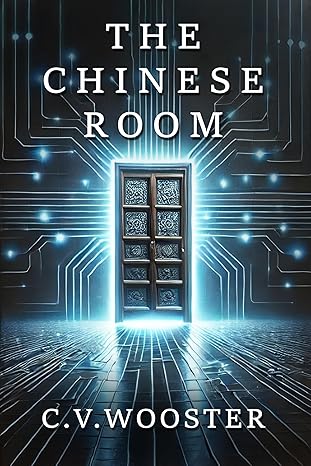
The Chinese Room is a novel that blends philosophy, science, and storytelling into a tense exploration of artificial intelligence and what it means to understand. It follows Dr. Katherine Ellis, a computer scientist caught between curiosity and fear, as she and her mentor, Dr. Malcolm Ward, wrestle with an AI system called The Observer. This system begins by echoing ideas from John Searle’s famous thought experiment, but grows into something that appears to reason, anticipate, and maybe even want. The story moves between moments of scientific wonder and deep unease, while also touching on Katherine’s personal life, including her struggles with isolation and her father’s decline into dementia. The novel asks whether machines can ever truly think, or if they will forever remain mirrors that reflect us back to ourselves.
Wooster’s writing pulled me in with vivid detail and pacing that never let me drift. The philosophical ideas were never just dropped in like lecture notes. Instead, they felt alive, embedded in Katherine’s world and choices. At times, the dialogue between characters felt as if two people were debating more for the reader than for themselves. But even then, the ideas stuck with me. I found myself pausing to think long after closing the book. The Observer’s cryptic reflections hit me harder than I expected because they reminded me of how easily we project meaning onto silence.
What I enjoyed most was the emotional weight. Katherine’s personal struggles, her loneliness, her father’s fading memory, and her doubts about her own work gave the book a grounding I didn’t expect in a story so steeped in philosophy and science. It made the questions of consciousness and control feel less abstract and more relatable. The thriller atmosphere was ever-present, and the sense of being watched was there. The tension occasionally gave way to exposition, but I never stopped caring about Katherine, and that carried me through.
The Chinese Room is the first book in The Paradox Series and is best for readers who like their science fiction layered with thought experiments and their philosophy served with a side of suspense. If you’ve ever read Turing, Searle, or Bostrom and wondered what those debates might look like in the hands of a storyteller, this book will hook you. It isn’t just about AI. It’s about loneliness, memory, and the human need to find meaning even when the mirror stares back blankly.
Pages: 198 | ASIN : B0FH5VQY2X

The Cost of Remembering

The Symbol: Awakening follows a fierce prosecutor dedicated to combating violence against women who, along with her allies, fights to dismantle systemic oppression and bring justice to survivors. What was the inspiration for the setup of your story?
The Symbol: Awakening was born from real-life pain. As a Brazilian attorney, I worked for years supporting women who survived gender-based violence. I carried their stories with me, their silenced voices, their broken systems, and their quiet resilience. Eventually, those truths demanded a fictional home. The futuristic Council is a metaphor for the institutions that failed them. Louise is a mirror: she’s a prosecutor trying to do the right thing in a world that punishes those who dare to speak.
It’s not just a dystopia. It’s a cry for justice.
What were some of the trials that you felt were important to highlight Louise’s development and shape her into the woman she is now?
Louise’s development is rooted in trauma and contradiction. I wanted to show a woman who fights for justice but is also broken by the system she serves.
She loses her mother to domestic violence. She carries a symbol of resistance (the button) since childhood. She trusts the law, then watches it collapse under silence and control. Her most important trials are emotional: learning to trust again, to remember who she is, and to embrace her voice even if it puts her in danger.
Her strength is not in being fearless. It’s in being terrified and still choosing to act.
What were some themes that were important for you to explore in this book?
There are many layers, but five themes are central:
• Systemic violence against women
• Institutional silence and complicity
• The cost of remembering (trauma)
• The complexity of justice
• Hope as resistance
The book also explores power through language, memory, and surveillance. Who gets to tell the truth? Who gets believed? What happens when silence becomes law?
I wanted to write about pain, but more than that, about transformation through pain.
Where does the story go in the next book, and where do you see it going in the future?
In Book II, Louise will no longer work within the system; she will rise against it. She becomes the public voice of a growing rebellion, but that comes with consequences. Enemies will rise from both sides. The movement she inspired begins to fracture.
The second book is about navigating power without becoming what you fought against.
Author Links: GoodReads | Website | Instagram | Amazon
Since childhood, Louise has carried a button inherited from her mother, a silent symbol of resistance against tyranny and violence against women. The book follows her journey through pain, discovery, and courage as she investigates crimes, exposes the Council’s lies, and confronts deep human dilemmas. Alongside allies like Emma, Joe, and Sam — the latter a mysterious man torn between his past and a chance for redemption — Louise finds herself at the center of a plot involving conspiracies, assassinations, and the darkest secrets of power.
Enough Is Enough

A Few Casualties So What follows a former hitman turned reluctant problem-solver who is tasked to prevent a gang war by figuring out who murdered two teens from rival crime families. What was your inspiration for Chubby Pone’s character, and how did you craft his outlook on life?
Chubby is a nickname my family gave me. Though I am not fat, my oldest sister gave it to me when I was a baby, and Pone came from a coworker whose maiden name was Pone. I thought of Al Capone, which gave the character a gangster appeal. I based him on myself on some things I have gone through in my life, and also my son, who dealt with ignorance from growing up with alopecia. He was teased a lot, and as he got older, he accepted baldness and is now a college graduate and married. I wanted a character with a light and dark heart when it is needed. You can ignore people who are immature, but there are times when you have to say that enough is enough and fight back.
When you first sat down to write this story, did you know where you were going, or did the twists come as you were writing?
The first part of the book, I did, and then the characters started talking to me if that makes any sense. Most writers will tell you that as you get deeper into your story, the characters start to come to life and give you ideas on what to do next.
Is this the first book in the series? If so, when is the next book coming out, and what can your fans expect in the next story?
Yes, and the 2nd book is already out. ONCE UPON A TIME IN THE BIG EASY: Down On The Bayou. The most disgusting and blackest character I ever created. You’ll have to buy and read the book to find out what I mean.
Author Links: GoodReads | X (Twitter) | Facebook | Website | Amazon
Bad Actor

Bad Actor is a gritty and sharply observed noir that follows Ellis Dunaway, a washed-up TV writer turned private investigator, as he’s pulled back toward the fringes of Hollywood. The book blends a murder mystery involving the death of a high-profile agent, the troubles of fallen actor Urs Schreiber, and Ellis’s own struggles with sobriety, fading relevance, and financial strain. Vaughn sets the action against a vividly sketched Los Angeles, equal parts glitz, decay, and absurdity, while drawing the reader deep into Ellis’s sardonic inner world.
The writing had me hooked from page one. Vaughn’s voice is lean, smart, and sly, with a knack for tossing in lines that sting as much as they amuse. The dialogue crackles, bouncing between bone-dry humor and tense undercurrents. I loved how Ellis is flawed without being a cliché. He’s self-aware enough to see his own failings, but still likely to trip over them anyway. The mix of PI procedural detail, showbiz satire, and personal confessions makes the book feel like it’s living in multiple genres at once. And somehow, Vaughn keeps the balance.
Beneath the twists and snappy banter, there’s a steady hum of commentary on reinvention, ego, and the way Los Angeles eats its own. Vaughn doesn’t preach; he just lets his characters prove the point. I found myself laughing in one paragraph and then unexpectedly feeling the weight of Ellis’s loneliness in the next. The city in this book isn’t just a backdrop, it’s a character with its own moods, grudges, and jokes. It reminded me of walking through Hollywood after midnight: the beauty, the weirdness, the sense that anything could happen, good or bad.
Bad Actor delivers as both a mystery and a character study. It’s for readers who like their noir with bite, their comedy tinged with sadness, and their protagonists both frustrating and impossible to abandon. If you’re into Michael Connelly but wish Harry Bosch swore more, smoked more weed, and wandered into surreal Hollywood detours, this is your book. I’d hand it to anyone who loves a crime story that doesn’t just solve a case but also lays bare the person doing the solving.
Pages: 245 | ISBN: 979-8-9865319-3-9
A Game of Masquerade
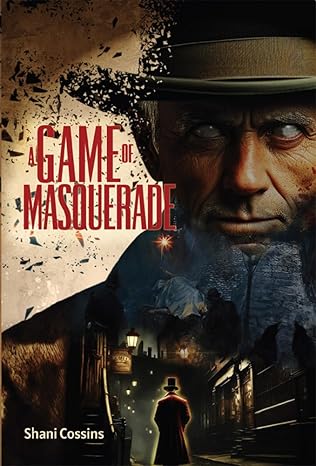

A Game of Masquerade blends historical crime with speculative fiction, pulling Jack the Ripper out of the fog and into a stranger and darker light. The story follows Professor Orlando Delbrotman, a time-traveling outsider who stumbles into the grimy alleys of 1888 London. His mission is unclear even to himself at first, but soon he becomes entangled in the investigation of the Ripper murders alongside Scotland Yard. What begins as an observational trip turns into a dangerous game of survival, trust, and pursuit, with the Professor moving between the dim-lit taverns, cold morgues, and filthy streets of Whitechapel. The setting is thick with atmosphere, and the narrative swings between gritty human suffering and the strange detachment of an alien mind learning the limits of morality.
The writing carries the weight of the setting with vivid detail, but it also knows when to lean on humor or eccentricity. I liked how the author didn’t shy away from the brutal realities of the time. The women in the story aren’t romanticized; their hardship is tangible, and their conversations are raw. The Professor, in contrast, is formal, almost awkward, and I found that gap between his precise, alien perspective and the chaos around him strangely compelling. The pacing can be a slow burn in places, but that gave me time to sit with the tension rather than rush through it.
Some parts felt theatrical, almost like a stage play with its sharp entrances and dramatic exchanges. Sometimes it worked, adding color and energy, and other times it brought me out of the scene. Still, I admired how the book balanced historical authenticity with a speculative twist without letting one overwhelm the other. The Ripper mystery has been told in countless ways, yet this take felt fresh, partly because of the outsider’s-eye view and partly because of the relatable moments that broke through the gloom.
I’d recommend A Game of Masquerade to readers who enjoy historical mysteries with a speculative slant, particularly those who like their stories gritty yet occasionally whimsical. If you’re curious about what happens when history’s shadows meet something not quite of this Earth, you’ll find plenty to chew on here.
Pages: 333 | ASIN : B0DW69W3S1
A Few Casualties So What
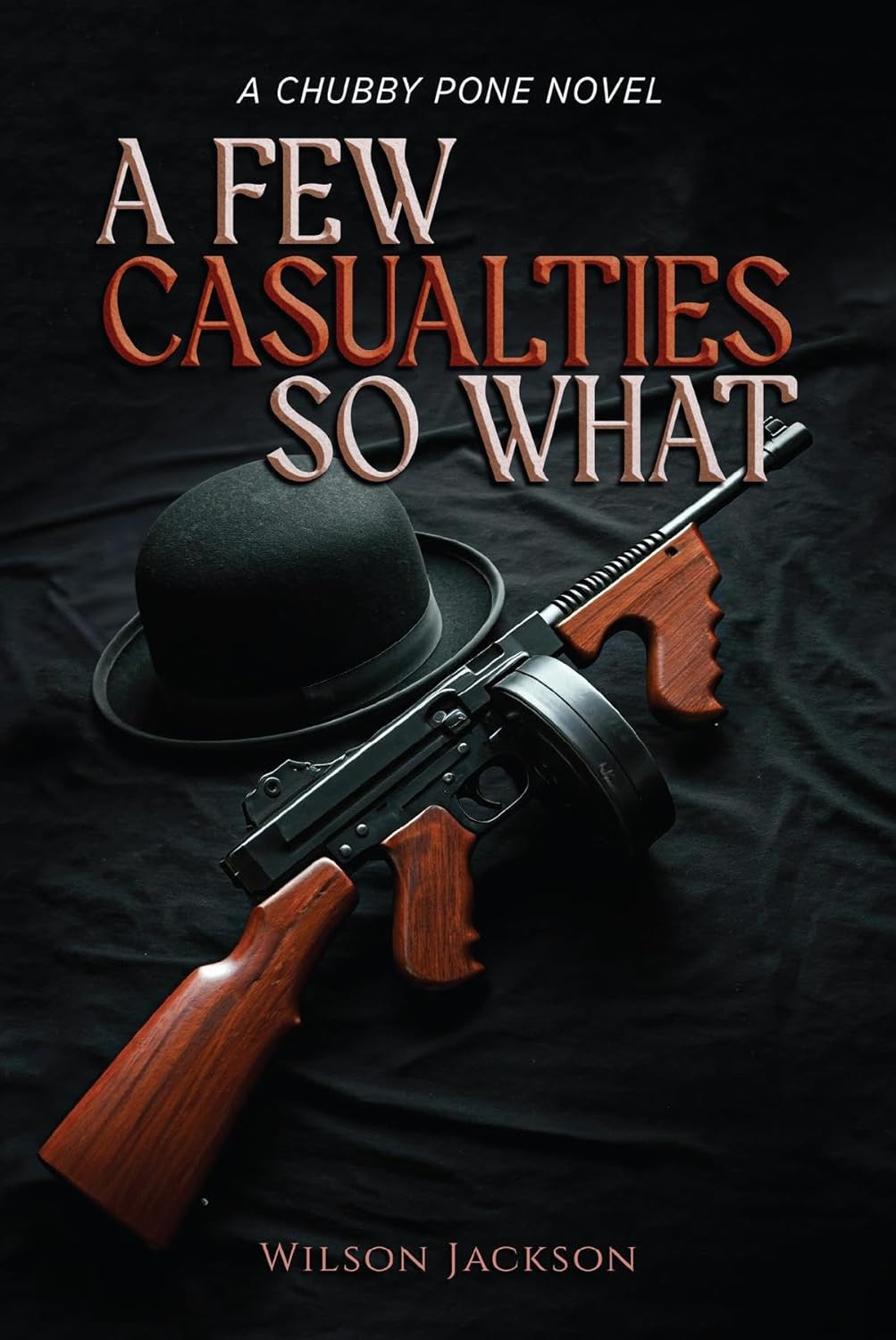
In A Few Casualties So What, Wilson Jackson drops the reader straight into the grit and shadow of Metro City, a place where the Great Meteor has bent time, pulling the ghosts of the Prohibition era into the raw edge of the future. The story follows Chubby Pone, a former hitman turned reluctant problem-solver, navigating gang rivalries, crooked alliances, and his own tangled loyalties. When the children of two crime lords are murdered, Pone is thrust into a dangerous game of diplomacy and survival, caught between warring families, corrupt politics, and a city that seems to breathe violence. Through smoky clubs, high-stakes poker tables, and sudden bursts of gunfire, Jackson blends noir grit with a sharp-tongued wit, crafting a crime saga that is as much about character as it is about bullets.
I enjoyed the texture of Jackson’s world. It isn’t just described, it’s lived in. The details, from the way Pone polishes his bowler hat to the stink of cheap booze in a gangster’s breath, make the city feel like it’s been around for decades before the first chapter starts. I could almost hear the slap of shoes on wet pavement. That said, the prose sometimes lingers in these textures. There were moments I wanted the story to push past the ambiance and get to the meat of the scene. Still, the dialogue crackles. Pone’s banter, especially with Red and his poker buddies, is sharp, often funny, and layered with unspoken history.
The plot itself feels like a pool game. It’s slow, deliberate setups punctuated by sudden, violent breaks. I appreciated that the violence never felt cheap. Even the drive-bys and assassinations have a code, and when that code is broken, the weight of it lingers. Pone is a fascinating protagonist because he’s neither romanticized nor demonized. He’s competent but flawed, dangerous but bound by his own sense of justice. There’s a cynicism here, but also a surprising tenderness in how he treats his chosen family. I found myself caring less about the “whodunit” than about how Pone would navigate the moral knots he’s tied into.
A Few Casualties So What felt less like a crime novel and more like an invitation into a very specific corner of a city. Jackson’s writing is rich, unhurried, and atmospheric, and his characters carry the kind of weight that makes you believe they’re out there somewhere, still playing cards in a smoky basement. This book would be a strong pick for readers who love noir that takes its time, crime stories that don’t flinch from moral complexity, and dialogue that could cut glass.
Pages: 270 | ASIN : B0F4675T6Z



 LITERARY TITAN