Blog Archives
Song of Hummingbird Highway


Song of Hummingbird Highway traces the tangled journey of Terri, a tender but wounded woman from Michigan who longs for love that actually sees her. Her world collides with Reynold, a Belizean musician with burning dreams and a storm inside him, and she follows him into unfamiliar cultures, humming forests, spiritual traditions, and painful truths. The story carries her from Laurel Canyon to Belize, through heartbreak, danger, betrayal, and a final push toward her own inner strength. By the end, Terri’s path is shaped as much by ancestors and myth as by the man who once dazzled her. The book blends romance, trauma, folklore, and self-rescue into something that feels bold and deeply human.
The writing has this emotional pulse that surprised me. It swings from soft moments to sharp ones that made me squirm. I could feel Terri’s insecurity, her hunger to be loved, her fear of being forgotten. Some scenes lit up with color and rhythm, especially the early moments between her and Reynold, which felt intoxicating in the best and worst ways. Other scenes hurt to witness. They exposed the cracks in Terri’s self-worth with such blunt truth that I found myself pausing. The story wanders and circles at times, yet the heart of it stays steady. It is a story about the lies we believe about ourselves, and the long walk it takes to unlearn them.
What I liked most was the book’s mix of spiritual energy and raw interpersonal mess. I loved the mythic threads, the Mayan echoes, the ancestors whispering at the edges. I also loved how the Belizean setting opened up like a living thing. Still, I kept wishing Terri would trust herself sooner. Watching her cling to Reynold, even when he faltered and shattered, made me ache. The writing captures that pattern well, because it reminded me of people I have known who could not break free of a charm tied to harm. The scenes near the end felt surreal and heavy with symbolism, yet they worked. They gave Terri a moment of power that felt earned.
When I closed the book, I sat with a strange mix of sadness and relief. I admired Terri for surviving herself as much as she survived Reynold. I admired the author for weaving love, history, culture, music, and pain into a story that refuses to sit quietly. I would recommend this book to readers who enjoy emotional journeys, spiritual themes, and strong cultural settings. It suits people who like romance, who like characters who stumble hard before they find the ground, and who crave stories that hum long after the last page is done.
Pages: 532 | ASIN : B0FZF1TN24

Sousanna: The Lost Daughter


In the aftermath of World War II, the world was in a state of flux. Countries devastated by the war faced the daunting task of rebuilding while their citizens grappled with profound changes in their lives. Greece, in particular, was further battered by the onslaught of a Civil War, compounding the struggle for survival. Amidst this backdrop of turmoil and rebuilding, America emerged as a symbol of hope and prosperity, an idyllic destination promising a life free from hunger and deprivation.
Sousanna: The Lost Daughter delves into this historical context, narrating the poignant tale of a young girl named Sousanna, caught in the crosscurrents of hope and despair. The memoir unfolds with Sousanna’s father, driven by a blend of hope and desperation, making the heart-wrenching decision to send his youngest daughter to America. This decision, born out of a belief in temporary separation, spirals into years of longing and heartache for Sousanna and her family back in Greece. The narrative poignantly captures the family’s clinging to the hope of Sousanna’s well-being, juxtaposed with her struggle to maintain her identity in a foreign land brimming with abundance.
Set between the 1950s and 1970s, the novel offers a compelling exploration of the complexities surrounding international adoptions, particularly from economically challenged countries. It insightfully presents the perspectives of the biological family, the adoptive family, and most crucially, the child at the heart of these life-altering decisions. The book sheds light on the controversial practices that led to the adoption of thousands of Greek children by American families, often under dubious circumstances.
Sousanna: The Lost Daughter, by Sousanna Stratmann, is a thought-provoking and relevant exploration of themes that resonate as much today as they did in the mid-20th century. The narrative is a testament to the enduring human spirit and the quest for identity in the face of overwhelming odds. This book is highly recommended for its insightful portrayal of a little-known chapter of history and its moving reflection on the human experience.
Pages: 272 | ASIN : B07JKBN66Y

Education and Evangelism

From Hill Town to Strieby explores the life of Reverend Islay Walden, a man born into slavery who overcame blindness and hardship to return home as a minister and educator, and the legacy the Hill and Lassiter families left on the community. Why was this an important book for you to write?
As descendants of the original families that helped found the church and who continue as trustees today, we worried as we watched the last of the generation before us pass away that our history would be lost if we did not make a concerted effort to preserve, share, and uplift it. As the writer in the group, they looked to me to help that happen. In addition, just as other African American community descendants are concerned about erasure, not just benign neglect, we wanted to do all we could to be certain that the history of the church, school, community and its founder, Rev. Islay Walden, would always be an acknowledged and celebrated part of Randolph County, North Carolina history, and be part of the broader American History of African Americans and the rural South. I didn’t want anyone in Randolph County to ever say again as someone once had, “Strieby? Never Heard of It.”
With regards to Islay Walden himself, I had come to realize, as I researched his life, that in his lifetime, he was not an obscure poet, as some had portrayed him. In addition, I realized that none of the biographical essays about him had really understood that his passion was not poetry, regardless of his success. His passion was education and evangelism. No one had reflected on that in writing about him, so I wanted to pay homage to him as a 19th century African American poet, but even more important for me to elucidate was his legacy in education and ministry.
How much research did you undertake for this book, and how much time did it take to put it all together?
At the time that I made the decision to finally write the book, I had been researching the community for over twenty years and had already written a book about the history of one family, the Miles Lassiter family. At the same time as discussions about writing the book, family members were also asking about historical preservation. As part of that, I prepared an extensive, documented history of the church, historic school, and cemetery in application for the county’s Cultural Heritage Site designation, which we received. That application became the first draft. It took two more years of research and writing before the book was completed in 2016.
What were some ideas that were important for you to share in this book?
The level of educational excellence that the school stood for had been praised and celebrated at every turn by the entire community. This was a community with nearly 100% literacy in the early 1900s, when that achievement was rare for any community in the rural South. This community had placed a high premium on education, and members had gone to great lengths to seek additional opportunities, even leaving the community to do so, yet always returning to share love and encouragement with the next generation. In fact, this community had produced at least one young teacher by 1900, and several more soon followed.
What is one thing that you hope readers take away from From Hill Town to Strieby?
I hope readers see that rural communities of color have been seeking the same things that their urban siblings have been seeking — opportunity. They seek educational opportunities, which they hope, like everyone else, will provide them with other opportunities, including economic security, whether they leave the countryside or not.
Author Links: Goodreads | Facebook | LinkedIn | Website | Amazon
“Finding Your Roots” One Man’s Journey to Discover His Ukrainian, Greek, And Bulgarian Roots

When I picked up Finding Your Roots: One Man’s Journey to Discover His Ukrainian, Greek, and Bulgarian Roots by Kiril Kristoff, I didn’t expect the ride I was about to take. The story follows Alexander Kakhovskiy, an American born into privilege, raised on excess and status, with little sense of who he really is. In one devastating night, he loses it all. After a near-fatal car accident, Alex wakes not in modern Chicago but in 19th-century Imperial Russia, stripped of his wealth and freedom, forced into the life of a serf. What begins as punishment unfolds into a profound journey of survival, faith, and love, where saints and ancestors shape his path and the brutal world of serfdom teaches him humility, responsibility, and sacrifice.
This book surprised me with its depth and scope. At first, I bristled at Alex’s arrogance, but as he stumbled through hardship, I found myself rooting for him, even protective of him. His encounters with Elizabeth, his soulmate in another lifetime, added tenderness that balanced the weight of war, betrayal, and spiritual reckoning. The way Kristoff shifts between past and present, dream and reality, sometimes left me dizzy, yet it mirrored Alex’s inner chaos. The novel also stretches beyond Alex, weaving in the stories of forefathers like Georgiy and Vasiliy, who stood on opposite sides of faith and revolution, and reminding us how much of who we are is inherited through blood and history.
Some passages hit me hard. The spiritual visions, the crushing trials, the echoes of immigrant struggles across borders and generations all resonated. At times, the prose felt heavy, yet it often swung back with vivid, aching beauty that lingered. What stayed with me most was its insistence that freedom, identity, and redemption are never free, that every generation pays its price. It is a bold, multifaceted story that dares to mix history, myth, and spiritual allegory in a way that feels rare.
Finding Your Roots isn’t a light read, but it digs deep and stays with you. I’d recommend it to anyone drawn to stories about faith, heritage, and the resilience of families across generations. If you like novels that wrestle with identity and legacy, or if you’ve ever wondered how the past continues to shape us, then this book is worth your time.
Recipient of the Literary Titan Book Award.
My Land, My Nile
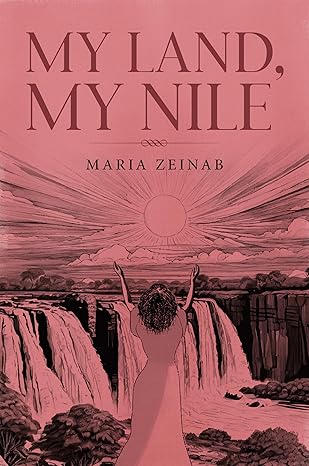
My Land, My Nile, by Maria Zeinab, is a sweeping and multi-generational tale that threads together history, myth, and personal memory along the Nile’s banks, from the Abyssinian Highlands to the Nubian Valley. It blends the oral traditions of Nubian culture with vivid depictions of displacement, political tension, and familial bonds. Through interwoven narratives, crocodiles as sacred guardians, the fall of the legendary Yahodi Nog, and the odyssey of Nabra-Isat Soliman returning to her ancestral land, Zeinab paints a textured portrait of a people’s resilience against the tides of time, politics, and water. The novel drifts between the past and present, memory and vision, often blurring the lines between the real and the mystical.
Reading this book felt like stepping into an old Nubian home where the walls are lined with family photographs, some faded, some vivid, each whispering a story. Zeinab’s writing is drenched in sensory detail like the smell of sandalwood, the glint of green crocodile eyes, the oppressive hush of a summer noon, and that attention to the tangible pulls readers deep into the narrative. Her characters are layered, never reduced to tropes, and their conversations carry the weight of centuries. That said, the lyrical style can be somewhat demanding. The shifts between timelines and voices require patience, but for me, that challenge was part of the reward. The story never panders. It trusts the reader to wander, to get a little lost, and to return richer.
What moved me most was how the novel treats loss, not just the loss of people, but the erasure of land, language, and ways of life. Zeinab doesn’t rush to offer hope. Instead, she lets grief sit in the room, lets it breathe beside the characters, until its edges soften into something like acceptance. I felt my chest tighten during the moments of cultural theft, like when Nubian names are stripped from official documents, because it’s not just fiction; it mirrors real wounds that history keeps opening. Yet even in the heaviest passages, the story never forgets the beauty of what it’s trying to preserve. It’s a rare balance of lament and love.
I would recommend My Land, My Nile to readers who appreciate historical fiction that leans into poetry and myth, and to anyone who has a soft spot for intergenerational sagas rooted in place. For those who have ever felt the pull of an ancestral home, whether visited or only imagined, this book will feel like a homecoming, with all the joy, ache, and ghosts that it entails.
Pages: 352 | ASIN : B0FH2Q9KQT
THE WAY IT WAS

In his remarkably poignant memoir, The Way It Was, Alvin Fuhrman intricately threads the lines of personal history, technological evolution, corporate progression, communal bonds, and cultural inheritance. The book stands as an intimate examination of Fuhrman’s life, charting his path as a telecom pioneer and community stalwart while also exploring his experiences in the army and his personal ebbs and flows.
One of the most captivating aspects of the book emerges when Fuhrman recounts the vibrant narratives of the Muenster community. This includes the inception of the Germanfest and the lasting influence of the Muenster Men’s Choir. The very essence of the memoir serves as a tribute to the industrious and committed individuals who shaped Muenster into the community it is today. It’s not all joyous recollection, however, as Fuhrman confronts the heartbreaking loss of his son, Gene. These poignant moments contribute a profound emotional depth to the memoir, reminding the reader that life is an intricate dance of happiness, victory, loss, and resilience.
The narrative occasionally delves into the more technical aspects of Fuhrman’s life, specifically when discussing the evolution of telephone technology and the trials of cablecasting. Yet, the unadulterated sincerity of Fuhrman’s voice within The Way It Was renders it an enthralling read. His memoir skillfully encapsulates the spirit of the times it navigates—the simplicity of the pre-digital era, the rigors of war, and the leaps of technology that have reshaped society. The backdrop of Muenster, with its deep-rooted German lineage and tight-knit community, becomes a lively participant in the narrative, enhancing the overall allure of the memoir.
Alvin Fuhrman’s The Way It Was is an eloquent and engaging memoir. It transcends the boundaries of a single life, narrating the broader tale of a community and a bygone era that bore witness to significant transformation. Despite the occasional foray into technical discourse, the memoir resonates on a human level, offering a deeply meaningful exploration of life, loss, community, and the unstoppable advance of technology.
Pages: 388 | ASIN: B09ZQ1K354



 LITERARY TITAN