Blog Archives
Still Waters Run Deep

PEOPLE PERSONnel follows a burnt-out HR manager trudging through her final year at a shrinking charity while juggling caregiving for her declining mother and quietly plotting a radical act of mercy. What was the inspiration for the setup of your story?
I have worked in HR in the not-for-profit sector for over 30 years and I live in Whitstable (UK). I have written before (historical) but thinking of the old adage, ‘write what you know’ I decided to do just that. I wrote something where character and location were key. You’ll notice it is not set in a particular time because I didn’t want it to date. I hope it will be picked up and televised one day so that my antihero can reach a wider audience and I can retire, like Janice.
I found Janice to be a very well-written and in-depth character. What was your inspiration for her and her emotional turmoil throughout the story?
Thank you. No spoilers but I wanted her to be a very ordinary person who ends up in the position of doing extraordinary things. She flies under the radar. She is invisible and for what happens in the story the fact that she is so overlooked gives her a very significant advantage.
What were some themes that were important for you to explore in this book?
Still waters run deep. It’s the quiet ones you want to watch out for. Again, no spoilers, but most fictional killers are larger than life as are the characters who catch them. To me it’s far more disturbing if the killer turns out to be someone just like you. I put, ‘But she always seemed so nice…’ on the back cover because that’s what people always say when their crimes come to light. Janice is a person who keeps herself to herself.
What is the next book that you are working on, and when can your fans expect it to be out?
I wrote this book 8 years ago and only very recently revisited it and got it published. I do have ideas for another book about Janice, perhaps a prequel, and hopefully that will be out in the next 6-12 months rather than in another 8 years.
Author BlueSky
She commutes every day from her home in Whitstable, Kent to London and is soon to retire from her standalone role for a not-for-profit sector organisation, that is facing very difficult financial decisions. She is innocuous, dull, easily overlooked and cut an inconsequential, loveless path through, what appears to have been, a largely non-eventful life.
Everyone knows she wouldn’t lift a finger. Everyone knows she wouldn’t swat a fly. Everyone knows she’ll just sit there and be quiet. No one would think twice about her, but Janice Mead’s savage way of exiting those who are now surplus to her requirements may change all that. See what kind of a person Janice Mead really is.
PEOPLE PERSONnel


PEOPLE PERSONnel follows Janice Mead, a seasoned HR manager trudging through her final year at a shrinking charity while juggling caregiving for her declining mother and quietly plotting a radical act of mercy. Set against the backdrop of a dreary office and the grey sprawl of southeast England, the story slips between sardonic workplace comedy and unsettling introspection before veering into a shocking yet oddly tender act of revenge and redemption. Holup delivers a narrative that simmers slowly, then boils over in a morally complex and relatable way.
Holup’s writing is dry, sharp, and deeply British. The voice of Janice (or Myra, depending on which identity you trust) is both painfully funny and heart-achingly bitter. Her observations cut deep, especially on ageism, bureaucracy, and the way society quietly dismisses older women. I found myself wincing at how real it all felt. There’s no sugar-coating here. It’s the raw, unfiltered truth of late-career burnout and quiet domestic despair, until, suddenly, it’s a murder mystery disguised as an act of grace.
What really surprised me is how effortlessly Holup builds a character who is both forgettable and unforgettable. Janice is invisible in the way that older women often are, and yet she becomes the exact opposite by the end: powerful, decisive, terrifying in her stillness. I couldn’t stop thinking about her. The bees, the gloves, the crispy pancakes, all these odd details add up to something chillingly intimate. The ending, though extreme, felt almost inevitable. It left me with that odd emotional mix of satisfaction and sadness, like watching a long-overdue storm finally break over a parched field.
If you like character-driven fiction with bite, with humour that borders on cruelty but never loses its humanity, then you’ll get a lot out of it. It’s perfect for readers who enjoy Eleanor Oliphant Is Completely Fine, but wish Eleanor had a darker side and a plot to poison someone. PEOPLE PERSONnel is bleak, funny, and full of feeling.
Pages: 307 | ASIN : B0FC462XY8

Do We Really Trust God?

Trust on Trial explores the complexity of human faith, betrayal, and redemption by staging a trial where “Earnest Trust” is accused of fraud, betrayal, and breach of contract. What was the inspiration for the setup of your story?
Honestly, it started with a question that hit me in the gut: We all have trust issues and how often does our trust issues impact our ability to trust God? Do we really trust God…or just say we do? From there, the courtroom idea took shape. I imagined Trust not as a concept, but as a character. Tired, beat up, misunderstood; and then put him on the trial of his life. Because let’s face it: we all have trust issues. Not just with people. With God. And until we drag those doubts into the light and interrogate them, we’re stuck spiraling and repeating the same cycle of misplaced trust.
The legal drama was the perfect lens. It’s structured, intense, and emotionally charged; almost like spiritual wrestling. It gave me the space to let readers become jurors in their own faith journey. And it gave Trust a voice we rarely give him.
What were some themes that were important for you to explore in this book?
Oh, we’re going deep. This book is about more than just faith; it’s about what happens when faith fractures. Themes like betrayal, disappointment with God, spiritual deconstruction, and church hurt are front and center. But more than that, I wanted to explore redemption. Not the clean, polished kind, but the messy, bloody, uncomfortable kind where people have to face their own reflections in the courtroom mirror. I also wanted to tear into the myth that doubt means failure. Because sometimes, doubt is just the doorway to deeper trust.
I find that, while writing, you sometimes ask questions and have the characters answer them. Do you find that to be true? What questions did you ask yourself while writing this story?
Absolutely. The entire book is one giant interrogation—of Trust, of faith, of myself. Every character is either asking or answering hard questions we usually avoid and lock away in the recesses of our minds.
Questions like:
What does it mean to trust when nothing makes sense?
Is God still good when the world isn’t?
Can I forgive the people who shattered my trust; and still trust again?
Am I holding onto control instead of trusting in the God I say I believe in?
So yes, the characters were answering questions I didn’t always have the courage to say out loud. That’s what made the courtroom setting so powerful. It gave me permission to go there.
What were some goals you set for yourself as a writer in this book?
I had two goals, and neither involved playing it safe.
Tell the truth, even if it’s ugly. I didn’t want to sanitize doubt or pain. I wanted readers to feel seen in their mess, not shamed by it. I wanted them to be confronted head on with the various ways they have had their trust broken in their lifetimes and examine if they have been misplacing their trust.
Start a conversation that keeps echoing after the last page.
I wanted readers to walk away wrestling with their own verdict. This isn’t a book that gives you answers on a silver platter. It asks you to decide. To confront your trust issues and look at broken trust, trust itself, and faith through a fresh, unfiltered lens.
My mission has always been to blend chaos with meaning, comedy with conviction, and absurdity with truth. Trust on Trial is all of that…and then some.
Author Website
What if Trust were dragged into court, charged with fraud, betrayal, and breach of contract? What if your own experiences with broken promises, lost faith, and second chances became the evidence? Trust on Trial isn’t just a book. It’s a courtroom battle for the ages, where Trust himself is on trial and readers hold the power to decide his fate. Through witness testimonies from history, the Bible, and real life, this gripping narrative challenges everything you believe about Trust, faith, and redemption. Can Trust be restored, or is he beyond saving?
As the prosecution and defense build their cases, readers will wrestle with questions like:
•Can Trust ever be fully rebuilt after betrayal?
•Is Trust dangerous, or is he necessary?
•What does it mean to put Trust in something greater than yourself?
The evidence is presented. The testimonies are compelling. Your verdict will define what Trust means in your life. Step into the courtroom, examine the evidence, and render your verdict. The stakes have never been higher.
Trust on Trial
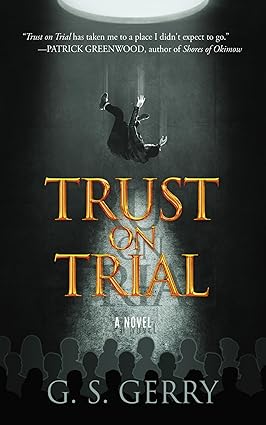
In Trust on Trial, G.S. Gerry delivers a genre-defying courtroom drama that puts the very concept of trust in the defendant’s chair. Through a bold and imaginative framework, Gerry explores the complexity of human faith, betrayal, and redemption by staging a trial where “Earnest Trust” is accused of fraud and breach of contract. The book moves through opening arguments, witness testimonies, and mounting evidence, both secular and sacred, asking the reader to consider the fragility and power of trust in their own lives. As jurors, readers are dragged into the emotional and philosophical firestorm surrounding every broken promise, every heartfelt risk, and every soul-deep disappointment.
Reading this book felt like watching a courtroom thriller crash headfirst into a TED Talk with a pastor and a stand-up comic on the bench. And somehow, it works. The writing style is punchy, dramatic, and often hilarious, with a rhythm that sways between poetic intensity and playful banter. Gerry plays with metaphor and theatrical tension in a way that makes each chapter feel like a scene in a well-directed play. His characters, Earnest Trust, the peacock-like prosecutor Curtis Reed, and the soulful defender Harvey Shield, are vivid, layered, and unforgettable. But underneath the flair and snappy dialogue is a serious meditation on pain, vulnerability, and where we choose to place our trust, people, institutions, or God.
The book leans on allegory and symbolism. At times, I craved more room to sit with the ideas rather than be handed metaphors. And yet, even in those moments, I couldn’t look away. This book struck nerves I didn’t know were still raw. It reminded me of past betrayals, yes, but also of why I continue to trust, despite it all.
If you’ve ever questioned your faith in people, in systems, in God or if you’ve been burned and are afraid to try again, this book is for you. It’s for the skeptical, the hopeful, and the broken-hearted. Trust on Trial isn’t light reading, but it’s real. It’s funny, aching, bold, and brutally honest. It got under my skin and made me think harder about something I too often take for granted.
Pages: 182 | ASIN: B0FBXDVGYZ
DON’T MESS WITH ANNA: A RECKONING IN BLOOD AND INK

Celeste Prater’s Don’t Mess With Anna is a wild, genre-melting ride that throws a petty online feud into a fantastical medieval meat grinder. When relentless troll Milton Smith takes one jab too many at author Anna DeMarco, karma doesn’t just knock—it drags him kicking and screaming into a brutal otherworld where knights don’t wear shining armor and dungeons are disturbingly real. Packed with vengeful magic, dark humor, and a strange sense of justice, the book follows Milton as he pays, painfully and hilariously, for every snarky comment he’s ever typed from the comfort of his mom’s basement.
Okay, first off—this book is bonkers in the best way. Prater doesn’t tiptoe around the setup. She throws us straight into Anna’s emotional breakdown over a brutal one-star review and it just spirals gloriously from there. But it’s when Milton starts feeling “icy tendrils” in his gut and faceplants into a keyboard that I knew I was in for something completely different. Prater doesn’t hold back. Her writing swings between hilarious and visceral, and the pacing is relentless. You’re either on this ride or you’re roadkill.
The fantasy world Milton lands in is where the story really flexes its muscles. It’s rich, weirdly believable, and mean as hell. These knights are not your noble, gallant types. More like angry executioners with perfect hair and better comebacks. Godric, Damon, and Jasper have big “don’t test me” energy, and watching Milton—a troll through and through—get absolutely wrecked by their world was satisfying in a primal, slightly guilty way. Milton’s journey through humiliation, fear, and growth, is uncomfortable but compelling. He’s kind of awful, but he’s also kind of us at our worst. That’s smart writing.
Now, don’t expect a subtle tale of redemption. This is more medieval-flavored revenge fantasy with a keyboard warrior at the center, and I loved that about it. But it’s not all snark and swords. Prater weaves in some really clever commentary on internet toxicity, cancel culture, and the emotional labor of creators. The queen and king’s fury over Anna’s mistreatment feels both over-the-top and totally justified. It’s like watching an entire fantasy kingdom rage-quit the internet on her behalf.
Don’t Mess With Anna is for anyone who’s ever read a one-star review and thought, “Wow, who hurt you?” It’s for writers, for readers, for anyone who’s been on either side of online drama and lived to tell the tale. It’s messy, chaotic, wildly entertaining, and unexpectedly sharp. If you’ve got a thing for dark fantasy, poetic justice, or just want to see a professional troll get medievaled, this book is for you.
Pages: 322 | ASIN : B0F22X4FVD
Making Vespuccia Great Again
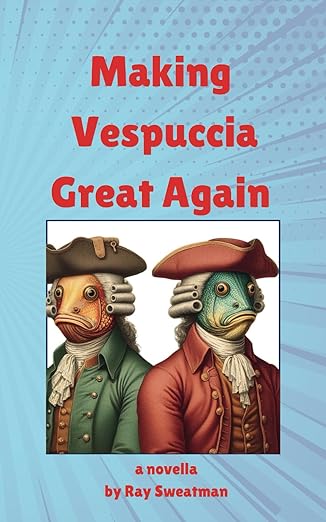
Ray Sweatman’s Making Vespuccia Great Again is a sharp, fearless, and at times laugh-out-loud political satire that imagines a dystopian America rebranded as “Vespuccia.” Set in a twisted mirror of our current socio-political climate, the novella follows the rise (again) of President O.J.C. McDonald, a grotesque caricature of a certain orange-hued reality TV personality. Through absurd characters, biting dialogue, and a surreal plot that includes everything from sentient fish Founding Fathers to LGBTQ revolutionaries called “The Pronouns,” Sweatman delivers a fiery send-up of authoritarianism, fake news, and cultural division in America.
From the very first chapter, Sweatman goes full throttle, skewering the January 6th insurrection with the same kind of commentary you’d expect from The Onion if it took acid and watched Idiocracy on repeat. The fake news anchors Donna Dumay and Don Drapery narrating the Capitol attack like a sports event? Genius. “Oh my, this is better than Getflix!” Donna chirps as democracy crumbles. I was equal parts horrified and laughing out loud. Sweatman walks that tightrope masterfully, never letting the humor soften the blow of the real critique.
One of my favorite arcs was Reverend Swindlemore and his daughter-turned-nonbinary-hacktivist Bucky (aka They/Them). The Reverend is a grotesque blend of fire-and-brimstone televangelists with just the right dose of unhinged righteousness. His hell-obsessed sermons feel ripped from real-life absurdities, and when Bucky forms a rebel group of queer hackers, I was all in. It’s outrageous, it’s camp, but there’s heart. You get the sense that Sweatman deeply respects those fighting for justice, even while cranking the satire up to eleven.
And then there’s the Founding Fathers. Literal fish-people who rise from the sea, transform into Jefferson and Hamilton, and get swept into a costume shop where they breakdance to Rick James’ “Super Freak.” It sounds insane because it is, but somehow it works. These absurd moments don’t just entertain, they hammer home Sweatman’s larger point: when truth dies, history becomes theater, and we’re all stuck on stage, flailing. Watching Jefferson defend his slave-owning past while Hamilton snarks and George Washington threatens to shoot him with a shotgun? That’s satire doing its job, shining light through the madness.
Making Vespuccia Great Again isn’t for everyone. It’s blunt, crude at times, politically fiery, and proudly liberal. But if you’re the kind of reader who enjoys Dr. Strangelove, South Park, or Vonnegut on a rampage, you’ll eat this up. Making Vespuccia Great Again is for the disillusioned, the politically exhausted, the angry, and the hopeful. It’s for anyone who still believes words have power, humor can cut deep, and that fighting back might look a little ridiculous but is still necessary. I laughed, I cringed, I shook my head. And I’d read it again in a heartbeat.
Pages: 252 | ASIN : B0DY4T96PV
Fulfilment City

Fulfillment City is about collapse—the slow, sticky unraveling of a woman, a city, an industry, and, in a broader sense, American identity. The story kicks off with Lydia Calligan, once a powerhouse in San Francisco’s boutique advertising world, and follows her as her crown jewel campaign. A wholesome berry ad featuring a lisping Black child implodes spectacularly in a culture-shifting scandal. What follows is a ghost story, but not the kind with cobwebs and creaky doors. Lydia becomes a living specter, wandering the city in a trench coat, haunted by both personal and public failure, as her former colleague Paul, sharp-tongued, prickly, and strangely endearing, tries to drag her back from oblivion. From its hip urban core to a strangely eerie prefab town in rural Colorado, the novel explores guilt, reinvention, and the absurdities of a country selling itself one delivery box at a time.
What I really loved was how quietly funny the book is, even when it’s steeped in grief and disappointment. The writing is whip-smart but never showy. The scene where Lydia, now adrift, sits in silence at a café while Paul performs his one-man comedy routine, trying to draw a single flicker of recognition from her, is painfully hilarious. I could practically hear the espresso machine hissing in the background as he babbled nonsense, and she stared through him like he was just another ghost. The comedy sneaks up on you, poking at the tragic bits without letting you sink. And Lydia’s fall from grace was Brutal, but also believable. The way the berry campaign spirals into controversy, starting with a lisp and ending in a death, is satire so sharp it practically bleeds.
Paul, for me, stole the show. He’s this oddball mix of charming, petty, broken, and brilliant. I didn’t expect to feel for him so much, but watching him scramble for relevance while his world shrinks to the size of a secondhand teacup was quietly devastating. His dry midwestern sass and resentment give the novel its bite and his weird antique obsession is oddly grounding.
The section set in the artificial town of Saltair Springs was deliciously eerie. The contrast between Lydia’s haunted sophistication and the soulless sheen of a fulfillment-center utopia gave me chills. You can feel Lydia’s unease seep through the page and yet, the town isn’t just a prop. There’s real life and love there, like with Cherise and Darnell, a couple that somehow blooms in the middle of all this engineered happiness. That sweetness tucked between cynicism and corporate doom felt like a little glimmer of hope.
Fulfillment City doesn’t wrap itself up in neat bows. But its honest about loss, about compromise, about how easily people and institutions get swallowed whole. I’d recommend this book to anyone who likes their fiction with bite and wit, who’s curious about what happens when the culture machine eats itself alive. If you liked Mad Men, White Noise, or just want to read something that feels both current and weirdly timeless, this one’s for you.
Pages: 245 | ASIN : B0DZ3RWF83
Compassion

Spin Cycle: Notes from a Reluctant Caregiver follows an exhausted and frustrated man navigating the complexities of caregiving for his aging mother with dementia. The book is beautifully written and addresses a subject that is rarely discussed in this way. Why did you want to write about caring for an aging parent?
This is the book I wish I had five years ago. It was around then that my mom was first diagnosed with “likely onset Alzheimer’s.” Those years, during which I became a parent to my parent, were some of the most challenging and exhausting of my life. I was frustrated, confused, angry, and felt guilty about feeling frustrated, confused, and angry. I felt alone. That’s the spin cycle. And going with fiction rather than, say, a memoir, gave me the freedom to explore and imagine more facets of that experience. If one person reads this book and thinks, “I’m not alone. These characters think and feel what I think and feel,” then I’ve done my job. I want this book to resonate with readers, and, hopefully, comfort them.
I find that authors sometimes ask themselves questions and let their characters answer them. Do you think this is true for your characters?
I think it was Truman Capote who said, “You can’t blame a writer for what the characters say.” I love this because I think it’s true. As you get to know a character more deeply through the writing process, you begin to hear their voice, their opinions, their view on life. For me I can be much more honest and raw – and therefore, hopefully, relatable – when I inhabit the minds of other people, people who might say or do things I wouldn’t. I think of myself as being reserved and polite, perhaps excessively so, and my characters give me the chance to break from myself.
What were some themes that were important for you to explore in this book?
Compassion is the overriding theme in Spin Cycle. When we meet the protagonist, Ezra, he is so consumed by resentment, frustration, guilt, and self-loathing that he no longer has the capacity to be compassionate, to others as well as himself. The book is about his journey to rediscover his capacity to empathize and love. I also try to explore the corrosive effect of family secrets, as well as the fulfilling sense of human connection we have when we choose to be vulnerable with others.
What is the next book that you are working on, and when will it be available?
It is called Convergence. I’ve just begun it. The theme for this novel will be “escape.” I think there are times in all our lives when we wish we could just snap our fingers and “escape” – perhaps literally: to a different place, a thousand miles from home; perhaps with extreme diversion: sex, drugs, booze; or maybe the escape is an internal one we make by shifting – not our circumstances – but the lens through which we view them. Put characters with these varying approaches to “escape” in a pressure cooker and that’s the book. Knowing my work pace, it will probably be out in a year, perhaps a year and a half.
Author Links: GoodReads | X (Twitter) | Website | Instagram | Amazon
Overwhelmed by it all, Ezra opens a strip-mall school to help others-and himself-become better caregivers. As he learns to handle the personalities of his nine misfit students, Ezra must also navigate the complex feelings he has toward his mother. It doesn’t help that she adores his do-nothing slacker brother.
But Ezra hasn’t told his students that he also has an agenda beyond becoming a more compassionate caregiver. And, it turns out, so does one of his students. Ezra confides the entire tale to his childhood friend Danny as he attempts to sort it all out and find room in his heart again for compassion and love.


