Blog Archives
Mirrors of Humanity

Terra Secundus follows a war-weary journalist sent to Titan, where humanity’s quest for discovery collides with its oldest flaws: ambition, control, and the fragile meaning of being human. What inspired you to set Terra Secundus on Titan rather than another world or moon?
In my exploration of the world of science fiction, I often encountered situations where many famous writers with multiple awards and nominations set their novels on many planets of the solar system and seldom on any satellites of the gas giants such as Jupiter, Saturn, Uranus, and Neptune. Before I decided to place my protagonist in a new world, I carefully studied the science literature about the possibilities of colonizing moons and planetoids orbiting the gas giants. Saturn’s moon Titan was a very strong contender for such an endeavour, and after studying everything I could about that unique moon, I decided to send my protagonist there, since Titan is considered a good candidate for a colony. Many scientists believe it could become a smaller version of Earth, since Titan has a thick atmosphere composed of nitrogen and other gases. Add oxygen to it, and humans could theoretically breathe its air.
The novel’s tone feels both futuristic and nostalgic. Was that a conscious stylistic choice to evoke classic science fiction?
I love classic science fiction novels and my exploration into this literary genre started with many memorable books by Ben Bova, Issac Asimov, Ray Bradbury, Arthur C. Clarke, Frank Herbert, Allen Steele, and Robert Heinlein. When writing about a future removed from our time more than 1,200 years, I tried to imagine a future society of the 32nd century to develop amazing new technologies and modify its social and religious beliefs. In this novel, I tried to use a classic style of storytelling, because for most readers it is much easier to understand. I believe that every society must learn from the past experience and try to avoid repeating tragic mistakes that led to the fall of ancient civilizations and magnificent extinct cultures. The roots of the future are in the present, and I hoped to tell this story in such a way as to entertain and educate my readers about the fascinating distant worlds, new technologies that border on magic and what it means to be human.
How did you approach writing the Artborn androids like Erika, as characters, machines, or mirrors of = humanity?
Interesting question. I like robots. Even as a kid, living in a different society during the Cold War, I liked all science fiction movies that featured cyborgs and robots. Since those days, robotics and and cybernetics both made giant strides forward, and now we see many cybernetic models starting to imitate humans. We are also witnessing the radical advances in Artificial Intelligence and autonomous systems that help us to explore other places and other planets. My approach to such characters as Artborn Erika was both scientific and philosophical. In my story, Artborns are advanced synthetic humanoids that were created to assist humanity, working in most dangerous places in space and underwater. They are essential mirrors of humanity and in some ways are better than us when it comes to programmed mission parameters and sense of duty. In my novel, androids like Erka are employed as explorers, personal servants and bodyguards but they can certainly do much more than that.
If Paul Rexton were alive today, what story would he report on Earth in 2025?
If my protagonist, Paul Rexton were alive today, I believe that he would be deeply fascinated, intrigued and disturbed by the Earth in 2025. His world is certainly very different from ours in many respects, but he would be able to understand our world and form his own unbiased opinion about it. He would no doubt be pleased about the technological progress and human rights, Very concerned about environmental pollution and deeply affected by the fact that there are still powerful evil forces exist on the planet, making life difficult for their neighbors and many other countries. He would no doubt be fascinated by our means of mass entertainment and our taditionsl and electronic libraries of vast human knowledge that contain many centuries of wisdom. I would imagine Paul Rexton standing on a hotel balcony in a quiet and beautiful Japanese village, visiting the beautiful museums of Europe or enjoying a good book at home with a glass of old, smooth, wellaged brandy.
Author Links: GoodReads | Amazon
Terra Secundus: A Novel of Colonization of Titan


Terra Secundus is a richly imagined sci-fi novel that follows Paul Rexton, a soldier-turned-news-explorer sent to report on humanity’s colonization of Titan, Saturn’s largest moon. Through his journey, the book explores ambition, identity, and the dangers of unchecked progress. From Earth’s “Longevity Wars” to the discovery of Blue Ice, a mysterious energy source that could reshape civilization, the story blends political drama, personal reflection, and wonder at the unknown.
The author paints a future that feels both vast and believable, filled with new technologies, evolving religions, and the long shadow of human history. The glossary of terms felt like stepping into a fully realized civilization. Yet, at its core, the story stays personal. Paul isn’t a stereotypical space hero; he’s a curious, conflicted observer trying to make sense of a world that keeps expanding faster than its morality.
The writing often feels old-fashioned in a good way, dense, descriptive, and philosophical. When Paul’s editor, Lana Emerson, sends him on his Titan assignment, their exchange brims with tension and respect. It’s less “blast-off adventure” and more about duty, curiosity, and the cost of truth. I especially loved the sections describing Titan itself: the orange skies, the methane seas, and the eerie silence of an alien world. The conversation between Paul and Evelyn Best, a local officer, about Blue Ice and the fragile ecosystem beneath Titan’s crust perfectly captures the book’s sense of awe and unease.
What makes Terra Secundus stand out is its focus on people, not just technology. The Artborn androids, like Erika, Paul’s robotic companion, are more than machines. They’re reflections of humanity’s desire to create, control, and connect. The pacing is slow at times, but it suits the introspective tone. Each scene feels like it’s building toward something deeper, a question about what progress really means.
Terra Secundus isn’t flashy space opera; it’s thoughtful, emotional, and quietly haunting. It’s perfect for readers who enjoy rich, idea-driven science fiction like The Expanse or Solaris. If you like stories that make you think long after the last page, this one will stay with you like a distant echo from the edge of space.
Pages: 157 | ASIN: B0FPBN7GQ8

A Story of Great Courage
Winter Comes in June is a post-apocalyptic sci-fi novel that weaves survival, science, and sorrow through the fractured memories of a family navigating life after an asteroid shatters Earth. What inspired the choice to tell the story through diaries and multiple family perspectives?
I have always wanted to write a dynamic and interesting post-apocalyptic novel where family members share their experience through their memories recorded after an Extinction Level Event. The inspiration to tell the story this way came from another science fiction novel written by a writer, Sheri Tepper, titled The Visitor. It also dealt with a world shattered by an asteroid impact. I felt that by telling this story through several individual voices adds depth to each character and makes them more sympathetic.
How did you balance the technical accuracy of the science with the personal emotional arcs?
In preparation to make this novel a reality, I read several fiction and non-fiction books dealing with asteroid impacts and their awesome destructive power that affected our planet’s evolution in the distant past. The personal emotional arc for each character is unique. Their reaction to the imminent asteroid collision and the life after the impact is also deeply personal. I tried to project realistic human emotion into the story, to make it character-driven. This is a story of great courage in the face of apocalyptic horror and the triumph of the human spirit. In my novel, everyone is touched by a world-shattering tragedy that my characters are able to overcome by their strength, their will, and their humanity.
Did you base the lunar Armstrong base or the Amira Event on any real scientific models or speculative research?
The lunar base Armstrong in my story was partially based on several proposed NASA projects since the first landing on the Moon in 1969. The original NASA plans were to build a permanent manned science base on the Moon. There were several interesting proposals, which were scientifically well grounded but were ultimately canceled because of the lack of proper funds and the danger of long-term exposure to the low gravity of the Moon, which would have had many negative effects on the astronauts’ health. The Amira Event described in my novel is, of course, purely fictional, but is based on the solid scientific data on what an asteroid this size can do if it had struck Earth. The rock that supposedly had killed the dinosaurs was only five to six miles long. In my story, the Amira asteroid was twice as big and caused much more damage.
What do you hope readers take away from the emotional aftermath portrayed in the story, beyond the survival elements?
In my opinion, a good book, just like a painting in a museum or a good movie, must provoke an emotional response. Skipping the survival elements, where the reader can reasonably guess the characters’ motivation and personality, I hope that the readers can take away with them the strong emotional impact and try to place themselves in the fictional character’s position. I believe that my readers will find inspiration from the main characters through their words and actions that often speak louder than words. I also hope that they can learn that no matter what happens, one must never abandon hope. I would also advise them to remember the ancient Greek myth about Pandora’s Box. When she opened the box out of curiosity, all the terrible things came out into the world. But at the bottom of the box, the Hope remained. Our species has survived many great catastrophes and challenges in the distant past. I hope that we are better prepared to face any type of disaster and emerge from it deeply scarred but ultimately victorious.
Author Links: GoodReads | Amazon
Winter Comes in June
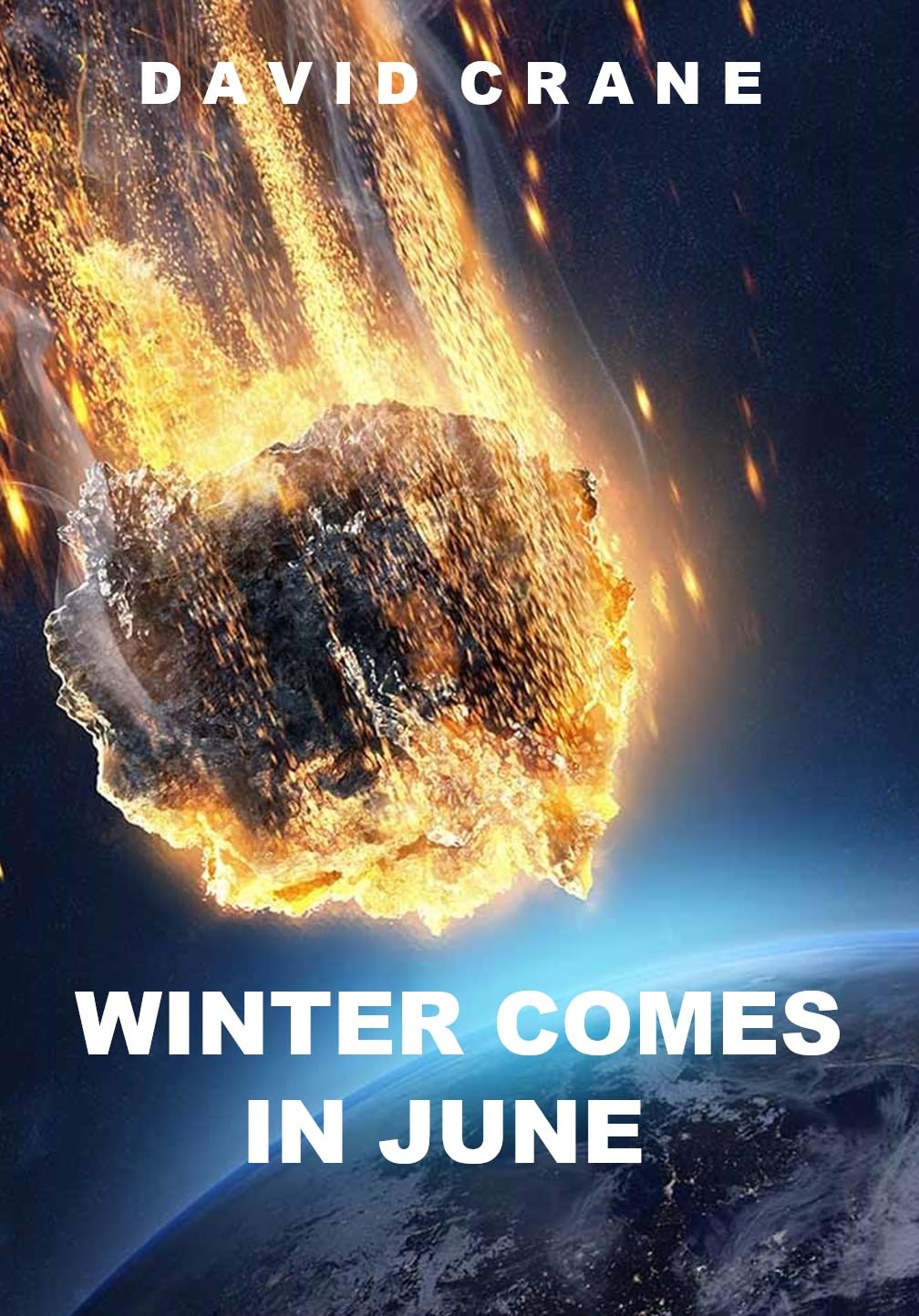

Winter Comes in June is a gripping and emotionally charged sci-fi survival novel that blends hard science with raw humanity. Set in a post-apocalyptic world scarred by the devastating Amira Event, a massive asteroid strike, the book unfolds through the voices of Sunday Rain and her parents, Oksana and Michael. The story moves between the sterile safety of the Moon’s Armstrong base, the grounded resilience of life on Earth, and the reflections of survivors trying to rebuild amidst ruin. It’s a chronicle of love, legacy, and loss as told by a young woman trying to understand the past by reading the diaries of those who lived through the unthinkable.
What struck me first was the immediacy of the voice. The writing is blunt, sometimes even crude, but in a way that feels honest and necessary. The characters speak the way real people might in a world gone sideways, candidly, with humor and despair all tangled up together. The author doesn’t waste time dressing things up. Instead, the rawness of the narration pulls you in. I felt like I was sitting beside Sunday or watching Oksana float down a Moon corridor. There’s something deeply personal in how the characters observe beauty, process trauma, and navigate love and fear. It’s not tidy, and that’s what makes it believable.
What also stood out to me was the heart behind the science. The book is packed with believable technical detail, from lunar base life to asteroid composition, but it never lets the science drown out the human stories. Michael and Jenny’s romance is sweet, grounded, and tender. Oksana’s guilt and pride as she watches disaster unfold from afar is gutting. The scenes between characters, whether they’re sitting at a breakfast table or staring up at the sky, hit harder than any explosion or battle could. The asteroid might be the monster in the sky, but it’s the people who give this book its weight.
Winter Comes in June is a story about surviving not just a planetary catastrophe, but the emotional aftershocks that follow. It’s not polished or flowery, but it’s deeply moving and hard to forget. I’d recommend this book to readers who like post-apocalyptic fiction with brains and heart, fans of Andy Weir or Emily St. John Mandel. If you want a sci-fi novel that feels less like a blockbuster and more like a diary, this one’s for you.
Pages: 294 | ASIN: B0F9VW85SH
Complex Beings
Heatseeker: A Story of the Vampire Alex Chance follows a former FBI agent turned vampire, investigating a gruesome serial killer who has to navigate the murky line between human law and vampire justice. What was the inspiration for the setup of your story?
This story was greatly influenced by a short story I wrote in my writing group back in 2015 when I came up with an idea of a modern-day lawman hunting an elusive and brilliant serial killer and getting exposed to the secret world of vampires. That short story was only five pages long and featured only two main protagonists, Alex Chance, who was a police detective in that story, and vampire boy, Jake, who hunted down child molesters with lethal precision. I later modified the story several times, and many years later, came up with a broader tale involving more characters that had enough material to turn it into a novella. And so, the Heatseeker book was born.
What were some of the emotional and moral guidelines you followed when developing your characters?
Emotional and moral guidelines in any story are important. I always loved the detective genre and introducing a supernatural element into it made it more interesting and added more depth to the story. Alex Chance is an FBI agent, trained to be strong, honorable, and devoted to his duty. The vampires are creatures of the night, who have their own codes of honor and justice system, only they operate without human bureaucracy and red tape, which makes them far more efficient. Alex Chance follows his personal and moral code even after he becomes a vampire, which I think makes him very likable. The vampire boy, Jake, on the other hand, is driven by an ancient hate for people who hurt and abuse children and his moral compass can only be affected by the elements of human law, which he breaks often in pursuit of justice.
What intrigues you about the horror and paranormal genres that led you to write this book?
Horror and paranormal genres are very intriguing because as a writer, I do find them very stimulating for the creative process. There were movies and shows that played a great part in its development, such as the vampire series Forever Knight and Moonlight, where vampires and humans must find common ground and ways to coexist. The horror element derives from the vampires’ ability to instill in morals great fascination and fear. In traditional vampire stories, the immortals are often depicted as killers, who justify their way of life by their constant need for human blood. The supernatural genre is even more fascinating. In my vampire story, I described vampires as complex beings with their own secret civilization that had evolved alongside humanity in parallel evolution. So in a way, both human and vampire worlds mirror each other.
Is this the first book in the series? If so, when is the next book coming out, and what can your fans expect in the following story?
Heatseeker is a stand-alone novella that features Alex Chance as the main protagonist. It is set in a world of vampires that were introduced in my previous vampire novels, Beyond Sunlight, Before the Dawn, and Eighteen Forever. Heatseeker is the fourth book that is related to them but follows its own path. My fans can expect a few more stories about vampires, which are currently resting on the development shelf, waiting to be picked up, analyzed and selected. Currently, I am at work on a new post-apocalyptic story that features human survival after a devastating asteroid impact.
Author Links: GoodReads | Amazon
Heatseeker A Story of the Vampire Alex Chance
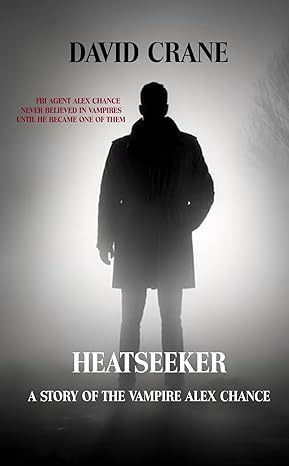
Heatseeker is an urban fantasy thriller that follows Alex Chance, a former FBI agent turned vampire, as he navigates the murky line between human law and vampire justice. With his centuries-old vampire partner, Jake, Alex investigates the gruesome crimes of Quasi Deus, a serial killer who leaves a trail of mutilated victims. The book weaves action, mystery, and supernatural elements into a dark and fast-paced story that explores morality, justice, and the burden of immortality.
The writing pulls you in right away with its bold, no-nonsense style. The prologue sets the tone with Alex’s introspective musings about life and death, immediately grounding the reader in his world. The descriptions are rich but never bog down the action. For example, Alex’s meticulous attention to his appearance—his five-o’clock shadow, his well-tailored suits—contrasts beautifully with his brutal efficiency as a hunter. The fight scenes are especially gripping, described with sharp clarity that makes them feel cinematic. When Alex and Jake take down a street junkie in a botched robbery, the details of the struggle feel immediate and raw. There’s no wasted motion in the writing, no unnecessary flourishes—just sharp, punchy prose that mirrors the efficiency of its protagonist.
I think the book’s greatest strength lies in its characters, particularly Alex and Jake. Their dynamic is fascinating. Jake, a seemingly innocent twelve-year-old with the skills of an assassin, serves as a dark mirror to Alex’s more grounded and world-weary demeanor. Their conversations are some of the book’s best moments, blending humor and pathos in a way that makes their bond feel genuine. For instance, Jake’s casual blood-mixing with his coffee at a café while discussing serial killers adds a surreal touch of dark comedy. Their code puts them at odds with both human law enforcement and their own kind, adding layers to their moral dilemmas.
While the mystery itself is engaging, with its twisted killer and underworld intrigue, what I truly liked about Heatseeker is its world-building. The vampire lore feels fresh—more akin to a clandestine society than the usual gothic tropes. The Urtama, or Nightwalkers, have their own rules and justice system, operating in parallel with human authorities. Alex’s ties to the FBI add another layer of tension. He’s a man caught between two worlds, enforcing laws he no longer fully belongs to. The contrast between mundane police work and supernatural justice is one of the book’s most compelling aspects. The scene where Alex investigates a ship full of drained and dismembered bodies evokes true-crime horror atmosphere that blends seamlessly with the supernatural elements.
Heatseeker is a must-read for fans of urban fantasy, noir thrillers, and supernatural crime stories. If you like the brooding intensity of The Dresden Files, the grit of a crime procedural, and the stylish brutality of John Wick, this book will be right up your alley.
Pages: 155 | ASIN : B0DSD4P1X2
Emotional Journey
Eighteen Forever follows an 18-year-old girl who is thrust into the dark world of vampires against her will and embarks on a quest to reclaim her humanity. What inspired you to set the story in 1988, and how did the era shape Elizabeth’s journey?
Elizabeth’s story is set in the year 1988, which was a very important formative year for me. I left the former Soviet Union with my family in the year 1986 and Came to the United States in the year 1987. By setting my story in the eighties, I wanted to show the period of my journey that has shaped my own life in many interesting ways. The 1980’s were some of the best years of my life, when I was able to learn to speak English fluently and discover many forms of entertainment through media, such as books and movies. In a way, I tried to imagine what it would be like to live in the United States in that fascinating and incredible period in history. The 1980s was an era of sensual exploration and discovery.
Elizabeth’s inner struggle between her human past and vampire present is compelling. How did you approach writing her emotional journey and creating relatable conflicts?
When a person undergoes a powerful dramatic event in his or her life, that event is never forgotten. Elizabeth is an innocent soul, who has been accidentally exposed to a parallel world of mysterious and very powerful beings, who have existed secretly alongside humanity in parallel evolution. After realizing that vampires were real and she is one of them, Elizabeth does her best to understand her new condition and seeks the knowledge to reverse the process to regain her humanity. The emotional journey for her is very intense and filled with many twists and turns as she tries to balance her sanity against the backdrop of a new world she has to adapt to in order to survive. In many vampire novels, teenagers and young adults are often depicted delighted to gain vampire powers even knowing the cost of such a change. In my story, Elizabeth does her best to remain human in her thoughts and deeds, while protecting those she loves the most, her family and her friends.
Did you draw from any specific historical or literary sources to build the vampire mythology in Eighteen Forever?
I was always fascinated by the vampires in literary fiction and have always wondered where they could come from and what is their purpose. I drew my inspiration from the vampire novels by Anne Rice, Michael Romkey, Jon F Merz, Laurell Hamilton, and several other stories and short novels where vampires were the main protagonists. In designing my won vampire world, I had an idea of parallel evolution, triggered by a mysterious ancient flower called The Sacrimal. By consuming its sweet petals, many ancient prehistoric humans were turned into vampires. After the last Great Ice Age, the flower seemingly vanished from existence, leaving behind a very enduring legend in vampire history. In my vampire novel, the vampires are called The Urtama and they have their language, customs, and traditions. Because of their incredibly long lifespan, they become the true keepers of human history and knowledge that helps them to adapt and survive.
What is the next book that you are working on, and when will it be available?
My next novel, titled The Heatseeker is another vampire story set in the same universe and featuring a young FBI agent who gets exposed to vampires while in pursuit of an elusive serial killer who targets sexual predators. In this story, a law enforcement officer wexill be confronted by the dark side of humanity and another world that would reshape his understanding about the nature of good and evil. This novel was actually based on a short story I wrote in my fiction writing class back in the year 2012 and it has stuck with me to this very day. I hope to make it interesting, exciting, and entertaining for everyone who enjoys reading dark fantasy. I will start working on this new book in November.
Author Links: GoodReads | Amazon
Eighteen Forever

In Eighteen Forever: A Story of a Vampire Elizabeth Sheldon, David Crane takes readers on an intriguing journey through the eyes of Elizabeth, an ordinary girl whose life is turned upside down when she’s bitten by a vampire against her will. From that moment, Elizabeth’s singular focus becomes finding a cure to reverse her transformation. The question of whether that’s even possible hangs over her quest, as she dives into understanding the origins of vampires and how they function. At only 18, an age when most people are planning their futures, Elizabeth is forced to grapple with immortality, reshaping her view of life and what it means to truly live.
The first-person narrative gives us a direct line into Elizabeth’s thoughts and feelings, making her story more relatable. You experience her struggles and inner turmoil firsthand, which helps create a strong connection to her character. Crane does an excellent job of grounding the story in its 1988 setting, capturing the essence of the time period with vivid descriptions and historical accuracy. The way Crane paces the novel is particularly engaging. The plot moves quickly, with multiple storylines running parallel, which keeps the reader on their toes and ensures the book never feels dull or slow.
One of the more intriguing parts of the book was Elizabeth’s internal struggle between her human past and vampire present. The flashbacks to her childhood and her close relationship with her brother Robert were especially poignant. They remind us that Elizabeth wasn’t always immortal, and the moments where she reflects on her past ground her in humanity.
The vampire lore in Eighteen Forever is a fascinating mix of familiar and fresh ideas. The concept of Urtama, the vampire race, and their relationship with humans is well-explored, but the part that really drew me in was the failed scientific attempts to let vampires walk in the sun. The scenes where Elizabeth reflects on these experiments, which almost killed several vampires, are chilling. It gave the sense that, despite their power, vampires are still vulnerable in ways that matter.
Eighteen Forever is a refreshing take on the vampire genre. It blends elements of history, science fiction, and introspective character study. I’d recommend this book to readers who enjoy character-driven narratives and are fans of vampire lore with a twist.
Pages: 419 | ASIN: B0DGFH7M9W



 LITERARY TITAN