Blog Archives
Chaos from the Cosmos


Chaos from the Cosmos is a sweeping, cinematic novel that weaves space technology, politics, and human ambition into a fast-moving geopolitical thriller. The story begins with Jackie Jill, a firebrand from rural California who rockets from small-town scandal to the U.S. vice presidency, and follows her alongside the cold genius President Bradford, the haunted astronaut Kiril, and the global powers manipulating events from behind the scenes. As nations battle over control of satellites, quantum computing, and the invisible systems that run our world, the book explores how space, a realm we often view with awe, has become the new front line of human conflict. It’s both speculative and alarmingly real, painting a future that feels close enough to touch.
The author writes with a crisp, cinematic eye for detail, making every scene, from backroom deals in Washington to drone swarms over Taiwan, pulse with tension. His prose is tight but not cold, and he has a knack for slipping big ideas into everyday moments without turning the story into a lecture. I liked that he doesn’t shy away from politics or human messiness. Jackie Jill, in particular, felt alive, loud, funny, damaged, and unapologetically herself. I found myself rooting for her even when she made questionable choices. Bradford, on the other hand, unnerved me. He’s brilliant but hollow, a mirror of our own age of clever leaders who mistake intellect for wisdom. The book never lets you relax. Every comfort in technology feels like a ticking bomb.
What struck me most was how human the book remains despite its cosmic scale. The tech and strategy are grounded in real science, but the real story is about people. Loneliness, pride, fear, ambition. I could feel the tension between progress and control, wonder and destruction. There’s a dark humor running through it, too, especially in how people justify madness as “innovation.” Sometimes I laughed, sometimes I felt sick, and sometimes I had to pause and just sit with what it said about us. The writing has a rhythm that keeps you hooked, shifting from sharp political dialogue to lyrical descriptions of space and silence. It’s smart without being pretentious, and heavy without being hopeless.
Chaos from the Cosmos hit me as both thrilling fiction and a warning. I’d recommend it to anyone who likes their science fiction tangled up with politics and human drama, or to readers who enjoy the sharp realism of Tom Clancy but crave more emotional depth. It’s not just for sci-fi fans, it’s for anyone curious about where our dependence on satellites, AI, and global systems might really lead. This book doesn’t just show chaos from the cosmos; it shows the chaos inside us, reflected right back from the stars.
Pages: 228 | ASIN : B0FCSM42MT

The Reckoning of Chaos and Magic
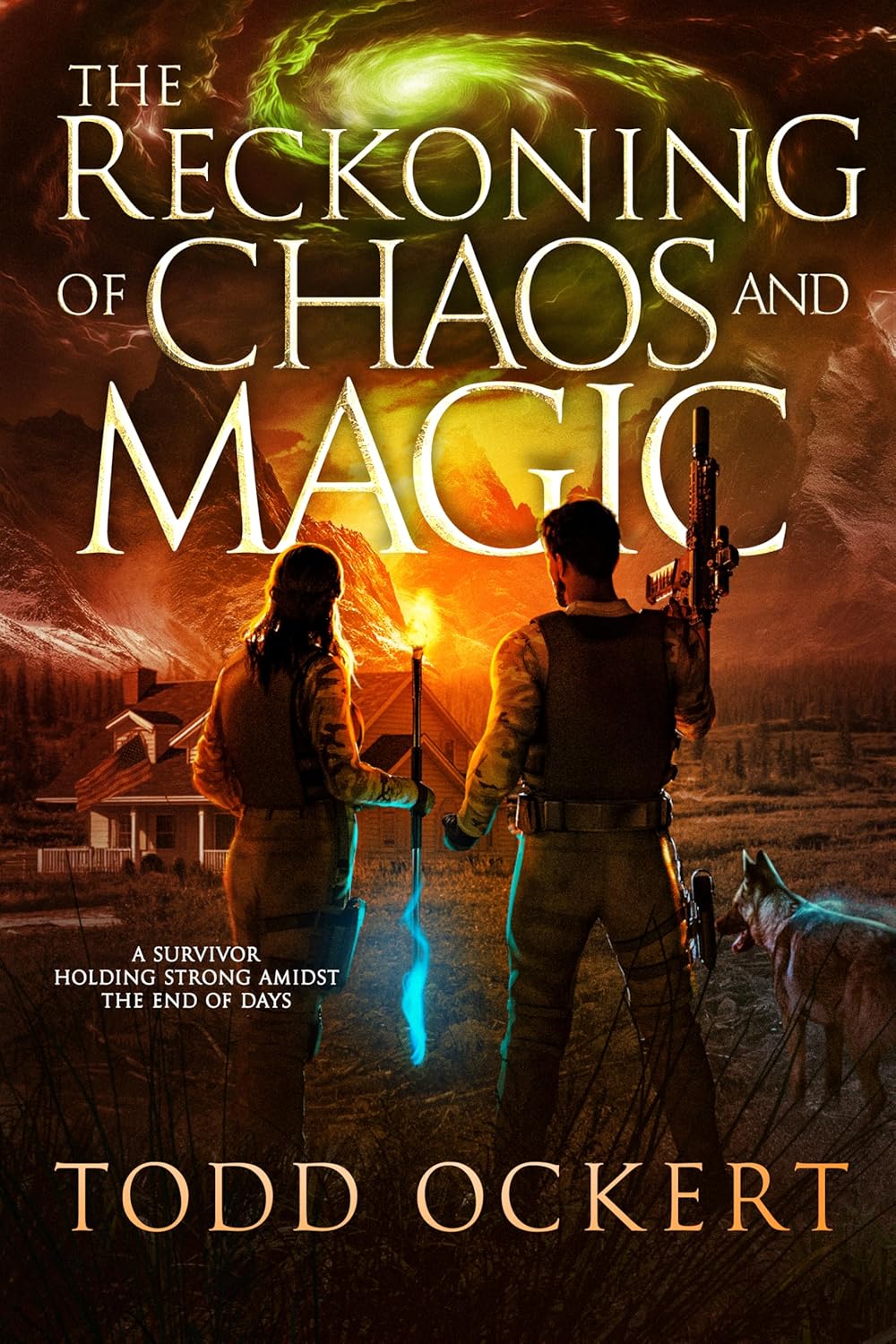
Todd Ockert’s The Reckoning of Chaos and Magic picks up in a world torn apart by disaster and violence, where ordinary people cling to survival through grit, loyalty, and a surprising spark of the supernatural. The story follows Mel and her crew from Freedom Ranch as they navigate a brutal new world after civilization’s collapse. Between biker gangs, gunfire, and a hint of midlife magic, Ockert weaves an intense and emotional tale of resilience and found family. It’s a mix of post-apocalyptic survival, combat realism, and mystical discovery, all grounded in friendship and love.
What really struck me about this book was how human it felt. The writing is raw, fast, and filled with emotion. You can feel Mel’s fear and fire. She’s strong, sarcastic, and flawed in all the right ways. The story never slows for long, yet it never loses sight of its characters. The world is cruel, and Ockert doesn’t sugarcoat that, but there’s warmth under the grit. I liked how the dialogue feels like real people talking under pressure. The moments of humor hit right when you need them, like a deep breath between storms. Sometimes the pacing felt jumpy, almost cinematic, but that also gave it energy, like watching an action movie unfold with heart. The magic side of the story adds a weird but welcome twist, it’s subtle, not sparkly, and feels more like power hidden in ordinary people than fantasy for its own sake.
I have to say, this book hit me harder than I expected. The writing isn’t about fancy turns of phrase; it’s about connection and survival. I found myself rooting for every battered, bloodied character. The scenes of violence are harsh, but they’re written with honesty, not shock value. The women in this story, Mel, Gail, Shelly, aren’t damsels or sidekicks. They’re the backbone of the book, and their friendship feels real, full of teasing and fierce loyalty. I also loved the touches of romance, especially between Mel and TJ, which felt tender and grounded in years of shared struggle rather than something sugary or forced. At times, the dialogue leans a bit heavy on exposition, but the sincerity of the writing more than makes up for it. You can tell Ockert loves these characters and the world he’s built for them.
It’s not just about chaos and magic, it’s about what people choose to protect when the world falls apart. I’d recommend this one to readers who love strong characters, action mixed with heart, and stories that don’t flinch from the dark. If you’re into post-apocalyptic tales like The Walking Dead but wish the heroes had a touch of witchy wonder, this book’s your jam. It’s rough, real, and full of hope where you least expect it.
Pages: 346 | ASIN : B0FG87T7T1

A Confounding World

Not Yet Your Time follows a self-deprecating office worker whose mundane New York life derails after a near-death encounter with a mysterious woman, leading him to question everything he knows about time, fate, and faith. What was the inspiration for the setup of your story?
I have always felt that the best drama or comedy follows from individuals being placed in situations for which they are utterly unprepared. (Being trapped on Everest while climbing is not the same as crash landing on Everest in your swim trunks) I have also always had the sneaking suspicion that our history, our myths, and the foundations of our culture are on very wobbly grounds. Finally, as someone who spent a full career in marketing, I know that reality is just a press release away from changing.
I found Titus to be an interesting character who gets pulled into a strange situation and manages to adapt despite everything that happens to him. Were you able to achieve everything you wanted with the characters in the novel?
When I embark on creating, in effect, an entire world, I need a central character to react to, digest, and pass through it. I needed Titus to be that person. I gave him the vulnerabilities and hidden strengths to attempt to deal with a confounding world that has sucked him in against his will, only because he was attracted to a mysterious woman. I was also pleased with Kanenas, my, in effect, flawed and reluctant messiah. A good man with ideas, totally unprepared for the greatness that is hung on his shoulders. (Inside secret) I patterned him after the attitude and speech mannerisms of the late actor Peter O’Toole, also a great and deeply flawed person.
I found this novel to be a cutting piece of satire. What is one thing that you hope readers take away from your novel?
Absorb all you can in life from as many sources as you can tolerate because no one person or philosophy has all the answers.
What is the next book that you are working on, and when can your fans expect it to be out?
The world’s greatest historian has a dark secret. He travels back in time and gets deathbed confessions from great figures in history. A Gesture to the Wind is narrated by the historian’s unsuspecting assistant, who is drawn into a world of illegal historic relic dealers, Russian spies, EPA investigators, and the Battle of San Juan Hill, all while developing a deep and abiding friendship with a time-displaced Ben Franklin. (As you can see, I’m having fun.)
Author Links: GoodReads | X (Twitter) | Facebook | LinkedIn | Website | Amazon
This odd trio embark on a perilous odyssey that includes imprisonment in a labyrinthine security complex under the ruins of the World Trade Center; flight through a murky unfinished tunnel beneath the Hudson River, a safe house masquerading as a defunct museum; and a perilous train ride to link up with a terror cell. Ultimately, the reluctant Titus will face a rendezvous with life, love, death, and destiny in the green wilds of New York’s Hudson Valley.
Funhouse Mirror

DimWitts: The Big Stupid is a genre-crossing novel with elements of fantasy, dystopian, and satire as well. Did you start writing with this in mind, or did this happen organically as you were writing?
I wanted to write something funny in the speculative fiction category without committing entirely to one genre. Admittedly, a few subplots emerged organically along the way, but the core story and the character arc of the protagonist remained largely consistent with my original outline.
Some events in the book were chillingly similar to real-life events. Did you take any inspiration from real life when developing this book?
My inspiration came directly from the last American election. It occurred at the same time the Canadian Parliament was being prorogued, and the rest fell into place around it.
I found this novel to be a cutting piece of satire. What is one thing that you hope readers take away from your novel?
Fulfillment. Enlightenment. The best satire is a funhouse mirror; it exaggerates flaws to ridiculous proportions, allowing an audience to see what could happen if a bad idea is given too much credence. I hope to scratch that surface, at least a little, and maybe get some laughs along the way.
Will this novel be the start of a series, or are you working on a different story?
This is book one of three. I am currently working on the “dark middle child” of the series and hope to have it finished by the spring of 2026. Book three is stewing nicely on the back burner and will likely be in print shortly thereafter.
Author Links: GoodReads | Website | Amazon
Lancaster Dirk, the newly elected American president, is on a race to destroy his enemies and restore the glory of the republic. But to do it, he needs something extremely important. Something Canadian.
A dirty old smelter in a dirty old B.C. mountain town — with an even dirtier old secret.
Balanced between worlds, the past and future collide in a tale that spans the globe — and the very edges of reality itself.
Arcanoforge: Midnight Metropolis


Arcanoforge: Midnight Metropolis is a feverish plunge into the neon-choked streets of Noctara City, a dystopian sprawl where humans and husks, ghosts and hemo magicians blur into a single, strange pulse. The story follows Tattie, a blood seer who’s fled her dying homeworld, and Brax, the man who tracks her across galaxies as their shared past claws its way back into the present. Around them spin a chorus of restless lives, skaterats, dealers, dreamers, all caught in the thrumming heart of a city that feels alive and dying at once. It’s part cyberpunk, part occult noir, and part heartbreak.
The writing is gritty, poetic, and weirdly tender. Author Caroline Barnard-Smith doesn’t just describe Noctara, she burns it into your head with words. Every street and shadow has its own personality, every conversation crackles like static. I loved how the world felt handmade, patched together with old wires and bad memories. The characters stumble through it broken and fierce, never really heroes, just people trying to stay one step ahead of decay. The prose leans heavily on texture, smells, lights, and sounds, and it builds a rhythm that makes the whole book feel like a song played through busted speakers. Sometimes it’s overwhelming, but in the best way.
There’s this deep ache about survival, about what we lose when the world stops caring. I kept thinking about the husks, these half-human enforcers who’ve traded pain for obedience, and how much that says about our own craving for numbness. And Tattie, she’s messy, angry, brilliant. I believed every choice she made, even when it hurt to watch. The story toys with power, guilt, and the ghosts that cling to love long after it’s gone.
Arcanoforge: Midnight Metropolis reads like Blade Runner crashed into The City & The City with a shot of Neuromancer’s grit and the bruised heart of a Becky Chambers story. I’d recommend it to anyone who loves science fiction that’s soaked in mood and grit. Fans of Gibson and VanderMeer will feel right at home. If you like your futures dark and your magic dirty, if you want to taste the metal in the air, this book’s for you.
Pages: 278 | ASIN : B0FFH6BS5L
Will Humans Become Obsolete?

100 Years to Extinction follows two sisters and their cousin who are caught in a world of chaos where pandemics, gun violence, climate change, and political division all overlap, and they make a pact to do something to save humanity’s future.
I found the science in the novel to be well-developed and engaging. What kind of research did you conduct to ensure you got it right?
My research, combined my knowledge, books on space exploration and AI, help from a fellow physicist on speed of light space travel, advice from a physician on medical issues, use of Google search for articles and the Google AI function, and advice from a NASA expert on the magnetic field for Mars.
What were some themes that were important for you to explore in this book?
The main theme is a world threatened by the Tyranny of Technology and dysfunctional politics. My three young Gen Z protagonists, Liz, Aster, and Milo, want a better world for everyone. The subthemes are the threats from global warming, nuclear security, unchecked AI, and misused genetic engineering. The cover image is a future that my protagonists fantasize: Genetic engineering creates a super-humanoid species that wipes out humans only to be eliminated by robots. All with the background of melting glaciers.
I find a problem in well-written stories, in that I always want there to be another book to keep the story going. Is there a second book planned?
Yes. My three protagonists, a little older now, are living in what is called the AI Singularity, predicted to occur in 2045. It is at this point that Artificial Intelligence becomes as intelligent and as powerful as humans. What will occur then? Will humans become obsolete? My three protagonists use their skills, intelligence and experience to ensure that humans and AI live together in harmony for mutual benefit.
My new novel, 12 YEARS TO AI SINGULARITY,follows Liz, Aster and Milo as they cope with the new reality. It is coming out in the spring of 2026.
Author Links: X | Facebook | Website
When EMT Liz Arvad is shot while saving a life, her recovery sparks a deeper awakening. Maybe the world isn’t just chaotic, it’s unraveling. Alongside her genius sister, Aster, and politically charged cousin, Milo, Liz makes a vow—do something, anything, to help save humanity. It starts with a promise in a sunlit room, and becomes a mission that could change everything.
In 100 Years to Extinction, physicist and award-winning STEM author Peter Solomon, Ph.D., blends heart-pounding fiction with scientific foresight. Inspired by Hawking’s dire warning that humans may face extinction by 2117, this gripping novel explores the runaway threats we can no longer ignore: climate collapse, pandemics, war, gene editing, AI, disinformation, and more.
But this story isn’t just about what’s going wrong—it’s about what we can still do. Backed by decades of experience founding clean-tech companies, leading multimillion-dollar government research, and writing 300+ scientific papers, Solomon brings unmatched clarity and urgency to the question: Can we still save ourselves?
With characters who feel heartbreakingly real and science that hits close to home, 100 Years to Extinction is both a wake-up call and a rallying cry. It dares readers to imagine a better future … and to fight for it.
Will you join the Earthling Tribe?
Pick up your copy today—and take the first step toward making Earth great again… before it’s too late.
About the Author: Blending heart-pounding fiction with clear, accessible science, physicist and award-winning STEM author Peter Solomon, PhD, explores the runaway threats we can no longer ignore—climate collapse, pandemics, nuclear war, genetic engineering, artificial intelligence, disinformation, and more. Solomon offers unmatched clarity on the question: Can we still save ourselves, and how might we do it?
Son of Osivirius
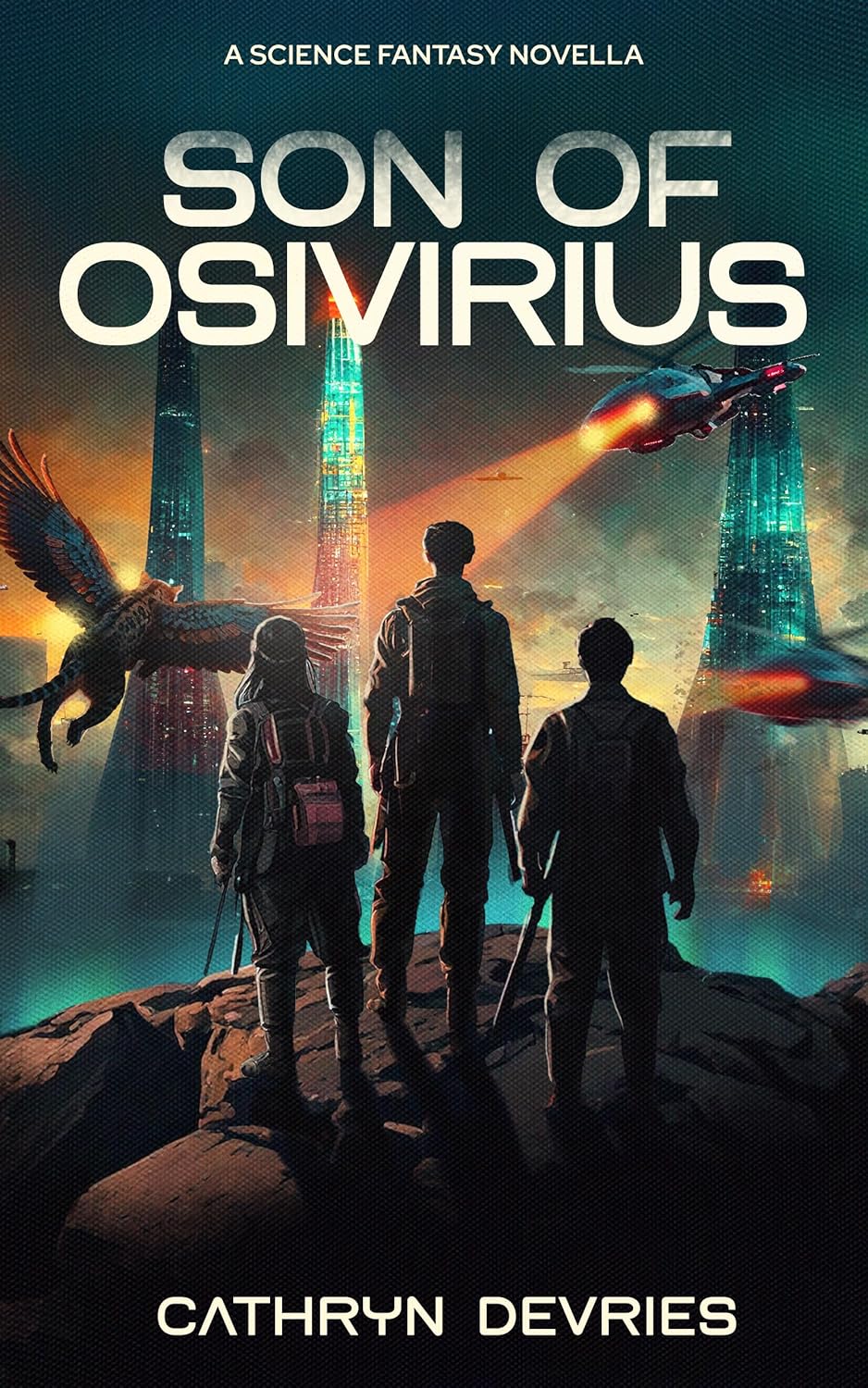
Son of Osivirius is a science fantasy novel set on the lush, dangerous planet of Osivirius, where electromagnetic “dead-zones” and rebellion complicate humanity’s survival. The story follows Jayden, a young pilot who crashes into a rebel stronghold, and Nettle, a fierce and distrustful woman who sees him as a threat. As Jayden struggles to heal and find a way back to his family, he becomes entangled in the rebels’ world of harmony with nature, flying cats called Masu, and a philosophy centered around balance. The narrative alternates between Jayden and Nettle, pulling readers into both perspectives and building a tale of survival, mistrust, slow-burning connection, and the search for peace in a world fractured by exploitation and greed.
I was hooked almost from the first page. The opening crash sequence was tense and immersive, and from there, the story barely let up. What stood out most to me was the vivid world-building. The descriptions of the valley, the rebels’ way of life, and especially the Masu, those awe-inspiring winged felines, gave me that rare feeling of stepping into a completely new world that still felt alive and believable. I loved the contrast between the sterile, suffocating colony and the lush, self-sustaining rebel enclave. It made me think hard about our own world and how we treat the natural environment, but it never felt preachy. Instead, the themes came through naturally in the characters’ choices and conflicts.
My feelings about the characters were complicated, and that made the experience all the richer. Nettle frustrated me at times with her hostility and refusal to soften, yet I understood why she was like that, and I respected her strength. Jayden, on the other hand, walked a tricky line between being sympathetic and being manipulative, and I often found myself both rooting for him and distrusting him. That tension gave the story its bite. There were also moments where I felt the romance threads were a bit predictable, but the emotional undercurrents of family loyalty, grief, and the fear of betrayal kept me engaged.
Son of Osivirius surprised me with its heart. Beneath the adventure and the danger, this is a story about belonging and trust, and how hard it is to let go of fear in order to live freely. I would recommend this book to readers who enjoy science fiction that balances action with deeper themes, especially fans of Avatar or The Left Hand of Darkness. It’s also a great pick for anyone who wants an adventure with strong characters, a lush setting, and deep ideas.
Pages: 188 | ASIN : B0FMXQ3C85
100 Years to Extinction
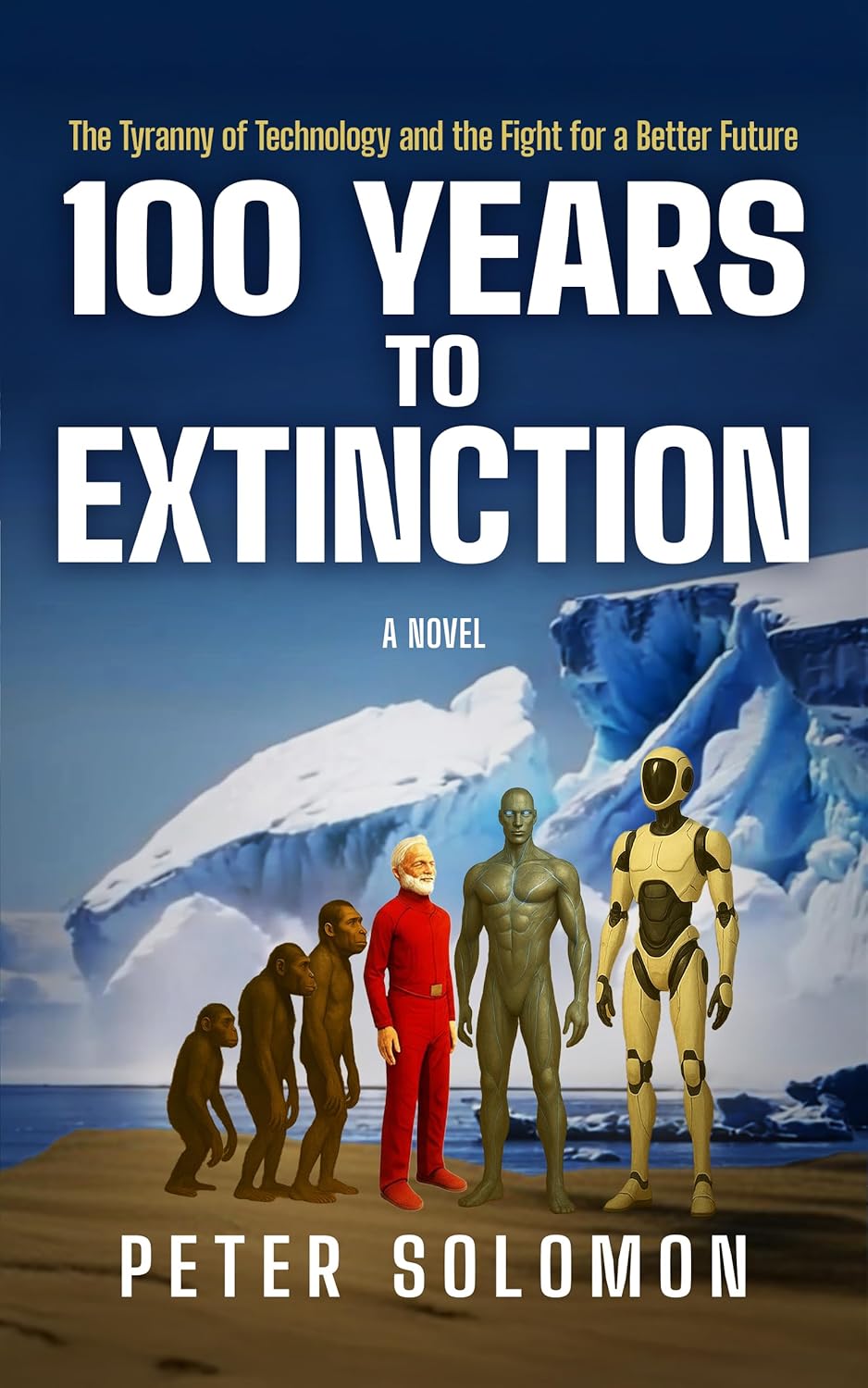
100 Years to Extinction follows Liz and Aster Arvad, two sisters caught in a world of chaos where pandemics, gun violence, climate change, and political division all overlap. Their family’s struggles are both personal and symbolic, from Liz being shot on an EMT call to the trio of Liz, Aster, and cousin Milo making a pact to “do something” about humanity’s future. The novel braids together near-future realism, speculative science, and the raw fears of Generation Z, asking whether we are truly on the brink of extinction in a century. It’s part survival story, part social critique, and part rallying cry.
The writing is sharp, fast, and emotional. There are moments when the dialogue feels like it’s been lifted from heated dinner-table debates, with characters rattling off facts about Stephen Hawking, artificial intelligence, and climate change. I liked that unfiltered energy. It made the book feel alive, like being thrown into a storm of voices where science, politics, and family pain collide. The rawness of Liz getting shot, the rage over conspiracy theories, and the quiet tenderness of sisters holding hands in a hospital room hit me hardest. Solomon’s sincerity is impossible to ignore. The story wanted me to care, and I did.
The weaving of real-world headlines into the story sometimes felt like the characters were vehicles for commentary. Still, there were passages where the mix worked beautifully. The contrast of cosmic wonder, Aster dreaming of the stars, against the blunt horror of school shootings or anti-vax violence made me feel both awe and despair in the same breath. That tension stayed with me, unsettling but real. The prose is straightforward, almost casual, but the ideas underneath are heavy. The combination created a rhythm I found hard to put down.
By the end, I felt the book’s true purpose wasn’t just to tell a story but to challenge me to think about the world I live in. Who is responsible for fixing this mess? Can young people make the difference their parents and grandparents didn’t? 100 Years to Extinction is a call to arms disguised as fiction. I’d recommend it to readers who enjoy speculative stories rooted in our very real present. It’s especially for young adults who feel overwhelmed by the crises around them and need to see their fears reflected and validated.
Pages: 438 | ASIN : B0FNX5VGY8



 LITERARY TITAN