Blog Archives
Eagles Fly ABOVE AI


Eagles Fly ABOVE AI is a sweeping and heartfelt exploration of the human relationship with artificial intelligence, told through personal stories, historical reflections, and rich metaphors. Lari Spire, drawing on decades as a surveyor, technologist, and lifelong learner, uses vivid nature imagery and accessible storytelling to walk readers through the complex and evolving world of AI. The book is divided into thematic sections that cover everything from the roots of human intelligence to the ethical challenges of modern AI systems. Rather than aiming to turn readers into engineers or coders, Spire focuses on fostering understanding, ethical reflection, and a deep appreciation of AI’s potential to work with us rather than against us.
I liked how Spire anchors high-level AI concepts in deeply personal and emotional experiences. Whether recounting his childhood travels, the awe of surveying sacred land, or witnessing his children grow up with emerging tech, every idea is grounded in lived reality. The writing is poetic and often tender. I loved the story about the light switches. It’s a charming memory that perfectly captures the beauty of binary logic. It’s rare to find a tech-centered book that makes your eyes sting with emotion, but somehow, this one did.
Some chapters feel like detours that might have fit better as stand-alone essays. The blend of memoir and tech can sometimes stretch when it leans heavily on analogy. Still, those moments are forgivable because Spire’s heart is in every word. You can feel his urgency, his reverence for both ancient wisdom and cutting-edge tools, and his hope that we humans don’t forget what makes us human as we build machines that think. I like how this book feels like someone reaching out, trying to help others understand the biggest shift of our time in a way that’s warm.
I’d recommend Eagles Fly ABOVE AI to anyone curious about AI but intimidated by the usual techno-jargon. This book is perfect for educators, lifelong learners, and thoughtful readers who care about ethics, nature, and the soul of progress. If you want to come away feeling both smarter and more inspired, then sit down with this book and let it carry you to the sky.
Pages: 380
It’s Never Been Easier to Hire the Wrong Attorney
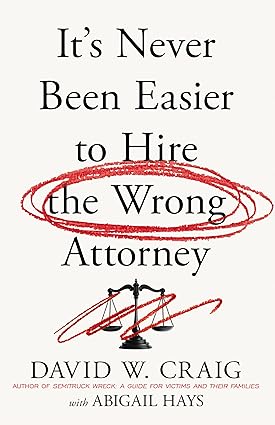

David W. Craig’s It’s Never Been Easier to Hire the Wrong Attorney is a sharp, eye-opening guide that walks readers through the legal landscape of attorney advertising and the pitfalls of picking a lawyer based on flash rather than facts. It starts with a chilling story, a catastrophic injury case that settled for pennies on the dollar because the victim’s family chose the wrong lawyer, and builds from there into a methodical, deeply researched argument about how legal marketing, both traditional and digital, can mislead the average person. Craig uses decades of experience to explain the evolution of legal advertising, why it can be so deceptive, and how to make better decisions when choosing legal help. The book also includes step-by-step guidance on how to identify and vet qualified attorneys.
This book stirred up a lot of frustration for me. Not because of how it was written, the writing is clear, blunt, and well-paced, but because the truth it reveals is maddening. Craig pulls no punches when explaining how law firms use billboards, flashy websites, and even hospital “runners” to scoop up vulnerable clients. The whole system is tilted in favor of those with marketing muscle, not legal skill. It felt a little like being told the magician’s secrets after already falling for the trick. At times, I wanted to shout, “How is this still allowed?” But that’s exactly what makes the book valuable. It’s not just a warning, it’s a toolkit for pushing back. His passion for protecting clients from bad outcomes shines through every page.
What I also liked was Craig’s honesty. He admits that there are good lawyers who don’t meet every “ideal” checklist he outlines and that the process isn’t foolproof. He isn’t selling himself or scaring the reader into hiring him, he’s educating with purpose. I appreciated that. The writing never talks down to you. It respects the reader’s intelligence, even as it challenges common assumptions. Some chapters were dense with stats and legal history, which dragged a little, but the real-world stories and practical advice made up for it. I especially liked the final chapters where he lays out how to actually find the right lawyer without getting tricked by marketing noise.
I think this book is a must-read for anyone who might someday need a lawyer, which, frankly, is most people. It’s especially good for those dealing with serious injury cases, criminal charges, or high-stakes family law situations. If you’ve ever felt overwhelmed by attorney ads or unsure where to turn after something bad happens, this book will be a lifeline. I wouldn’t call it light reading, but it’s certainly essential. Craig’s voice is steady, caring, and often quietly furious about the damage done when people trust the wrong person at the worst time.
Pages: 90 | ASIN : B0F7MYYZMD

Entrepreneurship and Intrapreneurship

Advanced Career Intelligence is a far-reaching, no-nonsense guide for navigating the higher tiers of professional life by examining strategy, emotional intelligence, work culture, & ethical success. What were your goals when writing this companion guide to your first book?
My goal with Advanced Career Intelligence was to build directly upon the foundation established in General Career Intelligence, diving deeper into the more complex and nuanced challenges professionals face as they advance in their careers. While the first book focused on core principles—like personal integrity, foundational traits, decision-making, and soft skills—this second volume takes on the higher-order dimensions of leadership, entrepreneurship, ethical influence, managing diverse teams, and navigating cultural and organizational dynamics.
I wanted to deliver real-world, distilled insights—practical and immediately applicable—without unnecessary fluff, jargon, or abstract theory. The intent was to save readers the countless hours (and dollars) it would take to absorb the same knowledge from a full library of business books, articles, and case studies. This two-volume series is meant to serve as a comprehensive, soup-to-nuts career playbook for the modern professional—whether they’re stepping into management, leading a team, building a business, or simply striving to thrive in today’s fast-paced and often chaotic work environment.
Ultimately, I wrote Advanced Career Intelligence to empower readers with confidence, clarity, and the tools to grow with purpose—professionally and personally—while staying grounded in ethics, emotional intelligence, and long-term success.
What were some ideas that were important for you to share in this book?
Several core ideas were especially important for me to highlight in Advanced Career Intelligence. First, I wanted to challenge the myth that success at higher levels is all about technical skill or raw ambition. Instead, I emphasize that sustainable success depends on emotional intelligence, ethical leadership, cultural awareness, and the ability to manage complexity with clarity and integrity.
I also felt it was critical to tackle real-world issues that professionals often encounter but aren’t always trained to handle—things like navigating toxic work environments, leading diverse and inclusive teams, maintaining work-life balance, and building organizations that prioritize long-term value over short-term gains.
Entrepreneurship and intrapreneurship were other key themes. Whether someone is launching a business or innovating within an existing one, they need practical, grounded advice that goes beyond platitudes. I wanted to demystify those journeys and offer insights that are both strategic and deeply human.
Equally important was the message that it’s completely okay to fail, to stumble, or even to get laid off—because most of us do at some point in our careers. These moments don’t define us. What matters most is how we respond, what we learn, and how we grow. None of us are perfect, and none of us have all the answers. In fact, our greatest strengths often lie in our ability to reflect, to adapt, and to keep moving forward. Flexibility, nuance, and emotional resilience are powerful traits that shape not only what we achieve, but who we become—and they ultimately play a vital role in the fulfillment and meaning we find in our work and lives.
Finally, I wanted to encourage readers to see their careers not just as a ladder to climb, but as a platform to give back—to mentor others, influence positive change, and leave a meaningful legacy.
I really appreciated you sharing your stories about mentoring and role models, and how they played a part not just in your success, but also in how you viewed success. What advice do you have for leaders considering taking on a mentee?
Mentoring is one of the most meaningful and impactful responsibilities a leader can embrace. It’s not just a way to give back—it’s a powerful tool for shaping the next generation of thinkers, doers, and leaders. But in my experience, mentoring also holds up a mirror. It forces us to examine how we lead, how we listen, and whether we’re still growing ourselves.
One key piece of advice: stay humble. As people advance and succeed in their careers, it’s easy—almost natural—to fall into the trap of believing we have all the right answers. That mindset often gives rise to a rigid, command-and-control leadership style that slowly drains the enthusiasm, creativity, and initiative from otherwise exceptional teams. I’ve seen this happen time and again. Confidence is vital, but unchecked confidence can slide into arrogance—and when that happens, mentoring becomes a one-way transmission of information instead of a two-way exchange of growth and trust.
True mentorship is not about telling someone what to do. It’s about helping them uncover their own path, develop their voice, and build their judgment. It requires vulnerability, active listening, and a willingness to let others thrive—even surpass you. That kind of leadership transforms teams. A great team is always more than the sum of its parts, and when every individual is encouraged, equipped, and empowered to reach their true potential, something extraordinary happens. You get innovation. You get trust. You get momentum that can’t be manufactured through control—it has to be nurtured.
And here’s the beautiful paradox: while personal success may boost your self-esteem, it pales in comparison to the fulfillment that comes from seeing someone you mentored grow into their own greatness. Watching someone stretch beyond what they thought possible—knowing you played a small part in that—is one of the most rewarding experiences in any career.
So if you’re considering mentoring, don’t just do it out of duty. Do it because you believe in people. Do it to stay grounded. And do it because, at its best, mentoring doesn’t just change someone else’s trajectory—it changes yours too.
What is one thing that you hope readers take away from Advanced Career Intelligence?
If there’s one thing I hope readers walk away with, it’s the understanding that there’s nothing mystical, unreachable, or reserved about advanced roles like entrepreneurship, team leadership, project management, or even executive leadership. These roles aren’t reserved for the extraordinary few—they’re built on human qualities that we all possess in one form or another. Every one of us brings something valuable to the table. We may think and operate differently, but it’s that very diversity—in background, perspective, temperament, and life experience—that allows us to solve hard problems, lead effectively, and create progress in today’s fast-moving world.
You don’t need to be perfect or have every answer, or tick every box to succeed. In fact, emotional intelligence, strong behavioral ethics, a sense of purpose, and a can-do attitude can more than offset areas where experience or technical skills are still developing. Values matter. Empathy matters. Integrity matters. And more than anything, the willingness to learn, collaborate, and adapt is often what separates enduring leaders from short-lived ones.
I also want readers to walk away with a sense of peace—and purpose. Too many professionals get caught up in chasing validation, trying to meet someone else’s idea of success. But in the long run, what matters most is not what others think of you—it’s how you live, what you stand for, and how you impact the people around you.
Live in a way that serves as a positive example. Make the most of the gifts you’ve been given and the time you have. Use your position—whatever it may be—to lift others up, to make things better, and to leave a trail of encouragement, not exhaustion. We all have a role to play in shaping the world around us. Every day, we get to decide: Are we making things better—or worse?
The beauty of Advanced Career Intelligence is that it reminds us that our careers are not just vehicles for personal advancement, but platforms for human connection, contribution, and meaning. That’s the takeaway I hope stays with readers long after the final page.
Author Links: GoodReads | Facebook | Website

AI Today: OI Tomorrow – The Dawn of Organoid Intelligence: Opportunities, Ethics, and the Future of Humanity

AI Today: OI Tomorrow offers a fascinating exploration of the cutting-edge advancements in brain organoid technology and the emerging field of organoid intelligence (OI). With precision and clarity, Edmund J.B. White chronicles pivotal breakthroughs—beginning with brain cells learning to play Pong—and examines the implications of these lab-grown neural networks. The book delves into their potential to revolutionize biological computing, model neurological diseases, and ignite crucial ethical debates about the nature of intelligence and consciousness.
The book tackles themes of innovation, ethics, and human essence with a dual focus on opportunity and risk. White emphasizes the transformative potential of brain organoids to enhance industries and improve lives while warning of their possible misuse. By weaving philosophical questions into the narrative, he compels readers to ponder the meaning of thought, emotion, and existence in a world where the line between natural and artificial intelligence grows increasingly indistinct. The author’s writing strikes a remarkable balance between accessibility and intellectual depth. Complex scientific concepts are rendered comprehensible without oversimplification, inviting readers of varying expertise to engage fully with the material. The prose shifts effortlessly from awe-inspiring depictions of groundbreaking discoveries to measured discussions of the ethical and existential dilemmas they raise.
Vivid imagery, such as a dystopian vision of a totalitarian regime exploiting brain organoid technology, provokes both fascination and unease. Drawing from cutting-edge research, including Cortical Labs’ 2022 milestone, White offers a thorough account of brain organoid development and its implications. The inclusion of philosophical musings on intelligence and consciousness elevates the discussion, sometimes leaving readers with more questions than answers but the kind that linger and spark further thought.
AI Today: OI Tomorrow is both a scientific chronicle and a philosophical guide, presenting an extraordinary advancement that challenges fundamental notions of intelligence and humanity. White’s ability to distill intricate ideas into an engaging, thought-provoking narrative makes this book an essential read for scientists, ethicists, and curious minds. It is a compelling exploration of a transformative frontier one that demands attention, reflection, and action.
Pages: 260 | ASIN : B0D2Z24L2L
Philosophical Tidbits

Philosophical Tidbits is an engaging collection of musings, observations, and reflections with a philosophical bent. The author, Michael Tate, delves into an array of life’s facets, blending serious contemplation with humor. This mix offers readers a distinctive view of life’s varied aspects. The book serves as a thought-provoking journey, inviting readers to explore the complexities of human experience. Tate’s knack for combining wit and wisdom allows for an exploration of diverse topics, ranging from introspective thoughts to societal commentary.
Tate’s writing style is both engaging and contemplative, encouraging readers to reflect on life’s intricacies through a narrative that is imaginative yet grounded in adult experiences. He skillfully juxtaposes lighter topics with profound philosophical queries, adding depth to his musings. The reflections, covering everything from personal relationships to societal issues, resonate due to their relatable nature and the author’s insightful observations on humanity’s imperfections. Tate’s use of humor is a key aspect of his work, providing a counterbalance to the more serious philosophical themes. His quips, such as “He that can see the future shall rule the world” and “If a child asks, answer. If a man asks, wonder,” inject a playful element into the narrative.
Moreover, the book bravely tackles often-shunned subjects like politics, justice, and belief systems, sparking vital discussions about societal perceptions. While the book offers insightful perspectives, it also presents a level of cynicism and skepticism, particularly regarding societal constructs and belief systems. Tate’s views on truth, ignorance, and justice showcase a critical, questioning mindset, which I feel might challenge some readers. The book’s more pointed critiques of established beliefs might not appeal to everyone, but I believe those who look beyond will find the work enriching.
Philosophical Tidbits is a stimulating read for enthusiasts of philosophical discourse, especially those who appreciate a blend of humor and skepticism. Tate’s ability to convey mature experiences with childlike imagination adds a novel dimension to the philosophical discussions. The book stands out not only for its broad range of topics but also for its forthright approach to expressing thoughts that many might harbor but seldom voice. It serves as an intriguing catalyst for deeper conversations and encourages a departure from conventional social norms in pursuit of honest dialogue.
Pages: 89 | ISBN : 0578269473

A Catharsis

Dialogues with the Wise Woman follows a lonely man in search of answers as he connects with a psychologist who guides him toward better and more philosophically-based life choices. What was the inspiration for the setup of your story?
George Sistern is my alter ego. I was scammed by a con artist, and like George, I also have a lot of trouble “letting go.”…which is highly destructive. Like I explain in the book, we can take every precaution to make sure we never get into a situation like this. But other than learning from it, we cannot undo what has already happened. By constantly obsessing and reliving the situation, we hurt ourselves more than our perpetrators did…and by doing so, we grant them enormous power over us.
I decided to write this book as a catharsis. I’m sure that others have experienced the same feelings of shame and guilt, and subjected themselves to massive self-flagellation…even if they were too embarrassed to admit it to anyone.
There was clearly a lot of time spent crafting the character traits in this novel. What was the most important factor for you to get right in your characters?
I wanted my readers to feel George’s pain – especially if they have experienced similar situations. I also wanted to let them know that they are not alone – even if it might seem that way at the time. I invented Mildred as the ideal therapist that I would like to see – if one like this existed. She had a PhD in psychology and philosophy, so she could address raw, overpowering emotions, but at the same time, incorporate iron-clad logic and offer practical and tangible solutions. She was loving, compassionate, understanding, and someone who you could comfortably share anything with without worrying about being judged. But at the same time, she was no-nonsense and solution-based. Visiting her Mercer St. office would not only represent a physical pilgrimage, but a psychological and philosophical one.
What were some themes that were important for you to explore in this book?
Even in the most dire circumstances, there are some things that even our most wicked oppressors cannot take from us. Victor Frankl proved this in Man’s Search for Meaning. People like Natan Sharansky have also proved this. No matter what physical and psychological abuse an oppressor can subject us to, they can’t take away our self-esteem and our attitude. Just like the term implies, it comes from the self. I also wanted to convey that if we’ve done something wrong, are truly sorry for it, try to make restitution, and vow never to do it again, then these incidents don’t define us. The reason people who have done things which were wrong feel so bad is because they have a conscience. That is what separates us from evil people. Evil people not only enjoy inflicting pain and suffering, but they seek out opportunities to do so. Good people will make mistakes. That is the price all of us pay for being human. But good people do not violate their moral code.
George’s story has all the makings of an engaging series. Can we expect to see more from you?
I’m flattered if some people would like to read a series, but I honestly hadn’t thought about it. I do know that I definitely have more books in me. I think it is great if an author can express ideas, provide food for thought (with maybe a new way of looking at things), and make his readers think about and contemplate important issues…even if they don’t agree with everything he writes. If I can provide help and inspiration at the same time, and really “make a difference,” that would make me very happy. But right now, I’m going to take a little respite. This has been an enormous undertaking, especially for an obsessive-compulsive guy like me.
Dialogues with the Wise Woman
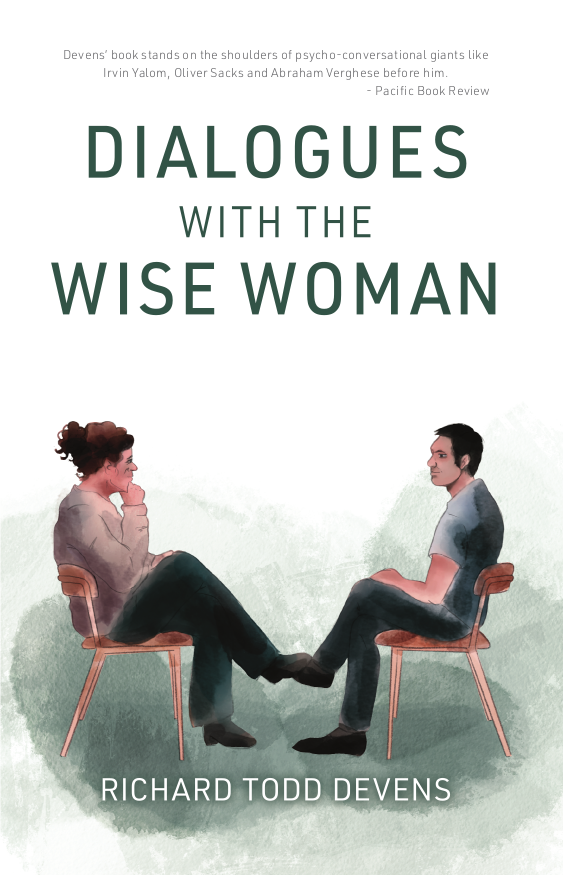
Dialogues with the Wise Woman, by Richard Todd Devens, is an enlightening exploration of human psychology and the quest for meaning. Devens weaves a captivating narrative through engaging dialogues and profound insights, guiding readers on a thought-provoking journey alongside the troubled character, George Sistern.
George, a middle-aged man, is trapped in a world of romantic solitude. George’s unique proposition to potential partners sets the stage for an intriguing encounter with the strange Poker Queen. Per the terms of their agreement, the Poker Queen wins him some money and eventually cons him out of $500. This loss triggers a downward spiral, forcing George to confront his intelligence, self-awareness, self-worth, and other existential questions.
In his pursuit of healing, George seeks solace in the company of psychotherapist, Mildred Markowitz. Their dialogues touch on issues of self-esteem, violent crime, and the philosophy of self-improvement, offering readers a profound reflection on their own lives and choices.
What stands out in this book is Devens’ ability to weave a story around the myriad of issues raised. Devens’ narrative brims with wisdom, inviting readers to explore the complexities of life, morals, and ethics. Although I feel the book lacks a clear central theme as the characters seek to practically address the big questions of life bordering on morals and ethics, its unique storytelling style infuses the journey with a distinctive flavor. At first glance, the transition from conversations on loss and self-chastisement to a full-blown debate on violent crime may seem smooth, but I believe it may distract readers somewhat from the troubles of the central character.
Dialogues with the Wise Woman delivers refreshing and insightful perspectives that resonate with a variety of readers. For those who might find philosophy and therapy daunting, this book illuminates pathways toward inner conviction and liberation. Richard Todd Devens has crafted a compelling narrative that encourages introspection and self-discovery, making it a valuable addition to the genre of psychological and philosophical literature.
Pages: 238 | ISBN: 1662933215
A Contrary Voice Of Reason
Meditations for Modern Man provides wisdom on morality, ethics, and everyday life. Why was this an important book for you to write?
I wrote this book at my son’s request. My book is a contrary voice of reason to an increasingly emotional and reactionary leftist society in America. For two decades I have been a parent, led Boy Scouts, and supervised military members. I have lived in several countries in Europe and Asia. I witnessed a severe decline in American critical thinking, rational thought, and historical facts. Contrary opinions to leftist (mostly Marxist and anti-Capitalist) dogma are literally being prosecuted as violating newly implemented company policy or worse prosecuted as a criminal without justifying the policy/law with facts, scientific studies, or logical argument. This is extremely dangerous and anathema to a free society.
What is one piece of advice someone gave you that changed your life?
An old adage military leaders once professed was “I Disapprove of What You Say, But I Will Defend to the Death Your Right to Say It”. This maxim is no longer in vogue and is not a tenant of current Academia ideology. Contrary opinion is silenced and individuals espousing it are censored or de-platformed. “Right is right even if no one is doing it; wrong is wrong even if everyone is doing it,” attributed to St Augustine of Hippo.
There are a variety of quotes I found valuable like, “When Logic fails, Emotion reigns.” What quote in the book do you find you most often refer to?
The quote I most often refer to is “An emotional mind is blind to reason, quick to anger, and intolerant of contrary thoughts.” This is the crux of the problem. Emotional people who cannot or will not think logically are easily manipulated. Rational people, on the other hand, question beliefs and behaviors while demanding those who profess them to logically justify them. Challenged emotional people quickly turn to anger.
What do you hope is one thing readers take away from your book?
Everyone must be able to challenge what they’ve been told, justify what they think, and logically defend what they believe. As Socrates wrote: “The unexamined life is not worth living”. Most critics of my book assume it is a “conservative viewpoint”. It is not. It is an unemotional logical viewpoint of traditional American values and principles. I hope people who were never exposed to contrary viewpoints are open-minded enough to entertain a rational belief.
Author Links: GoodReads | Twitter | Website
… this is the book you wish your parents gave you.
Have you ever questioned what you believe to be true?
Many unasked questions are answered from nine topics: Leadership, Morality, Logic, Facts, Liberty, Criticism, Character, Education, and Politics.
Do you regret not asking a parent, grandparent, or mentor about certain life lessons?
Get this book now for the answers.
TRIGGER WARNING
This book contains unapologetic content that could be emotionally and intellectually challenging to the reader.
If you are easily triggered, this book provides the opportunity to contemplate your strongly held beliefs and question your cultural conditioning.
An open mind is a free mind. Recent studies published in Clinical Psychological Science “suggest a trigger warning is neither meaningfully helpful nor harmful.”
A must-read for parents and children alike. Meditate on maxims developed by a loyal follower, moral leader, and compassionate parent.
Get it now.
LEGAL DISCLAIMER: The views presented are those of the author and do not necessarily represent the views of the Department of Defense or its components.


