Blog Archives
Conspiracy by Means of Natural Selection


Conspiracy by Means of Natural, Selection by Sherman P. Bastarache, explores the intricate relationship between faith, reason, human nature, and societal constructs. The author decodes the psychological and evolutionary origins of belief systems, language, and cultural narratives. Using a mix of historical, anthropological, and scientific perspectives, the book delves into humanity’s journey from primal instincts to complex ideologies, ultimately examining how belief and reasoning have shaped human progress and conflict.
One aspect I found intriguing was the book’s deep dive into language as a tool of human cognition and social structure. Bastarache’s claim that language is deeply rooted in primal senses and shaped by evolutionary necessities was fascinating. For instance, the exploration of the etymology of “V” and its symbolic ties to creation myths was unexpected and cleverly analyzed. At times, the explanations felt a bit elaborate which occasionally made it challenging to follow the central ideas as clearly as I would have liked.
The book shines when discussing the perpetual tug-of-war between faith and reason. Bastarache argues that these two forces are not inherently opposing but are evolutionary adaptations meant to coexist. The use of religious and mythological anecdotes, such as the reinterpretation of the Genesis story, brings a fresh and creative perspective. At times, though, I think the arguments felt more exploratory than conclusive.
I appreciated Bastarache’s exploration of “belief-reasoning” as a natural evolutionary mechanism. The idea that humans evolved to rely on “held-as-true” concepts for survival resonates, especially when tied to modern phenomena like conspiracy theories. Some sections, like the extended focus on primal consciousness and nervous system entanglements, felt lengthy and occasionally wandered from the main narrative, but I appreciate the depth they added.
Conspiracy by Means of Natural Selection is an intellectual yet accessible read for those fascinated by human evolution, cognitive science, and philosophy. Its unique lens on faith, reason, and their intersection with societal myths makes it particularly suited for readers who enjoy critical thinking and interdisciplinary analysis. Its blend of speculation and scholarly insight makes it a stimulating addition to conversations about human nature and belief systems.
Pages: 334 | ISBN : 978-0992159436

Purpose: What Evolution and Human Nature Imply about the Meaning of Our Existence
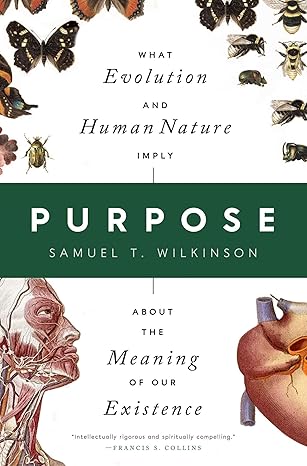
Samuel T. Wilkinson’s Purpose boldly tackles one of life’s grandest questions: Why are we here? Drawing from evolutionary biology, psychology, and theology, Wilkinson builds an argument that evolution, far from being purely random, reveals a higher purpose guided by natural principles. He links humanity’s dual nature—selfishness versus altruism—to the evolutionary forces that shape us. Through this framework, Wilkinson examines profound questions about morality, happiness, and the societal structures that foster human flourishing.
What stood out most to me was Wilkinson’s ability to bridge science and faith. He does so in a way that feels inclusive, not preachy. For instance, his discussion of convergent evolution—the independent development of similar traits in unrelated species—challenges the randomness of evolution. When he points out how dolphins and sharks evolved streamlined forms independently, it’s hard not to feel awe. Wilkinson makes a strong case that these repeated patterns hint at a purpose embedded in nature itself. This was eye-opening and left me rethinking my own assumptions about evolution.
The writing itself is thoughtful and engaging. I appreciated how Wilkinson wove personal anecdotes, like his own struggles with reconciling faith and science, into broader arguments. These moments made the text relatable. His tone remains accessible even when discussing complex topics, such as the psychological effects of incivility or the health benefits of prosocial behaviors. The chapter on family relationships as the foundation of societal well-being struck a particularly emotional chord for me. Wilkinson’s argument that family ties strengthen our altruistic tendencies felt deeply resonant and hopeful.
At times, the pacing felt uneven, particularly in the middle chapters. I believe that some sections, such as the technical discussion of embryonic development as an analogy for evolution, seemed a bit too detailed for a general audience. Still, these moments are outweighed by the clarity of his broader message.
I’d highly recommend Purpose to anyone curious about the intersection of science and spirituality. It’s a thought-provoking read for believers grappling with evolution, skeptics seeking a deeper understanding of faith, or anyone interested in exploring what it means to live a meaningful life. Wilkinson’s synthesis of research and reflection offers a fresh perspective that inspires both introspection and action. This is a book that challenges, uplifts, and ultimately leaves you hopeful about the human journey.
Pages: 321 | ASIN : B0BTZX7D3R
The Predatory Development of Humanity

Natural Insurrection takes readers on a journey through the evolutionary history of humanity and its impact on our modern existence, exploring the predatory nature and cognitive growth of human evolution. Why was this an important book for you to write?
I started putting my ideas on human evolution together some 30 years ago. I had no doubt that I was onto something, and just had to put it in writing.
How much research did you undertake for this book and how much time did it take to put it all together?
Research took up most of the work. I started out in 2002, writing/researching full time for a year, until other obligations had me re-enter the business world. It was not until 2018 that I again found the time to continue. In all, I would estimate that the book took 5 years to complete.
What were some ideas that were important for you to share in this book?
In the book I challenge conventional thinking on human evolution. This is an entirely new approach to the debate, focusing on the predatory development of humanity.
What is one thing that people point out after reading your book that surprises you?
What surprises me is that the average reader, unaccustomed to nonfiction, enjoys the read.
The manuscript Natural Insurrection: The Predatory Legacy of Man lay untouched in a dusty cabinet for more than a decade. Written on location, overlooking the hills and valleys of the Cradle of Mankind, this investigation into Man’s predatory evolution was eventually reworked and made available for publication.
Predatory delinquency, the phenomenon of preying on one’s ‘own kind’ laid the foundation for Man’s predatory transition.
Cannibalism was not merely an occurrence in human evolution; it was once a practice that extended over hundreds of thousands of years.
Man’s bipedal stance, manual dexterity and mental prowess reflect the adaptations of a carnivorous anthropoid.
This is a well-researched and revolutionary approach to the development of humankind. Like many other creatures, Mankind has undergone the transformation from herbivore to fully fledged predator. Hunting tree-dwelling primates most likely initiated the process, but it is against fellow bipeds that Man sharpened his wits. The butchered remains of Homo, spanning a million years, bear testimony to this.
Natural Insurrection: the Predatory Legacy of Man

Natural Insurrection by Wilfred Nieman takes readers on a journey through the evolutionary history of humanity and its impact on our modern existence. The book examines our development from early hominids to the dominant species we are today, focusing on the consequences of our predatory nature and cognitive growth. Nieman prompts readers to reflect on the less savory aspects of human evolution, highlighting how our instincts and intelligence have often driven us to disrupt the natural world in significant ways. His work combines historical, anthropological, and philosophical perspectives to offer a thorough and critical look at what defines humanity.
Nieman’s writing style strikes a balance between scholarly detail and an approachable tone. He effectively presents complex ideas in a way that is both understandable and thought-provoking. A notable example is his exploration of bipedalism and brain development, which he presents in a way that is engaging without oversimplifying the subject matter. Nieman is not afraid to question conventional thinking, particularly when discussing the possibility that humans may have deviated from the natural course of evolution, becoming a species that challenges the very order of nature itself. This bold perspective is likely to inspire thoughtful discussion among readers.
While the book’s expansive coverage is commendable, it sometimes results in sections that feel dense, potentially overwhelming readers who are not familiar with evolutionary biology or anthropology. The author’s thorough approach is evident as he tackles topics ranging from the origins of life to the complexities of human social dynamics, which can occasionally slow the pace for those less versed in these subjects.
Nonetheless, Natural Insurrection remains a thought-provoking read that invites readers to reconsider humanity’s role in the world. Nieman’s skill in blending scientific analysis with philosophical insight makes the book both intellectually stimulating and a source of deeper existential reflection. His assertion that human advancements in cognition and technology have not only separated us from other species but also placed us in conflict with the natural world serves as a poignant reminder of the weighty responsibilities that come with our unique position on this planet.
This book is highly recommended for anyone with an interest in anthropology, evolutionary biology, or the philosophical aspects of human evolution. It’s especially suited for those who enjoy challenging their own beliefs and delving into complex discussions about the past, present, and future of our species.
Pages: 249 | ASIN : B0D3CJNMC9
Making Neuroscience Engaging & Intuitive

Baby Senses: A Sensory Neuroscience Primer for All Ages shares with readers the world of nervous systems and how they have developed into the senses we have. Why was this an important book for you to write?
Thank you for this great question! I’ve always been passionate about making science engaging, relatable, and accessible to the interested lay audience. As an artist, I’ve also found the actual forms in biology incredibly complex and beautiful. As a tutor with Reading Partners, I wanted to share my love of neuroscience, art, and reading with the kids I was tutoring, but a search of the existing neuroscience books for children left me disappointed in the lack of truly engaging neuroscience content for beginning/emerging readers. And there a germ of an idea was born – to illustrate and write a children’s neuroscience book with accurate visual representations of sensory systems. I wanted my book to also impart fundamental principles of the scientific endeavor, for example, to convey that knowledge is built over time, with many researchers from diverse backgrounds working together (or apart) to gather facts in small steps. Related to this was my desire for Baby Senses to be a stand-alone educational resource for classrooms and families laid out in a scientific format. I think than an early introduction to how diversity in nature makes all animals special is important to encourage an appreciation of our ecosystem and why its delicate balance needs to be conserved. This was coupled with the intent to spread the subtle message that what makes us different is often our strength and neurodiversity is to be celebrated.
How much research did you undertake for this book, and how much time did it take to put it all together?
As an auditory and visual neuroscientist, I was already very familiar with several sensory systems before I decided to write Baby Senses. Some of the facts included in the glossary are in fact inspired by my doctoral dissertation. There were some systems I was less familiar with before writing my book, and for these I read several research articles and textbooks to gain a deeper understanding of each of these systems. I then condensed them down into narratives and ‘fun facts’ to highlight, as well as how contemporary research into these areas relate back to the lay audiences’ daily lived experiences.
The idea of writing Baby Senses really crystallized for me during the COVID-19 global pandemic. I’d been working on creating a series of neuroart paintings since 2018. The realization that I’d created a series of paintings that tied together into a narrative about the beauty and complexity of the many ways in which brains have evolved to do extraordinary things, coupled with the realization that there are not many neuroscience books available to early readers, really motivated me to sit down and start working on this project. I took about 8 months to finish my first draft of the book including the expanded glossary, the rhyming dialogues, and all the illustrations. I then spent several months researching publishing options and timelines, choosing my publisher, revising my book, and working on the cover images. Overall, it took a year and 5 months for my book to be published from when I started working on it.
What were some goals you set for yourself as a writer in this book?
In my experience, children are easily inspired or discouraged from pursuing further learning in topics based on demographics and gender, as well as how scientific topics are taught. An important goal for me was to make neuroscience engaging and intuitive so that children are inspired to pursue it, regardless of gender or demographics. When I take a step back to look at the bigger picture, the challenges facing neuroscientific endeavors are complex and large. To solve them requires team-science efforts, new ideas, collaboration within and across diverse teams, and an open-science, data sharing approach. All of these require that people from diverse backgrounds are drawn to and remain in research careers, and in the long-run, I hope that Baby Senses will contribute to that goal.
Another major goal for me in writing Baby Senses was to use multi-modal ways to engage diverse minds (neurotypical and neuroatypical), and of all ages. I wanted to maintain the balance between writing an engaging and relatable narrative while not shying away from scientific terminology. To do so, I used subtle cues like the parent-child bond as the context of these question-and-answer conversations to make the content relatable. More scientific choices like including the full references list were also deliberate. A related goal for me was to dispel scientific misconceptions, such as the all-pervasive idea that humans only have ‘5 senses’ and that having a ‘6th sense’ was somehow an anomaly. As humans, we have more than 5 ways to sense our internal and external environments, with research still ongoing to better characterize all the ways in which we sense our environment; for instance, how our gut microbial environment influences our brains through the gut-brain axis is an active area of research.
What is the next book that you are writing, and when will that be published?
I would certainly like to write more – I’ve a couple of ideas I’m playing around with right now. As a first-time indie author, I’ve learned a lot about the publishing process and am still learning so much with Baby Senses, so I am not ready to completely move onto the next project yet. I also have ideas about further expanding the reach of Baby Senses by for example, turning it into a sing along project. A lack of ideas has never been an issue for me so stay tuned for updates on my website https://babysensesbook.com/, where you can also sign up to receive my newsletter with events and updates or follow me on social media platforms!
Author Links: GoodReads | Twitter | Facebook | Instagram | Website
Baby Senses: A Sensory Neuroscience Primer for All Ages
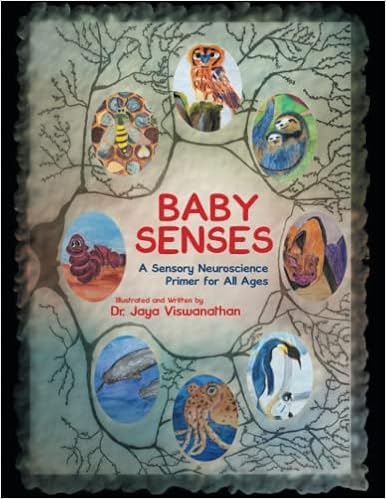

Baby Senses: A Sensory Neuroscience Primer for All Ages is an illuminating book by the creative mind of Dr. Jaya Viswanathan, an author whose passion for unraveling the intricate workings of the human brain was ignited at the remarkably young age of 14. Throughout history, the enigmatic complexities of the human brain and those exhibited by our fellow creatures have been the subjects of ceaseless fascination. Thanks to remarkable strides in scientific understanding, we stand on the precipice of delving ever deeper into the labyrinthine mechanisms governing the nervous system and the human brain itself.
In the pages of Baby Senses, a mesmerizing tapestry of creatures, from serpents to lemurs, penguins to worms, are unveiled to illuminate the 16 systems emerging from the bedrock of our five fundamental human senses: vision, hearing, touch, taste, and smell. This extraordinary odyssey unfolds through the lens of young animals inquisitively engaging their elder counterparts, who bear exceptional attributes such as night vision and reaping enlightening revelations in return.
One facet that conspicuously distinguishes this work is the inclusion of an all-encompassing glossary nestled at its conclusion. Personal encounters with sensory organ descriptors had left me grappling with their essence and role. The addition of this invaluable glossary not only demystifies these terminologies but also bestows an enriched grasp of their functionalities. The vivid and visually compelling graphics interwoven within the narrative further elevate the reading experience.
Baby Senses by Dr. Jaya Viswanathan is a wellspring of education. Beyond inspiring wonder and curiosity, this book stands as a repository of indispensable educational wisdom.
Pages: 74 | ASIN : B0C36NXZJ2
Some Mistakes of Darwin and a Programmer’s Theory of Life
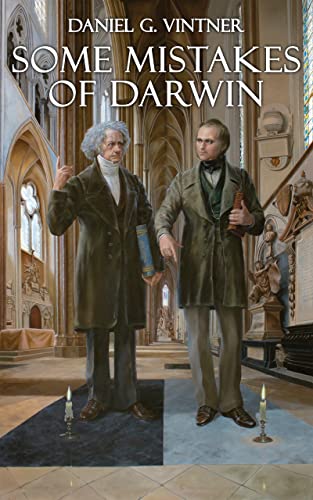
Evolution theories have always sparked unending debates. Human beings have different beliefs about how life was created and how we have developed. In Some Mistakes of Darwin and a Programmer’s Theory of Life, author Daniel G. Vintner compares old and new evolution theories, alternative theories, and everything in between. Daniel G. Vintner starts by discussing Darwin and his original theory of evolution. As you keep reading, the author gets to more complex topics like how accurate the theory is and how Darwin came to his conclusions. The concepts may appear a bit puzzling for starters, but one soon catches up thanks to the author’s brilliant way of breaking down his points.
Following the author as he expounds on the theory of evolution over the centuries, was exciting. I like that Vintner is detailed and diverse in his discussions. The author combs through more than a dozen theories and explains the hard stuff to the reader’s satisfaction. Daniel G. Vintner may be a bit radical, but I like the author’s attitude and firm stand on his philosophies and views.
Some Mistakes of Darwin and a Programmer’s Theory of Life is a great read, not just because of how thorough the author is but also because of how convincing he is. He quotes renowned icons and supports his findings with facts and research. Reading this book made me elated and increased my curiosity about evolution. After reading this book, you will question life and concentrate on the creation story and the origin of species.
This informative book may have been about Darwin and the theory of life, but at no point was it monotonous. Daniel G. Vintner knows how to blend the various sub-topics and how to introduce a new topic even while still discussing the main subject. I enjoyed his personal tales of being a programmer. Learning about the various historical figures and their theories was eye-opening and exciting. I learned more about evolution and got to understand why some problems of evolution not solved by Darwin still have no answers even with the modern advancement.
This book is not for the close-minded; some views by the author may seem extreme, but that only improves the reading experience. The author is an excellent narrator and an even better interpreter. His strength in convincing skeptics to subscribe to specific theories and beliefs is admirable. The technical terminology was easy to understand as the author gives a clear definition and extra description when introducing complex terms. Some topics that were most touched on were Genesis of Genetics, Mutating Randomness, and the Story of Creation. The author leaves readers with an understanding that nature is a bit more complex than we may think and that most things do not happen by chance.
Pages: 276 | ASIN : B0B29G9CY9
How Did It All Start?

As human beings, it is only natural to wonder where we came from and how we came about. It is only natural to wonder about the Earth and its history. Biku Ghosh has contributed to the conversation with an enlightening book that provides an exploration of the origin of the earth that the average person can understand. The author Biku Ghosh has done extensive research and provides a lot of great ideas to ponder.
This book reads like a campfire story session. It contains different origin stories from around the world, from Africa to Europe and Asia, and I found them all to be fascinating. It provides interesting insight into the beliefs of different communities. Although, a common element is a deity as the originator of the world. The Slavic creation story is especially funny in that it suggests that mountains came about as the devil coughed and fell over while trying to scamper away.
The author seems committed to presenting a well-rounded book. He begins the book with the scientific basis of the history of the planets. It also provides a historical account of the evolution of human beings. He ends the book with a catalog of interesting facts about Antarctica like the Blood Falls and diamonds floating in the air, for example. All of this is intellectually invigorating and provides plenty of food for thought.
Like all human beings, the author admits that no one really knows much about where everything came from and what was there before the Big Bang. His is a simplified account of what is known about the origin of planets and evolution. He strikes a delicate balance between scientific lingo and symbolism making the book more palatable.
How Did It All Start is not a menu of conspiracy theories, it is a museum of beliefs and scientific findings. It is a literary presentation of conversations we have all had in our heads. It is an excellent source for interesting tidbits to share with friends over wine under the stars.
Pages: 180 | ASIN: 183819178X



