Blog Archives
Mastering Emotions for Men


Jack Wolf’s Mastering Emotions for Men is a direct, honest, and refreshingly human guide to emotional intelligence designed specifically for men who feel stuck, overwhelmed, or just plain numb. Built around a framework called RESPONSE, the book walks you through reclaiming control over your emotions in a way that feels more like a conversation with a tough-love friend than a clinical self-help manual. Each chapter breaks down a different part of the emotional puzzle, from societal pressures to self-awareness, self-regulation, and even how to handle tough conversations without blowing up or shutting down.
What struck me most right away was the voice. Wolf doesn’t mince words. He opens with his own story, admitting he lived most of his life bouncing between “fine, discouraged, or angry.” That resonated with me. I’ve been there. The chapter “Righting the Societal Wrong” dives deep into the emotional straightjacket a lot of men are raised in. The anecdote about Doug—successful on paper, emotionally distant in real life—was painfully relatable. The part where he tries to reconnect with his family but doesn’t know how? Yeah. Been there. It’s not preachy, just real. And that’s what makes the message land.
I appreciated how Wolf balances personal stories with science without ever sounding like a textbook. The “Science Behind Emotions” chapter actually explains why we feel the way we do, not just what we should do about it. He breaks down how your brain predicts threats and how those emotional overreactions are often just misfires from a brain doing its best with bad information. I’ll be honest, this part blew my mind a little. It helped me stop shaming myself for snapping at small things—I understood the why, and that opened the door to changing the how.
But what really hooked me was how actionable the book is. This isn’t a bunch of feel-good fluff. Each chapter ends with reflection questions, “quick wins,” and micro-habits. Stuff you can actually do, like saying your emotions out loud or writing them in a journal. It sounds simple, maybe even cheesy, but I tried it, and I started noticing how often I feel frustrated without knowing why. That little shift in awareness helped me avoid snapping at my partner one night when I was tired and irritable. Small win? Maybe. But for me, that’s progress.
Overall, this book is a great fit for men who are tired of being ruled by emotions they don’t understand or can’t name. If you’ve ever felt like something’s off but didn’t know where to start—or if you’re tired of hearing “man up” as advice—this book might just be the permission slip and toolkit you need. I’d recommend it for any guy who wants to grow but doesn’t want to lose his edge doing it. You’ll come away stronger, not softer.
Pages: 231 | ASIN : B0DS992267

Rudeness Rehab: Reclaiming Civility in the Workplace and Your Home Space
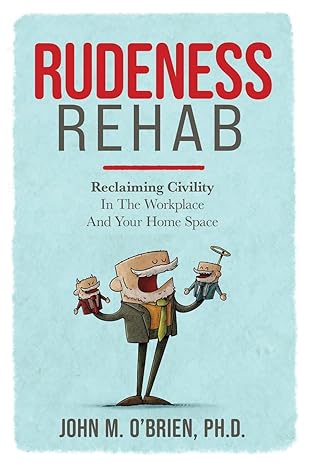
John O’Brien’s Rudeness REHAB dives into a pressing issue of modern life—the pervasive presence of incivility and its impact on personal and professional interactions. Through a compelling blend of personal anecdotes, psychological insights, and practical strategies, O’Brien offers readers a roadmap to understanding, addressing, and ultimately mitigating rude behaviors in themselves and others. His exploration strikes a chord, challenging assumptions while providing actionable tools to foster respectful communication.
O’Brien makes a clear distinction between overt acts like bullying and the subtler, often unconscious behaviors that define everyday rudeness. This subtlety allows readers to introspect and reconsider their own actions and reactions. Drawing on academic research, including the work of Christine Porath and Christine Pearson on workplace incivility, O’Brien builds a foundation of credibility without drowning readers in complex terminology.
One of the book’s most impactful aspects is its examination of the health consequences of incivility. Chronic stress stemming from rude interactions, O’Brien explains, can lead to significant physical and mental health issues, including high blood pressure, depression, and even addiction. By linking rudeness to such tangible effects, he underscores the importance of civility not just for interpersonal harmony but for individual well-being.
O’Brien’s storytelling brings the text to life. The book opens with a vivid and relatable account of an uncivil job interview, setting the stage for his exploration of the broader implications of rudeness. His conversational tone and knack for weaving humor into serious discussions make complex psychological concepts approachable and engaging. Whether recounting personal experiences or presenting strategies for improvement, O’Brien maintains an accessible and captivating narrative style. The author’s tone is both empathetic and empowering. He acknowledges the universality of incivility, offering reassurance to readers who have faced or exhibited such behavior. At the same time, he challenges them to take responsibility, encouraging proactive steps toward self-awareness and change. Strategies such as grounding techniques and reframing internal dialogue are explained with clarity, making them easy to implement.
O’Brien seamlessly transitions between personal stories, research-backed insights, and practical advice, guiding readers through scenarios ranging from tense family gatherings to the volatile realm of social media. O’Brien captures the essence of a society grappling with diminishing civility, offering readers tools to navigate and counteract this trend. His ability to contextualize rudeness within the broader framework of mental health and interpersonal dynamics makes this book an invaluable resource.
Whether you’re a professional seeking to improve workplace interactions, a parent teaching children the value of respect, or simply someone aiming to cultivate more meaningful relationships, Rudeness REHAB is an essential read. Through a masterful combination of reflection, research, and practical guidance, John O’Brien delivers a powerful call to action for fostering kindness and respect in an increasingly uncivil world.
Pages: 198 | ISBN : 978-1957651910

True Mental Illness

You’ll See is a raw and poignant memoir that delves into your experiences with narcissistic abuse, survival, and the arduous journey to understanding. What inspired you to share your story with others?
I began writing my book shortly after both of my parents died – within two months of one another. I was trying to make sense of all I had experienced with my father and, to a degree, my mother, and the only way I could do it was to pour everything onto paper…I guess, it was my way of trying to determine if I was really crazy, or if these things really happened to me. With every remembered vignette I described, I began to see a pattern that my therapist helped me understand was my father’s narcissistic personality disorder. I grew up thinking everything was my fault, that nothing I did would ever be good enough…it was an emotional torture chamber that still haunts me. I realized if this was my experience, surely, it was other people’s experience, too…and I decided that giving voice to one’s truth is one of the bravest things a person can do. I want to normalize discussions about narcissistic abuse, among other things, so those of us who were manipulated into believing false narratives can actually rehabilitate ourselves and recover…eventually.
I appreciated the candid nature with which you told your story. What was the hardest thing for you to write about?
Thank you…I decided if I was going to tell my story, I was going to tell ALL of it. As an adult with a grown child, I ached for “Little Suzanne”…the innocent, curious, sweet-natured child who only wanted to be Daddy’s girl and was rebuffed at every turn. The hardest part of writing this memoir was first, coming directly to terms with how my father put himself and his desires above his own family, and second, recounting the agonizing years of watching my mother succumb to Alzheimer’s disease while my father continued his dalliances.
What is a common misconception you feel people have about living with narcissistic abuse and getting away from it?
First, narcissistic abuse is just that: abuse, and it definitely leaves deep emotional scars that can affect every other relationship in the victim’s life. Second, the narcissist’s family becomes another tool for the narcissist to display their superiority to the outside world…our job is to make the narcissist look good, no matter what. That means you don’t air the family’s dirty laundry, as it were…and because the narcissist insists their way is the only way, you become conditioned to that…to protect the family image. To do anything else and you’d be labeled as “crazy” or “melodramatic.” I believe there’s a semblance of Stockholm Syndrome at work, too…you feel you must align yourself to your captors as a form of survival. Finally, it’s easy for people to say, “Establish some boundaries! Cut off the relationship!” and the like, but it’s not that easy because especially with a narcissistic parent, you’ve been conditioned your whole life to believe YOU have the problem, and YOU are at fault. It took a really long time (and years of therapy) for me to see that I never deserved any of the treatment I received and that I was dealing with someone with a true mental illness.
What do you hope is one thing readers take away from your story?
I think they key takeaway I tried to impart in my memoir is that narcissistic abuse is real AND it’s insidious…the narcissist will make you think YOU’RE the one with the problem and over time, you become scarred with feelings of inadequacy, worthlessness, and longing for a relationship you’ll never be able to fix. Being able to give voice to these feelings, telling your stories to someone you trust, is absolutely the first step to taking charge of your life and defining boundaries to protect yourself. Resilience comes at a high price because it means you had to suffer along the way, but it also means you survived it, and that’s what counts.
Author Links: GoodReads | X (Twitter) | Facebook | Website | Amazon
Learning that the threats came from within-that the threats were in the form of his personality disorder and addiction-came long after I had been damaged. Make no mistake-I never lacked for food, clothing, or shelter. We took family vacations. I received a wonderful education. I enjoyed numerous achievements, academically, professionally, and personally.
To an outsider, my life probably looked normal, even privileged.
The truth is the permanent scars resulting from narcissistic abuse are every bit as devastating and traumatic as those borne from physical and sexual abuse. Narcissistic abuse is insidious and challenging to survive. And the effects can outlive the abuser, almost in perpetuity. This is my story… possibly yours.
You’ll See: A Story of Narcissistic Abuse, Survival, and My Journey to Understand

You’ll See, by Suzanne Groves, is a raw and poignant memoir that delves into the author’s experiences with narcissistic abuse, survival, and the arduous journey to understanding. Centered around Groves’ tumultuous relationship with her narcissistic and addict father, the book intricately explores the psychological and emotional toll of growing up in an environment dominated by manipulation and emotional neglect. Through vivid storytelling and heartfelt reflections, Groves chronicles her path to healing and self-discovery, ultimately finding strength and resilience amidst her struggles.
One of the most striking aspects is Groves’ unflinching honesty. She doesn’t shy away from the painful realities of her past, instead laying them bare for the reader to see. This candid approach not only lends authenticity to her narrative but also fosters a deep connection with the reader. For instance, the chapter where she describes her father’s callous disregard for her mother’s wellbeing while she lay incapacitated is both heartbreaking and infuriating. Groves’ ability to convey the depth of her pain and confusion during these moments is profoundly moving.
Groves’ writing style is engaging and accessible, making the book hard to put down despite its heavy subject matter. She balances the recounting of traumatic events with moments of introspection and even humor, providing a well-rounded narrative that feels both genuine and relatable. Her reflection on her mother’s tough love approach, especially in the scene where she is nearly sent away as a child, showcases her ability to understand and convey complex emotional dynamics. This nuanced perspective adds depth to her storytelling, making it clear that she has spent a considerable amount of time processing and understanding her experiences. The epilogue, where Groves gets a tattoo in honor of her mother’s loving words, offers a glimpse of this resolution.
You’ll See is a powerful memoir that will resonate deeply with anyone who has experienced narcissistic abuse or emotional trauma. Suzanne Groves’ raw and honest storytelling not only sheds light on the painful realities of living with a narcissistic parent but also highlights the incredible resilience of the human spirit. This book is particularly suited for readers who appreciate candid memoirs and those seeking solace and understanding from similar experiences. Groves’ journey is a testament to the strength required to confront one’s past and the possibility of finding hope and healing on the other side.
Pages: 373 | ASIN : B0CSDZBTK5
Peace on the Other Side
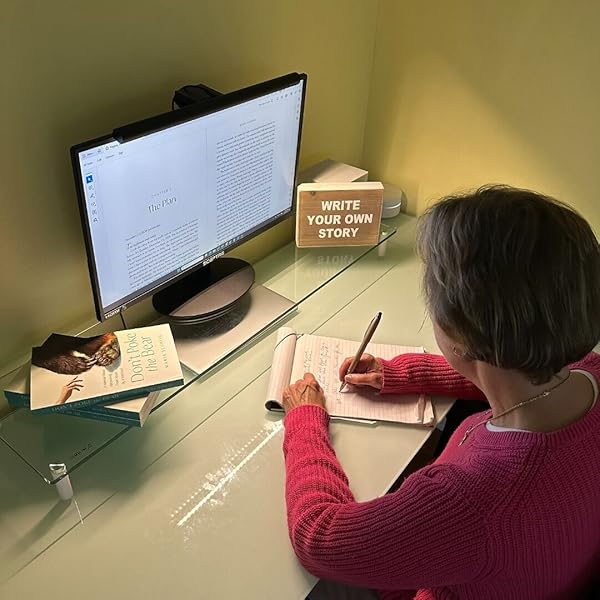
Don’t Poke the Bear: A Memoir About Recovering From Abuse By a Narcissist shares with readers your story of surviving an emotionally abusive marriage and how you eventually broke away and started healing. Why was it important for you to share your story?
For virtually my entire marriage, I lived in a state of bewilderment, not understanding how or why my husband was so easily provoked into a rage. I assumed he had a bad temper. It never occurred to me that he was abusive, and my eyes were only opened to that by a trusted advisor. After the breakup, I did a lot of research to better understand exactly what I had been dealing with. It was through that research that I learned that there were countless others experiencing similar circumstances. Many had situations that were worse than mine: they had little or no money, no support system, or the abuse included physical abuse. Many shared similar feelings of anxiety-filled confusion in dealing with their mates and the need to constantly walk on eggshells. I felt it was important to share my story for those who are still in these relationships, even though their guts constantly cry out that something is amiss. I hope that they can see that they are not flawed, but rather, the relationship and the other person in it is. I hope that once they see this, my book will give them the courage to get out and offer them hope for a better future. I hope my book will show them that there is peace and a good life waiting for them when they get out. For those who have escaped, I hope my book can offer them comfort, showing them that they are not alone, and that it was not their failing that caused the abuse. I also hope, that they too can be encouraged that they made the right decision and that life will be better for them in the future.
What were some ideas that were important for you to share in this book?
I think it is important that we each learn to love ourselves. Self-love is the beginning of healing. We have to forgive ourselves for getting into the relationship and perhaps staying longer than we should have. Everyone is dealing with difficulties, some harder than others, but we should never feel we are alone in what we are experiencing. Things are never as they seem to an outsider. No one has a picture-perfect life. A support system is vital to escaping. I was fortunate to have a great family and friends and my faith. For those who are isolated from family and friends, they need to actively seek out support whether at a faith-based organization or a shelter. There is peace on the other side, and it’s worth the pain to get there! Have courage!
What is one piece of advice you wish someone had given you when you were younger?
Never feel shame about sharing your story.
What is one thing you hope readers take away from your story?
I hope my readers see that they are beautiful and loved, that they deserve better than what they experienced with an abuser, and that if they are brave, they can find a way out and a happy future.
Author Links: GoodReads | Facebook | Website | Amazon
Maria’s gripping declaration, “This nightmare ends today,” sets the stage for a tale of love gone awry and the enduring strength it takes to break free. At 29, Maria believed she had found her soul mate, but the blissful façade quickly crumbled, revealing a narcissistic husband who unleashed an onslaught of emotional abuse. For an astonishing twenty-eight years, she weathered the storm of mistreatment, trapped in a cycle of manipulation and gaslighting by her narcissistic spouse.
Don’t Poke the Bear delves into the challenges of raising three children in an environment fraught with uncertainty, where the next rage could erupt at any moment. Maria candidly shares her coping mechanisms, shedding light on the perpetual bewilderment she faced until recognizing the narcissistic pattern. From the initial love-bombing to the heart-wrenching ultimate discard, Maria chronicles her journey through the exhilaration of early romance, the dark years of abuse, and the protracted, bitterly contentious divorce.
This memoir is a testament to Maria’s unwavering resilience, fueled by the support of her family and her unwavering faith. Don’t Poke the Bear is not just Maria’s story; it echoes the experiences of countless other victims, standing as a beacon of courage during life’s darkest hours. It is a powerful reminder that breaking free from the chains of abuse requires extraordinary strength and resilience.
Join Maria on a transformative odyssey, where love, courage, and empowerment triumph over adversity. Don’t Poke the Bear is not just a book; it’s an invitation to fall in love with a story of triumph and hope. Get your copy today and be inspired to conquer your own challenges with newfound strength and resilience.
Don’t Poke the Bear: A Memoir About Recovering From Abuse By A Narcissist
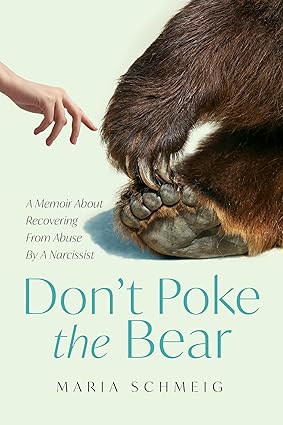
Maria Schmeig’s Don’t Poke the Bear: A Memoir About Recovering From Abuse By a Narcissist is a poignant and unflinchingly honest account of her 28-year struggle within an emotionally abusive marriage. At 29, Maria believed she had found her soulmate, only to discover that her partner was not the person she thought he was. Her narrative vividly details the challenges of navigating a dangerous relationship while raising three children, offering a close look at her coping mechanisms and the journey to recognizing the abusive patterns of her narcissistic husband.
From the opening line, “This nightmare ends today,” Schmeig sets a tone of empowerment and resilience. She not only shares her story but also imparts a critical lesson on the importance of community support in overcoming such trials. Her writing invites readers into her world, allowing them to connect deeply with her experiences. I found myself empathizing with Maria’s pain and admiring her courage. Her unapologetic honesty creates a bond with the audience, making her journey feel both personal and universal. The memoir stands out for its heartfelt sincerity and vivid descriptions of life with a narcissist. Schmeig’s storytelling is engaging and rich in detail, capturing the complex dynamics of her experience. The book’s artistic style contributes to its immersive quality, though some readers might prefer a more straightforward approach.
Don’t Poke the BearDon’t Poke the Bear: A Memoir About Recovering From Abuse By a Narcissist is more than a memoir; it’s a testament to the human spirit’s resilience. It’s a valuable read for anyone interested in understanding the realities of living in an abusive relationship and the power of personal transformation. This book not only tells one woman’s story but also speaks to the broader themes of survival, support, and self-discovery.
Pages: 263 | ASIN : B0CNTWR44T
Healing Books For Women
This guide helps women identify their attachment wounds and help them reframe their thoughts to regain control over their relationships. What was the idea, or spark, that first set off the need to write Healing Your Attachment Wounds?
I’d not long self-published Women Going Sober when I experienced what I’d call a stark illumination of my wounded self. Researching Women Going Sober exposed me to Gabot Mate’s body of work, specifically his assertion that addictions originate in trauma and emotional loss. With this nugget of insight, I glimpsed how emotionally ill-formed I felt at my core. A harsh reality to own in my 60s! It dawned on me that I was showing up wounded in every relationship, be it with my partner, adult children, family, career choices, etc. This broken version of me was sabotaging any and all attempts to step fully into an authentic life I’d yearned for as a young girl. I wanted to understand what it meant to have attachment wounds, how I got them in the first place, and where the path to healing might take me. It was only a matter of months after publishing my first book that I launched into writing book #2 Healing Your Attachment Wounds.
What were some goals you set for yourself as a writer in this book?
The vision, when sitting down to write my healing books for women, bundled together as the Sisterhood series, was to blend the latest neuroscience research with an overlay of spiritual awakening, shared struggles and triumphs, peppered throughout with hope and sisterhood. I set out to create a relatable roadmap for personal transformation and healing that would guide my readers through issues emanating from attachment trauma.
In writing Healing Your Attachment Wounds, I imagined my readers would receive a comprehensive understanding of their attachment style and its effect on their interpersonal relationships.
I understood, as I embarked on this healing journey with my readers, I’d be taking courage to confront my own demons.
What is one thing that you hope readers take away from your book?
Healing implies emotional work. It requires us to put our suffering into perspective. To look for the gift wrapped up in the wounds we lay down. Letting go of our wounds, however, we got them in the first place, creates space for our story to be as magical as we can imagine. We commit to nothing less than a deeply loving opinion of ourselves.
Do you have future books planned for The Sisterhood Series? If so can you tell us what topics they will cover and when you expect them to be published?
Yes, I feel book #3 calling to be written. I took a road trip recently. It was a long, exhaustive 13-hour solo drive. Towards the end, I got a glimpse of the direction my next book in the Sisterhood series might take. I believe women, young and old, are on their own heroine’s journey to usher in personal transformation that will upshift us all. Using my own journey as the backdrop, as I did in books 1 and 2, might I create an impactful healing book that not only encourages transformative experiences but provides a roadmap to connect with and experience our heroic self?
Author Links: GoodReads | Twitter | Facebook | Website
Many women don’t have secure attachment styles, which impacts adult behavior. By identifying and addressing attachment scars, we can more authentically improve the way we develop positive relationships in life.
If you’re a woman struggling with codependent behavior, addiction, anxiety, intimacy, or other trauma, former attachment wounds are molding your current experiences. Negative attachments, obsessions, and lack of trust no longer need to dominate or destroy your connections with others.
It’s time to reframe your attachment styles once and for all so you can heal, create personal independence, and establish successful relationships.
With a thorough examination and understanding of attachment, you can learn to more genuinely bridge a healthy relationship between yourself and others.
We build strong and thriving interpersonal relationships by learning how to comprehend our past and mend any damage caused by negative attachments. In this second book of The Sisterhood Series, author Boadi Moore offers insightful, candid, and personal connections to help readers quickly and effectively realize their healing potential.
Inside Healing Your Attachment Wounds, you’ll discover:How attachment styles impact individuals far into adulthood
Ways to understand which attachment styles connect most to your life
Raw and relatable stories that highlight how women can learn to let go of negative attachments
Strategies to explore and resolve negative parental attachment
Methods to detach from childhood trauma
Techniques to identify and heal toxic attachments
Ideas for reframing personal boundaries and communication
Unique and constructive self-care routines to begin celebrating you!
Plus, you’ll receive ideas for sharing your story of attachment and healing.
Neuroscientists and doctors are making society more and more aware of the undeniable connection between the mind, spirit, and body—which are holistically integrated parts of our whole being. Doctors Gabor Maté, Amir Levine, and Bessel van der Kolk are but a few of the prominent names who advocate this integrative mind-body system.
While the past shapes our behaviors and interactions with others, attachment wounds don’t have to impede our ability to succeed in the present. True integration of our wounds gives us the power to embrace love and nurture the connections we hold dear.
Healing Your Attachment Wounds: A Guide to What’s Hidden in Your Attachment Style and Relationships

Delving into the intricate world of developmental theory, Boadi Moore’s Healing Your Attachment Wounds illuminates the significant influence of childhood attachment on adult relationships. Moore thoroughly unpacks how attachment styles, shaped during early development, permeate through every aspect of relational interaction, occasionally leading to trauma and misunderstanding.
In this sophisticated exploration, the second in the Sisterhood series, Moore seamlessly combines her personal narratives with comprehensive research. Her transparent and candid writing style elucidates complex theoretical frameworks, making the subject matter both accessible and enlightening. Serving as an empathetic guide, Moore adopts a holistic perspective on attachment disorders, offering tangible steps towards healing and self-improvement.
One of the standout sections of this insightful book is the chapter dedicated to the concept of ‘letting go’. Despite the common skepticism around this idea, Moore convincingly argues that there comes a point where blaming upbringing loses its merit. Letting go, she posits, creates the necessary mental space to facilitate healing—a vital gem among numerous others in this compelling read.
Healing Your Attachment Wounds not only presents a powerful discourse on attachment styles and their implications, but also fosters meaningful conversation around these often-overlooked aspects of relational dynamics. Moore successfully reframes the common narratives around ‘toxic partners’ by encouraging readers to understand the underlying causes of their behaviors, thus promoting empathy and compassion.
Designed for anyone grappling with challenges related to intimacy, trust, anxious attachment, and identity merging, this book can serve as a valuable starting point. While it does not replace professional therapy, it equips the reader with a comprehensive understanding of their attachment style and its effect on interpersonal relationships. It inspires readers to embark on the journey of self-discovery and self-improvement.
Boadi Moore’s creation is indeed a beacon of hope for individuals seeking healthier relationships, despite the lingering effects of negative childhood attachments. It emphasizes that the past, while significant, need not dictate the future adversely.
The compelling narrative, coupled with Moore’s authentic connection with the reader, makes Healing Your Attachment Wounds not only worthy of one’s time but also deserving of recommendation. It truly serves as an instrument of healing for readers from all walks of life.
Pages: 303 | ASIN : B0C8P968GQ


 LITERARY TITAN