Blog Archives
Nothing Left to Lose


Nothing Left to Lose, by Len Joy, is a literary family drama about Tawni Carter, a prominent anti-abortion activist whose public convictions collide painfully with her private life. After she tries to take legal control of her pregnant daughter, Charlotte, Tawni loses more than a court case. She loses trust, family, and the story she has told herself about who she is. The novel moves between 2018, the 1960s, and the early days of COVID, building a layered portrait of mothers, daughters, regret, survival, and the hard work of letting go.
I liked how willing Joy is to sit with complicated people. Tawni could have been written as a symbol, but she isn’t. She’s proud, sharp, manipulative, wounded, funny, selfish, and capable of real tenderness. That makes her frustrating in the way real people can be frustrating. I didn’t always like her. I was not always meant to. But I kept wanting to understand her, and that is where the book earns its emotional weight. The shifts into Clover’s past also give the novel a wider shape, moving it beyond one family crisis into a story about inheritance, not just money or blood, but belief, grief, stubbornness, and love passed from one generation to the next.
Joy’s writing is clean and direct, with dialogue that often carries the charge of a courtroom argument or a family fight at the worst possible moment. The book takes on big issues, abortion, faith, political identity, addiction, aging, illness, and the pandemic, but it works best when those ideas are pressed through intimate scenes. A hospital room. A phone call. A daughter at the door. Those moments feel authentic. I did sometimes feel the novel was juggling a lot, especially as it stretches across decades and social conflicts, but the emotional line stays clear. This is a book about a woman who has built a life around certainty and then has to survive the collapse of that certainty.
I would recommend Nothing Left to Lose to readers who enjoy character-driven literary fiction with the sweep of a family saga and the tension of contemporary social drama. It will especially appeal to readers who like morally messy protagonists, intergenerational stories, and novels that ask hard questions without pretending the answers are easy. It is not a light read, but it is a thoughtful one, and by the end, I felt the title land with force.
Pages: 217 | ASIN : B0GXLJRYWF

Inherited Death

Inherited Death, by Jeanne Rietzke, is a family-centered mystery novel with a strong Southern Gothic flavor, set largely in New Orleans. The story follows Melissa Fairmont after her mother’s death, which pulls her back into a messy family inheritance dispute involving her two sisters, an old family home, a beloved pub, suspicious money, and a mysterious painting tied to Bonnard, wartime France, jealousy, and possible murder. What begins as grief and sibling resentment slowly turns into an art mystery wrapped in secrets, curses, old wounds, and real danger.
The book is most engaging when it leans into Melissa’s voice. She’s blunt, wounded, funny, and often exhausted, which makes her feel human rather than polished. Her grief isn’t tidy. One minute she’s mourning her mother, the next she’s furious at her sisters, and then she’s craving beignets, wine, or a moment of peace with Ben. That felt honest to me. Family loss rarely arrives alone. It brings boxes, old insults, unpaid emotional debts, and the strange smell of childhood rooms you thought you had left behind. Rietzke captures that well. The New Orleans setting also gives the mystery texture without turning the city into wallpaper. The hotel, the pub, the Irish Channel, Mardi Gras memories, and the family’s history all feel tied to the story’s bones.
The author makes a big, entertaining choice by blending domestic family drama with art-world intrigue and hints of voodoo lore. That mix pulls readers into a world that feels authentic. I enjoyed the ambition of it. The painting isn’t just an object to appraise. It becomes a pressure point, exposing greed, jealousy, family mythology, and the lies people tell when money and pride are involved. The dialogue can be very direct, and some emotional turns arrive with a soap-opera punch, but there is also a lot of energy in that directness. The book knows what kind of story it is. It’s a lively mystery with family knives out, secrets in the walls, and a past that refuses to stay framed.
I would recommend Inherited Death to readers who enjoy inheritance mysteries, art-centered suspense, and family dramas with sharp edges. Fans of cozy-adjacent mysteries who like more bite, more wine, and more emotional baggage will probably have the best time with it. It is especially suited for readers who enjoy stories where the real mystery is not only who did what, but why a family has been hurting each other for so long.
Pages: 242 | ASIN : B0FCG2X757
The Corridor


The Corridor, by William Klenk, follows Richard, a solitary grandfather whose knowledge of the Blue Ridge mountains is rooted in decades of bodily attention, and Eli, his withdrawn teenage grandson, who arrives carrying family trouble and a school assignment. What begins as a quiet stay in the mountains becomes a shared effort to document a wildlife corridor threatened by a resort development. Richard brings memory, fieldcraft, and lived intimacy with the land; Eli brings maps, cameras, data, and a stubborn belief that proof can still matter. Together, they learn that seeing is not always enough: sometimes the world needs evidence before it will listen.
I was drawn most to the book’s restraint. Its emotional engine is not built from melodrama but from small exchanges: a repaired hinge, a shared trail, a laptop turned across a kitchen table, a handshake that changes weight by the end. Richard’s interior life feels especially strong because the prose lets his certainty erode slowly, like weather on stone. The book understands that aging is not only a loss; it can also be a late apprenticeship in humility. Eli, meanwhile, never becomes a convenient symbol of youth or technology. He’s wounded, practical, observant, and quietly brave in the unflashy way of someone deciding to care again.
The book’s central tension between presence and documentation was entertaining. Richard knows the land because he has inhabited it; Eli protects it because he can translate it into a language that institutions recognize. It doesn’t worship data or romanticize intuition. It lets both be partial, both necessary. The environmental stakes give the plot shape, but the deeper subject is intergenerational repair: the fragile corridor between people, not just animals, and the work required to keep it open.
Readers who like environmental fiction, coming-of-age fiction, family drama, and nature writing will really enjoy this novel. And readers who like quiet, character-driven stories about land, kinship, and moral attention will find a lot to reflect on. I would place The Corridor near the gentler, contemplative side of Barbara Kingsolver, especially in its belief that ecology and family systems echo one another. It’s a brief book, but it has a patient pulse and a clean moral weather.
Pages: 25
The Day We Forgot to Smile


The Day We Forgot to Smile by Anthony Owens is a linked collection of life-centered stories about childhood, family, grief, violence, love, endurance, and the small mercies that keep people from disappearing inside their pain. The book moves from Bushwick fire escapes, church shoes, radiators, bodegas, and bruised family rooms into adult stories of marriage, guilt, friendship, loss, and renewal. Its subtitle, “Stories from the Tender Corners of Life,” is apt: these pieces are interested less in spectacle than in the private weather of ordinary people trying to remain whole.
Owens writes with a strong sense of place; Bushwick isn’t merely a setting but a living instrument, rattling trains, hissing heat, sidewalk music, corner-store candy, and danger braided together until memory feels almost tactile. I found the early stories especially affecting because they understand childhood without making it soft. The boys on the fire escape are funny, watchful, hungry, frightened, and inventive all at once. That mixture gives the book its unique feel: sweetness is never allowed to stay simple, but bitterness is never allowed to have the final word.
My strongest reaction was to the way the book honors survival without polishing it into a slogan. Some stories are painful: domestic violence, grief, betrayal, loneliness, but the narration keeps searching for the human shape inside the wound. The prose leans into reflection. Owens has a gift for making humble objects feel charged with meaning: a radiator becomes a lullaby, a polished shoe becomes faith, a basil plant becomes grief learning to sit quietly in the room.
The target audience is readers of memoirs, literary short stories, inspirational fiction, family drama, coming-of-age, and resilience narratives, especially those drawn to books about ordinary people carrying extraordinary emotional burdens. Readers who appreciate the intimate, memory-soaked storytelling of James McBride or the hard-won tenderness of The Color Purple may find a similar moral warmth here, though Owens’s voice is more direct and testimonial. The Day We Forgot to Smile is a book about pain, yes, but more importantly, it’s about the stubborn human talent for finding a little light and naming it home.
Pages: 248 | ASIN : B0G4B4V9Z3
Whisper (Book One)

In Whisper (Book One), Britney grows up in a small cottage where her father’s rage rules the weather, and her mother’s only shield is a soft, urgent refrain, “Whisper.” Before Britney ever leaves home, she has a secret refuge in the woods, a hiding place where she keeps meeting the same sharp-eyed black-and-tan puppy, the first creature she feels at ease around. So when Ma finally pushes Britney onto the road with a parcel of food and one instruction, keep walking, the puppy feels like a thread she’s already been holding, tugging her toward the care of Grandma Ruby and her son Lucas, a village carpenter whose steadiness begins to re-teach Britney what safety even is.
What hit me first was the book’s emotional temperature: it starts cold, boots on floorboards, hunger, flinching, and then, page by page, it warms. I kept noticing how the author uses small domestic details (soup by the fire, a rocking chair, a gift left within reach) as proof-of-kindness rather than decoration. Britney’s limited early vocabulary isn’t a gimmick; it’s part of the story’s bruise-realism, and watching her language return as trust returns felt quietly triumphant, like seeing color seep back into a washed-out photograph.
My other big reaction was how central Whisper is, not as a magical fix, but as a vigilant, bodily presence: heartbeat, warmth, barking at the wrong person, standing guard when humans can’t. The dog becomes Britney’s external courage, the part of her that can snarl when she can’t. And when the past finally lumbers back into the village in a “pleasant” voice Britney recognizes anyway, the tension is the good kind, tight as twine, because the book refuses to pretend that fear evaporates just because years have passed.
Whisper is best for middle-grade readers who can handle heavy themes with a hopeful landing, especially kids drawn to middle-grade historical fiction, family drama, survival adventure, and animal companion stories. If your shelf has space for the tender grit of Kate DiCamillo, or the heart-healing dog-thread of Because of Winn-Dixie, this one belongs nearby. And when the book reaches its final turn toward chosen family and hard-won forgiveness, it earns it with work, not wishful thinking.
Pages: 75 | ASIN : B0D3LSF7MR
Servant
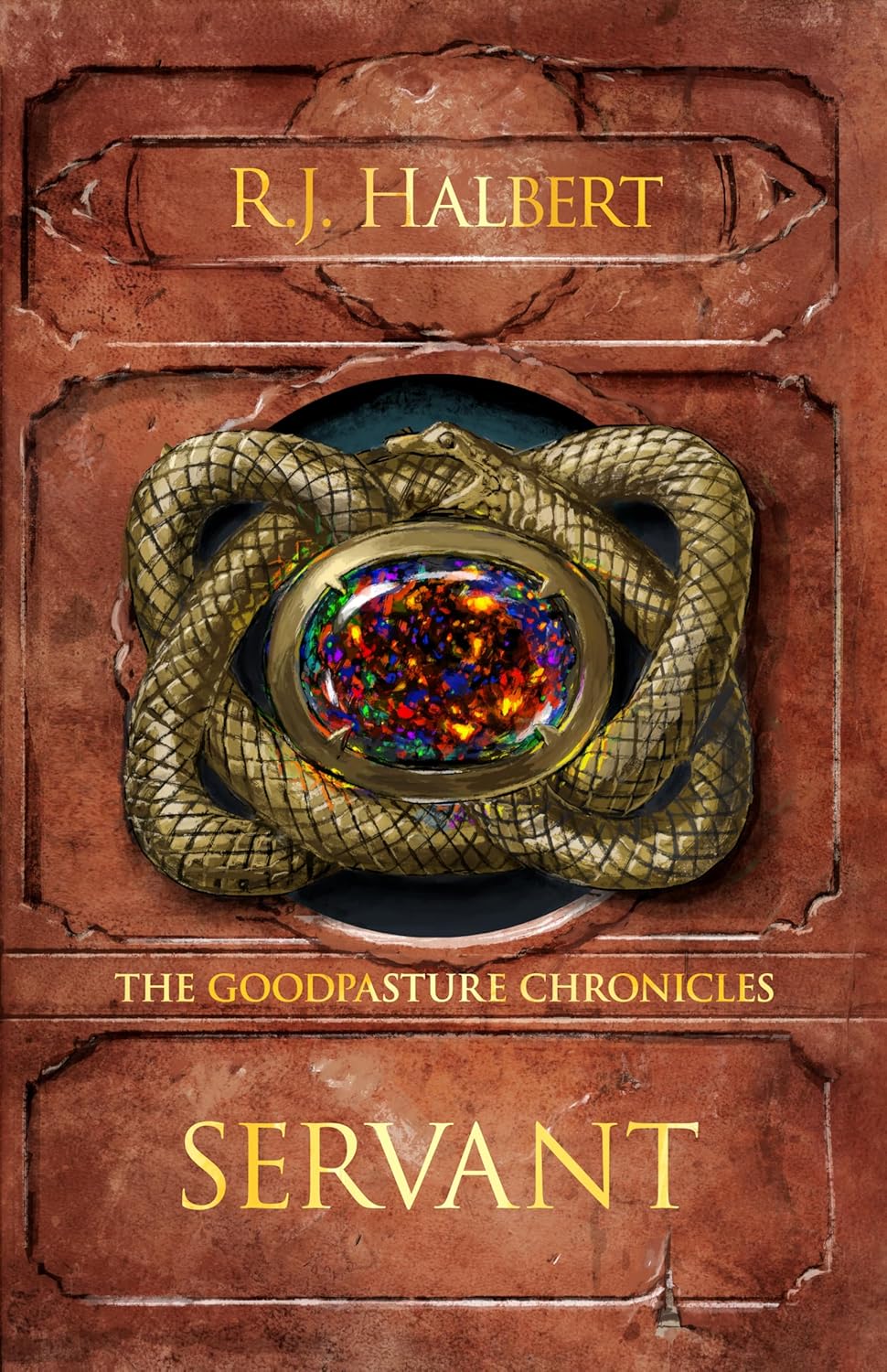
Servant is a supernatural fantasy novel that blends family drama, ancient mystery, and time-crossed storytelling. The book follows two threads that eventually begin to echo one another: Zach, a middle-school kid from the Keane family who vanishes from his house under eerie circumstances, and Akolo, a boy living centuries earlier whose life is marked by war, trauma, and the demands of kings. As Zach’s family searches for him in the present day, he finds himself wandering through stone hallways, oil-lit corridors, and a world that feels pulled straight from his dad’s archaeology stories. Meanwhile, Akolo faces his own captivity in a foreign palace controlled by a ruler who insists he will “need” him. Both boys are caught in places where power, fear, and destiny collide. By the time the book reaches its epilogue, the story has cracked wide open into something larger, hinting at deep magic, interwoven timelines, and a house that is far more alive than anyone wants to admit.
I found myself pulled in by the writing style. It’s simple on the surface but has this steady emotional current running underneath. The authors don’t rush. They let each moment breathe. Even the small scenes, a father making coffee, a daughter complaining about pizza for breakfast, or the house creaking in the early morning, carry a sense of “something is happening here,” even if you can’t name it yet. I liked that. It made me feel like I was sitting inside the Keanes’ home, overhearing bits of life while the bigger mystery brewed just out of sight. And then we cut to Akolo’s story, which feels raw and grounded and ancient. Those chapters landed hardest for me. His fear. His confusion. The way he clutches the jeweled stone in his pocket just to feel connected to something familiar.
I also appreciated the author’s choices around pacing and perspective. Switching between timelines can easily feel gimmicky, but here it feels purposeful. Zach’s modern confusion mirrors Akolo’s ancient disorientation, and that parallel makes the supernatural elements feel earned. I liked how the book doesn’t give its secrets away too quickly. We get hints, symbols carved into doors, fog in places fog shouldn’t be, Marshall knowing more than he says, but the authors trust the reader to sit in the unknown for a while. That kind of patience is rare, and honestly, refreshing. The emotional beats hit hardest because they’re framed by that tension: the Keane parents’ terror when Zach goes missing, Ariel’s mix of resentment and fear, Akolo’s grief for his family, Marshall’s haunted loyalty to forces he doesn’t entirely understand. All of it builds toward that late-book shake of the earth, where the house itself moves as though waking up.
Servant doesn’t wrap everything up, but it feels like a middle chapter that knows exactly what it is. I’d recommend this book to readers who love supernatural fantasy with a human heart, people who enjoy stories about families surviving strange things, or anyone who likes time-slip mysteries tied to ancient cultures. If you want something atmospheric, character-driven, and a little eerie without tipping into horror, this one will hit the spot.
Pages: 262 | ASIN : B0FQ5ZGH1R
Steampunk and Victorian Vibes

The Roses of Port Townsend follows a mother and her two sons as their fresh start in a seaport town turns into a ghostly adventure. What was the inspiration for the setup of your story?
I traveled with my two sons, Ian and Ryan, from Olympia, Washington, to Port Townsend when they were younger. We stayed at Manresa Castle over Easter and had a wonderful time. During our visit, we took several photos and captured images that featured orbs. In one photo, there was an orb above each of our heads, which was quite spooky. Manresa Castle is reportedly haunted and has been featured on the television show “Ghost Adventures.”
The Victorian architecture, combined with both Steampunk and Victorian vibes, makes Port Townsend a fascinating destination. The history of the town, as well as that of Fort Worden and Fort Flagler, is all intriguing and significant. As I was writing the novel, my husband and I lived on the coast, either on Camano Island or in Ferndale, Washington, overlooking the Salish Sea. We visited Port Townsend regularly, and during those visits, ideas for my novel began to develop. I would write between jobs or in the evenings after coming home from work. Once I was able to retire, I started writing regularly, and the ideas flowed freely.
How do you balance story development with shocking plot twists? Or can they be the same thing?
I tell a good story, and plot twists are a necessity. I have always hated knowing how a story would end, and about eighty percent of the time, I can guess at even a “trick” ending and get it right. However, plot twists need to make sense and must enhance the storyline. I found that plot twists added depth to my story and made it more engaging. Everything just fell into place. I also challenged myself to revive my imagination, which had been buried in dry government documents, statistics, program requirements, rules, laws, and administrative procedures. To be truly creative, you must find the child’s voice within and ask yourself what’s truly fun, scary, exciting, whimsical, or even absurd. That’s the voice I try to tap into. I do utilize some of my knowledge about government to create an image of “them bilge-rat government types,” as the untrusting pirate, Ben Pease, would likely say. Still, mostly I rely on my imagination, the history of the area, and the joy of finding and fighting monsters. We all have to defend ourselves against monsters at some point in our lives. These days, they are less likely to be vampires and more likely to be found in the hallowed halls of our political institutions.
Do you find you are able to relate to your characters while writing?
My characters have become very real to me; they feel like members of my family now, so I have a good understanding of what they will and won’t do. I can relate to every character in my novel because they remind me of my sons or because I’ve encountered similar characters in the past. Most of my characters are a blend of people I know, historical figures I’ve discovered through reading, characters from movies or books, and aspects of my own personality.
Can we look forward to more mysteries from you soon? What are you currently working on?
I want to share that the Gumshoes are preparing for another exciting adventure. I am starting to work on “The Portal Protectors,” the next book in the “Roses of Port Townsend” series. I hope to complete my first draft by the summer of 2026.
Author Links: Website | Reader’s Favorite
In the heart of the book, The Roses of Port Townsend, you will meet Mandy Rose, a resilient schoolteacher, whose husband is missing under mysterious circumstances. Forced to leave her home in Olympia due to her school’s closure, she ventures on a daring journey with sons Max and Oscar to Port Townsend, a quaint Victorian era seaport city. Despite warnings of its eerie aura and alleged hauntings from her brother, Leo, Mandy follows the path that fate has laid down for her. The Rose family’s strength is truly tested as they confront the chilling mysteries of this Victorian city.
Mandy, Max and Oscar, and their loyal dogs, Josie and Bone, delve into a world that transcends the realm of the ordinary. The city’s scenic tranquility belies the dangers that lurk within, as the family stumbles upon supernatural beings. The Rose family is welcomed by new friends in Port Townsend; Max and Oscar develop budding romances; family members come to the rescue; and together they all become amateur detectives in the most important missing persons case they will ever face.
Not all is as it seems in this city, where an unusual tomato garden holds lethal surprises, and a pirate’s secret could be the key to their survival. As Mandy and her family navigate through the labyrinth of Port Townsend, they uncover truths that could shatter their reality. What started as a quest for employment soon turns into a race against time as they struggle to find Mandy’s husband, and to discover the secrets of their new home, Victorian cottage, “Little Red.”
The Roses of Port Townsend is a thrill-ride of whimsy, suspense, mystery, and danger. The book weaves an enchanting tapestry of suspense, magical realism, and the strength of a mother’s love. As Mandy battles the unknown, the question remains-will the Rose family bloom again in Port Townsend, or will they wilt under its haunting spell? Dive into the pages of this riveting tale to find out!
The Roses of Port Townsend
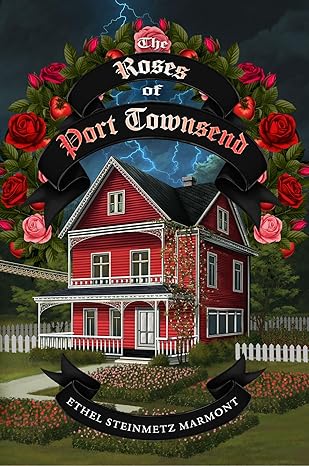
The Roses of Port Townsend is a genre-blending story set in the misty coastal town of Port Townsend, Washington, where mystery, fantasy, science fiction, and family drama intertwine. The novel follows Mandy Rose and her two sons, Max and Oscar, as they relocate to this Victorian seaport after the mysterious disappearance of Mandy’s husband, Rick. The family’s attempt at a fresh start quickly veers into strange territory, with ghostly figures, cryptic messages, unsettling townspeople, and supernatural occurrences. Many of them are tied to the town’s haunting history and a bizarre obsession with tomatoes. As secrets unravel, the Rose family must confront both literal and figurative monsters while clinging to love and hope.
Ethel Steinmetz Marmont writes with obvious affection for the Pacific Northwest, and her descriptive passages made me want to visit Port Townsend. The real heart of the story, though, is the relationship between the characters. I found Mandy’s weariness and perseverance achingly real. The banter between Max and Oscar made me laugh more than once, especially Oscar, who’s half spooky child, half comedy relief. That said, the book zigzags tonally. Sometimes it’s a whimsical ghost story, other times it’s a tech thriller or a family sitcom. It’s not a clean cut, and I loved the creativity.
The writing is imaginative and often charming. Marmont occasionally indulges in monologues or eccentric character introductions that make you pause and think. That unpredictability also gives the book its charm. I didn’t always know where the plot was headed, and I liked that. The character of Benny P., for example, feels like he walked out of a Halloween parade and straight into a ghost tour. Is he a ghost? A pirate? A time traveler? I’m still not totally sure, but I enjoyed every second he was on the page. And the tomatoes became such a strangely meaningful element of the story that I might actually never look at them the same again.
The Roses of Port Townsend was a delightful read. It’s best suited for readers who enjoy quirky tales that mix magical realism with heartfelt family drama. If you liked A Series of Unfortunate Events, Coraline, or Practical Magic, this might hit the sweet spot. It’s especially good for parents reading alongside tweens or teens. It has just enough spooky spice to intrigue younger readers while still offering emotional weight for adults. It’s a little weird, a little heartfelt, and very much its own thing. For me, that’s enough to recommend it.
Pages : 390 | ASIN : B0F277WYCR


