Blog Archives
Ex-Mas Song


Ex-Mas Song follows Justin R., a man who survives a suicide attempt during a snowstorm and wakes into a Christmas-haunted reckoning with his failures, his toxic attachment to Blair, his fractured family life, and his need for recovery. The novel moves through a psychiatric ward, painful memory, spiritual confrontation, and Dickensian visitations until Christmas becomes less a holiday than an autopsy of the heart, and, finally, a chance to choose life.
I found the book emotionally raw in a way that feels deliberately unpolished at the edges. Justin’s voice is funny, bitter, wounded, and frequently self-lacerating; he jokes because the alternative is to collapse. The Christmas references pile up almost like snowdrifts, songs, sweets, movies, scripture, old family rituals, and that abundance gives the novel its strange pulse. It can be messy, but the mess has intention. The story understands that despair is rarely neat, and recovery often begins in the least ceremonial places: an ER curtain, a locked ward, a stale room, a remembered plate of fudge.
I liked the way the book refuses to make healing sentimental. Blair isn’t simply a villain, Justin isn’t simply a victim, and the psychiatric ward is not merely a setting for misery. Everyone is carrying some private corrosion. The Christian framework is explicit and central, but the strongest moments are not sermons; they are moments of recognition, when Justin sees how much of his life has been governed by appetite, fear, resentment, and bad bargains. The prose can swing from comic riff to apocalyptic vision in a single breath, and while that tonal volatility may not suit every reader, it gives the book a feverish, singular energy.
This book is best for readers of Christian fiction, inspirational fiction, and contemporary spiritual drama, especially those who appreciate stories about suicide recovery, addiction, toxic relationships, forgiveness, and faith-based transformation. Readers who love A Christmas Carol will recognize the structure immediately, though this feels closer in grit and confession to a recovery-room answer to Dickens than a cozy retelling. Ex-Mas Song is a bruised Christmas carol for anyone who has mistaken survival for defeat.
Pages: 486 | ASIN : B0CNJKZJ3F

The Stonecaster


The Stonecaster, by Dillon W. Buck, is a modern parable about James, a sensitive boy who receives a mysterious stone that changes color according to the state of his heart. Through childhood wounds, college temptation, heartbreak, work, leadership, marriage, grief, faith, and entrepreneurship, James learns that life is shaped less by what happens to him than by the quality of his response. The stone becomes less a magical object than a mirror, teaching him that every choice sends ripples outward.
I appreciated how the book uses a simple allegorical device without letting it become merely decorative. The color-changing stone could have felt too tidy, but Buck gives it emotional utility: blue for peace, red for misalignment, gold for purpose. It becomes a private weather system, a way for James to notice what he is carrying before he releases it into the world. I was especially drawn to the early chapters, where James’s pain as a misunderstood child is rendered with enough tenderness to keep the lesson from feeling sermonized. The book is at its strongest when it lets discomfort sit on the page before translating it into wisdom.
What also stayed with me was the book’s insistence that growth is not a single luminous breakthrough, but a repeated return. James fails, forgets, chases the wrong things, confuses intensity with love, and mistakes validation for worth. That gave the story some necessary grain. I found the later sections more openly instructional, and at times the parable edges close to motivational speech, but its sincerity carries it through. The most affecting movement is James’s shift from striving for worth to living from it. That idea gives the book its spine, and it turns the final chapters into something calmer than triumph: a kind of earned stillness.
Readers who enjoy inspirational fiction, personal growth books, leadership parables, faith-based self-help, and coming-of-age stories will find The Stonecaster inviting and useful. It belongs beside books like Paulo Coelho’s The Alchemist or Andy Andrews’s work, though Buck’s focus is less on destiny as a far horizon and more on the daily discipline of response. This is a book for readers who want a story that behaves like a compass, gently but persistently turning them back toward intention. The Stonecaster reminds us that the life we build begins with the ripple we choose to send.
Pages: 119 | ASIN : B0H1N8BWDL
Almost Free


Almost Free follows Maggie, an enslaved young woman whose life on a Civil War-era plantation begins to change when Harland Langford, the master’s nephew, arrives from Pennsylvania with a quieter conscience than the house is used to. What starts as guarded kindness becomes a dangerous bond shaped by literacy, secrecy, the Underground Railroad, and the fragile possibility of choosing a life beyond survival. As war presses closer, Maggie must decide what freedom means when love, loyalty, memory, and danger all ask something different from her.
I was most moved by the way the novel treats freedom as something more complicated than escape. Maggie’s first acts of resistance are not grand speeches or cinematic revolts; they are smaller, almost tremulous things: lifting her eyes, learning the shape of her own name, deciding when to stay silent and when not to. That progression gives the story its emotional torque. The romance with Harland works best when it is tied to Maggie’s awakening rather than placed above it, because the novel understands that being loved is not the same as being free, though love can sometimes help a person recognize the door.
The writing has a plainspoken intimacy that suits Maggie’s voice, especially in scenes where domestic spaces become charged with threat: kitchens, porches, bedrooms, barns, and that ever-slamming screen door. I appreciated how the book lingers on touch, sound, and ritual, letting ordinary objects gather symbolic weight. At times, the emotions arrive directly, and some readers may want more restraint in the most dramatic exchanges. Still, the sincerity is hard to dismiss. The novel’s best moments have a pulse of hard-earned tenderness, especially when Maggie’s fear begins to loosen into choice.
This book will appeal to readers of historical fiction, Civil War fiction, romance, inspirational fiction, and stories of Black resilience and self-possession. Readers who admired Sue Monk Kidd’s The Invention of Wings may find a similar interest here in the inner life of an enslaved woman reaching toward literacy, dignity, and self-definition, though Marquette’s novel leans more openly into romance and deliverance. Almost Free is a heartfelt historical romance novel about the perilous work of becoming one’s own person. It reminds us that freedom is not only a place reached, but a self reclaimed.
Pages: 228
The Day We Forgot to Smile

The Day We Forgot to Smile by Anthony Owens is a linked collection of life-centered stories about childhood, family, grief, violence, love, endurance, and the small mercies that keep people from disappearing inside their pain. The book moves from Bushwick fire escapes, church shoes, radiators, bodegas, and bruised family rooms into adult stories of marriage, guilt, friendship, loss, and renewal. Its subtitle, “Stories from the Tender Corners of Life,” is apt: these pieces are interested less in spectacle than in the private weather of ordinary people trying to remain whole.
Owens writes with a strong sense of place; Bushwick isn’t merely a setting but a living instrument, rattling trains, hissing heat, sidewalk music, corner-store candy, and danger braided together until memory feels almost tactile. I found the early stories especially affecting because they understand childhood without making it soft. The boys on the fire escape are funny, watchful, hungry, frightened, and inventive all at once. That mixture gives the book its unique feel: sweetness is never allowed to stay simple, but bitterness is never allowed to have the final word.
My strongest reaction was to the way the book honors survival without polishing it into a slogan. Some stories are painful: domestic violence, grief, betrayal, loneliness, but the narration keeps searching for the human shape inside the wound. The prose leans into reflection. Owens has a gift for making humble objects feel charged with meaning: a radiator becomes a lullaby, a polished shoe becomes faith, a basil plant becomes grief learning to sit quietly in the room.
The target audience is readers of memoirs, literary short stories, inspirational fiction, family drama, coming-of-age, and resilience narratives, especially those drawn to books about ordinary people carrying extraordinary emotional burdens. Readers who appreciate the intimate, memory-soaked storytelling of James McBride or the hard-won tenderness of The Color Purple may find a similar moral warmth here, though Owens’s voice is more direct and testimonial. The Day We Forgot to Smile is a book about pain, yes, but more importantly, it’s about the stubborn human talent for finding a little light and naming it home.
Pages: 248 | ASIN : B0G4B4V9Z3
Sage of the Mountains

Sage of the Mountains is a modern inspirational fable, really a self-help story dressed in the shape of a quest. Dr. George Cluen frames it around Folly, a blacksmith whose life has been wrecked by betrayal, heartbreak, and the slow grind of pain, then sends him into the mountains in search of a sage who might help him let go and start again. The book makes its purpose plain from the start. It’s about healing, self-discovery, reframing suffering, and learning how to move forward when your mind keeps dragging you back. That mix of allegory and personal growth sits at the heart of the book, and Cluen underlines it again in the reflective material at the end, where he ties Folly’s journey to his own search for peace.
This book doesn’t hide what it wants to say, and I think that honesty gives it some real warmth. Folly’s setbacks are heavy, but they are presented in simple, readable language that keeps the story moving, and Arabello’s guidance gives the novel its emotional backbone. At times, the dialogue feels less like natural conversation and more like the delivery system for a lesson, but in this genre, that is partly the point. This isn’t a literary puzzle box. It’s a book that wants to meet a reader in pain, sit them down, and say, keep going.
I was also struck by the author’s choice to build the story as a series of encounters, trials, and reminders, almost like stations on a climb. That structure gives the book a steady rhythm and makes Folly’s growth feel incremental instead of magical. The strongest idea running through it, for me, is that change isn’t something that arrives from outside. It has to be practiced, sometimes awkwardly, through attention, gratitude, restraint, and small wins. That is familiar territory in inspirational fiction and self-help, but Cluen gives it a personal pulse by linking the fable to his own period of loss and searching. You can feel that lived experience underneath the message. Even when the symbolism is broad, it doesn’t feel empty. It feels meant.
Sage of the Mountains will work best for readers who like uplifting, faith-leaning or spiritually open personal-growth books, especially ones that use story instead of straight advice. If you’re looking for a reflective, accessible book about hurt, resilience, and finding your footing again, I think it has something genuine to offer. I would most readily recommend it to readers of inspirational fiction, allegorical healing narratives, and anyone going through a rough patch who wants a gentle nudge toward hope.
Pages: 102 | ASIN : B0FFVSPZT3

Judging Athena

Judging Athena is a slow-burning and intense romantic tale wrapped in layers of faith, wonder, and philosophical exploration. The novel follows Josh, a humble and kindhearted research assistant with a troubled past, as he meets the mesmerizing Athena, a seemingly otherworldly curator at an art gallery. What begins as a chance encounter over a necklace for a young girl’s birthday unfurls into a deep and poetic romance. But the book is far more than a love story. It is a meditation on grace, providence, redemption, and the mysterious forces that shape our connections with others. Lovett weaves Christian themes and classical imagery into a narrative that’s both gentle and spiritually charged.
Reading this book was like watching a candle flicker in a dark room—it’s quiet, but it draws you in with its warmth. Lovett’s prose is clean, sometimes florid, and undeniably heartfelt. He leans heavily into emotional introspection, and there’s a timelessness in how the characters speak and behave. I found Josh’s sincerity almost disarming. His faith isn’t just tacked on; it’s baked into the bones of who he is. Likewise, Athena, with her mythic presence and veiled depth, feels like a figure out of legend—yet she’s also relatable. Sometimes the writing feels deliberately old-fashioned, almost theatrical, but it works here. It feels earnest, not forced. There were scenes—particularly Josh’s interactions with the orphaned children—that made me tear up. This book is tender and idealistic, and that’s its charm.
Judging Athena won’t be everyone’s cup of tea. Some readers might find the pacing slow or the emotional tone a bit too syrupy. There’s also an idealization of the romantic female figure. Personally, I didn’t mind that. The mythic vibe—the goddess-like presence of Athena—is part of the book’s fabric. Still, it’s good to know what you’re walking into. I also appreciated how the novel wrestled with ideas of spiritual identity and belonging without sounding preachy. Lovett trusts the reader to wrestle alongside the characters. And for a book grounded in religious themes, that kind of subtlety is rare.
I’d recommend Judging Athena to readers who are believers in second chances, hopeless romantics, and anyone who finds beauty in the quiet corners of life. If you like books that wear their heart on their sleeve and aren’t afraid to slow down and feel deeply, this one’s worth your time. It is full of love for people, for faith, for redemption.
Pages: 330 | ASIN : B0F6KQ6C9S
The Last Appointment: II
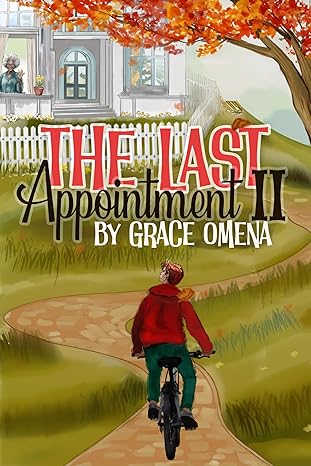
The Last Appointment II chronicles Noah’s transition from a determined pre-med student to a talented doctor and his enduring connection with Jasmine, whose path as a journalist takes her across the globe. This second installment dives into themes of perseverance, faith, and the impact of relationships. Noah’s journey is marked by challenges in his medical career and unspoken emotions for Jasmine, while her fearless reporting sheds light on global issues. Their parallel but divergent lives provide a rich tapestry of ambition, love, and destiny.
The stakes feel even higher in this book. I loved how the story delved into Noah’s growth as a doctor, especially during his emotional struggles with patients like Kira and her mother. The moment when Noah discovers his deeper connection to his healing gift was powerful and inspiring.
Jasmine’s story was equally compelling. It offered glimpses into her life of courage and sacrifice. Her time with the Peace Corps and her commitment to storytelling were vivid and captivating. Her scenes in war-torn regions, especially when facing danger while filming a report, showcased her bravery and depth.
One thing I loved about this book was the exploration of faith and destiny woven throughout the story. Noah’s faith in God’s plan and his ability to reconcile science and spirituality felt sincere and relatable. His reflections, especially during moments of doubt, were deeply moving to me. The reunion with Jasmine during the Christmas holiday was heartwarming as well. Their night under the stars was a touching callback to their shared history, making me root for their eventual union.
The Last Appointment II is an inspiring sequel that beautifully balances personal struggles, professional triumphs, and heartfelt relationships. I think it’s perfect for readers who enjoyed the first book and are looking for a continuation filled with emotional depth and hope. Grace Omena has a knack for capturing the beauty in ordinary yet transformative moments, and this sequel does not disappoint.
Pages: 97 | ASIN : B0CW19VSPM
The Last Appointment: I
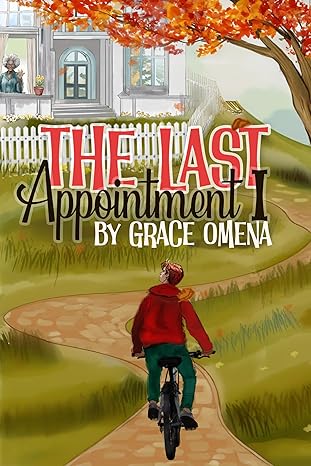
Grace Omena’s The Last Appointment weaves a touching and evocative story of loss, resilience, and redemption. It centers around Noah, a boy who has known little but hardship, and Rosemary, a microbiologist with a mansion full of memories and a heart full of grief. Their fateful encounter sets the stage for a story that explores themes of love, purpose, and healing. The book alternates between their perspectives, providing a layered exploration of their backstories and the challenges they face as individuals before their lives intertwine.
The writing is beautifully descriptive, particularly in how it captures the emotional and physical landscapes. Rosemary’s haunted yet hopeful reflections are deeply moving. The descriptions of Noah’s struggles, especially his time in the foster care system, felt raw and authentic. For example, his interactions with the cold and often harsh social workers added a layer of realism to his journey. However, some parts, such as Noah’s repetitive run-ins with the authorities, felt slightly drawn out, making the middle sections a bit slower.
What stood out most to me was the dynamic between Noah and Rosemary. Noah’s awe at discovering Rosemary’s book-filled mansion and his timid exploration of her kindness were heartwarming and heart-wrenching. The author does an excellent job of portraying how unexpected connections can mend unseen wounds. Rosemary’s reluctance to sell her home, tied to the surreal guidance of an angelic visitor, added a compelling mystical element. However, at times, the spiritual visions felt overly symbolic, and I wished for a bit more subtlety in their execution.
One of the book’s strongest aspects was its exploration of identity and belonging. Noah’s resilience as he faced rejection after rejection resonated with me. His quiet hope was a poignant reminder of the human need for connection. Rosemary’s grief over her late husband was another emotional anchor. Her decision to take in Noah showcased a beautiful evolution of her character. Their eventual bond felt organic and earned.
The Last Appointment is an emotionally resonant tale perfect for readers who enjoy character-driven stories with elements of hope and mysticism. The depth of its characters and the strength of its themes make it a rewarding read. I’d recommend this book to anyone who loves heartwarming stories of second chances or who might be looking for inspiration in tales of resilience.
Pages: 132 | ASIN : B0DFK4F6WC


