Blog Archives
Changing Eyes
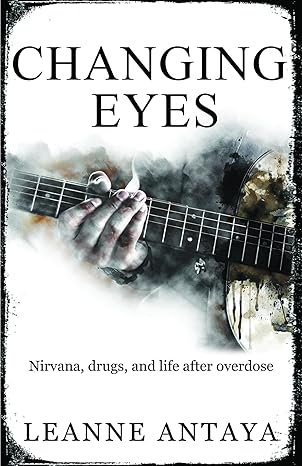

Changing Eyes is a raw and wrenching memoir written by Leanne Antaya about her family’s harrowing battle with addiction, particularly her son Trey’s descent into drug use and the long, painful road to his recovery. Spanning decades, the book moves from Leanne’s early romance and marriage to Marco, through raising four children, to navigating the chaos of addiction, near-death experiences, strained relationships, and personal trauma. Told through Leanne’s eyes as a mother, it’s an honest account of love, loss, resilience, and the aching hope that somehow, amid all the wreckage, healing is possible.
This book tore me up and stitched me back together, sometimes in the same chapter. Antaya’s writing isn’t polished in a literary sense, but that’s what makes it work. It’s messy, emotional, and real. She doesn’t whitewash the shame, the guilt, or the unbearable powerlessness that addiction brings into a family. Her style jumps between memories and moments with a kind of breathless honesty, as if she’s spilling it all out before she loses her nerve. There were parts where I had to pause and sit with it, where her pain leapt off the page and made me feel like I was in that hospital room or standing at that phone, dreading the worst.
The book is more like a collection of moments and memories than a tightly woven narrative. But maybe that’s the point. Addiction isn’t tidy. Grief doesn’t follow a three-act structure. What stands out most to me is Leanne’s sheer determination to hold her family together. Her voice carries this sharp mix of exhaustion and fire that made me root for her, even when things kept falling apart. And Trey’s story is both heartbreaking and infuriating, but Antaya never lets you forget that he’s human, even when he’s at his lowest.
I’d recommend Changing Eyes to anyone who wants to understand what addiction does to families, not in theory, but in the day-to-day heartbreak. This is for the parents who are living in quiet fear, for the friends who don’t know what to say, and for anyone who thinks addiction is just a personal failing. It’s not a light read, and it doesn’t offer easy answers. But it’s full of gut-level truth, and in the end, it clings to hope.
Pages: 356 | ASIN : B0B6QDP6C4

Freedom Highway

Priscilla Speaks follows a young girl living in poverty who is cast out of her home at sixteen, leaving her to set out on the Appalachian Trail, where she meets diverse people who help her learn about life and relationships along the way. What was the inspiration for the setup of your story?
The answer is broader than you might have anticipated. I have thru-hiked the Appalachian Trail four times, and have found each journey to be life-changing or life-affirming. As a consequence, it is an element in much (although not all) of my fiction. I find the trail to be regenerative. Most who successfully thru-hike it or even hike long sections of it feel the same. It is the total immersion that does it, having one’s ego worn down by sweat and hunger and bugs until the real you is exposed. A long weekend on the trail won’t quite get one there.
Relating to the Speaks Saga as a whole, and Priscilla in particular for the moment, during Hike 3 in 2018 I hiked into a town for resupply, a town brought closer by a trail relocation and a town I’d never been to before, in an area where rednecks were known to harass hikers, and where I’ve personally witnessed hillbillies doing some pretty bizarre things. I was struck by the despair of the place before I’d even entered the town, considering the drug paraphernalia I spotted littering the curb. Once in the town, I encountered people almost unintelligible in their speech who volunteered the most offensive racist comments to a total stranger, and many of whom sported the missing teeth and cleft lips of heavy meth addiction. I couldn’t hike out of that town quickly enough.
I pondered as I continued my hike, wondering how one could wrest oneself out of that environment, then realized that the Appalachian Trail, an actual freedom highway, lay right at their doorstep. I conceived the first novel, Timewall Speaks, within the next hundred miles, and have used the Appalachian Trail as a means of escape for every character since.
Priscilla is born into a world of poverty, addiction, and abuse, but refuses to let that define who she is or who she will become. What was your process to bring her character to life?
I knew from the beginning that Priscilla might be the most complicated character in the Saga, and I had to reimagine her a few times before I felt I’d gotten her right. The epiphany came as I was writing Chapter Two, the fight scene, her brother injured, and I knew right then who I wanted Priscilla to be. I raced back, did a lot of re-writing, made Pris autistic and fearless, had her cut off her braid (probably spoilers in this), and evolved her into an outsider in her own family. Unknown to Pris, she is more like her mother at that age than she would ever want to accept, strong, unyielding, fierce, and in her own emotionally-numbed way, proud.
What were some themes that were important for you to explore in this book?
As always, that transformation from dysfunctional to emotional health, and that people are not defined by their circumstances, but defined by themselves. I wanted to demonstrate that it is possible to escape, despite the burdens that Pris carried. I have known people in similar circumstances who have rescued themselves, so Priscilla’s journey is not a stretch.
Will this series continue in another book, or are you working on a different story?
There will be one more novel in the Saga, The Family Speaks, in which a story arc covering fifty years will be brought full circle. I intended to end it there, although I have been encouraged by many to expand the Saga to incorporate some of the secondary characters. That might happen in the future, novels in a Speaks Universe if you will, but immediately after The Family Speaks (and a fifth Appalachian Trail thru-hike), I will begin work on some unrelated novels that have been nagging me for a few years now.
Author Links: Goodreads | Website | Amazon
In Book Four of The Speaks Saga, Blaize’s second daughter, Priscilla, born during the worst of her mother’s addiction, begins at an early age to count the years until she can escape the drudgery and boredom of her dismal, impoverished life, all the while watching as her older siblings leave one by one.
Cast out on her own at the age of sixteen, Priscilla ventures forth in search of an uncertain future while grappling with her sexuality and the phenomenal capacity of her mind. Using the Appalachian Trail as a means of escape, distracted from her obsessive nature by the day-to-day trials of the wilderness, her journey thrusts her into the company of diverse people who steer her toward a fuller understanding of the complexities of life and relationships. Through confounding emotions, heartache, and moments of grace, she is forced to confront mortality, love, and loss, all pointing her toward a staggering awareness of space and time.
With deliberate cunning, Priscilla does battle on her own terms, calling forth the hardened legacy of her family as she fights against the abuses she encounters in society.
A Journey Into Manhood From the Path of an Idiot
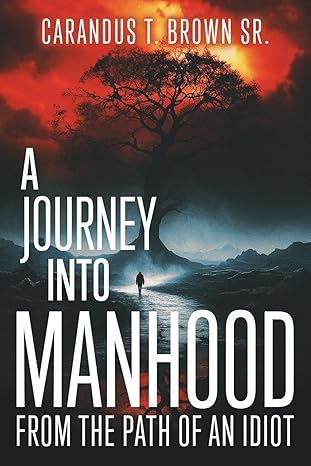

Carandus Brown’s A Journey into Manhood from the Path of an Idiot is a raw and deeply personal memoir that chronicles one man’s long, often painful climb from childhood confusion to adult accountability. With each chapter framed as a “lesson,” Brown reflects on his life from traumatic events and broken family dynamics to brushes with the law, misguided relationships, and spiritual reckonings. What starts as a candid account of pain and dysfunction slowly morphs into a powerful meditation on growth, faith, and the courage to confront your past. This is a book about how a boy with no clear path to manhood stumbles, fights, learns, and ultimately walks that road anyway.
Reading this book felt like being handed someone’s journal, written with no filter and no concern for appearances. I admired that. Brown’s writing is emotional and gritty, full of hurt and hope in equal measure. He doesn’t try to dress up his experiences. He owns his mistakes, often with heartbreaking honesty, and that kind of vulnerability resonated with me. Some parts were painful to get through, especially the loss of his nephew and the scenes with his father, but those chapters gripped me. It’s not just the storytelling, though. It’s how Brown unpacks each memory, not just to remember it, but to understand what it meant, what it cost, and how it changed him.
There were moments when the writing got a little long-winded. I sometimes wished he’d pulled back just enough to let the reader breathe. But even in those moments, I could feel the sincerity behind every word. And there’s poetry in how he writes, even when he’s angry or confused; there’s rhythm and raw beauty to the way he strings his thoughts together. His lesson on education, how he faked reading as a kid just to survive the shame, hit me in the gut. And the spiritual themes, especially his talks with God, felt real. Not polished. Not preachy. Just real.
This isn’t a polished self-help book or a clinical story of recovery. It’s a firestorm of memory and meaning, one that will resonate with anyone who’s ever felt lost, unloved, or misunderstood. I’d recommend A Journey into Manhood from the Path of an Idiot to young men navigating tough upbringings, to anyone grappling with forgiveness, and to readers who crave stories that bleed truth. Brown may have taken the long way to manhood, but this book proves he got there, and he brought a whole lot of wisdom with him.
Pages: 160 | ISBN : 978-1681116082
I Wrote to Remember
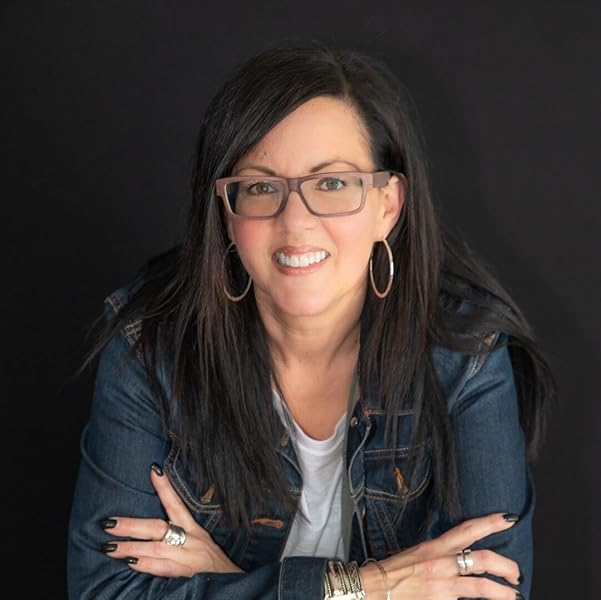
I Finally Have the Smoking Hot Body I Have Always Wanted is a wildly honest, heartbreakingly funny, and beautiful tribute to your late mother, sharing with readers your mother’s bold personality and her passion for life. Why was this an important book for you to write?
Because watching someone you love disappear in slow motion – while sitting across the table from you, eating toast – is surreal, maddening, and in many strange moments, hilarious. Writing this book was how I made sense of it.
It gave structure to the chaos of Alzheimer’s and honoured the woman my mom was before, during, and even after her death.
She was vibrant, feisty, and deeply funny ( sometimes unintentionally), and I wanted readers to get to know Mom and realize just what an incredible woman was taken from us and from the world.
I wanted readers to know that Alzheimer’s erased pieces of her slowly over time, but not entirely…some of those pieces were just rearranged.
I wrote to remember, to grieve, to laugh, to educate, and to honour every single person affected by Alzheimer’s – and hopefully, in the process, help someone else feel a little less alone in their own upside-down world.
I appreciated the candid nature with which you told your family’s story. What was the hardest thing for you to write about?
It wasn’t the big dramatic moments that were hard to write- it was the quiet ordinary ones that were the most difficult to write about …they knocked the wind out of me.
The moments when I saw her doubt herself. When she looked at us with her eyes searching, trying to remember or to find the right words… hoping we’d fill in the blanks.
Writing about her confusion, her fear, reading her hospital records, and the way her confidence evaporated-that gutted me.
And maybe the hardest part? Owning up to my guilt about not having spent as much time with her as I might have, and that I wasn’t her primary caregiver. My dad and my sister were. They were in the trenches daily. I have endless respect for all the full-time caregivers who show up day after day, holding it all together.
During the brief reprieve I gave here and there, I felt heartbreak, more guilt, and helplessness.
Admitting it and writing that on paper made it real, and once published, I couldn’t take it back.
What were some ideas that were important for you to share in this book?
Heartbreak and humour can—and often do —co-exist. That grief can be sneaky and slow and yet, darkly funny. That caregiving in all its forms…matters.
A reminder to always use the “people first” approach. There’s real dignity in that. Being remembered for the WHOLE person they were and not just the Alzheimer’s patient they became.
I also wanted to challenge the notion that writing about illness has to be sterile or solemn. Life is not tidy. Relationships are messy, and family dynamics aren’t perfect.
So, I wrote something messy, funny, painful, and true…because that’s what the journey was…
What do you hope is one thing readers take away from your mom’s story?
I hope readers walk away thinking about their people-the ones who shaped them, annoyed them, challenged them (maybe drove them a little crazy), and loved them anyway.
I want them to feel compelled to tell their stories…even if there’s guilt, cracks, or unresolved issues. Especially if there is. There is healing in the process.
AND I hope readers realize that humour doesn’t minimize the pain – it makes space for survival.
Above all, I hope they fall a little in love with my Mom …because she really was pretty cool.
Author Links: GoodReads | Facebook | Website | Instagram | Amazon
A moving, yet darkly funny, memoir.
Writer, Barb Drummond, grew up in a home filled with crazy antics, love, laughter, and an exceptionally unique and zany mother. Who else had a mom who specifically baked cream pies to throw at people she loved?
Her mom, however, drew the short straw by getting Alzheimer’s in her 60s. She lived with the monster for twenty years, and the disease stole her vibrant personality and voice. When Sybil died, an ordinary obituary just wouldn’t do. She was a glamorous Renaissance woman filled with creativity; a former ER nurse who saved lives; she was what movies are made of.
Barb wrote the quirky obituary with her mom’s voice. No one could’ve predicted her mother’s wild obituary would go viral within 24-hours-worldwide! The New York Post, The Irish Times, The London Times, The Huffington Post, CBC TV & Radio, Global, CTV, Hamilton Spectator, and many more media from Australia, UK, USA, and Singapore, spread the word to millions.
Hundreds of thousands of people internationally soon read about Sybil Marie Hicks and her smoking hot body and they wanted more!
Barb’s memoir takes you into her mother’s life and into the media whirlwind when her mom became an instant world-wide celebrity AFTER she died.
In this hilarious, quirky, and poignant memoir, I Finally Have the Smoking Hot Body I Have Always Wanted, Having Been Cremated, you’ll fall in love with Sybil and wish you’d known her in real life.
(Even if she’d smoosh a cream pie in your face!)
Hopefully Ever After
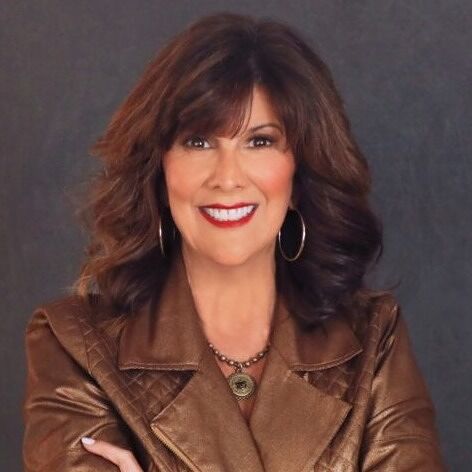
In The Widow Chose Red?, you share the highs and lows of your marriage and professional life, your unshakable faith, and your husband’s heartbreaking journey with ALS. Why was this an important book for you to write?
It was important to write this book for a few reasons: To heighten the awareness of ALS, which is still considered a rare disease. Too many people still don’t know about it. Proceeds from the book are benefiting the LiveLikeLou Foundation.
To have a written record of my life with John as something tangible for my boys to refer to.
To provide inspiration for others who may find themselves facing unimaginable circumstances and give them some support, insights, and strategies for dealing with those curveballs life throws at us. To remind people that we, as believers, we have all been gifted with a supernatural superpower in the form of the Holy Spirit, which is there to comfort and fortify us when we can’t go on..
I appreciated the candid nature with which you told your story. What was the hardest thing for you to write about?
The hardest parts to write about were the day we got the diagnosis, the Christmas we told his family, the day we told our boys, and the day John died. Even though it has been 14 years since John died, the mind is magical and mystical in how it can take us back to that moment in time, complete with emotion and physical presence. It’s never a fun process to go back to those moments of pain, suffering, sorrow and loss, and that is why sometimes, it is best to give yourself some time to process.
What advice would you give someone who is considering sharing their own memoir with readers?
Go for it! It’s your story, and someone will benefit from your sharing it. Get clear on your message. That being said, it is a process that can be lonely, confusing, and tiring, so get some support.
There are so many tech tools available (and I’m not talking AI), like transcription, voice recording, etc, that will make the process of getting it on paper so much easier. If you need to interview someone else to get a perspective…write up a list of questions and submit ahead of your conversation…give yourself a goal for writing…a number of words a day…a chapter a month…published by this date. Otherwise, it can go on forever, and don’t discount the editing process…it’s HUGE!!
What is one thing you hope readers take away from your experience?
Even when your “happily ever after” doesn’t go the way you wanted…you can have a “hopefully ever after” that is beyond your imagination.
Author Links: GoodReads | Facebook | Website | Amazon
“She stood at his service wearing red. Not in defiance, not in denial – but in love. Because grief is not just sorrow; it is the bold echo of a love that never fades. And red is not just a color – it is the flame of the Holy Spirit and the fire that refuses to be extinguished.”
When Rachel Kerr Schneider lost her husband, the world expected her to mourn in black – to withdraw, to disappear into sorrow. But she made a different choice. She wore red. Not because she wasn’t grieving, but because love – real love – is too vibrant, too deep, too enduring to be cloaked in darkness. And because red, the color of fire, is the color of the Holy Spirit – the every-present force that carried her through the valley of grief and into a future she never imagined.
This is not just a memoir about loss – it is a story of resilience, faith, and the bold, sometimes unexpected ways we learn to live again. For anyone who has ever faced heartbreak and wondered if joy was still possible, The Widow Chose Red is a testament to the truth that even in sorrow, life still shines – and the Spirit still burns.
Mama I Owe You Nothing
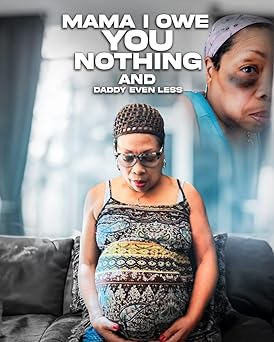
Mama, I Owe You Nothing and Daddy Even Less by Simmer Breeze offers a thought-provoking exploration of the intricate dynamics between parents and their children. The author sets a strong premise, asserting that engaging in consensual unprotected sexual activity demands accountability for any resulting consequences. This stance forms the foundation for a deep dive into the complexities of the parent-child relationship, addressing issues from gender roles and divorce to the challenges of adult children caring for aging parents.
With a comprehensive lens, the book examines family dynamics through biological, social, and legal perspectives, encouraging readers to reassess and expand their understanding of these relationships. The author’s approach is refreshingly direct, moving swiftly from one topic to another while maintaining clarity and focus. Despite its brevity, the book serves as a compact guide to navigating life’s familial intricacies, blending discussions of U.S. laws, societal views, and personal opinions seamlessly.
One particularly compelling aspect is the author’s ability to intertwine diverse elements, from biology to constitutional law, offering readers a multifaceted perspective on family-related issues. There are strong opinions given throughout the book, particularly on sensitive topics like abortion. Early in the text, the author’s perspective on abortion might be interpreted as leaning critical, which could potentially distance some readers with differing viewpoints. While this impression may vary among readers, it slightly shifts the book’s otherwise balanced exploration. Structurally, I think a chronological arrangement, beginning with early pregnancy and moving through the stages of life, including elder care, might enhance the book’s readability and overall coherence.
Mama, I Owe You Nothing and Daddy Even Less remains an informative and thought-provoking read, shedding light on essential aspects of family dynamics that resonate in daily life. I recommend it to anyone seeking to better understand the multifaceted relationships within families.
Pages: 65 | ASIN : B0CNKVQTH6
A Story of Great Courage
Winter Comes in June is a post-apocalyptic sci-fi novel that weaves survival, science, and sorrow through the fractured memories of a family navigating life after an asteroid shatters Earth. What inspired the choice to tell the story through diaries and multiple family perspectives?
I have always wanted to write a dynamic and interesting post-apocalyptic novel where family members share their experience through their memories recorded after an Extinction Level Event. The inspiration to tell the story this way came from another science fiction novel written by a writer, Sheri Tepper, titled The Visitor. It also dealt with a world shattered by an asteroid impact. I felt that by telling this story through several individual voices adds depth to each character and makes them more sympathetic.
How did you balance the technical accuracy of the science with the personal emotional arcs?
In preparation to make this novel a reality, I read several fiction and non-fiction books dealing with asteroid impacts and their awesome destructive power that affected our planet’s evolution in the distant past. The personal emotional arc for each character is unique. Their reaction to the imminent asteroid collision and the life after the impact is also deeply personal. I tried to project realistic human emotion into the story, to make it character-driven. This is a story of great courage in the face of apocalyptic horror and the triumph of the human spirit. In my novel, everyone is touched by a world-shattering tragedy that my characters are able to overcome by their strength, their will, and their humanity.
Did you base the lunar Armstrong base or the Amira Event on any real scientific models or speculative research?
The lunar base Armstrong in my story was partially based on several proposed NASA projects since the first landing on the Moon in 1969. The original NASA plans were to build a permanent manned science base on the Moon. There were several interesting proposals, which were scientifically well grounded but were ultimately canceled because of the lack of proper funds and the danger of long-term exposure to the low gravity of the Moon, which would have had many negative effects on the astronauts’ health. The Amira Event described in my novel is, of course, purely fictional, but is based on the solid scientific data on what an asteroid this size can do if it had struck Earth. The rock that supposedly had killed the dinosaurs was only five to six miles long. In my story, the Amira asteroid was twice as big and caused much more damage.
What do you hope readers take away from the emotional aftermath portrayed in the story, beyond the survival elements?
In my opinion, a good book, just like a painting in a museum or a good movie, must provoke an emotional response. Skipping the survival elements, where the reader can reasonably guess the characters’ motivation and personality, I hope that the readers can take away with them the strong emotional impact and try to place themselves in the fictional character’s position. I believe that my readers will find inspiration from the main characters through their words and actions that often speak louder than words. I also hope that they can learn that no matter what happens, one must never abandon hope. I would also advise them to remember the ancient Greek myth about Pandora’s Box. When she opened the box out of curiosity, all the terrible things came out into the world. But at the bottom of the box, the Hope remained. Our species has survived many great catastrophes and challenges in the distant past. I hope that we are better prepared to face any type of disaster and emerge from it deeply scarred but ultimately victorious.
Author Links: GoodReads | Amazon
Targets of Public Scrutiny

In Out of the Crash, tragedy brings together two families when an author’s son strikes and kills a cyclist with his car. Where did the idea for this novel come from?
Out of the Crash was inspired by two separate but similar tragedies that occurred in my hometown. I watched the aftermath of each incident unfold and read comments on social media in awe of how bold (and cruel) people could be. As quickly as the local media reported on the stories, people formed conclusions about the alleged offenders. What they were doing at the time of the accident. What kind of people they were. And what type of punishment they should endure. Despite a legal system built on the principle of innocent until proven guilty, the drivers of each car became targets of public scrutiny. Ultimately, some of those conclusions had merit; others did not. But it made me sad how easily people jumped to the worst-case scenario. I felt compelled to speak out but didn’t know how.
I also couldn’t help peppering myself with questions about how I would feel if wrapped up in similar circumstances. What if someone I love had sustained injuries in one of those crashes? Or someone close to me had been behind the wheel of one of those cars?
As a mom, I pictured myself trying to defend one of my kids if they’d been responsible for someone else’s grave injuries or even their death. Would I wholeheartedly support my child’s actions under any circumstance? Would I accept the truth even if it destroyed the future I’d foreseen for my family? And how much consideration would I give to the pain suffered by the victim and the victim’s loved ones?
What are some things that you find interesting about the human condition that you think makes for great fiction?
There are countless contexts where I see people taking unyielding sides. It’s black or white. Right or wrong. Us versus them. Life doesn’t seem that clear-cut to me, and storytelling provides the opportunity to give voice to those who might be misrepresented or misunderstood.
In writing Out of the Crash, I set out to convey how multi-faceted the human experience can be—to debunk any suggestion that there’s ever only one side to a story. In a time when the media bombards us with compelling headlines and summary talking points—typically just scratching the surface of a news event—it’s more important than ever to at least avoid passing judgment until the whole story becomes clear.
What are the pivotal moments in the story that you think best define Caroline and Ethan?
Caroline’s character arc is pretty gradual throughout the story. Still, one of the most pivotal moments occurs when she talks with Kyle’s attorney, Valerie, about their different cancer journeys. At this point, Caroline starts to see what everyone around her has seen for years—that she closed herself off from the ones who love her most as she underwent treatment. She put up a wall instead of accepting help from the people around her, like Valerie had done, and channeled her energy toward a career revolving around advocacy for others. The distance she created backfired when she tried to be there for her family after the crash as they’d learned to live without needing her attention.
A pivotal moment for Ethan occurred much earlier in the story when he learned about his mom’s past struggles with alcohol. This realization shocked him to his core and made him question whether he ever really knew his mother at all. Before that moment, he believed they were so close, making her sudden death even more devastating, as now he’ll never have a chance to talk with her about why she never confided in him about something so significant.
What is the next book that you are working on, and when will it be available?
I’m currently working on a book titled Iris Inked. The story revolves around an older woman who is forced to leave her cherished home due to a degenerative disease. She forms an unexpected friendship with a young aspiring social media influencer, who encourages her to share the stories behind her tattoos in a YouTube series. As their bond deepens, both women are compelled to confront their regrets and the challenges that come with embracing change. The book can be compared to The Seven Husbands of Evelyn Hugo by Taylor Jenkins Reid and the classic Fried Green Tomatoes at the Whistle Stop Cafe by Fannie Flagg. My first draft is almost complete, and I hope to start pitching/querying it in early 2026.
Author Links: GoodReads | X (Twitter) | Facebook | Website | Amazon


