Blog Archives
Fairy Lights: Bed Time Poems & Gallery of Fairytale Art from Yesteryear


Fairy Lights is a wonderful collection of bedtime poems interwoven with fairy lore, myth, and timeless art. Moving through the seasons of the year, the book gathers stories of spirits, shape-shifters, ocean dwellers, elven royalty, and everyday enchantments. It draws from Irish, Nordic, Greek, and New World traditions, blending them into verses that feel both ancient and freshly spoken. Each section carries its own mood, from the playful revels of spring to the melancholy mysteries of autumn and the haunting stillness of winter. Alongside the words, the author curates a gallery of fairytale art from past centuries, which adds a lovely echo of history to the poetry.
What struck me most was the way the poems refused to be pinned down. They could be lyrical and delicate in one breath, then strange, even eerie, in the next. A piece like A Piece of Amber felt tender and tragic, like a whispered legend by firelight, while something like The Baallad of Blaackie Coal made me grin with its folkloric humor and Scots cadence. I loved how the writing carried me away from reason into a place where fairies still dance, seashells sing, and even the smallest bird is mourned with reverence. The language is musical and sometimes unpredictable. At times, I found myself rereading lines not because I needed to but because I wanted to savor the rhythm.
The author clearly delights in layering metaphor upon metaphor, which creates a rich tapestry. This very quality also gives the book its dreamlike atmosphere. It reminded me of wandering through a forest at dusk, you don’t always know what you’re seeing, but the mystery is the point. I also appreciated how personal some of the poems felt. Knowing that pieces like To Wee Russet Tuft came from real experiences gave the collection an intimacy that balanced out the more mythic material.
Fairy Lights feels like a gift for anyone who still listens for magic in the quiet hours. I would recommend it to readers who love fairytales, folklore, or poetry that doesn’t mind breaking free from neat structure. It’s especially suited for those who want to share stories aloud, whether with children at bedtime or with the inner child who still believes in hidden worlds.
Pages: 181 | ISBN : 0473742454

Misfit’s Magic: Twisting in Time

Twisting in Time tells the story of Goff, a boy who desperately wishes to live a normal life but finds himself constantly dragged back into a world of magic, danger, and tangled loyalties. At Amworth Academy, what should have been quiet moments with friends and his first love quickly unravel into chaos as strange forces whisk people away, shadows stretch into monsters, and visions of looming battles return. The story swings between his present struggles and the origins of his curse in Slaathwick, where he is burdened with being a Verlokken, a kind of outcast whose magic is feared as much as it is needed. Through duels, betrayals, and heartbreaking losses, Goff keeps stumbling forward, hoping for safety and love, yet always being pulled into another storm.
What I liked most was the way the book balanced whimsy with darkness. There are scenes filled with warmth, like meals shared, jokes between friends, even the sweetness of Goff’s awkward romance with Joy, that made me smile. But just when I started to settle in, the story twisted into something darker. The shadows, the grotesque enemies, and the way time itself bends gave me a pit in my stomach. The writing has a playful rhythm in places, almost silly at times, and then suddenly sharp, reminding me of how childhood wonder collides with the dread of growing up. It kept me off balance, which I liked, because it mirrored Goff’s own unease.
Goff is both stubborn and insecure, and that mix makes him feel real. He longs to protect his friends, yet he keeps secrets, pushes people away, and sometimes gives in to anger. I wanted to shake him, but I also wanted to hug him. That kind of emotional pull is rare. The author’s choice to lean into food and cooking as recurring motifs was lovely too. Those moments grounded the story. A dish described in detail, or a meal shared, often felt more magical than spells or battles. It made me feel like magic wasn’t always in wands or words but sometimes in butter, lavender, or a loaf of bread.
By the time I reached the end, I felt both drained and hopeful. The book is heavy with loss and with the idea that time doesn’t really heal so much as twist and fold, carrying pain forward in new ways. Yet it’s also filled with small sparks of loyalty and friendship that remind you why the characters keep fighting. I’d recommend this book to readers who enjoy fantasy that doesn’t shy away from sorrow but still knows how to laugh at itself. It’s for anyone who wants a coming-of-age story tangled with monsters, magic, and heartache, but also with friendship, food, and flickers of joy that make the struggle worth it.
Pages: 318 | ASIN : B0FDQYQ8GK

I LOVE Superheroes
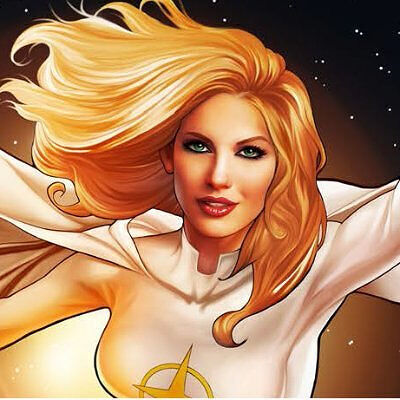
Guardian: Into the Light of Day follows an alien inhabiting a human’s body who has secretly protected humanity for centuries, until an asteroid strike exposes her existence and unleashes forces bent on Earth’s destruction. What were some sources that informed this novel’s development?
I LOVE superheroes. I have since I was a little kid watching TV on Saturday mornings. I can still remember the first superhero comic book my dad bought me. I don’t have it, but I have another copy bought through a collector. Superman, Batman, Wonder Woman, Captain Marvel (Billy Batson), Spider-Man, and a host of other heroes helped give me a background in the genre. Guardian herself came out of a superhero roleplaying game.
She would not leave me alone, dogging me for thirty years before I finally sat down and told her story. I think she’s someone we all wished existed in the world, someone who suddenly drops out of the sky and turns a bad situation around, whether it’s a crime, a medical emergency (she is a surgeon who can heal with a touch,) or a avert a natural disaster.
Elizabeth has lived for over eight centuries. How did you approach writing her perspective across such a vast timeline?
I really had to sit and ponder what the outlook for someone who has lived among humans while not aging a day. She still resembles the young woman who died on the Cornish moors and rose, healed and vibrant. She has had time to accumulate wealth and wisdom, and has meet and helped the best of humanity and to be blunt, in many cases, to confront some of the worst. Often there have been situations where she could have changed the course of history but in doing so she would have needed to reveal herself which would dramatically impact humanity’s natural evolution.
In the modern era she has had to be creative in the places she works, places where cameras and recording devices are far less common, like refugee camps and aide camps where she can practice medicine and remain a nomad, pulling up stakes every two to three years while zealously avoiding interactions with the media.
The book raises questions about identity and belonging. How do you see Elizabeth’s alien nature shaping her humanity?
Elizabeth is an outsider; she does not share historical animosities, or preferences that a human might hold. She regards humans as wonders, full of potential. She often works to bring out the best in people by being an example to aspire to. The events of the novel force her into a role that she struggles with while living in proverbial media goldfish bowl.
What is the next book that you are working on and when will it be available?
I have two in the works one with GG Michaels which I am still not sure will be a novelette or a novella. (Plus another 15 other stories.) The other project will be a full length Guardian novel. As for concrete dates of completion, I’m working as quickly as I can. Family emergencies derailed my spring and summer writing as I planned to have them both out by now. I’m playing catch-up. I am grateful for my readers’ kind words and support. GG and Guardian will both return!
Author Links: GoodReads | Twitter | Facebook | Website
Its explosion sent her crashing back to Earth in a fiery shower of meteorites.
Caught on video by a teenager, her anonymity is destroyed in an instant.
Turmoil ensues…
Meta-powered beings begin to appear. Humanity is frightened and confused. The media, and a politician with an agenda, seek to take advantage.
Into this global chaos a new threat emerges, one greater than any she has ever faced, one that, if she fails, will destroy all that she loves.
With the fate of the Earth hanging in the balance, all that stands between the world and obliteration is its Guardian, Elizabeth.
A New Superhero Rises…
Psychoactive-Aided Divination
Darkness and Blight follows a shaman as she claws for survival in a collapsing world of carrion ghouls, fractured tribes, and cruel magic, where every act of endurance blurs the line between humanity and despair. What was the inspiration for the setup of your story?
Defying Expectations and Dragon Pedicures
My goal as a writer is to subvert expectations, a role I may sometimes take too much to heart, occasionally progressing even to the sentence level. Like many readers of fantasy, I grew tired of the medieval European settings, omnipotent gods, brave knights, and damsels in distress. Lydarc may be in almost constant distress, but she’s no damsel, not by a long bow shot, mister!
I also wanted to set the story in my own backyard, the forests of the Siletz Valley, where I hunt and explore. The Valley of the Giants, a real old-growth preserve, formed the idea for the blastforms. Valsetz, at the end of the book, is a real abandoned town in this rugged coastal forest.
But from there reality takes a severe hit. I always wanted to incorporate shamanism in a story. The spirit journey, spirit animals, and psychoactive-aided divination are all a very real part of that ethos. What seems like a crazy dream to us is the natural state in a shamanic worldview. Who’s to say that our reality is the most correct version?
Lydarc’s voice is so distinct. How did you develop her perspective without softening the harshness of her world?
To me, Lydarc epitomizes the human experience. Through the endless pain and struggle, all she really desires is someone who cares about her, a home, and maybe a tiny measure of peace in the end. It’s no grand victory. Life is not guaranteed to be easy or even rewarding. It just is. Deal with it.
What were some themes that were important for you to explore in this book?
Strength through adversity and over time. The incredible—and sometimes neglected—value of found family. The evolution of romantic love into something even truer. The deep-seated desire for dragons everywhere to just make it to their pedicures on time.
What is the next book that you are working on, and when will it be available?
Originally, I intended for Darkness and Blight to be a standalone novel. How can anyone write fifteen sequels? Then a thought kept nagging at me: what if Achus, the head witch from hell, actually survived and followed Lydarc and her companions back to the human realm? The second book—the working title is The Drunken Corpse—is currently writing itself and should be available in early 2026.
Author Links: Goodreads | X (Twitter) | Facebook | Instagram | Website | Amazon
In the broken wastes of post-apocalyptic Oregon, reality has split into three realms: the scarred human world, the damned underlands, and the Overs—godlike beings hungry to invade.
Lydarc, pierced with a cursed shard of an Over, suffers endless pain, berserker rages, and visions of a blood-soaked future. When her tribe is slaughtered and their souls trapped in the underlands, she leads a desperate band into hell itself—through battles with mythical monsters, betrayal, and a hellgate that demands death as the price of entry.
Among her allies are a cryptic mentor, a spirit-bound apprentice, a dragon who hoards books instead of gold, and an ex-lover begging her to save his lost daughter. But one of them hides a devastating lie. And awakening the shamanic power inside her could destroy what’s left of humanity.
Darkness and Blight is a brutal grimdark fantasy odyssey where myth collides with quantum horror, and one fractured soul must face traitors, monsters, and her own guilt to save her people—or shatter the last remnants of reality.
Fast-Paced Storytelling
Lord of the Crimson Dawn follows a hitman on assignment in Mexico who winds up being turned into a vampire, but not like others; he can walk in the sunlight and has unmatched powers that have never been seen before. What was the inspiration for the setup of your story?
I had a lot of inspiration. Growing up, I had my favorite vampires, like Christopher Lee, Frank Langella, and Gary Oldman. But I was heavily inspired by a mixture of Underworld and The Blade movies and comics. I enjoyed writing this genre. I’ve always loved the fast-paced storytelling, like Indiana Jones movies. I just added the blood and gore to the mix.
Jack is a fascinating character. What scene was the most interesting to write for that character?
Jack is one of my favorite characters I created. There were a few scenes I enjoyed, but what I really enjoyed writing was the scenes where he wasn’t sure what was a dream and what was reality, and then he discovers that it was all real while he was being transformed into a vampire.
What intrigues you about the horror and paranormal genres that led you to write this book?
Growing up, I enjoyed all types of horror films, from the old-time monsters to slasher films. I also enjoyed reading vampire novels along with other monster and demon novels.
Will this novel be the start of a series, or are you working on a different story?
Yes, this will be the start of a new series, and yes, I am working on a new story as well as a new story for my Demon Hunter series.
Author Links: GoodReads | Amazon
Creative Non-Fiction

Leftwich Blues/Elfwitch Rules follows twin twelve-year-olds from a broken home who are abducted by the Elfwitch and taken to another world, where they must now find a way to get back home and heal their broken home. What was the inspiration for the setup of your story?
The idea started with the title. I like to make lists of titles from time to time. The title made me think who is Leftwich? Why does he have the blues? Who is the Elfwitch and why is she trying to rule? This image came to mind: a witch travelling through the air with twins she had kidnapped. One twin gets away, but the Elfwitch tricks the other twin into serving her. The escaped twin finds an oppressed people who need encouragement in fighting against the Elfwitch. So, the twin has to lead an uprising against the Elfwitch and try to free the other twin who turned against their original selves.
The idea reminds me of the many Saturday morning TV shows by Sid and Marty Krofft: H.R. PufnStuff or Lidsville plus other portal fantasies or science fiction movies like Alice in Wonderland or Planet of the Apes (the original from 1968, not the watered down remakes/reboots) where a stranger ends up in a strange land and has to keep their identity intact while turning from fugitive to hero/heroine to survive in a harsh new reality.
Your characters are wonderfully emotive and relatable. Were you able to use anything from your own life to inform their character development?
The twins’ first names I borrowed from my cousins. Their last name also belongs to distant cousins. I find that the more real or personal I can make the character or backstory, the more I can dig into it to adapt and change it according to how the story dictates. I was a mental health paraprofessional for a few years (so I have been to family court a few times) and worked at a charitable thrift store as well as conducting a twelve-step program and now I am a public educator. I have had ex-clients as my students and have come to know the families. I understand better the dynamic in households and the problems children bring to the classroom.
My writing has been called “creative non-fiction.” I never thought of it like that, but it’s true as I need a heavy dose of realism in my fiction before I introduce the weird and fantastical.
What themes were particularly important for you to explore in this book?
The idea of twins separated and working against each other and having to reconcile was the starting point. Then it became a study of duality: two sides or polar opposites that feed or synergize entities or issues: tyranny and freedom, good and evil, lies and truth, night and day, family/friends and foes, forgiveness and unforgiving.
Is this the first book in the series? If so, when is the next book coming out, and what can your fans expect in the next story?
This was written as a stand-alone. However, I am brewing ideas for a sequel (which I would make into a cliffhanger for a duology). That project will have to wait as I have two other current projects I am working on plus I am currently promoting my first collection of short stories: ghostly shudder tales.
Author Links: GoodReads | Website | Substack
Heir of Flame and Shadow
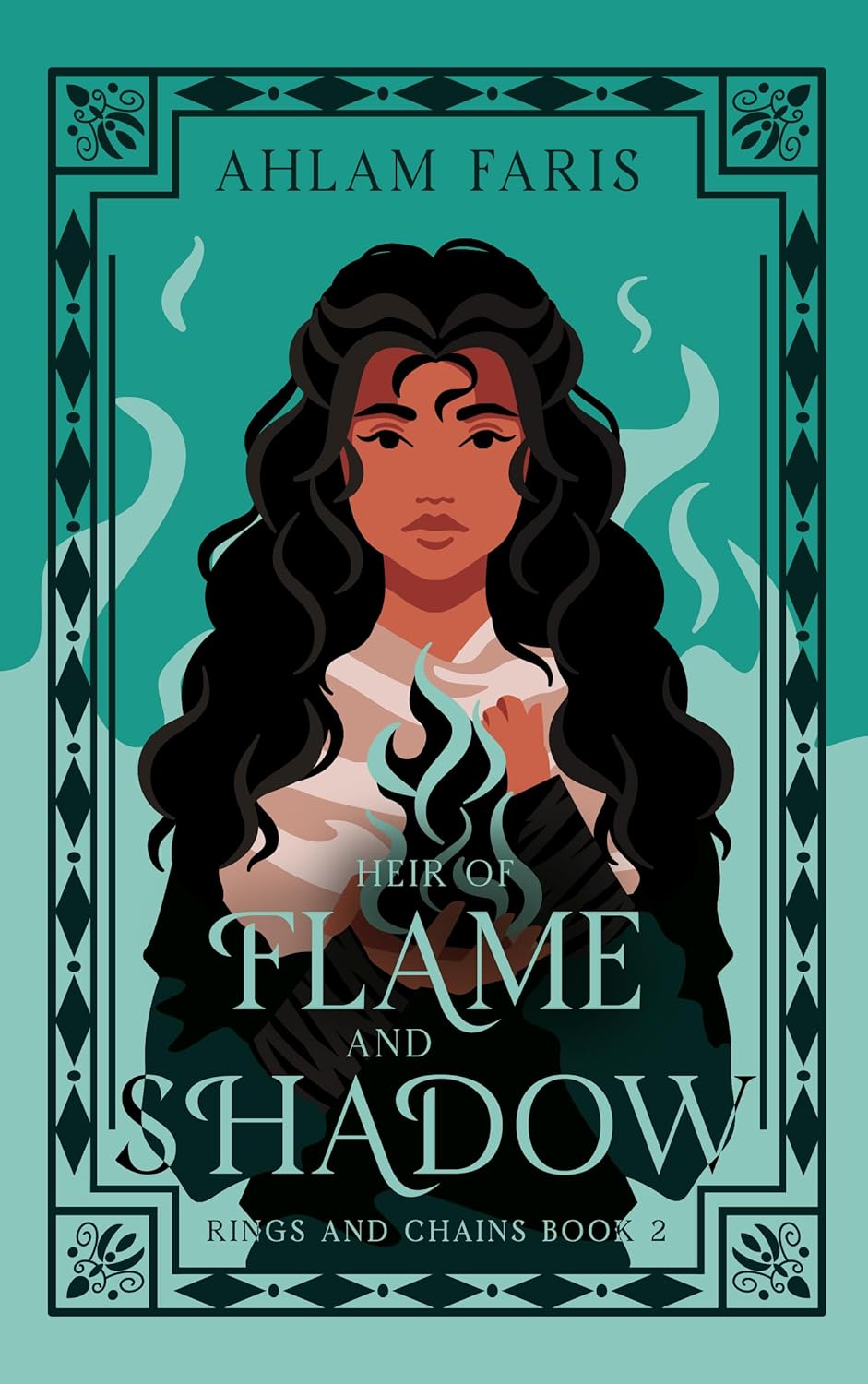

Heir of Flame and Shadow picks up where Daughter of Light and Dark left off, continuing Mina’s journey through a world steeped in shadow, betrayal, and dangerous magic. At its heart, this story is about survival and self-discovery in the face of unbearable odds. Mina struggles with her cursed gift, torn between the burden it places on her and the hope it brings to others. Alongside her, a cast of allies and enemies twist the path forward, pulling her into battles that are both physical and deeply emotional. Themes of identity, family, sacrifice, and the fragile line between love and pain shape the arc of this sequel, while the backdrop of supernatural powers and dark kingdoms raises the stakes to life-or-death levels.
I enjoyed how raw the writing felt. The prose is not polished to perfection, but that roughness gave the book a pulse, like the words were breathing with Mina. The imagery is often harsh, almost jagged, and it fits the tone of the story. I found myself swept along by the energy, even when the pacing slowed. The dialogue carried weight, sometimes heavy with pain, sometimes sharp with betrayal, and occasionally softened by fleeting moments of tenderness. At times, I wanted more quiet space to sink into the characters’ hearts, but the relentless drive of the narrative made sure I was never allowed to get too comfortable. I liked that. It kept me unsettled, the way Mina herself was.
The exploration of trauma and control felt unflinching, and it stirred up emotions that weren’t easy to brush aside. There were moments when I had to pause, not because the writing faltered, but because the weight of what was happening pressed too close. That’s a rare thing for me, to feel almost winded by a book. At the same time, the bond between characters, even when fractured, reminded me of how messy and stubborn love can be. It isn’t always gentle or safe. Sometimes it’s sharp enough to draw blood. And that messy truth gave the fantasy world a raw humanity that made it believable.
I’d recommend Heir of Flame and Shadow to readers who aren’t afraid of dark themes and emotional turbulence. If you like your fantasy with teeth, if you want magic tangled with pain, and if you enjoy characters who are complicated and scarred, this book will speak to you. It’s not for someone looking for a lighthearted escape. It’s for readers who want to be rattled a little, who want to sit with shadows and still see the flicker of flame inside them.
Pages: 262 | ASIN : B0FKZJDW49
River Talk

River Talk is a sprawling and dreamlike journey through myth, memory, and human frailty. It drifts between fables, folklore, and deeply personal reckonings with place and time. At its heart is Marchon Baptiste, a man both haunted and blessed by a heightened sense of connection to the world around him. His story, interwoven with echoes of gods distracted by their own games, high-stakes gamblers rising from the dead, and tribes living outside the reach of modernity, circles endlessly around the question of what it means to belong, or not belong, within the noise of humanity.
I enjoyed how the writing feels unpinned. Sentences sprawl and snap. They carry the same restless energy as the rivers and forests that pulse through the story. Sometimes I felt lost, like I was dropped into someone’s fever dream without a guide, and other times I felt stunned at how vividly the world cracked open. The language is raw, but that’s what gave it its weight for me. I loved how the prose could be coarse one moment, then suddenly dissolve into passages that felt more like prayers than storytelling.
The book kept circling back to this deep divide between human-made noise and natural rhythm. I felt admiration because it made me think about how little we listen, how much we dismiss in our rush to build walls of words and explanations. I can’t shake certain images: Marchon in the swamp hearing the river sing, the gods playing careless games with human lives, the silent communication of tribes who never needed words. These moments felt alive in a way I rarely get from fiction.
I’d recommend River Talk to readers who like stories that don’t walk straight lines. If you enjoy Faulkner’s twisting voices or the mythic strangeness of Toni Morrison’s Song of Solomon, you might find something here to savor. It isn’t a book for quick reading. It’s for anyone who’s willing to wrestle with the unsettling question of what it means to really be connected.
Pages: 222 | ASIN : B0FJR45LQK


 LITERARY TITAN