Blog Archives
NICK and CLANCY – A Tale of Nine Lives


NICK and CLANCY – A Tale of Nine Lives tells the story of Nick, a gentle and wounded man recovering from severe heart trauma, and Clancy, the sharp, funny, deeply devoted dog who enters his life at exactly the right moment. The narrative moves through years of shared life, illness, dreams, small victories, and fear, often told from Clancy’s point of view. At its core, the book is about survival, companionship, purpose, and the strange ways love shows up when life feels fragile and uncertain.
The writing feels intimate and conversational, almost like someone sitting across from you and telling you a story late at night. I laughed more than I expected. I also felt a quiet ache settle in as the pages went on. The dog’s perspective could have felt gimmicky, but it does not. It feels earnest and oddly wise. Clancy’s humor, guilt, loyalty, and protectiveness landed hard for me. I felt protective of Nick, too, even frustrated with him at times. The writing is messy in a relatable way. It rambles. It lingers. That worked for me. Life rarely moves in neat arcs, and this book does not pretend otherwise.
The theme of borrowed time runs through everything. Illness hangs over each chapter like background noise that never fully shuts off. I felt the anxiety of waiting for the next medical crisis. I also felt the stubborn hope that keeps Nick moving forward anyway. The story made me think about purpose in small terms. Not destiny. Not grand success. Just showing up for someone else. Just staying. There is a tenderness here that caught me off guard. Some sections felt repetitive, and a tighter edit could help in places, but I did not mind lingering with these characters. I cared about them. That matters more to me than polish.
I would recommend this book to readers who enjoy character-driven stories and emotional honesty. It is especially well-suited for animal lovers, people who have faced serious illness, or anyone who has felt unmoored and searching for meaning. This book is reflective and heartfelt and sometimes sad. If you like books that feel personal and lived in, and you do not mind getting a little misty-eyed along the way, this one is worth your time.
Pages: 288 | ASIN : B0FMTS6KZK

Deep, Soul-Level Understanding

Safe Haven follows a fallen Chicago news anchor who retreats to a crumbling farmhouse and finds redemption among strangers learning to live with their own brokenness. What inspired you to center Safe Haven around rebuilding after loss?
I love writing stories with broken characters—individuals struggling with grief, loss, and regret. People whose wounds run deep, whose silence often speaks louder than words. Yet within this brokenness, they somehow find a thread of hope, a quiet courage, a stubborn perseverance that keeps them moving forward. If they push through the pain, they come out on the other side changed in a way that makes them view the world in a different light. And when their eyes are open, they start to see the silent battles others are fighting. That recognition—that deep, soul-level understanding—is empathy. Empathy is not a character weakness. It is strength wrapped in softness. It is the heartbeat of humanity. To feel deeply is not to be fragile—it is to be brave. In my writing, I strive to illuminate the power of empathy, compassion, and hope for humans and animals alike.
The relationships in East Haven feel real. Were any of the characters or their struggles drawn from people you’ve known?
They didn’t come from any one person, but from a collection of individuals. People who have endured pain and carry wounds that don’t always show, but shape the way they move through the world. I’ve known people who have been through unimaginable tragedies, who have suffered physical, mental, and emotional abuse, and have found a way to heal those wounds through faith, hope, and love. Not in a religious sense—although many people find healing that way—but in a spiritual sense: in the presence of someone who cares deeply, in the quiet of nature, in the soul of an animal. Those are the kind of people I love to write about. The kind I find strength in. The kind that endures and transforms.
You write grief with so much restraint and honesty. How did you find the right emotional balance without tipping into sentimentality?
Finding that balance was incredibly difficult for me. I’ve always been someone who feels deeply, so stepping into Michael’s point of view—a man who struggles to name, express, or even acknowledge his emotions—was a struggle. His tendency to shut down or get angry felt foreign to me. But what started as a challenge became a blessing. It was a character fault that didn’t just serve the story—it shaped it. Michael’s silence, his internal battles, became a starting place for the growth he’d experience throughout the novel. Two things helped me keep the portrayal raw and honest. First, I created Mac—a character who became a mirror and a guide for Michael. Mac wasn’t just a sounding board; he’d done his own emotional work and could recognize the pain Michael was trying to hide. Through their dynamic, I could give Michael space to stumble, to resist, and eventually to speak. Mac helped him find language for the things he’d buried, and in doing so, helped me stay true to the emotional arc without forcing it.
Second, I had a writing partner who acted as an emotional compass. Doug wasn’t afraid to tell me when my own feelings were bleeding too heavily into the narrative—when Michael’s voice started sounding more like mine. That feedback was invaluable. And I learned that emotional truth doesn’t always mean emotional intensity. Sometimes, it means restraint. Sometimes, it means letting the silence speak.
What is the next book that you are working on, and when will it be available?
I’m currently working on the sequel to Safe Haven and, if all the stars align, hope to have it published sometime next year. I am also looking at publishing a collection of short stories.
Author Links: GoodReads | Facebook | Instagram | Amazon
On the eve of his 40th birthday, Michael Russo faces a devastating trifecta: the loss of his job, a crisis of self-doubt, and a broken engagement with the love of his life, Anna. On impulse, he buys a run-down forty-acre farm unaware the dilapidated barn, home to a one-legged turkey and a blind rooster, harbors mystery.
It isn’t long before Michael’s life is once again turned upside down and he finds himself raising his daughter, Brie, alongside Anna’s overbearing parents. While they fight about what’s best for Brie, she develops an enigmatic attachment to the barn’s residents. A bond that cannot be broken.
As Brie struggles with one mysterious illness after another, Michael discovers she was born with a unique gift. One that has the power to change the world, but also the potential to endanger her life.
In a race against time, Michael must face his greatest fear to safeguard his daughter, whose innocence and extraordinary talent have forever altered his life.
Elizabeth Stiles’ debut novel, Save Haven: Where Hope Lives, intricately weaves together themes of loss, resilience, and the unexplainable, culminating in a poignant exploration of the power of love, healing, and the interconnectedness of all beings.
The Meteor Symphony: Stories and Poems
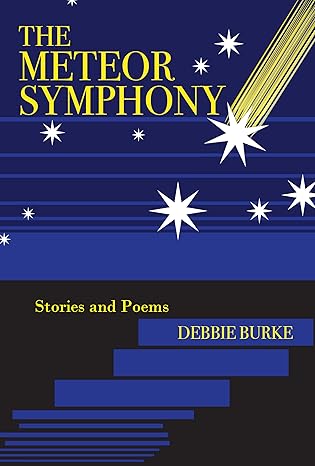

The Meteor Symphony is a colorful mix of short stories, poems, and microfiction, stitched together with music, humor, grief, and hope. It moves from tales of jazz musicians and stolen saxophones to intimate portraits of aging, love, heartbreak, and resilience. Some pieces lean into whimsy, others lean into sorrow, and many hover in the strange, honest space in between. The title story ties it all together with an imaginative search for a lost symphony, but the book itself feels like a symphony of voices, moods, and rhythms.
I enjoyed the range in this book. One page had me laughing at the absurdity of a sax heist, and the next had me sitting with the weight of a widow’s quiet grief. Burke writes with sharp clarity, yet there’s also a looseness in her storytelling that feels natural, like listening to a friend talk late into the night. I loved that she didn’t try to polish away the odd details. People misstep, conversations derail, feelings clash, and it all feels real. At times, the jumps between stories and poems felt a little jarring, but in a way, that’s what made it lively. The collection refuses to settle into one mood.
I also found myself connecting with her fascination with ordinary people. She doesn’t write grand heroes or villains, but flawed, funny, messy people. That resonated with me. Her style is direct but not cold, and she doesn’t shy away from emotions. Some of the poems hit me harder than the stories, brief as they were, because they carried that distilled punch of truth.
I’d say this book is best for readers who like variety, who don’t mind skipping from lighthearted banter to heavier reflections, and who enjoy the intimacy of short-form writing. If you’re open to being surprised, amused, and sometimes gutted all in one sitting, Burke’s collection is worth your time. I’d recommend it to anyone who loves music, who has wrestled with family, or who has ever paused at sunset and felt the ache of beauty and loss in the same breath.
Pages: 114 | ASIN : B0DTJ37FVK
A Wee Problem

Katerina Langley’s A Wee Problem is a deeply emotional and gripping story told from the perspective of a young livestock guardian dog named Wee. The book follows Wee and her family as they struggle to survive on a neglected farm, navigating threats from humans and predators alike. As their small world collapses, the story blossoms into a powerful tale of resilience, sacrifice, and growth. It’s part coming-of-age, part survival saga—told with heart, teeth, and muddy paws.
What got me right away was how alive the writing felt. The opening chapter throws us into the harsh reality of Wee’s life. The author captures emotions—fear, hunger, loyalty—with raw, physical language. It’s not poetic. It’s not polished. It’s real. And that makes it powerful. Langley doesn’t just want you to read about these dogs—she wants you to feel the dirt in their fur and the ache in their bellies.
Then there’s the emotional weight of the relationships. Wee and her brother Fur bicker and play, but they rely on each other in a world that’s turned cruel. Their mother is a complex figure—loving, strong, but breaking under the weight of loss and danger. That moment when she sends Wee and Fur running while she stays to face the coyote was gut-wrenching. I had to stop reading for a second. And when she returns, bloodied and barely alive, it doesn’t feel like a victory. It feels like the cost of love. Langley’s writing in these scenes is at its best: urgent, heartbreaking, stripped bare.
There’s also a slow burn of hope beneath all the struggle. Wee’s growth from a frightened pup to a determined survivor is subtle but moving. Her decisions get braver. Her thoughts get sharper. This book makes you care. You don’t just want these characters to survive. You want them to be okay. And that’s what sticks with you.
I’d recommend A Wee Problem to anyone who loves stories about animals, survival, or family. Especially readers who can handle the raw stuff—the loss, the violence, the quiet despair. This isn’t a fluffy farm tale. It’s tough. It’s tense. But it’s also full of heart. Langley has written something that feels lived in and loved. It’s not just a story about dogs. It’s a story about fighting to hold onto what matters when the world stops caring.
Pages: 413 | ASIN : B0DS52P491

Bad Pharma

Bad Pharma is a medical thriller that dives into the murky waters of the pharmaceutical industry. It tells the story of Nora O’Connell, a savvy pharmaceutical professional, and Siddhartha Kumar, a meticulous medical monitor, as they navigate the ethical quagmire of Big Pharma’s relentless drive for profit. The story intertwines corporate ambition, personal stakes, and moral dilemmas, shedding light on the sometimes disastrous consequences of prioritizing business over patient safety.
One thing I loved about this book is its rich and complex characters. Nora’s razor-sharp wit and unrelenting ambition make her a captivating protagonist, but it’s her internal struggle with corporate ethics that truly resonates. Take her confrontation with Sid in Chapter 4—her fiery accusations and Sid’s calculated calmness highlight the human element in a soulless corporate environment. Sid, too, is a standout character. Haunted by the ghost of Bonifidia, a past pharmaceutical disaster, he’s the moral compass of the story. His dogged determination to analyze RSVIX data properly, despite mounting pressure, had me rooting for him even when his methods bordered on maddeningly slow.
The writing itself is vivid and engaging, but at times, it teeters on over-explaining. The passages detailing the clinical trial process, while necessary, occasionally bogged down the pace. That said, I appreciated the clarity in these sections, particularly when Sid outlines the risks associated with cutting corners in vaccine trials. The authors don’t just present the science—they make you feel the weight of the decisions being made. For instance, the description of Keturah’s hospitalization in Chapter 6 was gut-wrenching. It made the stakes of the BREATHE trial painfully real.
I also found the tension between Nora and Sid compelling. The workplace banter was a welcome reprieve from the darker themes, providing a balance that kept the narrative from feeling too heavy. The authors’ ability to blend sharp commentary on the pharmaceutical industry with human connection is a testament to their skill.
Bad Pharma is a moral inquiry wrapped in an engaging narrative. I would highly recommend it to anyone intrigued by the intersection of science, ethics, and corporate drama. Whether you’re a healthcare professional, a corporate worker, or simply a fan of thought-provoking conspiracy thrillers, this book will make you question how much we’re willing to compromise in the name of progress.
Pages: 365 | ASIN : B0DPSWQMXK



 LITERARY TITAN