Blog Archives
Dissenting Opinion
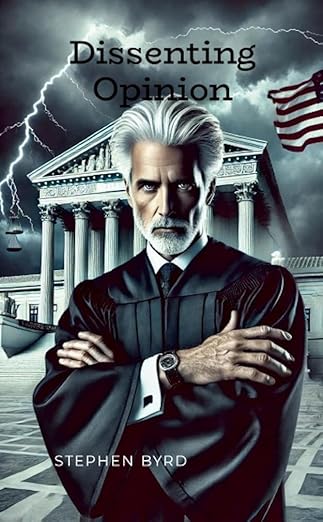

Stephen Byrd’s Dissenting Opinion is a sharp, clever, and wildly timely political-legal thriller that dives headfirst into the shadowy intersections of law, power, and identity. The novel follows Judge Jason Simpson, a respected federal judge tapped to fill a vacant seat on the Supreme Court by a conservative President who assumes Jason is one of their own. But Jason harbors a secret—his true beliefs align more with the liberal camp. What follows is a strategic dance of subterfuge, legal integrity, and ideological rebellion, all wrapped in wit, tension, and some laugh-out-loud moments courtesy of press secretary Vicki Smith’s PR disasters. It’s part courtroom drama, part political satire, and part character study of a man walking the tightrope between truth and survival in a world that expects allegiance above honesty.
I loved how Byrd played with tone. He bounces from biting satire to tense legal sparring without missing a beat. The opening scene with Vicki bungling the death announcement of Justice Egley had me laughing—lines like calling it a “standard, ordinary, everyday expiration of human life” hit with pitch-perfect awkward comedy. But then Byrd shifts gears in the courtroom scenes, like when Jason grills the government lawyer in the Argus Pipeline case. That whole back-and-forth about “potential” environmental harm and due process felt like reading a modern-day Aaron Sorkin script. It was fast, cutting, and quietly enraging. Byrd knows how to build a speech that punches through the page.
What stuck with me the most, though, was Jason’s internal conflict. His private monologues were some of the most honest writing I’ve read in a political novel. When he’s sitting in his study, weighing the morality of accepting the nomination under false pretenses, it’s not just good drama—it’s real. Like when he fears letting “the wrong kind of judge” take the seat instead. Byrd doesn’t shy away from that ethical gray zone. He leans in, and it makes Jason’s choices feel earned, not just symbolic. And the Supreme Court scenes where the other justices slowly start to realize Jason isn’t the conservative clone they expected? Absolutely delicious. It’s the quiet chaos of watching a system unravel from the inside out, led by someone who just refuses to be predictable.
If you like fast-paced political thrillers with brains, bite, and a moral center, this one’s for you. Fans of The West Wing, Scandal, or even Suits will be right at home. It’s not just for legal nerds or political junkies either—this book is for anyone who’s ever wondered what might happen if the person in power decided to put country and conscience before party. It’s smart. It’s brave. And it’s a good time.
Pages: 105 | ASIN : B0DZTRHP6C

A Haunting Mix
The Light of Faded Stars follows a retired detective on his deathbed who is reflecting on his final, unsolved case—the brutal murder of a young woman. What was the inspiration for the setup of your story?
The setup for The Light of Faded Stars emerged from a blend of literary influences, personal observations, and a deep sense of duty to honor my friends’ experiences. Stylistically, I was heavily inspired by the works of American writers like Cormac McCarthy, William Faulkner, Jack Kerouac, Ernest Hemingway, F. Scott Fitzgerald, John Fante, J.D. Salinger, and Jack London. Their mastery of raw, evocative prose and their ability to portray the complexities of the human spirit left a lasting impression on me and shaped the tone and style of my novel.
The idea for a crime story took root as I explored Saint John, often called Fog City. Its streets, steeped in a haunting mix of faded grandeur and lost promises, struck me as the perfect setting for a noir narrative. Despite its challenges, Saint John is a city on the cusp of renewal, and that tension between its past and its potential added depth to the story’s backdrop. In this place, shadows conceal untold stories, yet hope flickers on the horizon.
I also wanted to weave in a backstory about Afghanistan as a tribute to my friends who served there. While I served in the military, I didn’t deploy to Afghanistan, but I witnessed its profound impact on those who did. Including this element felt like a duty to honor their sacrifices and to explore how such experiences ripple through lives and communities. Together, these threads—the literary influences, the atmospheric setting of Saint John, and the Afghanistan backstory—formed the foundation for a tale of mystery, reflection, and remembrance.
What are some things that you find interesting about the human condition that you think make for great fiction?
The human condition offers endless inspiration for fiction, particularly in its messiness and contradictions. One aspect I find compelling is how people wrestle with their pasts—how regret and unresolved questions can linger like ghosts. In The Light of Faded Stars, the retired detective, facing his final days, is consumed by his last case with Marcel, his partner: the brutal murder of a young woman with such promise. This allowed me to explore the human yearning for closure and the burden of carrying unfinished business to the grave, and to tie it all together with the unfulfilled promise of the city.
Another fascinating element is the tension between memory and truth. As the detective revisits his life, he grapples with his recollections of the case, questioning what’s real and what’s colored by his biases. This mirrors a universal struggle—how we reshape our stories over time, often blurring the line between fact and perception, and how many things fall in the cracks of unremembered time. I think it ties well with the life of small-town folks. There are whispers and stories about everyone, and people’s reputations become more real than the real person sometimes. I wanted my narrator to be from a village like mine, where memory and truth can be two separate things.
Finally, the enduring impact of trauma captivates me. Whether it’s the detective’s decades-long career in law enforcement or the Afghanistan backstory reflecting my friends’ service, trauma shapes people in profound, often invisible ways. It influences their choices, relationships, and sense of self, making it a powerful lens for fiction that resonates with readers on a visceral level. And I wanted to explore the gritty outlook of hard-boiled characters in a philosophical and poetic way, which the reviewer noted and truly appreciated.
What were some themes that were important for you to explore in this book?
In The Light of Faded Stars, I wanted to explore themes that reflect the weight of a life fully lived. Regret stands at the forefront. The detective’s curse is that he meets the body before the person and only uncovers the humanity of his victim as he goes along. Basically, he is always too late, and that has to affect his psyche and outlook.
Another key theme is the passage of time. On his deathbed, the detective feels time slipping away, heightening his urgency to make sense of his past. Time is a palpable force in the story, underscoring how fleeting opportunities for resolution can be. Aging is a universal reality, and by exploring that subtheme, I wanted to offer an answer as to the best way to approach it. In my book, I did not shy away from darker themes, since literary fiction is not just there to entertain but also to help us confront real problems.
The search for closure ties closely to this. The case is an open wound—not just for the detective but for everyone touched by the crime. It extends itself like dominoes in multiple directions and affects various characters. I wanted to explore how people chase that elusive sense of completion and what happens when it remains out of reach. In real life, a detective investigation does not necessarily meet a resolution for all its threads. I read and researched about the experiences of real detectives to help me integrate a sense of realism into my investigation narrative.
Lastly, the impact of trauma runs through the narrative. From the detective’s years confronting violence to the Afghanistan backstory, the story examines how such experiences leave lasting marks. These themes—regret, time, closure, and trauma—intertwine to create a portrait of a man seeking meaning at the end of his journey. It makes it an existential novel at the core, but, as the reviewer mentioned, there is some humour, entertainment, and poetry to keep the reader positive and engaged.
What is the next book that you are working on and when can your fans expect it to be out?
My next project is a collection of short stories about the people of Saint John. It will be a fresque of the colorful people of the Maritimes—a vibrant tapestry of characters who embody the region’s spirit, struggles, and resilience. I’ve already written many short stories for this collection and aim to publish it in 2025 or early 2026. One is currently competing in a literary competition in New Brunswick, which is an exciting step forward. I’ll keep my readers updated on progress through my social media, and I’m eager to share these tales with them!
Author Links: GoodReads | Indigo | FriesenPress | YouTube | Amazon
Comic Relief

Devil’s Spit follows a rum-drenched city guard with a haunted past who is investigating a brutal murder scene with six bodies, which leads him into a far-reaching conspiracy putting his own life in jeopardy. What was the inspiration for the setup of your story?
I thought it would be great fun to have an action detective novel set inside a fantasy world. It’s not a detective novel without a detective who’s really messed up and Inspector Greaves from the Ironbay city guard plays that role. His assistant and sidekick Probationary Constable Nigel Owens provides some comic relief and some unexpected surprises.
The novel is a prequel to the Ironborn Saga and we see a whole pile of the characters that are in the series, in different roles and different stages of their lives. That’s fun for people who’ve already read the other books in the series and it also sets up those books for those who haven’t. I wrote the book so you didn’t have to read any other Ironborn Saga novels to enjoy it, but if you have there are nuggets sprinkled all through it.
What was the inspiration for the culture of your characters? Is it modeled after any particular society?
Devil’s Spit is set in Ironbay, the main city in my Ironborn Saga. It’s a prequel and this version of Ironbay is full of corrupt, murderous gangs, and people scraping to eke out a living. The city has a very vague English industrial feel to it but it’s not modeled after a specific society.
I felt that Devil’s Spit delivers the drama so well that it flirts with the grimdark genre. Was it your intention to give the story a darker tone?
In the Ironborn novels, I try to make them violent enough that you feel like the main characters are in real peril when you read the books. I also try to even that out with humour sprinkled in. And in my novels, it’s common for the main character to succeed to a certain extent. So it’s not really grimdark, just on the edges of it.
What is the next book that you are working on, and when will it be available?
I’m currently working on the next book in the Ironborn Saga. We return to Ironbay and Crutch dealing with what’s left of the city after City Of Corpses. It should be released sometime in the next 3 months.
Author Links: GoodReads | Facebook | Website | Amazon
But this is no ordinary murder. The conspiracy reaches higher than Inspector Greaves could ever have anticipated and uncovering it could lead to his death and the deaths of everyone he cares about. Can Inspector Greaves reveal the true murderer? Can he and Sergeant Zander’s royal marines survive protecting the innocent when every criminal and Ironbay’s corrupt city guard are determined to kill them?
Literary Titan Rating: 5/5
“Devil’s Spit is a gritty, booze-soaked detective noir tucked inside a fantasy world teeming with corruption, gang violence, and moral rot. The story follows Inspector Jack Greaves, a rum-drenched city guard with a haunted past, as he investigates a brutal murder scene that turns out to be more than just another night in Ironbay. With a rookie constable at his side and enemies lurking around every corner, Greaves dives headfirst into a tangled mess of bodies, secrets, and vendettas that refuse to stay buried.
This book had me hooked from the first swig of devil’s spit. The writing is razor-sharp, fast-paced, and just oozes atmosphere.”
This exciting, action packed prequel to the Ironborn Saga has surprises that set up book #9 in the series, with a wide range of characters including Sergeant Zander, Quicksilver, Longshot, Doc, Jasper, Mincer, Crutch, and Cedric.
IMPORTANT: This prequel is a stand alone novel that sets up book #9 in The Ironborn Saga. It is a stand alone novel but it is essential reading before you read book #9.
Other Realms

Whispers from the Grave follows a black witch/half-demon and her partner, a homicide detective/necromancer, who are working to navigate otherworldly threats while also trying to raise a child. What was the inspiration for the setup of your story?
When I was writing this book, my niece Aria had just been born (this is where I got the name) and I had already decided by the end of book 3 – Eternity, that Victor and Olivia were going to have a child. Having followed Molly through the whole saga to date, she was always going to continue (and will continue as long as I write in this Saga) As Whispers from the Grave is book 4 in this Saga, the characters have grown within each other. So to answer the question I would have to go back to Sekhet, the 1st in the Saga.
Born and reared in Ireland, I grew up within the folklore of ghosts, witches, entities from other realms, and yes heaven and hell. My inspiration came from my want to create a world within our own, which to some is a real thing. I wanted to delve into a world of supernatural beings while navigating through it in a way I believe it would be. My fear of hell from a young age allowed me to really imagine what it is to be there, those holy crap moments that test your resolve.
Whispers from the Grave allowed me to concentrate on some of my favourite characters, and branch out beyond what they have already brought to the table.
What character did you enjoy writing for? Was there one that was more challenging to write for?
My favourite character to write is Joe, since the beginning he has been the one to lighten the mood. The hardest in Whispers from the Grave was actually Olivia. As a human caught up in Victor’s world, trying to bring her into his supernatural life was in some ways tricky. I wanted her to keep her human side, the side that refused to accept anything out of the ordinary, especially the knowledge that Victor not only seen ghosts but could speak with them. Something as a human and not of his world leaves her terrified for her daughter.
In fantasy novels, it’s easy to get carried away by the magical powers of characters. How did you balance the use of supernatural powers?
Balancing was easy. The idea that a supernatural is simply just a powerful being is just that – an idea. Werewolves, witches, necromancers, seers, and vampires all have a human side. It is keeping that side of them alive within their characters and that in itself is not difficult.
Where do you see your characters after the book ends?
I see them in book 5 🙂
Author Links: GoodReads | Amazon | X (Twitter) | Facebook | Website
In a world of supernatural beings where boundaries are pushed beyond the realms, Victor (a homicide detective and necromancer) and Olivia grapple with the revelation that their newborn daughter is not without reach. With the aid of his childhood friend Molly, a black witch with demon bloodlines, Victor has no choice but to allow and support her taking control in a bid to fight off Lilith and a black witch from the land of Fairies. The Glaistig, an ambivalent figure both malicious and benign in nature, sees Molly tapping into her powers, although fearful for Aria’s safety, is always excited to delve into ancient spells and rituals.
News of a teenage witch’s demise at the hands of a vampire, leaves tension and mistrust the Coven feel in their connections, within the supernatural world.
Utter Destruction

T.V. Holiday’s Cataclysm: Legend of The Iron Warrior Vol. 2 follows the Iron Warrior as he attempts to stop a demon-power couple from overthrowing another city and causing unimaginable destruction. What was the inspiration for the setup of your story?
I’ve always had a love for horror stories and this was my attempt to do one of my own. Based on the way Slaying Paradise ended, it opened the door for me to go darker. I’ve always loved vampire stories and the Evil Dead series is one of my favorites. The world these characters inhabit is prime for those elements. I originally started this story back in 2004 but never finished. I tried a reboot, for lack of a better word, in 2012 but still never finished. This is the third time that I’ve written a version of this story. Just to finish it has been an accomplishment.
What character did you enjoy writing for? Was there one that was more challenging to write for?
Crystal ended up becoming one of my favorites to write for. Her dynamic with Travis was fun and natural. The banter just rolled out and she added some of the balance I felt the story needed in certain places. Ashley was more challenging because it took me a while to find her voice. I found her as I got closer to the end of the first draft. Once I went back for the revisions, I was able to find her much easier.
How did you balance the action scenes with the story elements and still keep a fast pace in the story?
To me, the action scenes flow naturally within the story. The action is part of telling it. That level of violence is essential to the character development and how it impacts those exposed to it. I’ve read that my stories have a fast pace, and it surprises me, to be honest. I try to focus on every bit of the story having a purpose. If a scene doesn’t add anything or is a repeat of something prior, then it has to go. I don’t want to be bored reading the story and it seems like that is what helps me with the pace.
Where does the story go in the next book and where do you see it going in the future?
T.V. Holiday’s Vendetta: Legend of The Iron Warrior Vol. 3 will be the final chapter in this trilogy. This will be the end of the story. I’ve seen the end for almost 20 years now. To me, utter destruction and the breakdown of everything is the only way to go. The Iron Warrior will be broken down in every way and ultimately lead him on a collision course with Luc in Brimstone. The confrontation has been building for two books and now is the time for it all to come to a head. After Volume 3, there will be the potential for spin-offs with other characters. But my goal is to end this and complete the mission that God tasked me with. This one will be the largest story I’ve written yet.
Author Links: GoodReads | Amazon
In the wake of Luc’s failed attempt to seize control of Carnage Coast with The Free Love Initiative, The Iron Warrior is reeling from a devastating loss. Bodies pile up, and the streets run red as he struggles to control the ever-growing darkness within himself.
Detective Rebecca Walters, now tasked with investigating the mounting murders, but time is running out. As the clock ticks, the pressure to solve the case grows, and her failure will lead to more than she can possibly imagine.
Meanwhile, Luc has enlisted the help of the ruthless Monsoon and his deadly wife, The Crimson Queen. Together, they are hellbent on adding The Iron Warrior to their long list of fallen champions and bringing Carnage Coast to its knees.
As nefarious forces close in, The Iron Warrior must make a harrowing decision: succumb to the darkness and meet his brutal end at the hands of Monsoon and The Crimson Queen, or help Detective Walters solve the case and prevent Carnage Coast from falling into eternal night?”
Bloodbound: Alternate Tracks
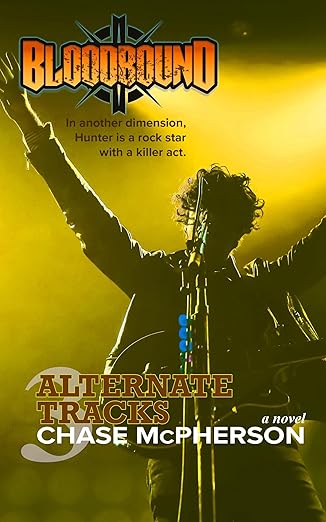

Bloodbound: Alternate Tracks drops readers headfirst into a pulsating world of supernatural espionage, romantic chaos, and moral grey zones. Think queer vampire secret agents mixed with gothic glam rock and high-stakes interdimensional danger. The story follows Hunter, a once-human vampire with hidden demonic roots, his maker-lover Kai, and their ancient, emotionally-complex partner Gibson as they battle both external threats from a rival faction called The Crown and internal turmoil about identity, power, and love. It’s urban fantasy, but not the moody, fog-soaked kind. This one crackles with neon, music, blood, and banter.
McPherson’s writing is this punchy mix of earnest and irreverent, and it works. The dialogue sparkles. Hunter’s snarky quips, Kai’s quiet intensity, Gibson’s flamboyant menace. They all clash and collide in the best ways. One of my favorite scenes has to be the opening in the artist suite where Mickey, the shady manager, gets drained dry by the lead singer of a vampiric rock band. That moment sets the tone: flashy, brutal, and a little unhinged. Later, the scene where Kai ends up in a weird alternate reality Dallas, able to walk in sunlight, ordering a sandwich like some confused immortal tourist was hilarious and oddly sad. The worldbuilding balances camp and dread in a way that feels totally unique.
The alternate universe storyline was wild, and while I love a good multiverse twist, it got a little dizzying with all the doubles and overlapping identities. Still, I loved how emotionally grounded it stayed. Even while being hunted, poisoned, or half-possessed, the characters are still trying to figure out their feelings. I genuinely felt for Hunter during his blood transfusion scene—his fear, his longing for Kai, his vulnerability. And the twist with the demon venom was dark. Really dark. The emotional undercurrents carry the high-concept fantasy, which I didn’t see coming.
I would absolutely recommend this book. It’s perfect for fans of urban fantasy who are tired of the same old brooding loner vampire tropes. If you like queer romance, secret organizations, chaotic polycules, and lots of sarcastic flirting mixed with visceral horror, this is your book. It’s not a subtle book. But it’s a fun one. Bold, sexy, weird, and somehow heartfelt—Bloodbound: Alternate Tracks doesn’t just bite, it leaves a mark.
Pages: 214 | ASIN : B0DWLNL79M
Inspired by Historical Fiction

A Tapestry of Two Worlds follows a young boy growing up in 19th-century Lancashire and his family’s transition to life during the Industrial Revolution. Where did the idea for this book come from?
A Tapestry of Two Worlds tells a story based on the life of my Great-grandfather. Using the known facts of his life blended with social history, I imagine dialogue, reactions to those events, and interaction with other characters, to build the character arc. This story breaks his world into two distinct aspects; his life in Northern England compared to the last half of his life in India.
How much and what type of research went into planning and writing this novel?
I begin my stories with a timeline of factual events for my protagonist and key relationships in their lives. Layered in, I research the social history of the places during those times. Extensive research happens before and during the process of crafting the manuscript. I discovered my protagonist on a ship’s passage notice in the China and London Telegram, a paper used by the P&O Shipping line to share news from the colonies. Another great find came from a letter posted on a blog site, detailing a similar journey around the same time. As it turns out, this person travelled on the same ship my character did.
What draws you to the historical fiction genre?
We have such a rich world of stories in our history. Exploring the lives from the past can teach us about resilience, courage, and inventiveness. I love writing in this genre. Recently, I’ve explored other forms of writing from poetry to flash fiction, but still find myself inspired by historical fiction.
What is the next book that you are working on, and when will it be available?
Due in 2026! Story Synopsis:
In 1932, at the age of 47, Victor Veevers, left his Indian birthplace, Bombay, to settle his family in London, England. Born in 1885 to a British father and a mother of Portuguese and Indian descent, he lived during a period of growing unrest in India and sought economic security as well as protection from the mounting resentment his family faced in Bombay.
Vic’s skills as a photographer and cine-recorder, along with his local knowledge of India, earned him a spot on the British Gaumont Studios production team hired to film the 1933 Lady Houston Mount Everest Expedition. The daring adventure would test both aviation and photographic technology by attempting to take aerial images of one of the last frontiers of the world, Mount Everest. The story arc follows the production unit as they prepare and film the events, culminating in the Academy Award for short film in 1936.
Within a year of leaving the birthplace that rejected him and his family, Victor finds himself back in India. The story reveals challenges and triumphs on his path of acceptance as Victor explores the dual perspectives of his British and Indian heritage.
It may also include memoir pieces; the discovery of my heritage, and the mixed-race heritage influenced future generations.
Author Links: GoodReads | Facebook | Website | Substack | Instagram | Amazon
Raised in a middle-class English family during the Industrial Revolution, James Harrison Veevers escapes to East Asia in 1863. Exchanging pastoral views, dingy factories and crushing poverty in his Lancashire home, for the exotic, intoxicating culture of India. James pulls at the threads, unraveling the expectations of others. Determined to design his own life, James artistically weaves a colorful new tapestry from the filaments of his experiences gathered across two continents.
If you love stories rich with description and adventure, share the journey with James as he travels to the exotic world of India.
Overcoming Fears and Self-Doubt

Rage Against the Machine follows a celebrated filmmaker who explores the dangers of filming and research when she finds herself deep within a world that combines faith and science fiction. What was the inspiration for the setup of your story?
Great question. I always found faith in God and science interrelated because both are sought after in search of truth, understanding why we’re here, with hope for the eternal life while discovering unknown mysteries of God, science, and the universe. I wanted to create a storyline that would weave these forces together and thought science fiction may be an avenue to explore the human struggle of faith and the technological world we live in and have yet to discover.
What do you think is the key to successfully blending spiritual elements within a science fiction plot?
Given this is my debut novel, I’ve learned a lot from my editors and trusted their input. Having said that, I believe too many spiritual elements would actually work against the science fiction plot. The spiritual aspects of the book should be subtle but prolific and nourishing to the soul. The science fiction elements should catch the reader off guard, be impactful, and thought-provoking, leaving the reader wanting to know more.
What were some themes that were important for you to explore in this book?
I thought it was important to highlight overcoming fears and self-doubt and finding inner strength through faith, and forgiveness. Given that A.I. is becoming more integrated into our lives whether we accept it or not, it’s not going away. I felt it was important to recognize the pros and cons of what direction advanced technology may be heading.
Can you give us a glimpse inside the second book in this trilogy? Where will it take readers?
I haven’t started writing the second book of this trilogy yet, but plan on beginning shortly. The outline is completed and is subject to change with a series of drafts before it’s perfected. The second book will delve deeper into the supernatural realm, off-world entities, greater challenges of faith, galactic battles, and bleeding-edge technology that hopefully will startle readers.
Author Links: GoodReads | Website | Amazon
Amid the challenges and dangers of research and filming, Hunter Barraclough, Roare’s biological father, enters her life for the first time. When Roare reaches her breaking point, help comes from an unlikely source, Sloane McInerney, Roare’s bodyguard. Sloane has his own reasons to join forces with Roare to unmask a malevolent AI lab whose CEO plots to destroy human souls through AI and other-worldly technology. As she battles demonic forces, Roare uses fear and anger to her advantage. But how long will she last before she questions her own survival?



 LITERARY TITAN