Blog Archives
The Real Shock

The Lost Bitcoin is an exciting middle-grade adventure about four friends who travel to London on a billion-dollar treasure hunt to recover a lost Bitcoin hard drive while uncovering a mystery that adults have failed to solve. What is the most rewarding aspect of writing a series?
The most rewarding thing is probably getting to imagine how these adventures would play out like a movie in my head. When I first heard about James Howells trying to gain access to a landfill in Wales to find a hard drive containing the key to hundreds of millions of dollars in Bitcoin, I immediately thought, If my friends and I lived anywhere near there, we would figure out a way to find that thing!
That’s one of my favorite parts about writing a series. Whenever I hear about a real lost treasure or an unsolved mystery, I start imagining what would happen if my friends and I tried to find it. What would we need? Who else would be looking for it? What could go wrong?
How did you develop the personalities of the four friends and decide what each would contribute to the team?
You asked me this same question in the interview for my first book, and my answer is still the same. The four friends are really different parts of my own personality. I think everyone has different “voices” in their head depending on the situation, and I thought it would be fun to turn those into separate characters.
I’m writing the third book now, and one of the coolest parts of writing a series is seeing how their personalities have grown. Each character has become more complete and distinct, and sometimes I already know exactly what one of them would say or do before I even write the scene.
What research did you do to make the Bitcoin and cryptocurrency elements understandable to middle-grade readers?
First, I will say that there is nothing understandable about Bitcoin! I spent a lot of time researching cryptocurrency, private keys, digital wallets, and what happens if someone loses access to their Bitcoin.
The hardest part was figuring out how much readers actually needed to know. And that turned out to be pretty simple: there’s a hard drive, it contains keys to a fortune in Bitcoin, and no keys = no money.
The real shock was learning that Bitcoin is only valuable because a lot of people believe it’s valuable—kind of like cash—and that you basically own it because a huge network of computers agrees that you do. Once I understood that, I figured readers didn’t need a school lesson on Bitcoin. They just needed enough to understand the treasure hunt.
What do you hope young readers learn from the characters about ingenuity, responsibility, honesty, and teamwork?
I don’t really have a goal of teaching my audience anything. I just want them to be engaged, entertained, and to keep turning the page.
This question actually reminds me of a trip I took to a museum. The guide kept pointing out all the symbolism and hidden meanings in the paintings, and I remember wondering if the artists really intended all of that or if they were just painting something they liked.
I think about my books the same way. If adult readers see lessons about teamwork, honesty, or responsibility, that’s great. But when I’m writing, I’m mostly thinking, Is this story good enough to make someone put down their phone and keep reading?
Author Links: GoodReads | Instagram | TikTok | Website | Amazon
The Goonies meets Home Alone in a hilarious, high-stakes hunt for a billion-dollar fortune buried beneath a mountain of garbage.
Five years ago, a hard drive holding the keys to 15,000 Bitcoin was accidentally thrown away. Now, it’s lost somewhere inside a sprawling, heavily guarded garbage dump outside London.
Sam, Riley, Ava, and Jonah are going to find it.
Soon, the four friends are sneaking past security, deploying custom drones, dodging guard dogs, and racing an eccentric British politician who will stop at nothing to claim the fortune for his own royal ambitions.
They thought digging through trash was the hard part.
They were wrong.
When the treasure hunt follows them home, the kids have to turn their own turf into a fortress. Think glitter bombs. Paintballs. Homemade gadgets. And one very angry, humiliated would-be king.
Finding the treasure was only the beginning.
Now they have to keep it.
The hunt is back on. Are you ready to join them?
The Disappearance of Synesthesia


The Disappearance of Synesthesia, by Steven Lesk, MD, is a comic mystery built around a wonderfully odd premise: a wealthy, highly intelligent ninety-year-old woman vanishes from her home, leaving behind blood, medication, and enough suspicious evidence to trigger a massive investigation. Sheriff Buck Cormorant initially assumes Synesthesia Kankoor has simply wandered off, but the case quickly attracts the FBI, the president, international detectives, the media, and her billionaire son, Artemis. The reader, meanwhile, learns very early that Synesthesia has arranged her own disappearance because she wants a life that belongs to her. That choice gives the novel an unusual shape. The mystery isn’t primarily about whether Synesthesia is alive. It’s about whether anyone will figure out what she has done, and how far the people helping her will go to preserve the illusion.
Buck Cormorant is the engine of the book. He’s profane, stubborn, politically incorrect, frequently intoxicated, deeply suspicious of the FBI, and much more perceptive than the people around him tend to believe. His investigation unfolds amid mushroom trips, hallucinated conversations, arguments with federal agents, bizarre encounters with outside detectives, media speculation, forensic discussions, and increasingly elaborate theories. The comedy is broad and intentionally outrageous, but there’s a genuine detective story running underneath it. Details such as the blood pattern, the abandoned medications, the strange ransom demands, the supposed kidnapping video, and the death of Gregory Watson gradually stop looking like unrelated curiosities and begin pointing Buck toward a staged disappearance. That process gives the middle of the novel its momentum because Buck keeps returning to the evidence even when almost everyone else is ready to accept an easier explanation.
What makes the story more interesting than its comic surface suggests is its recurring question about who gets to decide what another person’s life should look like. Synesthesia doesn’t disappear because she’s helpless. She disappears because she’s fiercely independent and wants to spend what remains of her life as herself. That idea becomes increasingly important as the investigation grows into an enormous institutional spectacle involving money, politics, celebrity, law enforcement, and public opinion. The novel also enjoys poking at professional certainty. Experts repeatedly settle on explanations while Buck keeps worrying at the facts that don’t fit. His persistence finally leads him to George Castelanet and Barbados, where the supposed kidnapping collapses, and the real criminal element of the scheme comes into focus. The conclusion also gives Buck a satisfying moral decision: after finding Synesthesia alive, he agrees to tell the world she’s safe without revealing where she lives.
I’d recommend The Disappearance of Synesthesia most to readers who enjoy irreverent mysteries, eccentric detectives, dark comedy, and stories that are willing to wander into strange territory while still moving toward a solution. It’ll especially suit someone who likes satire mixed into a crime plot and doesn’t mind profanity, sexual humor, drug humor, or deliberately abrasive characters. Buck’s voice is so dominant that a reader’s enjoyment will probably depend on whether his chaotic, offensive, funny, self-medicating personality clicks with them. For the right reader, though, that personality is exactly what gives the book its identity. Beneath all the absurdity, there’s a surprisingly warm conclusion about persistence, privacy, personal freedom, and keeping a promise even when powerful people would rather you break it. Buck’s persistence keeps the mystery moving, and the book ultimately ties its larger themes of privacy, freedom, money, and institutional pressure back to Synesthesia’s unusual disappearance.
Pages: 212 | ASIN : B0HDB3YZT7

Enemy of the Future

Enemy of the Future by R.E. Trout is a fast-moving young adult science fiction thriller that blends time travel, biological danger, high school drama, and action-adventure mystery. The first book in the Trip Stewart Adventure series opens with Trip and his classmate Jayla trapped inside a pharmaceutical laboratory during an armed attack, then rewinds several days to reveal how an ordinary school project led them into the crisis. That opening gives the story immediate urgency, while the earlier timeline builds a web of suspicious cars, unexplained disease outbreaks, secret research, and adults who may be hiding more than they admit.
Trip makes an appealing lead for this YA sci-fi adventure because he feels like a teenager before he feels like a hero. He’s smart, observant, socially uncertain, and still grieving his grandfather, but he also has an instinct for stepping in when someone’s in danger. His developing friendship with Jayla gives the book plenty of warmth and humor between the suspenseful scenes. Their conversations, school pressures, awkward romantic moments, and shared detective work keep the speculative premise grounded in a recognizable coming-of-age story.
The time-bending element adds the book’s most intriguing layer. Trip gradually reveals that he can return to an earlier point when someone dies before their time, carrying his memories into a new version of events. That ability turns the time travel mystery thriller into more than a race to expose a conspiracy. Each choice carries emotional weight because Trip remembers outcomes that everyone else has forgotten. Trout uses that idea to explore courage, responsibility, grief, and the pressure of knowing what may happen while still having to improvise when events begin changing.
The final stretch delivers the full energy promised by the opening, with a pharmaceutical symposium, a stolen virus, armed intruders, betrayals, laboratory escapes, and Trip trying to keep Jayla and her father alive. The scientific setting gives this biotech conspiracy thriller a distinct identity, and the combination of teen relationships, speculative powers, and cinematic action makes the story easy to picture as it unfolds. Enemy of the Future works as a complete adventure while leaving Trip and Jayla with a compelling new partnership, a dangerous secret, and plenty of possibilities for the rest of the series.
Pages: 319 | ASIN : B0GZVJ5CYJ
Neutrality Act


The Consulting Agent: Neutrality Act, by Jonathan M. Bryant, is a historical noir crime and espionage novel set in Atlanta in 1939, just before the world tips fully into war. The story follows Mark Morgan, a damaged former corporate fixer turned consulting agent, as he is hired to keep watch over German delegates attending the Baptist World Alliance meeting. What begins as a protective job quickly pulls him into Nazi politics, local corruption, murder, police violence, and the uneasy question of what neutrality means when evil is standing right in front of you.
What I appreciated most about this book is how lived-in it feels. Bryant gives Atlanta texture: the heat, the class divisions, the racial lines, the clubs, the trolleys, the old buildings, the stink of streets that have not recovered from hard times. The city is not just a backdrop. It presses on Mark from every side. The noir genre works well here because Mark is bruised in all the ways a noir lead should be, but he’s not a cartoon of cynicism. He’s weary, proud, scared, impulsive, and often slower to understand people than he thinks he is. That made him interesting to follow. I did not always admire him, but I believed him.
The author also makes a smart choice by tying the mystery to real historical tension rather than treating history like decoration. The Baptist World Alliance, Nazi delegates, American isolationism, antisemitism, segregation, and the coming war all sit under the plot like a low rumble. Sometimes the book is a detective story, sometimes an espionage tale, and sometimes a character study about a man trying to decide what kind of person he still is. I liked that the title keeps echoing through the story. Neutrality is not presented as clean or noble. It starts to feel like a thin coat of paint over fear, self-interest, and exhaustion. That is where the novel has its sharpest edge.
I would recommend The Consulting Agent: Neutrality Act to readers who enjoy historical fiction with crime, espionage, and moral tension woven together. Fans of noir mysteries, prewar spy fiction, and character-driven detective stories will get the most out of it, especially if they like books that care as much about atmosphere and history as they do about plot. It’s thoughtful, gritty, and grounded, with enough danger to keep the pages moving and enough unease to linger after the last chapter.
Pages: 275 | ASIN : B0GHVRDKHW
The Stanton Falls Mysteries – Dead Reckoning
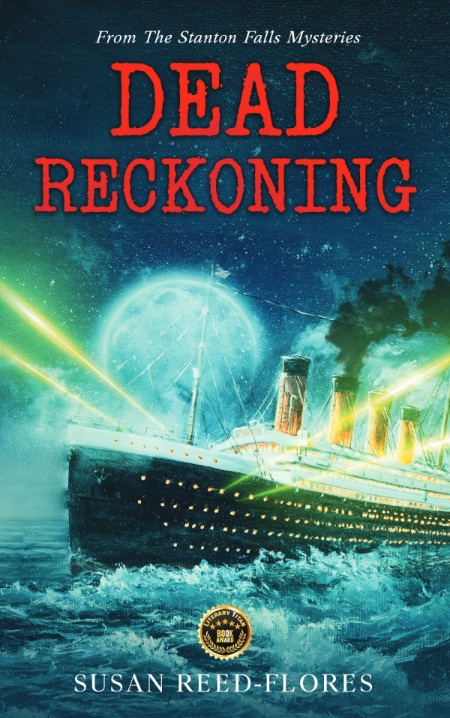
Dead Reckoning follows a tight-knit group of Stanton Falls detectives and their families as they head out on what should have been a relaxing Mediterranean cruise. Instead, the trip unravels into a tangled mess of missing passengers, eerie shipboard mysteries, emotional tension, and danger that creeps up on them when they least expect it. The story shifts between calm family moments, unsettling turns, and sharp revelations. It keeps the focus on relationships and teamwork while pushing the characters into situations that test them in new ways.
While reading, I kept feeling this warm mix of comfort and suspense. The writing leans heavily into character bonds, and I liked that a lot. There is a genuine sense of history between them, and the quieter scenes made the high-stress moments hit harder. At times, the dialogue felt a little straightforward, but the emotional weight underneath kept me hooked. I appreciated how the author balanced cozy slice-of-life beats with creeping dread. It created this enjoyable tension that made me want to keep turning pages.
Some ideas in the book surprised me in a good way. The ship’s strange happenings, the shifting cabin numbers, the subtle horror beneath the surface, all of it gave the mystery a fresh vibe. I loved that the story didn’t try to outsmart the reader with cheap tricks. It felt honest. There were moments when the pacing slowed, and I caught myself wishing for quicker movement, but the payoff eventually landed with enough emotional punch to make up for it. By the end, I felt oddly proud of the characters for what they’d pushed through.
I’d recommend Dead Reckoning to readers who enjoy character-driven mysteries with a touch of creepiness and a whole lot of heart. It’s great for anyone who wants a story that mixes friendships, family, and danger in a setting that feels fun at first and unsettling once things start going wrong. If you like mysteries that make you care about the people as much as the puzzle, this book will be right up your alley.
Pages: 187
A Haunting Mix

The Light of Faded Stars follows a retired detective on his deathbed who is reflecting on his final, unsolved case—the brutal murder of a young woman. What was the inspiration for the setup of your story?
The setup for The Light of Faded Stars emerged from a blend of literary influences, personal observations, and a deep sense of duty to honor my friends’ experiences. Stylistically, I was heavily inspired by the works of American writers like Cormac McCarthy, William Faulkner, Jack Kerouac, Ernest Hemingway, F. Scott Fitzgerald, John Fante, J.D. Salinger, and Jack London. Their mastery of raw, evocative prose and their ability to portray the complexities of the human spirit left a lasting impression on me and shaped the tone and style of my novel.
The idea for a crime story took root as I explored Saint John, often called Fog City. Its streets, steeped in a haunting mix of faded grandeur and lost promises, struck me as the perfect setting for a noir narrative. Despite its challenges, Saint John is a city on the cusp of renewal, and that tension between its past and its potential added depth to the story’s backdrop. In this place, shadows conceal untold stories, yet hope flickers on the horizon.
I also wanted to weave in a backstory about Afghanistan as a tribute to my friends who served there. While I served in the military, I didn’t deploy to Afghanistan, but I witnessed its profound impact on those who did. Including this element felt like a duty to honor their sacrifices and to explore how such experiences ripple through lives and communities. Together, these threads—the literary influences, the atmospheric setting of Saint John, and the Afghanistan backstory—formed the foundation for a tale of mystery, reflection, and remembrance.
What are some things that you find interesting about the human condition that you think make for great fiction?
The human condition offers endless inspiration for fiction, particularly in its messiness and contradictions. One aspect I find compelling is how people wrestle with their pasts—how regret and unresolved questions can linger like ghosts. In The Light of Faded Stars, the retired detective, facing his final days, is consumed by his last case with Marcel, his partner: the brutal murder of a young woman with such promise. This allowed me to explore the human yearning for closure and the burden of carrying unfinished business to the grave, and to tie it all together with the unfulfilled promise of the city.
Another fascinating element is the tension between memory and truth. As the detective revisits his life, he grapples with his recollections of the case, questioning what’s real and what’s colored by his biases. This mirrors a universal struggle—how we reshape our stories over time, often blurring the line between fact and perception, and how many things fall in the cracks of unremembered time. I think it ties well with the life of small-town folks. There are whispers and stories about everyone, and people’s reputations become more real than the real person sometimes. I wanted my narrator to be from a village like mine, where memory and truth can be two separate things.
Finally, the enduring impact of trauma captivates me. Whether it’s the detective’s decades-long career in law enforcement or the Afghanistan backstory reflecting my friends’ service, trauma shapes people in profound, often invisible ways. It influences their choices, relationships, and sense of self, making it a powerful lens for fiction that resonates with readers on a visceral level. And I wanted to explore the gritty outlook of hard-boiled characters in a philosophical and poetic way, which the reviewer noted and truly appreciated.
What were some themes that were important for you to explore in this book?
In The Light of Faded Stars, I wanted to explore themes that reflect the weight of a life fully lived. Regret stands at the forefront. The detective’s curse is that he meets the body before the person and only uncovers the humanity of his victim as he goes along. Basically, he is always too late, and that has to affect his psyche and outlook.
Another key theme is the passage of time. On his deathbed, the detective feels time slipping away, heightening his urgency to make sense of his past. Time is a palpable force in the story, underscoring how fleeting opportunities for resolution can be. Aging is a universal reality, and by exploring that subtheme, I wanted to offer an answer as to the best way to approach it. In my book, I did not shy away from darker themes, since literary fiction is not just there to entertain but also to help us confront real problems.
The search for closure ties closely to this. The case is an open wound—not just for the detective but for everyone touched by the crime. It extends itself like dominoes in multiple directions and affects various characters. I wanted to explore how people chase that elusive sense of completion and what happens when it remains out of reach. In real life, a detective investigation does not necessarily meet a resolution for all its threads. I read and researched about the experiences of real detectives to help me integrate a sense of realism into my investigation narrative.
Lastly, the impact of trauma runs through the narrative. From the detective’s years confronting violence to the Afghanistan backstory, the story examines how such experiences leave lasting marks. These themes—regret, time, closure, and trauma—intertwine to create a portrait of a man seeking meaning at the end of his journey. It makes it an existential novel at the core, but, as the reviewer mentioned, there is some humour, entertainment, and poetry to keep the reader positive and engaged.
What is the next book that you are working on and when can your fans expect it to be out?
My next project is a collection of short stories about the people of Saint John. It will be a fresque of the colorful people of the Maritimes—a vibrant tapestry of characters who embody the region’s spirit, struggles, and resilience. I’ve already written many short stories for this collection and aim to publish it in 2025 or early 2026. One is currently competing in a literary competition in New Brunswick, which is an exciting step forward. I’ll keep my readers updated on progress through my social media, and I’m eager to share these tales with them!
Author Links: GoodReads | Indigo | FriesenPress | YouTube | Amazon
Shell Shocked: An Ocean Mystery

Kathleen Welton’s Shell Shocked: An Ocean Mystery introduces readers to 16-year-old Alex, whose passion for sea turtles transforms her summer into a thrilling yet treacherous adventure. Alex starts by volunteering at a local turtle rescue center, but her idyllic island life takes a dark turn as she and her best friend, Avery, uncover threats to the turtles she cherishes. Together, they navigate a dangerous mystery that puts both the turtles and their own lives at risk.
Welton captures the spirit of conservation beautifully, weaving Alex’s love for sea turtles into a compelling narrative. I particularly enjoyed the vivid descriptions of Cataluna Island, where the ocean’s beauty contrasts starkly with the shadowy threats beneath its surface. One standout moment for me was when Alex first encounters an injured loggerhead turtle, its scarred shell a haunting reminder of human negligence. The emotional weight of that scene stuck with me and underscored the importance of the book’s environmental message. Key moments, like the discovery of the mysterious markings on the turtles’ shells, carried significant intrigue, but some plot developments happened off-page or lacked depth. For example, Alex and Avery’s decision to confront the poachers directly felt rushed, and I found myself wishing for more buildup to heighten the tension. The stakes were clear, but the execution didn’t always deliver the urgency the story demanded. Alex is a relatable and determined protagonist, and her mentor, Maya, adds depth with her wisdom and wit. Avery’s role felt underdeveloped. His contributions to the plot were overshadowed by Alex’s larger-than-life drive, making him more of a sidekick than an equal partner in their shared mission. While their bond was endearing, I wanted more nuance in his character to balance the dynamic.
Shell Shocked offers an engaging tale for readers who love stories with environmental themes and strong-willed protagonists. The book’s heart is in the right place, and its vivid imagery and sincere message make it a worthwhile read. I’d recommend it to teens and young adults who enjoy eco-mysteries or are passionate about wildlife conservation. It’s a story that will make you think twice about the impact of human actions on the world’s oceans—and leave you rooting for every turtle that makes it to the sea.
Pages: 121 | ASIN : B0DRPC38HR
There Are No Superheroes

A Small Mountain Murder delivers a high-stakes investigative thriller where three reporters unravel a web of murder, corruption, and intrigue against the unique backdrop of skiing culture. What was the inspiration for the setup of your story?
I was a journalist on television and the radio for over 40 years. I covered a lot of crime and murder. I also spent decades competing as an amateur ski racer. I’ve had the pleasure of knowing great people, greater racers than I ever was and some influential people in the ski industry.
My novel, A Small Mountain Murder, is about a small ski area. Small ski areas are just like most other small businesses, they run on a shoestring budget and a lot of passion. Passion can get you to do strange things. And if you think a line has been crossed, you might even kill for your passion. Don’t believe me? Just read the headlines. Police call it a “Crime of passion.”
Presently, there are small ski areas across the United States being purchased by much larger ski resorts who are in the process of creating a nationwide network. Some of the employees and customers of those little ski areas are resentful. They didn’t ask for change. The result has been a great deal of resentment. Is that a good reason to kill someone? How often do you really hear of a good reason to kill someone?
Did you base the characters of JC, Milt, and Robin on real-life journalists, or are they entirely fictional?
Any number of people have suggested that I write a story about my life. I’m grateful to have led a pretty interesting existence, so far. But a book about me didn’t sound very interesting. However, a book based on my experiences with some embellishment? That sounded like some interesting fiction.
JC Snow is a television reporter. I was a television and radio reporter for over 40 years. The crimes that I describe in my books are often based on crimes that I really covered as a journalist. And the outdoor adventures I describe are based on some of my own outdoor adventures. That includes decades of ski racing and some jarring crashes while in a race course.
And there are pieces of Milt and Robin that also come from real stories and people that I really knew. Milt is a compilation of talented news photographers that I’ve worked with. Some were a little eccentric. The beautiful and talented Robin reflects the adoration and exchanges that I have with my own wife, Carolyn. But Robin also serves another vital purpose. She is often the sound of reason and reflection.
How did you balance the multiple storylines to create such a seamless resolution?
I want my stories to be plausible. I want the reader to feel that this story they are participating in could really happen. It resembles real life. There are no superheroes. And real life isn’t neat. It doesn’t follow a straight line. Events in life overlap. So, that’s how events unfold in my books. There is already stuff going on when something else crops up. When I was a journalist, I just had to juggle all the balls that I found circling in front of me. I was covering one good story when another good story came up and I just had to figure out how to cover them both.
And it wasn’t unusual to find that a career criminal was responsible for more crimes than the one he or she was being investigated for. Criminals are, in most ways, like the rest of us. When they find a way to get something done, they become comfortable with that technique. That’s their modus operandi. So, when investigating a criminal’s behavior, sometimes you’d stumble over other devious deeds they are responsible for. You also stumble across things someone else is responsible for. Life is complicated. But I do try to resolve most of the issues on the table by the time the book ends.
Can we expect a sequel or future stories involving these characters and the intriguing world you’ve built
Thank you, I do find this world I have contrived to be intriguing. So do a growing number of readers. Now, I have published six Murder on Skis Mysteries. A Small Mountain Murder is my 6th. And more are on the way. They tend to arrive at stores each November. To keep up with our plans and publications, go to our website at murderonskis.com.
Author Links: GoodReads | Website | Amazon


