Blog Archives
The Bent Nail


M.D. Nuth’s The Bent Nail is a dark, unflinching exploration of power, corruption, and the human cost of control. It begins in the chaos of a Delhi marketplace and spirals into a global web of political manipulation, personal ruin, and moral decay. At its center is Tau, a man born into filth and neglect who becomes both a victim and an instrument of a shadowy organization bent on reshaping the world through brutality. From street-level despair to the high offices of government, the novel draws a line between the powerless and the powerful, showing how desperation and authority twist into something monstrous.
Reading this book felt like riding a rollercoaster. Nuth’s writing hits hard. The language is raw and often brutal, but it feels right for the world he’s built. I could almost smell the filth of the streets and feel the emptiness in Tau’s heart. The dialogue is jagged, messy, and alive. It sounds like people breaking apart, trying to make sense of what’s left of their lives. The pacing is relentless. There were moments I had to pause just to breathe, especially in scenes that blended violence with eerie calm. It’s not an easy read, but it’s gripping.
What surprised me most was how much I cared for characters who probably didn’t deserve it. Tau, especially, is a walking wound, and even as he kills, I felt something like pity. Nuth doesn’t excuse evil, he shows how it’s born. The story’s ideas about government control, manipulation, and the illusion of freedom hit close to home. It’s a political thriller, yes, but it also feels like a prophecy, a mirror held up to our worst tendencies as people.
I’d recommend The Bent Nail to readers who like their fiction sharp, ugly, and honest. It’s perfect for those who aren’t afraid of dark themes or moral gray areas. If you want a story that challenges you, unsettles you, and makes you question the world you live in, this one’s worth every page.
Pages: 294 | ISBN : 1681607840

“even gods have flaws”

The Shape of Angels follows an immortal man haunted by a curse who must travel back in time and across dimensions to confront his former self to prevent the universe’s destruction. What was the inspiration for the setup of your story?
My inspiration came from the desire to create something that did not exist. Imagination was strongly encouraged in my household while growing up, as both my mother and my father were very creative. Mom once worked for Sysco Foods as a graphic designer and designed their penguin mascot, Sysco Sydney. Dad was a storyteller, a so-called professional liar. He ‘made up things’ for a living, which is what we do as writers. Imagination came easily to me, and I aimed to create a series that did not resemble others. There are many time-travel books out there, but not many, if any, that feature multidimensional time travel. As per my theory of ‘Dimensional Distinction’, the past, present, and future co-exist at the same time. This allows me to shift readers between timelines by using dimensions to explain a Napoleonic Europe with advanced technology—an entirely new concept and theory with much to explore.
I find the world you created in this novel brimming with possibilities. Where did the inspiration for the setting and the supernatural elements come from, and how did it change as you were writing?
The supernatural elements of my story were inspired by real mythology, and I had always admired Napoleon Bonaparte, who was superstitious himself. To reference mythology, we can examine Napoleon’s imperial eagle, which closely resembles Caesar’s Aquila, including the lightning bolts in its talons—the sacred emblem of Jupiter (and Zeus). I conducted extensive research the six inventors, incorporating the elements and cultures of the real people they represent. Throughout my trilogy, I will introduce and delve into the roles of each inventor, as all six dimensions matter.
What were some themes that were important for you to explore in this book?
The Shape of Angels explores a primary theme of “even gods have flaws”, and those flaws can either destroy or empower, depending on the individual. It is a story that examines limits, but also shows how life can be molded beyond what is possible. Identity is another theme TSOA explores, including what it may look like in the eyes of others.
What will your next novel be about and what will the whole series encompass?
The next novel in my series will be titled The Probability Machine. In TPM, we will learn more about Adreian’s past and how he came to bear Sil’nei’s heart. TPM will lean more on hard science fiction and the coalition wars. Let’s say there might be a shift in protagonists…
Author Links: GoodReads | Facebook
The universe is crumbling. Its fate depends on a child (Adreian Bayne) with a magical heart and a broken body—whose very existence threatens the balance of its six dimensions, time and space.
As the organ propelling Adreian’s blood bears a terrible hex—devised by its original host—and, mighty demigod, Sil’nei.
Tasked with preventing the universe’s destruction, Sil’nei must shed his guise as Physics Professor Giovanni Romano—and confront Adreian in the past (1804) to silence his (own) beating heart. Thus, destroying himself.
Giovanni realizes the complexity of his assignment after undergoing inter-dimensional time-travel. Upon arriving in the third dimension, he meets a grand opportunity—tempting Giovanni to cement his former empire—and mentor his former incarnation, Napoleon Bonaparte, while exploiting Adreian.
As expected, Giovanni receives opposition from his fellow ‘Inventors’, who seek to arrest his conquests—waging a war between gods and mortal men, with Adreian at the epicenter.
Song of Hummingbird Highway


Song of Hummingbird Highway traces the tangled journey of Terri, a tender but wounded woman from Michigan who longs for love that actually sees her. Her world collides with Reynold, a Belizean musician with burning dreams and a storm inside him, and she follows him into unfamiliar cultures, humming forests, spiritual traditions, and painful truths. The story carries her from Laurel Canyon to Belize, through heartbreak, danger, betrayal, and a final push toward her own inner strength. By the end, Terri’s path is shaped as much by ancestors and myth as by the man who once dazzled her. The book blends romance, trauma, folklore, and self-rescue into something that feels bold and deeply human.
The writing has this emotional pulse that surprised me. It swings from soft moments to sharp ones that made me squirm. I could feel Terri’s insecurity, her hunger to be loved, her fear of being forgotten. Some scenes lit up with color and rhythm, especially the early moments between her and Reynold, which felt intoxicating in the best and worst ways. Other scenes hurt to witness. They exposed the cracks in Terri’s self-worth with such blunt truth that I found myself pausing. The story wanders and circles at times, yet the heart of it stays steady. It is a story about the lies we believe about ourselves, and the long walk it takes to unlearn them.
What I liked most was the book’s mix of spiritual energy and raw interpersonal mess. I loved the mythic threads, the Mayan echoes, the ancestors whispering at the edges. I also loved how the Belizean setting opened up like a living thing. Still, I kept wishing Terri would trust herself sooner. Watching her cling to Reynold, even when he faltered and shattered, made me ache. The writing captures that pattern well, because it reminded me of people I have known who could not break free of a charm tied to harm. The scenes near the end felt surreal and heavy with symbolism, yet they worked. They gave Terri a moment of power that felt earned.
When I closed the book, I sat with a strange mix of sadness and relief. I admired Terri for surviving herself as much as she survived Reynold. I admired the author for weaving love, history, culture, music, and pain into a story that refuses to sit quietly. I would recommend this book to readers who enjoy emotional journeys, spiritual themes, and strong cultural settings. It suits people who like romance, who like characters who stumble hard before they find the ground, and who crave stories that hum long after the last page is done.
Pages: 532 | ASIN : B0FZF1TN24
Prism

Prism is a science fiction novel that follows Vernon Vining, an investigator with an unusual sensitivity to the natural world, as he’s sent to a distant planet called Prism to solve a life-or-death mystery. The planet is a technicolor ecosystem where everything shifts through endless shades. The local life communicates by flashing patterns of light instead of sound, and the human settlers, who initially thrived, now face a frightening problem after a worker dies from a catastrophic and inexplicable internal breakdown. Vernon and his longtime partner Sam are sent across light-years to figure out what Prism is trying to say and how to stop the danger before the entire colony must be evacuated.
Vernon’s voice is warm and wandering in a way that makes even technical explanations feel personal. He reflects on childhood, on breezes and falling leaves, and somehow those memories fold into his ability to understand alien worlds. I liked that. It made the story feel grounded even while describing shimmering forests and oceans that blink like jewels. The author leans into color as a living force, almost a language, and that choice gives the book a dreamy undercurrent. The pacing sometimes slows, but the wandering feels intentional, as if we’re supposed to drift a little so Prism’s strangeness can seep in. I didn’t always know where the story was taking me, but I didn’t mind being led.
What surprised me most was how gently the book handles first contact without making it sentimental. The native creatures don’t speak. They glow. They flash warnings or greetings that humans barely know how to read. When Vernon and Sam try to interpret those signals, the book plays with the idea that meaning might hide in anything. A ripple in water. A field shifting from green to gold. Even a sudden, planet-wide burst of color that feels like a greeting from the world itself. I found myself wondering, along with the characters, whether we’d notice such messages on Earth, or whether we’ve forgotten how. The mystery at the heart of the plot gives the story momentum, but it never overshadows the quieter reflections about perception, patience, and what it takes to truly listen.
By the end, I felt like I’d spent time in a place that was oddly soothing despite the danger. The book is science fiction, but it carries the tone of a field journal mixed with a travel diary. I’d recommend Prism to readers who enjoy reflective sci-fi, worldbuilding built around sensory detail, and stories where the “alien problem” is really a communication problem at heart. If you like stories that move with curiosity and a steady, thoughtful rhythm, you’ll probably enjoy settling into Prism for a while.
Pages: 227 | ASIN: B0CHL7WRTG

Mortal Revenge
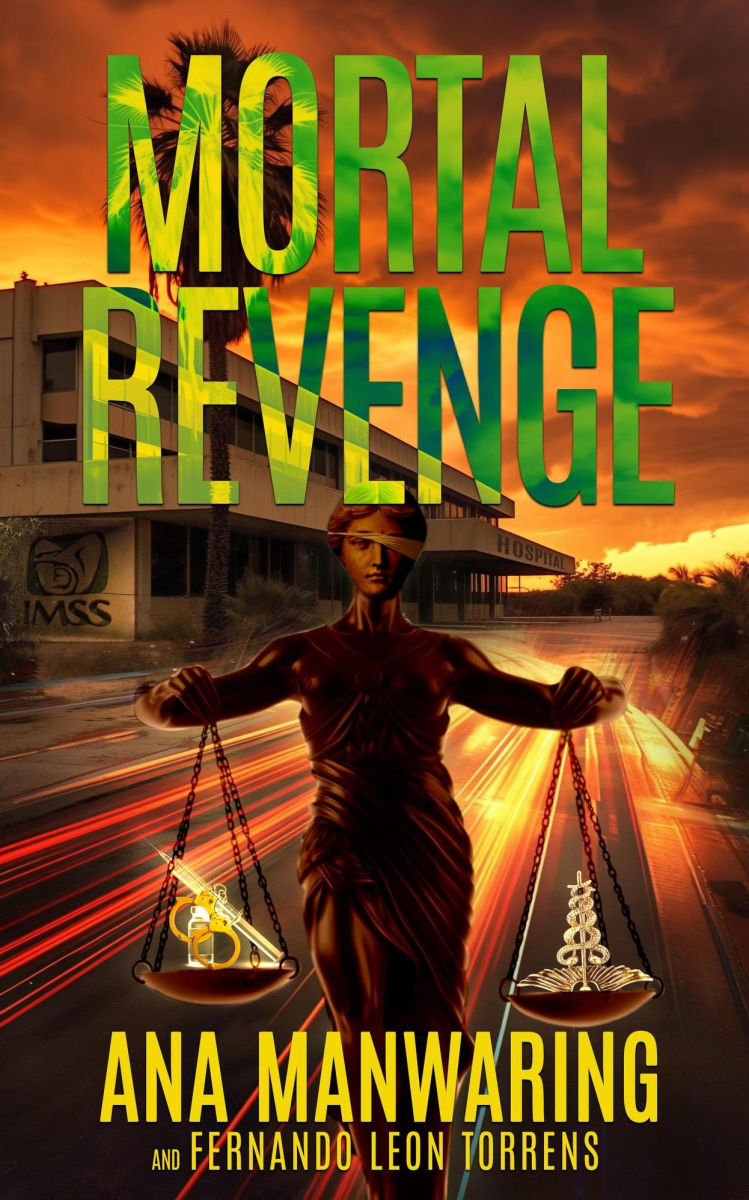
At its core, this is a crime thriller that blends family betrayal, corruption, and moral reckoning into a story driven by personal stakes. The book follows Alex Deltoro, a successful pharmaceutical executive in Mexico City, whose professional triumphs collide with a dark family crisis involving his mother, his brother, and a web of neglect, greed, and possible murder. Set against the early days of the COVID-19 pandemic, the novel moves between domestic abuse, corporate intrigue, and the broader rot of institutional corruption, all building toward a question that lingers throughout. How far can a decent person be pushed before justice turns into revenge?
What stayed with me most was how grounded the writing feels, even when the plot leans into high-stakes territory. The authors do not rush Alex’s inner life. We sit with his guilt, his exhaustion, and his instinct to care for others even when it costs him. The pacing reflects that choice. Some scenes stretch out, especially in hospitals or family spaces, and that patience pays off. It gives the story weight. The prose is clear and unflashy, which works well for a thriller rooted in realism rather than spectacle. Those details never feel decorative. They serve the story.
I also appreciated how the book handles power and corruption. No one twirls a mustache here. Harm happens through neglect, selfishness, and systems that reward the wrong behavior. The pandemic backdrop is especially effective. It adds urgency without feeling opportunistic, and it mirrors the novel’s larger concerns about who gets protected and who gets sacrificed. There were moments where I wished certain confrontations had been sharper or arrived sooner, but in hindsight, the slower burn fits the emotional logic of the story. Revenge, in this novel, is not impulsive. It is something that grows quietly, fed by love and frustration in equal measure.
Mortal Revenge felt less like a simple thriller and more like a meditation on responsibility. It sits comfortably in the crime thriller genre, but it also borrows from social realism and psychological drama. I would recommend this book to readers who like suspense grounded in character, especially those interested in morally complex stories set in real-world crises. If you enjoy thrillers that make you think about systems, family, and the cost of doing the right thing, this one is worth your time.
ISBN: 978-1-64456-875-0

Hell to Pay

Hell to Pay is a fast-moving crime mystery that follows Iris Raines, a private investigator whose long night of chasing down a missing witness explodes into something far bigger. The book opens with Iris watching her family’s law firm go up in flames just hours after she drags a frightened, drug-addicted witness out of a dangerous alley. From there, the story spirals into criminal entanglements, old secrets, gang threats, and a devastating building explosion that leaves Iris shaken and determined to figure out who is behind it all. The plot blends gritty street crime with legal drama and emotional fallout, and the mystery keeps widening as Iris realizes the disaster may have deeper roots than anyone wants to admit.
What struck me first was how quickly I settled into Iris’s voice. She feels sharp, funny, and deeply human all at once. One minute she’s dodging gunfire in a trash-strewn alley, the next she’s cracking a joke to keep herself steady, and somehow both moments feel true. The writing has that crisp, no-nonsense energy you expect from a crime mystery, but it also lingers in the moments that count. Iris isn’t just tough. She’s tired. She’s scared. She’s grieving places and people she hasn’t even lost yet. When she watches a woman burn in a car outside the exploding office building, it hits her hard, and the book lets her sit in that shock instead of brushing past it. Those emotional beats helped me feel anchored even when the plot moved fast.
I also appreciated the author’s choices around relationships. Iris and her “fathers,” the Raines brothers, give the book a surprising warmth, especially as we learn how she came into their lives. Her friendship with Dean adds another layer, mixing loyalty, dark humor, and the kind of comfort that only comes from years of shared history. Even Maybelline, a character who could have easily been written off as a stereotype, is treated with compassion. Her story is messy and sad, and Iris meets that messiness with more empathy than she gives herself credit for. That mix of grit and heart is what kept me reading. Sure, the book has gang shootouts, legal maneuvering, and explosions that shake entire blocks, but it also has tiny, quiet moments where people choose to take care of one another.
By the time the story shifted fully into unraveling what caused the explosion and who might be responsible, I was hooked. The mystery feels grounded, like something that could happen in a city where money, politics, and corner-cutting collide. And it never forgets the personal cost. Iris isn’t solving a puzzle for the thrill of it. She’s fighting to keep the people she loves alive and to protect the witnesses who fall into her orbit, whether they want to or not.
I’d say Hell to Pay is perfect for readers who enjoy character-driven crime mysteries with a mix of danger, sarcasm, heart, and legal intrigue. If you like stories where the investigator has as much going on inside as she does outside, this one will land well. It’s gritty without being bleak, emotional without dragging, and smart without feeling showy. Fans of mysteries with messy heroes will feel right at home.
Pages: 337 | ASIN : B0DSY8M2QJ
Love’s Journey Home

Love’s Journey Home by C. A. Simonson tells the story of a young boy named Frankie who grows up in deep poverty, family loss, and emotional neglect. The novel begins with children left sitting on a fence while their father disappears, and it follows Frankie as he is forced to separate from his siblings and survive on his own. The book traces his path through hardship, farm labor, fleeting kindness, cruelty, and moments of grace. At its core, it is a coming-of-age story rooted in abandonment, faith, and the human need to belong.
What stayed with me most was the emotional weight of the writing. The voice feels raw and personal, like someone sitting across from you telling their life story without polish or pretense. I felt anger toward the adults who failed these children, and a deep ache during scenes of separation and loss. Some moments hit hard and fast, especially when innocence collides with cruelty. Other scenes linger quietly, almost painfully so. The author does not rush the pain, and I respected that.
The ideas in the book revolve around resilience, faith, and the search for love when family falls apart. I appreciated how love is not portrayed as neat or easy. It shows up in small gestures, imperfect people, and unexpected places. The spiritual thread is strong, sometimes heavy, but it feels sincere rather than forced. I did feel that some characters leaned toward clear good or bad roles, and I wanted a bit more nuance in places. Still, the honesty of the message carried me through. This story felt authentic.
I would recommend this book to readers who enjoy heartfelt stories about survival, family, and faith. It would resonate most with those who like historical fiction rooted in real hardship and moral struggle. It is not a light read, but it is a meaningful one. If you appreciate stories that sit with pain and still believe in hope, this book is worth your time.
Pages: 260 | ASIN : B0BPF65W63
Buried Secrets

Buried Secrets picks up with a jolt. The book throws Samantha Jordan and Detective Nick Ballard straight into a chaotic mix of protests, an explosion at a construction site, and a buried set of bones that kick off a genuine mystery. The plot widens fast. What starts as a fight over Comanche remains becomes a deeper story involving political pressure, corruption within law enforcement, tribal tensions, and a startling discovery tucked inside the concrete foundation of an old grocery store. The book follows Samantha and Nick as they clash, cooperate, and dig into a crime that was literally cemented over. The stakes climb fast, and so does the tension between them.
I felt myself reacting to this one in a more personal way than I expected. The writing moves with confidence, and the pacing is punchy. It felt like watching fireworks go off one after another. Some scenes made me grin because the banter hit just right, and then others had me tense because the danger felt close. Samantha and Nick have a dynamic that made me laugh and sigh. They get under each other’s skin in that messy, irresistible way that makes their partnership crackle. I liked how Samantha carries her knowledge like armor. She never apologizes for it. Nick, on the other hand, is a storm of frustration and loyalty and old wounds. Seeing them work through their differences while everything around them blew up kept me rooting for them.
The ideas sitting under the plot also caught me off guard. The book digs into how politics twist simple decisions until nothing is simple anymore. It touches on greed, identity, and the uncomfortable ways power gets used when no one is watching. I liked how the story made space for that without slipping into heavy language. The scenes in the medical examiner’s office felt eerie and sad. The discovery of the young woman’s remains pulled the story into a darker place, and I could feel my stomach drop when the characters realized what it meant. The writing captures that dread without drowning the reader in it. It reminded me how crime fiction can make you feel the weight of a life even when that life isn’t on the page anymore.
Buried Secrets is a great pick for readers who love crime novels with emotional punch, fast pacing, and characters who spark off each other. It felt to me like Buried Secrets carried the same mix of tension and character chemistry that you get in The Lincoln Lawyer, only with a sharper emotional pull and a mystery that hits closer to the heart. This book is perfect for anyone who wants mystery mixed with humor, tension, and a touch of romance that doesn’t feel forced.
Pages: 279 | ASIN : B0DKB3NBZ8



 LITERARY TITAN