Blog Archives
“Finding Your Roots” One Man’s Journey to Discover His Ukrainian, Greek, And Bulgarian Roots


When I picked up Finding Your Roots: One Man’s Journey to Discover His Ukrainian, Greek, and Bulgarian Roots by Kiril Kristoff, I didn’t expect the ride I was about to take. The story follows Alexander Kakhovskiy, an American born into privilege, raised on excess and status, with little sense of who he really is. In one devastating night, he loses it all. After a near-fatal car accident, Alex wakes not in modern Chicago but in 19th-century Imperial Russia, stripped of his wealth and freedom, forced into the life of a serf. What begins as punishment unfolds into a profound journey of survival, faith, and love, where saints and ancestors shape his path and the brutal world of serfdom teaches him humility, responsibility, and sacrifice.
This book surprised me with its depth and scope. At first, I bristled at Alex’s arrogance, but as he stumbled through hardship, I found myself rooting for him, even protective of him. His encounters with Elizabeth, his soulmate in another lifetime, added tenderness that balanced the weight of war, betrayal, and spiritual reckoning. The way Kristoff shifts between past and present, dream and reality, sometimes left me dizzy, yet it mirrored Alex’s inner chaos. The novel also stretches beyond Alex, weaving in the stories of forefathers like Georgiy and Vasiliy, who stood on opposite sides of faith and revolution, and reminding us how much of who we are is inherited through blood and history.
Some passages hit me hard. The spiritual visions, the crushing trials, the echoes of immigrant struggles across borders and generations all resonated. At times, the prose felt heavy, yet it often swung back with vivid, aching beauty that lingered. What stayed with me most was its insistence that freedom, identity, and redemption are never free, that every generation pays its price. It is a bold, multifaceted story that dares to mix history, myth, and spiritual allegory in a way that feels rare.
Finding Your Roots isn’t a light read, but it digs deep and stays with you. I’d recommend it to anyone drawn to stories about faith, heritage, and the resilience of families across generations. If you like novels that wrestle with identity and legacy, or if you’ve ever wondered how the past continues to shape us, then this book is worth your time.
Recipient of the Literary Titan Book Award.

The Copper Scroll: Masa Chronicles
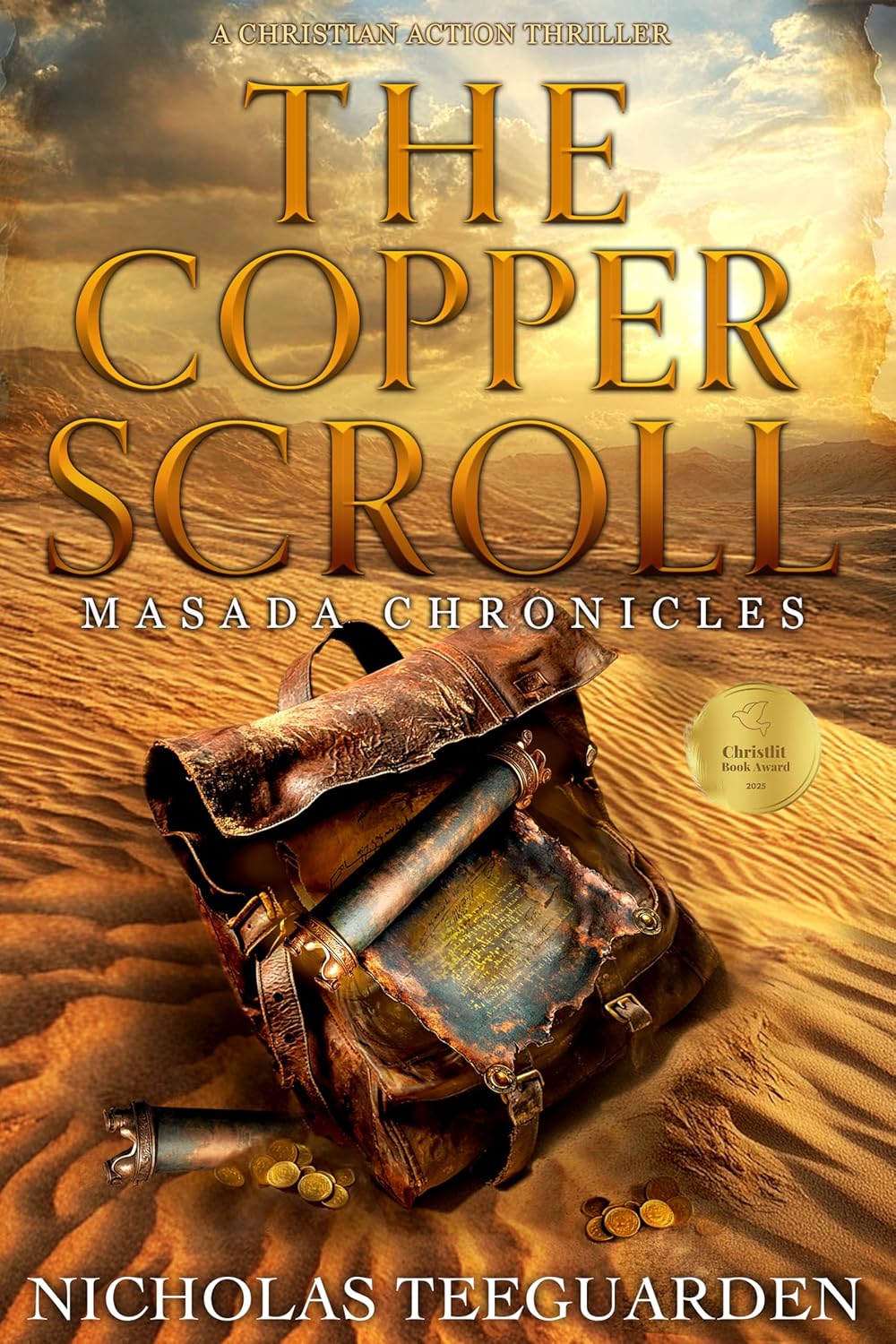
The Copper Scroll by Nicholas Teeguarden follows Joshua “Masa” Bennett, a young archaeology student with a deep faith and a restless curiosity, as he embarks on a journey from Arkansas to Jordan to study the Copper Scroll, the most mysterious of the Dead Sea Scrolls. What begins as an academic interest quickly pulls him into a world of danger, conspiracy, and discovery. Alongside Noa, a sharp and guarded fellow researcher, Joshua navigates ancient clues, personal doubts, and very real threats that blur the line between history and myth. The novel blends scholarship with thriller pacing, offering treasure-hunt suspense set against the rich backdrop of Middle Eastern history and modern tension.
I found the writing to be immersive and full of sensory detail that made me feel the dust of the caves and the press of crowded streets. The style is lively and cinematic. The vividness held me, and I often felt like I was traveling beside Joshua, seeing what he saw, feeling his awe and his unease. The dialogue is sharp, and the interplay between Joshua and Noa kept me engaged. Their banter carried the spark of rivalry mixed with mutual respect, and I looked forward to every scene they shared.
What I liked most was the balance between faith and doubt. The book treats belief not as a simple comfort but as a constant wrestle, something that can drive discovery as much as devotion. Joshua’s hunger for truth, his stubborn streak, and his flashes of insecurity made him a character I could root for. At the same time, the story didn’t shy away from showing how obsession can tip into danger. I liked that complexity. It gave the book more weight than just a straightforward adventure.
I’d recommend The Copper Scroll to readers who enjoy thrillers with a strong sense of place and a dose of history. It will appeal to fans of Dan Brown-style puzzles but also to those who like characters wrestling with faith and identity. It’s heartfelt and ambitious. If you want a story that mixes archaeology, intrigue, and personal struggle, this book is a good fit.
Pages: 254 | ASIN : B0FF2CT6CF
Connection vs Performance

The Influencer’s Canvas follows an elite nail artist from London who is invited to an exclusive Maldives retreat for elite creators, where, while she does their nails, she documents their hidden lives. I think this original idea is intriguing. How did you come up with this idea and develop it into a story?
The idea came directly from my work. I’ve been doing nails for influencers and celebrities in London for years, and there’s something about the intimacy of that process: having someone’s hands in yours for an hour whilst they’re away from their cameras. That’s when people drop their guards completely. I started noticing this pattern. Their online personas were completely different from who they became during our sessions.
X, my nail artist character, first appeared in Polished Edges as someone who collects these unguarded moments. When I was developing her story arc, the Maldives retreat setting felt natural because I’d heard about these exclusive influencer events where the performance pressure is even more intense. The isolation, the competition, the need to create content even whilst supposedly relaxing: it creates the perfect pressure cooker for masks to slip.
The lives of social media content creators are intriguing, as is their die-hard followers’ obsession. What aspects of the human condition do you find particularly interesting that could make for great fiction?
The performance of authenticity fascinates me. We’re living through this moment where being ‘authentic’ has become a brand strategy, where people curate their vulnerability for maximum engagement. There’s something deeply human about our need to be seen and loved, but social media has commodified that need.
I’m drawn to characters caught between who they are and who they think they need to be to survive. The influencers in my book aren’t villains; they’re people trapped in a system that rewards them for turning their lives into content. That tension between genuine connection and strategic self-presentation feels universal now.
I found this novel to be a cutting piece of satire. What is one thing that you hope readers take away from your book?
I hope they start questioning the difference between connection and performance in their own lives. The book is satirical, but the real target isn’t individual influencers: it’s the systems that turn human relationships into metrics.
If readers think more critically about what they consume online and what they share themselves, that’s success. We’re all performing to some degree now. The question is whether we can still recognise ourselves underneath the performance.
What is the next book you are working on, and when can fans expect it to be released?
I’m working on Project Mirror, which takes these themes into speculative territory. It’s about a world where beauty becomes algorithmic: people subscribe to facial features and get software updates for their appearance. My protagonist is a technician who fixes glitches in people’s neural aesthetic systems.
What unsettles me is how plausible it feels when you look at where beauty technology is heading. We’re already filtering ourselves in real-time during video calls. Neural implants for aesthetic modification seem like the logical next step.
No firm publication date yet, but I’m deep into the writing process. The research keeps making my fictional dystopia look conservative.
Author Links: GoodReads | Facebook | Website
What you’ll find insideConfessions at the manicure table
Each chapter is a fresh set of nails and a fresh secret, from burnout hidden beneath flawless French tips to crypto fraud masked by liquid-gold chrome.
High-gloss social satire with a beating heart
Picture White Lotus colliding with The Devil Wears Prada, written in micro-cinematic detail and edged with sly wit.
A thriller of algorithms and aesthetics
Beneath the sunsets and “sustainable luxury” hashtags lurks Project Chimera, an AI experiment that scores every guest’s malleability. Recommendation: neutralize or recruit.
Sensory prose that sparks the feed
Sharp dialogue, vivid color palettes, and scroll-stopping quotes perfect for BookTok or Instagram.
Perfect for readers whoScroll Instagram before they blink and wonder what is real
Devour sharp, contemporary fiction like Crazy Rich Asians and Such a Fun Age
Love luxury-world settings, moral gray areas, and plot twists that sting like acetone on a paper cut
Will the polish crack, or will the algorithm win?
The Influencer’s Canvas peels back the gel-coat glam to expose the messy, human nailbed beneath, then asks whether authenticity can survive once the cameras stop rolling.
One retreat. Two weeks. A million followers waiting.
Swipe in if you dare.
Compassion and Vulnerability
Dark District Primer: Duology on the Lore and Lure of the Dark District combines two novellas, Sojourn and Take Me Now, weaving personal identity with fantasy, Filipino folklore with urban life, and spiritual questions with surreal encounters. What was the inspiration for these stories?
For Sojourn, I wrote it in a time of grief when my father passed away. And so most of the things that I wanted to say and wanted to do were all poured into that novella as well as the emotions involved in such a given circumstance. Writing it was both an affirmation for me in being the son that I am and the son that he wanted. He was the first one to acknowledge my writing growing up. Perhaps he already knew something even before I knew who I was.
For Take Me Now, I wanted to incorporate the world that I have established and expound on it and give it more spice and relationship-driven. While Sojourn was written first, it was Take Me Now that was first published and I had to go back and tweak Sojourn in order that it would mirror the world that I wanted to establish.
What are some things that you find interesting about the human condition that you think make for great fiction?
I love it when we show our humanity both through compassion and vulnerability. Compassion when we are able to put ourselves in the shoes of others to either feel their weakness in order to give them a little bit of our strength so that we help sustain them and what they need to do and vulnerability when it is our time to be on the receiving end of the help and empathy we give to others.
What were some themes that were important for you to explore in this book?
As my father’s passing was the catalyst for me to be more introspective and re-examine my writing, it was both my feelings of grief, honesty and self-identity that I wanted to explore more in Sojourn while framing it within a created universe that has touchpoints in Philippine Folklore. In any relationship, being true and comfortable with oneself is one of the pillars in making it work. Lose that or postpone that form of self-affirmation then the foundation to establishing a relationship with another falls apart.
What is the next book that you are working on, and when can your fans expect it to be out?
My next book is the next installment of the Tales from the Dark District series, entitled Take My Heart, and is being targeted for a FALL 2026 release. Along with that I shall also resume work on my New Adult series, which will also be set within the Dark District Universe.
Author Links: GoodReads | X | Instagram | Facebook | Website
By C.J. Edmunds
Welcome to the Dark District. A place where magic hides in plain sight, and desire leads you deeper into the unknown.
In this atmospheric duology by C.J. Edmunds, two queer protagonists are drawn into the same hidden world—but under very different circumstances.
🌀 In Sojourn, David Lansing, a half-Filipino call center trainer, suddenly begins seeing visions and a mysterious spirit guide. Haunted by creatures from Philippine folklore—Tikbalang, Aswang, and the White Lady of Balete Drive—he embarks on a magical and existential journey that becomes one of purpose, ancestry, and an invitation to a place where people like him finally belong.
✅ Recommended for ages 16+ due to complex parental and identity themes and supernatural tension.
🔥 In Take Me Now, Alvin is tired of the wrong men, wrong choices, and wrong timing. Until the Dark District opens its doors and gives him more than he bargained for. Steamy encounters, eerie magic, and dark truths collide in this sensual tale of love and self-worth.
⚠️ Recommended for ages 17+ for sensual scenes and mature emotional content.
Whether you crave introspection or intensity, Dark District Primer invites you to step through the veil—and explore what’s waiting on the other side.
This lush and haunting collection explores:
Filipino urban legends reimagined
Queer identity and transformation
Steamy encounters and emotional awakenings
A universe where fantasy, myth, and reality blur
Welcome to the Dark District. You might not want to leave.
Perfect for fans of Neil Gaiman’s The Sandman, Philippine mythology, and magical realism with queer narratives.
📘 Includes the complete novellas “Sojourn” and “Take Me Now.”
Seasons in Manana
Seasons in Manana tells the story of Alan Cook’s childhood years in Hawaii during the early 1970s. It mixes memories of baseball, schoolyard lessons, friendships, and family life with the shadow of darker cultural forces at the time, including counterculture unrest and the infamous Patty Hearst kidnapping. Baseball runs through the book like a backbone, but so does the tension of being a young outsider learning how to belong in a place that’s both paradise and something more complicated. What begins as a nostalgic recount of sandlot games and Little League gradually unfolds into a narrative with loss, trauma, and the bittersweet pull of memory.
Reading it, I felt a lot of warmth for the way Cook captures childhood. The thrill of hitting a ball over the fence, the pride of finding your place on a team, the confusion of first crushes and cultural clashes. The writing is simple and straightforward, yet it carries weight. At times, I laughed out loud, especially at the awkward moments with teachers, neighborhood kids, and those backyard fields of dreams that turn into battlefields. Other times, I found myself sitting with the heaviness of tragedy, the way innocence bumps up against a world that isn’t always kind. The book doesn’t try to polish everything. That makes it more real, and it pulled me in deeper than I expected.
What I also appreciated is the honesty in how Cook admits his own shortcomings and misconceptions as a kid. It’s not just sports fiction, though the baseball parts are excellent; it’s also a reflection on identity, on being the “haole” outsider, and on the cultural shifts of the 70s. The mix of humor, nostalgia, and darker threads keeps the story from ever being flat. Sometimes the pacing wanders, but even then, I didn’t mind. It felt like sitting with someone who tells stories the way they come, with tangents and side notes that only add to the charm.
I’d recommend Seasons in Manana to anyone who loves baseball stories, but also to readers who enjoy coming-of-age tales set against vivid backdrops. It’s great for people who grew up in military families, or who know the strange feeling of belonging everywhere and nowhere. If you like fictional memoirs that balance nostalgia with honesty, this book is worth your time.
Pages: 257
A Line In The Sand


A Line In The Sand follows the life of Nilima, a young woman whose dreams and determination clash with the crushing weight of poverty, political unrest, and the merciless grip of microfinance debt in rural Bangladesh. It begins with her small but ingenious act of saving rice for chickens, showing her resourcefulness and grit, then moves into her family’s struggle to rise above hardship, their hopeful venture into poultry farming, and the devastating consequences that follow. At its heart, it is both an intimate story of love and loss and a wider indictment of a system that fails the very people it claims to uplift. Nilima’s journey is heartbreaking and raw, a story where triumphs are fragile and tragedy feels inevitable.
The writing pulled me deep into the everyday textures of life. Rain drumming on tin roofs, muddy fields, mothers whispering blessings, bank agents pounding at doors. These scenes felt so alive that I could almost smell the damp soil and hear the clamor of village life. The author lingers on details that many might skip, and while sometimes this slows the pace, it also creates a sense of intimacy. I felt like I was sitting in the room as Nilima set aside that handful of rice each day, sharing her quiet hope. The language is unpolished in places, almost raw, yet that very rawness gave the story its soul. It felt honest, like something carved out of lived pain rather than polished for prettiness.
The narrative can be heavy, and the sorrow almost relentless. Some passages leaned into exposition, especially when diving into the politics of Grameen Bank and corruption. Yet even then, the fury behind the words was undeniable, and I couldn’t help but respect the conviction driving them. What stayed with me wasn’t the banking jargon, but the sense of injustice, the deep unfairness that weighed on Nilima and countless others like her.
This is not a book you close and forget. It made me think about the hidden costs of “progress” on people who are barely noticed by the world. I would recommend it to anyone who wants to feel, not just read, to anyone who can handle being unsettled and wants to see the human cost of economic experiments and systemic neglect.
Pages: 210 | ASIN: B0FL99N2FZ

Resilient: She Will Not Be Defeated
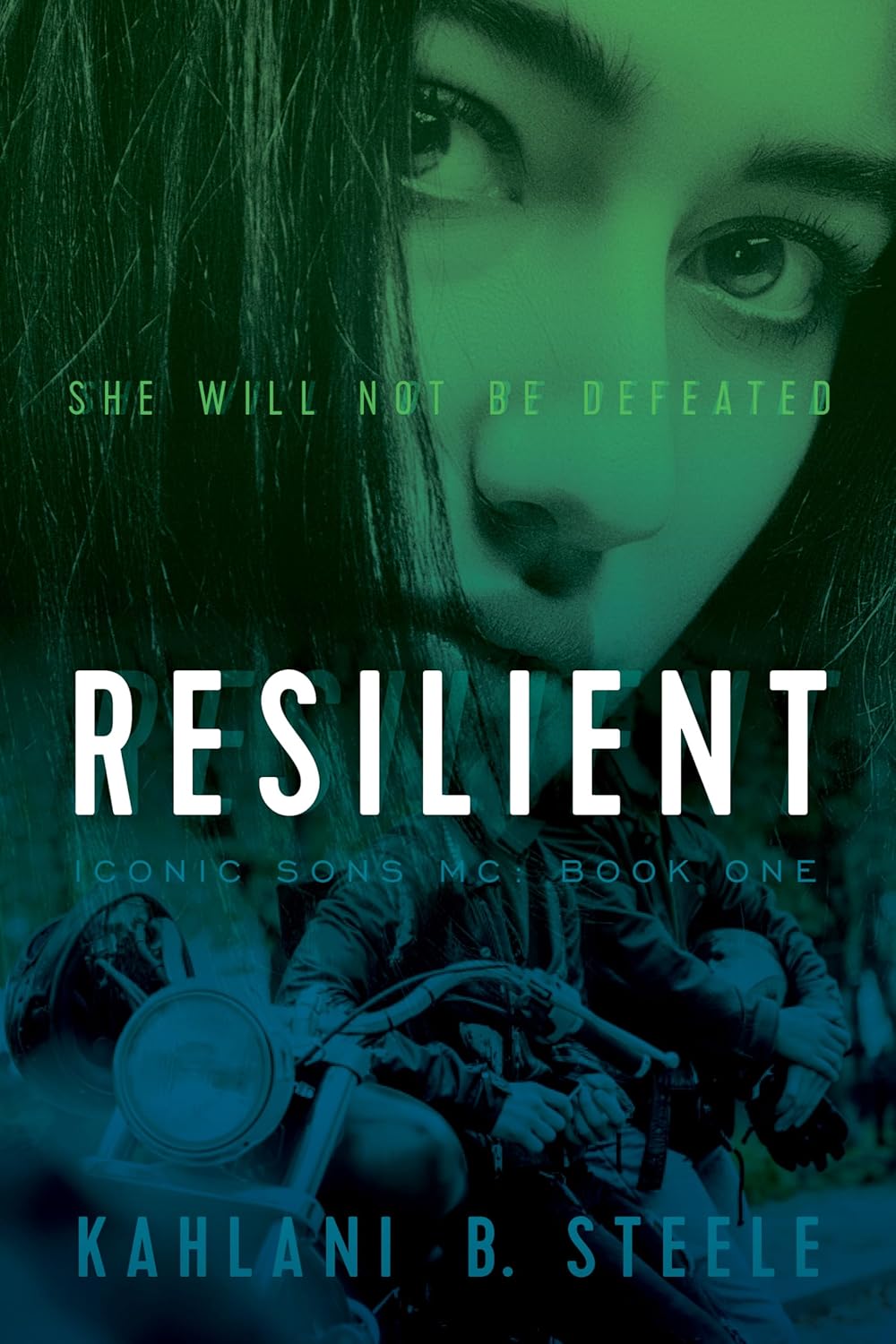
Resilient follows Charly, a young woman hardened by a brutal childhood, as she finds her footing in the gritty and dangerous world of the Iconic Sons Motorcycle Club. The book is about survival, longing, and the messy beauty of human connection. Charly’s path collides with Dominic, the imposing and magnetic leader of the club, and what unfolds is a mix of danger, desire, and a fragile hope for something better. The story swings between raw trauma and steamy intimacy, never shying away from either.
The writing pulled me in fast. The prologue set a heavy tone, and from there I couldn’t look away. The way the author builds Charly’s voice, tough yet achingly vulnerable, hit me harder than I expected. Some scenes had me clenching my jaw, especially when Charly’s past resurfaced. Others left me flushed, not just from the romance but from the sharp tension that hangs over everything. I appreciated the way the author blends grit and softness without ever letting one overpower the other. It gave the story bite, but it also gave it heart.
There were moments that made me stop and roll the words over in my mind. Sometimes it was the heat of a love scene, other times it was the sudden sting of a memory Charly couldn’t escape. I liked how the relationships, even the side ones, felt messy and real. At times, I found myself annoyed with Dominic, which I think was the point. He’s not the classic flawless hero. He’s complicated, rough-edged, and often infuriating, yet he’s magnetic all the same. That contradiction made the romance more believable for me, even when it was frustrating.
Resilient isn’t just a romance novel; it’s a story about scars and survival, and how people learn to keep going when the world keeps throwing punches. It’s raw and passionate, but it’s also about tenderness in unlikely places. I’d recommend this book to anyone who likes their romance intense, their characters flawed but resilient, and their stories with enough grit to leave a mark.
Pages: 336 | ASIN : B0D1MY68J8
The Cats of Caylor Academy: The Pharoah’s Catacombs
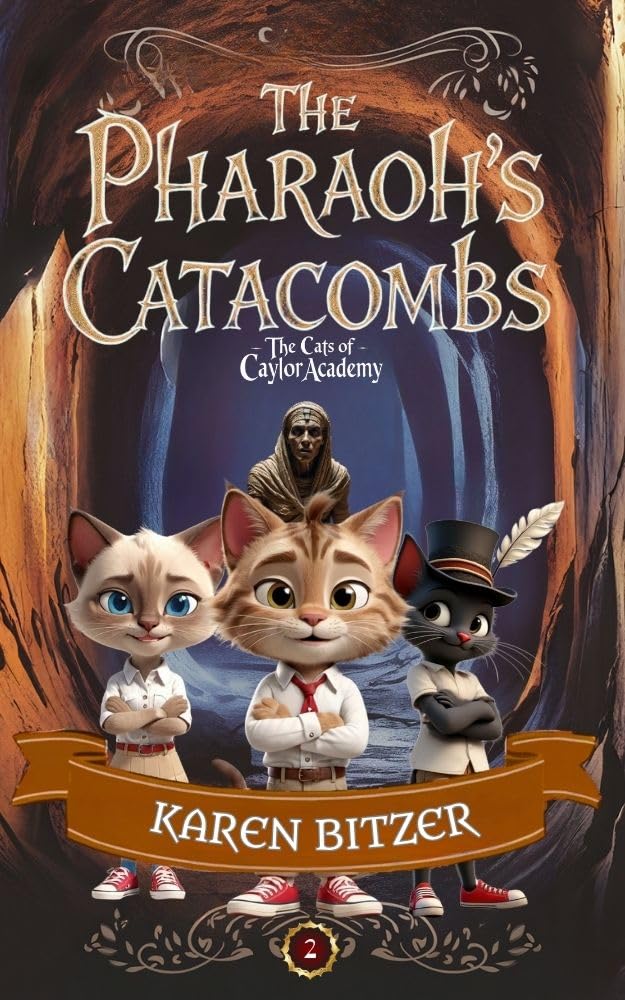
What unfolds when a band of spirited young cats collides with supernatural adversaries in the shadowy depths of Paris’s underground funerary labyrinth? A mix of intrigue, humor, and unexpected poignancy, far richer than one might anticipate from a children’s tale.
Karen Bitzer’s The Pharaoh’s Catacombs, the second entry in The Cats of Caylor Academy series, offers a brisk yet absorbing read. Five feline protagonists, each with quirks and flaws as vivid as any group of adolescents, must rely on cleverness and the unshakable bond of friendship to survive. Their adventure carries them into danger, wonder, and the kind of magical mayhem that feels instantly captivating. Historical touches, woven seamlessly into the narrative, lend an educational edge to the book’s enchanting blend of action and charm.
Comparisons are inevitable. Some readers may catch echoes of Harry Potter in the camaraderie and peril, while others will recognize the wry tone of James and Deborah Howe’s Bunnicula novels. Yet Bitzer carves her own imaginative space. Even those who missed the first volume needn’t worry, this story stands solidly on its own, thanks to the memorable personalities of Quinn, Buckley, Tank, Sheba, and Ruby.
Bitzer wastes no time tossing her band of misfit cats into trouble, and watching them claw their way out is a consistent delight. Each character resonates in archetypal fashion: Quinn, spirited and eccentric; Buckley, the thoughtful strategist; Ruby, bold and daring; Tank, ever resourceful; and Sheba, sharp-eyed and strong-willed. Young readers will almost certainly discover a favorite, a kindred spirit among the whiskers and tails.
Beyond its magic and mischief, the book respects its audience. It challenges as much as it entertains, delivering both excitement and substance. The Pharaoh’s Catacombs proves itself a children’s story of uncommon depth, one that educates, enchants, and refuses to underestimate the intelligence of its readers.
Pages: 177 | ASIN: B0FLH1R587



 LITERARY TITAN