Blog Archives
The Brothers of Dane
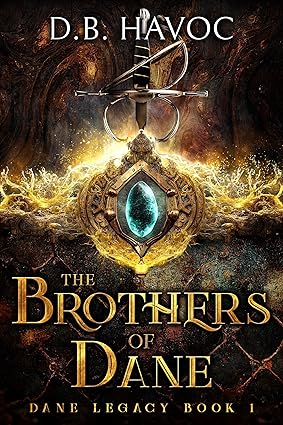

D.B. Havoc’s The Brothers of Dane begins as a tale of mischief and theft, but it quickly expands into something much grander. On the surface, the novel follows Balran, Mak, and Dag, three notorious outlaws whose exploits make them both feared and strangely admired. What starts as a high-society robbery soon spirals into a quest tied to ancient artifacts, the legendary city of Dhravendor, and the fabled Udin Stone. Beneath the adventurous exterior lies a narrative about loyalty, betrayal, and the often-fractured bonds that hold families, chosen or otherwise, together.
The opening scene at Counselor Imara Enas’s estate establishes this duality immediately. The cultivated elegance of an elven dinner party collides with the chaos of the Brothers’ sudden intrusion, led by Balran’s dryly menacing declaration: “This is a robbery.” The episode is both dramatic and darkly humorous, and it illustrates Havoc’s ability to balance tones with confidence. The moment also introduces Maeve, whose tense but charged interaction with Mak provides an early glimpse of the interpersonal conflicts that run beneath the novel’s more visible plot.
The novel’s strongest element is the interplay between the brothers themselves. Their dialogue is sharp, unpolished, and filled with an authenticity that makes their quarrels and camaraderie equally compelling. Dag, for instance, provides a mix of cynicism and biting humor, as when he mocks Mak’s affection for Maeve through his song “Sweet Maeveriene”. Balran assumes the role of pragmatic leader, while Mak wrestles with the tensions of his half-elven identity. Together, they form a partnership that feels volatile but indispensable, and it is this sense of lived-in brotherhood that makes the narrative resonate beyond its adventurous trappings.
The scope of the story broadens dramatically with the introduction of Emperor Elric Veshlor, the so-called Sun Eagle. The confrontation in the Tower of Tiriel, particularly the battle with a shadowed figure whose blows are revealed to fall from a wooden blade, is a pivotal moment. Elric’s eventual appearance transforms the narrative from one of petty thefts into an epic struggle intertwined with exile, history, and the hope of redemption. The Brothers’ shifting responses, debating whether to assist, betray, or outwit the emperor, add moral complexity and highlight Havoc’s interest in the gray spaces between honor and survival.
By its conclusion, The Brothers of Dane reveals itself as more than an adventure tale. Havoc blends action with myth, allowing the reader to move seamlessly from tavern brawls to weighty reflections on power, freedom, and legacy. At times, the exposition particularly in the sections concerning the Treaty of Maltran Heights and the dwarven astrolabe leans heavily on lore. Yet even these passages contribute to the sense that the Brothers are entangled in a world where their small-scale ambitions intersect with forces far greater than themselves.
The Brothers of Dane is recommended for readers who appreciate fantasy that is bold, atmospheric, and character-driven. It will appeal especially to those who enjoyed the grit of Scott Lynch’s The Lies of Locke Lamora or Christopher Buehlman’s The Blacktongue Thief. Havoc has crafted a story that captures both the recklessness of outlaw life and the enduring weight of myth, producing a work that is as much about the bonds of brotherhood as it is about treasure and survival.
Pages: 302 | ASIN : B0DPR7YM66

Resurrection, a Beyond the Faerie Rath Novel
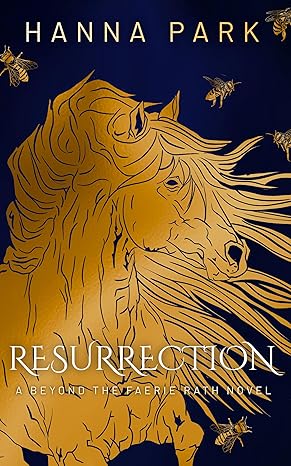
Resurrection is the second book in Hanna Park’s Beyond the Faerie Rath series, and it plunges straight into a lush, myth-soaked world of Irish folklore, family secrets, and otherworldly battles. The novel follows Calla, a young woman caught between two identities. She is both the adopted daughter of mortals and the blood-born child of Finvarra, King of the Faeries. This duality drives the story as Calla confronts her strange visions, her tangled sense of belonging, and the weight of her destiny. Alongside her, we meet Colm, Ciarán, and a host of mortals and immortals whose lives tangle in love, grief, betrayal, and the ever-thickening shadows of war between worlds.
Reading Resurrection reminded me of Sarah J. Maas’s A Court of Thorns and Roses, but with a sharper mythological backbone and a darker and more haunting atmosphere rooted in Irish folklore. What struck me first was the writing itself. Park has a way of spinning language that feels alive, almost like it breathes. Her descriptions of the Otherworld are thick with sensory detail. At times, the imagery is overwhelming, but I found myself drawn to it, letting it wash over me like waves. It added to the dreamlike quality of the book. The dialogue is what anchored me. Calla’s sharp tongue, her refusal to bow to anyone, even a faerie king, gave the story a grit that balanced the lyrical flow of the prose.
Beyond the style, it was the ideas that resonated with me. Family, choice, identity, these aren’t new themes, but Park gives them an edge by setting them against myth. Calla’s push and pull with Finvarra felt both ancient and painfully modern. Who hasn’t wrestled with the weight of family expectations, or the question of whether blood defines us? The battles, the shape-shifting, the omens of doom, they’re grand and dramatic, but they all circle back to something intimate: a young woman figuring out who she is and what she’s willing to fight for. That hit me harder than I expected.
The author doesn’t hand over tidy answers. She leaves you standing with Calla, teetering between two worlds, unsure which one feels more like home. I’d recommend this book to readers who love fantasy rooted in myth, who want their escapism tangled up with questions that bite. If you’re willing to wander through mist and shadow, to wrestle with beauty and terror in equal measure, then Resurrection is well worth the journey.
Pages: 268 | ASIN : B0FKDLGSFN
The Dryad’s Crown


The story follows Piper, a girl who comes into the world under strange and magical circumstances, a child not born but found. She grows up pulled between care and cruelty, eventually falling under the rule of Dahlia Tulan, a guildmaster feared by all of Penderyn. Piper, renamed Silbrey, learns to fight, to kill, and to survive, carrying with her a mysterious staff that ties her to the forest and the gods. The book traces her journey from abandoned child to trained warrior to wife and mother, weaving in themes of love, power, abuse, and the weight of choices. It’s a tale about what it means to belong, and what it costs to escape.
Reading this book stirred up a mix of emotions. At times, the writing hit me hard with its blunt edges. Scenes of brutality were uncomfortable, but that discomfort made the story feel real. I caught myself holding my breath when Dahlia appeared, because the tension the author created around her was suffocating. The pacing sometimes slowed down with long descriptions, yet I didn’t mind, because it grounded me in the world. The tenderness between Silbrey and Callis was a much-needed counterweight to the violence. Their love felt believable, raw, and fragile. It gave me hope that even people shaped by cruelty can carve out something good.
What I found most striking were the ideas buried under the story. The book isn’t just about fantasy battles or guild politics. It’s about how trauma roots itself in people and how hard it is to pull free. Silbrey’s connection to her staff, to the trees, and the earth, reminded me of the ways we cling to something solid when everything else is crumbling. Hopkins doesn’t hand out easy answers. The gods don’t swoop in to save anyone. Instead, the book suggests that survival itself is sacred, and sometimes love, though messy and imperfect, is the closest thing to grace. That felt honest to me.
The Dryad’s Crown reminded me of Robin Hobb’s Farseer Trilogy with its mix of intimate character struggle, harsh mentorship, and the ache of trying to build a life in a world that feels both cruel and magical. I’d recommend The Dryad’s Crown to readers who like their fantasy with grit and heart, who don’t mind being unsettled along the way. If you’re drawn to characters who bleed, who fight, who love fiercely even while carrying deep scars, then this book will stay with you long after you set it down.
Pages: 569 | ASIN : B0C19R4FM5
An Age-Old Dilemma

Emergence: The Orbit Stone Saga follows a young man recruited into an ancient order of protectors who must learn how to navigate a world of ancient magic, political intrigue, and try to prevent a genocide. What was the inspiration for the setup of your story?
Ottix’ arc was mostly inspired by my own journey into law enforcement. Much as I did, Ottix has a desire to help others, protect the innocent, and make Orbis a better place. His story is not a rags-to-riches tale though. Other characters like Glacea and Armin follow this classic trope. Ottix however, was born into a good family that cared about him and gave him opportunities. I wanted to emphasize that bad situations or upbringings do not always create good characters. Ottix came from an upper-middle class situation and through hard work, ascended further beyond that station. The elements surrounding Ottix such as magic, politics, and genocide were inspired by classic fantasy stories and real history.
I find the world you created in this novel brimming with possibilities. Where did the inspiration for the setting come from, and how did it change as you were writing?
My settings were inspired by a variety of things and places, as Orbis is a large world. I’ll start with Palagr, since it was the first region I developed. Palagr is based on my home, the southeast U.S. I wanted to share the beauty of this area with my readers. The towering pine forests and bountiful marshes are a sight few get to see and one I thought was worth sharing. Next came Mwantamba. At the time I began writing Emergence, my sister was traveling to Africa to study elephants for a college project. I researched the country’s wildlife, cultures, and history. Mwantamba is home to many fantasy creatures based on real ones. The Watu were inspired by Zulu, Maasai, and Swahili. Next came the icy homeland of the Visoibri, Vorigheim. This nation was developed with Iceland in mind. Many ancient Visoibri words are based on old Norse, such as Vorigheim which means “origin home.” I imagine the structures of Towerton to be norse inspired, though the culture relies more on magic than sea raiding as the vikings did. Every story needs a villain, and Emergence’s live in Metusol. The central land of the Azeri has a varied climate. On the west it is arid but has access to the ocean and plenty of trade routes. On the east side it is more temperate with most of the country’s agriculture. I wanted to reflect the Azeri’s split ideologies with this difference. Many of the people in Metusol just want to live a fair and happy life. But the rulers use the citizens for their own gains. My next creation was the Jah’kuls of The Paw. As I created the map, I ended up drawing an island in the southeast that kind of looked like a paw. Later on, I added an entire race, the Jah’kul, to the island. This race was inspired by the Khajit from the Elder Scrolls series. I figured if there are cat-people, why not make dog-people! Next came my favorite group of characters, the Marinites. These creatures were inspired by many things including the Zora from Zelda, Kitt Fisto from Star Wars, and Abe Sapien from Hellboy. I wanted Orbis to be connected by a large ocean, and the Marinites helped complete that goal. The other thing that connects the world is of course, the Orbit Stone ring. The magic ring of stones is the source of all magic on Orbis.
What were some themes that were important for you to explore in this book?
Throughout history there have been many examples of religion or politics creating opposing groups that are pitted against one another. I wanted to incorporate this age-old dilemma into Emergence. I also wanted to explore the themes of duty and loyalty. Characters are often torn between their loyalties to their family or nation and the greater good. I also wanted to explore how magic could be used other than in the traditional sense. The prevalence of magic and Azeri technology makes for a unique setting in which ancient magic and modern technology collide. Finally, I wanted to write about war and peace. Emergence delves into the fragility of peace and the brutal consequences of war, contrasting the ideals of unity and cooperation with the destructive nature of hatred and ambition.
Where does the story go in the next book, and where do you see it going in the future?
The second book, Convergence, will continue the story, focusing more on Razi as the new leader of the paladins. An ancient secret is revealed which changes everything. The truth about what happened to the ancient Visoibri comes to light. And the war against the Azeri rages on and eventually concludes. The second book dives deeper into the relationships between characters and even some romances. The third book, Transcendence, will take place 15 orbits after Convergence, and will focus on the paladin’s new mission after the war.
Author Links: GoodReads | Facebook | Website
The Paladins, an ancient order of protectors, rise up to counter the Azeri threat. Among them is Ottix, a young man recruited into their ranks, determined to fight for his world’s survival. As war erupts across Orbis, the Paladins lose their greatest weapon, and the future of the Republic hangs in the balance.
In the face of impending chaos, the heroes of Orbis must navigate a world of shifting allegiances, ancient magic, and political intrigue. With the stakes higher than ever, it’s unclear who will emerge victorious—and who will be lost forever.
The Orbit Stone Saga 1: Emergence is a high-stakes adult fantasy filled with complex characters, dangerous magic, and a world on the brink of war. Will Ottix rise to the challenge, or will Orbis fall into ruin?
My Life Story

The book follows Tess, a young woman moving through a world that feels half dream, half reality. From her childhood prayers beneath the stars to her adult wanderings through galleries, cafés, and shadowy streets, she is haunted by questions of love, loss, and meaning. Along the way, she encounters figures like Jules, Samuel, and Sara, each carrying secrets and desires that pull her deeper into a web of longing and reflection. The novel drifts between memory and the present, mixing photography, magic, and fleeting encounters with moments of aching stillness. The story is a meditation on how people search for beauty and truth in a fractured world.
I felt a tug in two directions reading this book. On one hand, the writing is lush and cinematic, clearly born from its origins as a screenplay. Scenes play out like film reels: light shimmering on water, footsteps echoing in an empty church, faces caught in camera flashes. That worked beautifully for me, giving the book a dreamlike quality that made me want to live in its world. On the other hand, the density of description left me craving more dialogue and more movement. Still, the mood was so strong that I let myself get carried by it.
What I really liked was how the novel handles its ideas. It’s not just a story of Tess and Jules or Samuel and Sara, it’s about the ways we carry grief and desire through our lives. The characters often feel like symbols more than flesh-and-blood people, yet that abstraction made the book feel universal. I found myself frustrated at times because Tess keeps drifting, Jules hides behind charm, and Samuel slips away into the shadows. But that frustration mirrored the characters’ own struggles. It left me unsettled, and I liked that.
My Life Story feels like a novel for readers who enjoy atmosphere more than plot, who don’t mind stepping into a story that blurs the lines between memory, fantasy, and reality. I’d recommend it to anyone who loves lyrical writing, who wants a book that feels like cinema on the page, and who doesn’t mind sitting with unanswered questions. It isn’t a fast read, but it’s a rewarding one if you let yourself drift in its tide.
Pages: 128 | ASIN : B0FCCBB2BG
The Two Dogs Who Stayed
The story follows Rusty, a quiet man living alone in Alaska, who stumbles upon an injured dog beneath an abandoned porch on his fifty-eighth birthday. What starts as an act of compassion turns into a bond that reshapes his life. The book drifts between his routines, memories of lost love, and the growing companionship with the dog he names Goober. Along the way, he reconnects with people from his past, builds unexpected new relationships, and faces the ghosts of his solitude. It is, at its core, about second chances, about what it means to be seen, and about the quiet power of loyalty.
The writing is plainspoken. It’s stripped down, direct, almost conversational. That style made me lean in, like I was hearing Rusty tell me these stories over coffee instead of flipping through pages. I enjoyed how ordinary details, like the smell of cedar or the sound of snow under boots, were given weight. It reminded me that the small, everyday things are where life actually lives. Rusty’s reflections sometimes circled the same ache. Still, that’s part of what made it feel real. Grief and love do repeat themselves.
What surprised me most was how emotional I got. Goober isn’t just a dog in the story. She’s a mirror. She reflects Rusty’s loneliness, but also his stubborn hope. Watching him wrestle with old wounds while learning to trust her presence was touching, even frustrating at times, because it reminded me how often people push away the very thing that could help them heal. I felt protective of Rusty and Goober, like they were people I knew. And when the book delved into his lost love and family tensions, it cut deep. Not because the writing was fancy, but because it was honest.
I’d recommend this book to readers who like slow, thoughtful stories that don’t rely on spectacle. If you’ve ever loved a dog, or if you’ve ever carried the quiet weight of being alone longer than you wanted, this book will hit you where it hurts and where it heals. The Two Dogs Who Stayed is a tender and heartfelt story that I enjoyed reading.
Pages: 232 | ASIN : B0FQ3CC7FN
The Wonder of Archaeological Digs

Finders follows a group of university students on an archaeological dig in Cornwall who uncover an ornate, gem-encrusted Celtic relic filled with ancient mystery. What was the inspiration for the setup of your story?
I’ve often felt there’s something magical hiding just out of reach in the British landscape. I like walking to hillforts, standing stones, burial mounds, and the like. And I’m interested in reading about archaeological discoveries, watching videos about digs, and listening to history podcasts. All that came together in the opening of Finders.
Capturing the personalities of college students while keeping the story focused and moving forward can be a challenging task. What character did you enjoy writing for? Was there one that was more challenging to write for?
I especially enjoyed writing as Ozzie, mostly because of his wry sense of humour about the world and himself. I got stuck some way through the first draft when my bare, vague plot plan didn’t work, but Ozzie kept making me want to discover what happened next.
It was hard to express the main antagonist’s narcissistic megalomania and at the same-time make him seem like a real person rather than a moustache-twirling, melodramatic villain.
What were some themes that were important for you to explore in this book?
The fascination of exploration and discovery, particularly the discovery of what lies beyond the material realm; and, tied in with that, shifts in awareness. At least I think those are themes. To be honest, I never thought about the book’s themes until my developmental editor asked me what the central theme was . . .
Where does the story go in the next book, and where do you see it going in the future?
Mercie, Ozzie and Petroc journey through what Petroc calls “a more subtle level” of existence, where the relationship between mind and matter is different, as is the relationship between one mind and another. After confronting two of their enemies there, the three return to the dig. Now seeing the “normal” world in a new light, they confront the third of their enemies in a way they did not anticipate.
Author Links: Website | Instagram | Substack



 LITERARY TITAN