Blog Archives
Patterns of Finance and War

Prophets Of War follows a young financial advisor who stumbles onto a horrifying truth: his own father has created a shadowy business empire that bankrolls Russia’s invasion of Ukraine. What was the inspiration for the setup of your story?
I didn’t sit down one day and decide, ‘I’m going to write a novel.’ Prophets of War came to me gradually, one breadcrumb at a time. For about a year, I carried around the seed of an idea for a compelling story, but it wasn’t until I was working on my Master’s thesis about the origins of national debt that I had my ‘aha’ moment. A thousand years ago, European monarchs borrowed from banks to wage profitable wars — and in many ways, that was the birth of public debt. I began connecting those historical dots to more recent examples and realized I wanted to explore the idea of war as a business model. The Russian invasion of Ukraine became a natural setting, especially since so many of the mechanics — shell companies, offshore secrecy, private military contractors — are real-world systems.
From there, tone became just as important as plot. When I finally read The Wolf of Wall Street (after seeing the film multiple times), I loved its darkly funny, irreverent voice and knew I wanted to channel some of that energy. Tom Wolfe’s Bonfire of the Vanities was another stylistic touchstone. So the book grew out of both history and literature — from centuries-old patterns of finance and war to the sharp, satirical voices of modern storytelling.
What inspired your characters’ interactions and backstories?
Alex is probably the most personal character — he’s a reflection of me, but exaggerated. I gave him many of the same questions I’ve wrestled with in my own life, then pushed them further to see how far they could go under pressure. The other characters came from a mix of real experiences and public figures I’ve studied. Some are composites — Lena, for example, was inspired by several real women, but I wanted her to embody duality: someone magnetic and vulnerable, yet someone you can never fully trust. Devil Bill, on the other hand, was meant to be the incarnation of corruption and power without conscience. And Langston was my chance to write a parody president — larger than life, full of contradictions, but all too familiar.
Some events in the book were chillingly similar to real-life events. Did you take any inspiration from real life when developing this book?
Absolutely — I drew inspiration from real events, but Prophets of War is still very much a work of fiction. You can’t write about finance, politics, or war without noticing the patterns that repeat throughout history. Shell companies, corruption, shadow networks — these things are in the news all the time, but fiction gives me the freedom to connect the dots in ways that journalism can’t. My goal wasn’t to retell any specific headline, but to create a story that feels uncomfortably close to the world we live in. Readers should come away thinking, ‘This could happen… maybe it already is.’ But at the end of the day, it’s still a novel — a thriller built to both entertain and provoke thought
Will there be a follow-up novel to this story? If so, what aspects of the story will the next book cover?
I’ve been asked that a few times now, which is exciting in itself. I do have ideas for where the story could go next. If Prophets of War is about uncovering the financial machinery behind conflict, then the follow-up might explore how those same hidden networks shape politics — through propaganda, dark money, and campaign donations where no one really knows who’s footing the bill. I could see a storyline where a presidential candidate is backed entirely by the business of war. That said, whether I actually write it will depend on how this first book resonates with readers. If there’s demand for more, I’d consider it.
There will also be a podcast coming out soon that you can listen to. I am featured on Read, Beat (…And Repeat) on Spotify but it has not come out yet. It will be posted to my website once it’s live.
Author Links: GoodReads | Instagram | Facebook | Website | X (Twitter) | Amazon
When Alex Morgan, a rising star in wealth management, stumbles onto a trail of cryptic financial clues, he doesn’t just uncover corruption—he unmasks a global conspiracy.
Behind the headlines of the war in Ukraine lies something far more chilling: a private empire of shell companies, black-market trades, and political operatives turning global conflict into personal profit.
The deeper Alex digs, the more dangerous the truth becomes. His own father may be at the center of the scheme. His mentors may be funding both sides of the battlefield. And the woman he trusts most might be the key to it all—or the final betrayal.
From Caribbean tax havens to Wall Street boardrooms to shadowy Zoom calls between oligarchs and ex-presidents, Prophets of War is a pulse-pounding political thriller that rips into the machinery of modern power. Inspired by real systems, real tactics, and real moral failures, it asks a question no one wants answered:
What if the next world war is already on the balance sheet?
Prophets of War
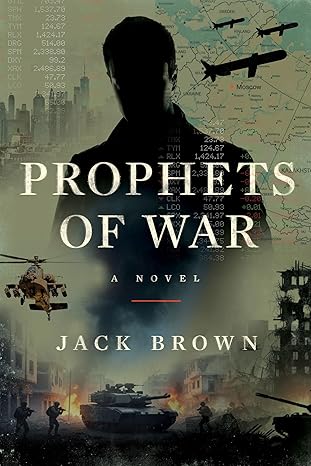

Prophets Of War follows Alex, a young financial advisor who stumbles onto a horrifying truth: his own father has created a shadowy business empire that bankrolls Russia’s invasion of Ukraine. What begins as a Wall Street career quickly spirals into a nightmare of offshore shell companies, secret deals in Tortola, oligarchs with bottomless bank accounts, and a sprawling conspiracy called the “Business of War.” The story stretches across years, peeling back layers of betrayal, greed, and the way capital can be twisted into a weapon. It is a thriller about money and morality, but also about family, ambition, and the unbearable weight of knowing too much.
Reading it was both exciting and unsettling. I found myself drawn to the writing in a way that made it difficult to put down. Jack Brown’s prose is sharp, direct, almost conversational, and it has this raw energy that carries you forward. The emotions are messy and real. The narrator swears, second-guesses, and drinks too much, and it all makes him feel believable. Still, the style can be over the top, even exhausting, with its constant intensity, but that relentlessness matches the chaos of the world he’s describing.
The central concept that war itself can be commodified, that it thrives not on ideology but on profit, is chilling because it feels close to the truth. The book doesn’t come across as a lecture, though. It’s more like watching someone wake up to a nightmare and realizing you’re in it too. There were points where I laughed bitterly, other times where my chest tightened with dread. And then there’s the father-son dynamic, which added a gut-punch of personal betrayal on top of the political corruption. That made the story hit even harder for me, because it wasn’t just about governments or faceless corporations, it was about blood ties and the price of silence.
By the time I finished, I felt both drained and oddly hopeful. Drained because the world it paints is so dark. Prophets Of War is best for readers who like fast-paced thrillers that are unafraid to mix politics with personal stakes. People who enjoy the works of John le Carré or Robert Ludlum but want something grittier and more contemporary will likely appreciate this story.
Pages: 174 | ASIN : B0FL2YB474

Running Toward Danger
Cram Down follows a Kansas City attorney who takes on a case involving a couple who had their business funding cut off, only to get mixed up with the mob and a missing bank president. What was the inspiration for the setup of your story?
Many times, the story just seems to be inside of me waiting to come out. For Cram Down, there were several components in play: (a) the inspiration for a community bank came first, (b) followed by the notion that 3J would have to force a plan of reorganization on the bank over its objection, and (c) I’ve always been fascinated with Kansas City history, and I’d been reading books about the Kansas City mob in particular. In each book in the series, there’s always Jazz, and BBQ, and history as well.
3J is an amazing character that readers can be invested in. Was the character’s backstory something you always had, or did it develop as you were writing?
When I started working on the series, I wanted to create a strong, admirable protagonist who would give me a chance to comment on social issues in each book. 3J is a Black, female bankruptcy lawyer in a large Kansas City law firm, which, until recently, was dominated by white men. I am neither black nor female. So, while her character gives me the chance to address social issues (haters, mental illness, when does the ends justify the means, redlining), and have my characters reflect the diversity in our country, I also need to respect that I can never actually know what it’s like to be Black, and a woman, and their struggles to make it up the law firm ladder.
How did you balance the action scenes with the story elements and still keep a fast pace in the story?
In Cram Down, I wanted to kick the action scenes up a notch. In the prior book – Unfair Discrimination – 3J must battle a White nationalist who becomes unhappy that he won’t get paid back all that the debtors owe him, and he takes his rage out on 3J and a Jewish attorney. My readers liked the action in UD, so I wanted to create an action-packed story in Cram Down as well.
3J also has a habit of running toward danger, at great personal risk, which continues in Cram Down, and through flashback chapters, we begin to learn more of her bad habit, and where it may come from as she grew up in the Lower Ninth Ward and Tréme neighborhoods in New Orleans.
Will there be a follow-up novel to this story? If so, what aspects of the story will the next book cover?
Yes. I have begun to research my next 3J thriller – tentatively named For Cause. It will involve a Deep Fake video that 3J must contend with and save her client from its impact, while trying to prove in court that the video is not her client’s message to the world. She will also continue her habit of running toward danger.
Author Links: GoodReads | Twitter | Facebook | Website | Linkedin | Amazon | YouTube
Cram Down
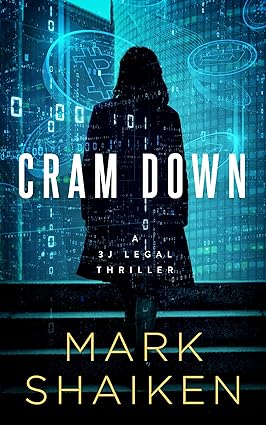

Cram Down, follows the compelling narrative of the astute lawyer Josephina Jillian Jones – affectionately termed 3J by her friends – and the intricately woven lives of brothers Amadi and Jordan Browne.
Embarking on a journey from a shadowed past, 3J plunges herself into the legal maelstrom encompassing a non-profit organization, Abode. The atmosphere tenses as her involvement quickly spirals into a vortex of unpredictability and peril. The reader is left poised on a razor’s edge, contemplating: will 3J’s legal prowess and emotional resilience be enough to navigate this treacherous case?
Contrastingly, Amadi Browne, rooted in his banking pedigree and a connoisseur of charitable endeavors, grapples with the bittersweet legacy of a bank inherited from his parents. His appreciation for the institution’s history teeters on the brink of melancholy as he yearns for his brother to peer into the depth of its legacy with equivalent reverence. The complexities of family ties and inherited responsibility are palpable, keeping the reader bound to Amadi’s internal and external struggles.
Jordan Browne, embroiled in his ambitious visions, stealthily assumes control of the bank through the strategic acquisition of his brother’s shares. His clandestine maneuvers and stark contrast in visions for the bank’s trajectory pose a poignant question: Will the brothers’ divergent paths weave a future of success or sow seeds of familial discord?
Cram Down boasts an impeccably crafted ensemble of characters. From 3J – whose intelligence and occasional recklessness converge to form a profoundly relatable protagonist – to the dichotomy of the cultured Amadi and the precarious Jordan, Shaiken masterfully molds characters that resonate with vibrancy and depth. The secondary characters, such as the enigmatic Robert McFadden, the eccentric investigator Moses Aaronson, and sagacious William Pascale, are not merely supporting cast but vital cogs in this intricate narrative wheel, each contributing their distinct flavor to the unfolding drama.
The narrative navigates through light and shadow with a suspenseful undertow, encapsulating the reader in a setting richly steeped in engaging history and meticulously tailored to envelop the story. The pacing is unyieldingly brisk, propelling the reader through its pages with a magnetizing allure. Amidst the dynamic world-building and a potently character-driven narrative, Shaiken crafts a tale imbued with non-stop action, gripping suspense, and an emotional complexity that beckons readers into its depths.
Cram Down emanates flawless narrative charisma, effortlessly earning its commendation to aficionados of the legal thriller genre. This book gracefully interweaves tension, drama, and emotional depth, ensuring that readers will want more.
Pages: 336 | ASIN : B0CJ1QJDQV
It Originally Had A Darker Ending

High Risk follows a self-absorbed businessman who becomes trapped in his building for four days with no internet, phone, water, or a way out. What was the inspiration for the setup of your story?
This story was originally written in 1999 as a screenplay. The idea came about when I was sitting in my office late at night working, and the cleaning crew came around. I wondered what would happen if they accidentally locked me in the building. My office wasn’t 50 stories high like Jim, but this idea of being locked in intrigued me. The basic premise for Jim came together quickly in my head, and I emailed my writing partner about it (who happened to be working late), and he got excited about it, too. The full story and details of the screenplay came together very quickly after that. It was probably the fastest and easiest thing we’ve written. It was one of those rare moments where the story just flowed. There is one key difference between the original screenplay and the final version—the ending. It originally had a darker ending, something neither of us liked. In subsequent revisions, we settled on something very close to the version in the book.
The screenplay seemed like it might get made in the early mid-2000’s. After it stalled out, it sat on the shelf for many years until the pandemic hit, and I decided to turn it into a book. Anyone who read the screenplay really liked it, and a common note we got from readers was that it was a fast and thrilling read. My writing partner and I were very proud of it and thought people would enjoy it, so it bothered me when it became this dead story. During the pandemic, I re-wrote it as a book and enjoyed the process so much that I wrote three more books and plan to continue.
I felt that there were a lot of great twists and turns throughout the novel. Did you plan this before writing the novel, or did the twists develop organically writing?
Most of the twists and turns happened as we plotted out the story. I’ve never had a story reveal itself as easily as this one. The only thing we struggled with was the ending. The original ending felt like it worked, but I didn’t like it. My writing partner and I kept kicking around versions and eventually settled on the final ending.
What were some themes that were important for you to explore in this book?
We were both much younger in our careers when we first wrote this, and we saw executives who were older than us who had let their work consume their lives. Despite their success, they didn’t seem happy. Some people seemed to prefer being in the office rather than being at home. The book is by no means an anti-work story, but it does offer a picture of what can happen if you define yourself by your career and money.
What is the next book that you are working on and when will it be available?
I’m working on a sequel to Nina Winter and the Age of Darkness which will be released at the end of the year. I also write short stories that I post on my website, and a new one should be released in May.
Author Links: Website | GoodReads | Twitter
From the authors of the mind-bending epic, HISTORY OF LIES, comes HIGH RISK, an intense, claustrophobic thriller set fifty stories high.
An ambitious business executive, Jim Sloane, is imprisoned in his high-rise office over the long holiday without food, water, or power. Cut off from the world, Jim must figure out who locked him in and why. As he unravels the mystery, Jim discovers that his list of enemies is long and his time to escape is short.
Can he find a way out, or will he die trying?
O’Brien’s Law
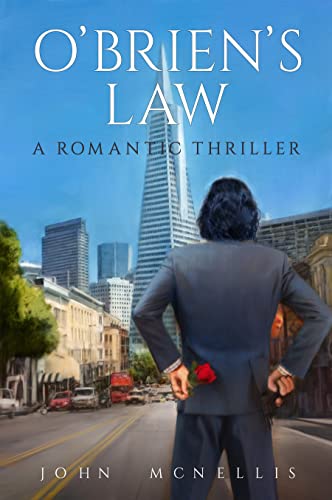
In a big law firm in San Francisco, a junior lawyer is thrown into the deep end with a complex and infuriating case concerning an inheritance. During this case, he must navigate the challenges of a complex legal system, demanding clients, and formidable adversaries. Along this journey, he’s helped by close friends and mentors and hindered by superiors and villains. As well as this, he faces personal problems and joys, including meeting the charming ex-model and cafe owner, Marybeth. Behind all these legal hurdles and personal relationships lies an intrigue that places the young lawyer and those close to him in the way of potential danger.
O’Brien’s Law by John McNellis follows the journey of hot-headed but ultimately extremely likable Michael O’Brien, a junior associate at the firm Drummond, Upton, and Isherwood. Even though it covers complicated legal matters and contains legal jargon and issues in the business world, it’s completely accessible to those with little former knowledge of these areas.
The story takes the reader through an exciting journey, covering themes such as justice, romance, and mystery. The plot is superbly well-crafted and packed full of unexpected twists and turns. Additionally, McNellis’ characters are fully fleshed out with their flaws and imperfections. The protagonist, Michael O’Brien, is a particularly well-portrayed character with whom it’s easy to empathize. The author’s writing style is engaging and integrates moments of comedic relief while becoming emotional at specific points. I would recommend this novel to those interested in a fun read that covers engaging legal issues.
O’Brien’s Law by John McNellis is an adrenaline-filled and fast-paced read that keeps the reader in the story and eager to discover what happens next. This is a romantic thriller that readers will not want to miss out on, as the suspense will have them hooked from the opening lines.
Pages: 294 | ASIN : B0B7Z21KHD
Contrarian
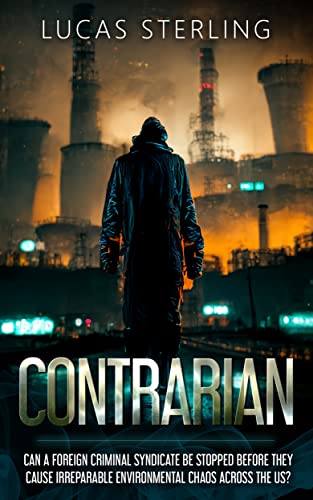
Contrarian is the action-packed second novel in the “Lars the Hitman” series by Lucas Sterling. Lars Christopherson is a former Department of Homeland Security agent turned high-priced assassin. He uses his specific set of skills to take out undesirables like drug dealers and corrupt law enforcement officers while also donating large sums of money to an animal shelter.
The main focus of Contrarian is Lars’ dealings with Srepska, an eastern European terrorist organization plotting a massive eco-terrorism attack on the US. There’s lots of spying and subterfuge as Lars joins German agent Frederic Ulrich in unwinding a nefarious plot designed to destabilize the American economy.
Contrarian is an overly macho, entertaining tale. It is reminiscent of the action movies and spy thrillers of the 80s and 90s. The physical descriptions of most of the main characters read like stat lines for action heroes: 6’4″, athletic, and packed with deadly fighting skills! The characters’ internal monologues are aptly ridiculous as they think to themselves, “These guys are no match for my judo.” It’s filled with cliches and tropes of the genre, which is not necessarily a bad thing. More so, they make the tale comfortably familiar in a nostalgic sort of way.
Lucas Sterling does an excellent job of weaving the story together, but at times I feel like Sterling’s prose is a little overwritten, being a bit too descriptive of details and actions that could be left in the reader’s mind. As a result, the novel starts a little slow, but the pacing takes off once the players are appropriately introduced and in place.
Contrarian is a swift and enjoyable conspiracy thriller that I feel anyone who likes action novels would enjoy. Readers of crime thrillers and suspense will find this book does not let you down when looking for that nostalgic feeling of undercover detectives.
Pages: 372 | ASIN : B0BHPXH3FD


 LITERARY TITAN