Blog Archives
Protecting Creativity

The B2B Reset is built around the idea of “buyability,” which is described as a brand’s lasting ability to stay top of mind and be selected when a buyer’s need eventually emerges. What inspired you to write this book?
Over the last few years, I have been incredibly fortunate to be part of a global community of people focused on progressing the thinking behind what best-in-class B2B marketing looks like today. I found myself in conversations with some of the smartest minds in the discipline, exploring ideas around brand, creativity, effectiveness, buying behaviour and, increasingly, Buyability.
What struck me was what a privilege it was to have access to those conversations, and how fragmented much of that thinking still was for the broader marketing community. I wanted to bring those ideas together into one simple, practical handbook that a CMO could read, but equally the most junior marketer in her team could pick up and use to understand what world-class B2B marketing looks like now.
At the centre of the book is Buyability because it fundamentally reframes how we think about the job of B2B marketing. A buyer may encounter your marketing months or even years before a genuine category need emerges. When that moment eventually comes, the question is whether your brand is already present in their consideration set and feels credible, familiar, and easy to choose.
That is really what inspired the book: a desire to make the best current thinking in B2B more accessible, practical and useful to the people doing the work every day.
What misconceptions do companies often have about how their customers actually make buying decisions?
One of the ideas I challenge in the book is the myth of rational consensus. B2B buying processes look incredibly rational on paper. There are committees, procurement processes, evidence, validation, and business cases. But underneath all of that are human beings navigating risk, emotion, identity and accountability.
Buyers don’t arrive at a decision carrying only the information presented to them at that moment. They bring everything they have seen, heard, felt and inferred about a brand over time. Eventually, something gives them enough confidence to act. That means every interaction before the buying moment matters because it is either making that future decision easier or harder.
That is why confidence is such an important idea throughout the book. In complex B2B decisions, where buying committees are larger, and the consequences of a poor decision can be significant, the challenge is not simply persuading one buyer. It is building enough accumulated confidence for multiple people to believe this is a choice they can support.
What does a B2B brand need to do differently to remain memorable during long, complex buying cycles?
The first thing is to accept that memory is part of the commercial strategy.
Buyability is built through the long, patient work of becoming mentally available to people who may not be in-market today. A buying decision might ultimately happen quite quickly, but it can draw on years of accumulated impressions about a brand.
That places a premium on consistency, distinctiveness and meaning. Every interaction should leave something behind. It might strengthen familiarity, reinforce trust, express a point of view or create a little more confidence. Over a long buying cycle, those effects accumulate. Brand creates preference, familiarity and confidence, while demand converts that accumulated confidence into action when the buyer is ready.
For me, this is also why creativity matters so much in B2B. Buyers cannot choose a brand they don’t remember. In markets where several organisations may be perfectly credible and capable, being understood, trusted and easy to choose becomes a genuine commercial advantage.
What advice would you give to teams trying to protect creativity while operating under increasing pressure for short-term performance?
I would start by looking very carefully at what your measurement system is rewarding. Measurement is one of the most powerful forces shaping behaviour inside a marketing organisation. If we reward only immediate response and clean attribution, we shouldn’t be surprised when the work becomes narrower, experimentation becomes harder to defend, and longer-term brand building starts to look indulgent.
Protecting creativity doesn’t mean protecting it from commercial accountability. It means being much more rigorous about what different parts of the marketing system are designed to achieve, over what timeframe, and therefore how they should be measured. Some work exists to convert demand today. Other work is creating preference and confidence that will make future demand easier and less expensive to convert. A mature marketing organisation needs to be capable of valuing both.
The line from the book I would come back to is that good measurement should make it easier to defend the right bets, not harder. Creativity and commercial discipline belong together. When performance loses creative ambition, it becomes indistinguishable, and when creativity loses commercial pressure, it can become self-referential. The strongest work holds both at once.
Author Links: GoodReads | LinkedIn | Amazon
The B2B Reset is a practical handbook for the modern marketer navigating that gap.
It explores the real questions B2B marketers face every day, from brand and demand to creativity, measurement, AI, and the complexity of buying groups. It strips away jargon and outdated thinking to offer a clearer, more coherent way to approach the discipline as it exists now.
Written for marketers at every stage of their career, from those building their foundations to those leading entire teams, this is a book designed to be used; picked up, applied, and returned to when the work gets harder.
The B2B Reset: Building Brands That Get Bought


Wendy Walker’s The B2B Reset: Building Brands That Get Bought is a strategic argument for treating business-to-business marketing with the creative ambition, commercial rigor, and human understanding its economic importance warrants. Walker organizes the book around “buyability,” which she defines as a brand’s durable readiness to be recalled and chosen when a buyer’s need finally arises. That concept gives coherence to the book’s wide-ranging discussion of positioning, category design, demand generation, measurement, team structure, artificial intelligence and privacy. Rather than presenting marketing as a sequence of isolated campaigns, Walker describes it as the sustained construction of confidence across long buying cycles and complex groups of decision-makers.
The book is particularly persuasive when it examines the psychology of B2B purchasing. Walker shows that corporate decisions may be supported by data, procurement procedures and financial models, but they’re still made by people managing professional risk, reputation and accountability. Her observation that “The decision may be shared, but the risk rarely is” neatly captures why reassurance, identity and emotional credibility matter alongside evidence. This human-centered perspective also strengthens her critique of generic product messaging. Buyers aren’t simply evaluating functionality. They’re considering whether a choice can be explained internally, defended under pressure and trusted when circumstances change.
Walker’s strongest practical contribution is her insistence that brand and demand, marketing and sales, and creativity and performance are interconnected parts of the same commercial system. She replaces the conventional linear funnel with a loop in which buyers repeatedly return, consult new stakeholders and test whether a brand’s claims remain coherent. Positioning, in this model, must be useful throughout the organization, not merely polished for an external campaign. Briefs must create space for judgment, measurement must recognize effects that develop over time, and performance creative must build memory as well as generate immediate activity. The book’s later chapters extend this reasoning thoughtfully into AI and data use, arguing that technology can accelerate production and analysis while leaving responsibility, restraint, and strategic choice firmly with people.
Written in direct, polished prose, The B2B Reset functions as both a leadership framework and a working standard for modern marketing organizations. Its chapters are concise and deliberately cumulative, repeatedly connecting creative quality to commercial outcomes such as pricing power, trust, preference and ease of selection. Walker’s statement that “Proof establishes parity but purpose creates preference” summarizes the book’s central conviction: evidence earns consideration, while meaning makes a brand worth choosing. For marketing leaders, strategists, creative teams and revenue executives, the book offers a disciplined vocabulary for building B2B brands that are distinctive, internally defensible and memorable long before a purchase is imminent.
Pages: 167 | ASIN : B0H4SGQXTT

The B2B Reset: Building Brands That Get Bought
Wendy Walker’s The B2B Reset is a focused, persuasive examination of how business-to-business marketing can better reflect the economic importance and human complexity of the decisions it influences. Its central concept is “buyability,” defined as a brand’s durable readiness to be recalled and chosen when a buyer’s need emerges, often long after the marketing encounter itself. Walker uses this idea to connect brand building, demand generation, positioning, creativity, measurement, sales, procurement and organisational design into one commercial system. Her governing argument is captured neatly in the line, “The category has powered the world behind the world for a very long time. This is the decade when the marketing catches up.”
The book is strongest when it describes B2B buying as an emotional and social process conducted under professional pressure. Walker shows that committees don’t simply compare features and prices. Their members weigh reputational exposure, internal politics, trust and the defensibility of a choice. This understanding gives substance to her discussions of positioning and creative strategy. She repeatedly asks marketers to replace exhaustive explanation with a clear point of view that buyers can remember, repeat and advocate for. Her formulation that “Story is structure, not embellishment” is especially effective because it explains storytelling as a practical aid to decision-making rather than a decorative communications technique.
Walker also succeeds in translating her strategic argument into organisational consequences. Chapters on briefs, performance creative, measurement, procurement and team design demonstrate how promising work is often weakened by fragmented responsibilities, narrow dashboards and approval systems that reward consensus. Her account of the modern funnel as a loop is particularly useful, since it recognises that buyers return, reconsider and introduce new stakeholders instead of progressing cleanly through fixed stages. The later chapters on artificial intelligence and privacy extend the book’s logic thoughtfully. AI can accelerate production and analysis, Walker argues, but judgement, trust, restraint and responsibility remain sources of meaningful differentiation.
The book’s direct, declarative style gives it authority and makes individual chapters easy to use in leadership discussions, although its core themes of clarity, conviction, coherence and human judgment recur frequently enough to create some repetition. That repetition also reinforces the book’s purpose as a shared operating standard rather than a collection of isolated observations. The practical tools at the end strengthen its value for teams that need to assess briefs, positioning, measurement and decision quality. Overall, The B2B Reset is a commercially grounded guide to building B2B brands that earn memory, trust and preference. It’s most valuable for marketers and business leaders seeking a common framework for producing distinctive work and defending its contribution inside the organisation.
Pages: 167 | ASIN : B0H4SGQXTT
The Human Rules of Digital Marketing That Work


The Human Rules of Digital Marketing that Work is a broad, example-rich guide to modern marketing that keeps returning to one stubborn, worthwhile idea: beneath every dashboard, funnel, and automation lies a person making a decision. Across six parts and thirty chapters, Author Vamsi Bandi moves from fundamentals like funnels, positioning, and content to AI, privacy, UX, blockchain, and future-proofing, all while insisting that the real subject is not technology but behavior, trust, timing, and clarity. The book’s recurring case studies, from the saint posting “Mindful mornings. Coconut & clarity” to the midnight thermostat search, the biodegradable balloon launch, and Nikhil’s AI-driven tea shop, give the material a narrative spine and make its central claim memorable: marketing works best when it feels less like pressure and more like understanding.
What I admired most is the book’s temperament. It’s trying, very deliberately, to bring dignity back to a subject that’s often flattened into hacks and platform chatter. I liked that Bandi keeps translating marketing problems into human ones: uncertainty, hesitation, overload, and the need to feel seen. The balloon company’s mistake is not merely bad targeting but a failure of emotional understanding. The product was sold as eco-conscious novelty, yet customers were buying it for grief, ritual, and memory. That’s a sharp, humane insight, and the book is full of them. I also found the prose more lively than most practical business books. The stories sometimes feel polished to the point of parable, but they give the book warmth, rhythm, and a sense of forward motion. Even when the frameworks are familiar, the writing often makes them feel newly inhabited rather than mechanically repeated.
This is an expansive book, and its comprehensiveness is one of its virtues. There’s a clear, deliberate structure to the way it unfolds, with story leading into lesson, then framework, then takeaway, and that rhythm gives the book a reassuring sense of purpose. It feels carefully built, designed to help the reader understand an idea and carry it forward into practice. I especially appreciated the later chapters on AI, privacy, and emerging tools when they remained grounded in ethics and restraint. Even when the book surveys tools and trends, its deeper intelligence remains intact. It pushes back against empty techno-optimism and makes the persuasive case that personalization without empathy is just intrusion by another name, that privacy is a form of respect, and that AI is most valuable when it extends human judgment. That conviction gives the book both moral clarity and staying power.
This book is more thoughtful than the average marketing manual. It doesn’t reinvent marketing from the ground up, but it does something more useful: it rehumanizes it. I finished it feeling that Bandi is less interested in dazzling the reader than in steadying them, reminding them that tools change, channels fragment, and trends flare out, but people still want relevance, reassurance, and honesty. I’d recommend it most to founders, early-career marketers, and working professionals who want a single, wide-ranging book that connects strategy, psychology, measurement, and ethics without losing its pulse. It’s a book for readers who want to market with sharper judgment and a little more conscience.
Pages: 386 | ISBN : 978-1966355502
Harness the Power of PR

In The Powerful Publicity Prescription, you explore the history and evolution of PR and stress the importance of purposeful PR management in business. Why was this an important book for you to write?
Many authors and entrepreneurs have come to me saying they lacked a PR resource to flip through and refer back to. I wanted to give them a resource that they could be empowered to take action with and to fill in the gap in the PR industry as much of the sector neglects and overlooks the author and entrepreneur communities.
I wanted to show authors and entrepreneurs that they too, can harness the power of PR to achieve their goals, that they deserve to fulfill their fullest potential to become global industry leaders trusted by audiences worldwide because PR isn’t just reserved for Fortune 500 companies.
In addition to giving them the history of PR and in-depth knowledge of every aspect of a PR campaign, I wanted to show them that authors and entrepreneurs in every genre and sector, just like them, have found PR success, which is why I shared my own client case studies and portfolio examples. I take it one step further by giving them tools and resources to save time and energy in every part of a PR campaign and resources to help them push past the fear, anxiety, and imposter syndrome stopping them from moving forward.
How much research did you undertake for this book, and how much time did it take to put it all together?
I started writing this book in 2022 and the draft started undergoing revisions a year later before I started working with my editor. With this book, I leaned on my client portfolio and experiences of authors and entrepreneurs I’ve worked with and presented webinars to over the last decade.
I framed the chapters of this book with a specific focus on questions my clients and audiences have had about why PR is powerful, why it’s different from advertising and social media, how mindset can stop you from moving forward, how to develop strong media pitches, and how to develop confidence with interviews.
What is a common misconception you feel people have about public relations?
A common misconception many authors have, which I address in the book, is that PR only works if you have at least $20K and an audience in the millions to launch a campaign. That myth is false, PR works for any author and entrepreneur who has a solid foundation of what their goals are, who their audiences are, and some ideas on what methods they want to incorporate into their strategies.
What is one thing you hope readers take away from your book?
That the knowledge they obtain helps them to build the confidence to take action on developing their own PR campaigns, even if it’s sitting down and brainstorming their goals.
Author Links: GoodReads | X (Twitter) | Website | Instagram | InRetrospect | LinkedIn | Amazon
Never run ineffective publicity campaigns again.
Unlock the secrets of becoming a global industry leader, powerhouse pioneer and trusted expert with this deep dive into the impactful world of public relations. This compelling book will guide you through how to recognize and push past limiting beliefs such as fear, anxiety and imposter syndrome to develop a resilient and positive mindset for PR and marketing. From its intriguing history to the powerful impact of media relations, you’ll receive invaluable step by step guidance on how to develop each element of a successful, global PR campaign to reach your goals.
You’ll learn:
- How to build exciting media kits to present your brand using engaging and fun audiovisuals
- How to craft irresistible story pitches to attract media attention, no matter the platform or industry
- To develop comprehensive media databases to get in front of the right audiences and build powerful relationships
- The art of how to solidify concrete goals and the key performance indicators to measure campaign results
- How to master interviews and presentation opportunities with confidence
And much more!
Armed with real world case studies and industry success stories from the author’s rich client portfolio, embark on this journey to gain the confidence to share your story with worldwide audiences and develop long lasting relationships with media, influencers and collaborative partners to harness the power of public relations to fulfill your fullest potential as a global industry leader.
Written with the creative entrepreneur, startup, nonprofit, and small business in mind, The Powerful Publicity Prescription will demystify the world of public relations including busting popular PR myths, to empower you to develop tailored, customized public relations campaigns to achieve your goals without spending thousands of dollars or having an audience that numbers in the millions.
The Powerful Publicity Prescription

In The Powerful Publicity Prescription, Lilian Sue offers an insightful exploration of public relations (PR) and its crucial role in building strong reputations and authentic relationships with both the media and the public. She underscores the importance of strategic PR management in business, highlighting how PR can expand networks, foster trust, and craft compelling stories that lend authenticity and credibility to a brand, making it a powerful communication tool compared to other marketing forms.
Sue begins by delving into the historical evolution of PR, tracing its roots back to the formation of the first PR agency in 1902 and the pioneering efforts of figures like Ivy Lee and Edward Bernays. This historical backdrop provides a solid foundation for understanding the power and potential pitfalls of PR. As she transitions to modern times, Sue emphasizes the transformative impact of PR, particularly in the digital age. She illustrates how PR has shifted towards storytelling and building genuine relationships with audiences, reflecting a more customer-centric attitude in today’s corporate environment. This evolution has made PR more influential and essential than ever before. Although PR may not be a particularly complex subject, Sue takes great care in elaborating and explaining key concepts. Each strategy is enriched with practical examples, demonstrating how they can be effectively employed to enhance brand awareness, credibility, and trust. This practical approach allows readers to see how these concepts can be applied in real-world scenarios, rather than just understanding them theoretically.
Sue offers actionable advice on building positive relationships with media outlets, leveraging these relationships to reach target audiences, and crafting engaging stories that resonate with both media and the public. Her clear, methodical approach is designed to empower readers to implement these strategies on their own, making the process accessible and executable.
The Powerful Publicity Prescription provides readers with a solid grasp of why PR is so vital to any business. Sue’s discussion is compelling, encouraging readers to start crafting their own PR strategies. She provides a clear rationale for her arguments, such as the limitations of relying solely on social media and email marketing due to algorithm constraints. Sue’s perspective is fresh and may challenge those who have been successful with online marketing to reconsider the broader role of PR in their overall strategy.
The Powerful Publicity Prescription is a comprehensive guide that revives attention to a phenomenon that many have overlooked or forgotten. It’s a must-read for anyone looking to deepen their understanding of PR and its enduring relevance in today’s business landscape.
Pages: 175 | ASIN : B0D5HWPMYW
Tackling Complexity
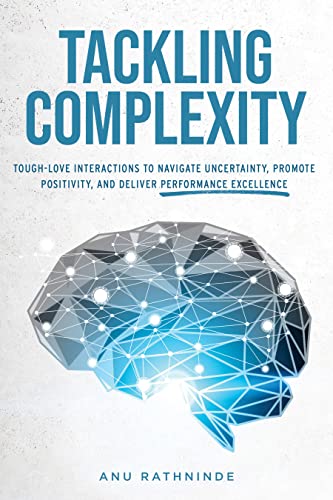
Tackling Complexity, by Anu Rathninde, is a book written for and intended for leaders. Its aim is to help them become a better version of themselves and to learn from their own or other leaders’ mistakes. The book’s seven parts each focus on a different aspect of the SIILA model. In addition, they include the writer’s personal experience, giving readers a real-life look at things.
Rathninde writes in a very detailed way, guiding the reader through every concept, even writing a short summary of each part at the end of it. This helps readers review concepts and internalize them. The author also addresses the reader directly, more than once, to strengthen the point and to give suggestions on how to be and become a better leader.
As a reader keen on details, I appreciated the examples taken from contemporary situations. The writer provides the reader with plenty of examples, complete with data, names, and everything that might help contextualize them and that will help the reader understand the concept explained in the paragraph. Furthermore, the focus on variety, complexity, and interdependency helps readers feel part of the process as common situations happen in every work context.
In addition, the book revolves around the SIILA model, a loop of system thinking, internalizing, interaction, learning, and adapting. This model helps the entrepreneur or CEO in question to analyze their own habits and correct them when necessary. It is well described and uses the metaphor of parental love to explain the tough love one has to feel for their own work, which matches their dedication to the process.
Tackling Complexity, by Anu Rathninde, is an enlightening business management book focusing on the personal growth of a leader. With its suggestions and examples that make the reader understand what a good leader is, it can help everyone achieve good results in their own workplace. I recommend this book to any reader keen on self-help books, leaders in need of a guide, and anyone interested in leadership development.
Pages: 221 | ASIN : B09XVMLZ6C


