Blog Archives
I Seek To Understand People
The Silent Hen follows the lives of a fearless Virginia spy and a young Jewish girl as they navigate the complexities of WWII and the aftermath of 9/11, in a poignant story of love, bravery, and the resilience of the human spirit. What was the inspiration for the setup of your story?
During WWII my mother and father both served in OSS, the forerunner to the CIA. Like the characters, Lucy and Gordon, they married in Cairo, Egypt. I was born shortly after the war, and my younger brothers and I picked up on our parents’ interests in foreign relations. Although they kept secrets about their wartime service, our dinner table conversations were often about strategies for promoting civil rights and foreign and domestic justice. It was not unusual for refugees from different parts of the world to stay in our home while they looked for places to resettle. I took the thread of one of my mother’s rare stories, that of a little girl she befriended in Cairo, and decided to blend that with the testimony of a Holocaust survivor who had been helped by a Muslim family. The story at the beginning of The Silent Hen of Lucy taking a trolley into Washington, DC, and getting in an Army truck to sneak back to her hometown for OSS training is something that happened to my mother.
The characters of Lucy and Bella are both captivating and complex. How did you develop their personalities throughout the novel?
That’s a good question. My main career was as a psychiatrist, and I have never been able to stop myself from trying to understand people. I ask my characters the same kinds of questions I tried to teach my patients to ask themselves.
The theme of resilience amid adversity is a powerful aspect of The Silent Hen. How did you balance the novel’s darker themes of loss and sorrow with threads of hope and idealism?
I guess that’s Pandora’s box, isn’t it? There was a time when my field, psychiatry, emphasized uncovering primitive emotions, which would be the equivalent to opening a box of traumas. In psychotherapy, bringing unconscious darkness to consciousness was never enough to sustain recovery. As in the Greek myth, in which the last thing to fly out of Pandora’s box was hope, recovery from trauma requires hope. I suppose these ideas work their way into my writing, especially in these current times of international conflict that so much resemble the times in my book. If individuals persist in caring for one another despite our conflicts and failings, I think we have a chance. One of my brothers has worked trying to promote reconciliation between Christian and Muslim groups in a war-torn area, and I wanted to write a novel that captured that spirit calmly enough that people could take it in.
What is the next book that you are working on and when will it be available?
Another good question. I’m working on a mystery novel set in Tidewater, Virginia, about a woman psychiatrist, her foster daughter, and the problems that ensue when they run afoul of a militaristic NGO located nearby. I’m not sure when I’ll be done, but I have other projects going on at the same time.
Author Links: GoodReads | Facebook | Website
This morally complex story follows a Jewish child sheltered by a Muslim couple in Nazi-occupied Yugoslavia, and a Virginia woman named Lucy whose conscience compels her to enlist in the OSS, forerunner to the CIA, for service in Egypt.
After an OSS man in love is severely injured in a parachute drop, he and the child, Bella, begin a harrowing journey to Egypt, where Lucy’s resemblance to Bella’s murdered mother will confront them with decisions for which there are no easy answers.
Augusta


Augusta is a beautiful mix of fiction and nonfiction anecdotes about a tenacious woman working to keep her family afloat in the early 1900s. Based on the author’s grandmother and family stories, Augusta tells the tale of a young farm girl married off at thirteen, abandoned, and then remarried to another abusive man. Her second husband, Ottis, is fired, leaving Augusta to be their family’s sole provider. While the storm of calamity continues to affect her family, Augusta must make the hardest decision of her life: whether to keep her youngest, Lottie, or allow her to be adopted by a wealthy family.
Augusta is a heart-wrenching novel centering on the unique circumstances of a woman in a time period where dependency on marriage to a man for survival was commonplace. Augusta represents a silent yet resilient generation of women who frugally kept their families fed and clothed throughout poverty-stricken years. Many of these women turned to each other and created pockets of communities and villages to ensure mutual aid. The writing captured this well. Augusta’s pain is clear, but so is her love for those around her. She was forced into a marriage and motherhood at an extremely young age and thus relied on her community to guide her through adulthood. Her sacrifices became an important parable for those of us who live in the present.
I enjoyed how the author filled in some gaps to complete Augusta’s story. The story of Al and Angie was particularly touching. They served as a silver lining and restored optimism back into the story. I also liked the historically accurate descriptions of appliances, money, and the like. Augusta’s wide-eyed incredulity towards appliances is interesting to witness. While modern readers will be interested in the simplicity of it, Augusta is impressed by what it can do. In a lot of ways, readers can still feel a connection to Augusta amidst the decades of distance.
Augusta is an essential story for all readers and will continue to be important for years to come.
Pages: 199 | ASIN : B0BQ9KLK2K

The Stones of Ailsa Craig
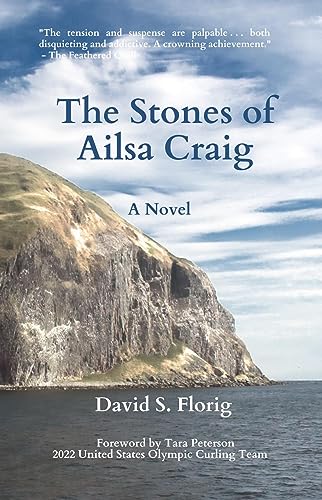
In The Stones of Ailsa Craig, author David S. Florig masterfully spins a tale that transcends time, bridging a remote Scottish island’s mystery from the turn of the century with the story of a newly widowed man in modern-day Maine. The protagonist, grappling with profound grief after losing his wife to cancer, embarks on a journey to discover a new purpose in life. His path uncovers unexpected connections between two women separated by over a hundred years and a surprising link to the ancient sport of curling.
Florig’s storytelling is as intricate and engaging as the sport of curling itself. He deftly combines historical fiction and mystery, intertwining rich historical details about the origins and nature of curling. Though an unlikely backdrop, the details are so vividly rendered that they complement the broader themes of love, loss, retribution, and healing that underpin the novel.
The narrative offers an exquisite balance of suspense and light-hearted amusement, allowing for a full-bodied reading experience that entertains and enlightens. It will enable readers to traverse different eras, offering a lens through which to view human themes that remain relevant across time and context.
The Stones of Ailsa Craig is a novel tailored for mature readers who appreciate layered storytelling and lush, intricate prose. It’s an intriguing feast for enthusiasts of well-researched historical fiction and an enticing lure for those curious about the heritage of curling. Both unexpected and captivating, this novel promises a reading experience that is as unique and multifaceted as the game it explores. The book is a testament to Florig’s skill in weaving a dynamic story that resonates with emotion and authenticity, offering a fresh perspective on historical connections and the timeless journey of self-discovery.
Pages: 281 | ASIN : B0CGJ8B395
Colosseum: Blood and Roses
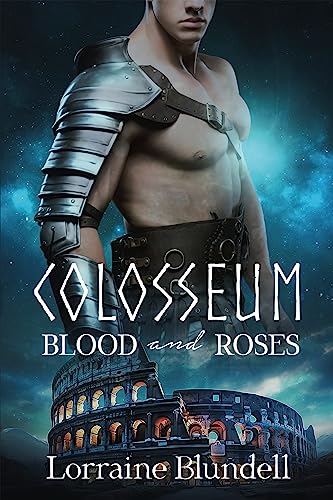
Colosseum: Blood and Roses by Lorraine Blundell is a brilliant action novel that transports readers into the times of ancient Rome. The narrative is alive with brave gladiators, brutal wars, and a variety of Roman emperors who continued outperforming their predecessors with grandiose public entertainment called “games.” The public recreation encompassed animal hunts, beast attacks, executions, spectacular gladiatorial combats, and mock naval battles, which are vividly portrayed via sharp writing and a wealth of metaphors to describe the epic battles with ample attention to the most intricate details.
During the Vespasian era in 79 A.D., the amphitheater was constructed via the blood and plunders of the Judaean war. The Colosseum is one of the most well-known architectural structures of ancient Rome and battles that took place within altered Roman culture and world history indefinitely.
The multifaceted characters provide several viewpoints to examine the history and making of the Colosseum from the perspective of Famulus, Rome’s most well-treasured Fresco-era painter, who guides the narrative with introspection and a reverence for Greek mythology and a penchant for detailing the gladiators’ combative skills in battle.
The novel chronicles the journey of Quintus, a young man training as a Retiarius, while he deals with the emotional damages from his mother’s death. Quintus’s determination to find and destroy his mother’s murderer and end his life in the act of retribution intertwined bravery and familial love into Quintus’s complexity.
Author Lorraine Blundell combined historical accuracy within a fictional narrative that will educate readers on the Romanic history surrounding the world-renowned Colosseum via a detailed character list, glossary, and historical notes that guide the story. The multifaceted novel will undoubtedly foster the readers’ appreciation for the history of the Colosseum and broaden their understanding of ancient Rome.
Pages: 358 | ASIN : B0C7TR81Y2
It’s Okay To Ask For Help

Sweepings of the Street follows a young girl whose family moves to London and, due to an accident, winds up in poverty and struggling to survive. What was the inspiration for the setup of your story?
My inspiration came from several Romantic poems: “London” by William Blake; “London, 1802” by William Wordsworth; and both poems entitled “The Chimney Sweeper” by Blake. Some of those poems are quoted in Sweepings of the Street. These spurred me to learn about the British Industrial Revolution and the ways in which it upended the lives of many people in the early 1800s. More specifically, Sweepings of the Street is set in 1816, known as the “Year Without a Summer” due to a volcanic eruption that caused intense climate change and crop failures. This, along with the effects of the Industrial Revolution, forces Sarah and her family to move to London. I wanted to explore the changes brought on by these catalysts and Sarah’s struggles adjusting to her new life.
Sarah has to grow up fast and find a way to help her family to the point of disguising herself as a boy. What were some driving ideals behind your character’s development?
I began writing Sweepings of the Street when I was 14, not much older than 12-year-old Sarah. I published Sweepings at 19, so my writing process spanned a good portion of my childhood, and I was living through some unprecedented historical events of my own. Sweepings is a coming-of-age story that follows several children who are given premature responsibility, such as working to support their families and raising their siblings. That premature responsibility can seriously affect development and mental health, and the characters spend the novel recovering from those effects.
Sarah also struggles with the dichotomy of wanting to help others, but not having resources to spare, and this sometimes gets her into trouble. That is juxtaposed with Sarah’s friend Jamie, who believes that it’s foolish to prioritize anything other than the direct safety of one’s family. As Sarah and Jamie get to know each other, they disagree about whether trying to help others is worth the risk of failure.
Your novel covers some important themes such as poverty, child labor, and depression. What is one thing that you hope readers take away from the story?
Sarah and her friend Jamie have close experiences with grief and depression, and although that was always part of Sweepings, there were times in the writing process when the content hit very close to home. So if there’s one thing that I want readers to take away from Sweepings, it’s that your story doesn’t have to be over. Change is terrifying and at times devastating, but it can also bring better things. Moreover, some things you can’t do alone, and that’s okay. There’s no shame in asking for help.
What is the next story that you’re writing and when will it be published?
I have a story in progress whose working title is Just A Reflection. It’s a middle-grade fantasy that follows a girl who learns of the existence of a world hidden behind mirrors and who realizes the importance and the cost of breaking the spell that has trapped hundreds of children in that parallel world. I don’t have a publication date for that yet, since I’m still drafting it, but I’m excited to dive into that next.
Author Links: GoodReads | Facebook | Website
Sarah soon learns that life in London is not as simple as it seems. She meets Jamie, a sullen, aggressive boy who helps her adjust to the new conditions. But Jamie has dark secrets of his own, and his reluctance to trust strangers clashes with Sarah’s burning curiosity about his past. As the city creeps towards winter, Sarah and her friends stand face-to-face with the horrors of London poverty—rising prices, rampant crime, disease, and hopelessness—and it becomes clear that not everyone will make it out alive. Everyone has a secret, and the consequences can be more devastating than any of them can imagine.
Set in Regency-era England, this award-winning coming-of-age novel delves into the effects of poverty, child labor, exploitation, grief, depression, loss of innocence, and premature responsibility on children and families. Sweepings of the Street delivers a powerful, timeless story against a rapidly changing historical backdrop.
Farm Boy, Professor, Actor, and Writer

Harvest is a collection of six short stories that take readers on a journey of growing up and survival. What was the inspiration for the setup of this collection of stories?
Harvest takes its name from the first story in the collection and also was the most difficult of the stories to write. It is set in 1947 during the first grain harvest I worked on as a boy and was originally intended to be the first story in The Past We Step Into, my 2021 book for Atmosphere Press. However, it was 75 years ago, and (1) I couldn’t remember all the technical requirements, plus (2) there were relatives of people whom I had used as character models who I was afraid of offending. In The Past We Step Into, all twelve of the stories were connected in some way to my family history, and I wanted to have more options in Harvest. I was helped by having already written “The Peacemaker” and “Change of Pace.” Despite the difference in locale and storyline—the making of a television series in Oregon—“The Peacemaker” was still about a boy growing up, and “Change of Pace” was about a professional baseball player facing the need to change his profession as he approached thirty. “The Bulbeaters” was family history again (not mine)—pioneers finding ways to survive in frontier Utah. “Submitted for Your Consideration”(as the title might suggest) began as a tribute to Rod Serling and then developed along the lines of Franz Kafka’s The Trial, set this time in modern-day Utah. We watch a man being persecuted in the present for reasons that are never given any explanation until the last line of the story. “VICKI…and the whispering children” is my story again, but derived from hallucinations I had after being hospitalized for cancer in 2020.
Each character in these stories is unique and gives readers a thought-provoking experience to reflect upon. What were the morals you were trying to capture while creating your characters?
No character in any of the stories is presented as the personification of good or evil. For example, the Hired Man in “Harvest” was convicted of statutory rape, deserted from the Army during wartime, and has a long history of sexual relations with married women. And yet, more than any other, he is the person with whom we identify right up to the time that he is driven out of the community. In the same story, two young farmers are brothers in every meaning of the word except blood relationship. In “The Peacemaker,” the man who makes (and stars) in the television series has a questionable record from World War II and a weekend drinking problem yet drives himself to create an idealized art form right up to the moment when he drops dead. The baseball pitcher and the actress in “Change of Pace” are truly in love but are separated by the art forms to which they have devoted their lives. The seemingly ordinary neighborhood depicted in “Submitted for Your Consideration” persecutes a seemingly ordinary man endlessly until he volunteers to be incarcerated in a prison long ago disgraced. In two different stories of “The Bulbeaters,” women do the heroic thing, and both die. We may question the morality of the universe in which these characters live, but if my writing achieves its purpose, we will not question the morality of their actions.
What experience in your life has had the biggest impact on your writing?
I am a farm boy (with some experience in the military) for whom an education and travel was unlikely. Yet I taught college for fifty years, was a Fulbright Senior Lecturer in Poland, and a guest lecturer for more than ten years in the University of Utah London Study Abroad Program, as well as at the University of Utrecht, the University of Aarhus (Denmark), and the Korean National University of the Arts. I also acted in seven foreign countries, wrote four books (two scholarly, two fiction), and published 25 essays. I was lucky to be raised in a farmhouse where there were always books and magazines around. My father, who had to leave school in the sixth grade when planting time came, told me that if I wanted to go to college, he would pay for it. I had a teacher who suggested I go to graduate school, even though I didn’t know what it was. I married a girl who not only deserved much better than me, but also went to graduate school with me, taught college, was a political organizer, a radio hostess, a key figure in the Utah Academy of Sciences, Arts, and Letters, and created a home for me where I only had to think about the academic interests I listed at the beginning of the paragraph.
I would like to make one more addition to the influences my family, my teachers, and my wife had on my writing. I began writing fiction after my wife died in 2002, but I had mostly continued to focus on my teaching and my theatre work until I was diagnosed with cancer in 2020. I got home at the end of April, physically unable to go out in the midst of a pandemic, during which it was unhealthy to go out. What could I do? I sat down in front of my laptop, reasoning that even if my writing was no good, I probably wouldn’t live long enough for anyone to read it.
I would not recommend these circumstances as a reason to write.
What is the next collection of short stories that you are working on, and when will it be available?
As I see it now, my next collection will be named after the opening story, “The Woman in the Third Floor Front,” and will have as its inspiration two events from my life: the semi-crippling of my legs; and the collapse of Southwest Airlines, which left me stranded for ten days last Christmas. I suffered from cancer in 2020 and my central character had a motorcycle accident. (I rode a motorcycle for 35 years before the coming of the cancer.) The injury cost my protagonist his job as a writer for an adventure magazine, e.g., his most recent assignment was a trip to the Himalayas to interview a mountain climber. He takes a plane to the city where his magazine is headquartered, only to be stranded in a relatively small-town in-between. He is directed to a hotel run by a widow with a young son. Her husband also had a motorcycle accident, but his was fatal. The woman and the boy continue to occupy the third-floor family apartment, and as the days pass the writer becomes more and more interested in her story. It is impossible for me to determine when this story or any of the following will be available, although my goal is 2025.
The second story is based upon the lives of Kathy and Elliot Lewis, two stars of the last days of Network Radio. They acted, directed, produced, and wrote some of the finest radio theatre right up to its end in October 1954. (Maybe because of my age, I am fascinated by artists who lose not their skill, but the place of their art in society.) We will see in passing William Conrad—Matt Dillon on radio, Hans Conreid—who once acted in seven different programs in a week, and Dean Martin and Jerry Lewis—who made the leap from supporting radio comedians to movie stars. Incidentally, the Kathy and Elliot partnership did not long outlast Network Radio. They divorced after 14 years of marriage in 1958 (unable to adapt to one another in changed roles?).
If I am to bring about the third story, I will need the help of my publisher. You may or may not know Johnny Mercer, but you are likely to know songs like “Moon River” and “Days of Wine and Roses.” Johnny was a leading movie lyricist and writer of popular songs, as well as a successful radio and night club singer. Have you ever seen Clint Eastwood’s Midnight in the Garden of Good and Evil? Every song in it was written by Johnny Mercer, beginning and ending with “Skylark,” and including “Fools Rush In” and “That Old Black Magic.” As a Savannah-born singer, Johnny is best measured by his 1943 radio show, during which a segregated high school voted Johnny “the best black singer in radio.” He ended his career in the sixties and seventies singing his own songs in nightclubs, and that is where my story would be set. Two things should be remembered: (1) Johnny had brain cancer late in his life; and (2) he had a love affair with Judy Garland that only ended with her death. It wasn’t long after The Wizard of Oz that the 19-year-old Garland and the already-married Mercer fell in love. MGM and her agent convinced Garland that it would ruin her career if she was seen as a marriage breaker, and she soon embarked upon the first of her five marriages. They got together again in the late sixties just about the same time as Mercer’s wife came down with cancer. She made them promise not to marry until she died, then outlived them both. Mercer said his song, “I Remember You,” is the best expression of his feelings for Garland and that is the title of the story. Johnny sings his own songs in a full nightclub, with Hoagy Carmichael—who wrote the music for some of them—at the piano, but sometimes forgets where he is and who is there with him. Sometimes he sings to Garland, sometimes she sings to him, and sometimes they sing together. The problem is copyrights. Johnny rarely wrote his own music, and the question is whether the songs (whose music will not be in the story) will have to be cleared by the estate of each individual composer.
These three stories are probably book-length. If they are not, or if one or more can’t be included, I have two earlier stories I would like to re-write. In “When I go, I leave no trace,” a political reporter for The Salt Lake Tribune finds himself unwillingly doubling as an environmental reporter when the newspaper makes a sharp cutback in staff. His first assignment is to cover the standoff in Oregon between the Bundy family refusing to pay grazing fees on federal land, and governmental agents. That night on the wall of the cabin where he is staying, the reporter sees the block print of a wilderness photo. When he awakes later, he sees through the window a campfire tended by a young man with two donkeys with back packs. The boy gives every impression of being Everett Ruess, the poet/ artist/environmentalist who disappeared in 1934. Ruess convinces the reporter that the land itself is more important than the human beings who rape it, and he returns to The Tribune to accept the position of reporting on the environment.
The last option is “Chinaman’s Chance,” set at the Centennial Celebration of the Intercontinental Railroad in 1969, marked by giant photographs of the officials given credit for the massive achievement. A young woman who is the descendant of one of these officials is exposed for the first time to the truth of the day-to-day construction of the railroad track and the lives of those who built it. She has the opportunity to compare the prejudice the Chinese workers shared with the feelings expressed by her fiancée, a PTSD-suffering Vietnam veteran, and comes away with a new understanding of both historical incidents.
Author Links: GoodReads | Website
From the Wisconsin farms of Scharine’s youth to the vivid hallucinations of his own cancer experience, each story is set in a locale that the author knows intimately. Three stories are set in the picturesque landscape of Utah where diverse characters meet unique challenges: a Mormon matron deals with a series of memories, a failing Triple A baseball player faces a questionable future, and a present-day outcast contemplates his fate in front of Topaz, the World War II Japanese internment camp.
These thought-provoking stories carry a stark warning – growing up doesn’t always lead to survival. Be prepared for moments of tension and heart-stopping suspense as you join Richard Scharine on his captivating exploration of what it means to grow up in America.
Themes That Are Still Valid Today

My Place Among Them follows the lives of a 12-year-old boy and a teacher who form an unlikely friendship and bond despite their different cultures. What was the inspiration for the setup of your story?
I was inspired to tell the story because the two main characters actually existed and dealt with the issues and events that are portrayed in the novel. I also believe the mandatory school attendance as a form of cultural change for native children should be told as a part of US history.
What kind of research did you do for this novel to ensure you captured the essence of the story’s theme?
I had my great-grandfather’s employment records from the archives of the Bureau of Indian Affairs as well as a rough manuscript he wrote about the life experiences of John Iron Horse. Because Covid limited my access to library research, I purchased numerous non-fiction books that documented life on native reservations from 1800 to 1950. I also used archival records of the various government schools that are depicted in the story. When details from my research conflicted with current widely accepted information, I reached out to native elders to confirm the authenticity/accuracy of the sources I used.
What were some themes that were important for you to explore in this book?
Some of the themes that intrigued me were:
- While government policy may appear as the work of all persons within “the government” and thus the desire of the nation, in fact, there are often individuals who act on their own beliefs/desires within the bureaucracy that have the greatest impact, both good and bad.
- While it is easy as an outsider to look at others who are struggling with “life” and say, “get over it” or “if you just work hard enough, you can improve your life”, it’s not as easy as it sounds. There must be some “hope” that an individual can grasp as he/she works to improve their status in life or they may be overwhelmed by their daily struggles.
- “Education” has a profound impact on the future of society when it is used to indoctrinate or when policy encourages standards that become social norms whether by intent or accident.
These themes are as valid today as they were at the turn of the 20th century.
What is the next story that you’re writing, and when will it be published?
I have just begun writing a “coming of age” novel about John’s daughter Johanna, set in the midst of the Women’s Suffrage movement. Its title is “Tonic of Wildness”. The publication date has not been set.
I’m also planning a novel about life on a modern family farm…possibly titled “Worth Fighting For,” but it is still in the basic, basic development stages.
Author Links: GoodReads | Twitter | Facebook | Website
Carter Heath teaches in the government-run educational system and knows there’s more to his position than what’s happening in his classroom. He’ll soon learn that, in bureaucracy, politics, money, and ulterior motives are always intertwined.
Can the bond between an extraordinary student and a dedicated teacher survive in a world that pits red man against white?



 LITERARY TITAN
Resilience and Healing
Aug 21
Posted by Literary_Titan
The Unbroken Horizon follows the lives of two people, a white humanitarian nurse in 2011, and a 14-year-old Black girl in 1914 whose lives are interwoven. What was the inspiration for the setup of your story?
The birth of The Unbroken Horizon came in 2011, during a healing workshop. Suddenly, I had the sense of being in a forest. I saw flashes of white hoods and torches. I felt dizzy and nauseated. The images and feelings followed me for days until I finally sat down at my computer and started writing what ended up being the broad outline of Maggie’s life. A few weeks later, I had the idea of a humanitarian nurse, Sarah, who had a similar vision as I had, but in a recurrent nightmare that caused her to make a near-fatal mistake, and subsequently launched her on a healing journey. I had done international humanitarian work for a decade (mostly in Asia and the Middle East) and my sister had worked for fifteen years with Doctors Without Borders (mostly in African countries) so I combined both our experiences for the setup. Sarah’s path to healing was inspired by my own and that of my clients, as I am now a holistic healer focusing on anxiety and trauma—including that which is inter-generational.
What kind of research did you do for this novel to ensure you captured the essence of the story’s theme?
After getting the initial sense of Maggie’s life through automatic writing, extensive research into that era (1914-1927)—both general and also focused on Black history—helped flesh out the details. Learning about the 1918 Dyer anti-lynching bill (which never became law due to filibusters in the Senate) helped contextualize the story in time. Jim Crow Laws, the Great Migration, World War I (and the promises made and broken to Black soldiers), the Spanish Influenza and the Red Summer form the backdrop to Maggie’s lived experiences in the first five years covered in the novel. Some of the details I included (such as the messages on placards at an NAACAP silent march, or the rain bringing an end to four days of violence during the Washington DC Red Summer events in July 1919) were informed by thorough research from books, internet searches and news clippings. Reading Ida B. Wells and Mary Church Terrell’s autobiographies helped give me a sense of Black women activists’ experiences around that time.
However, it was also clear to me that Maggie was a poet at heart and would want to go to college to explore that passion. Archival images of Howard University’s 1920 yearbook gave me a sense of the students, the campus, and the professors at that time. I was sure Maggie and Alain Locke would have gotten along famously, so I did a deep dive into his life to understand him better as a person. I read numerous books of both poetry and prose written by Harlem Renaissance writers featured in his The New Negro anthology (which, in my novel, Maggie helps with) to imbibe the voice and lyricism of that time period.
My research for Sarah’s story (the parts not inspired by my own experiences) was more informal. I pored over my sister’s photos and stories of South Sudan, and talked to various friends about their experiences as: a therapist doing EMDR, a baby cuddler at a neonatal Intensive Care Unit, a study abroad student in Tanzania, a volunteer with CORE (Congress of Racial Equality) in the 1960s, to bring some of Sarah’s scenes to life.
What are some things that you find interesting about the human condition that you think make for great fiction?
As a healer/poet/writer, I’m fascinated by trauma, mental health struggles, and the capacity for resilience and healing. I love combining the stark realities of being human with magical realism, hope, and realms/guidance that transcend the limitations of our cognitive brains.
What is the next book that you are working on, and when will it be published?
Honestly, since I poured so much of myself into The Unbroken Horizon and it took be about a decade to finish (the writing, rewrites, and publishing), I feel like I need a little break from novel-writing. However, I am hoping to publish a nonfiction book about body-based ways of healing from anxiety and/or a book of poetry in the next year or two.
Author Links: GoodReads | Twitter | Website
2011: Sarah Baum is a white humanitarian nurse who’s worked in conflict zones for years. When recurrent nightmares of being a scared Black girl hiding in the forest cause her to make a near-fatal mistake, she’s faced with her biggest challenge yet: how to heal from her past. And who is the girl in her dreams?
1914: Fourteen-year-old Maggie Burke flees the land where her family works as sharecroppers after witnessing the lynching of her brother and father. She eventually finds her way to New York and later Washington, DC, where her personal demons finally catch up with her. Will she have to give up everything she thought she wanted to follow the wild, poetic voice wishing to emerge through her?
Alternating between Sarah’s deep dive into her childhood and ancestral wounds, and Maggie’s journey from survival to forging her own path, The Unbroken Horizon explores the ways humans survive, heal, and even thrive in the face of individual and collective trauma.
Share this:
Posted in Interviews
1 Comment
Tags: author, book, book recommendations, book review, book reviews, book shelf, bookblogger, books, books to read, contemporary fiction, ebook, goodreads, historical fiction, indie author, Jenny Brav, kindle, kobo, literary fiction, literature, nook, novel, poetry, read, reader, reading, social commentary, story, The Unbroken Horizon, womens fiction, writer, writing