Blog Archives
Identity Crisis: Who Am I, Really?
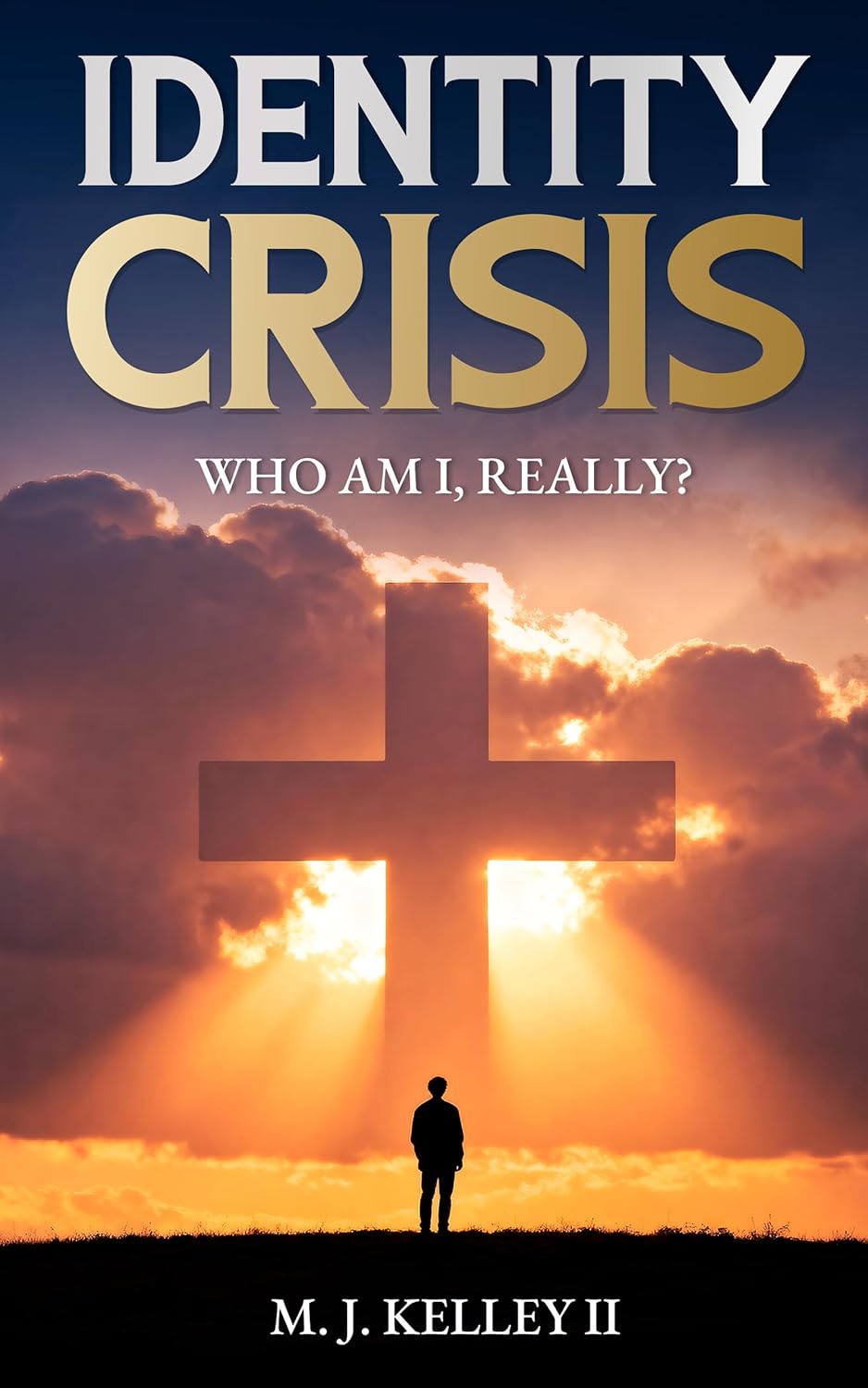

Identity Crisis: Who Am I, Really? offers a striking blend of memoir and theology, tracing one man’s journey from abandonment and anger to spiritual renewal. The author begins with a vivid recollection of his upbringing in foster care, marked by instability, neglect, and emotional wounds. His story unfolds through a lens of deep honesty, moving from survival and self-reliance to the gradual recognition of divine purpose. What begins as a personal account of loss transforms into a broader reflection on how individuals construct their identities in an age of distraction, performance, and comparison.
The opening chapter establishes both the emotional and philosophical weight of the work. When the author describes “the names I had been called were weapons,” the reader is immediately drawn into his internal conflict between strength and brokenness. His career as a police officer becomes a metaphor for control, an outward display of stability masking an inward fragility. This contrast anchors the book’s central theme: that human worth cannot be secured through achievement, image, or reputation. The author’s eventual encounter with faith reframes identity not as something earned, but as something received.
Beyond the personal narrative, the book engages thoughtfully with cultural issues. In “The Crisis of Identity,” the author critiques the social and psychological consequences of the digital age, arguing that social media’s obsession with validation has eroded authentic self-worth. His discussion of the “comparison trap” is particularly compelling, weaving together research on narcissism and mental health with theological reflection. The prose maintains clarity even when exploring complex ideas, inviting readers to think critically about how technology shapes the self.
One of the most powerful sections, “When Labels Become Limiting,” exposes the damage caused by societal categorization and contrasts it with the Christian understanding of identity as being “created in the image of God.” The author’s exploration of spiritual adoption, our becoming children of God with a new name and inheritance, provides the emotional and theological resolution of the narrative. This theme of restoration lends the book both its moral force and its hope.
Identity Crisis is deeply personal yet widely relevant. It speaks to anyone wrestling with self-worth, purpose, or belonging in a world that prizes performance over authenticity. The author’s courage in revisiting his past, combined with his grounded biblical insight, makes the work both reflective and redemptive. Readers seeking a thoughtful, faith-centered examination of identity will find this book profoundly moving and intellectually satisfying.
Pages: 241 | ASIN : B0G1NK5V76

The Farthest-Reaching Ball


Every mother’s journey is unique, however, they all share one thing: heartache. In one way or another, every mother travels down a difficult road as she fights tooth and nail to bring her child to adulthood unscathed. Sandra Bowman, author of The Farthest-Reaching Ball: A Memoir of Motherhood is no stranger to heartache. As the mother of two children, Grant and Parker, Bowman relates the trials and tribulations she overcomes as she raises her children virtually on her own. A mother’s love is nowhere more evident than in Bowman’s explanation of how she comes to understand the needs of her children and the struggle that has permeated her son’s life since an early age.
Sandra Bowman describes virtually every aspect of her journey as a mother in her poignant memoir, The Farthest-Reaching Ball. She details the birth of her sons so vividly that I felt, as the reader, that I attended the delivery. Her emotions surrounding the births are clearly drawn, and any parent who has experienced a particularly difficult birth will appreciate how very frank Bowman is with her details.
As a teacher, I am struck by the battle Bowman and her son, Grant, face as he begins school. His gifts are both amazing and obvious to all, but the obstacles he faces are numerous. Children with talents beyond those of the average child are often overlooked in the regular classroom, and they are not always afforded the opportunity to showcase their skills. Grant is one of those children with a mother on a mission to find a setting that suits her child’s best interests.
When Bowman’s son begins to experience behavior challenges and depression sets in, the author’s challenges multiply. Moreover, Grant’s own slowly-revealed identity crisis begins to consume his thoughts and every interaction. Bowman is more than understanding and is the proverbial mother bear–she is fierce and stops at nothing to make sure her child is content with himself. The author is beyond adept at communicating her feelings and her ever-fluctuating fears regarding Grant’s mental state. His worries are her worries, and his unhappiness is hers to bear.
There doesn’t seem to be a problem Bowman and her son haven’t endured. From excessive weight gain, to depression, to attention deficit disorder, Grant runs the gamut. Bowman is exceptionally open with her own feelings of defeat, despair, and utter helplessness. She is at loss as to how to help her son deal with an identity crisis that threatens to be the end of them all. Mothers of all walks of life can relate to Bowman’s honesty as she admits to her own suicidal thoughts.
I am impressed with Bowman’s forthrightness and openness. She lays out every frustration, worry, and obstacle for readers and shares with them the most intimate of details about her own regrets as a mother. Parents of children struggling with identity crises of all types will appreciate Bowman’s story.



 LITERARY TITAN