Blog Archives
Multidimensional and Relatable

Imber centers around a young woman whose family is dedicated to sustainable living as she finds herself drawn into the mystery surrounding the fate of Earth and the limits of science. Where did the idea for this novel come from?
For as long as I can remember, I have been drawn to wildlife and wild places – not necessarily in a clinical way, although I do enjoy learning about nature, but more often as feelings of deep affection and awe. The initial spark for Imber grew out of the idea that humanity has a profound connection with nature. I wanted to explore what might happen in a dystopian future where that connection is strained to a breaking point.
How do you capture the thoughts and emotions of a character like Violet?
Violet is a complex protagonist. While she has many admirable qualities, she is far from flawless. It was important to me that Violet be multidimensional and relatable. In the first moments of Imber, Violet is brooding and somber. She’s reading depressing poetry on a day when she is already sad. Although she is self-aware enough to stop, I love that the first time we meet her is in a moment of self-sabotage. When capturing Violet’s thoughts and emotions, I was careful to shine a light on both her strengths and weaknesses. And because she is highly intelligent and analytical, her inner life must reflect that as well. So, overall, I would say that characters like Violet require a layered approach that befits the complexity of their thoughts and feelings. Violet was challenging to write – but tons of fun, too.
Is there any moral or idea you hope readers take away from Imber?
One of the fascinating things about reading is that people can take away very different things from the same book. They might have dissimilar interpretations of the plot or characters, or certain aspects of the story might resonate differently with them. As an author, I think it’s exciting that my work can have a life of its own in that way. Nevertheless, there are themes in Imber that I hold dear: humanity’s responsibility as shepherds of the earth; the power of hope; courage and perseverance in the face of injustice; and the beauty of found family, to name a few.
What is the next book that you are working on, and when will it be available?
I would love to write a sequel to Imber. I have roughly outlined the story, but I haven’t started to write it in earnest yet. I am working hard to help Imber find an audience. If there is interest, I would be thrilled to continue this tale!
Author Links: Goodreads | X (Twitter) | Website | Amazon
The remnants of humanity are living in hiding, making the best of their circumstances while searching for a new celestial home. Just when salvation seems imminent, four strangers discover they have an unusual, inexplicable link—one that pitches them headlong into high adventure and intrigue.
Totally unprepared, the four must navigate shocking obstacles and trust unexpected allies as they race against the clock to unravel a chain of unsettling revelations that could impact the fate of the world.
The government has been concealing important facts about humankind’s promising hereafter. Will the efforts of a farmer, a hacker, a businessman, and an academic be enough to overcome impossible odds and expose the truth before it’s too late?
Imber
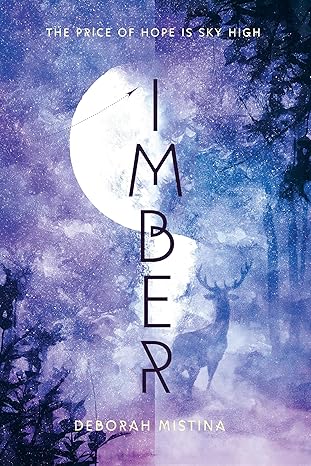

Deborah Mistina’s Imber is a speculative, soul-stirring tale set in a future where nature is both fragile and sacred. The novel follows Violet Murphy, a young woman devoted to her family’s farm and their legacy of sustainable, organic living amid a crumbling world. As the government’s strange motives begin to unravel, Violet is pulled into a deepening mystery that questions everything, from the fate of the Earth to the limits of science and memory. At once a dystopian adventure and an emotional meditation on grief and hope, Imber crafts a world that’s both fantastical and deeply familiar.
I enjoyed Mistina’s writing style. It’s poetic, even when it’s subtle. Take the opening pages where Violet feeds her horse Firestorm while mourning her lost parents. The imagery is soft and painful: “They broke like porcelain on the jagged rocks below, where the sea writhed with furious waves…”. Mistina doesn’t just write; she paints with words. She lets grief sit beside beauty. The prose made me feel something in every paragraph, like each sentence had its own pulse.
Then there’s the story itself, which is clever and unexpected. When Violet is summoned to present her work at the Science Bureau, things turn dark fast. The seemingly harmless coffee offered to her becomes a sinister turning point. “It was excessively bitter and altogether unsavory,” she says—a perfect metaphor for what comes next. That whole interrogation scene was haunting. It wasn’t just suspenseful, it was invasive and raw. The way Mistina writes Violet’s spiraling consciousness during that sequence made me uncomfortable, in the best way. I couldn’t stop reading, even though I wanted to yell at Violet to run.
But maybe the most surprising part of Imber was how it made me care so deeply about more than one character. Jack Collins, who shows up in a later chapter, is someone I didn’t expect to love. He’s a hunter mourning his father, caught in a storm of his own. At one point, he’s trying to shoot a deer but ends up crying in the rain because he suddenly feels the deer’s fear. Sounds absurd, but the way Mistina handles it is gentle and strange and real. I felt his grief. I felt his confusion. That’s powerful writing.
By the time I finished the book, I felt a little haunted, a little hopeful, and completely wrecked in the best way. Imber isn’t just a sci-fi story or a survival tale. It’s a quiet rebellion against numbness. It reminds us what it means to feel deeply, to protect fiercely, and to listen—even when it’s hard. I’d recommend this book to anyone who loves stories about resilience, about the intersection of science and emotion, and about what it means to fight for what you love. It’s perfect for fans of Station Eleven or The Overstory, or really anyone who needs to be reminded that the Earth, and our hearts, are worth saving.
Pages: 315 | ASIN : B0DV3V8L5K

I Followed the Magic

Tyffany Hackett Author Interview
Imber follows a young queen on a deadly journey to save her kingdom from an ancient enemy. What was the inspiration for the setup to this exciting novel?
Honestly I’ve always been a huge fan of epic fantasy; huge, sweeping books that pulled you into another world, or games that let you have powers and forge bonds. Larger than life enemies, heroes that don’t always win. I grew up on JRR Tolkien, Garth Nix, Julian May, and JK Rowling. I’ve poured hours and hours into the Dragon Age and Elder Scrolls games, and more still into Dungeons and Dragons sessions. So when I started writing I leaned into that. I followed the magic. And while I still have a lot to learn from those greats, I knew going in that I really wanted Imber to encompass what I love about fantasy–the trials, the adventures, the magic, the friendship.
Natylia is an intriguing character that I enjoyed following. What were some driving ideals behind her character?
With all of my characters I stick very firmly to the ideal “write what you know.” Who was I at 19? I was young, and impulsive, and made mistakes. So what would I have done thrust into a spotlight I wasn’t quite ready for? I would have been young, and impulsive, and made mistakes–mistakes I would later learn great lessons from. I’ve always loved flawed heroes, because they felt more real to me, and I wanted Natylia to feel as close to a living person as one could living inside pages.
The novel has a rich backstory that I hope to see more of. What were some themes you wanted to explore in this book?
I think there’s a lot of conversations that aren’t being had in our real, living world, and I tried to weave some of those into my world building. I’m all for a story with a message, and I tried to throw in a few that were important to me.
Natylia has panic attacks because of crowds, and because that’s what felt natural to me; but mental health isn’t often addressed in fiction and when it is, often it’s in a harmful or inconsistent way.
I also wanted younger readers, since Imber is YA, to be reminded that they will be underestimated, and they will make mistakes, but that they can move forward from them.
I wanted to reinforce the idea that sometimes family isn’t blood, but the people in your life who love and support you. Specifically, Natylia’s relationship with Jyn. They’re really important to me because I think strictly platonic male-female relationships are almost nonexistent in literature, and they shouldn’t hold the strange taboo that society puts on them, but also because when Jyn had no one else he still had Natylia. Those kind of friendships are rare and should be cherished.
This is book one in your Thanatos Trilogy, where will book two pickup and when will it be available?
Book two will pick up two to three weeks after the end of Imber, and it will be available Fall 2019. Right now I’m aiming for a late September/early October release.
Author Links: GoodReads | Twitter | Facebook | Website | Instagram
![Imber: Book One of The Thanatos Trilogy by [Hackett, Tyffany]](https://images-na.ssl-images-amazon.com/images/I/51WhEv4rpzL.jpg) The locks are failing
The locks are failing
–
The keys are calling.
–
The Titans are waking.
–
Crowned before her time, nineteen-year-old Natylia is thrust into an unpleasant reality–her people don’t want her, her family doesn’t need her and,despite her best efforts, she can’t seem to shake an incorrigible suitor. But when rumors begin to swirl throughout her kingdom the young queen shifts her focus and realizes that the world she loves could be destroyed in an instant.
–
An ancient enemy, long thought gone, is trying to return.
–
Forgotten legends have resurfaced, stories that tell of three scepters: the keys to unleashing these foul beings. Across Araenna the hunt rages for this trio of formidable power–to command the keys is to hold the power of mortal gods.
–
Aided by her snarky elven bodyguard, an unassuming blacksmith, and a clever nature witch, Natylia races to correct the mistakes of the past… before they can destroy her people’s future.

Imber

Tyffany Hackett’s book Imber follows the journey of a young girl named Natylia, who becomes queen before she is of age and takes her mother’s throne. She is accompanied throughout the story by friends like an elf, an herbalist, and a blacksmith. Natylia, after hearing about the legend of an ancient artifact, decides to go with her friends and find the artifact before others take it. Our heroine toils through loss and political conflict to successfully achieve her goal of benefiting the kingdom and saving it from an ancient doom.
Set in medieval times, this book contains so many fantastical things that are superbly described. The characters were well developed and gained layers as the story progressed. Natylia is one example of such a character. Throughout the book, you can see she reacts to stresses and pressures in a believable and relateable way. There is a complexity to all the characters stories, starting superficially and growing into something deeper, which is explored and hinted at throughout the book. One such example is Jyn, who is a friend of our protagonist. He’s ever faithful, and even with his temper he’s something more than Natylia’s guard.
The book explores themes of growing up in the face of adversity, as seen with the protagonist’s ascension to the throne. The trials she faces make her grow up from a young girl into a full-fledged woman right before your eyes. This coming-of-age theme really kept me turning pages all the way through. The author’s writing delivers complex ideas easily, but at times I felt the story was hampered by excessive descriptions, which detracted from the momentum built with some very well orchestrated action scenes. At the same time however, I can’t help but feel that the descriptions helped cement the world better and evoke a stronger image about the story. I suppose this is to say, if you like deep descriptive world building then this book is for you.
While the character development was excellent, I felt that some of the relationships that Natylia has throughout the book were shallow and easily cast aside. There were some relationships that I did enjoy, such as our protagonist’s relationship with her parents and siblings, but others seem to be thrown aside or not developed. I was given just enough to be deeply intrigued and begged for more.
Nevertheless, even with these flaws the book was a thrilling read. The prose was crafted with care and the author was very descriptive throughout. When the action came it kept me on the edge of my seat and was very fun to read.
Pages: 424 | ASIN: B07CMGSDRD



 LITERARY TITAN