Blog Archives
I Love the Me I See In You
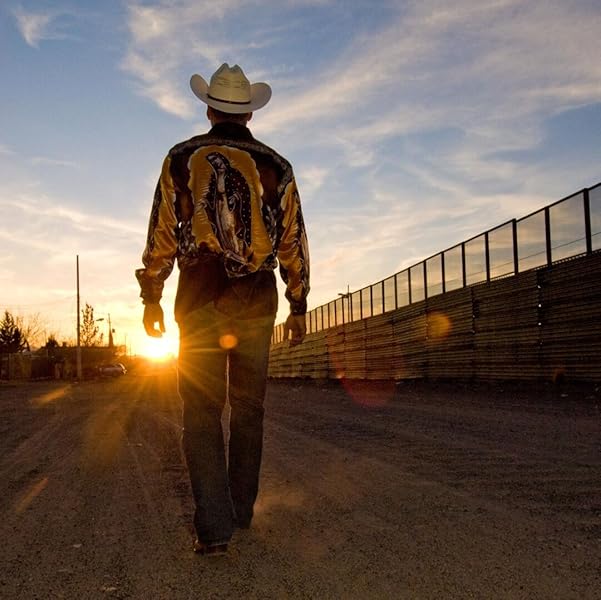
In Hope on the Border, you address existing misconceptions surrounding the US–Mexico border and offer an honest look at life in this perilous area. Why was this an important book for you to write?
America is in trouble. We are more divided and unhappy than ever. In the 2024 World Happiness Report, people under 30 in the U.S. ranked 62nd globally out of 143 countries in happiness and life satisfaction. And this abysmal ranking is plummeting. Suicide is now one of the leading causes of death for American preteens (ages 8–12). How can this be when roughly 95% of the planet is financially worse off than the average American?
(Of interest, Mexico ranked 25th in the 2024 World Happiness Report.)
At our four-decade-old Rancho Feliz Charitable Foundation, Inc., we have a proven solution, and America needs to know what we have to offer. So I decided to write a book.
Ensnared in technology’s frenetic pace, many youth and young adults in America are experiencing a poverty of purpose, meaning, and connection in an environment of unparalleled abundance. Paradoxically, this poverty fosters the same primal fear, alienation, loneliness and emptiness that haunt the poor and underprivileged in Mexico, on the U.S. southern border. In fact, both have the same negative symptoms, just on opposite ends of the socioeconomic spectrum.
Rancho Feliz’s volunteer program allows both sides of the charitable transaction to be simultaneously donors and recipients, thereby thriving in tandem. In a very real sense, the volunteers feed the stomachs of the poor and, in turn, the poor feed the souls of the volunteers. It’s an equal exchange of energy with no logical end—and it transforms the lives of everyone.
This two-pronged approach of serving the poor and creating purpose for the privileged fosters a symbiotic relationship—one in which givers become receivers and receivers become givers. Everyone benefits equally from the same service transaction. We call this reciprocal giving. Under this operating mandate, we have changed thousands of lives on both sides of the border.
To run a successful volunteer-based charity, the greed of human nature must be recognized and harnessed. In other words, service work is foremost in your best interest, and the recipient benefits as a result.
10,000 years of failed religious teachings have taught us that presenting charity as a sacrifice, an action grounded in lack, doesn’t work.
Rather, Rancho Feliz appeals to the driving force of basic human self-interest. Out of selfishness, a form of altruism blossoms.
This isn’t about helping Mexicans – it’s about helping ourselves (by which the Mexicans get helped in the process). This is a true win-win.
In light of our current situation, Americans need to hear this message now more than ever.
How long did it take to research and put this book together?
“Hope on the Border” is a collection of lessons and experiences I gleaned over 38 years of volunteering on the Mexican border, coupled with a lifetime interest in the workings of the mind. My interest in the mind led me to five expeditions into Tibet’s Himalayan “Hidden Lands of the Blossoming Lotus” A.K.A. “Beyul Pemakö” where I studied with several learned Buddhist monks and indigenous ascetics. I firmly believe that in the arena of the mind, what we believe to be true is.
To this end, I also had an early interest in hypnosis and visualization. In the late 1970’s this fascination led me to the Institute of Noetic Sciences which, in turn, led me to studying eastern philosopher Paramahansa Yogananda and his self-realization teachings. Though Yogananda was a Hindu, this study led me to a profound interest in Tibetan Buddhism. In 1993, I took my Bodhisattva Vow of Compassion directly from His Holiness the 14th Dalai Lama. This experience further strengthened my resolve to help others as a path to a rich and full life.
I attended Buddhist meditation master Chögyam Trungpa’s “Shambhala: The Sacred Path of the Warrior” classes in Boulder, Colorado, and completed all 12 levels of the meditation teachings in 1998. It’s important to me to note that I do not consider myself a Buddhist – rather I am a student of Buddhism and how our minds work.
It has been my experience that meditation changes us. It changes our brains. It changes the way we think and relate to our world and to each other. It breaks down the hard boundaries that separate us. As a life-long meditator, I have experienced this firsthand. Likewise, when I am in service, the distinction between me and you is blurred. I see myself in others.
At Rancho Feliz we have created a venue where our volunteers can see themselves in others less-fortunate. When this true view is mastered, the only logical conclusion is to serve – for in serving others you are serving yourself.
Both meditation and serving others unveil the interconnected nature of all things. This awareness further strengthens one’s resolve to help others as a path to a rich and full life.
And this is what led me to start Rancho Feliz. I began seeing myself in others. I could no longer default to ‘empathic blindness’ as I realized that the only difference between me and the poor on the border was ‘luck’ – just blind luck.”
Did you learn anything in the course of writing Hope on the Border that surprised you?
Yes. I came to understand the difference between the statements, Love thy neighbor as thyself and I love the me I see in you. I learned that the worn-out and ineffectual statement Love thy neighbor as thyself is a gullible and simply impossible moral imperative that doesn’t work. It goes against our basic instincts of self-interest. To love a stranger is treacherous. It’s a dualistic love. It assumes a separateness, a distinction between you and your neighbor. And all divisions invite conflict. All I had to do was look at our border wall for proof of that.
I love the me I see in you, on the other handis the “true view”(as the Buddhists would say) of our human condition. We are not separate and independent from each other. Rather we only exist in relation to, and are dependent upon, everything else as strands in a universal web of cause and effect.
I love the me I see in you is personal and reflective. It concentrates on unity and shared being. It’s about recognition and connection. It’s self-referential – focused on how the other person reflects you back to you. It suggests that when you look at another human being, you see yourself – echoing the same emotions, wants, needs, hopes, joys, and vulnerability of our shared experience. And you love them because they mirror what is familiar in you.
This is love based on recognizing our “oneness” – the sense that you and I are not truly separate. Love here comes from seeing ourselves in the other and recognizing our shared existence – our shared humanity. We’re all in this together. None of us knows exactly why we’re here, yet we’re all doing the best we can with the circumstances we were born into. This is a non-dual love – a love that dissolves the boundary between self and other.
In writing “Hope on the Border” I was forced to define what made Rancho Feliz different from other charities and religions. Working in one of the most divisive atmospheres on earth – the U.S./MX border – made me contemplate deeply what approach to charity is in sync with our basic human nature and what approaches are not. I attribute much of Rancho Feliz’s success to this simple but all-powerful understanding.
What is one thing you hope readers take away from this book?
We all have a hand in the maladies that plague our southern border. And the pain, suffering, desperation, misunderstanding and divisive contempt will continue until such time as we truly take to heart the fact that you can best serve yourself by serving others.
Author Links: GoodReads | Facebook-Author | Facebook-Book | Website-Author | Website-Book | Instagram
The U.S.–México border is more than a line on a map. It’s a place of hardship and resilience, inequity and generosity, division and connection. In Hope on the Border, Gil Gillenwater draws on nearly four decades of firsthand experience to bring readers face-to-face with the realities of the world’s most dangerous migrant corridor—and the hope that still thrives there.
Through vivid storytelling and dramatic photography, Gillenwater reveals the heartache and humanity that define life on both sides of the border. His unflinching accounts expose the shared responsibilities of two nations, while his insights point to a deeper truth: Mexico’s material poverty and America’s spiritual poverty are intertwined.
Readers will discover:
Authentic border experiences free from partisan narratives and media distortion.
Stories and photography capturing resilience and humanity.
Insights into poverty on both sides of the border.
A blueprint for hope through reciprocal giving.
A challenge to reflect on personal responsibility.
Hope on the Border won’t just inform you—it will transform how you see division, compassion, and your own capacity for change. If you’re willing to move beyond comfortable assumptions and discover what truly has the power to unite us, this book will be your guide.
Join the movement. Start reading Hope on the Border today.
$5 of each book’s proceeds will support Rancho Feliz’s life-changing work on the U.S.–México border.
Hope on the Border


In Hope on the Border, author Gil Gillenwater dismantles the misconceptions surrounding the U.S.–Mexico border with rare honesty and humanity. Drawing on nearly forty years of personal experience as founder and president of the Rancho Feliz Charitable Foundation, Gillenwater offers a deeply moving exploration of what life is really like along the world’s most perilous migrant corridor. The result is both a visual and emotional journey, one that enlightens as much as it inspires.
This is not a book about politics; it’s a book about people. Through gripping stories and stunning photography, Gillenwater captures the contradictions that define the border: suffering and joy, despair and resilience, inequity and generosity. He introduces the concept of “reciprocal giving,” an approach to charity that rejects dependency and instead emphasizes empowerment and mutual respect. In the villages of Agua Prieta, where Rancho Feliz operates, residents “earn” their homes through fair rent-to-own programs and participate in community-driven initiatives that uplift both givers and receivers.
Gillenwater’s message extends far beyond the borderlands. He challenges readers to reflect on the dual poverty that afflicts both nations, Mexico’s material deprivation and America’s spiritual emptiness. His argument is both searing and hopeful: true transformation begins not with policy, but with personal responsibility and human connection.
Every page of Hope on the Border radiates with color and life. The photographs are vivid, compassionate, and unflinching, and offer more than illustration; they act as testimony. Smiling faces, vibrant murals, and rugged landscapes bring the narrative to life, emphasizing the beauty and strength found in even the harshest environments.
Hope on the Border is a call to conscience. Gillenwater offers readers a rare gift: the opportunity to see the border not as a place of division, but as a landscape of shared humanity. His blend of storytelling, activism, and introspection makes this a must-read for anyone seeking to understand the deeper truths behind one of the world’s most misunderstood regions. A masterpiece of empathy and vision. Part photojournalism, part personal odyssey, and entirely transformative, Hope on the Border reminds us that the most powerful walls we can dismantle are the ones within ourselves.
Pages: 318 | ASIN : B00OH0HUHK

Adobo In The Land Of Milk and Honey

E.R. Escober’s Adobo in the Land of Milk and Honey is, at its heart, a story about identity, loss, and the complicated dance between assimilation and heritage. We follow Mirasol Mendoza Moreau, a sharp and ambitious Filipino-American executive who is sent to the Philippines to oversee the acquisition of a struggling fast-food chain, Pinoy Jubilee. What begins as a business assignment quickly becomes a deeply personal journey, forcing her to reckon with her late boyfriend’s absence, her mother’s silence about the homeland, and the messy, beautiful reality of a culture she has always kept at arm’s length.
Escober’s prose is remarkably vivid; rather than merely describing Manila, he immerses the reader in it. The airport scene, in which Mirasol is immediately enveloped by a wall of heat and commotion, vendors calling out, families embracing in noisy reunions, captures the overwhelming disorientation of arrival with striking immediacy. And later, the kalesa ride through Intramuros, Mirasol annoyed, Ramon smug, the horse nosing her shoulder, was both funny and strangely tender. I loved how Escober uses small, almost absurd details (like a horse drooling on a silk blouse) to pull Mirasol out of her polished New York shell. The writing has this knack for being sharp one moment and unexpectedly warm the next, which felt very true to the push and pull of identity crises.
What stood out most to me was how food served as the narrative’s foundation. The balut scene is a perfect example: Mirasol, determined to prove she isn’t just another “Fil-Am tourist,” dives into the duck embryo with salt and chili while Ramon watches like a judge at a reality show. It could have been written for laughs, but instead, it becomes a turning point, breaking down Ramon’s skepticism and showing Mirasol’s willingness to embrace discomfort. Later, when she eats Rosa’s adobo at the original Pinoy Jubilee, it isn’t just a meal, it’s an initiation into the heart of what the restaurant represents: family recipes, sacrifice, and tradition. Escober makes food not just symbolic, but alive, messy, and deeply emotional.
I felt conflicted about Ramon; his air of superiority often proved as frustrating for me as it was for Mirasol. His constant testing, comparing her to Olivia Rodrigo, making her ride a kalesa instead of a car, lecturing her about “real” Filipino culture, sometimes felt heavy-handed. But then Escober complicates him by revealing his own past heartbreak with another Fil-Am who “came back home” only to leave again. Suddenly, his sharp edges made sense. He wasn’t just gatekeeping culture; he was guarding against disappointment. That shift made him more compelling, and I found myself grudgingly rooting for the dynamic between him and Mirasol to thaw.
By the time I closed the book, I felt like I had been on the journey with Mirasol, not just through Manila’s crowded streets, but through the strange space of being between two worlds. Escober doesn’t sugarcoat it. The book is messy, emotional, and sometimes frustrating, but that’s exactly why it works. It’s not a polished postcard of the Philippines; it’s a story about finding pieces of yourself in unexpected places, whether in a noisy street market or in a bowl of perfectly braised adobo.
I’d recommend Adobo in the Land of Milk and Honey to anyone who enjoys stories about identity, grief, and rediscovery, especially second-generation immigrants who’ve ever felt the pull of a “homeland” that doesn’t quite feel like home. Even if you’ve never wrestled with cultural roots, the humor, the romance, and the sheer sensory detail make this a rich, rewarding read. It’s not just a business story. It’s not just a food story. It’s a story about being human and hungry, for meaning, for connection, and, for really good adobo.
Pages: 302 | ASIN : B0FHSZ95N7

To Save a Life
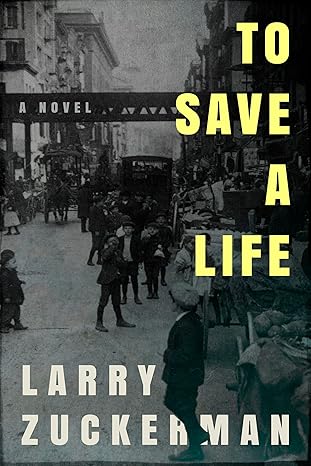
To Save a Life is a historical novel set in early 1900s New York, chronicling the intersecting journeys of Malka Kaminsky and Yaakov Rogovin—two young Jewish immigrants who have fled trauma, violence, and constraint in Eastern Europe. Malka escapes an arranged marriage in Grodno, stealing her dowry in the process, while Yaakov leaves Valozyn, carrying the weight of a haunted past. As they struggle to carve out lives of meaning and agency in the Lower East Side’s chaotic tenements and sweatshops, they find themselves drawn together in a tentative alliance that flirts with hope, love, and the idea of starting anew in a land that promises much but delivers on its own terms.
This book left me both emotionally shaken and deeply moved. Zuckerman’s writing is textured and rich, never rushing, always letting the weight of the moment hang in the air. His depiction of early 20th-century immigrant life doesn’t glamorize struggle—it holds it close, like a bruise you can’t ignore. The scenes of factory labor and violent crackdowns on striking workers burned bright with tension. And yet, it’s the quieter moments—Malka rolling noodles, Yaakov pressing coats while humming a tune—that linger. They feel relatable. I also loved how layered the characters are. Malka’s shame, rage, and tenderness are all tightly wound; Yaakov hides behind music and wit, but you can sense his wounds pulsing underneath. They’re both survivors, just barely hanging on, and their tentative trust feels earned, not forced.
At times, the novel slows a little more than I’d like, especially in some of the reflective passages. But even then, there’s something refreshing about the patience of Zuckerman’s prose. He lets his characters breathe. I found myself unexpectedly teary during the scenes where Malka reflects on the home she fled. There’s a raw honesty to those passages that hit hard. And the subtle Jewish references—Mishnah, Shabbos, old-world customs clashing with American hustle—ground the story with authenticity without weighing it down.
This novel isn’t just for lovers of historical fiction. It’s for anyone who’s ever felt like a stranger in their own skin or tried to build a new life out of broken pieces. Readers who cherish character-driven stories, especially those rooted in immigrant narratives and quiet acts of rebellion, will find a lot to hold on to here. To Save a Life is tender, brutal, and hopeful in equal measure—a heartfelt reminder that surviving is one thing, but daring to live is something else entirely.
Pages: 286 | ASIN : B0F2X1RB6F
Where Eagles Fly Free
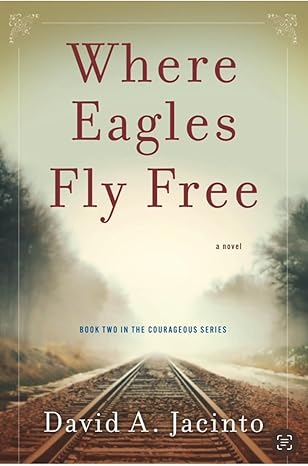
David A. Jacinto’s Where Eagles Fly Free is an immersive historical novel that whisks readers back to 1868, following Tom Wright and his family as they embark on a grueling transatlantic journey from England to America. Their story is one of resilience, hope, and unyielding determination as they flee the oppression of the British aristocracy in pursuit of a dream to live freely on their own land. Throughout, the narrative teems with vivid imagery, from the breathtaking Irish Sea to the cramped, unsanitary ship conditions, and highlights the toll of physical and emotional hardships faced by immigrants.
Jacinto’s writing made me feel present in every scene. His descriptions of the Colorado ship, the swaying wooden masts, the pungent smell of mildew, and the ever-present threat of the Atlantic’s fury were so vivid I felt seasick myself. One standout moment was when the ship endured a violent cyclone, complete with cracking masts and desperate sailors. It was heart-pounding and terrifying, yet it highlighted Tom’s courage under pressure. At the same time, the book’s pacing allowed for reflective moments, particularly during the extended inner monologues about America’s promise, which offered a hopeful and idyllic vision of the future that added depth to Tom’s dreams.
The novel shines brightest in its portrayal of human relationships. Annie, Tom’s pregnant wife, was a standout character for me. Her compassion and sheer grit stole the spotlight repeatedly. I found myself rooting for her during the scene where she faced off with the ship’s detestable cook, Mr. Bunnings, over the rotten food being served to sick passengers. Her determination to improve conditions for everyone, even as she battled her own exhaustion, was inspiring. Tom’s interactions with his wife left me conflicted. While his dreams for America were noble, his occasional dismissiveness of Annie’s struggles added a layer of tension that felt unresolved.
The bonds of family and the pain of loss are central themes. Tom and Annie’s shared grief over their son Henry’s death added a poignant layer to their relationship. Scenes like Annie comforting her ill nephew or witnessing a mother and child being buried at sea were gut-wrenching. These moments grounded the story in raw emotion and reminded me of the immense sacrifices immigrants made for the hope of a better life.
Where Eagles Fly Free is a deeply evocative tale of perseverance, filled with memorable characters and stirring imagery. While it occasionally leans into idealism, the novel’s focus on family, faith, and the pursuit of freedom will appeal to readers who enjoy richly detailed historical fiction. I’d recommend it to anyone with a taste for emotionally charged narratives, particularly fans of stories about immigration or survival against the odds.
Pages: 400 | ASIN : B0DZY69F2J
CROSSING BORDERS AND GENERATIONS: One Man’s Journey To Search For His Ukrainian, Greek, And Bulgarian Roots

Kiril Kristoff’s Crossing Borders and Generations is a masterfully crafted fictional memoir that chronicles the lives of multiple generations of the Kakhovskiy family. At its heart is George Kakhovskiy, a Bulgarian native who, at just sixteen, escapes the oppressive grip of communism and emigrates to America. In this new world, he fights to survive, driven by the dream of a better future. However, through a surreal twist of fate following a car accident, George and his teenage grandson embark on an extraordinary, otherworldly journey—one that allows them to relive George’s past and trace the profound impact of immigration on their family’s history.
Kristoff’s use of innovative narrative techniques elevates the storytelling, making George’s life unfold in an immersive and deeply emotional way. The supernatural journey shared by George and his grandson, Alex, serves as a compelling literary device, allowing readers to experience George’s struggles, triumphs, and sacrifices firsthand. More than a mere retelling, it becomes a deeply introspective exploration of generational resilience and the enduring consequences of leaving one’s homeland.
Themes of displacement, perseverance, and the pursuit of the American dream permeate the novel. As Alex observes his grandfather’s past, he gains an appreciation for the hardships George endured. The novel effectively captures this realization and moments like these bridge the generational gap, transforming historical struggles into personal revelations.
One of the novel’s most striking elements is its ability to convey emotion through memory. The re-experiencing of George’s past does more than recount events, it immerses the reader in his emotional reality. Kristoff’s skill in translating raw emotion into words, allowing the reader to step into the mind of a man who has lived through exile, hardship, and ultimate resilience is unmatched.
Beyond George’s personal journey, Crossing Borders and Generations skillfully examines how immigration shapes an entire lineage. The novel portrays the pain of separation, the struggle to adapt, and the complex emotional landscape that immigrants and their descendants navigate. George’s mental health, his son’s feelings of alienation, and the often-complicated father-son dynamic all intertwine to form a rich, multi-layered narrative. Yet, amid the adversity, the novel celebrates the enduring strength of the human spirit and the invaluable privilege of freedom—something often taken for granted by those born into it.
Kristoff’s novel is a captivating and inventive take on the memoir genre, skillfully blending fiction with personal history. Through its unique structure and poignant storytelling, Crossing Borders and Generations offers a compelling glimpse into Bulgaria’s past and the lived realities of those who sought a better future beyond its borders. Thought-provoking, deeply moving, and beautifully executed, this book is a must-read for anyone interested in immigration narratives, family sagas, and the timeless quest for belonging.
Pages: 314 | ASIN : B0DC4QR89S
The Boy From Boadua: One African’s Journey of Hunger and Sacrifice in Pursuit of a Dream
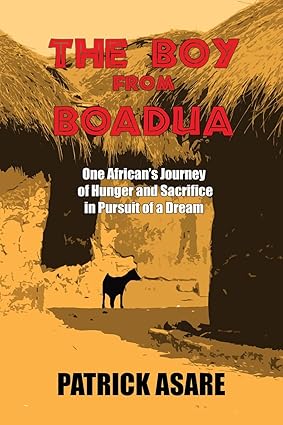
The Boy from Boadua by Patrick Asare is a captivating chronicle that traces Asare’s journey from his humble beginnings in the small Ghanaian town of Boadua to his accomplished adulthood in the United States. This engrossing narrative is a testament to Asare’s youthful aspirations and his relentless quest to surpass the constraints of his unassuming origins. Readers are treated to a vibrant exploration of Asare’s growth and evolution, skillfully entwined with a rich portrayal of Ghana’s culture, traditions, and adversities.
Asare’s adept storytelling paints an immersive picture that transcends geographic boundaries, allowing readers to journey through previously unexplored terrains, and empathize with unfamiliar struggles. His straightforward, lucid prose, bereft of excessive lyricism or metaphors, serves as a pristine canvas where his compelling narrative unfolds uninhibitedly, with the spotlight rightly shining on the messages he aims to convey.
The characters in the story are imbued with remarkable realism, be it the father’s sacrificial love or the protagonist’s innocent frustrations during his childhood. This authenticity fosters a deep connection with the reader, lending a universal appeal to the story. The Boy from Boadua particularly shines in its nuanced exploration of human responses to varied life circumstances. Asare deftly illustrates the multifaceted nature of circumstances, the diverse elements influencing one’s life, all the while inspiring readers with the tenacity and perseverance that have been the guiding lights of his life journey.
The Boy from Boadua is an alluring novel that instructs readers about perseverance, injustice, resilience, and the boundless potential of life. A stirring emotional journey that delivers its message with unflinching honesty, it comes highly recommended to those seeking to be deeply moved and engaged by a powerful story.
Pages: 270 | ASIN : B0BNXXH9R9
The Hidden Lives of Taxi Drivers
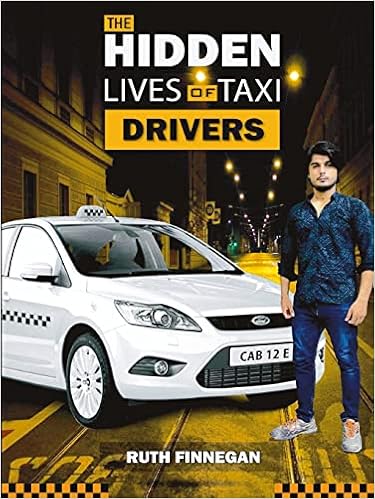
The Hidden Lives of Taxi Drivers, a Question of Knowledge, can be described in one word enthralling. The author is enthusiastic when narrating; the tales she shares are mesmerizing. In just a few pages, you can live through dozens of cabbies’ lives and experience life on the road. Ruth Finnegan writes her stories in a manner that makes the reader engrossed. As a result, this book is both entertaining and enlightening. As a reader, you learn that every industry is unique and how committed the stakeholders are. The taxi business has existed for ages, and Ruth Finnegan helps the reader compare this means of transport to others.
I like that the author discusses the various forms of taxis. She writes about early methods of transportation, how kings in ancient empires traveled compared to commoners, and how taxis were perceived to be luxury by some not long ago. Ruth Finnegan writes about traditional taxis, their role in the transportation industry, and the effect of modern online taxis like Uber and Bolt. Reading through the well-researched discussions gives one a sense of realization. Not many people understand the dynamics of the taxi business, and the author’s notes help clarify some of the misconceptions. No matter how trivial a topic may appear, the author manages to bring life into the discussion.
In this fascinating book, you will virtually travel with taxis in various United Kingdom cities like Cambridge, Belfast, Milton Keynes, and Birmingham. The lives of taxi drivers are interesting, and the author is inspiring with the stories. In her unique way, Ruth Finnegan pays homage to taxi drivers through her book. She also encourages readers to appreciate their cabbies and give them the respect they deserve, as the profession has a few challenges. I appreciate the author for the facts, research, and, my favorite, the pictures, maps, and illustrations. I enjoyed going through the images, as they made the book more appealing. One could tell that taxi drivers worldwide could relate to the author’s stories even when talking about U.K. taxi drivers.
Ruth Finnegan is engaging. Every chapter in the book will make you feel like you are interacting with the author one-on-one. Apart from the excellent storytelling, one cannot help but point out the author’s sense of humor. Ruth Finnegan is naturally hilarious and gives the reader light moments after every few chapters. The educational aspect of the book deserves mention as even with the many beautiful stories, the author learns about hidden issues in the industry, Issues that are barely addressed in casual conversations or in the mainstream media.
Pages: 102 | ISBN: 173989376X



 LITERARY TITAN