Blog Archives
HAIKU FOR YOU A collection of simple haikus for early readers.


Poetry and poetics often take a back seat in books for young readers. That is a missed opportunity. When children encounter poetry early, appreciation tends to grow naturally over time. This effect becomes even stronger when the focus is clear and approachable. Haiku, with its compact form and playful precision, is an ideal place to begin.
This book introduces young readers to haiku in a way that feels inviting rather than instructional. Children explore the form through a delightful collection of poems centered on penguins bursting with personality. Each poem feels lively and expressive. The result is a charming blend of structure and storytelling. Narrative skills are quietly reinforced, and vocabulary expands along the way, all while readers spend time with these curious, endearing birds.
Haiku for You by Anthony J. D’Amato is a children’s book devoted entirely to haiku. It is especially well-suited for ages three to seven, given the tone and subject matter. Still, anyone interested in a quick and enjoyable introduction to haiku will find something to enjoy here.
Haikus are sometimes seen as intimidating due to their strict rules. Yet those same constraints are what give the form its striking elegance. This collection makes that point clearly. Many of the poems are lighthearted, even silly at times, but they remain beautifully crafted. The contrast works well and keeps the reading experience fresh.
This is very much a learn-as-you-read book. Educational value is woven throughout, never feeling forced. Just as important, the author’s enjoyment of language is evident on every page. That sense of fun is contagious. It recalls the spirit of Dr. Seuss, where playful experimentation lifts the entire experience. The joy behind these haikus becomes clearer the longer you linger with them.
Both children and adults will enjoy watching this penguin cast move through their world in neat, poetic lines. There is warmth here, along with wit and imagination.
Haiku for You offers knowledge, creativity, and visual appeal in equal measure. The engaging illustrations and D’Amato’s confident command of haiku make this a pleasure to read. It has all the makings of a bedtime favorite, one that families return to again and again.
Pages: 36 | ASIN : B0F4PXF1CZ

Dirty South Haiku
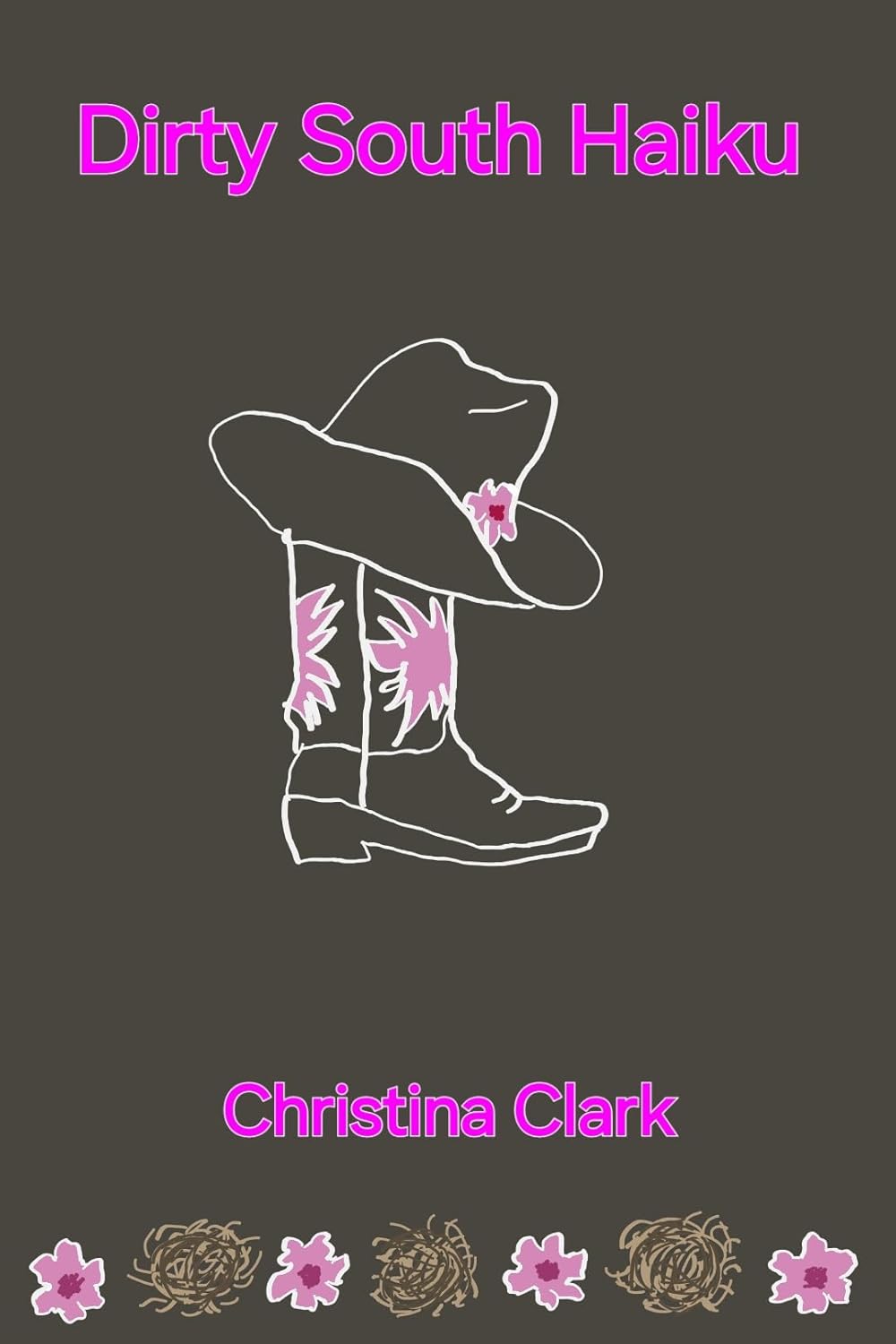
Dirty South Haiku sketches a childhood and young life shaped by family legends, Southern landscapes, and the mix of sweetness and grit that sits in so many memories. The book moves through tiny scenes. Grandmas with sharp edges, gumbo secrets, cousins who grow strange, drums and guitars, pageants, honeysuckles, hot sauce, hoodoo, moonshine, and music that hums through it all. Each haiku captures one quick flash. Together, they paint a loose but vivid portrait of a Southern girl growing up around beauty, chaos, and deep roots.
While reading, I found myself smiling at the warmth tucked into these short lines. The poems feel plainspoken and familiar. I liked how the author keeps the tone light, even when hinting at hard things. Nothing gets weighed down. The rhythm stays airy. A poem might nod toward heartbreak or trouble, then slip into a memory of food or song. That contrast felt honest. Life in these pages is messy, yet the speaker holds it with affection. I felt that softness, and I enjoyed it.
Some scenes passed so fast that I wanted a fuller picture, but that is part of the charm. The book plays with nostalgia in a way that feels almost slippery. One moment, we are with a machete-wielding grandmother. Next, we are at a pageant. Then, suddenly, moonshine under a night sky. The jumpiness gave the book a dreamy, scrapbook vibe. I loved that loose flow.
I would recommend Dirty South Haiku for readers who enjoy poetry that is easy to slip into and full of mood and memory. It fits anyone who likes Southern culture, family stories, or short poems that carry a lot of heart.
Pages: 39 | ASIN : B0DXQG5C42

Haiku Makes Me Happy!

How Do You Haiku? A Step-by-Step Guide with Templates helps readers understand the form of Haiku and teaches them how to write their own beautiful poetry. What inspired you to write this book?
I wanted to write a book I wanted to read as a child. I’ve always loved playing with words. I had many excellent teachers along the way but ten-year-old me would have loved to have had access to a book that taught me simple ways to understand and write Haiku while encouraging me as a shy child. I would have loved to have a book that told me my words were worthwhile and my poetry was worth sharing. This book is part technique, part pep-talk, and part wordplay with a whole lot of templates and Haiku crafts.
What draws you to the Haiku style of poetry? Is there one poet who stirred your love for this style of writing?
Haiku makes me happy! It isn’t a long, arduous poetry form, so I can write it on the fly or while I quietly observe the world through my window. I love that one can express so much with so few words. Writing and reading about little winking moments in nature and time significantly impact my well-being.
Of course, I admire the masters’ Haiku, but I also love Haiku written by current poets and fellow children’s book authors, such as the poets who contributed to this book, Kate Coombs, Raven Howell, and Amy Losak, among others. I also love reading Haiku written by children. Kids come up with amazing poems with unusual and entertaining wordplay!
What were some goals you set for yourself as a writer in this book?
Many kids (and adults) feel they can’t write poems or that their poems are not “good enough.” I wanted to give my readers ample opportunity to see that writing a poem can be easy and fun! My goal was to explain Haiku in a way that gets kids excited about it and gives them the confidence to try something new and be proud of their work.
Is this the first book in the series? If so, when is the next book coming out, and what can your fans expect in the next book?
How Do You Haiku? is a stand-alone book, but another Haiku book is available for my littlest readers (Preschool & up). Peek-A-Boo Haiku (Little Simon) features Haiku about hidden woodland animals, plus flaps that reveal those animals! It’s never too early to introduce kids to poetry!
Author Links: GoodReads | Instagram | Website
This book will help you understand haiku so you can create poems with powerful words and images. Each chapter contains examples from Japanese haiku masters and current poets. The included activities and templates will guide you through fun ways to “haiku,” including painting poem stones for your garden (Kuhi), creating haiku comic strips, and writing group poems with your friends (Renga). How Do You Haiku? This handbook will show you how— step-by-step.
Includes haiku by contributing poets Kate Coombs, Nancy Etchemendy, Matt Forrest Esenwine, Raven Howell, Linda Hoffman Kimball, Amy Losak, Bobi Martin, Angie Quantrell, Sydell Rosenberg, Lee Wardlaw, and Linda Whalen.
How Do You Haiku? A Step-by-Step Guide with Templates
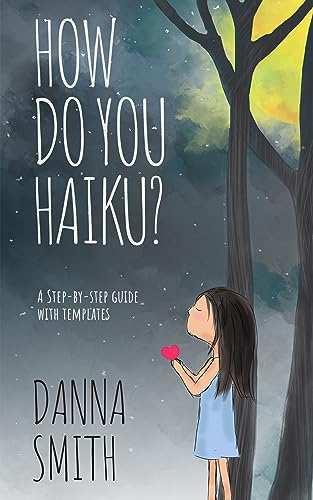
Poetry is an art form that allows us to express ourselves and concisely share feelings. However, the characteristics of poetry vary based on its place of origin. In Japan, for instance, we encounter Haiku, a seventeen-syllable poem with a unique structure and composition. The Haiku aims to draw us out of our daily routine, encouraging us to pause and appreciate nature as if we were capturing a special moment in a photograph. In this context, Danna Smith introduces us to How Do You Haiku? A Step-by-Step Guide with Templates. This guide showcases Haiku’s meditative aspects and highlights its ability to explore the dramatic and the amusing. Thus, Danna Smith leads us through the fundamentals of Haiku efficiently and engagingly, providing instructions, examples, and tips.
Danna Smith discusses how the Haiku sparks imagination and shifts our perception of our surroundings. But she goes even further. She shares vocabulary and explains how to find dynamic words to maintain a solid structure. One of my favorite parts was the Haiku’s history, as it offers insight into using poetry as a means of expression. Furthermore, the book presents clear explanations, and the numerous examples are enjoyable. Another aspect I appreciated is Danna Smith’s addition of translations and explanations for the Japanese terms she uses, enhancing our understanding of Japanese culture.
Writing poetry might initially seem complex, especially in Haiku, where space is limited. Nevertheless, Danna Smith does an outstanding job motivating us to give it a try. While more examples of Haiku would have been helpful to complement the emphasis on technical aspects, overall, the information is well-explained, and there’s ample material to inspire us.
How Do You Haiku? A Step-by-Step Guide with Templates is an exceptional children’s book to help educate and inspire children and adults. This guide is excellent for beginners, serving as a helpful tool to learn how to perceive the world through the lens of poetry and practice the art of Haiku.
Pages: 112 | ASIN : B0CF65LDHT
Realms of my Soul III: A Golden Gift
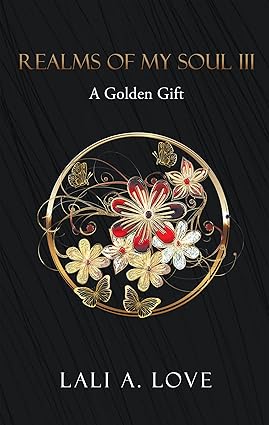

Realms of My Soul III by Lali A. Love is an exquisite collection of autobiographical poems that take readers on a captivating journey. The anthology is divided into two sections, the first, Fifth Decade: Alchemising with Hope, and the second, My Masterclass. The combined sections feature a total of 120 poems, each preceded by a short verse.
Love’s ability to infuse her personal experiences into her poetic expressions is truly remarkable. While maintaining a sense of mystery and leaving out specific details, she manages to evoke powerful emotions through her choice of poem titles. Soul Leaks, A Triggering Gift, and Vast Creation are just a few examples that delicately touch upon profound themes such as desire, anxiety, and passion.
The beauty of Love’s poetry lies in its thought-provoking nature. Although some lines may initially appear metaphorical, they hold deeper meanings that leave the reader pondering long after reading. For instance, lines like ‘Could language be a technical force/ Functioning as the software of the mind’ from the poem Human Language, and ‘A spirit bearing an olive tree’ in Blue Bird Chanting, showcase Love’s ability to create imagery that is both evocative and profound.
Realms of My Soul III is a testament to Love’s personal growth and her journey toward inner peace. While the poems tend to be more abstract and lacking in specific instances, the language she employs and the vivid imagery she paints make for a captivating read. The verses, presented against stone backgrounds, add an extra layer of allure to the collection.
Though I appreciate the overall artistry of the poems, I would have loved to see more concrete instances and vivid imagery incorporated rather than relying solely on philosophical and metaphorical phrases. In today’s world, where such expressions are commonplace, adding specific instances and detailed images would have given the poems an even greater impact.
Realms of My Soul III by Lali A. Love is a poetic journey that emanates from the depths of the author’s soul. Love’s masterful use of language and evocative imagery make it a valuable read.
Pages: 260 | ASIN : B0C6NBB8TW
Haiku, Schmaiku, and Headin’ Out to Sea

Haiku, Schmaiku, and Headin’ Out to Sea is a fascinating book filled with author David Bayard’s personal poetry about his life experiences. The author surmises, on the first page of the book, the topics within this collection: “rabbit holes, flying metal boxes, churches, trees, the Higgs Boson particle, squirrels, underwear, and sea odysseys.”
First, I have to say my favorite poem in Bayard’s book has to be Crow. Though it is one of the short and simple ones, I like a poem with rhyme and rhythm. Crows (the animal, not the poem) are incredibly intelligent creatures and are not as appreciated as they should be. This small poem sums up their most unique and beautiful qualities perfectly. I also particularly liked one of the author’s first poems, Sailor. A song about doing what you love no matter what other people might say. The poem has a nautical theme that represents life’s troubles, conquests, and adventures and kind of reminds me of children dreaming of becoming pirates and sailing the seven seas.
There is no definitive definition of poetry or how it should be constructed, there are the basics, but poetry is whatever the author deems it to be. And like any art form, poetry is in the eye of the beholder. I found many of these poems to be little gems. Falling Into Holes, for example, has an Alice in Wonderland theme, but by the end of the poem, the author switches over to Winnie the Pooh and Hundred Acre Woods which is a pleasantly unexpected twist. This mash-up of children’s books and their characters was a unique experience that leaves the reader questioning if there is any connection between the two.
I enjoyed the images that accompanied the poems as they helped me reflect more on the meaning of the poems. It seems like Bayard has left many of his poems open for interpretation, and I enjoyed that because I could sit and reflect on what I had just read.
Haiku, Schmaiku, and Going Out to Sea: Poetry as Looking Glass, Poetry as Mirror is a collection of poems for those who enjoy nontraditional works and unusual topics. Included in this collection is the author’s own photography and artwork, making this a magnificent piece of art as well.
Pages: 164 | ISBN : 0996738088
Perfectly Poetic
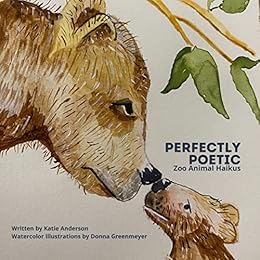
LogieBear wants to know if brown bears are perfect. His Grandmother’s answer surprises little LogieBear. Grandma Bear tells him that yes brown bears are in fact perfect, for brown bears, and that every animal is perfect for itself. Grandma Bear and LogieBear then go around the zoo and look at different animals while she shows him what makes each animal special, different, and perfect for them.
Perfectly Poetic: Zoo Animal Haikus by Katie Anderson and illustrated by Donna Greenmeyer is a whimsical picture book about different animals you can see in a zoo. Their stories are told through Haikus and highlight what makes each animal special. The accompanying watercolor paintings for each animal were beautiful and attention-grabbing. I especially like the panda painting, it was vivid and had a lot of personality. The layout of the book is clean and simple, perfect for picking one poem to read at a time for babies or children with short attention spans. Each poem can be read alone and talked about individually, or it can be read all at once for a comprehensive message. I can see a teacher using this in class assigning each student a poem to lead off on learning about an animal.
While I enjoyed all of the poems, the last one was my favorite. The message of everyone is different, and everyone is perfect is so important for children. It is stated so simply and clearly that preschoolers can even understand the concept. Individuality should be celebrated and that is what Grandmother Bear does as she shows LogieBear around the zoo.
Perfectly Poetic: Zoo Animal Haikus is a beautifully written children’s book with eye-catching illustrations and charming poetry that will draw in children with its fun facts and simple format. Kindergarten and young elementary students will love reading this kid’s book and exploring all the animals it introduces to them.
Pages: 32 | ASIN : B09QXXDN96


