Blog Archives
The Sanctuary of Tomorrow


The Sanctuary of Tomorrow, by Lyntara Choi, drops readers into a 1930s London where secrecy is a daily muscle: Maxine Ocampo-Weber, chemist, part-time detective, keeps a careful household with her spouse Jodi and their two adopted children, until a hunted telepath, Martino Griffiths, collides with their lives and refuses to stay “someone else’s problem.” He’s been running since childhood, since the war years in Italy when telepathy turned from rarity to criminality, and his reappearance draws the same vindictive coppers who once tried to cage him. When those officers escalate to abducting Max’s daughter as leverage, the story pivots into a rescue that drags the family toward a notorious factory and, ultimately, toward the idea the title promises: a place where gifted people can exist without apology.
I admired how the novella treats “difference” as layered rather than ornamental. Martino’s telepathy isn’t just a cool trick; it’s a pressure chamber that has warped his sleep, his trust, and his sense of deserving anything tender. The domestic scenes matter because they aren’t mere breathing space; they’re proof of stakes. The Ocampo-Weber home feels authentic (art supplies, sibling squabbles, a dog with opinions), so when the outside world intrudes, it feels like a boot on the threshold, not a plot coupon. And I appreciated the quiet insistence that chosen family can be both sanctuary and risk: loving someone doesn’t stop the law from noticing, you just decide they’re worth being noticed for.
The book runs on momentum and moral clarity, which makes it exhilarating. Frank, especially, is a grim engine of obsession, effective, yes, though sometimes so single-minded he feels less like a person than a blunt instrument. Still, the payoff is emotionally satisfying because the “sanctuary” isn’t presented as a glittery utopia; it’s a practical refuge, hidden, imperfect, fiercely guarded, where Josephine can discover frightening new parts of herself (the first small levitations are written like a held breath finally released).
The Sanctuary of Tomorrow is for readers who like historical fantasy, paranormal suspense, found family, and queer historical fiction with a streak of ethical urgency, people who want their magic braided tightly with social peril, not floating above it. If you loved the warm-hearted refuge vibes (with teeth) of TJ Klune’s The House in the Cerulean Sea, this feels like its shadowed cousin: less seaside whimsy, more alleyway breath and improvised courage.
Pages: 82 | ISBN : 978-1300127765

A Love Letter

Ancilla centers around a bisexual woman in the 80s and 90s in Ohio as she finds herself unraveling her own Catholic upbringing when she enters into a relationship with a magus who becomes her mentor, dom, and soulmate. What was the inspiration for the setup of your story?
I took my inspiration from a number of different sources.
Some of it came from my own memories of growing up. I, too, was raised in Ohio, at roughly the same time my protagonist grew up. People have asked me just how autobiographical the book is, to which I would have to say, not much, except for the protagonist’s sexual orientation (I, too, am bi/pan and kinked – more on this later) and the book’s setting.
Putting the story in the time I remembered, in places where I had lived, allowed me to do my background descriptions more or less on autopilot so that I could focus on other things. I didn’t want to think too hard about whether or not I was describing a college campus, or downtown library, or city park accurately. It felt like a distraction. I wanted to use familiar material when writing. I prefer to pour my energy into other things: word choice, sentence structure, philosophy, foreshadowing, character development, and style.
Some of it came from a desire to fill a void – to fill multiple voids, actually. Bisexual people, for instance, are rare in literature. They’re rare in general. When we are portrayed, it’s usually in a villainous context (we’re depraved! Remember Basic Instinct?) or a pitiable one (just Google “hot mess bisexual” and “disaster bisexual” and see what you get – it’s an unfortunate trope). When we manage to be the main characters rather than just side characters, we’re still usually villains or “messy.” Or we’re hypersexualized! The bisexual literature category, commercially, is well-stocked with smut. This is not necessarily a bad thing if you are looking for validation or for one-handed reading material, but I think we deserve something serious, as well.
So I wrote something that was sort of like The Bell Jar, only its protagonist is a young bisexual woman. (Also, it takes the historical figures of Heloise and Abelard as its inspiration, and the main characters are vampires who can bend elements when adequately fed or otherwise sufficiently powered, because magical realism. I assume my readers are bright enough to figure that one out for themselves).
I worked in depictions of BDSM that centered informed, enthusiastic consent, because there’s a lot of material out there that romanticizes captivity, “dubious consent” with or without “betraying body syndrome” (news flash: “blurred lines” are just rape), and other abusive dynamics, and that’s not what BDSM is all about. Let’s have some good representation.
And I created characters who were different from what might be otherwise expected in more mainstream love stories. How often have you encountered a story about a couple of academic nerd types falling head over heels in love with each other, despite what was originally meant to be a purely tutorial relationship? And how often have those nerds been obviously neurodivergent? Although I don’t say so explicitly (there’s not a lot I say explicitly in Ancilla, ironically enough for a novel that is explicit enough when it comes to matters of sexuality) I coded “ancilla” and “Magister” as autistic. I am on the spectrum, so this is another way in which Ancilla is own-voice literature written for a demographic that, at least from what I have seen, seldom gets good representation. The autistic characters I’ve seen in books are often caricatures, or at least, our autism is treated as our entire personality, rather than as just part of what makes us who we are and ought to be taken for granted as such. Normalized.
I especially thought about breaking convention when crafting “Magister,” because I wanted to create a male character who didn’t fit at all into the “man box,” but who was nevertheless unquestionably masculine. Whereas most men in romance novels are alphas, even when they aren’t alphaholes, “Magister” is shy and reserved, and he is more than content to let other people take the lead when BDSM is not involved. He’s not a billionaire CEO or sports figure or firefighter or cowboy or spy or in some other hyper-masculinized, unrealistically romanticized line of work – he’s a librarian. He’s middle class, and that only barely. Hobbies? He cooks and bakes, listens to opera, reads, and plays tabletop role-playing games. Is he “ripped?” No, he’s actually rather slender, and his muscles are not prominent (although he is strong enough to carry “ancilla” in his arms without struggling – let the readers assume what they like about whether or not vampiric power factored into that one). He’s comfortable with showing his feelings and being vulnerable, too, although introvert that he is, he’s usually rather subtle about it… He is masculine, though. Very obviously. You wouldn’t have accused people like Bob Ross and Fred Rogers of not being men just because they didn’t fit into the prescribed masculine mold when they were alive, and I don’t think anybody could accuse “Magister” of not being a man, either. He is a wrecking ball to toxic masculinity.
I put these people into a setting I knew, and knew intimately, so that I could focus on them rather than on the setting. I wanted them to shine.
On another level, Ancilla is a love letter. The people I wrote it for know who they are. They might not see themselves in the characters – in fact, I sincerely hope they don’t, because my characters are distinct people in their own right, and were never meant to be based closely on anybody in particular, even in instances where I ransacked my memories, took things out of context that I thought would read well if fictionalized, and embroidered like mad – but they know who they are.
One of them was my first beta reader. She lost internet access soon after I completed the rough draft and sent her the final chapter in its raw form, and I hope she finds the final product on Amazon or in a library somewhere, reads it, and approves of it. And if she ever sees this interview, I hope she reads far enough to see that I say I miss her.
What drew you to frame your narrative in this particular setting?
Why northeast Ohio in the early 1990s, of all times?
Partly because, again, I wanted to rely on memory for descriptions of the setting. Nearly all the places described in the book are real, whether I’m describing a mansion in Cincinnati within walking distance of a posh private school, a small college on the edge of northeast Ohio’s Amish country, Severance Hall, or the neighborhoods and metroparks of Akron and Cleveland. The only made-up place in the entire book is “Magister’s” apartment, which I nevertheless set at the end of a real street. I didn’t want to interrupt my creative processes by researching locales. I just wanted to write my story and let the setting more or less take care of itself. I trusted my memory when thinking about how to describe places.
I also decided on northeast Ohio because it was generic. A colourful setting – say, Manhattan – would have become almost a character in itself. I wanted a setting that felt real, but not one that would steal the focus from my characters and from the book’s esoteric themes.
If I’d set the story too early, it would have been historical fiction, which would have required extra research. If I’d set it later, it would eventually become science fiction, because this is going to be part of a trilogy, and the third book covers “ancilla’s” later years. She’s writing her memoirs, and at the time of her writing, she’s either a centenarian or a late nonagenarian. That’s still going to put the final chapters of the last book in the future, but not very far. I don’t want the focus to pivot to science fiction scenarios… So the time is set where it is.
The eighties and nineties were not a good time to be queer in any way, unless you were maybe living in a haven like San Francisco. While I didn’t want to make that hostility to sexual divergence the most central part of the plot, it is nevertheless part of the background. It was all too common for kids to get disowned by their parents after coming out, or to be packed off to “deprogramming.” Coming out was terrifying if you lived in a conservative part of the country, which was most of the country at the time.
It was also difficult to be kinked back then. There wasn’t much support for it unless, again, you had the good fortune to live in a large city where there was an active subculture. Today, “ancilla” and “Magister” could have booked sessions with a kink-friendly, polyamory-friendly couples counselor to work on the challenges they faced (okay, that I set up for them). That option did not exist for them in their time and place.
The chapters are structured around the Tree of Life and its sephiroth, turning the novel into a kind of spiritual ladder. Why did you decide to organize the book this way?
It came to me.
It demanded to be written that way.
I still don’t know if I was up to the task that seemed to have been set before me. Only time will tell.
What do you hope readers ultimately take away from your protagonist’s journey through belief, identity, and desire?
Enlightenment.
Failing that, I hope I created something so beautiful that it felt like a dream, and so immersive that it felt like a pleasant form of drowning.
And for the readers on the margins of our heteronormative, neurotypical society, I hope they see themselves represented and know that they are not alone, and that they are valid.
We exist. We have a right to exist. We have a right to be visible.
Author Links: Reedsy Discovery | BookBub | GoodReads | Bluesky | Facebook | Instagram | Pinterest | YouTube | Website | Amazon
Disability Representation in Fiction

A Life in Too Many Margins follows a man looking back on his life from childhood to now, exploring how forced gender roles, neurodivergent masking, disability, and medical trauma have shaped him into the person he is today. Why was this an important book for you to write?
I found myself feeling sad quite often about the lack of disability representation in fiction, especially contemporary literary fiction by queer and neurodivergent folks and/or other intersectional groups. It’s gotten better in recent years as we’ve moved away from disabled characters being villains or “inspiration pornography,” but my dream world would have an entire section in every bookstore!
This story explores many kinds of labels. Which ones felt hardest to untangle?
The one I try hardest to help readers understand is the medical trauma. It’s hard to explain to anyone who isn’t trans or a woman the extent to which doctors will gaslight us when we don’t have the more obvious symptoms. The hardest emotionally was being neurodivergent. I am in my 40s and still working on unmasking behaviours.
Humor plays a central role in the book. How do you balance humor with emotional weight?
This didn’t really feel like a job or anything I had to balance, honestly. My humor is what’s gotten me through my worst times; I used it as a coping mechanism, then a grounding technique, and now it’s just a part of how I present myself and my stories.
Did writing this book feel like an act of advocacy?
Absolutely. I wanted to write about what it feels like to grow up learning how to adapt constantly, often without realizing you’re doing it. Also, because enough people told me I had to write a book, I eventually gave in. It’s almost completely a memoir, so it’s rooted in my lived experience, but it’s shaped intentionally with the occasional note of fiction. I wasn’t interested in documenting everything that happened so much as capturing how it felt. It took time to have the language and distance to write it clearly, but I always meant to share it to help others going through similar situations.
Author Links: GoodReads | Website | BlueSky | Instagram | Amazon
A Life in Too Many Margins is the story of a man looking backward while time keeps nudging him forward. From childhood misunderstandings to medical disasters, David is collecting the fragments of a life shaped by truths he didn’t discover until far too late: that he’s neurodivergent, that his body will never play by the rules. That gender was never the box people insisted it had to be.
If you’ve ever felt like the world wasn’t built with you in mind, or if you just enjoy a dark laugh in the middle of disaster, David’s story will remind you that sometimes real life only happens… in the margins.
A Life in Too Many Margins

S. E. Thomson’s A Life in Too Many Margins: Laughing Through the Labels is a whip-smart and emotionally stirring memoir that opens in a hospital room, David, chronically ill and exhausted, finally believed after months of dismissal, staring at the “beige hospital blanket” and coping with gallows humor as doctors confirm an omental infarction tied to Ehlers-Danlos Syndrome. From there, the book moves through a childhood and adulthood spent ricocheting between forced gender roles, neurodivergent masking, disability and medical trauma, and the slow, hard-earned assembly of a self, one chapter at a time, like a life rebuilt from receipts and radiology reports.
I liked the voice in this book. It’s not “funny” as decoration; it’s funny as a crowbar. In the prologue alone, the humor keeps snapping the seal on the airless jar of medical neglect: the hospital gown “afraid of commitment,” the Jell-O christened Gary, the pain described as a “damp grocery bag full of bees.” That comedic metabolism doesn’t dilute the suffering; it metabolizes it, turning indignity into something you can hold up to the light without going blind. I found myself laughing, then immediately feeling implicated, because the joke keeps pointing back to the systems and people who require disabled folks to audition for basic credibility.
I also didn’t expect the book to be so precise about the small origin-moments that become a lifelong weather pattern. The early sections about gender feel like being trapped in a brightly colored room where everything is a script you didn’t agree to learn; the “pink” isn’t just décor, it’s enforcement. And when the narrative arrives at pronouns later, quietly, almost offhand, in a classroom roll call, it lands with the force of a key finally fitting a lock: “Uh, I don’t care?” becomes the hinge that swings the door open. The moment David names it, I am transgender… I am a man, it’s rendered not as a glossy reveal, but as an “ohhhhhhh” that rearranges decades of memory in one night. That ordinariness is the point. Self-recognition isn’t always fireworks; sometimes it’s just the first time someone asks the right question in a room that doesn’t punish honesty.
This is for readers who gravitate toward memoir, humor, disability, neurodiversity, LGBTQ+, and trauma recovery narratives, especially anyone who’s ever been treated like a “case” instead of a person, or who wants a story that makes space rather than demanding palatability. If you like the sharp, self-protective candor of Jenny Lawson (or the laughter-through-the-bruises essay energy of Samantha Irby), Thomson’s voice will feel familiar. And when the book closes by insisting, without sentimentality, that if your body is falling apart and no one believes you, you should write it down because it might save someone else’s life, it doesn’t read like a slogan; it reads like a field note from a survivor.
Pages: 229 | ASIN : B0FL6XG768
Loss Fuels a Life

Loss Fuels a Life is a queer erotic crime novel that follows Ivan Dorn, a globe-trotting classical music critic, whose life is ripped apart when his best friend Rye, a Toronto tech whiz and sex worker, is found dead in what looks like a kinky suicide gone wrong. As Ivan digs into Rye’s emails, videos, and clients, he discovers footage that points to murder and to “Upstairs Daddy,” a wealthy older benefactor named Harold, whose world stretches from a Palm Springs gay resort to a sleazy film set in Los Angeles. Around them orbit hustler turned actor Andreas, Harry’s bitter daughter Melissa, and a whole ecosystem of critics, festival insiders, and sex partners, all tangled up in money, desire, and lies. The book moves between Toronto apartments, desert pools, and casting couches, and builds toward a bloody, messy finale where attempts at revenge leave more than one body on the floor and no one walks away clean.
I was pulled along by the sheer energy of the writing. The style is lurid, breathless, and very visual. Scenes of sex, murder, and concert halls all get the same close-up treatment, and that gives the book a strange, nervy power. I liked how S. James Wegg uses the structure of emails, reviews, and camera footage to shift point of view and to keep dropping new information. The explicit scenes come early and often, and a few times I caught myself wanting more space to sit with what the characters are feeling in the aftermath. When the book slows down and lets Ivan grieve or scheme instead of just react, it really lands for me. Those quieter stretches in Toronto or in an empty hotel room hit harder than yet another trip to the lube drawer.
What I liked most were the ideas behind all the sweat and violence. The novel digs into power and dependency in queer relationships in a way that feels blunt and uncomfortable. Rye trades submission for rent and a sense of safety, Harry trades money for youth and denial, Andreas trades his body for access and leverage, and Melissa treats everyone around her as a threat to her inheritance. Loss sits in the middle of all that, not just Rye’s death but also Melissa’s dead mother, Harry’s health, Ivan’s illusions about his own sexuality and about his best friend. The title feels dead on. Grief becomes fuel for art, and also for obsession, bad choices, and finally murder. I liked that the book refuses to give me a neat moral. Ivan’s revenge is clumsy and cruel, and the story does not pretend that righteous anger automatically leads to justice.
I see Loss Fuels a Life as a bold, messy, very specific ride. The pages are full of graphic sex, BDSM, sexual violence, homophobia, substance abuse, and a detailed suffocation scene, so readers who are sensitive to those topics will want to steer clear. If you enjoy dark, character-driven stories about queer lives that sit at the crossroads of art, money, and desire, and you are comfortable with explicit content that never really lets up, this novel will probably get its hooks into you.
Pages: 248 | ASIN : B0G341Y3PX
TELL ME THAT YOU LOVE ME
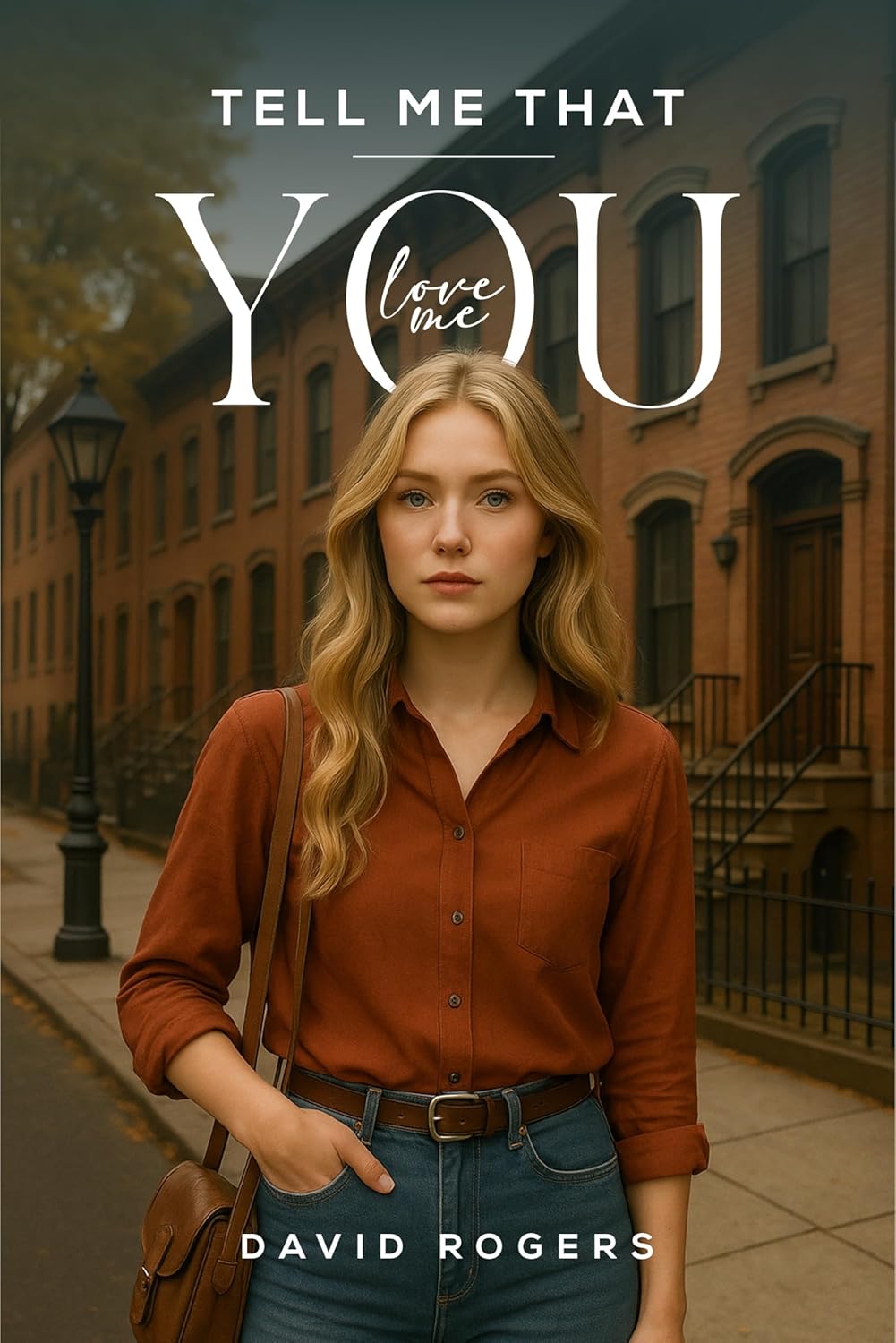

In Tell Me That You Love Me, Connie Roberts narrates a restless, decade-tinged search for tenderness that keeps slipping into sex, friendship, and misread need, moving between New York City, Charleston, Fire Island, and Key West as the story escalates from raw erotic entanglements to genuine catastrophe. What begins as Connie’s attempt to reinvent herself and be chosen becomes a harsher education in how people use each other, how shame masks longing, and how “love” can be mistaken for the simple relief of being wanted.
This book doesn’t flirt with discomfort, it really commits. The eroticism is frequently charged, sometimes tender, and sometimes poisoned by power games and crossed boundaries; there’s an argument over “who did what to whom” that lands with a sour aftertaste because it’s played like banter while still naming rape outright. That tonal whiplash, sensuality set beside psychic bruising, feels deliberate, a reminder that harm often arrives in familiar voices, even in rooms that look safe.
And then the plot turns viciously public. On Fire Island, the story’s social sparkle (tea dances, beaches, the magnetic churn of summer bodies) is split by sudden violence: Connie learns that her friend Darin has been shot and is dead, rumors detonating faster than facts, police looming at the edges of the party. The murder isn’t used as a gimmick; it changes the temperature of everything, exposing how quickly a chosen family can become a crime scene, how fear rearranges loyalties, how the self tries to sprint away from grief. By the time the book reaches its late stretch, it’s no longer asking “Will she be loved?” so much as “What kind of love can survive the world she’s already lived?”
Readers who want erotic romance, dark romance, and emotional romantic suspense, especially stories that braid sex with queer-adjacent nightlife, messy friendship, and genuinely disturbing turns, are the best fit here (with a clear content-warning mindset for sexual violence and murder). If you’ve enjoyed the big-feelings sweep and relationship labyrinths of Taylor Jenkins Reid’s The Seven Husbands of Evelyn Hugo, this delivers a grittier, less polished cousin: more bruises, fewer soft-focus edges. The last pages in Key West widen into something like grace: a sail into the sunset, a rare “green flash” called a lucky omen, and Connie, finally, naming her love as improbable but real, choosing to believe she and Bill were “destined to be together.” Tell Me That You Love Me is a jagged, sensual novel that earns its ending by refusing to pretend the dark parts didn’t happen.
Pages: 411 | ASIN : B0FBY5KNSH

Mortal Vengeance: A Grim Tale

Mortal Vengeance: A Grim Tale, by Alejandro Torres De la Rocha, is a psychological thriller that works like an origin story: it follows a 17-year-old senior at the Jesuit-run Excelsior Academy, as the school’s cruelty, silence, and “character-building” discipline quietly shape the conditions for the future Grim Cojuelo killings. It’s framed as the “howdunit” prequel to another book in the same universe, tracing how institutional rot and personal guilt turn a Dominican folklore figure, the limping devil reimagined as a hunter, into something inevitable.
I really enjoyed the cinematic writing. The book opens with a staged, almost spoken-word setup, with a narrator and the killer stepping in like voices in a dark theater, and it keeps that heightened, performative feel even in ordinary moments. The school itself is described with a kind of glossy dread: stained glass, marble, crucifixes everywhere, and beauty that feels like a trap. Sometimes the language is intense, almost daring you to look away. It works, especially when it’s tied to sensory detail and not just mood. Other times, it can feel a little crowded with emphasis, like the book underlining its own points. Still, the voice commits. It wants you inside Julián’s head, where guilt is not abstract; it’s a pressure in the chest.
The author’s big choice, and I mean this in a good way, is to make the horror feel system-made. The most frightening scenes are not supernatural. They’re social. A teacher humiliates a student in public, classmates freeze, phones come out, and nobody with power stops it. Then you get a philosophy class where a priest asks, calmly, if it’s ever okay to lie, and suddenly the book is talking about survival, complicity, and the cost of telling the truth in a place that punishes it. That’s where the psychological thriller genre really clicks for me: it’s less about jump scares and more about watching a closed world tighten its rules until someone breaks. If you like school-set dread where the building itself feels like a character, it reminded me at times of the slow-burn pressure and moral rot in Donna Tartt’s The Secret History, and the “this place is shaping you” inevitability you get in Stephen King’s novel Carrie, even though the voice and cultural lens here are very much its own.
I’d recommend A Grim Tale to readers who want their thriller to have teeth, especially people interested in stories about institutions, religious power, and how silence gets enforced. One note, it does not tiptoe around heavy material, including trauma and grooming, so you really have to be in the right headspace. But if you’re drawn to psychological thrillers where the scariest thing is watching a system teach people to look away, you’ll appreciate what this book is doing, and how patiently it builds the sense that the monster is being assembled in plain sight.
Pages: 571 | ASIN : B0FPBB3ZDL
Mortal Vengeance


Mortal Vengeance, by Alejandro Torres De la Rocha, is a young adult supernatural thriller that follows a tight-knit but deeply troubled group of teens whose attempt to get revenge on a cruel teacher spirals into something far darker than any of them imagined. What starts as a grim school drama quickly escalates into a chain of betrayals, fear, and ultimately the appearance of a mythic, reaper-like being that shatters their lives. The book blends coming-of-age turmoil with horror and psychological suspense, and the shift from everyday cruelty to supernatural violence comes through sharp and sudden.
I was pulled into the heat and pressure of those classrooms and courtyards. The writing often leans intense, almost cinematic, with scenes described in a way that makes the emotions feel oversized, raw, and volatile. I caught myself thinking, these kids are carrying way more weight than they know how to hold. Marcos’s explosive anger, Mario’s guilt and fragility, Alex’s manipulative charm and insecurities, Melissa’s heartbreak, Enrique’s need to please everyone… every character is drawn with a kind of heightened emotional color. Sometimes it felt melodramatic, but in a way that matched the story’s pulse. The author’s choice to push sensations and metaphors to their limits gives the book a feverish energy, like the world is always one bad decision away from breaking.
What surprised me most was how quickly the story shifts from grounded teen conflict to something mythic and terrifying. One moment we’re dealing with bullying and revenge in a school hallway, and the next we’re staring down the Grim Cojuelo on a moonlit pier. That jump could have felt jarring, but for me, it worked because the emotional stakes were already running so high. The supernatural element feels like an extension of everything boiling inside these characters. Still, I found myself wishing for a few quieter beats where the emotions had room to breathe. When everything is dialed up, it can be hard to sit with the subtler moments. But there’s something gripping about how unafraid the author is to dive into intensity, whether it’s love, jealousy, fear, or guilt.
Mortal Vengeance is a story about how small cruelties grow into big consequences, and how revenge rarely lands where you expect. If you like young adult stories that mix school drama with supernatural horror, and you don’t mind a narrative that swings for big emotions instead of quiet restraint, this will be the perfect book for you. It’s a dramatic, dark, and sometimes chaotic ride, but it is delightfully entertaining.
Pages: 306 | ASIN : B0FDT6JYSQ


