Blog Archives
Kamp Kromwell: A Novel
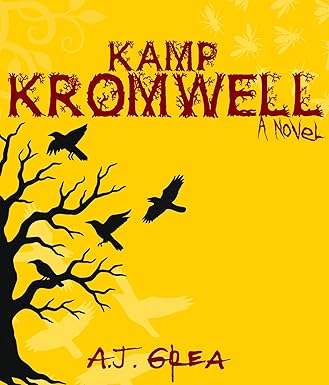

The novel follows Joey Carpenter, a teenage boy caught between the ordinary trials of growing up and the monstrous legacy of Kamp Kromwell, a summer camp haunted by tragedy, folklore, and something darker that won’t stay buried. It weaves Joey’s personal journey of survival, identity, and trauma with the eerie history of Jasper Mill and the cursed land it sits on. The story blends horror, coming-of-age, and queer self-discovery into a narrative that feels both chilling and raw, moving from gothic lore about the crooked oak tree to Joey’s painful memories of abuse and his attempts to reclaim his life.
Reading this book stirred up a whole mess of feelings in me. The writing is sharp and biting, like it wants to cut the reader open just to show what bleeds underneath. Other times it lingers in the shadows, letting dread seep in slowly. I was unsettled more than once, not just by the supernatural elements but by the human ones. The portrayal of Sam Barnes made my skin crawl, and the way the author shows Joey’s shame and survival felt almost too close for comfort. But that’s what hooked me. It’s horror that doesn’t rely only on monsters in the woods, but on the monsters we know too well.
The story moves from ghost stories to camp drama to deeply personal confessions, and yet that unevenness feels true to life. Memories don’t line up neatly, trauma doesn’t follow a straight path, and the narrative mirrors that jagged rhythm. Grea’s style veers between gritty and tender, and I loved the shifts. There were moments of humor that broke through the darkness, and they mattered because they reminded me that life is never just one thing. I also admired how unapologetic the book is about queerness. It doesn’t smooth over the rough parts or wrap them up in platitudes. It leaves the edges sharp, and that honesty made the story feel alive.
Kamp Kromwell reminded me of a strange marriage between Stephen King’s It and Boy Erased by Garrard Conley. Like King’s work, it builds its terror through folklore, small-town legends, and the slow creep of something monstrous hiding in the shadows, yet it also grounds itself in the personal anguish of a boy dealing with abuse and identity. Where Conley’s memoir is brutally honest about the shame and secrecy of growing up gay in a hostile environment, Grea filters that same raw vulnerability through a horror lens, giving the trauma both a literal and supernatural shape.
Pages: 294 | ASIN : B0FHC149LJ

Emotions

With His Words I’m Not Alone is a coming-of-age novel that explores the main character’s vulnerability and queer identity as they search for connection and healing. Where did the idea for this novel come from?
This may come as a shocker to some, but the idea for With His Words I’m Not Alone came after listening to a webinar about writing with AI a few years ago. That alone shocked me because my first thought was, now everyone can write a book whether they know how to write or have not a talent for writing a good or any story. From that thought came the fear of the book market being flooded with poorly written and “fake” books. As I had been developing this idea in my head, I identified with Noel, who falls victim to this technology, uses AI and then regrets it. To make things more complicated for him, I made Faded enter the scene like his online stalker. And not only a stalker. Faded was supposed to challenge Noel on every level, especially his sexuality. Faded is both Noel’s poison and cure, someone who invaded his intimate space and turned it into chaos before trying to put things back in order. Slowly, this lit-fic drama metamorphosed into a LGBTQ+, contemporary, unconventional romance and human story as I wanted it to be. It is a story of a relationship building that seems to be impossible to work out, not only because of the vulnerability of one protagonist but also because of two different worlds that clashed thanks to one tag and one message.
Because of my personal situation and the hard time I was going through, it took me a few long years to finish this book. Back then, AI was just knocking on our door. It was something new for most of the writers and authors; me included. Today, the situation has dramatically changed. Many authors use various AI software to get them the idea for their characters, backdrop, plots, and even write their stories. Besides being an unconventional love story, With His Words I’m Not Alone raises questions of morality of using technology to create and write instead of us and for giving our readers and fans a chance to decide whether they want to read human-made or AI-written books. To avoid any misunderstanding and possible confusion, I did not use AI as my muse or to write With His Words I’m Not Alone. It is all me. And I plan to keep it that way. My cover is also a creation of a talented human designer.
Your characters are wonderfully emotive and relatable. Were you able to use anything from your own life to inform their character development?
Thank you for saying that. I like character-driven stories and if I created emotive and relatable characters, I am more than happy. As it is with every author, we draw inspiration from people and the environments that surround us. From certain moments in time. That’s how I created Noel and Faded, mixing characters and characteristics of several people I encountered somewhere and at some point in my life.
I was able to use something from my own life in their character development, but only in a smaller portion. Going through a challenging period of my life and being a big introvert, I used my emotion and vulnerability in Noel, but I am not as broken and haunted as Noel is. Besides being emotional and driven by desire to help others, I am also passionate and intense when something intrigues me and occupies my attention. This passion, compassion and need to help Noel I built into Faded, although I am not so intense and obsessed as Faded is, haha.
I also used my fear of failure, fear of disappointing my readers as an author and creator of stories, and fear of being a bad promoter of my written words. Therefore, I made Noel so bold and determined to fight for his books, as my opposite, to encourage and boost myself that way that I can do it too. When you are set on doing something and you fight for it hard, the forces of the universe will help you do it.
What were some of your inspirations as a writer?
I get my inspiration from various situations and moments in life. From something that hits me, enchants me, or shocks me. It can be a breathtaking sunset or an incredible book. Since I read most genres, many authors have inspired me throughout my lifetime. I was a big fan of Anne Rice’s vampires, Stephen King’s horrors, a historical classic by Margaret Mitchell and other novels about the American Civil War, the Wild West, and other authors and books which don’t have much in common with my genre. Thanks to a few indie authors who write LGBTQ+ and YA books and movies like Call Me By Your Name, Brokeback Mountain, or Love, Simon, I got an inspiration to write this story. Indie author Jonathan Hill made the biggest impact on me; he was a sort of my turning point. Then followed other, both traditionally published and indie authors, like Adam Silvera, Jay Bell, Darryl Banner, Thomas Grant Bruso, Benjamin Alire Saenz, and most recently Kent Holland whose book, Honey, Moon, I finished at the moment of this interview and loved it as much as fabulous The Sea Ain’t Mine Alone by C.L. Beaumont I’ve read years ago.
What is one thing you hope readers take away from this book?
The one thing I hope readers take away from my book is emotion. Emotion that will encourage them to love someone unconditionally and bravely, like Faded loves Noel, emotion that will motivate them to help their crushes, boyfriends, husbands, sons and daddies—or pets!—selflessly and without a hidden agenda of wanting something in return. I would like them to feel and experience emotion that will motivate them to strive to be a better person, and make their life more fulfilled, meaningful, and beautifully passionate.
Author Links: Linktr.ee
With His Words I’m Not Alone


With His Words I’m Not Alone is an intimate and emotional novel that weaves a coming-of-age journey with raw vulnerability, queer identity, and the turbulence of modern relationships. Lucas Ryker introduces us to a protagonist searching for connection and healing, wrapped in layers of poetic language and introspection. The narrative takes us through chapters of discovery, trauma, affection, and longing. Along the way, we meet characters who feel real in their confusion, hope, and complicated love. The story isn’t told in a linear fashion, and its structure mirrors the chaos and beauty of memory and personal growth.
Reading this book felt like peering into someone’s private journal. The language is unconventional, fragmented at times, stream-of-consciousness at others. At first, I found this style jarring. Sentences don’t always follow the rules. Words tumble together like thoughts in a storm. But then it clicked. Ryker is more interested in feelings than form. It’s messy because life is messy. The story’s most powerful moments come in hushed lines or sudden bursts of intensity, the way emotion really hits. It made me feel caught off guard, and honestly, that vulnerability resonated with me.
Some parts of the book moved a little slower, and now and then the dialogue leaned toward the dramatic. A few characters felt more like glimpses or impressions than fully fleshed-out people. That might make some readers pause. But for me, even moments of uncertainty felt intentional, like part of the emotional rhythm. I may not have always known where the story was headed, but it always felt deeply personal and true.
This book is intense. It asks you to let go of convention. But if you’ve ever felt alone, if you’ve ever wanted someone’s words to fill the silence in your chest, this book might speak to you. It’s for readers who care less about plot and more about emotional resonance. It’s for queer folks looking for something that doesn’t smooth out the rough edges. I’d recommend it to anyone who wants to feel something deep and human, even if it hurts a little.
Pages: 345

A Magical and Vast Universe

Beast of Phe’lak follows a woman trapped on an alien planet, under the control of a powerful beast who spots a delegation on the beach that triggers century-old memories, and a chance to regain her freedom. What was the inspiration for the setup of your story?
The inspiration began in Queen of Highwings, the first book in my Chronicles of Phe’lak Trilogy—of which Beast is the third book. Phe’laki General George muses about the beast with regard to the palace’s understructure, which once served as another dragon’s lair. He thinks that the underpass was sealed to prevent attracting the Beast of Phe’lak to such a luxurious dwelling because, unlike the original resident, the Dragon of Yand, the beast is not benevolent. I received many questions, including: ‘What happened to the beast?’ and ‘Is it related to the beloved Yandar dragon?’ The character Hele’ne lived in my head for a long time. I always knew who she was and how she ended up on the alien planet. I naturally wove her in.
Hele’ne is a fascinating character. What scene was the most interesting to write for that character?
I must say, I love all her scenes. My top favorites include her introduction scene, her interaction with the beast and then with Wolfpack at the beginning of the story. I also love her exchanges with Rel and Drace, as well as her final scene in the last chapter. This last scene is very powerful.
For readers who have not yet read the rest of the Worldmaker® series, what do you want them to know about the world you have created?
It is a magical and vast universe, spanning galaxies and constellations. Each new world—whether a star system, planet, or moon—comes to life in vivid detail. The people who populate these worlds, whether they are queens and kings, scientists, military archers, or regular people, are just as authentic and lifelike. There are four humanoid species introduced so far: the empathic, winged Yandar; their slightly smaller telepathic cousins, the non-winged Yendai; the benevolent, non-meta giants known as the Phe’laki; and the malevolent K’tul. The main characters are complex and richly developed, and their extensive dialogues throughout the stories enhances the immersive quality. The illustrations are glorious. If you purchase the PDF, please read in full-screen, two-page format to get the full benefit of the artwork.
The primary genre is Sci-Fi/Fantasy, but with elements of the paranormal, a touch of horror, and unconventional romance, always with a hint of humor. LGBTQ+ and polyamorous marriages are part of the norm alongside exclusive and binary ones.
The storylines follow the saga of Worldmaker Yanara’s family, whose children have evocative names: Snowfox, Hawklord, Asimia, Dragonlord, Wolfpack, Sunstorm. Can you guess the kings among them? The Worldmaker and Dragoon? The Pathfinder?
Where does the story go in the next book, and where do you see it going in the future?
I received requests to write more about the Dragon of Yand and his wife, Yira, and also of Drace and his husband, Rel. I can’t stop writing about these two. I could serialize their adventures. However, I meant to write the third trilogy in my series, the one that brings the war to the K’tul homeworld. We’ll see. For the next couple of months, I’ll be taking a breather and focusing on earning a few accolades for Beast to adorn its cover, just like my other books. It has already received a few awards, the most prominent among them being the No. 1 Book/Manuscript on Coverfly’s Red List this month (out of 57,000 scripts).
Author Links: Website | X | Facebook | LinkedIn | Instagram | TikTok
Genuine Faith

With Mercy’s Eye follows a gay actor several months after his husband is killed in an accident, who is left navigating grief, spiritual trauma, and identity while trying to hide his sexuality from his Christian producer. What was the inspiration for the setup of your story?
Some stories take years to develop. Others arrive overnight. With Mercy’s Eyes was a bit of both. I knew years beforehand that God was directing me toward writing a Christian fiction book whose main character was gay. I had no idea how God was going to help me work with that particular combination of factors. All I knew was that He was pointing me toward writing this particular story. That nudge came quietly at first—a few times here and there. But eventually, God’s direction became louder and clearer, letting me know it was time to start writing.
As for the setup specifically, most of it I knew from the outset. I knew the main character’s name, his profession (actor), and where he lived. From the moment it was time to start writing, I also knew what the opening scene would be. There was no wondering or having to build it from the ground up. It was just already there, waiting for me to write it.
What were some of the emotional and moral guidelines you followed when developing your characters?
As a writer, I have one personal baseline. I choose to show characters the same respect I would show a stranger. For me, that means I don’t write scenes involving personal hygiene that wouldn’t be performed in a public setting. It also means I don’t write sexually intimate moments or the lead-up to those moments 99.99% of the time. And it means there are situations where I don’t convey a character’s personal thoughts for more than a few moments at a time.
As a Christian, I look to God and the Bible for guidance on how to handle any given subject, theme, or incident.
This book shows God’s quiet working in our lives and how He can use even the most awful of experiences and circumstances to bring us to Himself. To honor that truth, I chose to portray both Christians and non-Christians in a genuine, true-to-life way. For the Christian characters, that means the faith contained in this book is an everyday faith that works into all aspects of life. It isn’t a faith that only shows up at the dinner table or when something bad happens. It’s always there, and it’s the foundation for the choices and actions of multiple characters in the book. For the non-Christian characters, that means no one is stereotyped or unnecessarily vilified. There is one character who behaves horribly throughout the entire book. That person has reasons for what they do, and there are consequences for their actions. But they aren’t the only character who makes mistakes or hurts others.
While I wrote With Mercy’s Eyes, there were several very personal moments that needed to be explored. Whenever that was the case, I kept the goal of the story in focus throughout that entire scene. I also chose not to elaborate on details that did not serve the overall goal. Many times, that also meant I had to stop mid-paragraph, or even mid-sentence, and hand my words over to God. Because I was not enough for that scene, but God was.
For example, there is a moment in this book where a character loses a child. First, I chose to leave a clear content warning at the start of the book that marks the chapter containing this moment. Second, I chose not to force the reader to remain in that moment for an extended period of time. Third, I chose to focus on elements that directly serve the scene and the book’s goal. There is a brief, but in no way detailed, description of the deceased child and how the parent responds to what they observe. These moments are not for shock value and are never treated as such.
What were some themes that were important for you to explore in this book?
This is a book about redemption, God’s love, and genuine faith. It’s also about taking a hard look at how we view both others and ourselves. Too many of my fellow Christians hold to an “us vs. them” attitude when it comes to people who live in same-sex relationships. There’s also a tendency to shy away from talking with someone who identifies as LGBTQ. So, With Mercy’s Eyes asks, “What if my fellow Christians could see one of ‘them’ in a different light?”
What is the next book that you’re working on, and when can your fans expect it out?
I have a novella about church hurt that will be published this December as part of a 3-novella collection titled Every Voice Heard. It follows a woman who works at a big-box retail store during the months directly following her departure from the church she’s attended her entire life. When she visits the last church on her list of prospects, she discovers her new employee is the pastor.
To get updates about my novella and the collection as a whole, stay tuned to my Instagram @dtill359 and sign up for my newsletter at dtpowellwrites.com.
Author Links: Goodreads | Instagram | Facebook | Website | Amazon
Six months after struggling actor Lane Harris lost his husband in a tragic accident, he lands a movie role guaranteed to put him on the Hollywood map. But one producer holds the power to shut down his shot at stardom—and she’s a Christian. If she finds out he’s gay, it’s over. Lane is careful not to say too much around her.
When an alcohol-fueled tryst with his co-star ends in humiliation, and his landlord hands him an eviction notice, Lane looks for someone to talk to. He finds a confidant in the Christian producer. After a night of too little sleep and not enough coffee, he lets slip his sexual orientation. Instead of a verbal flogging, the woman recounts recently losing her own husband.
The only Christians Lane knows condemn him upon learning he’s gay. But this one is different. She doesn’t embrace his sexuality, but instead of treating him with disdain, she offers compassion. Christians are supposed to hate people like him. So, why doesn’t she?
– – – – – – –
With Mercy’s Eyes by D. T. Powell is an issue-facing Contemporary novel for adult churched Christians. It addresses homosexuality and same-sex attraction from a Biblical perspective without falling into the trap of the extreme responses we too often see from modern churches. It holds similar views to Jackie Hill Perry, Becket Cook, Rosaria Butterfield, and Christopher Yuan.
Beast of Phe’lak


This book throws you headfirst into a world of magic, pain, and tangled emotions. Hele’ne has spent centuries trapped on an alien planet, isolated and broken, under the control of a powerful beast who both saved her life and stole her freedom. When a group of new arrivals shows up on the beach near her prison, something stirs—faint memories, a flicker of purpose, a chance at freedom. What follows is a story that twists through identity, power, and survival, where every choice carries a cost, and every shadow hides something sharp.
What I loved most was how deeply personal it all felt. Beneath the dragons and battles and cosmic stakes, this is a story about trauma, real, raw, and relentless. Hele’ne’s connection to the beast is terrifying in how familiar it feels. It’s a portrait of control disguised as care, and it chilled me. And yet, there are soft moments too, brief flickers of tenderness, humor, even love, that make the heavy parts hit even harder. Elia dives into the darker emotions, showing what it means to fight for your own mind, your own body, your own name.
The writing is lush and dreamlike. The lore runs deep, the world is massive, and if you haven’t read the other books, you’ll probably spend a few pages catching up. But there’s something wild and beautiful about that, too. It feels alive. The characters are vivid, passionate, and impossible to ignore. Some are haunted, some are healing, all are trying to hold onto something in the chaos.
In the end, Beast of Phe’lak is for readers who want their fantasy to cut deep. It’s messy and magical, yes, but it’s also full of heart. It’s for anyone who’s ever felt lost, controlled, or broken and dared to imagine something more. If you want to be shaken, moved, and maybe even changed a little, give this one a shot.
Pages: 309 | ASIN : B0F7FD49NL
One Perfect Daughter: He Was The Perfect Son. Until She Wasn’t
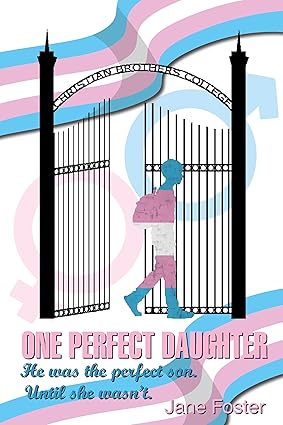

One Perfect Daughter is a raw, intimate memoir chronicling Jane Foster’s journey through parenthood, heartbreak, and ultimately transformation, as her “perfect” son Julian becomes Jules, her daughter. What starts as a tale of maternal pride in a brilliant, sweet, high-achieving child, twists into a deeply personal struggle with change, identity, and acceptance. The book charts Jane’s emotional turbulence as she tries to reconcile the child she thought she knew with the one they were becoming and herself with the mother she now had to be.
Reading this book, I often felt like I was sitting across from Jane as she told her story over coffee, unfiltered, messy, and sometimes uncomfortable. What stood out to me most was Foster’s unwavering honesty. When Jules first reveals she is a girl, Jane’s reaction is devastating: “I want to die,” she writes in a passage that is deeply painful to read but profoundly important. That level of raw vulnerability is uncommon. Foster resists the urge to present her experience in a tidy, resolved narrative. Instead, she exposes every fracture, every contradiction. Even when her words are difficult to read, even when her responses made me uncomfortable, they felt undeniably authentic.
The writing swings wildly between rage, sarcasm, humor, despair, and love, and while that might sound chaotic, it mirrors the emotional rollercoaster she’s riding. One moment she’s joking about calling autism “the tism,” the next she’s sobbing on the kitchen floor while her son, now daughter, is breaking down upstairs. Some parts were so raw they made me tear up, like when Jules says, “I think I need professional help.” Other times, I laughed out loud, like her reaction to the “gluten intolerance” revelation. She is not always gentle in her reflections and at times, her words are harsh, even cutting. Yet she remains unapologetically authentic throughout, and that authenticity gives her story its power.
The way she wrote about her daughter River, who has autism, also resonated with me. Jane is fiercely protective but often overwhelmed. Her love comes with frustration, exhaustion, and even resentment, which, again, makes her story feel all the more authentic. And then there’s Sally, the girlfriend turned scapegoat. Jane blames her for just about everything, and while it’s obvious this relationship triggered deep changes in Jules, I couldn’t help but feel Jane was reaching for control in the only place she thought she still had it. Her bitterness is loud, but beneath it, there’s fear. Fear of losing her child. Fear of not being enough. It’s messy, complicated love, and it’s painfully human.
By the end, I didn’t feel like Jane had wrapped things up or found closure, because life doesn’t work that way. What she offers instead is vulnerability. If you’re a parent, especially one grappling with identity shifts, mental health challenges, or just trying to love your kids through the chaos, this book might just gut you, but in a good way. One Perfect Daughter isn’t for the faint of heart, and it’s not always easy to like the narrator.
Pages: 191 | ASIN : B0DFBMF7LS
One Perfect Daughter: He Was The Perfect Son. Until She Wasn’t

One Perfect Daughter, by Jane Foster, is a raw, candid, and emotionally turbulent memoir by Jane Foster, chronicling her journey as a mother grappling with her child’s gender transition and mental health crisis. The narrative opens with pride and joy as Jane watches her high-achieving son, Julian, graduate. That moment quickly spirals into turmoil as Julian comes out as transgender, becoming Jules. What follows is a painful and intimate account of confusion, grief, love, and resistance as Jane struggles to reconcile her expectations with her daughter’s evolving identity, all while navigating the complex terrain of mental illness, family dynamics, and societal change.
This book hit me like a freight train. I felt gutted, enraged, helpless—sometimes all on the same page. Jane’s writing is so open that it borders on raw nerve. She holds absolutely nothing back, which can be both powerful and uncomfortable. There were times I wanted to scream at her, times I wept with her, and times I just sat in stunned silence. Her pain is real. So is her love. But her reactions—her denial, her blame-shifting, her open contempt for her daughter’s partner—were at times hard to digest. And yet, I kept turning the pages because underneath it all was a mother who was simply lost in a world she didn’t recognize anymore, trying her best to understand a child she no longer knew.
The book doesn’t flinch from portraying Jane in an unflattering light. She’s honest, sometimes shockingly so. Her anger can be vicious. Her judgment–brutal. But that’s what makes this story feel so relatable. Jane is not a polished narrator—she’s confused, contradictory, heartbroken, and often wrong. And that’s what makes her voice linger. There are moments of humor and deep tenderness, too, especially in her memories of Jules as a child. But this is not a comfortable read. It’s messy and often painful, but it’s real.
I would recommend One Perfect Daughter to anyone trying to understand the emotional fallout of identity shifts within families, especially those dealing with transgender issues, mental health, or just the loss of what they imagined their future would look like. This book is not a guide. It’s not politically correct. But it is an unfiltered look at a mother’s love, fear, and grief. If you’re looking for honesty—ugly, complicated, vulnerable honesty—this book will stay with you long after the final page.
Pages: 191 | ASIN : B0DFBMF7LS


