Blog Archives
The Intricacies of Life

The Edges is a collection of poems spanning the human experience, addressing topics such as growth, loss, and wonder. What inspired you to write this particular collection of poems?
I found inspiration for The Edges in our lives’ delicate balance of light and shadow. I tried to grasp the universal truths common to everyone, regardless of their origins or situations.
This collection draws heavily from my personal experiences. Composing these poems turned into a voyage of self-exploration, a method to navigate my emotions and present them to encourage others to contemplate their own experiences—those instances of change, sorrow, and happiness that shape our lives.
At its core, The Edges is an homage to the complexities of life and what we all share.
Did you write these poems with a specific audience in mind, or was it a more personal endeavor?
Writing The Edges was a personal endeavor rooted in my reflections and experiences. Initially, the poems served as a means for me to process my thoughts and emotions, allowing me to explore the intricacies of life from a deeply personal perspective. I found solace in writing, using it as a tool to make sense of moments that felt chaotic or overwhelming.
However, as the collection began to take shape, I became increasingly aware of the potential audience. I started to envision readers who might resonate with the themes of growth, loss, and wonder—individuals navigating their edges. This awareness guided me to balance personal narrative and universal experience. I wanted the poems to feel relatable, inviting readers to see themselves within the lines and reflect on their journeys.
Ultimately, while the collection began as an intimate exploration of my feelings, it evolved into a shared conversation with readers. I hoped to create a space where others could find comfort, connection, and understanding, allowing them to reflect on their own experiences while feeling less alone in their struggles and triumphs. In this way, the poems bridge my journey and the collective human experience.
What was the biggest challenge you faced in putting together this poetry collection?
My biggest challenge in assembling The Edges was navigating the delicate balance between vulnerability and authenticity. I grappled with the fear of revealing too much and of making myself too vulnerable on the page while also understanding that a genuine connection with readers comes from that very honesty.
Additionally, organizing the poems to create a seamless flow was challenging. I wanted each piece to stand alone while contributing to the larger tapestry of human experience. It was a process of trial and error, moving poems around, listening to their voices, and ultimately finding an organic structure.
Can we expect to see more poetry from you soon? What are you currently working on?
Yes, you can expect more poetry from me shortly! I am currently immersed in a new collection of 33 poems titled Immigrant Dreams, which will be published on January 17. This project is particularly close to my heart, as it explores the complex tapestry of experiences surrounding immigration—capturing the hopes, struggles, and dreams of those who leave their homelands in search of a better life.
In Immigrant Dreams, I delve into the myriad emotions of this journey: the longing for home, the challenges of adaptation, and the resilience that emerges in the face of adversity. Each poem seeks to honor the stories of individuals who have navigated the often tumultuous waters of migration, reflecting both the beauty and the hardships inherent in their experiences.
In this collection, I found inspiration from personal narratives, interviews, and historical accounts, weaving them into poetic forms that resonate with the shared human experience. I hope this work amplifies marginalized voices and fosters empathy and understanding among readers.
I’m excited to share this journey with you and look forward to unveiling Immigrant Dreams in the coming weeks. Thank you for your continued support, and I hope my upcoming work resonates with you just as deeply!
Author Links: GoodReads | Website | Amazon
Love & War: A celebration of love in all its forms and complexities and an exploration of human suffering in the raw and brutal realities of war.
Nature & Cosmos: A journey through the untamed wilderness and boundless expanse of the universe, where the mysteries of existence unravel in whispers of wind and starlight.
Time & Memories: Threads of reminiscence woven into time’s fabric, where nostalgia and reflection entwine.
Seasons & Liminal Spaces: Capturing time’s ebb and flow in seasons and liminal spaces, between what was, what is, and what will be.
Observations & Views: Perspectives painted with the strokes of keen observation and introspection, offering glimpses into the diverse landscapes of the human mind.
Wounds & Contemplations: A canvas of healing and introspection, where individuals wear scars as badges of resilience and contemplations resound in the chambers of the soul.
Together, these sections create a multifaceted exploration of the human experience, inviting readers to engage deeply with the themes of love, nature, time, and the complexities of existence.
Scrambled or Sunny-Side Up?: Living Your Best Life after Losing Your Greatest Love


Loren Ridinger, a lifelong entrepreneur and philanthropist, is best known for co-founding Market America and SHOP.COM alongside her husband, JR Ridinger. Their story began when Loren met JR at just 18 years old, drawn into his magnetic energy and shared vision. From that moment, they built a partnership anchored in love, trust, and unwavering encouragement. JR’s ambition gave birth to Market America and SHOP.COM, a groundbreaking global e-commerce platform designed to empower entrepreneurs and offer consumers a smarter way to shop.
In Scrambled or Sunny-Side Up, Ridinger offers a deeply personal reflection on their extraordinary relationship, their journey as business partners, and her struggle to navigate the world after JR’s sudden death in August 2022. Raw and unfiltered, the memoir captures life both before and after his passing. Ridinger candidly shares her regrets—moments left unsaid, sentiments unspoken—while urging readers to embrace life and love fully, never assuming tomorrow is guaranteed.
Ridinger’s narrative walks a delicate line between relatability and privilege. She speaks earnestly about her pain and healing, yet the luxurious backdrop of private yachts and multimillion-dollar homes may feel distant to the average reader. Still, the universal emotions of love, grief, and uncertainty transcend the material world. These are feelings we all know—loss that shakes us, love that defines us, and the struggle to rediscover ourselves in the aftermath. While some readers may find Ridinger’s lifestyle detached from their own realities, her vulnerability resonates. She does not shy away from questions of identity, purpose, and healing. Her journey—marked by profound sorrow and the search for meaning without her partner—offers inspiration for anyone who has loved, lost, and struggled to move forward.
Scrambled or Sunny-Side Up is more than a memoir. It’s a call to live intentionally, to love deeply, and to value every fleeting moment. Ridinger’s story is a reminder that even in unimaginable loss, there is hope, resilience, and the power to carry on. Whether you’ve experienced a loss as seismic as Loren Ridinger’s or simply grappled with change, her reflections will touch your heart and encourage you to live without regrets.
Pages: 208 | ASIN : B0DDJJF81D

An Air of Mysticism
The Dragon’s Fly follows a reclusive woman battling social anxiety who finds out her estranged daughter is murdered while on a camping trip in what can only be described as a nightmare by the sole survivor. What was the inspiration for the setup of your story?
The inspiration for my story came from a desire to translate my vision of how a nightmare might look into words. As a devoted fan of horror, I knew this novel would firmly belong to that genre. I began by imagining some of the worst possible scenarios that a human could endure and began organizing these ideas. This process led me to dig into some of my own personal fears and phobias – the fact that I struggle with social anxiety, am deeply claustrophobic, terrified of the dark, and have a paralyzing fear of heights. From there, a tale began to take shape.
I find the world you created in this novel brimming with possibilities. Where did the inspiration for the setting come from and how did it change as you were writing?
The world I created in this book is a comparison of two distinct realms designed to both parallel and contrast one another. The setting was inspired by my desire to observe the grey areas in the story where the boundaries between human and monster nature would blur. What sets humans apart from the Sihashee? Where do we overlap in the eternal struggle between good and evil? How could I address the answers to these questions and, most importantly, describe this? I concluded that these questions were essential to shaping the setting and attempted to show duality through Vicky’s jaded view of the human world and Colby’s treacherous journey within the Sihashee’s society. I also wanted to emphasize the “all too familiar” dynamics of hierarchy and privilege rooted in wealth and power, as well as the clash of cruelty and kindness governing both worlds. Despite their monstrous nature, the Sihashee demonstrate tenderness and care towards those they value, much like humans. Unlike humans, their world is a deep, dark subterranean civilization hidden from the pristine presence of sunlight and fresh air. The setting is a stark contrast between Vicky’s quiet, isolated existence and the chaotic, noisy world droning along dozens of miles beneath her feet. The environment gradually evolves to accommodate the dichotomy and gently carry readers between both worlds. I found myself having to resist the temptation of delving too deeply into the complexities of the Sihashee’s realm, realizing that I could save those details for a future novel.
What were some themes that were important for you to explore in this book?
Some key themes I explored in this novel are overcoming fear, power and corruption, and love and loss. Perhaps Vicky’s greatest struggle is overcoming fear. I highlight her vulnerabilities by walking readers through her daily experiences to show her struggle with anxiety, depression, and guilt. These internal conflicts get in the way of her longing to connect with her estranged daughter and an admirer’s romantic pursuit.
The theme of power and corruption is more apparent within the Sihashee society where monstrous beings dominate through ruthless control over one another and their human captives. Through Colby’s eyes, readers navigate an underground empire ripe with resentment, brutality, and an air of mysticism.
Meanwhile, love and loss acts as the catalyst dictating Vicky’s fragile reality. From her failed relationship with her ex-fiancé, Roe, to the estrangement from her daughter, and the awkward tension she feels towards her family, these themes interweave to create a story that examines hopelessness, the nuances of relationships, and the cost of navigating a society defined by both humanity and monstrosity.
Will there be a follow-up novel to this story? If so, what aspects of the story will the next book cover?
Yes, I am currently working on the framework for the sequel. Without revealing too much, the next story may possibly follow the adventure of another character from The Dragon’s Fly more closely. I’d like to give readers the opportunity to experience this world through a different lens and navigate new dimensions of the narrative.
Author Links: GoodReads | X (Twitter) | Amazon
Growing up, Patty
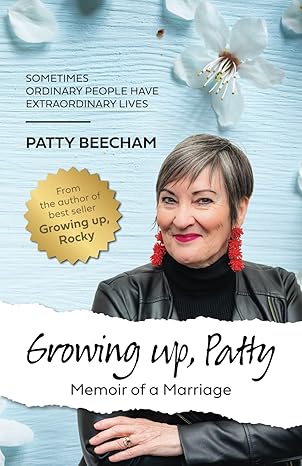

Growing Up, Patty, by Patty Beecham, is one of the most candid and heartfelt memoirs I’ve encountered in a long time, and I found myself captivated by every page. From her earliest school days, Patty felt out of place—longing to fit in yet always sensing she was different. Her twenties were a turbulent time, marked by a troubled marriage, unemployment, and no stable home. Despite these challenges, Patty’s resilience shines through as she gradually pieces together the life she wanted, proving her unwavering dedication to creating her own path.
Throughout the memoir, readers are taken on a vivid journey through her friendships, romantic relationships, family struggles, career transitions, and a deep passion for adventure. Her experiences with failed relationships are laid bare, and one revelation—that she had once been stalked—left me genuinely surprised. Eventually, she meets Chris, the love of her life, and together they build a family. The challenges of motherhood were not easy for Patty, but with Chris’s steadfast support, she overcame the hardships. Her career, which began in advertising, later evolved into a successful role as a radio presenter. I admired her boldness in starting fresh, never hesitating to reinvent herself. Her courage and determination left a lasting impression.
One of the qualities that stood out most about Patty is her incredible resourcefulness. I recall her initiative in setting up one of the first school websites on the Internet, a moment that filled me with pride for her accomplishments. The way she navigated the joys and pains of motherhood, including heartbreaking miscarriages, was deeply moving. The strain her marriage endured due to her husband’s demanding job underscores the broader theme of how work can ripple through every part of a person’s life, affecting health, relationships, and emotional well-being.
Amid life’s toughest challenges, Patty’s humor became her shield, allowing her to find light even in dark moments. Her stories brim with wit and wisdom, and I found myself relating to many of her experiences—whether it was the quest for purpose, the restless ambitions of young adulthood, or the bravery it takes to pivot careers when life demands it. Growing Up, Patty is not just a memoir; it’s an honest reflection on the highs and lows of life, filled with moments of vulnerability, strength, and humor. It’s a deeply personal narrative, and I loved every moment of it.
Pages: 350 | ISBN : 978-0645247855
Shelter of the Monument: A Provincetown Love Story

Shelter of the Monument, by Yvonne deSousa, takes readers on a heartfelt and intimate journey through the author’s memories and emotions, centered on her time in Provincetown, Massachusetts. The book weaves a narrative of love, loss, addiction, and personal growth, using the physical and emotional shelter of Provincetown’s iconic Pilgrim Monument as a central metaphor. The story, rooted in real-life events, revolves around deSousa’s relationship with Richard, a man struggling with addiction, and her evolving understanding of herself, her faith, and her place in the world.
What stands out immediately is deSousa’s unflinching honesty. She holds nothing back, whether she’s reflecting on her love for Richard or facing the painful reality of his addiction. In the chapter about Richard’s addiction, deSousa lays bare her frustration and heartbreak, especially when she hands over the hidden drugs in a scratched-up pan buried in the kitchen. That vulnerability is what makes this book so gripping and authentic. She never glosses over her pain or makes excuses for Richard, and that openness gives the narrative a powerful, almost visceral quality. The book’s emotional highs and lows are intense. DeSousa expertly captures the exhilaration of young love alongside the despair of watching someone self-destruct.
I do believe that the pacing in some parts might feel slow to some readers, especially when Richard’s relapses pile up, delaying deSousa’s personal growth. It’s frustrating to watch her forgive him repeatedly, but this is what makes the novel so moving. It’s a realistic portrayal of how hard it is to let go of someone you love. Her struggle speaks to the difficulty of choosing self-care over a destructive relationship, and that tension is central to the story’s emotional depth. The novel is truly compelling, thanks to deSousa’s sincerity and the strength of her prose. The themes of love, loss, and personal transformation are woven throughout, keeping the reader emotionally invested, even during the slower-paced passages. Her journey is filled with heartbreak, but also moments of clarity that bring hope.
Shelter of the Monument is a riveting memoir that will resonate with anyone who has experienced the complexities of love or the pain of watching a loved one struggle with addiction. DeSousa’s warmth, honesty, and vivid sense of place make this a must-read for those who appreciate deeply personal stories. If you’re drawn to tales of personal growth, tough decisions, and the messy beauty of small-town life, this book will leave a lasting impression.
Pages: 309 | ASIN : B0CHSHVHRS
Being a Human is Really Hard

The Requirement of Grief shares your experiences with grief and loss as well as the impact of suicide and the resilience of humans to cope with grief and find hope even in the darkest of times. Why was this an important book for you to write?
Initially, I was writing to help myself process the complicated relationship that I had with my sister Alexis. Each time I wrote about something that happened between us or in our family, I thought of it as its own essay. After Alexis died, I came to an awareness that the things I’d been writing were going to be part of a book, and I began to think about how to put these together in a way that would allow a reader to come along on the journey.
Ultimately when you publish a memoir, it has to be a written with an eye toward the reader and the audience, otherwise it’s more of a journal. I spent a lot of time shaping the chapters and choosing a deliberate structure in order to keep the reader engaged and willing to stay with me for 200 plus pages that deal with very heavy topics.
What were some ideas that were important for you to share in this book?
I’m always telling my son that being a human is really hard. I tell him this because I want him to develop an awareness of the complicated nature of feelings and the fact that it can be quite overwhelming to experience the full range of emotions. I hope anyone who reads this book will come away with an understanding of each character’s perspective (mine, Alexis’s, my parents), and I hope that this understanding will allow readers to expand their capacity for compassion in their own lives. All the characters in this book, especially me, are deeply flawed, but we are also trying to do the best we can.
I appreciated the candid nature with which you told your story. What was the hardest thing for you to write about?
At a certain point while writing, I decided that I needed to include chapters from my sister’s imagined perspective. Once I made this decision, something clicked. It felt right and necessary. I wanted readers to feel that they knew my sister as well as they knew me. After I had written several of these chapters, I was talking to one of my writing mentors and she asked if I’d written the scene of my sister’s death. I hadn’t, but the moment she asked I knew that I needed to.
This was the hardest chapter to write. I had a fixed number of facts. I knew who Alexis called on her last day. I knew that she sat out on the porch in the sun with a glass of wine. I knew the time that my parents had last spoken to her and what they said, and of course I knew what kind of pills the coroner had found in her stomach and the drug levels in her blood. In order to write the rest, I had to imagine what Alexis might have felt on that day; what she might have thought about as she wrote the note she left for us; how she might have decided which pills to take. This was not something I ever expected to write and it was incredibly difficult, but writing it opened something up inside of me, and I think it was an important piece for the reader to have.
What is one thing you hope readers take away from your story?
Loving a family member through any illness, whether it’s cancer or Multiple Sclerosis or even something small like a pinched nerve, is difficult. Illness and pain can change a loved one’s personality and outlook on life. It could feel like you’ve lost the person even while they are still alive. That’s how it felt with my sister. She was there, but she was not the sister I grew up with.
I had a whole host of emotions that cropped up for me while Alexis was alive, and they were not easy feelings to confront. There was a well of anger, resentment, bitterness, and sadness, which left me feeling a great deal of shame and guilt. My hope is that anyone in a similar situation will feel seen as they read, and perhaps less burdened by shame than I was.
Author links: GoodReads | Twitter | Facebook | Instagram | Website
The Requirement of Grief lays bare the relationship between two sisters and the bond that remains in the wake of a suicide. In startlingly honest prose, Ariano tracks her grief journey chronologically through days, months, and years; all the way through the birth of her first son. But will the unparalleled new joy of motherhood be powerful enough to drive out her grief?
Equal parts shatteringly sad and infinitely hopeful, The Requirement of Grief tells the story of one person learning to bear the unbearable.
The Requirement of Grief

Danielle Ariano’s memoir, The Requirement of Grief, presents an insightful exploration into the multifaceted experience of loss and healing. Ariano’s journey through the challenging landscape of grief following the impact of suicide is interwoven with the life-affirming journey of motherhood, showcasing her remarkable resilience.
Ariano’s writing is introspective and heartfelt, inviting readers to share in her deeply personal experiences of sorrow and reflection, ultimately leading to a sense of hope. Her approach is marked by an authentic, unguarded honesty, offering a genuine connection for readers who may have faced similar trials. The memoir does not shy away from the complexity of emotions inherent in grieving, including shock, sadness, and despair. Ariano’s detailed account of her mourning process provides comfort and understanding to those who have endured similar losses. The memoir is particularly compelling in its portrayal of the transformative impact of motherhood on Ariano’s life. Amidst the grief, the profound relationship with her child emerges as a source of joy and purpose, offering light in the darker moments. A key strength of The Requirement of Grief lies in Ariano’s commitment to candidly addressing the often uncomfortable and chaotic aspects of grief. This honest exploration contributes to a deeper understanding and healing process.
The Requirement of Grief stands as more than just a memoir. It is a powerful affirmation of the human spirit’s capacity for resilience. Ariano’s narrative is a poignant reminder of the beauty and love that can emerge from our most challenging experiences, resonating with readers who appreciate the nuanced reality of grief and its inevitable presence in our lives.
Pages: 258 | ASIN : B0CVR46Z1X
Shadows In My Soul

In Recycled Lives, an Italian artist loses her memory following a car accident, and she and her family must face the repercussions of her tormented past. What was the inspiration for the setup of your story?
At the time, I was exploring the question of taking responsibility, where it begins and ends. I just realized in my own life that every choice and action has a price and a consequence, and the concept fascinated me.
The story came alive in me when I was living in Hungary, homesick and desiring almost desperately to return to Italy, where I used to live in my twenties (and where I live now). This might be why I didn’t even ask myself where it would play out.
Was Selvaggia’s backstory something you always had, or did it develop as you were writing?
Yes, it was clear as day before I started writing, just as the story and the other characters did. I didn’t really brainstorm about any of it while writing on a what-happened level; I outlined everything beforehand.
I knew the facts and what was about to happen in a given chapter or scene, while at the same time, it was a surprise how it all took shape. As I sat down at my laptop, I felt the top of my head sizzling and my fingertips moving on the keyboard, and I became aware of the words as I saw them on the screen, not while they formed in my mind. It was a super-interesting, super-creepy experience.
Which character in the novel do you feel you relate to more and why?
I asked myself the same question after everything was said and done. More than identifying with one, each represents a part of me. At some point in my life, I felt how they felt or acted like they acted.
I know Selvaggia’s darkness from the inside and how it is when you don’t want to go on living, wanting to escape from your reality. I know Luca’s painful struggle to repress his needs in order to obtain only the illusion of being loved and living a life of compromise.
They are the shadows in my soul I embraced. On the one hand, Alessia represents my personal transformation in the last ten years. On the other, she’s the person I still desire to become, inspiring me to stay connected to my true self and preserve my purity in every situation I face.
What is the next book you are working on, and when will it be available?
I’m working on a three-volume magical realism series. It’s an entirely dissimilar investigation of life choices, loyalty, and personal transformation, questioning the polarity of good and evil. If everything goes as planned, the first volume will be available by the end of the year.
Author Links: GoodReads | Facebook | Website
Life goes from painful to unbearable for the known Italian artist Selvaggia Fedele, and she makes the poorest choices. Becoming the worst version of herself, she wreaks havoc in the lives of those who hold her most dear.
She wishes to vanish and make everything that tortures her disappear. When both come true through a tragic accident, she still has to take responsibility for the actions of her past life. And must deal with a lot more than what she left behind in the first place.
Selvaggia and her husband, the person she inflicted the most pain on, find themselves in front of a mystery. Luca does everything to ignore it, but Selvaggia chooses to connect with her higher Self to try to solve the puzzle.
Things are not what they seem; they only see a slice of reality, and the answers to the seemingly unanswerable questions lie in the spiritual dimension. The path there leads through otherworldly encounters and inner demons to face.



 LITERARY TITAN