Blog Archives
Love Yourself

Indra’s Net offers readers a spiritual guide that blends personal experiences and grounded spiritual lessons within a Tarot-inspired structure. Why was this an important book for you to write?
For my own growth.
Is there anything you now wish you had included in Indra’s Net? Any additional anecdotes or bits of wisdom?
No.
What is one thing you hope readers take away from your book?
Love yourself.
Can we look forward to more releases from you soon? What are you currently working on?
Ideas, but nothing definite.
Author Links: GoodReads | Facebook | Website
Adult Nonfiction Book of the Year, San Francisco Writer’s Conference
FOR THOSE WHO SEEK ANSWERS, UNDERSTANDING, INSPIRATION, & INNER PEACE
Indra’s Net is a collection of themes about learning to live an awakened life and opening one’s mind and heart to the Self. It is for those who seek answers, understanding, inspiration, and inner peace. It discusses topics such as vulnerability, codependence, arrogance, impermanence, gratitude, and failure, and contains wisdom and teachings from many paths.
This book can be used as daily inspiration, a tool for self-improvement, a spiritual lesson plan, and a source of divination. Full of helpful techniques, hints, humor, and love, all oriented towards making sense of our human experiences and discovering a cosmic home here on Earth, it is a how to do and how to be manual.
The format mirrors a traditional Tarot card deck, although it offers a new take on both Tarot meanings and spiritual discovery outside of Tarot readings. The book can be used as a modern guide to reading and understanding Tarot card meanings.
In the two-thousand-year-old tradition of Indra’s Net, each perfect faceted jewel reflects every other jewel and is reflected by that jewel. It’s an image of interdependence, in that everything is connected to everything else. Indra’s Net is not a poetic or a philosophical idea, it’s the way life functions.
Indra’s Net is a product of author Indra Rinzler’s 50+ years of living on the spiritual path, assembled from decades of study, wisdom paths, practices, experiences, and revelations.
How we view life is our choice. This book is meant to encourage one to choose from a higher wisdom and connection to the truest Self. That which we wish to understand and become, transforms us in the very process of seeking. As we open to awareness, we awaken to the significance of all dimensions of reality.
Indra’s Net: A SEEKER’S Guide to the Human Experience


Indra’s Net, by Indra Rinzler, is a spiritual guide built from seventy-eight themes that weave stories, reflections, and practices into a single tapestry of awakening. The book blends personal experience, Tarot-inspired structure, mythic symbolism, and grounded spiritual lessons. It invites readers to look inward, release old patterns, and explore consciousness with curiosity. The author draws from decades of study, travel, meditation, and teaching to create a kind of living manual that meets readers wherever they are. The effect is a blend of memoir, parable, and spiritual toolkit.
Reading the book, I kept feeling a mix of surprise and comfort. The writing carries a warm, almost conversational honesty that makes even the heavier ideas feel approachable. I liked how the author refuses to separate the mystical from ordinary life. A simple bowl of oatmeal becomes a miracle. A long walk in Thailand becomes a spiritual dilemma. A beggar’s smile becomes a master class in grace. The stories feel loose and unforced. I found myself nodding along, then stopping, then looking up from the page because something landed in my chest. The rhythm moves from personal anecdote to broad spiritual teaching so quickly that it left me slightly off balance in a good way. It reminded me that understanding rarely arrives in a straight line. It sneaks up on you.
At the same time, the ideas stirred up a strange mix of awe and restlessness. The author talks a lot about surrender, intuition, and letting life unfold. Some moments felt so gentle that I relaxed into them. Other moments poked at me. The theme of impermanence, for example, made me strangely uneasy. I felt myself push back, even as I knew the point was to soften. That emotional tug made the book stick with me. I appreciated how the stories never try to be perfect teaching moments. They wander and land where they land. The book feels authentic, and that gave it a texture that pulled me deeper.
By the last pages, I felt a quiet gratitude for the way the Rinzler uses imagery and structure. The Tarot framework, the themes, and the practices are presented at the end of each chapter. It all creates a rhythm that feels like a long walk with someone who has been on the road a while and wants you to see the scenery with fresh eyes. I would recommend Indra’s Net to readers who enjoy reflective, spiritually curious writing and who like books that offer small, steady insights rather than big proclamations. It is especially good for people who want a companion on their inward journey. Someone who wants to feel less alone and more connected to something larger and kinder than their own thoughts.
Pages: 286 | ASIN : B0FX65LB69

Awakening Stories
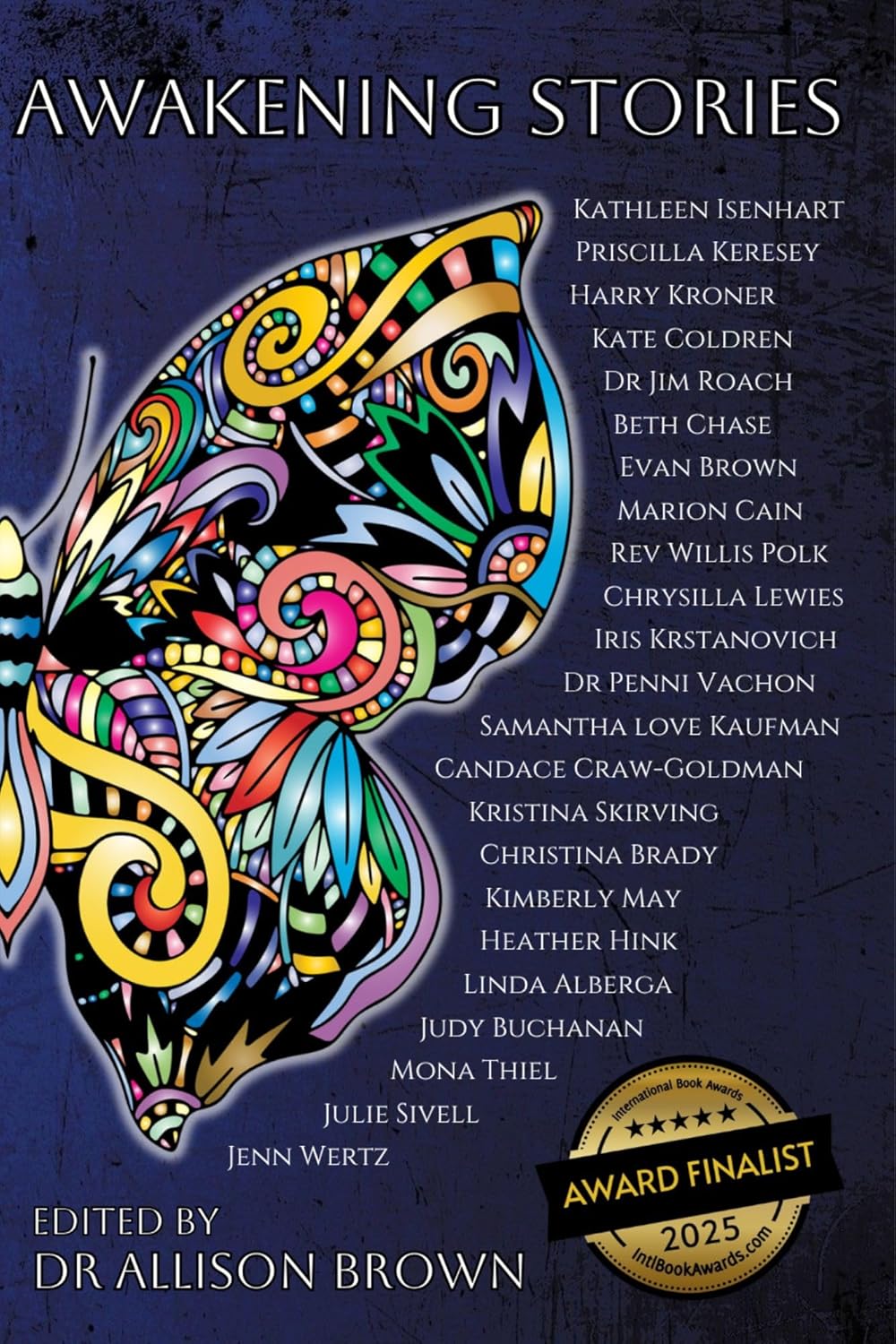
Awakening Stories is a collection of personal essays written by twenty-three individuals who share their spiritual and emotional transformations. The book begins with an introduction by Dr. Allison Brown, who frames the anthology as part of a broader human awakening, a time when individuals and societies are breaking down old ways of being to rebuild something more authentic and compassionate. Each story follows a different thread: grief, addiction, faith, illness, self-discovery, and love. Together, they form a patchwork of healing, vulnerability, and inner strength that echoes one truth, awakening isn’t a single event but a lifelong process of remembering who we are.
Every chapter opened a window into someone’s private reckoning with pain and renewal. The writing varies, sometimes lyrical, sometimes blunt, but always sincere. I found myself pausing often, not because the text was dense, but because it stirred things I hadn’t planned to feel. Some stories shimmered with beauty, like Julie Sivell’s reflection on homesickness for the divine, or Evan Brown’s raw recollection of a moment of awakening in a Hawaiian temple. Others punched harder, especially those that dealt with trauma and survival. There’s a rhythm to the book, like waves of confession and clarity, and though the voices differ, there’s a common heartbeat pulsing through them: hope.
Stylistically, the book has an intimacy that pulls you close. It doesn’t read like a polished self-help manual or a philosophical treatise, it reads like a gathering around a fire. Some passages drift into the mystical. It invites you to question, to lean in, to wrestle with what you believe. Dr. Brown’s vision as editor feels grounded in compassion rather than doctrine.
I’d recommend Awakening Stories to anyone feeling lost, restless, or curious about the deeper layers of being alive. It’s not a quick read, it’s one you sit with. If you’ve ever faced a moment that cracked your sense of self, this book will meet you there and whisper that you’re not alone. It’s for the seekers, the skeptics, the wounded, and anyone brave enough to believe that breaking apart might just be the first step toward becoming whole.
Pages: 287 | ASIN: B0DKG1RNT3

It’s Never Personal: Weaving Psychology, Neuroscience, and Ancient Wisdom Through a 5-Step Process to Finally Let It Go

Vicki Kennedy’s It’s Never Personal is a heartfelt and practical guide to understanding why we take things personally and how to let go of that burden. Through her five-step “Never Personal Process,” she blends neuroscience, psychology, and ancient wisdom into a pathway for real emotional freedom. The book moves between personal stories, client experiences, and clear, accessible explanations of concepts like attachment theory and the mind-body connection. At the end of each chapter, reflective questions invite the reader to dig deeper, making the book part manual, part mirror. It’s not just theory, it’s a lived approach to releasing shame, resentment, and self-criticism, and finding the peace that comes with truly seeing that “it’s never personal.”
What struck me most was the openness and warmth in Kennedy’s writing. She doesn’t hide behind clinical distance. She shows her own struggles, moments of feeling unworthy, rejected, or invisible, and how she worked through them. This made the book feel like a conversation with a trusted friend who also happens to have a lot of professional wisdom. I found myself pausing to think about my own raw spots, the times I’ve rushed to forgive without healing, and how often my mind leaps to negative conclusions without evidence. Her examples, whether about a casual slight or a deep betrayal, hit that sweet spot of being specific enough to feel real, but universal enough to resonate.
I also appreciated how she bridged the gap between emotional healing and spiritual growth without slipping into abstract mysticism. Her tone is grounded and compassionate, and she has a knack for taking big ideas like flow states, shadow work, and generational patterns and making them simple without making them shallow. She’s equally willing to quote neuroscience research and the Tao Te Ching, and she makes both feel relevant. Some passages challenged me to face uncomfortable truths about my own defensiveness and judgment. Others left me feeling lighter, more hopeful. By the time I finished, I could see my own patterns a little more clearly and felt more willing to try her process in real life.
I’d recommend It’s Never Personal to anyone who finds themselves replaying conversations in their head, holding grudges they wish they could drop, or feeling too easily bruised by others’ words and actions. It’s ideal for those already in therapy or on a personal growth journey, but it’s also accessible to someone just beginning to wonder why certain hurts linger. If you’re ready to let go of the weight you’ve been carrying, whether it’s been a few weeks or a few decades, this book offers both the map and the encouragement to take those steps.
Pages: 139 | ASIN : B0F9B51HNT
Gratitude with Grace: Finding Happiness


Gratitude with Grace: Finding Happiness is a deeply personal and heartfelt guide to self-love, healing, and spiritual transformation. Written in an accessible and conversational tone, Anita Fonteboa draws from her own life—her hardships, her healing, and her growth—to offer readers a roadmap to joy. The book is organized into thematic chapters that tackle gratitude, manifestation, intuition, and self-awareness. It encourages readers to tune into their inner voice, shift their mindset, and connect to something greater—be it God, angels, or the universe. Through affirmations, real-life anecdotes, meditative practices, and soulful wisdom, the book leads you to discover your own light, even in the darkest moments.
Reading this felt like having a warm and honest chat with a wise friend who’s been through the wringer and still found reasons to smile. I appreciated how Anita doesn’t hide behind theory or abstract advice. She gives you the raw truth of her lived experience, from financial struggles and single motherhood to spiritual awakenings. That honesty makes her message land with impact. The writing is simple, direct, and full of warmth. She repeats her messages often, which might bother some readers, but to me it felt intentional, like a mantra. I especially loved the affirmations peppered throughout the book. At times, I actually found myself saying them out loud, which is a testament to the author’s ability to make her words feel like an invitation rather than a command.
There were moments I wished for more clarity or a deeper dive into certain tools she mentions, like grounding or chakras, which are touched on. Still, the emotion is always present, and that’s what kept me hooked. This isn’t a textbook or a clinical how-to. It’s a love letter to the person who’s struggling but still showing up every day. And that makes it an incredible tool. Chapter 8 was one of my favorite parts of the book because it felt like the heart of everything Anita had been building up to. It was empowering and full of emotional honesty. I loved how she tied all the previous lessons together and reminded us that happiness isn’t something you wait for, it’s something you claim.
I’d recommend Gratitude with Grace to anyone who’s feeling stuck, broken, or lost in the noise of daily life. It’s perfect for readers new to the world of self-help or spiritual growth, especially those who resonate with personal storytelling and faith-driven inspiration. If you’ve ever whispered “there has to be more than this,” this book might just be the soft nudge toward that “more.” It won’t change your life in one read—but it just might remind you that you can. And that’s more than enough to start.
Pages: 82 | ASIN : B0CK79ZGX6
How Change Really Happens

Sierra Melcher’s How Change Really Happens is part guidebook, part heart-to-heart open discussion, offering readers a warm and honest exploration of personal transformation. Framed around metaphors from nature—trees, butterflies, and lotus flowers—it walks the reader through both the emotional and practical aspects of change. The book is structured in two parts: the first dispels common myths about transformation, and the second offers a “tool belt” of strategies to help you move through life’s messier moments with more grace, awareness, and intention. It’s clear this book was written by someone who not only teaches these lessons but lives them.
I found Melcher’s writing style incredibly approachable. She doesn’t lecture—she chats. Reading this book felt like talking to a wise friend who isn’t afraid to laugh at life’s chaos while still taking your growth seriously. There’s a deep tenderness in how she shares her own stumbles and breakthroughs. I appreciated that vulnerability. And she doesn’t pretend to be a flawless guru either. She reminds you constantly: you’re the expert on your own life. That humility made the whole thing feel more real. The idea of “micro-shifts”—tiny, consistent actions—was a standout for me. It took the overwhelming bigness out of “transformation” and made the process seem manageable.
The book leans heavily into metaphors, and many of them were beautiful. The butterfly one, for instance, is familiar territory in self-help, but Melcher does offer a more nuanced view of it. Her insights about the fear of change, the pushback from others, and the need to sit in discomfort instead of forcing outcomes felt deeply relevant. She doesn’t sugarcoat things. Change is hard. Messy. Sometimes lonely. But she makes you feel okay about that. Like you’re not broken for struggling.
I’d recommend this book to anyone standing at the edge of something new—whether that’s a life transition, a career shift, or an internal reckoning. It’s especially good for folks who are burned out on the hustle culture and looking for a gentler, more sustainable way to grow. If you’ve ever felt stuck but unsure why, or if the idea of transformation feels too big to tackle, this book will meet you exactly where you are and gently nudge you forward.
Pages: 118 | ASIN : B085H9LGG9
Create Yourself Anew From Above Down: By CHOOSING Who and What YOU Prefer to Be in this Multiverse of ALL POSSIBILITIES

Create Yourself Anew From Above Down is a spiritual and philosophical meditation on the nature of identity, healing, and human potential. It’s less a traditional book and more a guided conversation with the reader’s soul, where the author nudges, encourages, and sometimes challenges the reader to drop the weight of ego and conditioning in order to rediscover their divine origin. Rooted in Christian metaphysics and laced with poetic rhythms, the work explores how we can transcend physical, emotional, and mental limitations by aligning ourselves with a higher consciousness—the God above and within.
I enjoyed the tone of the book. It was tender but firm, like a mentor who’s seen some things and knows you need more than just a pep talk. The phrase “from above down” becomes a kind of mantra throughout, suggesting that transformation starts not from effort or grit, but from surrender. The book doesn’t offer steps or techniques. No charts, no tasks. Instead, it repeats like a prayer: remember who you are. I wanted to resist that simplicity. But the more I read, the more I felt a shift, like layers peeling back.
The writing is unconventional. It flows like a stream of consciousness, filled with repetition, symbolic language, and a kind of rhythmic insistence that keeps echoing long after you put it down. At times, it felt like the words were circling me, not just speaking to me but trying to repattern something inside. There were moments I had to close the book and sit with the words. It’s rare to find writing that feels more like song or prayer than essay—but that’s exactly what this is. This book doesn’t explain—it awakens.
Create Yourself Anew From Above Down is for the seeker, the one tired of fixing, hustling, analyzing. It’s for anyone who’s sat in silence and whispered, “There must be more than this.” If you’ve ever felt like you’re standing at the edge of something sacred but don’t know how to step into it, this book might be the invitation you’ve been waiting for.
Pages: 194 | ASIN : B0DG11JNXK
Bigger Living, Smaller Space: Resizing for a Clean & Cozy Home

Judy Granlee-Gates’ Bigger Living, Smaller Space is part practical guide, part personal memoir, and entirely a wake-up call to anyone drowning in their own possessions. This book isn’t just about organizing; it’s about resizing, reframing our relationship with stuff, and creating a home that works for our current lives rather than clinging to what used to be. Granlee-Gates, a seasoned builder and remodeler, combines humor, wisdom, and a bit of tough love to help readers declutter with intention, offering actionable steps and mindset shifts to make the process both manageable and meaningful.
What struck me first was her no-nonsense approach to decluttering. She doesn’t sugarcoat the work involved. She makes it clear that there’s no magic bullet, just effort and commitment. One of the book’s most powerful moments comes early on when she shares her own experience of inheriting belongings from multiple relatives and how she ended up with literal boxes of ashes in her closet. That image stuck with me. It’s a stark reminder that we often hold onto things out of obligation, not because they serve us. Her decision to finally scatter those ashes and then methodically clear out inherited possessions was deeply moving and set the tone for the rest of the book: decluttering isn’t just about making space in your home; it’s about making space in your heart and mind.
Another standout section for me was Chapter Five, America, Land of the Storage Units. It’s shocking how much we collectively spend just to store things we don’t even use. She points out that 9.4% of U.S. households rent a storage unit, and the majority of those people also have garages and basements packed to the brim. That statistic alone made me reevaluate my own storage habits. Granlee-Gates highlights the absurdity of spending thousands of dollars over the years to keep things we could probably live without. Her example of her husband’s grandmother, who paid for a storage unit for years only to end up selling its contents at a garage sale, was painfully relatable. It made me think: how many of us are holding onto things just because we’re not ready to deal with them?
What I appreciated most about this book is how it acknowledges the emotional weight of decluttering. Chapter Nine, Sentimentality and the Weird Stuff that Slows Us Down, was a game changer. She doesn’t dismiss sentimental attachment but rather offers practical ways to honor memories without being buried under them. Her take on “little ghosts” (items that constantly remind us of loss rather than joy) was especially eye-opening. I realized how many of those I have in my own home. The idea that memories are portable—that they live within us, not within objects—was a refreshing perspective that I needed to hear.
Bigger Living, Smaller Space is an absolute must-read for anyone feeling overwhelmed by their possessions but not sold on the idea of extreme minimalism. If you’re looking for a book that will hold your hand while also giving you a firm push in the right direction, this is it. Granlee-Gates is like that brutally honest but loving friend who tells you what you need to hear, not just what you want to hear. Whether you’re thinking of downsizing, trying to declutter, or simply want to create a home that feels more like a sanctuary than a storage unit, this book is packed with wisdom, humor, and actionable steps to help you get there.
Pages: 102 | ASIN : B0BS8KFV4T



 LITERARY TITAN